Not many artists have had better years than Mitski. With the release of her celebrated album “Puberty 2” (via Dead Oceans Records), Mitski only got bigger and bigger, but always on her own terms. On November 21st, she played her largest headlining show in New York yet, with a sold out performance at Webster Hall, along with two great openers in Weaves and Fear Of Men. It was even more impressive to see the hold she had over Webster Hall crowd during every living moment of her personal 15-song set. She attracts a young and passionate fanbase, who are devoted to every word and line she delivers, singing it back even more emotional than it was originated. There’s a sincere power to her voice, and it’s hard not to be swept up by it all. Mitski is only going to garner more accolades as the best of the year lists continue to file in, it’s safe to say that her star will only rise even more over the years. It’s been a great pleasure to watch her grow as an artists, and here’s to whatever she does next.
In “A Loving Feeling” from her new album Puberty 2, Mitski Miyawaki asks, over static and guitars, “What do you do with a loving feeling/ if a loving feeling makes you all alone?” It’s a question she poses, in various forms, throughout the record, sometimes in a hopeful whisper, other times in an enraged, accusatory shout. By the end of “Puberty 2″, it becomes clear that it’s a question she can only answer herself.
The album’s title positions it as a sequel—the awkward, cruel extension of a life stage few people would willingly revisit. She depicts that tension and confusion with particular pointedness in “Happy,” where the titular emotion finally visits her, only to leave a mess behind. “Well I sighed and mumbled to myself/ ‘Again I have to clean,’” she sings in amusement. The sax riff and dry applause that follows land like a punch line.
Subtle images of “pinky promise kisses,” of being the little spoon that “kiss[es] your fingers forever more,” of taking one last look at a lover in the rear view mirror, convey a vulnerable intimacy; it’s as if Mitski, in the midst of self-doubt and anxiety, wants to make herself smaller. Yet throughout the album, those subtleties give way to sudden, explosive moments of exhilaration and self-assertion: slow doo-wop declarations of love in “Once More to See You,” ragged howls and aggressively-strummed guitars in “My Body’s Made of Crushed Little Stars,” the invasive flash of sweet memories during “one warm summer night” in “Fireworks,” and the fierce look of love on “I Bet on Losing Dogs.” By the record’s end, it’s clear that Mitski has made peace with her question about a “loving feeling.” She finds all of the strength and peace she needs simply by loving herself. She may be alone, but she’s never lonely.
That might make Puberty 2 sound meek. It is anything but. Mitski and her sole collaborator and producer, Patrick Hyland, trade the slightly rustic quality of 2014’s Bury Me At Makeout Creek for grungy sharpness and spacey ambience, These 11 tracks creep up on you, as her coiled melodies suddenly explode into cavernous freak-outs or build to a crescendo of unbearable catharsis.
Mitski – Puberty 2 (Dead Oceans Records)
Puberty is a motherfucker. It’s a time when your body’s doing weird stuff, your hormones are running wild, and every little problem seems like the end of the world. But things gets easier. Your emotions don’t go away or even get smaller, necessarily — you just learn to deal with them, to manage them, to live your life anyway. That’s what growing up is, and Puberty 2 is the sound of Mitski growing up.
The fuzzed-out indie-rock that’s become her signature is supplemented by drum machines, synths, even a saxophone, blossoming from the soft/loud dichotomy of Bury Me At Makeout Creek to a more nuanced spectrum of sound. Lyrically, Mitski is focused on what basically amounts to Newton’s third law of emotion: for every feeling, there is an equal and opposite un-feeling. On opener “Happy,” that endless and inevitable cycle is cause for hopelessness and exhaustion. But by the closing track, you get the sense that she’s figured out the secret to living, which is that that there isn’t really a secret to living — you kinda just have to do it. Or, as she sighs in the album’s closing lines: “So today I will wear my white button-down/ I can at least be neat/ Walk out and be seen as clean/ And I’ll go to work and I’ll go to sleep/ And all of the littler things.” Puberty 2 might be a huge achievement, but it’s the sound of all the littler things that get you through the big things. It matters.
The 1970’s saw a run of albums released by Pink Floyd containing songs whose invention, ambition and creativity continues to dazzle and resonate with a global audience by even today standards. The passage of time has done little to diminish the quality of these songs’ and their capacity to astonish, move and enthral.
As one of rock music’s most successful acts, Pink Floyd have sold more than 200 million albums worldwide. “Dark Side of the Moon” is third on the list of most albums ever sold, with more than 45 million copies; The Wall sold another 30 million to date—both hit Number 1 on the charts. In all, Pink Floyd have released 14 studio albums, three live albums, three box sets, 26 singles, and 10 music videos. Pink Floyd was inducted into the Rock and Roll Hall of Fame in 1996, the UK Music Hall of Fame in 2005, and awarded a Grammy in 1995.
Atom Heart Mother Suite (1970) Atom Heart Mother
Though collaborations between rock bands and orchestras were nothing even in 1970, Floyd’s willfully experimental and typically idiosyncratic approach put them in a field of their own. The title track for their fifth studio album finds Ron Geesin’s bold score for brass, strings and chorus enhancing the surreal and often dream-like quality that so characteristic of this side-long extravaganza.
Echoes (1971) Meddle
With their desire in developing long-form writing well established by 1971, Echoes showcases their refined, consummate grasp of textural detail. From the very first ‘sonar’ ping through to the exultant, radiant climax, via strange alien hinterlands, the piece ripples steadily outwards; a sustained masterclass in controlled tension and triumphant release.
One Of These Days (1971) Meddle
What might otherwise be a nondescript riff is collectively transformed into an elemental howl of rage on this opening track from Meddle. Transposing music concrete techniques onto an unstoppable head-shaking force, torrents of echo-enhanced bass, snarling guitar, propulsive beats and slashing keyboards coalesce into one of most formidable moments in the Pink Floyd canon.
Time (1973) Dark Side Of The Moon
As impressive a piece of musical engineering as the inner workings of the massed clocks which open it. This DarkSide Of The Moon staple sees Gilmour’s impassioned guitar effortlessly falling in slow motion slo-mo into a plangent bed of backing vocals, though it’s Rick Wright’s diffident and unvarnished vocal – ‘hanging on in quiet desperation’ – which deftly steals the show.
Money (1973) Dark Side Of The Moon Floyd’s affection for experimentation pays off as it seamlessly merges found-sound tape loops with quirky time signatures to fashion this unlikely hit. Dick Parry’s shrill, klaxon-like tenor sax adds another surprising dimension to their palette, but it’s Waters‘ barbed lyric and Gilmour’s exquisitely structured soloing that really hits the jackpot.
Shine On You Crazy Diamond Parts 1 – 5 (1975) Wish You Were Here Pink Floyd frequently prove dramatic music needn’t be all about fiery grandstanding, and never more so on this emotive two-part epic that bookends Wish You Were Here. Unfolding at a glacial pace, Waters’ meditative lamentation of Syd Barrett’s tragic arc from brilliance to illness smoulders with a fierce, heartfelt intensity. The emotional weight of the tolling four-note motif ushers in one of Gilmour’s more thoughtful excursions.
Wish You Were Here (1975) Wish You Were Here Pink Floyd’s intimate vulnerability remains startling, even at the height of their fame. On the title track of 1975’s Wish You Were, melancholic recognition that something and someone has been irrevocably lost is tempered by the acceptance that time has moved on. Neatly avoiding any showiness, sentimentality or self-pity, this is undoubtedly Pink Floyd at their most poignant.
Sheep (1977) Animals
Emerging from the cosseted glow of Wright’s electric piano, Pink Floyd go for the jugular with their most caustic cut from Animals. Underpinned by Waters‘ glowering bass, Gilmour’s strafing chords graze and bite through Mason’s driving pulse. As the pensive atmosphere bleeds out into the grotesque, distorted psalm, it’s genuinely chilling.
Comfortably Numb (1979) The Wall
Though Waters’ sombre account of an individual’s slide into personal dislocation and isolation is grim and unflinching, Gilmour’s anthemic solo magically transcends the bleak subject matter. Taking on a life of its own in concert, its sonorous tones rally the spirits, articulating the human need to connect with one another.
Waiting For The Worms (1979) The Wall
The unhinged fascistic whine of Roger Waters’ histrionic demagogue brings 1979’s The Wall hurtling towards its chaotic climax. More unsettling however, are the emollient tones voiced by Gilmour – reasonable on the surface, but beneath their respectable veneer just as vile. Juxtaposing sunny harmonies against darker, grinding riffs, Floyd’s brutal, uncompromising psychodrama remains ominously disconcerting.
“Stand Up” marked an early turning point for Jethro Tull, as their second album introduced folk-rock influences into what had previously been a sturdy blues-based sound. It also marked the first studio collaboration with Barre, a guitarist who would become Tull leader Ian Anderson‘s longest-running bandmate.
In a recent interview, Anderson selected Stand Up as his favorite Tull album, “because that was my first album of first really original music. It has a special place in my heart.”
The album topped the U.K. charts, and earned gold-certification status in the U.S. You can buy Stand Up: ElevatedEdition, now
Check out Jethro Tull‘s“Bouree: Morgan Version,” a previously unreleased song, from the expanded reissue of “Stand Up“.
The new set, called the “Elevated Edition,” features two CDs of music and a DVD. The first disc features StevenWilson’s new stereo mixes of the original 1969 album, paired with rare recordings like “Bouree.” There are also four additional songs recorded at the BBC, as well as stereo single mixes of “Driving Song” and “Living in the Past.”
The second disc in the Stand Up: Elevated Edition set finds Jethro Tull performing live in Sweden, just a few weeks after Martin Barre joined the band. Highlights from the evening’s set list include two cuts from Stand Up, plus songs originally found on the band’s debut album. Another Wilson remix, this time in surround sound, is included on the DVD along with concert footage from January 1969 and other goodies.
Two years after the breakup of the Plimsouls, Peter Case returned with a solo album that departed from soul-tinged rock ‘n’ roll and moved to folk and blues . T-Bone Burnett’s production includes electric guitars and drums, but they’re layered carefully among acoustic and synthetic elements. Case’s new material sported more abstract surfaces and tackled introspective and socially conscious themes, and combined with Burnett’s production, led the singer to more subtle vocals. A few of the songs, including “Walk in the Woods” and the Pogues’ “Pair of BrownEyes,” are narrative, but others, including “Echo Wars,”“Steel Strings” and “I Shook His Hand” remain more open ended.
Case’s is matched by Burnett and the assembled musicians, as harmonica and percussive guitar are backed by a Van Dyke Parks string arrangement on “Small Town Spree,” and Jerry Marotta’s drum machine adds texture on several tracks. Omnivore’s 2016 reissue includes a sixteen-page booklet with new liner notes by Case, and expands the original twelve-track lineup with seven bonuses. The latter features acoustic versions of “Steel Strings” and “I Shook His Hand” previously issued on the promo-only Selections from Peter Case, and five vault finds. Latter day fans who haven’t dug back this far in Case’s catalog now have a reason to do so, and fans have a good reason to upgrade.
After the indie-folk restraint of Calder’s 2011 solo mini-album Bleeders, Trouble With Templeton served evidence of tremendous range and ambition on their debut album. Then went a step further, harnessing a leaner, tighter take on Trouble With Templeton’s melodic styled alt-rock . As Calder puts it, “We made a conscious decision to challenge ourselves to focus on minimal instrumentation and production in the recording process in an effort to place more emphasis on the song-writing.”
The full-bodied songs here can take that emphasis, Trouble With Templeton weren’t slouching , where Calder and company wedded vibrant melodies epic, jangly, glam – to a core of emotive cogency. But on Someday, Buddy, their personality emerges sharper and clearer. “Our goal was to make a record that is raw, bare and honest,” says Calder, a claim borne out by the incisive lyrics of the swelling “Sailor” and lilting “Heavy Trouble”, where Calder’s falsetto dances over a tender indie-folk backdrop.
Sometimes fragile, sometimes forceful, Calder’s voice remains a marvel on lead track “Bad Mistake”, a combination of intricate verses and a huge chorus pitched somewhere between Pavement and Elliott Smith. And so the album goes, its full of slow-burn songs harbouring great reserves of potency: the discreet neo-glam swagger of “Complex Lips”, the sunburst chorus of “Vernon”, the gorgeous ripples of album highlight “1832”.
The album is the culmination of time spent refining the band’s qualities, something that the Bella Union label allows its artists in abundance and every time pays off . Following extensive touring for Rookie. After taking time out to recharge their batteries, Calder, Ritchie Daniell (drums) and Sam Pankhurst (bass) recorded as a trio with help from their friend Matt Redlich; later, they were joined by another buddy, guitarist Jack Richardson. As a result, says Calder, the band’s bonds are “stronger than ever”. By the time Someday, Buddy fades out with the understated confidence and poised beauty of “Sturdy Boy”, you won’t doubt it. Someday, Buddy is to be released 2nd December on Bella Union.
In the two and a half years since the release of their last album, Brisbane’sThe Trouble with Templeton have, says frontman Thomas Calder, been busy “breaking down and reassembling what it means to make music for us”. On the evidence of the richly confident and clear-sighted Someday, Buddy, released 2nd December 2016 on Bella Union, that time was well spent.
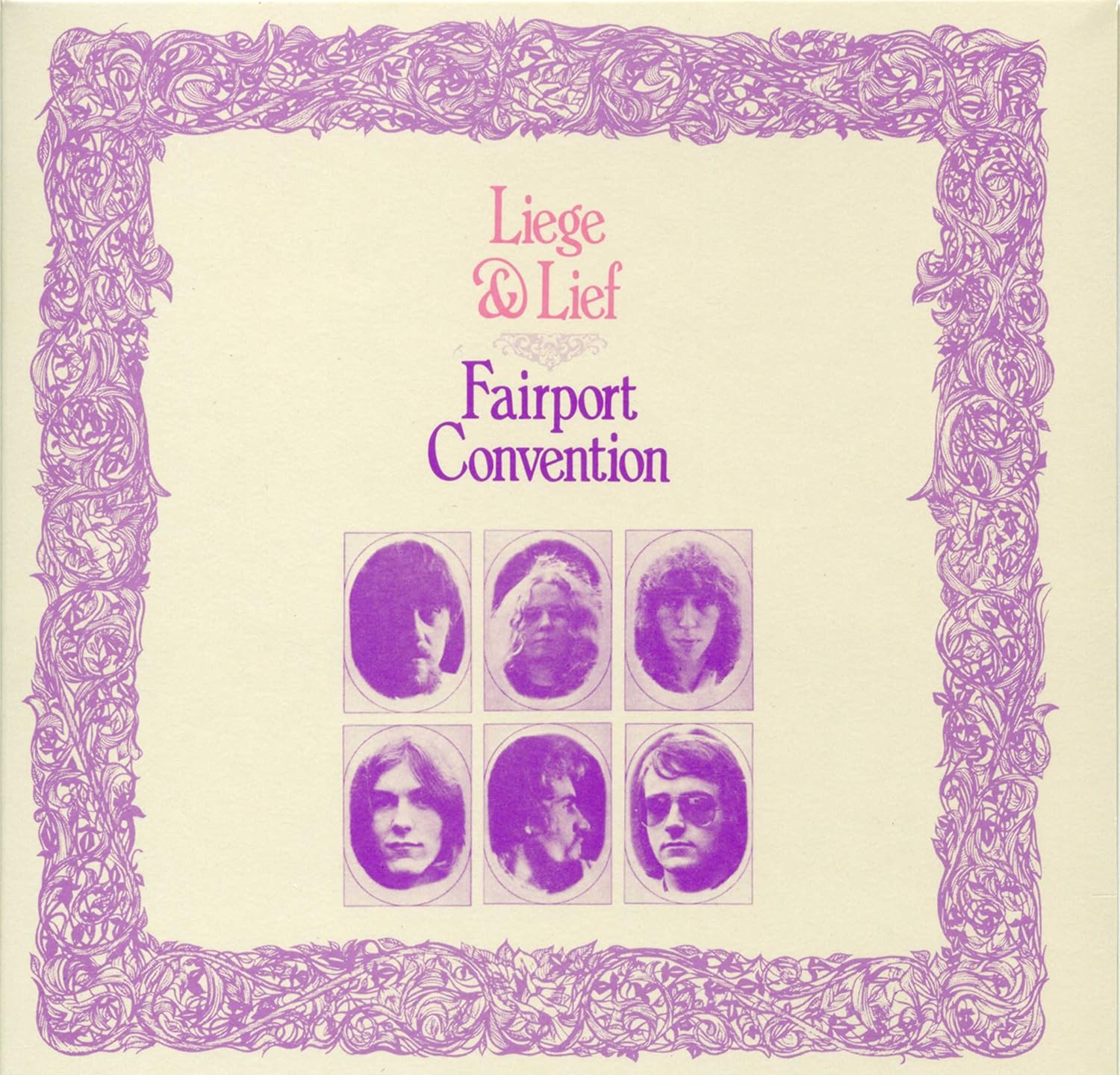
Fairport Convention generally have the tag of being ‘the all-time folk-rock band of Britain’ and deservedly so.
“They do in a very worthy sense have the right to be crowned the most important folk-rock band ever”
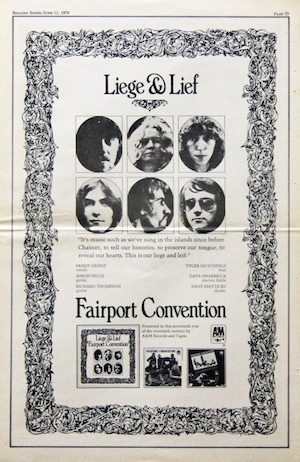
“They began with a much more American focus to their music, which is often forgotten. It was much less traditional than it became a few years later. They fell back more into being a traditional folk band, but with all the rhythmic and rock sensitivity that would come to them. Back in 1969, Liege & Lief was the seminal album which established British folk-rock as a distinct genre, separate to the hippy mysticism of America’s west coast or the earnest finger-in-the-ear traditionalism of the folk club purists. Paving the way for everyone from Steeleye Span to Lindisfarne, it mingled rock & roll attitude with a sense of indigenous history and myth that stretched back deep into folk memory.
In the first month of the 1970s. Fairport Convention had performed all be it miming, on the British TV institution Top Of The Pops in August 1969, and come within one place of the top 20, with ‘Si Tu Dois Partir,’ their French version of Bob Dylan’s ‘If You Gotta Go, Go Now.’
That helped the Fairports album it came from, “Unhalfbricking”, climb to No. 12 in the UK chart. Then, on 17th January, 1970, they entered the bestsellers with a follow-up that, like its predecessor, has become a folk music cornerstone: Liege & Lief, it was the group’s third album inside a year, after Unhalfbricking and before that What We Did On Our Holidays. All of that during a period in which a car crash claimed their original drummer Martin Lamble.
Sometimes it was difficult to tell traditional tunes apart from those written by the band. Although the supernatural epic “Tam Lin” and adulterous tragedy “Matty Groves” are plainly trad, the beautiful “Crazy Man Michael” was written by guitarist Richard Thompson and violinist Dave Swarbrick, while the melancholy “Farewell Farewell” is an old tune reworked with new lyrics — possibly in response to the fatal road accident on tour .
“Some of those members of Fairport did play with rock bands, including Dave Pegg who played with Jethro Tull, too. But they do in a very worthy sense have the right to be crowned the most important folk-rock band ever.
“I thought I might find something quirky, but I do have to go back to Liege And Lief because it’s the one that put them on the map. It’s the one you can’t escape, their biggie – their Aqualung, if you like!”
1. Come All Ye – 00:00 (Denny, Hutchings)
2. Reynardine – 05:02 (traditional – arr F C)
3. Matty Groves – 09:33 (traditional – arr F C)
4. Farewell Farewell – 17:44 (Thompson)
5. The Deserter – 20:24 (traditional – arr F C)
6. Medley – 24:50 (traditional x4 – arr Swarbrick, F C)
7. Tam Lin – 28:58 (traditional – arr Swarbrick)
8. Crazy Man Michael – 36:12 (Thompson, Swarbrick)
Sandy Denny – Lead Vocals Richard Thompson – Guitars Simon Nicol – Guitars Ashley Hutchings – Bass Guitars Dave Swarbrick – Violins and Viola Dave Mattacks – Drums and Percussion
The Who, My Generation: Super Deluxe Edition
This 5-CD, 79-track box set celebrating The Who’s debut includes the original mono album (newly remastered), a disc of mono bonus tracks (newly remastered) and a disc of stereo bonus tracks. It also includes a new stereo remix of the album originally released on iTunes in 2014 featuring new overdubs by Pete Townshend and Roger Daltrey using the same guitars and amps and the same type of microphones used on the original album. (Generation was first mixed to stereo for the 2002 reissue, but dropped many of the overdubs from the mono album – this new stereo mix recreates them). Finally, a disc of demos is included – which features three previously unheard songs: “The Girls I Could Have Had,” “As Children We Grew” and “My Own Love.” An 80-page book and six inserts top off this lavish set! The U.S. release for this box is set for December 9. It is available today in the U.K.
R.E.M., Out of Time: 25th Anniversary Edition
R.E.M.’s 1991 classic is revisited as a 3 CD/1 Blu-ray set, a 2-CD set, a 3-LP set, a single LP of the original album and as a digital download as part of the band’s new deal with Concord Bicycle Music. The box includes the original album on Disc 1 followed by nineteen demo tracks on Disc 2. The third disc contains a concert from Capitol Plaza Theater in Charleston, West Virginia performed on April 28, 1991 and aired on NPR as an installment of their Mountain Stage program. The Blu-ray has the original album both in Hi-Resolution Stereo and Hi-Resolution 5.1 Surround. It also contains 8 music videos and an 18-minute EPK which contains studio and performance footage. The new liner notes by music journalist Annie Zaleski features interviews with the band members and producers of the album. The 2-CD edition contains the first two discs of the deluxe edition and the 3-LP edition replicates those two discs as well.
Jethro Tull, Stand Up: The Elevated Edition
For the past several years, Jethro Tull has been releasing expanded editions of their albums featuring new remixes by Steven Wilson. Just under a year after the release of the last reissue in the series of 1976’s Too Old to Rock ‘n’ Roll: Too Young to Die!, here is a 2CD/1DVD version of 1969’sStand Up, entitled Stand Up: The Elevated Edition. Housed in a deluxe hardcover book-style package complete with a pop-up in the style of the original release,
Soundgarden, Badmotorfinger
This seven disc set – four CDs, two DVDs and a Blu-ray – expanded the rockers’ third album to staggering proportions. Astoundingly, much of Badmotorfinger’s deluxe content has never been released before. You get the remastered album, a disc of studio outtakes (with just one released track, a version of “New Damage” with Queen guitarist Brian May), a 1992 live set at Seattle’s Paramount Theatre on two CDs and a DVD, an additional DVD of live footage and music videos (including the DVD premiere of the Motorvision VHS) and the entire album newly remixed in 5.1 surround for Blu-ray. The battery-operated (!) box set edition also comes with a 52-page book, a 12″ x 12″ lenticular print, four 8″ x 10″ band member photo cards, stickers and an iron-on patch. More frugal fans can opt for a 2CD deluxe edition, 2LP 180-gram vinyl or just the original album remastered on CD.
Tori Amos, Boys For Pele: 20th Anniversary Edition
This expanded edition of Tori Amos’ third album, Boys for Pele, will feature new liner notes penned by Amos and a 21-track bonus disc of demos, B-sides and alternate versions, four of which (“To the Fair Motormaids of Japan,” “Sucker,” a remix of “Talula” and an alternate take of “In the Springtime of His Voodoo”) are previously unreleased. A double vinyl reissue of the original album will also be available.
Dungen – Haxan
Long before psych fests were springing up all across the globe populated by bands operating aesthetically in ever decreasing circles, Sweden’s Dungen were blazing a trail through the consciousness with psychic transmissions that connected the pastoral spirit of the late ’60s with the 21st century. Haxan however marks something of a departure for the band, having been put together to soundtrack Lotte Reiniger’s 1926 classic silent film – taking the demonic and haunting imagery as inspiration, the result is a standalone piece replete with wild freakout, eerie soundscapes and panoramic ambience, reflecting new horizons and underlining this visionary troupe’s enduring power.
The Drones. On their fifth album proper, I See Seaweed, the Australian five-piece engage directly with the weirdness of the contemporary Australian experience. Here songwriter and lead Drone Gareth Liddiard eviscerates the hypocrisy of Australia’s conservative politicians, narrative-based songs are located firmly in terra Australis: ‘They’ll Kill You’ is a paean for an ex-lover who has, like so many others, gone off to Europe in a vain attempt to escape her own flaws; ‘Nine Eyes’ sees Liddiard using Google Street view to observe the social economic damage wrought on his home town of Port Hedland by “cashed-up bogan” mine workers.
The Drones have always traded in this kind of fire-and-brimstone, but it’s never sounded quite this good. One of the most obvious improvements has to do with new full-time member Steve Hesketh, whose piano and keyboard work seems not so much to add startlingly new elements to the band’s songs but to allow them to develop their artier ambitions and perform their more technically difficult material live. This personnel addition bodes well for Liddiard’s songs, though, as the additional textural detail Hesketh provides allows the songs to rely less on bludgeoning loud/soft contrasts than in the past.
Perhaps the most significant change in I See Seaweed, though, is a softening of Liddiard’s previously dogmatic misanthropy, which is on display in both the album opener ‘I See Seaweed’ and its closer, ‘Why Write a Letter That You’ll Never Send’ has plenty of zingers, but the structure of the song reveals that they’re equally self-directed: supposedly an email from a friend Liddiard is reading “verbatim” (in rhyming couplets?), its chorus features Liddiard chiding his “friend”: “Why write a letter that you’ll never send?” he asks, reminding us that “everybody’s hurting / and their needs are always stark.” It may be too late to avert the coming disaster, but we need not revel in the end – I See Seaweed’s ultimate message is that we can wait out the apocalypse and make the most of what little time remains with decency, tenderness and humour.
In the same way Benji was about “death” and 69 Love Songswas about “love,” Camp Cope’s enthralling debut is an album about “shame.” There are dozens of times where Georgia Maq, leader of this Melbourne trio, recognizes the subtle way shame has goes viral in real time, tinting and tainting almost every one of her interactions: The discomfort and depression she feels after passing by a homeless man in the park, getting catcalled at a construction yard or busking in the streets. Each encounter is processed as a projection of her emotional state or payback for the original sin of having been born. Maq’s emotional intelligence is off the charts here, but in that aspect, she might admit she’s too smart for her own good.
On “Flesh & Electricity,” Maq exhales, “I’ve been desensitized to the human body/I could look at you naked and all I’d see would be anatomy,” like she just might sink so far into her couch that she disappears. When she modulates the chorus a few steps higher, she sounds even wearier; the effect is like watching someone force a smile in a crushingly repetitive job. It’s perhaps the saddest of Camp Cope’s eight songs because it was inspired by her actually trying to do good in the world; Maq worked as a nurse during the writing process of Camp Cope, but her altruism might have just been shame management: “My father says it’s atonement for my reckless years,” she says in “Flesh & Electricity.”
Camp Cope’s sound is, increasingly, the sound of indie rock today: a divergence from the too-cool VU–the Fall–Pavement lineage that embraces the effusive, empathic and emphatic qualities of emo, with some pop-punk (Tigers Jaw and UV Race are namedropped in “Stove Lighter,”WHY? is paraphrased in “West Side Story”) and a social awareness that negates any of the aforementioned’s previously questionable politics. You can tell from the stock chord progressions and loudly projected vocals that Camp Cope used to be Maq’s solo project, but if it’s folky at all, it resembles the superlyrical the Front Bottoms or the Mountain Goats rather than any roots music.
It’s a testament to Camp Cope’s unique magnetism that they never cheat towards the catharsis typically expected to balance out such heavy subject matter. They often use deadpan humor instead: “Jet Fuel Can’t Melt Steel Beams” references nutball 9/11 conspiracy theories, but uses it as part of a pattern where any authority condescends to you, whether it comes from the NRA (“the only thing that can stop a bad man with a gun is a good man with a gun”) or the victim-blaming inherent in most sexual assault investigations.
The most powerful moments on Camp Cope come when Maq shows a willingness to take some kind of power back after being talked down to her entire life, by parents, by teachers, by partners (“Hey, I was looking for a reason to leave and it’s you”), friends and peers in the punk community. There are no revelatory epiphanies for Maq, just valuable growth spurts that feel like acceptance. In “West Side Story,” Maq gets closest to the “survive and advance” thesis statement of Camp Cope: “It all comes down to the knowledge that we’re gonna die/find comfort in that or be scared for the rest of your life.”
The Rolling Stones are working on a blues-themed studio album, and we know for sure that Eric Clapton will be making a guest appearance on the disc.
Clapton “dropped by for a couple of numbers,” Richards told BBC 6 Music, adding that the recording sessions were lke “like old times down in Richmond.”No, he’s not talking about Richmond, Virginia; he means the CrawdaddyClub in Richmond, Surrey, England, where the Stones and Clapton’s old band, the Yardbirds, used to perform in the early to mid-Sixties.
The Rolling Stones confirmed that they were working on a new album at the launch of Exhibitionism, a career retrospective at London’s Saatchi Gallery, earlier this year. The sessions have included new material and several blues covers, including tunes by Howlin’ Wolf and Little Walter. Richards said the album would include “lots of Chicago blues” and would be released sometime “in the autumn.”
The Stones have circled back to the blues, with “Blue & Lonesome”, a (mostly) live-in-the-studio collection of 12 songs originally performed by the likes of Little Walter, Jimmy Reed and, again, Howlin’ Wolf. It’s the first Rolling Stones album to have zero Jagger-Richards originals; even their debut had a couple of attempts at songwriting. Recording Blue & Lonesome was easy – it took all of three days. “It made itself,” says Richards. As Ronnie Wood points out, however, it’s also the product of “a lifetime’s research, really.”
The freakiest thing about “Blue & Lonesome” is the extent to which Jagger and Richards agree on it. both are genuinely excited about the roots revival. The project might, from the outside, seem more like a Richards thing, the kind of retro move he’d favor, while Jagger The frontman says the stereotype isn’t all wrong, but that in this case, “we were all equally into it. I was as into it as anyone.”
“This is the best record Mick Jagger has ever made,” says Richards, always a fan of Jagger’s emotive harmonica playing, which flourishes on the new LP. “It was just watching the guy enjoying doing what he really can do better than anybody else.” He pauses. “And also, the band ain’t too shabby.”
Even after their early flurry of covers subsided, the Stones have never stopped playing old blues tunes, both onstage and, especially, in rehearsals. The 200 hours of Exile on Main Street sessions, for instance, were punctuated by repeated attempts at covers, meant to clear the air between the midwifing of new songs. Two of them Slim Harpo’s “Shake Your Hips” and Robert Johnson’s “Stop Breakin’ Down Blues” – made the 1972 album.
Jagger is finally ready to concede that the Rolling Stones have something to add to this music. “The thing about the blues,” he says, “is it changes in very small increments. People reinterpret what they know – Elmore James reinterpreted Robert Johnson licks, as did Muddy Waters. So I’m not saying we’re making the jumps that they made, but we can’t help but reinterpret these songs.
This past December, the Rolling Stones gathered in Mark Knopfler’s British Grove Studios in West London to begin work on a batch of original songs. Jagger is deliberately vague on the nature of those tunes. “I hope it’s gonna be a very eclectic album,” he says. “I hope some of it’s gonna be recognizable Stones and some of it’s gonna be some Stones you never heard before, maybe.”
Knopfler’s studio is gorgeous, equipped with an ideal mix of vintage and modern equipment, with high ceilings and gleaming blond-wood floors. It was also a totally alien environment for the Stones. says Richards. “I know that recording new music in a room they’re not familiar with, there’s sometimes going to be weeks before the room breaks in.” So Richards told fellow Stones guitarist Ronnie Wood to learn Little Walter’s apocalyptically mournful 1965 B side “Blue and Lonesome” as a potential icebreaker (Wood remembers this suggestion coming in by fax, well before the sessions).
By the second day at British Grove, Richards felt his prediction coming true. “The room is fighting me,” he recalls thinking. “It’s fighting the band. The sound is not coming.” He suggested “Blue and Lonesome,” Jagger dug up a harmonica in the right key, and the band barreled through two quick takes. “Suddenly,” says Richards, “the room is obeying and there’s something happening – a sound is happening and it was so good.”
One of those two takes ended up on the album, and it’s extraordinary, with Wood playing frantic lead; Richards hitting huge, doom-y chords; Watts nailing the original track’s regally restrained drum part; and Jagger digging deep on his harp when he’s not delivering one of the least-mannered vocals of his career. “Baby, please, come back to me,” he pleads. Afterwards, Jagger – who says he had already been pondering a Stones blues album – surprised everyone by calling for more covers. That night, he went to his MP3 collection, returning the next day with more song ideas.
And in keeping with the serendipity of the endeavor, a special guest showed up. On the first day, Eric Clapton happened to be mixing an album of his own at British Grove when he poked his head into the Stones‘ live room. The guitarist, who had seen the RollingStones playing blues gigs when he was still in his teens, was taken aback. “Eric walked in, and he had the same reaction that any fan would have,” says Was. “He was just gobsmacked at being that close to something that iconic and powerful. There was this great look on his face.” They asked Clapton to jam on two songs, and he ended up picking up one of Richards‘ guitars, a semihollow Gibson, instead of the Strats he’s mostly played post-1970 – which helped him reclaim the fat tone of his Bluesbreakers days: You can hear the band applauding him at the end of “I Can’t Quit You Baby.”
It all happened so quickly and naturally that the band never really discussed what it was doing, or even acknowledged it was making an album. “I didn’t even have time to change my guitar,” says Wood. “They were coming so thick and fast. It was like, ‘OK, let’s do it – this one, that one.’ Some of the harder riffs were making my fingers bleed, and Mick was going, ‘Come, let’s do it again, then!’ And we’ll go, ‘Hang on! My fingers!’ It was real hard work, but I love it.”
For Jagger, it was a chance to indulge his blues-harp habit, a subject that arouses an incongruously geeky enthusiasm in him. “If I had known I was gonna have to do this,” he says, “I would have spent a few days practicing, because sometimes I do that, sit at home and play. It’s quite easy, really; I mean, you just put on whatever, a whole bunch of Muddy Waters records.” (Muddy “Mississippi” Waters – Live, a 1979 LP featuring Johnny Winter, is one of Jagger’s favorites for this purpose.)
Jagger’s vocals are also striking in their authority. The camp he once brought to the genre is gone, replaced by something darker and deeper, perhaps reflecting the weight of real-life losses. “You can put yourselves inside the songs as a 70-year-old,” says Was, “in a way that you couldn’t when you were 21, because you hadn’t experienced the stuff.”
“On some of these, I sound quite old,” Jagger counters, “and on some of them, I don’t. Some of it sounds like when I was in my twenties doing this stuff. I didn’t really mean it to sound like that. I was supposed to be more mature!”
In October, as the Stones stepped onto the Desert Trip stage in Indio, California, some thoughts crossed MickJagger’s mind. “It was 30 meters wider than our normal stage,” says Jagger, “which is quite wide, by the way, which I usually run. And I heard that nobody else went out there, apart from me.
Though Jagger blames the dusty field for a recent bout of laryngitis – and he originally questioned the idea of a festival of “old, over-70 white English people playing all the same music” – the band had a good time at Desert Trip, treating it as a sort of boomer-rock class reunion.
The Stones are discussing more shows next year, and they really do intend to work on that album of originals. “There’s about 10 or 12 new songs that Mick actually has been cooking up,” says Wood, “and Keith’s got the odd one, too.” Richards suggests that at least some of the songs might be unfinished compositions that date back 15 years or more. Keith Richards is trying to persuade them to do some recording, which may be a stretch. Jagger is positive they’ll finish that album, “but I don’t know when, because you want it to be really good and everything.”
At 75, Watts is the oldest band member, and also happens to have the most physically demanding job. Understandably, he struggles with back pain, according to Wood. It’s unclear what the Rolling Stones would do without him, and that’s a prospect Richards refuses to contemplate. “Charlie Watts will never die or retire,” Richards says. “I forbid him to.” Richards knows exactly how he’d like to go, and he’s sure that doctors will want to have “a good look at the liver” when he does. “I’d like to croak magnificently,” he says, savoring the prospect. “Onstage.”
Blue & Lonesome sees the Rolling Stones tipping their hats to their early days as a blues band when they played the music of Jimmy Reed, Willie Dixon, Eddie Taylor, Little Walter and Howlin’ Wolf – artists whose songs are featured on this album.
The tracks are – ‘Just Your Fool’, ‘Commit A Crime’, ‘Blue And Lonesome’, ‘All Of Your Love’, ‘I Gotta Go’, ‘Everybody Knows About My Good Thing’, ‘Ride ‘Em On Down’, ‘Hate To See You Go’, ‘Hoo Doo Blues’, ‘Little Rain’, ‘Just Like I Treat You’, ‘I Can’t Quit You Baby’.