Archive for the ‘CLASSIC ALBUMS’ Category

Best albums of 2016 Iggy Pop - Post Pop Depression

On his awesomely gnarled 17th solo album, On Post Pop Depression and a worthy addition to the 22 album legacy spawned with the immortal trilogy of The Stooges, Fun House and Raw Power Iggy Pop deliberately uses the strength of his sound to summon something more than temporary wrath … for one last time. Whether announced or not, every legendary artist will have a final album. spanning massively influential solo outings including 1977’s opening 1-2 combo of The Idiot and Lust For Life, and 1990’s gold-certified Brick By Brick.

Here he plays the low-rent elder statesman, “America’s greatest living poet/Was ogling you all night,” he sings modestly on “Gardenia,” addressing a girl “much taller and stronger” than he, with an “hourglass ass” and a “powerful back.” (What woman wouldn’t be flattered?) His sinewy visions are shaped by producer Josh Homme and Dean Fertita (bunkmates in Queens of the Stone Age), and Matt Helders, the hip-hop-snappy drummer with the Arctic Monkeys. Over nine songs and 42 minutes – old-school LP length – they juggle tight and loose, conjuring a ravaged cadaver in a sharp funeral suit.

The former Stooges frontman and Josh Homme teamed up to rage at the dying of the light, funneling the power of its members’ pedigrees and boasting a high-volume homage to Pop’s past. “To really make a real album, you really have to put everything into it,” Pop commented. He scrapes up every last bit of his power, infusing songs like the bone-dry “American Valhalla” and bruised sunset “Paraguay” with a timeless snarl.

General consensus has it that the hardships of life on the road is far from the most compelling of subject matters for an album. Singer Songwriter MC Taylor – the North Carolina-based songwriter, singer and guitarist operating with a rotating cast of collaborators under the Hiss Golden Messenger guise – delivers compelling evidence to the contrary on Heart Like A Levee, by some distance HGM’s finest record so far.

M.C. Taylor’s sixth album as Hiss Golden Messenger is arguably his best. While 2013’s Haw served as the band’s initial breakthrough and 2014’s Lateness of Dancers brought about late night revelry (featuring Sylvan Esso  Amelia Meath and Reggie Pace from No BS! Brass Band) on Letterman ,

Heart Like A Levee serves as a deeper incarnation of those predecessors. The album is steeped in the duality of leaving one of his greatest loves in life—his family—only to venture off into the world to embrace his other love—music—and exemplified in the gutting title track and “Cracked Windshield.” Yet, Heart Like A Levee reconciles with a singular musicality. Multi-instrumentalists and brothers Phil and Brad Cook have finally perfected the Hiss Golden Messenger sound by balancing the meandering guitar noodling and reverberating Wurlitzers worthy of a jam band breakdown with Taylor’s acoustic Americana foundation

Hiss Golden Messenger, AKA MC Taylor.


The Who announce that 5 UK dates scheduled for April 2017 will include a performance of classic album Tommy in full.
The Who have confirmed they will play 1969 album Tommy in full on their 2017 UK tour.
After postponing five UK dates this year, The Who rescheduled them for April and have now revealed they’ll perform Tommy live in its entirety for the first time since 1989.

They say: “The Who are incredibly excited about performing Tommy and more in April 2017! Marking the first time that the band will play Tommy in full since 1989, it will be a truly unforgettable tour.”

The Tommy element of the shows will include a new video segment produced specially for these gigs.
As well as Tommy, Pete Townshend and Roger Daltrey’s band will play a set of their greatest hits and some lesser known tracks. The Tommy & More dates follow two shows at London’s Royal Albert Hall on March 30th and April 1st, at which they will also play Tommy in full.

Frontman Daltrey recently said he felt rock had “reached a dead end.” The tour has been especially reinvigorating for Pete Townshend, who has for years found playing live increasingly dull. But in the last few weeks of the run – originally dubbed “The Who Hits 50!” and later revised to “Back to the Who Tour 51!” Townshend is looking forward to getting back on the road and, for at least two shows, changing up the set list. On March 30th and April 1st, the Who will present the rock opera Tommy live in its entirety for the first time since 1989 at a benefit gala for Teenage Cancer Trust. The band’s website claims it will be acoustic but, as Townshend says below, that may not be the case.

He said: “The sadness for me is that rock has reached a dead end. The only people saying things that matter are the rappers and most pop is meaningless and forgettable.


The Leaf Library – Versions , When a band releases 3 versions of the same album, I usually let out a big sigh. We see it far too often: Remastered, reissued, special edition, live version, demo version, 20 year anniversary edition etc…
The Leaf Library is one of the few bands that can make 3 versions of one album, and still make it really interesting and highly creative. The three versions, “Daylight versions” (the original, full band album, – a wonderful release), “Nightlight versions” (an instrumental, droney, ambient version of the original) and now “Versions”, where we find 9 remixes of the songs on the album. Each one adds a new flavour to the original songs, and they are all very good.

http://

On “Versions” we are presented with great remixes from artists like Cavern of Anti-Matter, Firestations, Deerful, Hong Kong in the 60s/A Taut Line,  Bit Cloudy, Hood and more. This is something rare, – a remix album with lots of different remixers, that still sounds like a consistent album where all songs have a similar feel and atmosphere.
A very pleasant and interesting listen.

Daylight Versions is a gorgeous album of woozy, drone-pop tunes about meteorology, the seasons and the incoming sea.
From songs about the ghostly Suffolk coastline to the slowly rising waters of London marshes, these ten tracks channel the warm fuzz of Yo La Tengo, the spacious repetition of Talk Talk and Movietone’s seaside melancholy to beautiful effect.

http://

Matt Ashton – guitar, percussion, sonar piano, synth
Kate Gibson – vocals, synth, piano
Gareth Jones – bass, baritone guitar, percussion
Ben Smith – guitar, synth
Lewis Young – drums, synth, percussion

The Leaf Library make droney, two-chord pop that’s in love with weather, the seasons and buildings.

Image result for nadia reid

New Zealand songwriter Nadia Reid’s debut album begins with the kind of Zen-like certainty that only comes after taking stock. “When I hit the ground in all my glory/ I will know where I have come from,” she sings on “Runway”, its opening track. Listen to Formation, Look for the Signs finds the 24-year-old Aucklander dissecting a relationship whose end illuminates new layers of failure and hidden motives with each re-examination. Reid’s outlook on love may be hopeless, but her blunt words are cocooned by the warmth and unusual hookiness of the varied arrangements.

Listen is a soothing, folky Americana album that recalls the work of Laura Marling and Gillian Welch. Reid isn’t reinventing anything, in other words, though Listen is itself more inventive than many records of its ilk. Its main mode is a kind of glowering hush made up of gentle acoustic guitar, glints of pedal steel from Sam Taylor, and Richie Pickard’s glacial double bass, very occasionally chased by Joe McCallum’s spindly drums. The band changes the pace with waltzing rhythms that evoke rural dance halls (“Just to Feel Alive”), or pare back the already-ghostly instrumentation to let Reid’s nimble voice come to the fore (“Ruby”).

The stormy weather of “Reaching Through” is broken up with sparkling, ascendent layers of Reid’s voice and strings; the bowed guitars and clanking metallic chords of “Seasons Change” .  The gorgeous “Call the Days” marries the poppier sensibility of Reid’s heavy songs with the grave palette of her more candlelit numbers. Throughout, she shapes her words into characterful, sticky hooks, which feels rare for this genre of music.

Not to underestimate the experiences behind Reid’s lyrics, but the loss of faith that unravels throughout the record comes off a little grave, reminiscent of those fogged post-heartbreak moments where it’s impossible to believe you’ll ever be happy again—the kind you look back on and laugh. And some of these songs are seven years old, written in her teens, which may explain why love is a “fiery black disease” and delusion, marriage is a convenience, and she can’t even believe other people’s happiness. “Bittersweet I am when it comes to young love,” Reid sings on “Ruby”,

But there are also beautiful, revealing turns of phrase: on “Reaching Through” Reid admits, “If I am bound for something, honey won’t you know, that I always take the shortest fucking road.” “Seasons Change” sneaks a crushing truth into the lifespan of a relationship: “It’s good to love a heart who surely understands/ The coming of the day/ The beauty of the land/ The act of being sorry/ The breaking of a man.” “Call the Days” feels like the resolution to all the heartache and anger, Reid declaring, “I threw out my winter coat/ I cut the sleeves off all I’d known.” Although by no means the finished article, Reid’s acute understanding of where she’s been sets her up nicely for what happens next.

http://

Listen to formation, Look for the Signs was recorded in July 2014 at the Sitting Room in Lyttelton, New Zealand. Players on this record were Richie Pickard, Sam Taylor, Joe McCallum and Anita Clark.

Image of Thee Oh Sees - An Odd Entrances

From the same misty mountaintop tape spool as August’s A Weird Exits, Thee Oh Sees bring the companion album An Odd Entrances.

Delving more towards the contemplative than the faceskinning aspects of its predecessor, this sister album is a cosmic exercise en plein aire with John Dwyer and company double-drum shuffling, lounging with cellos, following a flute around the groove, and spooling a few Grimm-dark lullabies along the way. Lurking in the grass are a snake or two, like the celestial facing instrumental buzz of “Unwrap The Fiend Pt. 1.”…But for the most part this is a relatively hushed affair, a morning rather than evening listen.

The band plans on donating half their profits from the first pressing to Elizabeth House, a local charity in Pasadena that specifically helps homeless women with children get back on their feet.

Image of Public Service Broadcasting - Live At Brixton

Public Service Broadcasting are pleased to reveal the release of a double LP/CD live album of their sold-out performance at Brixton Academy from ‘The Race For Space’ Tour, recorded on 29th November 2015. A taster of this release can be viewed here as the band perform their celebration of the moon landings with crowd favourite, ‘Go’ https://youtu.be/y8rNlFYRcgs

“We first talked about the possibility of a live album and DVD a long while before Brixton and I have to confess that I ruled it out almost immediately” says frontman J. Willgoose, Esq. “I was persuaded over a few months, though, by both the reaction on the night – which was overwhelming – and of those who watched the stream as it went out live, that something special had occurred and it truly was worth documenting. Brixton had been a dream of mine ever since seeing the Manics there on their Everything Must Go tour many moons ago. Playing there as Public Service Broadcasting, and selling it out, was something I never even thought of as a possibility. It’s my favourite venue in the world and we wanted to make it a show to remember.”

The show features arena-level production crammed onto the Brixton stage with a 13- piece choir, 5-piece string section, expanded brass section, a longer set list, Smoke Fairies guesting on Valentina, a surprise special guest, dancers, pyrotechnics and more as the London-based band wow a hometown crowd with a very special performance. The release will be accompanied by a DVD filmed on the night along with an audio commentary from the band and bonus features.

Unknown1

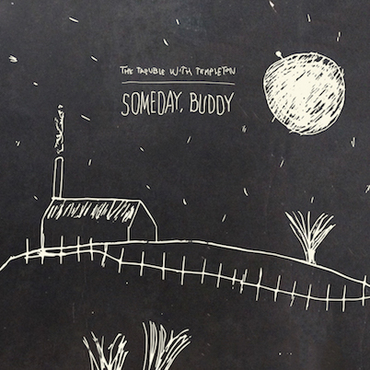
In the two and a half years since the release of their last album Rookie, Brisbane’s The Trouble With Templeton have, says frontman Thomas Calder, been busy “breaking down and re-assembling what it means to make music for us.” On the evidence of the richly confident and clear-sighted Someday, Buddy, released through Bella Union, that time was well spent. The full-bodied songs here can take the emphasis, no trouble. The Trouble With Templeton weren’t slouching on Rookie, where Calder and company wedded vibrant melodies and multifarious alt-rock flavours – epic, jangly, glam – to a core of emotive cogency. On Someday, Buddy, however, their personality emerges sharper and clearer. “Our goal was to make a record that is raw, bare and honest,” says Calder, a claim borne out by the incisive lyrics of the swelling Sailor and lilting Heavy Trouble, where Calder’s falsetto dances over a tender indie folk backdrop. Sometimes fragile, sometimes forceful, Calder’s voice remains a marvel on Bad Mistake, a combination of intricate verses and a huge chorus pitched somewhere between Pavement and Elliott Smith. Someday, Buddy’s recipe is one of slow burn songs harbouring great reserves of potency: the discreet neo glam swagger of Complex Lips, the sunburst chorus of Vernon, the gorgeous ripples of album highlight 1832.

The last shadow puppets the dream synopsis ep packshot


The EP was recorded live in one day at Future-Past Studios, Hudson NY and features new versions of album favourites ‘Aviation’ and ‘The Dream Synopsis’ alongside a selection of cover versions, first heard live during The Last Shadow Puppets’ summer touring. Expanding their trademark rawkous rock sound with a swagger and confidence rarely heard though their short but illustrious career, this is a bold and enthralling expansion of their already venerable sonic palette.

Image of The Rolling Stones - Blue & Lonesome

Their first studio album in over a decade. Recorded in just three days in London, England, this is an album full of their passion for the music that has always been at the heart and soul of the band – Blues.

Recorded in three days in December last year at British Grove Studios in West London, just a stone’s throw from Richmond and Eel Pie Island where the Stones started out as a young blues band playing pubs and clubs. The credits say it all, in the way this project was approached to play live in the studio without overdubs. Mick Jagger (vocals & harp), Keith Richards (guitar), Charlie Watts (drums), and Ronnie Wood (guitar), plus their long time touring sidemen Darryl Jones (bass), Chuck Leavell (keyboards) and Matt Clifford (keyboards). For two of the twelve tracks the Stones were also joined by old friend Eric Clapton.

‘Blue & Lonesome’ sees the Rolling Stones tipping their hats to the blues roots with tracks of intense spontaneity. It’s hard to believe that this is a record made by musicians in their sixth decade of recording. In their very early days the Stones played the music of Jimmy Reed, Willie Dixon, Eddie Taylor, Little Walter and Howlin’ Wolf – artists whose songs are featured on this album.

Image of Various Artists - The Reverb Conspiracy Volume 4

Reverb Conspiracy Vol. 4 is a collection of 12 tracks from some of the best in Europe’s unfathomably fruitful psych scene – offering a plethora of gems of the rock and roll, kraut, shoegaze, folk and garage-rock variety, and just about everything in-between. The highlights of the record include the dark, discordant ‘krautgaze’ of My Invisible Friend, the mammoth 15 minute spaced-out jam from Giobia, the ominous and mind-altering Ulrika Spacek and the kaleidoscopic splendor of Josefin Ohrn + The Liberation. Volume 4 also boasts immersive cuts from the likes of The Madcaps, Soft Walls, Pretty Lightning, The Oscillation and Fuzz Club’s own otherworldly psych juggernauts TAU, 10000 Russos, The Orange Revival and Throw Down Bones – each and every track is a piece of experimental sonic mastery in its own unique and distinct right.

Fifty years ago, an album arrived that changed the way we hear rock music and made improvisation the test of credibility for rock bands. The album was, “Fresh Cream”. When it appeared, on December 9th, 1966, it inspired a rush of new terms, including “supergroup,” “power trio,” “jam rock,” and “drum solo.”

In ‘1966 it was all new, and all due to a band named Cream, which had formed just six months earlier. They arrived with a significant pedigree,The members from London’s early-to-mid ’60s blues and jazz scene. The bands that provided Cream’s ingredients—The Yardbirds, John Mayall’s Bluesbreakers, and the Graham Bond Organization—each had elements that suggested what the bold new band would become.

The resumes of Cream’s players, account for the first of their new catch-phrases “Supergroup”, though their previous, individual star power hardly qualified as “super.” Two of the band’s members—drummer Ginger Baker and bassist/singer Jack Bruce had far greater recognition among serious music listeners than casual pop fans. Guitarist Eric Clapton was the most renowned, for his work with both The Yardbirds and John Mayall’s Bluesbreakers. But because he ditched the former act before they scored their U.S. run of hits (like “For Your Love”), he had scant Stateside fame. Even so, the whole of the band added up to more than its parts, fueling enough buzz to birth the “supergroup” tag.

Fresh Cream featured originals like “N.S.U.,” “Dreaming,” and “Sweet Wine” plus American blues standards like Robert Johnson’s “Four Until Late” (sung by Clapton), Muddy Waters’ “Rollin’ and Tumblin’,” Willie Dixon’s “Spoonful” and Skip James’ “I’m So Glad.” Non-LP single “I Feel Free,” added to U.S. pressings of the album, would become the group’s biggest hit single in their native U.K.,

The super deluxe Fresh Cream offers three CDs and one Blu-ray Audio with a treasure trove of extras. In addition to mono and stereo mixes of the original U.K. album, the set includes a myriad of mono single and EP material (including two ultra-rare French mono EPs), seven brand-new stereo remixes of album tracks and ten unreleased outtakes, and four complete and unedited BBC session appearances in 1966 and 1967. The Blu-ray Audio features 24/96 KHz high-resolution mixes of the U.S. album running order in stereo and mono, plus U.K. album track “Spoonful” and non-LP tracks “Wrapping Paper” and “The Coffee Song,” also in stereo and mono.

This new edition is packed in a gatefold slipcase with a 64-page hardcover book featuring liner notes written by David Fricke. (The outer slipcover features the U.K. design of the album front, while the inner package features the slightly altered U.S. cover.)

Cream’s having just three players pared the sound down far enough to provide new rhythmic, and spatial, possibilities. The spareness of the instrumentation left extra room between the players, giving the music space to swing while also highlighting the contributions of each participant. The “power trio” dynamic make it easier to isolate and appreciate each star’s technique the set-up provided a generous enough platform for each player to encourage the third and fourth terms Cream presaged—”jam-rock” and the drum solo.

From their previous jazz flirtations, Cream’s players had plenty of experience with soloing. But for the new band, they brought the full expanse of jazz jamming to the chordal structures of the blues. Solos often became the focus of the song, In the process, Cream made improvisation the test of credibility for rock bands, as well as an integral part of the song rather than a mere elaboration or time-killer. The tracks’ longer lengths allowed listeners to bore further into the music, losing themselves entirely.

The band’s expansive solos mirrored the wanderings of the blissfully altered mind. Cream’s specific approach to soloing brought to rock a new density. The musicians often solo’d at the same time, allowing Bruce’s bossy bass line to wend in one direction while Clapton’s wild guitar wandered in another. The result created as many complex and exciting interactions as messy and indulgent ones. While Clapton later denounced Cream’s “all-at-once” approach as a result of sloppiness and ego, in fact it gave the band a sense of tension and dimensionality that remains unparalleled.
Cream’s solo-centric style found its clearest expression in the drum cadenza, created by Baker for the instrumental track Toad. Ginger Baker infused his work with more freedom and complexity. After hearing “Toad,” every serious drummer in rock pined for a showcase, inspiring drum breaks ranging from the cogent (Led Zeppelin’s John Bonham in Moby Dick) to the clunky (Ron Bushy in Iron Butterfly’s In-A-Gadda-Da-Vida). Eventually, this led to 15 minute live smack-downs which did more to pack concert hall bathrooms than did the beer its patrons quaffed.
Cream themselves indulged “Toad” to a greater degree on their 1968, half-live double set Wheels of Fire. It boasted a sixteen minute-plus elaboration of the song, hogging an entire side. If “Wheels” found the band in full jam-band mode, “Fresh Cream” presented a more tentative, and terse, manifestation of that mission. Like many debut works, it was more about potential than fulfillment. The lengths of the songs remained clipped by the band’s later standards. Only two tracks exceeded the five minute mark. The longest, Spoonful, offered a six and a half minute riff on Willie Dixon’s blues classic, starring Clapton’s shimmering dips and dives.

Other songs seem unformed, like the meandering waltz Dreaming, the campy bauble Wrapping Paper (included on international editions) or the indifferent run at Robert Johnson’s Four Until Late.
At the same time, the album’s opening track, I Feel Free, idealized Cream’s deliverance from the bonds of their previous bands. In the process, songs like the flamboyant N.S.U., or the swaggering Sleepy Time Time, provided a blueprint for all ’60s psychedelic blues-rock bands to come. ‘Fresh Cream’ became the test-run for groups as seminal as The Jimi Hendrix Experience, the Jeff Beck Group and Led Zeppelin.

Cream itself would go on to create more fully realized works, like 1967’s Disraeli Gears, which perfected their flower-power pop side, or the aforementioned ‘Wheels of Fire,’ which captured them in their full frenzy. But before all that came ‘Fresh,’ a work which forever changed rock’s sound, configuration, vocabulary and goals.

After taking some time away from each other to concentrate on solo projects, the members of Los Angeles band Warpaint released their album back in September with a new album, Heads Up.

“I feel really proud of what we made—almost surprised and shocked,” bassist Jenny Lee Lindberg . “When we were making it, I was like, ‘I wonder what this is going to sound like? How’s this going to come together?’ I love the way that it came together so nicely. I feel so proud of it, and like it’s an evolution of our band. It sounds like a mature version of Warpaint.”

Heads Up is Warpaint’s third full-length album and first since 2014’s self titled album. Late last year, Lindberg released Right On.  After a solo record under the name jennylee. In addition, guitarist/singer Theresa Wayman formed Boss with Sarah Jones and Guro Gikling  and put out a single called “I’m Down With That.” Another member of Warpaint, Emily Kokal, appeared on songs by Saul Williams and Paul Bergmann.

Warpaint played a handful of European festival dates during the August period. When the hazy LA rockers released ‘New Song’ in early August, it was a complete surprise: Warpaint does pop. There’s more where that came from on third album ‘Heads Up – ‘By Your Side’, ‘So Good’ – but they still remain true to the moody atmosphere of their previous work elsewhere.

Warpaint, ‘Heads Up’ Track Listing

1. “White Out”
2. “By Your Side”
3. “New Song”
4. “The Stall”
5. “So Good”
6. “Don’t Wanna”
7. “Don’t Let Go”
8. “Dre”
9. “Heads Up”
10. “Above Control”
11. “Today Dear”


In tech jargon, a “flood network” is a system of nodes that handle data overflow. Similarly, Katie Dey’s Flood Network is a system of songs that handle emotional spillover. Dey’s uncomparable production teems with life, and her lyrics — when you’re able to make sense of them — are small, life-affirming bits of prose that you can carry with you into the next day when simply existing feels impossibly hard. Flood Network sounds like nothing that was released this year; it’s glitchy, weirdo pop music for introverts, the work of someone who rejects convention and lets true ingenuity guide her process.

http://

PUP - The Dream Is Over


This quartet of childhood friends play a highly infectious propulsive brand of punk rock. There’s a touch of At The Drive-In in their unrelenting use of anthemic group vocals, but these guys are a lot more fun than the El Paso legends.  Their humble claim that they are, “4 dudes who play punk rock. That’s all,” belies the ambitions of their self-titled debut album, released via Side One Dummy Records, which deftly and effortlessly explores indie, classic rock and punk. Aptly, the moniker PUP is an acronym for Pathetic Use of Potential, and their lyrics largely deal with the lethargy and desire to escape that are synonymous with the dichotomies of youth.

The Toronto punk band open their second album, The Dream Is Over, with “If This Tour Doesn’t Kill You, I Will,” a portrait of punk rock van life that’s darker and nastier than any I’ve heard at least in song. These guys are waking up on the same living-room floors for months on end, hearing each other tell the same jokes over and over again, wearing on each other’s last nerves. And it’s gotten to the point where every new van haul feels like a prison sentence. “Everything you do makes me wanna vomit / If this tour doesn’t kill you, buddy, I’m on it,” frontman Stefan Babcock hollers. And then: “You think you’re so original / I can’t wait for your funeral!”

http://

If you’ve ever been in a touring band, or been friends with someone who is, then some of this might ring true. It sounds fun — packing all your shit in a van with your friends, leaving your life behind for a few weeks, playing loud music for strangers, seeing the world. But every dream job eventually becomes a job, and this one happens to be a low-paying, transit-heavy, privacy-annihilating dream job. If you talk to enough people in bands, and if they’re willing to puncture your romantic image, you might learn that  for instance  going to Europe sucks because nobody has good weed and because you’re always dealing with customs people.

And yet the way PUP play the song, it still sounds fun. PUP have levels of on-record energy that I’m just not used to hearing in 2016 — from a punk band or from any other sort of band. They play with a rocketing urgency, charging headlong into every chorus with guns blazing. They’re unapologetic disciples of the whole EpiFat sound — the ’90s variation on melodic California pop-punk that briefly conquered the world. And they play it like it’s new, that combination of all-out speed and sugary melody and snot-rocket sarcasm. Babcock’s voice is a passionate nasal harangue, and every time they get the chance, his bandmates join in on some gang-shout singalong shit. They’ve also learned from emo and post-hardcore and fuzzed-up revivalist Japandroids-style indie rock, with all these chords crashing and dynamics switching up in profoundly satisfying ways. The Dream Is Over is a short album, just a hair over half an hour, and it never lets up. That’s good.

But while the music is hurtling along, Babcock is putting all his energy into making twentysomething life sound like a living hell. “If This Tour Doesn’t Kill You” is the only song that explicitly addresses the day-to-day realities of being in a band, but the rest of the album is all about that stage of life, how much it can fucking suck. When you get past that time, it takes on a rosy glow, but when you’re in it, the puke-sticky floors and day-long hangovers and warning-your-account-has-dipped-below-$25 emails seem like they’re never going to end. Again and again, Babcock sings about himself as a drunk loser who can’t keep a relationship together — partly, at least, because so many of his relationships are with other drunk losers. “I’m sick and tired of blacking out on my carpet / And waking up all alone / So I brought you home,” he wails. Then, later: “I can’t stand you trying to save me / It’s so fucking frustrating.” And nothing drives him more nuts than the people who express concern over his wellbeing, to the point where his most self-deprecating line almost registers as a gloat: “They used to say, ‘Don’t quit your day job!’ / Guess what? I never had one!”

List Ten New Toronto Bands

Before the band recorded the album, Babcock went to see a doctor because his throat was hurting. The doctor told him his vocal cords were damaged and that he’d have to stop singing. That’s where the title came from; the doctor actually told him, verbatim, “The dream is over.” Babcock, of course, decided that no, fuck that. If anything, he’s yelling even louder on The Dream Is Over than he was on PUP’s 2013 debut. But you get the sense, listening to the album, that this whole thing could end anytime. His voice could just give out on him completely, and he knows it. So he’s packed all his angst and anxiety into one furiously fun 31-minute album, knowing that it could well be his last. And more than any rock album I’ve heard in a long minute, he sounds like he’s saying things that he absolutely needed to say. Sometimes, you see, your own body and your own friends can seem as malicious as a pack of machete-wielding white-nationalist skinheads. And sometimes, you just have to yell about it.