Archive for the ‘CLASSIC ALBUMS’ Category

See the source image

Another delicate and devastating piece of music from the pen of Big Thief’s Adrianne Lenker. Her deeply affecting, evocative lyrics are potent as ever on the Brooklyn band’s third album, and the music has that same free and unencumbered spirit as their best work in the past.

Adrianne Lenker is here for the journey. On rare breaks in her touring schedule, she travels. It’s a willing itinérance that confirms the singer-guitarist’s rapport with the unknown. “I’ve become very translucent,” she says. “I allow things to pass through me, rather than feeling them hit me, like a defense mechanism.”

Lenker and her band Big Thief has built their reputation on a transcendent live show, where the boundaries between performer and audience evaporate in the wake of Lenker’s vulnerability, words sprouting from her harrowing and beautiful depths. The folk-steeped indie-rock quartet has toured relentlessly since their 2016 debut Masterpiece and its 2017 follow-up Capacity became hits for Saddle Creek, playing hundreds of shows across North America, Europe, and Australia.

“I’m living out of my truck,” Lenker explains. Speaking from that vehicle, parked outside a café in Los Angeles, Lenker explains that life without a permanent home is freeing, but also has its drawbacks. “I’m driving this truck, and it’s a gas guzzler,” she says. “If I could afford it, I’d get an electric car, and I’ve been thinking about converting this one.”

The band’s third album, U.F.O.F., marks their debut for indie stalwart 4AD. Recorded with long time producer Andrew Sarlo at Bear Creek Studios near Seattle, the record showcases the locked-in nature of the band whose communal instinct has been honed by the intimacy of its live show, and the tacit bonds formed from an aggressive touring schedule. Capturing this spirit was essential in the recording process, and the band largely played live in a cozy, rustic room.  Big Thief, which includes guitarist Buck Meek, bassist Max Oleartchik, and drummer James Krivchenia. The group will live here together for a month, and eat, sleep, and rehearse for their upcoming tour. But today, the mountaintop hideaway is Lenker’s alone—one in a long line of interim homes for the songwriter, who ditched her Brooklyn apartment three-and-a-half years ago in exchange for a life on the road. “We basically set out on tour and kind of never went back,” she says. “When I’m not touring, I’m just visiting with people, or renting, staying in an AirBnB or a motel. I like it, but the grass is always greener in a way. I think I’m craving a space where I can be still. But I imagine if I had the stillness, I’d be longing for the road.”

“We wanted it to be one big moment of energy with lots of passions,” recalls Krivchenia. Many of the tracks on U.F.O.F. were recorded live—some in just one or two takes—in the studio’s cabin-like main room. “Dom had this focus on the microphones and capturing the sounds of our instruments, so we were able to dance a lot more,” recalls Lenker.

Lenker’s complicated relationship with her life in perpetual motion is one of the many inspiration points behind Big Thief’s latest record, U.F.O.F. Anchored by Lenker’s vocals, U.F.O.F. (the last F stands for “friend”) sounds as expansive as its title implies—a shimmering collection of songs about “the blood and the guts of the human experience and the outward wondering about the mystery of it all,” says Lenker. It’s the most ambitious music Big Thief have ever made. Compared to the band’s last two records, U.F.O.F.’s arrangements are fuller, brighter, and harsher, delivered with the kind of ease that can only come from years of living, working, and creating side-by-side.

“There’s always some element of that alchemy of us playing together in real time, rather than stacking everything,” Lenker says. “It’s important. When a band is actually playing together you can feel it in the recordings.” Though U.F.O.F.is sharp in its instrumentation—drums, bass, and guitars passing through one another with a patterned fluidity—it also exudes spontaneity. Ambient sounds and textures punctuate the songs, and Lenker’s vocals growl and skitter.

Led by Lenker’s stunning, vulnerable lyrics, Big Thief’s songs have the keen ability to command attention. Few do that as well as U.F.O.F.’s opening track, “Contact.” The song begins with Lenker’s trance-like voice and Meek’s droning atmospherics. “It started as this exercise about the movie “Contact,” says Lenker. “I was looking at this heroine [played by Jodie Foster] who was so brave and so passionate, but didn’t receive much recognition, and had to fight through life. She had this deep longing for contact with the unknown—she was so committed to it. I thought it was so inspiring. That’s what I want to be like. Sometimes I feel like I get there, but then sometimes I’m so far from that—I’m caught by the traps of my ego, or all these things that make me feel smaller. That whole beginning section [of the song] is this brooding, numb state—a state I’ve been fighting my whole life. When you’re depressed, you can go to this place where you could be run over and not even feel it. There’s this disassociation from the body. But at the same time, you can see the sun, you can see the wind, you can see all the life around you. You can recognize that there is life being breathed through everything, but somehow you just can’t feel yourself connected to it.”

Around the three-minute mark, “Contact” is jolted from its slow, languid rumination on depression by a jarring onslaught of noise, accompanied by Lenker’s big, blood-curdling scream. “The idea was this person who could sort of see the sunlight through the water, and suddenly they feel this hand on their arm and they get pulled up. Their lungs fill with oxygen and they can feel the joy, they can feel the loss, they can feel the beauty, they can feel the nastiness—they can feel everything suddenly because they’re alive. That scream is suddenly feeling the deepest and oldest wounds. It’s the scream of birth—of being knocked back into life.”

There’s an unexpected bite when she sings the phrase “screaming sound” on the fourth track, “From” (a song that also appeared on Lenker’s 2018 solo album abysskiss). The heart-rending enunciation poured out unexpectedly, and was a point of discomfort at first. “I’ve been practicing trusting the band, even to the point where I don’t always choose my vocal takes,” she says. “Even if I don’t like something, I let go of it if the collective thinks that it’s good. I’ve realized that I’m not a good judge of my own singing.”

Whether you’re losing your mind in the dizzying ‘From’, stomping your feet to the down-home Americana of ‘Cattails’, or bawling your eyes out to the title track – you’re not gonna get through this record without feeling some feelings.

Though her life isn’t tethered to possessions, there are aspects of keeping a home that she misses. “I imagine that if I lived in one place I would have a compost toilet, and would be gardening and cooking my meals, and biking around a lot,” she says. She’s also not remiss about the volume of disposable wares commensurate with life as a working musician. “It’s a pretty wasteful industry that we’re a part of, even making records,” she says. “All the paper products and fliers and water bottles and driving. Not to mention when you play festivals, there are all these products that are offered to you.”

This macro view of the music industry can feel staggering, so for now Lenker is focused on more easily attainable and conscious decisions when it comes to avoiding waste. “When I bring my little ceramic mug made by my friend into the coffee shop, and ask them to please put the coffee in there, I feel more myself,” she says. “It’s little things, like turning off the water when I’m brushing my teeth.” Though it can be easy to abandon these principles when rambling from green room to green room, she feels more grounded when honouring them. “I feel part of the earth in some small way,” she adds. “You can ignore these tiny thoughts, or you know, you can turn off the lights when you leave the room. The small things are really important.”

This spring, Lenker begins playing in support of U.F.O.F., marking the start of fifty tour dates at mid-sized clubs and European festivals stretching into November. She’ll have only July and September off to recharge, and admits that this amount of travel and outpouring of physical and emotional expression can be depleting—but to her, it’s mostly a blessing and an opportunity to connect.

“The only way we can do this is to try to knock walls down with our music,” she says. It’s in this open posture, on the road and in performances, that she’s found her greatest sense of self. “That’s Big Thief in a nutshell,” she says. “We’re digging through all these layers that separate us.”

Listen deeply and allow yourself to be taken by its subtle charms.

Image may contain: 3 people, people on stage, people playing musical instruments, concert, night and guitar

We’re excited to announce our new album ’Distractions’ out February 19th on City Slang Records,

A new album on its way, it’s called ‘Distractions’ and we are pretty excited by it. More details to follow but in the meantime here is the first song – A cover version of The Television Personalities‘ ‘You’ll have to scream louder’ from their classic album ‘The Painted Word’ “Late May, early June 2020 was a twitchy and angry time for many of us. There was a growing agitation inside of me.

I woke on a Saturday morning with no plans but just this Television Personalities song going round in my head, it pushed me into the studio.4 or 5 hours later I had made the basis of this recording, though I had to wait for windows of opportunity within our confinement to work with the band to bring it to a conclusion. I have loved the TVPs since buying the Bill Grundy e.p. with its photocopied sleeve on one of my regular after school bus trips to the Virgin record shop in a basement on King Street, Nottingham. Some years later, in 1984, I was living around the corner on the 17th floor of Victoria Centre flats, they swayed in the wind. I was working a few days at a local record shop and The Painted Word was released. It became at the soundtrack to that semi-slum, those times. I was 19. To be young in the early 1980’s there was much to be angry about, battles to be fought – Thatcher, racial and gender injustice – and (one of the motivations for this song) nuclear disarmament. Although we may not have thought those battles were ever won, we believed we had helped push things in a different direction, that changes were made. In the spring of 2020 we were shown painfully that these battles are ongoing.” ‘Hope you enjoy

“Man Alone” was always a journey but I wasn’t expecting it to be such a long one. We made a 6 minute version but it felt like it pulled off and stopped half way to its destination. This was the beginning of a long journey in itself, to find the route needed to complete itself – Probably the biggest challenge a song or piece of music has given us. It was delicate and slippery right up to the final mix – which lasted a week! The song has a strange connection for me to the drum machine, bass guitar and voice combination of ‘Indignant Desert Birds’ – mine and Neils first band when I was 17.

In the back of a London cab driving through the city at night is a very special space for me. It has a particular kind of aloneness. This fascination grew over hundreds of nights leaving the the studio exhausted at 1 am – Ladbroke Grove or St Johns wood, through the city and over the river to South East London in an almost dream state. Retracing that journey, this film became a way of touching the city and the feeling of being both a part of and apart from it.  S.A.Staples

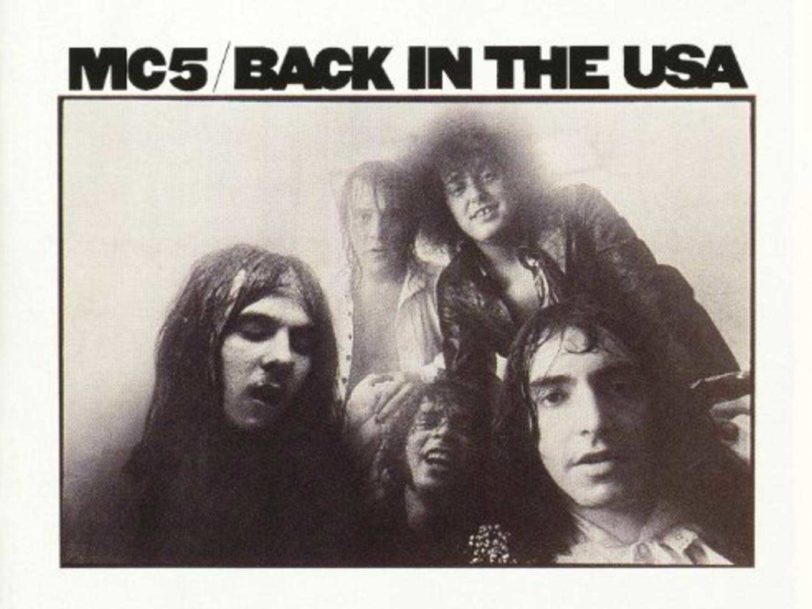
Back In The USA: How MC5 Invented Pop-Punk Ahead Of Schedule

The LP was no longer just a collection of songs, it had a purpose, a message – and fans triumphantly carried their favourites from party to party. Connecting rebellion with the counterculture, and blazing a trail for punk rock years ahead of schedule, were MC5, the Michigan band whose second album, “Back In The USA”, hit the shelves smack-bang at the start of the decade, on 15th January 1970.

Released a year after their frenetic proto-punk debut, “Kick Out The Jams”, Back In The USA marked a new direction for a group whose opening call-to-arms caused no small amount of controversy. A mixture of pop tunes and deep blues riffs, it found them matching their rebellious stance to catchy song writing, becoming the blueprint for something else entirely: pop-punk. The opening track is a cover of the classic hit “Tutti Frutti” by Little Richard. “Let Me Try” is a ballad. “The American Ruse” attacks what the Detroit quintet saw as the hypocritical idea of freedom espoused by the US government, and “The Human Being Lawnmower” expresses opposition to the US involvement in the Vietnam War. The last song on the album, which is the title track, is a cover of Chuck Berry’s 1959 single “Back in the U.S.A.”

Every strain of this combination of punk and pop music has produced some of the most iconic party tracks in history while offering an aggressive release that skirts some of punk music’s more anti-social aspects. It’s a deadly combination, and one that MC5 lit the touch paper for with Back in The USA.  What distinguished the band was not only its fiery political content-inspired by the militaristic, anti-establishment ideology of manager John Sinclair’s White Panther Party-but the furious, free-jazz energy of the music. Guitarists Kramer and Fred “Sonic” Smith engaged in long exchanges that suggested Sun Ra and John Coltrane.

Where Kick Out The Jams was a fast, messy live album that felt experimental while heralding the punk scene to come, Back In The USA was immaculately recorded, with a tight production suggesting how much rehearsal time must have went into creating it. They hadn’t let go of their revolutionary aesthetic, they’d just acquired the musicianship to match. With short, memorable riffs and a greater use of vocal harmonies, Back In The USA showed the world that a radio-friendly rebellion could be a great recipe for success. With lyrics that combined themes of partying with those of finding confidence as a teenager, it captured the spirit of youth in revolt, while the use of pronouns in the lyrics ignited a feeling that the album was written for the listener alone.

Producer Jon Landau doubtless had a hand in the band’s new direction. A former music critic who would go on to work with Bruce Springsteen, Landau had a natural instinct for pop-rock; dissatisfied with psychedelia’s lack of focus, he was drawn to MC5’s raucous energy, helping them channel it into a bluesy, catchy bubblegum-pop record that rolled party and rebellion into one. 

The problem was: the audience. MC5 had already announced themselves as punk trailblazers almost a decade ahead of schedule. Their turn towards a cleaner, more mainstream sound turned off a fanbase interested in revolt over record sales, peaking at No.137 in the US – over 100 places lower than Kick Out The Jams. Long-term, however, Back In The USA opened up a world of airplay and mainstream acceptance, if not for the group (who split in 1972, after the release of their third album, “High Time”), then for anyone willing to combine anarchy and danceable pop music in the years that followed.

The MC5 also happened to be making some of the greatest rock’n’roll music ever committed to tape. Post-Elektra, the band managed to record two raucous LPs for Atlantic. The first, ‘Back In The USA’, is often considered to be their weakest – and while it suffers both from a dearth of political focus and a thin, edgy sound (it was recorded by rock critic Jon Landau, who’d never produced a record before), its concise, commercially skewed sound was a profound influence on punk groups like The Clash, while songs such as ‘The Human Being Lawnmower’ offered a radical rewiring of the old bubblegum rock blueprint.

Though the album was viewed as a flop early on by most fans, and lacked the commercial success of their previous release, it would later be considered highly important due to the album’s absolute projection of MC5’s core sound and earliest influences.

In hindsight, MC5 were greatly ahead of their time in terms of both the radical changes they made to their sound and template they laid for a whole new musical genre. The group have been nominated – and overlooked – for entry into the Rock And Roll Hall Of Fame on numerous occasions, but their true reward is that the collective consciousness of the pop-culture-loving world now know them as this: punk pioneers who became something so much more – a band that showed the way for forging aggressive catharsis with infectious pop music.

MC5 
  • Rob Tyner – vocals
  • Wayne Kramer – guitar, vocals on first & third chorus of “Back in the USA”, guitar solos on “Tutti Frutti”, “Teenage Lust” and “Looking at You”
  • Fred “Sonic” Smith – guitar, guitar solo on “The American Ruse”, lead vocals on “Shakin’ Street” and second chorus of “Back in the USA”
  • Michael Davis – bass
  • Dennis Thompson – drums

Image may contain: 1 person, text

When Big Thief guitarist Buck Meek asked the band’s go-to producer Andrew Sarlo to oversee his second solo album Sarlo agreed, but there were some non-negotiable conditions. Everything would be recorded live using just eight dynamic mics, there could be no overdubs and headphones were banned.

It’s a familiar rootsy, organic approach to that which enabled Big Thief to release four beguiling indie-folk albums in their first four years, and it works a charm on Two Saviors, recorded on a humble Tascam 38 eight-track at the humid height of a steamy New Orleans summer. Set up in a Victorian house one block from the Mississippi, Meek taught his band these gentle, unpolished country arrangements on the fly, recording everything inside a week. The songs had been written while Meek was on downtime following Big Thief’s pair of 2019 releases, Two HandsandU.F.O.F., following the end of his marriage to the band’s lead singer Adrianne Lenker a year earlier. The mood is pastoral and reflective, Meek looking back with fond perspective on a past chapter of his life.

Buck Meek’s new album, “Two Saviors”, one of the first records released this year, and I wouldn’t bet against it being one of the best. Recorded by Buck, alongside producer and engineer Andrew Sarlo, who also worked with Buck on a number of Big Thief records, “Two Saviors” marks a change of tone for Buck’s solo material. While his self-titled debut was a character driven snapshot of the American Dream, here Buck seems to tap into something more personal, with these almost cathartic confessions spilling out of him.

Ahead of the record’s release, Buck this week shared the latest track from the album, “Candle”, co-written with Big Thief bandmate Adrianne Lenker. Lyrically, the track is a somewhat troubling affair, a song that seems to always be attempting to run, yet keeps getting drawn back; the sweetness of, “the same love I always knew” contrasted with the sighing inevitability of, “I guess you’re still the first place I go”. The lyrical juxtaposition is set against a musical backing that seems to murmur along with the words, the slide-guitar that seems to exist like an exhale of sadness atop the warmth of the Rhodes-piano, as Buck’s vocal is at times joined by bandmate Mat Davidson, before he leaves again to let Buck travel on alone. This really feels like a master-craftsman at work, a songwriter who knows exactly how to ring every drop of magic out of a track: this is something truly special.

Guitar performed by Buck Meek and Adam Brisbin Drums performed by Austin Vaughn Pedal Steel and Bass performed by Mat Davidson Produced and Engineered by Andrew Sarlo

Two Saviors is out today via Keeled Scales.

See the source image

Wand frontman Cory Hanson is gearing up to release his second solo album, “Pale Horse Rider”, on March 12th via Drag City Records. An Los .Angeles native, he’s penned this pretty ode to the city he lives in, the city of angels. No bridges mentioned. The gorgeously animated video was made with help from his brother, Casey. Talented family!. A lifelong Californian, Cory Hanson has naturally found himself standing to the left of most of the country. The west may be only what you make it; these days, the roadside view looks exceptionally sun bleached and left behind.

His forthcoming long player, Pale Horse Rider, eyes the city, the country and the fragile environment that holds them both in its hands — a record as much about Los Angeles as it can be with it’s back to the town and the sun in its eyes; as much about nostalgia as new music can be with the apocalypse over the next rise. Fuelled by DNA lifted from country-rock cut with native psych and prog strands, Cory guides his craft toward the cosmic side of the highway. Pale Horse Rider’s second single, “Angeles”, is an understated heartbeat thump of drums and folky acoustic guitar-driven tension, those steel strings echoing above Cory’s plaintive croon and impressionistic lyrics. The view of LA is exquisite from the high, lonesome peaks of the Angeles National, vibing with a foreboding mood of majesty and despair

Myths and truths of a country on the way down, viewed through a deep-focus lens trained on the city from the deserts on the east; a terminus of unoccupied residential parks and streets fading into craggy footpaths to nowhere, where our passage is seen as diligent, ephemeral and grotesque by turns, forgiven and made beautiful again by the sound.

“Angeles” is from “Pale Horse Rider,” to be released on LP/Cassette/CD/Streaming on March 12th, 2021, from Drag City.

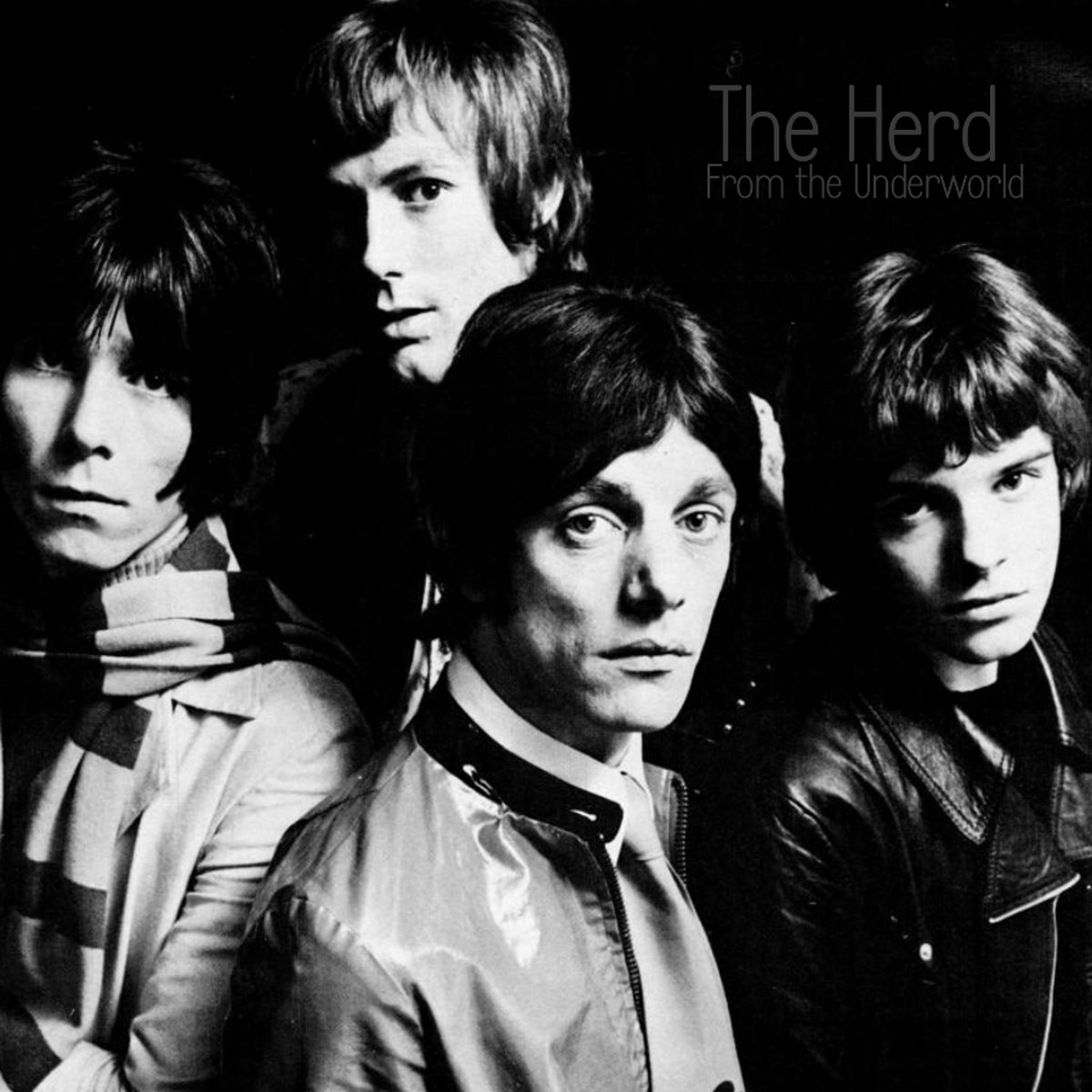
The Herd was founded in 1965 in south London and recorded three singles with Parlophone  the most well known perhaps “I Don’t Want Our Loving to Die”. In 1966 three members in succession (Terry Clark, Louis Cennamo and Mick Underwood) quit the group, Parlophone did not want to go on with them, but Fontana Records was willing to give them a try. They also sent their manager Billy Gaff away and brought in the songwriters/producers Ken Howard and Alan Blaikley instead. This pair had been largely responsible for a string of hits by Dave Dee, Dozy, Beaky, Mick & Tich. Howard and Blaikley orchestrated for them a unique blend of pop and flower power pop.

and the group got the line-up that made it famous. Peter Frampton was 16 when he joined the group in 1966, a few years younger than the other members. After a UK Singles Chart near-miss with “I Can Fly” (April 1967), the haunting “From the Underworld”, (August 1967) based on the legend of Orpheus and Eurydice, reached Number 6 later that year with help from copious plays on pirate radio. Radio airplay was essential for success and the band recorded many unique versions of their hits, near misses and stage favourites for radio broadcast. It’s those recordings that comprise this album. The last months of 1968 were tempestuous times for the group. Steele left to be replaced by Henry Spinetti and dissatisfied with mere teen idol status, and disappointed with the failure of “Sunshine Cottage”, which he’d written, Their first and only album Paradise Lost most songs being written by Peter Frampton and Andy Bown, . Frampton left to form Humble Pie with Steve Marriott.

http://

released January 17th, 2021

Image may contain: 1 person, closeup

Tele Novella is a project out of Lockhart, Texas–a small town lost in time–where their classic and sincere pop song writing is slowly processed through a loner medieval-tonk machine and then captured on cassette 8-track. Their forthcoming record, Merlynn Belle, was the music they wanted to be making all along but didn’t know until it happened accidentally.

Sometimes the best things happen by accident and for Natalie Ribbons and Jason Chronis of Tele Novella, that is exactly the case with their latest single, “Paper Crown.” Ribbons  recalls how she wrote part of this upbeat song to keep herself occupied while at work. “I wrote the very first verse of this song about nine years ago when I was a cook at a Thai restaurant,” Ribbons shares. “I used to make up little ditties to sing while I would chop up lime leaves and chilies, and this just happened to be one that stayed in my head all these years.”

Although this verse was written with the assumption that it would only remain a verse, with their sophomore album, Merlynn Belle, out now, it became much more.

“When I considered this little song fragment, I was immediately very inspired and wrote the rest of the song in one sitting,” says Ribbons. With its enchanting lyrics, “Paper Crown” is the perfect tune to make you feel inspired, and make you want to live every day to the fullest. It’s the type of melody to stick with you, even when you’re chopping lime leaves and chilies.

“This song embodies a feeling that sometimes spontaneously overcomes me, where I am just heart bursting-ly, madly in love with life and with the moment,” adds Ribbons. “Times like these, I just want to do anything within the realm of my abilities to leave a mark on this world and play a part in decorating time as it passes.

http://

It comes out February 2021.

See the source image

This last year, indie rockers Lucy Dacus, Julien Baker and Phoebe Bridgers all released acclaimed solo albums. The three Singer Songwriters guitarist-vocalists were booked on a North American tour together, with Baker and Bridgers co-headlining and Dacus opening. But that wasn’t enough: They also quickly formed a supergroup, and gave it a tongue-in-cheek name that nods to how women are rarely called geniuses with the frequency the way their male peers are. After the trio released its self-titled EP, on which they take turns in the frontwoman role and elsewhere blend their voices and instruments together in perfect bliss. The EP’s uniting thread, though, will surely be the clear-cut lyricism they all have in common, which packs a witty punch line after line. Some might even call it genius.

The debut from rock supergroup boygenius has only one real flaw: it’s much too short. Its length (still on the longer side for an EP, at six songs) is forgivable, though: The women behind boygeniusPhoebe Bridgers, Julien Baker and Lucy Dacus—are busy artists. They’ve each released a critically-adored solo LP in the last year or so and have thusly been swamped with promotional duties and live performances. So although these ladies aren’t technically “new artists,” their supergroup is new, and music is better for it. On boygenius, the three become one, miraculously and pristinely so. Bridgers, Baker and Dacus pack a novel’s worth of narrative and as many masterful melodies (not to mention harmonies) into just 21 minutes that will leave you feeling as if you’ve had the wind knocked right out of you.

The album ends on an especially magical note. On “Ketchum, ID,” Bridgers, Dacus and Baker assume soprano, alto and tenor and churn up a harmony so handsomely melancholic you’ll find yourself snatching tissues without even knowing why. It’s a fitting epilogue, too, that chronicles the band’s shared experience as touring musicians, and the emotional heaviness following those long nights in unfamiliar places. “I am never anywhere / Anywhere I go,” they sing in unison. “When I’m home I’m never there / Long enough to know.” Those are devastating words, but, at the same time, you get the feeling Bridgers, Baker and Dacus have found some sense of home in one another.

boygenius performed songs off their first EP live at Brooklyn Steel for Pitchfork Live

Setlist: 0:50 Souvenir 5:10 Bite the Hand 8:50 Stay Down 13:35 Me & My Dog 17:50 Salt in the Wound 23:35 Ketchum, ID

Their mutual experiences are what unite them, and that bond bleeds through this music in every buzzing, beautiful bar.

Image may contain: 4 people, text

Pale Waves have just dropped ‘She’s My Religion’, another track to be released from their upcoming album “Who Am I?”.

A track following the story of a cynical girl and the speaker’s love for her, it fights against the usual stigma that darker characters are unlovable and Hollywood’s preference for positive love interests. This normalisation of unhappy characters still being necessary to our lives can be heard in the lyrics, “She helped me find a different kind of love, made me feel like I was finally enough / She’s cold, she’s dark, she’s cynical, she’s forever angry at the world / She’s no angel but she’s my religion”.

Opening with a soft solo guitar, Heather’s vocals join in a whispery tone and set the scene for the love story. Suddenly, the chorus of the song brings the power that we’re used to from Pale Waves. With blasted vocals that’ll be screamed by everyone who can relate, the verses go back to a slow paced track creating a nice balance between passion and sincerity. 

In an age where hetrosexual couples are still the focus of popular media unless being the feature of a dramatic and often overwhelming and exaggerated hollywood film, it’s refreshing to see Pale Waves talking about homosexuality in such a casual and accessible way. It allows young people to find themselves without being scared to ask questions or feeling isolated from a community because they haven’t felt the struggles of past generations. This accessibility along with the erasure of the usual clichés of over-sexualisation or experimentation is exactly why Pale Waves made the cover of Gay Times this year.

‘Who Am I?’ is the second album from indie-pop icons Pale Waves, due for release on February 12th 2021.

Recorded in Los Angeles over early 2020 with Rich Costey (muse, biffy clyro, sigur ros), and led by the unabashedly huge lead single ‘Change’, it finds the Manchester band stepping up once more, fulfilling the promise of that widely-lauded debut album and striding towards pop megastardom. 

From the new album ‘Who Am I?’, out February 12th – Dirty Hit Records.

Image may contain: 3 people, people standing, tree and outdoor

The introduction to “Friends On Ice” reverberates like the switching on of machinery, the transfer of emotion through engagement or the wheel of cognitive thought ahead of comprehension. The thought-provoking new single by Danish collective Yung is cut from their upcoming LP which arrives this month on PNKSLM Recordings. “Friends on Ice” came about as a consequence of Mikkel being challenged to strum the most difficult guitar chord he could come up with. This approach has since become a go-to suggestion to any kind of creative block we encounter.

The instrumental repetition and momentum that Yung develop in the track seems to embody grief itself, allowing a contemplative and confessional lyrical delivery to drift ghostlike through the mix. On the subject of lyricism, vocalist and songwriter Mikkel Holm Silkjær explains, “It’s a song about alienation, loneliness and the immediate remedies we, as individuals in western society, turn to when confronted with pain or struggle.”

Previous singles taken from the band’s upcoming record – “Such a Man” and “Above Water” – offer a more combative and dynamic post-punk sound, which reveals “Friends On Ice” as a unique feat and a perfect album closer. Mikkel Holm Silkjær reiterates, “Capitalism promotes individualism, which makes a lot of people think they have to deal with issues and problems in life on an individual level, when often we’d be much better off if we dealt with things on a collective level.”

The sophomore record by the Aarhus quartet is entitled “Ongoing Dispute” and arrives January 22nd.