In the 14 years since The Tigers Have Spoken, Neko Case has long since transcended her alt-country beginnings to become something more complex and harder to define. The Tigers Have Spoken captures her on the precipice of a shift that would begin on 2006’s Fox Confessor Brings The Flood. Here, Neko Case stays close to her twangy roots, leaning heavily on covers (from Loretta Lynn, Buffy Ste. Marie, traditionals, and others) and performing only four originals. One of those, “Favorite,” remains one of her best songs ever, and it was unavailable elsewhere until 2015, when a studio version finally appeared on the box set Truckdriver Gladiator Mule. Although The Tigers Have Spoken may disappoint fans looking for a more representative set, the album nicely captures Case’s voice and artistic restlessness.
XTC detractors would often accuse the band of being “too quirky.” While they definitely had that side, their debut, ‘White Music,’ showed that they were not going to be some cookie-cutter new wave or punk rock band. The opening frantic surge of “Radios in Motion” gets things rolling and it’s all forward drive from there. “Statue ofLiberty” and “This Is Pop?” are among the many treasures here as they sounded like none of the punk era brethren, but rather like some holy merging of ‘Trout Mask Replica’ and ‘With the Beatles’ on an amphetamine bender. While they would rapidly move forward with each release, ‘White Music’ was a hell of a place to start.
This one is a bit uneven, I think mainly due to the band attempting to find its voice. Overall, the album has all that quirkiness that defined the band in their early years, which works most of the time. It seems Colin Moulding is trying a little too hard to be quirky on two of the three songs he wrote, but I’ll Set Myself On Fire is a good early effort. Radios In Motion is a fantastic opening track and Andy Partridge also scores well with Into The AtomAge, New Town Animal, and This Is Pop? (I do agree with that other list-maker that the later single version of this song is much better). However, their cover of Dylan’s All Along The Watchtower really does fall flat.
They’re one of the best groups that Britain ever produced. I don’t know why everyone goes on about someone like Morrissey making the best British pop when in fact XTC did it better that anyone else. I remember when they did ‘This Is Pop’, and I just thought, ‘Yeah this is pop. This is pop.’ It seemed like such a brilliant thing for them to say. Pop is what they were doing and they were writing all these great songs, going on about the whole punk thing and not being embarrassed about writing great pop songs.”
An album that was more influential than successful, White Music was the first album by the much-loved English new wave popsters around whom an obsessive cult following has grown over the years. The album includes one of Andy Partridge’s most enduring song “This Is Pop”, and was produced by John Leckie, who subsequently has gone on to work with the Stone Roses, Radiohead and others.
Smells like 30 new minutes of new music via seven new electric hues, shocks of light that flagrantly provoke the dark, a posy’s clutch of purple, fuchsia, green and snowy white that curl against the stench of plague. With “Perfume”, Wand presents olfactory events that recall futures and pasts.
If the emblem of Wand‘sPlum was the stark blue cloud – a condensation, a linking between longing molecules, data hungering for more data, a flotilla of vapor between eye and sky – then Wand‘s new EP reeks of something more forceful, more seductive, more intoxicating, more insidious: this is “Perfume.”
Here are seven electric hues, shocks of light that flagrantly provoke the dark, a posy’s clutch of purple, fuchsia, green and snowy white that curl against a stench of plague. Recorded between tours and fire seasons in Grass Valley, CA by Tim Green, Perfume‘s potent, expansive tunes were mixed in Woodstock, NY by Daniel James Goodwin. The band features Sofia Arreguin, Evan Burrows,Robbie Cody, Cory Hanson and Lee Landey.
Montero is an Australian musician and artist Ben Montero. His New album “Performer” was recorded at Mark Ronson’s Tileyard studios in London. It is co-produced by Ben, Jay Watson of TameImpala/Pond/Gum, and Grammy Award winning engineer Riccardo Damian. All instruments were played by Ben, Jay and Riccardo, save some violin by Emily, a waitress from the studio cafe, and electric piano from Ben’s uncle Jason. Performer glories in the widescreen soft rock tradition, updating the romantic classicism of golden era love songs with a psychedelic pop brush. Montero’s music evokes the extended soundscapes and textures of 70s prog, the easy listening adult weirdness of Jimmy Webb and Burt Bacharach, and the sports arena pounding of vintage MOR rock – sometimes all in the space of one song. With an emphasis on clear vocals, soaring melodies, lush instrumentation and dreamy glam pomp, Performer ventures into gently surreal realms of romance, yearning, and wonder.
As a visual artist, Ben’s much-loved comic-based style highlights the universality of small human moments via a cast of furry (or sometimes slimy) friends. His art has graced album covers, t-shirts and posters for Mac Demarco, Ariel Pink, Kurt Vile, Pond and others. Ben has lost count of the number of fans who have had his drawings tattooed on their body. His Facebook page Ben Montero Sketchbook has more than 80,000 fans.
In Australia, Montero has played with Ariel Pink, Kurt Vile, John Maus, Yeasayer, Sonny & the Sunsets and The Bats. Ben currently lives in Athens, Greece and his live band are made up of members of Greek psych heads Acid BabyJesus, plus other friends. The Montero band tour UK/Europe in November 2017 supporting Mac Demarco.
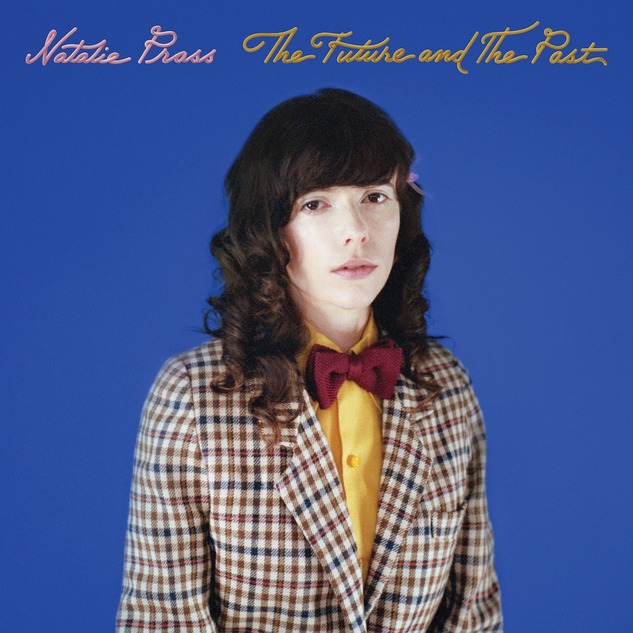
In the process of writing and recording her new album, Richmond, Va.-based singer-songwriter Natalie Prass ran into what has become a familiar artistic roadblock nowadays: the 2016 U.S presedential election.
Prass had her album written, her band assembled, her studio booked … and had to change course completely after you-know-who somehow came out on top. The result was The Future and The Past, due out on June 1st via ATORecords, the follow-up to Prass’ breakthrough, self-titled debut and her covers EP Side by Side, both released in 2015. the press release for the new album “finds Prass tapping into deep, dancey grooves that glisten with ‘80s pop and ‘90s R&B, nestled alongside quivering, lushly orchestrated ballads.” The first of those is “Short CourtStyle,” the video for which debuts here.
Directed by Prass herself and Erica Price, with Jethro Waters (Angel Olsen) as Director of Photography, the “Short Court Style” visual features a colorfully dressed Prass bringing jubilation to an otherwise-dreary park in her home state. She spins on a merry-go-round, performs with ribbon dancers and generally delights. “Short Court Style” itself is equally joyous: Prass offers figurative revolutions to match the video’s literal ones, singing, “Oh you spin me round / Round and round / Had ups and downs / No but I can’t be without / My love that I have found.” The song’s irresistible groove makes for a slick and spirited showcase of Prass’ exquisite vocals, emphasizing her R&B leanings in irresistible fashion.
Prass recalls the rocky road that led to her uplifting new album:
The record was ready to go, and then the election happened. I was devastated. It made me question what it means to be a woman in America, whether any of the things I thought were getting better were actually improving, who I am and what I believe in. I knew I would be so upset with myself if I didn’t take the opportunity to say some of the things that meant so much to me, so I decided to rewrite the record. I needed to make an album that was going to get me out of my funk, one that would hopefully lift other people out of theirs, too, because that’s what music is all about.
Prass recorded The Future and The Past in Richmond with long-time collaborator Matthew E. White at his Spacebomb Studios, teaming up with artists including Blue (Solange’s A Seat At The Table, Blood Orange, Carly Rae Jepsen) and Michael Brauer (Elle King and James Bay).
The new album from Natalie Prass, The Future and the Past, out June 1st
Spring is a time of rebirth and renewal—both for the individual and, obviously, the environment. Winter releases its grasp, the trees turn green, and flowerbeds come back to colorful life. But before flowers can bloom or those vegetables can sprout, there are a million little things that need to be done: there are bulbs to be planted, earth to till, seeds to be watered. So it’s fitting that Haley Heynderickx is releasing her debut record, the gentle and gorgeous I Need to Start a Garden, as the new season starts to peek around the corner. Throughout the album, Heynderickx focuses on the small moments in life—those necessary moments of toil and work that, ultimately, cause a person to grow. And though the album’s title refers to a literal garden, it should be noted that it’s aspirational.
“I grew up with some really wonderful gardeners,” she says. “My mother, for example, has really good intuition of what to plant and how. I was always bad at science in school. I want to get to know nature better.”
On I Need to Start a Garden, it often feels like Heynderickx has been getting to know herself better, too. “Show You a Body” is a stark, striking number where piano flutters between gently-strummed guitar and Heynderickx’s bell-clear voice. “I am humbled by breaking down,” she sings. On “The Bug Collector,” Heynderickx reconciles herself with her desire for perfection, and on “Oom Sha La La,” she sounds as though she’s working through her own insecurities in real time. “I’m tired of my mind getting heavy with mold / I need to start a garden,” she sings, building up to a shout as she repeats the lyric that gives the record its title.
Despite the songs’ effortless beauty—classic folk and Appalachia built around Heynderickx’s equally old-timey voice—the record didn’t come easily: it took three tries with three different producers for I Need to Start a Garden to bear fruit. Most of the issues came down to bad timing, but Heynderickx nevertheless found herself repeatedly wondering whether or not she wanted to keep going.“I felt like an onion, just so many layers of insecurity and weeping over not knowing how to do it right,” she says. “I found the right people with the right intentions, and it kind of became a labor of love, which is what I wanted it to be all along.”
The record isn’t Heynderickx’s only passion project—she also works as a teacher in an after-school music program helping middle-school students form rock bands. As they learn their instruments and write songs with a mentor’s guidance, the students learn about communication, self-actualization, and collaboration with each other. That, too, has found its way into Heyndrickx’s work. “It humbles me, getting to see them through different phases of feeling embarrassed and feeling empowered, and trying new things,” she says. “It makes music more human to me.”
Heynderickx has a keen eye and ear for those tender moments of humanity, and those observations turn up most explicitly in “Untitled God Song.” The track is a poignant take on spirituality: God doesn’t have to be some omnipotent force; rather, it’s possible to find tethers to something bigger than yourself through unconventional forces. Heynderickx sings that maybe her god has thick hips, a knockoff designer bag, and “a trot in her walk.”
At the time that she wrote it, Heynderickx says that she was struggling to find emotional support in her life. But she found unexpected strength through the advice of older women—most of them strangers, like customers at the bakery where Heynderickx once worked—who somehow happened to show up and say the right thing at exactly the right time.
“And then you’re crying at your customer service job because this older lady just saw the root of what you’re going through,” she says with a laugh. “It’s a really wonderful experience. Kind of embarrassing, but it’s kind of cool when someone older can see through you for a second. Recognizing those people in our lives that feel sacred—that was my way of saying thank you to that force, whatever it was.”
Though Heynderickx has her first record behind her and a long stretch of U.S. touring ahead of her, she says she’s still unsure what she’ll do next, artistically. “I have a lot of groundwork to do again, finding that safe space in myself to create again. I just want to write songs that feel honest and feel good to share, she says. “I hope I get to just do this again.” In the meantime, though, there’s always that garden to tend to.
While the previous Amen Dunes records had all been largely improvisational first-take affairs, recorded in a matter of weeks at most, the forthcoming full-length, “Love”, is the product of close to a year and a half of continuous work.
Damon McMahon (aka Amen Dunes) chose to hold the main recording sessions in Montreal with Dave Bryant and Efrim Menuck of Godspeed You! Black Emperor. In addition to recording the sessions that McMahon produced, members of Godspeed also played on several of the songs, along with Colin Stetson on saxophone and Elias Bender-Ronnenfelt of Iceage, who duets with McMahon on two tracks. The result is definitively the most substantial Amen Dunes record to date. These are elemental songs about time, love and memory, as much about the listener as they are about the writer: pure, open, and beautiful.
The Rolling Stones have announced dates for the No Filter tour that will bring them to the U.K. and Europe from May to July. It’s the band’s first run of U.K. dates in five years. Pre-sale tickets for most of the 11 stadium shows starts on February. 27th, with sales for the Dublin, France and Czech Republic shows to follow. General sales begin on March 2nd. You can see the full list of dates below.
The Stones won a Grammy last month for their return-to-roots LP Blue & Lonesome in the Best Traditional Blues Album category. It was their third-ever Grammy, not including a Lifetime Achievement Award. A few weeks earlier, Billboard listed Blue & Lonesome as the ninth-biggest album of 2017. The covers set came about by accident as the band prepared to record an album of new original songs; they’d become distracted during the sessions by playing some of their favorite older tunes instead.
The original record remains on hold. Singer Mick Jagger had noted they had only “half an album” of material recorded. ”It’s like putting it on top of the strainer and seeing what soaks through by the time you come back to them again,” guitarist Ron Wood said. “The lumps that are left on top after time has gone by, that’s what you make your dough out of. It wouldn’t surprise me if we recut them all again. It’s one of those things.”
The Stones have now been in business for 56 years, but guitarist Keith Richards wrote on the band’s Twitter account that they “haven’t finished yet. It’s still too early to talk about the Stones’ legacy. There’s one thing that we haven’t yet achieved and that’s to really find out how long you can do this. It’s still such a joy to play with this band that you can’t really let go of it.”
Warren Zevon’s self-titled 1976 album announced he was one of the most striking talents to emerge from the LosAngeles soft rock singer/songwriter community, and Linda Ronstadt (a shrewd judge of talent if a sometimes questionable interpreter) recorded three of its songs on two of her biggest-selling albums, which doubtlessly earned Zevon bigger royalty checks than the album itself ever did.
His own breakthrough album from the songwriter’s songwriter from LA. Warren Zevon had been knocking around since the late ‘60s, but with the championing of Jackson Browne, the Eagles and Linda Ronstadt (who recorded a bunch of his tunes) and subsequently the patronage of David Geffen at Asylum Records, he finally connected in a big way. The fact that it was with “Werewolves of London”, the most throwaway song he’d recorded for the label at that point didn’t matter; it was still a great song, and a great entre to Zevon’s weird and violent world. The title track, “Lawyers, Guns & Money”, “Accidentally Like a Martyr” and the seriously wacko “Roland the Headless Thompson Gunner” are the stuff of genius. Oh, and did you know “Werewolves…” (which peaked at #11 in Australia and was Zevon’s only charting single) features the rhythm section of John McVie and Mick Fleetwood?.
The tracks “Excitable Boy” and “Werewolves of London” were considered macabrely humorous by critics. The historical “Veracruz” dramatizes the United States occupation of Veracruz, and likewise “Roland the Headless Thompson Gunner” is a fictionalization of a mercenary in Africa. “Lawyers, Guns and Money” is a tongue-in-cheek tale of a young American man’s adventures in Cold War era Latin America. In addition, there are two ballads about life and relationships (“Accidentally Like a Martyr” and “Tenderness on the Block”), as well as a dance tune (“Nighttime in the Switching Yard”).
Street Hassle is the eighth solo album by rock icon Lou Reed, originally released on Arista Records. The album is notable as the first commercially released pop album to employ binaural recording technology.
Arguably, Street Hassle – the apogee of Reed’s adventures in the New York junkie underworld, made up of three “movements” , The first part is titled “Waltzing Matilda” but has nothing to do with the Australian song of the same name; we’re guessing the title stuck with him after Australian tours in both ’74 and ’77. Street Hassle and Slipaway. But each movement bleeds into and informs the other, adding up to a stark meditation on the fragility of human life. Besides, if the track ended after the second movement, with an overdose victim’s corpse dumped unceremoniously in the street, it would simply be too harrowing; instead, a ruminative coda – with guest vocals from Bruce Springsteen – provides a sliver of solace. Ultimately, though, the message is heart-wrenchingly bleak, with Bruce adapting the words of Born To Run to fit Lou’s more pessimistic worldview: “Tramps like us, we were born to pay.” this amazing rock opera written in 1978 by the best living rock songwriter, the NYC man Lou Reed. The song is divided into three parts (Walzing Matilda, Street Hassle, Slip Away), which have all the same music structure that meets first the orchestra, then acoustic guitars and rock bass guitars, and at the end the prayer of a penitent man, made of tears..
This was Lou’s eighth solo album, and one of many a fan’s favourites, “Street Hassle” is most often noted for its epic three-part title track. As was common on ‘70s Lou Reed solo albums, Street Hassle contained a song originally written during his days in the Velvet Underground—in this case, “Real Good Time Together” (which more recently Patti Smith had been using as a set opener) – and the album the first pop album to employ binaural recording technology aka Dummy Head Recording, a recording technique that sounds so odd we suggest you look it up.
Street Hassle combines live concert tapes and studio recordings. All of the songs on Street Hassle were written by Lou Reed, The album was met with mostly positive reviews, Its Raw, wounded, and unapologetically difficult, Street Hassle isn’t the masterpiece Reed was shooting for, but it’s still among the most powerful and compelling albums he released during the 1970s, and too personal and affecting to ignore.