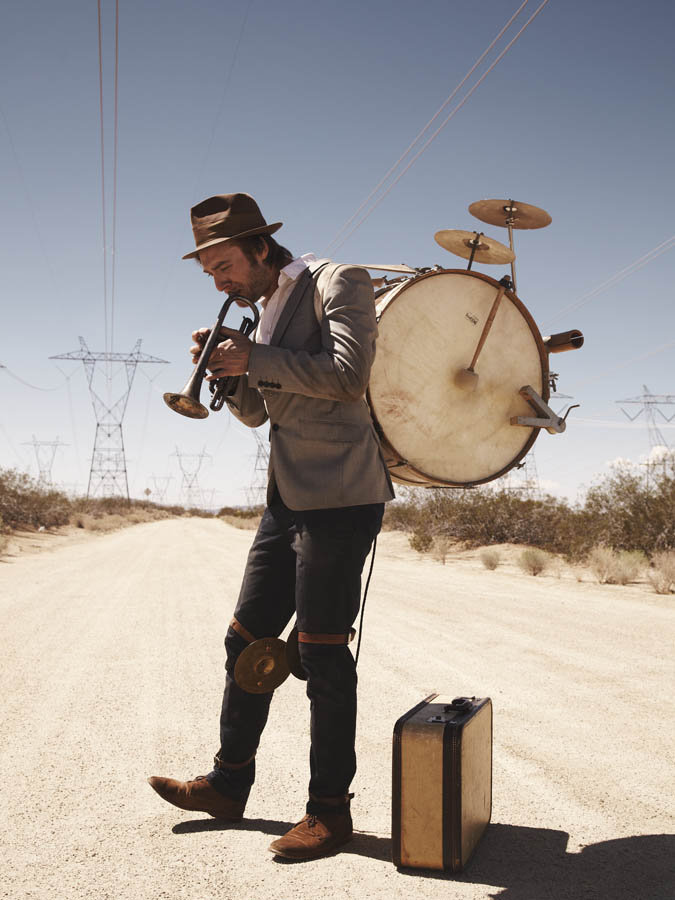
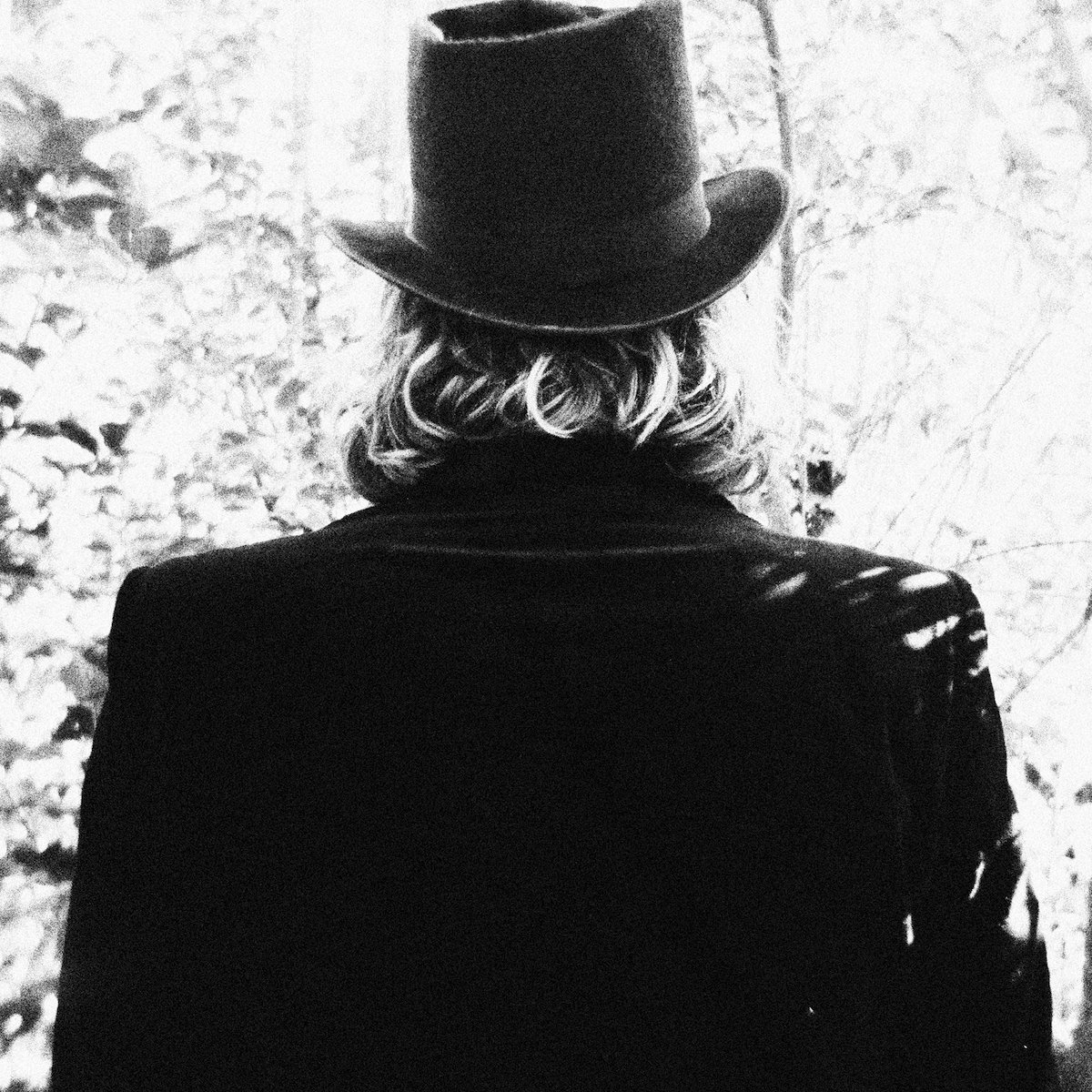
Growing up, Tyler Lyle vowed never to go into music when he got older. “As a kid we were always taking family trips to Nashville so my dad could play the Bluebird Cafe or attend some songwriting symposium, and I resented the city for stealing my vacations away,” recalls the West Georgia native. But at age 15, he haphazardly picked up his father’s guitar, quickly mastered a few chords, and soon started writing his own songs. In 2011 Lyle released his indie-folk debut “The Golden Age & The Silver Girl,” solely through Bandcamp—then re-released the top-five seller the following year to find it named one of the top 10 albums of 2012 on NPR’s World Cafe. In 2013, he was awarded the Abe Oleman Scholarship for songwriting presented by ASCAP and the Songwriter’s Hall of Fame. He is currently at work on a new full length album.
While Bully’s 2015 debut ‘Feels Like’ tumbled headlong into the precarious nature of Alicia Bognanno’s young adult life, its follow-up Losing is their first for Sub Pop (which in many ways feels like their spiritual home; Bully’s sound is an outgrowth of the bands the label championed in the late ‘80s and ‘90s). Losing is a document of the complexity of growth: navigating breakups with sensitivity, learning not to flee from your troubles but to face them down no matter how messy they may be (“Well, this isn’t the summer I wanted,” she muses on “Blame,” before admitting that she’s trying to “cut down on booze and you”). Written as the group slowed down from touring constantly and Bognanno attempted to adjust to how different a home schedule is from a road schedule, her songwriting has matured from the quick one-two punches of Feels Like to tracks that contemplate the necessity of space in both song structure and emotion. Bognanno’s gruff yet dynamic voice is allowed to bloom, and it has a tenderness and openness to it here that’s new. There are multiple layers of wistfulness and care to her delivery of lines like “It just takes one disagreement for you to remember the one time I fucked up,” from “Spiral,” turning songs that could be one-dimensional kiss-offs into warm and complex expressions of regret.
The group returned to Electrical Audio in Chicago, another home for Bognanno, to record Losing. Their core—Bognanno, guitarist Clayton Parker and bassist Reece Lazarus—truly solidified during the process, a detail-oriented push for perfection in which each moving part was labored over and polished. Emily Lazar’s mastering adds the perfect cap to Bognanno’s engineering; this is a record that has both shimmer and heft. There’s power in the guitar attack, delicacy and toughness in the melodic hooks, precision in the drums, and backbone in the bass.
While Bognanno wouldn’t call this a political record, she doesn’t deny that the current political atmosphere and its urgency and tension haven’t shaped some of her ideas on this record, too—though she does not want that to be its focus. Mostly, this is an internal record, a universalized diary and an exorcism—not of any one specific demon, but of the host of them that characterize contemporary anxieties. Bully are growing up, sure, but their fire is in no way diminishing.
The summer often finds a way of mixing magic and melancholy, and it proves to be the case once more on “Young”, the beautiful lead track from Sun June’s new record, set to be released later this year. Palpably a song for the aforementioned season, the track could quite easily slip in to the sultriness of long sun-filled days, it’s outward persuasion one of bright vocals and buoyant musical spirals, but pear through the cracks and something is revealed; a yearning for something as yet untouched, a sadness needling away at the core.
Arriving this-coming June, via Keeled Scales beautifully blossoming roster, the new record is the debut LP from Laura Colwell and Stephen Salisbury’s tender project, and was introduced last week by the track “Young”, with a beautiful new self-directed video. New album ‘Years’ is pitched as a “we’ve-been-broken-up-a-long-time” album which might go someway toward explaining that balance between sunniness and solitude.
At just two-and-a-half minutes, “Young” is a fleeting first glimpse of the record but it feels far broader than its running-time suggests, the lilt of the voice, both brooding in its verses and punchy in the chorus’ hooks, giving way to a charming splash of instrumental that underpins the whole thing with a country-like sway that has always been a skeleton key for heartache. Brooding and quietly powerful, it makes for a beautiful first-step
Sun June “Young” From “Years,” their debut LP, out June 2018 via Keeled Scales
The Ty Rex corner of Ty Segall’s oeuvre represents the nom-de-rock behind which the artist puts his spin on favored Tyrannosaurus Rex and T. Rex compositions. With previous releases now dwelling in out-of-print nether-regions, the album compiles the six-song Ty Rex EP (a.k.a. Ty Rex I, originally released by Goner Records as a limited edition 12-inch for Record Store Day 2011) and the two-song Ty Rex II 7-inch (RSD 2013). As if this wasn’t enough of a corrective gesture, Ty Rex is expanded to include a previously-unreleased cover as a bonus
For those who missed out on this nook of Segall’s rapidly-growing footprint across the rock landscape, here is a cursory rundown: The compilation showcases a nice balance between T. Rex’s ’67-70 psych-folk incarnation under the name Tyrannosaurus Rex and the better-known pioneering and perfecting of glam-rock that defined the initial ’71-73 era under the shortened T. Rex moniker. Kicking things off is the thick, woozily rocking interpretation of “Fist Heart Mighty Dawn Dart,” one of two covers pulled from Tyrannosaurus Rex’s fourth and best album, 1970’s A Beard of Stars. Segall then double-dips into the consummate T. Rex (and for that matter, the entire glam-rock movement) achievement, The Slider, with a rendition of “Buick MacKane” followed by an excellent dirtying-up of the title track.Clearly executed with the ear and understanding of a super-fan, next up is Segall’s awesome tackling of “Woodland Rock” an Electric Warrior outtake that also surfaced on the B-side to 1971’s non-album “Hot Love” single. Returning to Tyrannosaurus Rex fare for the two tracks that originally concluded the Ty Rex I EP, “Salamanda Palaganda” originates from 1968’s Prophets, Seers & Sages: The Angels of the Ages and “Elemental Child” from A Beard of Stars. “Cat Black” (from Tyrannosaurus Rex’s 1969 album, Unicorn) and Electric Warrior’s closing song “The Motivator” follow, before wrapping up this compilation of Ty-Rex material is the aforementioned previously unreleased bonus track, Segall’s cover of “20th Century Boy” (a non-album T. Rex single from 1973).
Cream ‘Nineteen Sixty-Seven’ features a fantastic live recording made for Swedish radio in March 1967 and previously un-released BBC radio sessions. It provides a unique picture of Cream in-concert and live in the studio in the period leading up to their classic 1967 album Disraeli Gears.
TRACK LISTING:
01: N.S.U. / 02: Stepping Out / 03: Traintime / 04: Toad / 05: I’m So Glad / 06: Sleepy Time Time (“Saturday Club”, Recorded 8 November 1966 – Broadcasted 11 November 1966) / 07: I’m So Glad (“Saturday Club”, Recorded 8 November 1966 – Broadcasted 11 November 1966) / 08: Traintime (“Saturday Club”, Recorded 10 January 1967 – Broadcasted 14 January 1967) 09: Toad (“Saturday Club”, Recorded 10 January 1967 – Broadcasted 14 January 1967) / 10: Tales of Brave Ulysses (“Joe Loss Show”, 14 July 1967) / 11: Take it Back (“Joe Loss Show”, 14 July 1967)
Joni Mitchell emerged at a time when the women’s rights movement was still building steam, and had to fight for recognition as a serious artist. Her image was often defined in terms of whom she was dating – a Rolling Stone article dubbed her “The Queen of El Lay”, and her famous boyfriends included David Crosby, Graham Nash, James Taylor, and Jackson Browne. As her material became more ambitious, and her lyrics became more questioning of society, she was abandoned altogether by Rolling Stone, who named her 1975’s excellent The Hissing of Summer Lawns as one of the worst albums of the year. So if she often appears a little self-promotional in interviews, ranking herself alongside Bob Dylan as the great solo artist of her generation, she’s generally justified, reacting to the sexism she encountered in her prime.
The sophistication of her songwriting and, in particular, her musical arrangements is the essential element that sets Joni Mitchell apart from her contemporaries and her peers, whether the troubadours of the early 70s Laurel Canyon singer-songwriter scene or lyrical heavyweights such as Leonard Cohen, Neil Young and even Bob Dylan. And yet in the music industry, Mitchell has never really been afforded the kind of respect heaped on her male counterparts.
Mitchell’s a wonderful singer, songwriter, and guitarist; a childhood bout of polio left her unable to play guitar conventionally, and she’s an expert of alternative tunings. While her public persona is of a folk singer of songs like ‘Both Sides Now’ and ‘Chelsea Morning’, her musical reach expanded throughout the 1970s into pop and jazz. Towards the end of the 1970s, her albums became too insular for me to follow, but her run of albums in the early to mid 1970s is stunning, a peak that ranks with the greatest artists in popular music. It defines the best songs that Joni Mitchell wrote at her creative peak, which stretched from the release of Blue (1971), through For the Roses (1972), Court and Spark (1974) and The Hissing of Summer Lawns (1975), to the pared and broodingly atmospheric Hejira (1976).
Blue (1971)
Joni Mitchell’s early work was often folk based – 1970’s Ladies of the Canyon featured singalongs like ‘The Circle Game’ and ‘Big Yellow Taxi’. These five classic releases began with the starkly powerfulBlue, on which she single-handedly redefined the notion of the singer-songwriter. Intimate and confessional, her new songs of love and heartbreak shocked some of her male counterparts with their emotional intensity. On first hearing them, her friend Kris Kristofferson exclaimed: “Oh Joni – save something of yourself!” . That was not an option for Mitchell, whose songwriting had now approached a level of rapt intensity. Graham Nash, the Manchester-born, Los Angeles-based songwriter, remembers her “channelling” her songs so intensely at the piano of the house they shared in leafy Laurel Canyon that she would be utterly immune to his presence in the room.
Arguably the most vulnerable song on Blue, “A Case of You” is an intimate window into Mitchell’s personal life. In 1979 Rolling Stone interview, Mitchell said, “The Blue album, there’s hardly a dishonest note in the vocals. At that period in my life, I had no personal defenses. I felt like a cellophane wrapper on a pack of cigarettes.” Said to be inspired by her breakup with Graham Nash, “A Case of You” is yearning and raw. And interestingly, that’s James Taylor on guitar in the back, Mitchell’s love interest at the time.
The best song on Mitchell’s best album has become a seasonal classic over the past couple decades, with artists as diverse as Rosanne Cash, Cee Lo Green and old buddy James Taylor recording cover versions for holiday records. Mitchell’s spare, piano-driven take is the most heartbreaking. Like most of ‘Blue”s tracks, it’s a love song. But this one looks back on a particularly painful breakup that still hasn’t settled in as Christmas nears.
She took a more direct approach with 1971’s Blue, a stripped back, emotionally vulnerable album that diaries her relationships with Graham Nash and James Taylor. Side two is the stronger half with masterful songs like ‘A Case of You’ and ‘River’, and the intense paranoia of ‘This Flight Tonight’. Blue features Mitchell’s work on the Appalachian dulcimer.
The trio of austerely beautiful and forlorn songs – River, A Case of You and The Last Time I Saw Richard – that close Blue are the real beginning of that creative tightrope walk. On the final repeated line of the beautifully forlorn River – “I wish I had a river I could skate away on” – she lingers on “skate”, making it sound like the resigned cry of someone falling slowly, wilfully though the ice.
“During the making of Blue, I was so thin-skinned and delicate that if anyone looked at me, I’d burst into tears,” she admitted years later, referring to the messy fracturing of her relationship with Nash and the tentative beginnings of a short, but intense, relationship with James Taylor, then in the throes of heroin addiction.
Blue, though, also signalled in more subtle ways the more dramatic musical shift that was to follow. Listen to the way she enunciates the very first notes of the title song, settling on the word “blue”, stretching and bending it across an octave or two in the manner of a seasoned jazz singer. Then there’s the joyous lilt and sway of Carey, one of several songs of wanderlust that, across the years, testify to a relentlessly restless spirit.
Mitchell came up though the American trad-folk circuit of the mid-60s and was for her first two albums marketed as a fey, fragile hippy folk singer. She had already survived several setbacks. Her childhood in small-town Saskatchewan was fractured when she contacted polio, aged eight, in 1951. In 1964, she had fallen pregnant and, struggling financially, gave her newborn daughter up for adoption the following year. (The song, Little Green, from Blue, is an ode to her lost daughter and, on Chinese Cafe, a song released in 1982, she sang: “My child’s a stranger / I bore her / But I could not raise her.” She was reunited with her daughter, Kilauren Gibb, in 1997.)
For The Roses (1972)
If Blue was a dramatic refinement of her songwriting approach, the next album, For the Roses, seemed like a step sideways. Revealingly, though, the usual coterie of LA session players was augmented by jazz musicians WiltonFelder and Tom Scott. Between her two undisputed classics ‘Blue’ and ‘Court and Spark,’ Mitchell released ‘For the Roses,’ which, in its way, is the quintessential Joni Mitchell album’s, despite its shortcomings. The record’s lead single stems from a meeting with record-company executives, who asked the commercially averse artist to write a hit single. Even though it’s delivered with tongue firmly in cheek, ‘You Turn Me On, I’m a Radio’ ended up in the Top 30, The effortlessly commercial You Turn Me On, I’m a Radio – written to assuage DavidGeffen, the boss of her new record label, and the snaky thrust of Cold Blue Steeland Sweet Fire both pulse with the more musically loose-limbed presence of Felder (bass) and Scott (woodwind and reeds). Joni was branching out and moving on once again.
For The Roses has always felt like the overlooked album from her 1970s peak. It’s also an important step in her development, a big leap in musical sophistication after the emotionally naked Blue. Seemingly straightforward songs like ‘The Blonde in the Bleachers’ are filled with complex chord changes that showcase Mitchell’s musical sophistication. Her arrangements are fuller than before, with more guest musicians, but it’s still centered around Mitchell’s acoustic guitar and piano. A lot of these songs concern Mitchell’s recent breakup with James Taylor.
Court and Spark (1974)
All of Mitchell’s studio albums between 1971 and 1976 are strong, but my favourite is the smooth jazzy pop ofCourt and Spark. Mitchell recounts; “Nearly every bass player that I tried did the same thing. They would put up a darkpicket fencethrough my music, and I thought, why does it have to go ploddy ploddy ploddy? Finally one guy said to me, Joni, you better play with jazz musicians.” . “Help Me” Mitchell’s biggest hit (it reached No. 7, her only Top 10 showing) is also one of her instantly likable songs, thanks to an impeccably played melody that splits the difference between soft rock and smooth jazz. Backed by an ace session group fronted by L.A. saxophonist TomScott, Mitchell breezily works her way through this distress call that goes down like a cool cool cocktail on a hot summer day.
The sound and the melodies are smooth, and the singles like ‘Free Man In Paris’ and ‘Help Me’ are among her most approachable songs. But there’s still plenty of trademark romantic insecurity on songs like ‘Car On The Hill’ and ‘Down To You’. On Free Man in Paris – reputedly about Geffen – and the observational People’s Parties, Mitchell turned her gaze on the newly ascendant Los Angeles rock music aristocracy with their “passport smiles” and cocaine cool. As Court and Spark became her bestselling album, she was still the conflicted outsider, unable to fit comfortably into this new elite – “I feel like I’m sleeping, can you wake me?” she sings on People’s Parties, sounding resigned, almost numb, “…I’m just living on nerves and feelings with a weak and a lazy mind/ And coming to people’s parties, fumbling, deaf, dumb and blind.”
Court and Spark came as a surprise. Gone was the fragile, confessional songstress in a flowing dress; instead, here was a confident, full-throated singer in designer threads with a slick electric band in tow. Gone, too, were the acoustic songs sung with just a guitar, piano or dulcimer backing, replaced by an electric, jazz-inflected, intricately arranged sound, courtesy of Tom Scott’s LA Express Band, that weaved around lyrics that were acutely observational or dazzlingly impressionistic, rather than soul-baringly confessional. When her friend, Malka Marom, author of Both Sides Now, asked her if the band’s presence meant that she might risk the vulnerable singer-songwriter image she had cultivated, Mitchell replied defiantly: “Well, I don’t want to be vulnerable any more.”
Not for the first or last time, Joni Mitchell had moved on and, in doing so, had remade herself in the manner of a true artist. The band were rehearsing the Court and Spark songs for the live tour,” says Malka Marom. “Joni had a close connection with drummer John Guerin. He was the first person to put her music on paper; he mapped it out for the band. But he was also the one who inspired the courting and the sparking.” You can hear that romantic static loud and clear on the raucously sensual Raised On Robbery, After five albums of increasingly personal songs, mostly guided by acoustic guitar, Mitchell didn’t want to rush the record she had released an album each year since 1968 — but she also didn’t want it to sound anything like those other ones, which were starting to pigeonhole her as a single-minded singer-songwriter. So she incorporated jazz elements into the songs. ‘Raised on Robbery,’ the album’s first single, begins as a big-band-style boogie before giving way to one of the hardest-rocking songs in Mitchell’s catalog. In which Mitchell inhabits the role of a good-time girl on the pick-up, relishing the lines, “I’m a pretty good cook, I’m sitting on my groceries/ Come up to my kitchen, I’ll show you my best recipe.” It was a long way from Laurel Canyon, lunar miles from the folksy piety of Clouds.
The Hissing of Summer Lawns (1975)
The follow-up, The Hissing of Summer Lawns, sparked a critical backlash that is hard to fathom. Rolling Stone noted Mitchell’s increasing sophistication as a songwriter while lambasting her “increasingly eccentric” melodies and “uninspired jazz-rock style”. One suspects that the rock blokes wanted folk-rock authenticity, but her hybrid sound and the shifts in style that now marked her writing had taken her way beyond that.
Among those who did get The Hissing of Summer Lawns, though, were Smiths frontman Morrissey – who called it “the first album that completely captivated me” Hissing got thrashed,” a defiant but still bruised Mitchell recalls So, though it got thrashed by the press, the young artists coming up could see there was something special going on there.”.
The Hissing of Summer Lawns marks where Mitchell focused on texture, a much more eclectic record than anything she’d done previously. ‘The Jungle Line’ is built around a sample of Burundi drumming, while ‘Shadows and Light’ is filled with airy synthesisers. But the dominant mood of the album is sumptuous, feminist ballads like ‘Shades of Scarlett Conquering’ and ‘The Boho Dance’. Prince was vocal in his admiration for this record, and ‘Don’t Interrupt The Sorrow’ is my favourite of Mitchell’s songs, with its fluid bass line and dobro textures.
“For a long time, I’ve been playing in straight rhythms,” Mitchell told her friend, Malka Marom, in 1973, in the first of the three extended interviews that are included in Both Sides Now, a new book published next month. “But now, in order to sophisticate my music to my own taste, I push it into odd places that feel a little unusual to me, so that I feel I’m stretching out.” The Jungle Line, which jumps out at you with its juxtaposition of Mitchell’s voice and the thunderous rhythms and whoops of the Drummers of Burundi.)
Hejira (1976)
After the richness of Hissing, the mood poems of Hejira seemed to me for a long time to be a muted coda to Mitchell’s golden period. Over time, though, the best of these often slow and brooding songs – Hejira, Amelia, BlueMotel Room have kept calling me back despite my slight aversion to Jaco Pastorius’s relentlessly virtuoso bass playing. If Blue Motel Room is a study in longing and languorous sensuality. Amelia, an ode to the pioneering aviator Amelia Earhart, sees Mitchell in reflective mood, her confessional honesty now even more nakedly self-searing than before. “Maybe I’ve never really loved, I guess that is the truth”, she sings in the penultimate verse, “I’ve spent my whole life in clouds at icy altitudes…”
After splitting with drummer John Guerin, Mitchell embarked on a road trip. Hejira is effectively a journal of her travels, documenting characters like the horny protagonist of ‘Coyote’ and veteran blues-man Furry Lewis. Texturally, the album revolves around Mitchell’s guitar and Jaco Pastorious’s fretless bass. With the homogeneous sound, it’s perhaps the most difficult of her first five albums to access, but it’s filled with gorgeous songs like ‘Amelia’ and ‘Refuge of the Roads’.
It is an acknowledgment that Joni Mitchell created her best music at some personal cost, which is part of the reason it carries such emotional resonance across the years. She once said that her audience connected with the honesty of a great song because “it strikes against the very nerves of their life”. She then added: “To do that, you have to first strike against your own.” For me, she is indisputably the most sophisticated voice of hope and heartbreak, joy and sorrow.
A Four-disc box set Love Has Many Faces: A Quartet, a Ballet, Waiting to Be Danced, featuring 53 remastered songs from Joni Mitchell’s career, is out 17th November on Rhino.
Also check out: 1977’s double album Don Juan’s Restless Daughter has lots of great moments, and it’s a little overlooked in her catalogue. 1969’s Clouds is the best of her early folk-oriented work, with gorgeous songs like ‘That Song About The Midway’.
Gearing up for a UK tour supporting Gretchen Peters, “Edgeland” is Kim Richey’s eighth album, a follow-up to her 2013 Thorn In My Heartthat finds her working in Nashville with producer Brad Jones and a bunch of seasoned studio hands that include Dan Dugmore, Pat McLaughlin, Chuck Prophet and Robyn Hitchcock. It’s also very much a collaborative affair in terms of the writing, Richey taking only one solo credit with the twilight and starry skies atmospherics of the mellotron and keyboards-based ballad Black Trees.
With Chuck Prophet on guitar, Doug Lancio on resonator and Chris Carmichael providing fiddle, the album opens in punchy form with the chiming train song swagger and circling riffs of The Red Line, presumably a reference to the Boston rapid transit line. The pace is maintained for the done-running, changed my ways themed Chase Wild Horses, co-penned with Al Anderson and McLaughlin, the latter on mandolin and bouzouki.
The first of four Chuck Prophet writing collaborations, Leaving Song, a duet with McLaughlin, has a good-time bluesy lope, Dan Cohen handling electric banjo and Pat Sansone bolstering the drive on resonator. Again co-penned with Prophet, the mid-tempo, domestic abuse-themed Pin A Rose also has a bluesy tone to its country groove, although tempered here with instrumentation that includes bouzouki, slide, banjo and electric sitar and has, at times, vague echoes of The Waterboys. I suspect it’s also Prophet who brings the Tom Petty influence in the chiming guitar and tumbling chords of their third co-write, Can’t Let You Go.
A song about getting your shit back together and doing something,High Time, written with Mando Saenz and featuring puttering percussion from Brad Jones with Gareth Dunlop providing harmony as well as the guitar solo bridge, is a gentle train time country chugger. Meanwhile, co-writer Saenz takes the duet role on The Get Together, its dreamy, fluid melody rolling on Dugmore’s pedal steel and Chris Carmichael’s strings with Jones giving it a jazzy tweak on vibraphone.
I Tried chugs pleasantly along without making any waves while Your Dear John, co-written by Jenny Queen, the album’s only female co-writer, is a quietly reflective number that puts a spin on the topic ( “if I don’t read your letter, you can’t make me your dear John”), the melancholia coloured by cello and wistful recorders. The last of the shared credits belongs to Australian songwriter Harry Hookey on Not For Money Or Love, a slow sway unfulfilled dreams/back home from the war number firmly evocative of The Band’s bucolic post-bellum moods with Dugmore’s keening pedal steel augmented by violin and harmonium.
It ends with the last of the Prophet collaborations, duetting and playing both guitar and Casio keyboard on the whimsical, bubbly fingerpicked Whistle On Occasion, its simple acoustic arrangement and affirming positivity leaving things on a mellow upbeat note. Back in 1996 Richey earned a Grammy nomination for writing Trisha Yearwood hit Believe Me Baby (I Lied), it’s about time she had another, this time for her own album.
San Francisco psych wunderkind Ty Segall continues a tireless musical assault on ears and minds with his third album, Melted. Segall says it sounds like “cherry cola, Sno-Cones and taffy.” Indeed! Over the past two years he’s released records more often than most people do laundry, but somehow there is still a heap of anticipation for this new album on Goner packed full of truly psychedelic pop songs with great vocals and exciting arrangements.
On the heels of two critically acclaimed solo albums, Ty Segall holed up in a basement studio in late 2009 to begin recording Melted. Friends occasionally dropped by to hang out and help–including Mike Donovan (Sic Alps), John Dwyer (Thee Oh-Sees) and Eric Bauer (Crack W.A.R.).
The result is a carefree yet precise balance of acoustic and electric elements. Distorted echo and thunder mix together with enough clean guitar lines and addictive choruses to deliver an album that recalls the ’60s without sounding like anything created during that decade. Time melts away, vision melts away, minds melt away. Get Melted!.
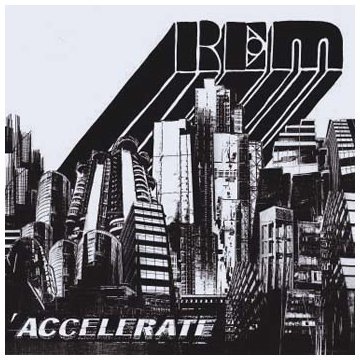
On March 31st, 2008, R.E.M. released their 14th studio album in europe, “Accelerate”, As the title implies, the record, possesses great urgency. Songs such as “Living Well Is the Best Revenge” and “Horse to Water” careen and lurch forward on the strength of buzzing guitars, lithe bass lines and racing tempos. The goofy, dissonant “I’m Gonna DJ” with lyrics such as “Death is pretty final / I’m collecting vinyl” cloaks its apocalyptic messages in crunchy glam riffs that hark back to 1994’s Monster.
To many, Accelerate felt like a decided sonic nod to the band’s past. After all, the lead single “Supernatural Superserious” boasts clear-eyed guitar jangle, and the acoustic-led “Until the Day Is Done” has the kind of elegiac folk vibe the band favored on 1992’s Automatic for the People.
OF course, R.E.M. had been threatening to “go back to their roots” for years; it was a running joke among fans that the phrase would crop up during album’s pre-release promotional cycles. But vocalist Michael Stipe for one demurred that Accelerate sounded like “a cousin” to 1986’s Lifes Rich Pageant and 1987’s Document.
“I’m really bad at looking backwards, and I’ve stated that a thousand times before,” he responded. “Even thematically, I had no idea where the direction the record would go. I try not to think, or overthink, what I’m writing about and let it come through me and be in some more unconscious voice.
“Thematically, I didn’t know ’til halfway through how the record was shaping up, and the different emotions that are touched on and the different scenarios that are played out in the record.”
Still, as the songs for Accelerate coalesced, the band did nod back to their early road warrior days. Peter Buck and bassist Mike Mills began working on instrumental demos in winter 2007, assisted by touring members BillRieflin and Scott McCaughey. The music they wrote was faster and more aggressive than other material they had written in years. Mills suggested the band work out its new songs in a live setting before recording them, as it had done in its early years so over five nights in July 2007, R.E.M. hunkered down at the Olympia Theatre in Dublin, Ireland, and workshopped their new songs and unearthed seldom-heard chestnuts (“Circus Envy,” “Kohoutek”) in front of a live audience. The album was recorded the album in a nine-week schedule. Stipe said, “We spent less time making this record than we have in 20 years”
As had been the case throughout R.E.M.’s history, a couple of these new songs (“On the Fly” and “Staring Down the Barrel of the Middle Distance”) never made it past the live tryout to a studio record. But other future Accelerate songs, including “Man-Sized Wreath” and the title track, were vital.
In several other notable ways, Accelerate was a firm step forward. For starters, the band worked with producer Jacknife Lee, at the recommendation of U2 guitarist the Edge. Stipe, who had enjoyed Lee’s work with bands like Snow Patrol and Bloc Party, said the producer was an asset in the studio.
“I think he’s got his own style, but more than anything, it’s probably just a directness, a straightforward way of communicating, which is something that the band, we were looking for in ourselves on this record. And he definitely has his own sound. I think he does, anyway. It’s a little different. He doesn’t necessarily come from rock music and so the universe that he collides with our universe is interesting.”
Accelerate is a real pop album in the sense that the arrangements are (generally) compact and don’t skimp on hooks. But, if anything, Lee’s influence—when combined with the ferocity of studio drummer Bill Rieflin—ensured this record possessed the kind of velocity that was largely absent on R.E.M.’s previous studio album, 2004’s Around The Sun.
Accelerate is also full of biting, observant songs touching on society and politics. “Houston”—a song “filled with sadness,” Stipe refers to the aftermath of Hurricane Katrina, which devastated New Orleans in 2005.
“I was writing from the point of view of someone who has barely survived Hurricane Katrina and then been displaced,” he explained. “Barbara Bush, the ex-First Lady and the president’s mother, said, ‘So many of the people were underprivileged anyway, so this is working well for them.’ Hello, Barbara, these are people who lost everything. I know people who lost family members, their homes, everything.”
In an odd twist, Accelerate feels extremely relevant to the post-2016 roiling political climate–even though Stipe told Huffington Post in 2008 that certain songs were written about the political chaos of that time. “All of the new songs are fictional. ‘Mr. Richards’ could be about any member of the current administration. “Living Well Is the Best Revenge’ is about the 24-hour, personality-driven news media. ‘Until the Day Is Done’ is about how the idea of America is so much greater than where this country has gone.
“The title of the album is tied to my conception of the 21st century as it has unfolded,” Stipe added. “I just thought we would have solved these problems by now. So here we sit, even as people feel, as I do, that things are moving way too fast. We are out of control.”
Accelerate landed at No. 1 on the album charts in the U.K., After the album’s release, R.E.M. embarked on what would be their last world tour as a band.
A deluxe edition of the album was released in addition to the standard edition; it includes a DVD featuring filmmaker Vincent Moon’s film 6 Days, which includes behind-the-scenes footage and performances of various songs on the album. Two B-side tracks, “Red Head Walking” and “Airliner,” are included as bonus tracks, along with a 64-page booklet. The vinyl version consists of two 12 inch discs each running at 45 RPM, and contains the full album on CD.
All songs written by Peter Buck, Mike Mills and Michael Stipe, except where noted.
“Living Well Is the Best Revenge” – 3:11
“Man-Sized Wreath” – 2:32
“Supernatural Superserious” – 3:23
“Hollow Man” – 2:39
“Houston” – 2:05
“Accelerate” – 3:33
“Until the Day Is Done” – 4:08
“Mr. Richards” – 3:46
“Sing for the Submarine” – 4:50
“Horse to Water” – 2:18
“I’m Gonna DJ” – 2:07
Bonus tracks
“Red Head Walking” (Calvin Johnson) – 2:11
“Airliner” (Buck, Mills, Stipe, and Scott McCaughey) – 2:21
“Horse to Water” (Live from Athens) – 2:17
“Living Well Is the Best Revenge” (Live from Athens) – 3:12
“Until the Day Is Done” (Live from Athens) – 4:06
“Supernatural Superserious” (Live from Athens) – 3:25
Our new album, Stains on Silence, is now available to pre-order on limited edition ultra clear vinyl, and comes with a different colour sleeve and poster. Only 200 copies.
It stands to reason that many vital albums come critically close to never being made. The eight-track upshot of doubt, upheaval and financial strain, Stains on Silence by Girls Names is one such release.
Following 2015’s blitzing Arms Around a Vision, and the parting of drummer Gib Cassidy just over a year later, the Belfast band suddenly found themselves facing down a looming void. “There was a finished – and then aborted mix of the album, which was shelved for six months,” reveals Girls Names frontman Cathal Cully. “We then took a break from all music and went back to full-time work. We chilled out from the stress of rushing the record and not being happy with it, as well as being skint with no impending touring on the cards and constantly having to worry about rent.”
The stumbling blocks that proved a strain became the album’s defining breakthrough. Recorded in various locations including Belfast’s Start Together Studio with Ben McAuley, Cully’s home and the band’s practice space, spontaneous creation, cut-up techniques and self-editing took centre-stage for the first time. “We started tearing the material apart and rebuilding, re-editing and re-recording different parts in my home in early Autumn last year,” says Cully. “When we got them to a place we were happier with we went back into Start Together Studio with Ben to finalise the mixes to what they are now.”
Where AAAV proved a brazen statement of intent, Stains on Silence bounds forth as its feature-length comedown. What could have seen the band buckle became an opportunity for approaching things tabula rasa. During its two-year transmutation, Cully, bassist Claire Miskimmin and guitarist Philip Quinn had a single aim for their fourth album: to make an old-fashioned record clocking in around 30 to 35 minutes in length that made the listener reach straight for repeat. From the Bang Bang bar-summoning swoon of opener ’25’ and the submerged disco doom of ‘Haus Proud’ to the rapt, dub-leaning ‘Fragments of a Portrait’, Girls Names have excelled in their goal by forging an LP of synchronous nuance and defiance.
Marked by the presence of drum machines and programming throughout, these eight masterfully-woven tales are once again commandeered by band founder Cully, whose words, understated yet defiant, mine purpose and meaning from the mire (“I want to bathe again, I want to swim again / In a pool of twisting bodies, blackened gold.” — ‘25’). But while Stains on Silence came critically close to never being made, having lived with it, reconfigured it, and guided its metamorphosis from flickers of inspiration and half-formed schemes, it’s both a statement of pure perseverance, and a head-on confrontation with ambivalence that couldn’t be more assured.