This track from The Shacks is delightfully undefinable. With elements of funk to folk to good old rock and roll, it’s one that’ll keep you on your toes. Vocalist Shannon Wise’s airy voice is reminiscent of that ’60s psychedelic sound, and during this 2:19 minute song, the slightly manic structure counteracts the dreamy lyrics and melody to create a unique listening experience. It’s not just a song to press play on and forget about, it’s one to pay attention to. It’s an adventure on which you can really enjoy the ride and the varying scenery presented to you.
Wye Oak’s fifth album, The Louder I Call, The Faster It Runs, begins with a warm-up instrumental, The brief track hums with a disorienting noise electronic pulses, snatches of ambient conversation and what sounds like a creaking floorboard but is dominated by someone picking out wobbly notes on an off-key piano, as if they’re coaxing the instrument back into tune. The meticulous exercise is a success: By the end of “(tuning),” the piano’s keystrokes are strident and melodic, and bleed directly into the second track, “The Instrument,” a bustling display of fizzy synthesizers and rain-on-tin drums.
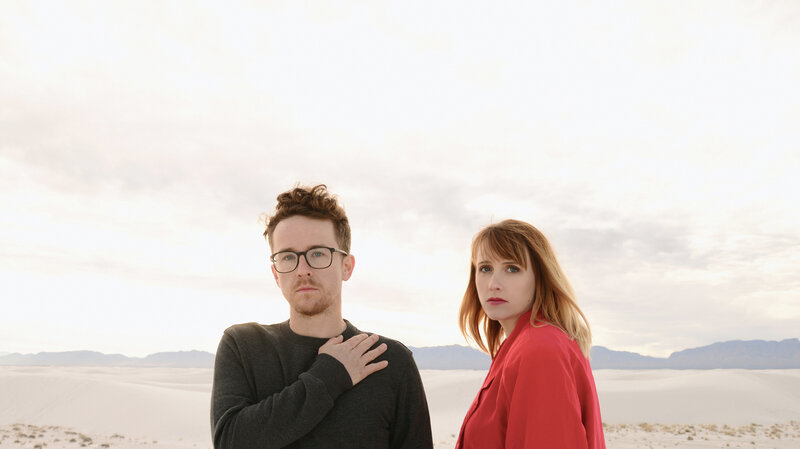
The idea that settling into a groove requires patience and subtle tweaks also happens to be Wye Oak’s career narrative. After forming in 2006, the duo (multi-instrumentalists Jenn Wasner and Andy Stack) slowly have become a more traditional indie-rock act into a keyboard-heavy operation. Although this progression was certainly due to Wasner’s growing interest in electronic music — outside of Wye Oak, she’s dabbled in R&B-tinged gloss-pop with Dungeonesse and maintains the synth-forward solo project, Flock Of Dimes.
On The Louder I Call, The Faster It Runs, Wasner and Stack sound even more emboldened than they did on Wye Oak’s last proper studio album, 2014’s Shriek. Here, the pair builds on the record’s keyboard and sculpts adventurous, pop bursting with contrasting textures. A stabbing kick drum propels the grimy stomp “Over And Over,” which is also daubed with spiderweb-like synths, while distorted guitar crashes to the forefront of the otherwise tranquil “Lifer.” Throughout other songs, dusky guitars dissect plush keyboard layers, and on “You of All People,” off-kilter rhythms push against Wasner’s ethereal vocals.
In a nod to this slightly askew vibe, The Louder I Call, The Faster It Runs‘ lyrics are oblique, and focus on coming to terms with life when things don’t quite go as planned. Rather than wallowing in disappointment, however, the speaker in these songs marvels at change and attempts to assimilate new realities. “As I expected, with time it hasn’t gotten easier / I have to work now at things that used to be like breathing,” Wasner observes on the Kate Bush-esque “It Was Not Natural,” while on “Lifer,” she admits, “I am not old, but I’ve become afraid of things I never was.”
The hard-fought wisdom shared on the sugary dream-pop gem “Say Hello” is even more striking. “We want our wishes to bow to us / But they have a life of their own,” Wasner reveals early in the song, before eventually drawing a poignant conclusion: “It is hard to admit you were all wrong / Accept some things are not for you.” She sounds wistful and resigned as she sings these lyrics; the sense of loss is palpable.
Yet The Louder I Call, The Faster It Runs is anything but nostalgic. The members of Wye Oak derive power from striding forward without the sonic (and emotional) baggage of the past. That’s evident in the album’s seismic musical leaps — the gorgeous “My Signal,” which pairs delicate string twirls with Wasner’s bravado-laden a cappella vocals.
From the album The Louder I Call, The Faster It Runs, out April 6th, 2018 on Merge Records.
Buck Meek, is the lead guitarist and founding member of Big Thief, just released he has a second single, “Ruby,” off of his solo album which is set to be released in full on May 18th. “Ruby” is a laid back alt-folk track that is filled to the brim with country-influenced guitar and charming lyrics. This two minutes and thirty three seconds is that small blip in time with a lover that seems to feel infinite. Buck Meek stretches this moment by guessing names, noticing lights left on, tasting strange Coca-Cola and having sudden existential thoughts, “Ruby, I’m too young to die.” This song explores every corner of a moment, leaving no stone unturned, allowing us to be there with him (and Ruby) completely. Buck Meek is already a much-loved member of Big Thief but is proving to be a true force on his own, and we cannot wait to be submerged in the rest of his story.
Wimberley, Texas is about 45 minutes out from Austin by car or truck — far enough to allow a music scene independent of Austin’s own to thrive in that hill country. Alexander Buck Meek grew up in that scene, among the jazz manouche, blues and outlaw country guitarists of the region. Even though Buck Meek’s work with Big Thief has taken him far away from his Texas home,
Buck Meek’s self-titled debut album comes out on May 18th via Keeled Scales
Nap Eyes are a remarkably consistent band. Their 2015 debut, Whine of the Mystic, contains nine tracks of breezy, itinerant indie rock that only occasionally rambles on too long. The follow-up, 2016’s Thought Rock FishScale, does more or less the same thing. So the question for these Canadian crypto-jammers is: mix it up on LP3 or nah? I’m Bad Now is another reliable work of songs from Nap Eyes, with stronger melodies and more consistency across the board.
Nap Eyes are a remarkably consistent band. Their 2015 debut, Whine of the Mystic, contains nine tracks of breezy, itinerant indie rock that only occasionally rambles on too long. The follow-up, 2016’s Thought Rock Fish Scale, does more or less the same thing. So the question for these Canadian crypto-jammers is: mix it up on LP3 or nah? I’m Bad Now is another reliable slab from Nap Eyes, with stronger melodies and more consistency across the board.
“Night Shift,” the opener on Lucy Dacus’s sophomore LP, is a scorching kiss-off to an unworthy ex that starts quietly and builds slowly. Dacus sings softly at first, her dark, honeyed voice gaining momentum as the acoustic guitar picks up support from bass, drums and then, two-thirds of the way through, an overdriven electric guitar that punches through the facade of calm as Dacus lets her voice loose. “Addictions” is no less impactful: chiming guitar at the start rolls into a chugging riff on the refrain, punctuated by a huge brass fanfare that immediately retreats—and never exactly repeats. The genius of the song is the way Dacus steers it in unexpected directions, the horns circling her voice here and veering off on their own there in a way that makes the tune take flight. It’s a talent she demonstrates throughout Historian.
Marmalakes, an Austin Texas-based rock-pop duo that infuses folky influences are “really nice guys”, their music is really nice, too. “New Sweden,” a single off of their full-length debut album Please Don’t Stop, is just a taste of what’s to come. Childhood friends Chase Weinacht (guitarist/writer) and Josh Halpern (drummer/producer) are able to capture the youthful energy of that time and make those nostalgic feelings warm, welcoming and close. And their local ties to Austin make those emotions even more palpable. “New Sweden” sounds like a homecoming of sorts, even though they’re poised to journey far and wide. Keep an eye out for Please Don’t Stop, out May 11th via Austin Town Records.
Folk-rock quartet Darlingside have enjoyed astronomical success in the UK since their 2016 release Birds Say. “Eschaton,” the band’s single from their recently released sophomore album entitled Extralife, meanders away from their bleary-eyed first release and explores a more electric sound. Campy synth sounds and electric guitars accompany Darlingside’s quintessential organic vocal harmony.
Darlingside (Don Mitchell, Auyon Mukharji, Harris Paseltiner, and David Senft) are a Massachusetts-based ensemble whose sound is an eclectic blend of 60s folk, clever wry wit, classical arrangements, soaring harmonies, and a modern indie-rock sensibility. The four vocalists and multi-instrumentalists construct every piece collaboratively, pooling ideas so that each song bears the imprint of four different writing voices. Playful vocal permutations swing from four-part unison to CSNY-inspired group harmonies, underpinned by rich, carefully crafted soundscapes. The final product threads the collective memory of the four songwriters, nodding to the music of their parents’ generation while establishing a sound that is all their own.
Filmed in the quiet comfort of a living room, Nashville indie pop band Frances Cone delighted us with a Buzzsession that carries an openness and honesty not often found in the genre. The band has been praised for their compelling, emotional live show and captivating recording Lead vocalist Christina Cone comes from a line of musicians, and it is clear that music runs through her veins in these energized, emotional performances. Director Sonya Goddy chose black and white visuals to mesh with the purity of Cone’s voice and the band’s sound, and we think you will love their sincere, simple style.
A song about the desperation of impending loss, “85” features the spacey whine of a pedal steel and the buzz of a beautifully arranged guitar, creating an undeniable electricity in the room. What starts as a lullaby-like whisper from Cone crescendos into something full of power. Her angelic vocals morph into an edgy grunginess that creates an enticing blend of folk and rock. In “Unraveling,” a militant snare drum contrasts with the gentility of the male vocals, and Cone erupts with a warm, soulful narrative about breaking down. By the last verse, Cone has learned to embrace the calm of letting something go, and you can feel the catharsis with her. We cannot wait for more from this captivating, inspired group.
Band Members
Christina Cone,
Andrew Doherty,
Adam Melchor,
Aaron Hamel,
A collaboration with Way Better Snacks, ‘Buzzsessions’ is an original video series produced by The Wild Honey Pie. With each new episode, we capture footage of our favorite bands as they record alternate studio versions of their songs.
The Brown Acid compilations have been collecting hard-to-find and obscure hard-rock tracks for more than two years now. The series’ sixth volume, Brown Acid: The Sixth Trip, will be released on April 20th.
We have an exclusive premiere from the set – a four-minute blast of psychedelic proto-metal called “Inferno” from the Canadian band Heat Exchange. The song dates from the A-side of a rare 1968 single, and like other tracks found on the Brown Acid compilations, the music serves as a bridge between the louder side of the ’60s garage-rock spectrum and the following decade’s move into heavier sounds.
The upcoming album includes 11 cuts by little-heard bands that slipped through the cracks over the years. But that doesn’t mean they don’t deserve some attention. Songs like Gold’s ferocious “No Parking,” the riff-heavy and reverb-drenched sway of Travis’ “Lovin You,” and Truth & Janey’s bluesy stomp “Midnight Horsemen” are lost nuggets from an era that churned out gems like these on a weekly basis.
Heat Exchange’s “Inferno” is one of our favorite cuts on Brown Acid: The Sixth Trip. It sounds a little like a soul-kissed Cream working their way toward the ’70s, with a killer riff as their guide. The Toronto group originally released the song on the Yorkville label; it was later included on a compilation that collected Heat Exchange’s handful of singles. It sounds right in place on the upcoming volume with other unearthed chunks of guitar-driven rock ‘n’ roll from the period.
We’re huge fans of the Brown Acidseries, which gathers largely forgotten garage, psychedelic and stoner-rock tracks from the ’60s and ’70s. Think of it as a companion to the essential Nuggets compilation but covering artists and records that never made it out of their hometowns. Brown Acid: The Sixth Tripis available for pre-order directly from RidingEasy Records now.
After the election, the Richmond artist Natalie Prass threw out the introspective album she’d been working on and started over. What she made next was music for everyone. Prass’s forthcoming sophomore album The Future and The Past play through the car stereo. Completed only a few weeks ago, the record blasts at peak volume, straining the small vehicle’s inadequate speaker system. Listening there is a very evident shift in who Prass is about to become.
“I hear a lot of frustration,” says Prass “But also a lot of courage.”
When Prass introduced herself to mass audiences (and was met with substantial critical acclaim) in 2015 on her self-titled debut, the album was a work invested in the emotions of personal heartache. Utilizing warm brass instrumentation and lilting string arrangements—all complementarily flourishing around Prass’s songcraft and airily affected vocals—the collection of songs felt simultaneously delicate and vibrant.
The songs on The Future and The Past do away with such nimble intimacy, revelling instead in a newfound boldness and authority. While Prass’s voice remains deceptively unassuming, the words behind it are now far less concerned with matters of the heart than with matters of life, and where Prass fits in what has become an increasingly uncertain socio-political landscape. Accompanied by a well of deep, danceable grooves that make heavy reference to the late ’70s and early ’80s funk Prass has made an album that imbues protest with celebration.
“I feel like it’s an, ‘OK, we have to keep going,’ kind of record,” she explains. “‘We’re going to get through this. Let’s dance. Let’s clap. Let’s all sing. Let’s just keep going. We’re living. Life is hard but it’s also really rewarding.’ I didn’t want it to be just about me. It felt like there was just too much going on for me to write a super personal this-is-my-experience-and-I’m-going-to-be-really-vague-about-it-so-you-can-maybe-relate kind of thing. No. I wanted to make good pop songs out of subjects that are a little harder to write about, or that people are scared to write about. I feel like a lot of people are writing political songs, but trying to make it into music that you would actually want to dance to and sing back is another challenge.”
Natalie Prass admits that The Future and The Pastwasn’t always intended to be so conscientiously charged. When she first started writing new songs last year, “It was basically turning into another heartbreak record.” Then, right before she was scheduled to begin recording in November, the results of the presidential election came in, hitting her in a way she wasn’t expecting. Though she doesn’t go into great specifics, she says, “The election brought back all of these ghosts from my past that I’ve just kind of pushed away. All of a sudden they started bubbling to the surface again. I started reevaluating things that I’ve experienced as a musician and as a woman—just thinking that it was normal—and realizing, ‘Oh, wait a second. That’s not normal.’ It all came crashing down on me at once.”
In one fell swoop, Prass decided to scrap her intended album. Keeping only a few holdover demos, she started over. “I was like, ‘I’m not releasing that record,’” she says. “There was no way. I needed to write more. So I wrote every day from January to early March. I wanted to give myself a chance to say something about everything. I would be so upset with myself if I just released some neutral record about love or whatever. That’s not what I need. That’s not what a lot of people need right now.”
“I would be so upset with myself if I just released some neutral record about love or whatever.”
Even before her inspirational U-turn, Prass once again sought out Spacebomb Records guru Matthew E. White to produce her album. White, who regards Prass as a sibling and lives just blocks away from her apartment, spent hours a day during this creative reset as a sounding board for Prass’s new direction and ideas. Looking back at his first collaboration with her, White admits that his own sense of musical style may have been more heavy-handed than it should have been.
This time around, he made a point to temper his influence. “My job on this record was to be as transparent as I could be and let her be Natalie,” says White, talking over the phone. After getting out of the way, White enthuses over the passion, directness, and clarity that Prass brought to the proceedings. “Natalie’s a very sweet person,” he says. “But there’s a lot of frustration, anger, and power in the record that comes from all the political and socio-political stuff, and hopefully that comes across. I think that’s very important to understanding her state of mind and the attitude she was asking of myself, the band, and the arrangements. All of that is tied together.”
With her rewriting blitz completed, Prass retreated with White and several of Spacebomb’s veteran session players to a small studio just outside Richmond’s city limits called Montrose Recording. Whereas Prass’s debut relied on the use of strings and horns to fill in musical gaps, for The Future and The Pastit was simply other voices coming in for support. “I needed songs that made me feel part of a movement,” she says. “There’s a lot of choir on it. It’s not like gospel choir, but a group of people singing in unison. I needed almost warrior songs to get me out of what I was feeling. It’s a very groove-heavy record. There’s a heavy, heavy pulse to a lot of the songs.”
Vibe in place, The Future and The Past features tracks such as “Oh My,” which Prass says is about the daily frustrations of a non-stop media bombardment (“I feel insane if I keep up with the news—it makes me feel like I’m going out of my mind and I start to unravel”), and “Hot for the Mountain,” which Prass says “originally wasn’t going to be political.” Of the latter, she explains: “It was just going to be about outcasts and how outcasts are actually beautiful and strong people that have different ideas and don’t fit in, but can take over the world with their imaginative way of thinking. That’s still the case to me, but it’s also like, ‘We represent our country, too.’ In high school I was definitely the weird kid. I had four friends and we were all really weird, but we were inseparable—that typical kind of high school story. Any time I see young kids that are a little different I feel so near-and-dear to them. Those are my people.”
The new album from Natalie Prass, The Future and the Past, out June 1.




 With her rewriting blitz completed, Prass retreated with White and several of Spacebomb’s veteran session players to a small studio just outside Richmond’s city limits called Montrose Recording. Whereas Prass’s debut relied on the use of strings and horns to fill in musical gaps, for The Future and The Past it was simply other voices coming in for support. “I needed songs that made me feel part of a movement,” she says. “There’s a lot of choir on it. It’s not like gospel choir, but a group of people singing in unison. I needed almost warrior songs to get me out of what I was feeling. It’s a very groove-heavy record. There’s a heavy, heavy pulse to a lot of the songs.”

