Julia Jacklin follow up to her 2016 debut, Don’t Let The Kids Win, with this assured second effort. “Crushing” untangles the feelings of a young woman adrift after the end of a relationship – a break-up she herself instigated – with truth and levity. Her sound is marked by dynamism: after moments of quiet yearning, the tempo builds on tracks like You Were Right and Pressure To Party, moving from alt-country to almost-garage and back again. Whether bringing up the possibility of revenge porn or how tiresome mansplaining is, her songs are intimate and revealing, carried by Jacklin’s unique folk voice.
Here is the acoustic version of her song “Comfort.”
The video features a stripped-down performance of Jacklin crooning the 10th track from her highly acclaimed 2019 album, Crushing, in her dressing room while on tour with First Aid Kit last fall. Draped in modest pastels, Jacklin (and her poignant songwriting) reels in all those who will listen with a voice that, while delicate, is a deceptively potent vessel for emotional intensity. Watch the video for “Comfort” below,
The most brutal (and best) song is the opener, ‘Body’. The scary dickhead ex-boyfriend – proud of being kicked off a plane for smoking, now in possession of nude photos of her – is perfectly drawn and unfortunately recognisable.
‘I guess it’s just my life, and it’s just my body’ she observes painfully.
These lyrics linger in your mind as Jacklin moves through emotionally potent singles ‘Pressure to Party’ and ‘Head Alone’, exploring cleverly the rocky path of self-realisation. ‘Hurts for a while, cured with time’ she sings hopefully on gentle closer ‘Comfort’. Like the worst break-ups you might find yourself flicking back to track one to do it all over again.
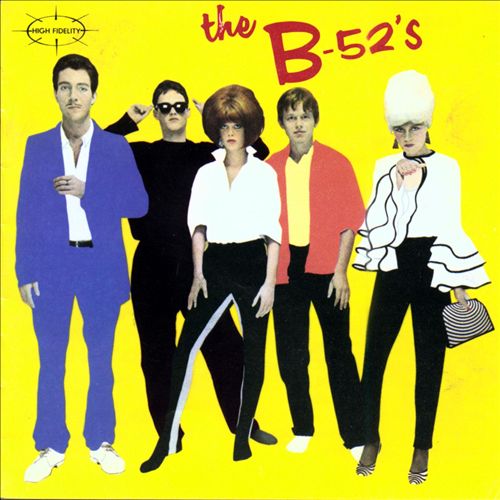
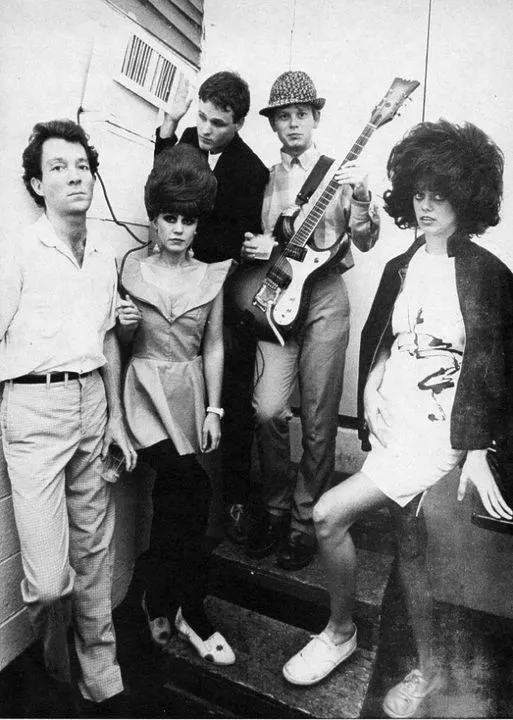
There’s no getting away from the campy cartoonish image of The B-52s and, frankly, they wouldn’t want you to. The band emerged in the late seventies as the kitschy cousin of punk-rock but as their sound progressed and began to involve more elements of surf-rock, rock-a-billy and so much more, their moniker soon changed. Its dark and moody sound often characterises post-punk, but the B-52s do a good job of brightening the place up. While the band’s contemporaries were keen to use post-punk to rally against the day’s political factions, the B-52s were far happier shaking their rumps and getting down on the dancefloor.
The B-52’s Released Their Eponymous debut LP was over 40 Years Ago, on 6th July 1979 a totally weird looking combo out of Athens, Georgia called THE B-52’s released their amazing self-titled debut long player. A wacky mix of retro dance-pop and surfy funk twisted upside down and wrapped up brilliantly as the new chic back then and still sounding damn hip today! A solid gold masterpiece, a bona fide classic.
Rolling Stone wrote: “The debut by the B-52’s sounds like a bunch of high school friends cramming all their running jokes, goofy sounds and private nicknames into a New Wave record. It turned out nobody could resist the band’s campy, arty funk, or the eccentric squeals and bouffant hairdos of Kate Pierson and Cindy Wilson…
Even in the weird, quirky world of new wave and post-punk in the late ’70s, the B-52’s’ eponymous debut stood out as an original. Unabashed kitsch mavens at a time when their peers were either vulgar or stylish, the Athens quintet celebrated all the silliest aspects of pre-Beatles pop culture — bad hairdos, sci-fi nightmares, dance crazes, pastels, and anything else that sprung into their minds — to a skewed fusion of pop, surf, avant-garde, amateurish punk, and white funk. On paper, it sounds like a cerebral exercise, but it played like a party.
The jerky, angular funk was irresistibly danceable, winning over listeners dubious of Kate Pierson and Cindy Wilson’s high-pitched, shrill close harmonies and Fred Schneider’s campy, flamboyant vocalizing, pitched halfway between singing and speaking. It’s all great fun, but it wouldn’t have resonated throughout the years if the group hadn’t written such incredibly infectious, memorable tunes as “Planet Claire,” “Dance This Mess Around,” and, of course, their signature tune, “Rock Lobster.” These songs illustrated that the B-52’s’ adoration of camp culture wasn’t simply affectation — it was a world view capable of turning out brilliant pop singles and, in turn, influencing mainstream pop culture. It’s difficult to imagine the endless kitschy retro fads of the ’80s and ’90s without the B-52’s pointing the way, but The B-52’s isn’t simply an historic artifact — it’s a hell of a good time.
The B-52’s distinctive sound can be attributed to the talk-singing of Fred Schneider, the complimentary highs and lows of Kate Pierson’s and Cindy Wilson’s vocals and the unique tuning of Ricky Wilson’s riffs all of which are on display in “Dance This Mess Around.” You can’t talk about these trailblazers without mentioning “Hero Worship,” where Cindy’s raspy wails created what could be considered the very first riot grrrl song ever. Then you have the infamous “Rock Lobster” with Ricky’s funky and famous riff, a biting organ and a cacophony of animal sounds laced through a song about a rock that “wasn’t a rock.” It’s stupid fun, and its absurdity launched The B-52’s to the moon (in the sky.)
Fred Schneider (vocalist) “No one likes to throw a party more than we do, but after almost a half-century on the road, it’s time for one last blow-out with our friends and family… our fans.”
Kate Pierson“Who knew what started as a way to have some fun and play music for our friends’ at house parties in Athens in 1977 would evolve into over 45 years of making music and touring the world. It’s been cosmic.”
Cindy Wilson: “It has been a wild ride, that’s for sure,” said Cindy Wilson. “We feel truly blessed to have had an amazing career encouraging folks to dance, sing along with us and feel they can be whomever they are with our music.”
If there is one thing I can say about this The B-52’s, it’s a party from start to finish. Opening with the morse-code beeps and a heist-movie-esque riff on “Planet Claire” cemented the space-age flair of these art punks.
Andrew Combs’ sophomore album, All These Dreams, marks a huge step forward for the Nashville singer-songwriter. Using hisgifts for lyricism and wry observation, Combs weaves tales of love, sin and redemption, in a style that brings together classic country and contemporary pop.
Ideal Man was produced by Sam Cohen (Kevin Morby, Benjamin Booker) and follows Combs’ critically acclaimed 5 Covers & A Song EP, which featured his interpretations of songs by The Strokes, Radiohead, Blake Mills, Lucinda Williams, and Loudon Wainwright III.
The album sees Combs pushing the boundaries of his music as he sets aside his acoustic aside in favour of atmospheric synthesizers and distorted electric guitars. Ideal Man was captured live in Cohen’s Brooklyn studio and also features Combs’ longtime collaborators, drummer Dom Billet and guitarist/keyboardist/bassist Jerry Bernhardt.
“One of the things I really admired about Sam is that he wants to capture a moment,” says Combs.
“In the past, I’ve tended to pursue a studio sound that was really polished and clean, but I wanted to do something different this time, and I knew that working with Sam would lead to more of a loose, psychedelic, spaced-out vibe. We did everything live in the studio, even my vocals, and there’s a sense of immediacy and discovery in those early takes that you can’t recreate.”
The first track to be lifted from the album is Stars of Longing, Combs wrote the albums song with some of his favourite writers including Joe Henry, Dylan LeBlanc, Jeff Trott and Kenny Childers.
“It really changed the way that I write songs,” he reflects. “When I paint, I might start with a very abstract idea or maybe even just a feeling, but from there I’ll paint and scrape and paint and erase and keep on painting until something starts to take shape. I just let nature play out.”
Don’t You Think You’ve Had Enough? is what Jennifer Clavin asked herself when she hit a turning point in her life. It’s also the title of the new record from Bleached, Jessie and Jennifer Clavin’s first LP written from a place of sobriety. That newfound perspective serves as the guiding force, yielding a courageous, honest, and sonically ambitious album. It’s a record about fighting both literally and figuratively for your life – and the clarity born from that struggle.
Writing began in early 2018, both in a Los Angeles practice space, and with friends and co-writers in Nashville. Producer Shane Stoneback (Vampire Weekend, Sleigh Bells) helped open every door to experimentation, wanting to be exploratory while keeping the sound singularly Bleached.
The resulting LP is explosive, grappling with the past; its twelve tracks mark some of the sisters’ most visceral, rawest songwriting to date – and some of their best. The work glimmers with inspiration found in touring with the likes of The Damned and Paramore. That arena-ready pop, incisively catchy, was a palpable influence helping to push Bleached’s sound in a new direction.
Following on from the release of “Kiss You Goodbye” last month, Los Angeles duo Bleached return this July with the romping “Rebound City.” The latest single to be unveiled from Don’t You Think You’ve Had Enough? is described by Jennifer Clavin as “a brief history of the mistakes that I’ve made,” with the front woman’s post-breakup mea culpa coming supported by a combination of exuberant power chords and thunderous drums.
off ‘Don’t You Think You’ve Had Enough?’ out July 12 on Dead Oceans Records.
The 7th studio album from The Dollyrots, The Dollyrots are a female-fronted rock n’ roll band from California. Titled Daydream Explosion, the upcoming album follows the huge success of their breakout album, 2017’s Whiplash Splash, and will be released in July this year.
Well known for being a very successful DIY band, the release of Daydream Explosion is the first time THE DOLLYROTS have worked with a label since their days working with Joan Jett‘s BlackheartRecords in the mid-late 00’s. The album has also turned out to be one that was particularly inspired by some tough times in the band’s home life, as their vocalist and bassist Kelly says, “it threw us for a loop in December when my dad passed away [of complications from heart disease and a type of dementia]. We had just a handful of songs written. But we managed to keep our kids happy through the holidays, and then every night we’d go into our studio and write. Somehow we wrote the best group of songs of our career in those few weeks.”
Alongside the announcement of the new album, the band have launched a new music video for the first song taken from the upcoming record; titled Everything.
Ty Segall presents a new single “Radio,” from his forthcoming album, “First Taste”, due August 2nd! Just in time for the July 4th festivities (such as they are), “Radio” should satisfy all our barely-subsumed bloodlust and immutable desire to rule while also providing a majestically boomboxable anthem to revel along with at the cookout.
“Radio” sizzles with koto by Segall, saxophone and piano by Mikal Cronin, bass by Emmett Kelly, percussion and drums by Segall and Charles Moothart, and back up vocals by Shannon Lay.
“‘Radio’ is a science non-fiction song,” says Segall. “We live in a Cronenberg film. It has Videodrome saxoheadphones. I am a slave to the new radio and so are you.”
First Taste is an introspective set for Ty Segall after the extroversions of 2018’s Freedom’s Goblin, yet just as steeped in hard beats. These twelve songs form a tightly revolving cycle of song and sound. Throughout, Segall reflects on family, re-encountering pasts, anticipating futures, and hits on oneness, self-esteem and the parents, while reaching outward, feeling for a shared pulse in the world around him.
Segall will play First Taste in full, alongside select albums from his expansive catalogue, in LA, New York, and select European cities with residencies starting this month and going through the end of the year.
A first taste of Ty? Hardly, but First Taste erects extreme new sonic skylines for Segall to soar over. His natural state of urgency is paired with a thirsty contemplative vibe as Ty examines both sides now, twisting some of his best songs and production wack into hard left turns both sweet and hot.
Despite coming up in a Georgia scene that also spawned R.E.M. and the Black Crowes, and spending time on the road touring with Neil Young and Soul Asylum following the release of their successful 1991 album Fly Me Courageous, Drivin N Cryin are generally overlooked in the discussions of Southern rock. As this new vinyl reissue makes clear, they certainly deserve to be part of the conversation. The LP is a sparklingly remastered and renamed version of the group’s 1997 self-titled album, originally released on the little-known Ichiban International label. And what it reveals is a band that is comfortable working in the vein of cowpunk (“Paid In Full,” a stomping cover of John Denver’s “Leaving On A Jet Plane”), jangling power-pop and dreamy psychedelia as they are in muscular barroom rock. Beneath it all, front man Kevn Kinney’s bruised lyrical sensibilities prove to be the true heart of the group, capturing the desperation, thrills and weathered spirit of a born romantic.
Drivin N Cryin proved much more resilient than many of their peers as well, as the band is still going strong today and still releasing quality music. It’s well past time catch up with these rock lifers.
Listening to Mal Blum’s music, you might grow a bit jealous of the people who get to actually hang with the singer/songwriter in real life. Thanks to their wry one-liners and their ability to create joyful sounds out of relentless self-scrutiny, it’s easy to picture Blum sliding up to brunch or a beach day dispensing a fluid mix of slightly weird yet perceptive jokes and deep insights about the endless struggle to understand oneself and others. These registers—humor and world-weary musing—converge on Blum’s latest record Pity Boy, bringing levity to songs about mental health, the limited resources we have to care for one another, and the grace to be found in taking responsibility for hurting others. Even when Blum’s themes shade darker, the music allows slants of brightness to permeate the gloom and offers frequent opportunities to jump up, dance around, and forget whatever problem might have initially inspired a song.
Opening track “Things Still Left to Say” summarizes what distinguishes Blum’s music from others working at the nexus of punk, pop, and confessional songwriting: specifically, Blum’s ability to diffuse difficult thoughts with humor (“Should I explain myself? / I’d rather read the dictionary!”) and their fascination with the metaphysical gap between one’s presence among others and one’s internal experience of that togetherness. “Do you miss me when I’m not around?” Blum sings, “Because you don’t see me when I’m here”.
In their refrains, Blum’s songs often rely on repetition but not in a way that grows annoying or rote. Rather, the strategy lets Blum turn a thought over and over, drawing different meanings out of it. The refrain on “Things Still Left to Say” goes, “I’ve got things still left to say / I’ve got phrases, I’ve got phrases”—and the contrast between the colloquial construction “I’ve got” and the pretentious word “phrases” strikes a somewhat hilarious, self-deprecating tone. Through this choice, the refrain both mocks the self-indulgent impulse to express oneself and insists on its importance. Blum never specifies what “things” they have to say, but that evasion is exactly the point. Sometimes we feel moved to speak but don’t quite know what to say.
Pity Boy is the first album that Blum recorded with their longtime touring band, The Blums, which includes Audrey Zee Whitesides on guitar, Barrett Lindgren on bass, and Ricardo Lagomasino on drums. The Blums contributed substantially to the arrangements here and created teflon-tight musical structures to shape Blum’s occasionally wordy writing. On “Things Still Left to Say,” for example, Lagomasino and Lindgren create a foot-stomping backbeat while Whitesides sprays arcing guitar riffs like rainbow confetti all over the melody. The song feels engineered to inspire head-bobbing; it’s almost impossible to take the ride without moving some part of your body along.
Pity Boy’s other tracks cleave into two fairly distinct sonic categories: cathartic pop-punk bliss and downtempo DIY acoustics. “Odds,” “I Don’t Want To” and “Gotta Go” exemplify the former through fast tempos, peppy power chords, and Blum’s slightly attitudinal delivery, recalling the adolescent paradox of raising a middle finger to the world while secretly stewing in insecurity. These songs hit a sweet spot between Green Day’s guilty-pleasure ear candy and the introspective, political observations made by Blum’s punk-leaning labelmates at Don Giovanni Records.
On its face, “I Don’t Want To” appears to be an anti-adulting anthem: a declaration of resistance to the tasks we must do to keep our lives on track under capitalism even if, like Blum, we don’t want to. Closer inspection reveals a confrontation with a friend who’s leveled up in the game of life, engaging in bourgeois activities (“You do yoga / And you don’t feel complicated about it”) and hitting their financial marks (“Pay your bills on time / Not month-to-month like some other guys”) with aggravating precision. As elsewhere, Blum deploys the musical syntax of fuck-you punk to sublimate their self doubt, as lines like this creep in: “I’ll never be like that / I can’t tell you why.” If you feel like blasting the song while doing something other than opening your mail, then Blum is giving you permission to go for it.
The second category of songs harkens back to Blum’s earlier, quieter compositions, turning down the feedback and softening the rhythm section to showcase poetic observations. “Splinter,” “Black Coffee” and “Salt Flats” all deserve a close listen, but “See Me” stands out among this group. “I don’t belong, though it helps to play along,” Blum sings, capturing a feeling that resonates between two valences of experience: the common suspicion of not fitting in and Blum’s own identity as a non-binary transgender individual in a cis-normative society. Blum may well have written the song before the Trump administration launched its assault on the civil rights of transgender people, but in its current context, Blum’s repeated plea of “Why can’t you see me when I’m right here?” insists on visibility not just in an interpersonal sense, but also at a crucial juncture in American political life. On album closer “Maybe I’ll Wait,” Blum acknowledges how their self-protective tendencies—whether stemming from brain chemistry or being hurt by others—sometimes lead to letting people down. “I’ve been trying to be better / Since I’ve known what better was,” Blum admits. Pity Boy offers both the comfort and joy of spending 38 minutes in Blum’s forthright yet mercifully light-hearted presence as they navigate how to speak politically in 2019 and try to be a better friend.
If you heard new solo electro-rock act Des Rocs’ first single last month, “Hvy Mtl Drmmr,”you’d know that he carries the same theatricality as the rock greats before him — only he’s far from old and crusty. In fact, he’s bringing the genre back with a freshness and modernity that’s a breath of fresh air for those who miss the days of blaring guitar solos and fuzzed out “We Will Rock You”-type anthems.
Before Des Rocs, Danny Rocco was just one half of the electro-rock duo Secret Weapons, who broke through with their soulful pop sound with the underground hit, “Something New.” When it comes to this new project, Danny says, “Des Rocs is something I’ve felt inside myself since the first day I started making music. It’s a more personal expression of the energies that make me tick.”
He is releasing his second single from the project, “Used to The Darkness,” a pulse-pounding, vocally soul-filled, fuzz boxed tune about being lost. But what does our new favorite rock star have to say about the supposed demise of rock music?
“Rock was the most culturally disrupting movement in music history, yet somehow today the word has lost something. So many artists worry about sub-genres and lose the greater energy of what it means to say you’re a rock artist. I think there’s a lot of great songs out there waiting to be revealed if we could embrace the “rock artist.”
Des Rocs may be a relatively young rock artist, but he’s already secured opening gigs for some of the biggest names in the biz, including The Rolling Stones and The Struts. His discography consists of an EP and a handful of singles, but his live performances are enough to satiate fans while waiting for an album.
Des Rocs just recently started playing live shows — and if you’ve seen his artwork, you’ll notice something important:
“I want you to see the artwork and think, ‘this is live.’ When I was a little kid and before I knew anything about recording, I would hear a song on the radio and thought these guys just went in there and played into microphones and that was the record. There was a certain live energy in the presentation of the music then that you don’t have today, and that is what Des Rocs is all about.”
He played stripped-down versions of two of those songs, “Let Me Live / Let Me Die” and “Used to the Darkness,” plus an unreleased track, “Hold On,”
Songs :1. Let Me Live / Let Me Die 0:30 2. Used to the Darkness 5:30 3. Hold On 12:15
Des Rocs Live at Paste Studio NYC live from The Manhattan Center
Exclusive to Vivid LIVE, alternative British rock legends The Cure brought their magisterial, slow-burn masterpiece “Disintegration” to the Opera House Concert Hall for five shows to mark the 30th anniversary of their career-defining epic. This was the world premiere of these 30th anniversary performances, and their only Australian engagement. This live stream was directed by British filmmaker Nick Wickham, a close collaborator of The Cure’s who is known for his work with Iggy Pop, Joe Cocker, Annie Lennox and Madonna.
Released in 1989, Disintegration peaked at No 3 in the UK album charts, making it the band’s highest-charting record. Songs such as Lullaby, Lovesong, Pictures of You and Fascination Street cemented the band’s success in the United States too. By 1992, the album, described by this publication as “exquisitely morose”, had sold more than three million copies worldwide.
The Cure played the record with a full band, featuring lead singer Robert Smith alongside Simon Gallup, Jason Cooper, Roger O’Donnell and Reeves Gabrels.
This will be the second time the Cure have played Vivid Live after 2011’s Reflections shows, at which the band played their first three albums in full: Three Imaginary Boys, Seventeen Seconds and Faith.
This time, the band will play Disintegration along with other tracks from their back catalogue.
Today marks 30 years since the release of the Disintegration album – and we are very pleased to announce to Cure fans around the world that we will be global live streaming our final performance from the Sydney Opera House on 30th May, where we will be playing the album in its entirety – plus extras! – at Vivid LIVE. We look forward to celebrating the anniversary of this special album with you all… …And remember: this album was mixed to be played loud… so turn it up!” — Robert Smith, 2nd May 2019.
The Cure’s fifth and final performance of “Disintegration” at Sydney Opera House on 30th May 2019
Setlist:
B-Sides and Demos 1. Delirious Night 17:20 2. Fear of Ghosts 23:44 3. No Heart 30:54 4. Esten 34:20 5. 2 Late 38:17 6. Out of Mind 41:10 7. Babble 44:45 Disintegration 8. Plainsong 49:15 9. Pictures of You 59:31 10. Closedown 1:06:44 11. Lovesong 1:11:00 12. Last Dance 1:14:40 13. Lullaby 1:19:54 14. Fascination Street 1:24:46 15. Prayers for Rain 1:29:47 16. The Same Deep Water as You 1:35:34 17. Disintegration 1:44:47 18. Homesick 1:53:10 19. Untitled 2:00:18 Encore 20. Burn 2:10:55 21. Three Imaginary Boys 2:17:52 22. Pirate Ships (Wendy Waldman cover) 2:21:30