“The Hot Rats Sessions” box set celebrates the 50th anniversary of one of the greatest albums in the history of recorded music, and will be released on December 20th .
The original 1969 Frank Zappa album was the first to be recorded on a prototype 16-Track Tape Machine. Self described as a “Movie For Your Ears,” it was the first solo outing for the composer and the album that put FrankZappa on the map as a guitar player. The recording sessions produced a wealth of material that ended up being sprinkled among multiple releases during FZ’s lifetime.
The mostly-instrumental LP came on the heels of the breakup of the original Mothers of Invention, making it clear that Zappa was a force with which to be reckoned as a composer. Described by the artist as “a movie for your ears,” Hot Rats was a fusion of jazz and rock as only Zappa could create. Recorded on 16 tracks (a first for a Zappa album), it featured the producer/arranger/guitar virtuoso (who also played bass and percussion) joined by The Mothers’ Ian Underwood as well as Max Bennett, Johnny Otis, Shuggie Otis, John Guerin, Paul Humphrey,Ron Selico, Don “Sugarcane” Harris, and Jean-Luc Ponty. Don Van Vliet, a.k.a. Captain Beefheart, provided the vocals on the lone non-instrumental, “Willie The Pimp.”
The “Hot Rats” album, the 2nd solo album by American musician Frank Zappa, released on October 10th, 1969. Five of the six songs are instrumental; the other, “Willie the Pimp”, features vocals by Captain Beefheart. It was Zappa’s first recording project after the dissolution of the original Mothers of Invention. In his original sleeve notes, Zappa described the album as “a movie for your ears”. Zappa composed, arranged and produced the album himself, his primary instrument being lead guitar. The song “Peaches en Regalia” is widely recognized as a modern jazz fusion standard and is one of Zappa’s best-known songs. The colourful, psychedelic aura of the late sixties is apparent in the graphic design and photography of Hot Rats, though Zappa himself disdained the psychedelic movement. The front and back cover photos by Andee Nathanson use infrared photography and reflects Zappa’s taste for striking visual images, combined with the absurdly humorous. ecause Hot Rats largely consists of instrumental jazz-influenced compositions with extensive soloing, the music sounds very different from earlier Zappa albums, which featured satirical vocal performances with extensive use of musique concrète and editing.
This new Anniversary mammoth six disc collection documents and compiles every composition recorded during those days in July 1969, along with an abundance of rare mixes, Vault nuggets and complete basic tracks mixed from the original multi-track masters by Craig Parker Adams, and mastered by Bob Ludwig in 2019. Additional gems include images by original Hot Rats cover photographer, Andee Nathanson, session photos taken by Bill Gubbins, liner notes by Matt Groening and essays by Ian Underwood, Andee Nathanson and Vaultmeister Joe Travers. The box set also includes a Zappa Land board game in celebration of this release.
Track listing and more info here: http://bit.ly/HOTRATS50
We are happy to finally announce the upcoming release of the second installment of the Go-Betweens anthology series, which will be released worldwide on December 6th.
“G Stands For Go-Betweens Volume 2” extensively documents the band’s creative output in the latter half of the Eighties in an ambitious box containing five vinyl LPs, five compact discs and an extensive 112-page book, featuring a trove of archival photos and extensive historical liner notes from founding member Robert Forster, along with additional pieces from guest essayists, fans and contemporaries.
The box set captures the band’s output from 1985 through 1989 and includes the first vinyl re-pressings of the three mid-period studio albums in over thirty years (“Liberty Belle And The Black Diamond Express,” “Tallulah” & “16 Lovers Lane”), all re-mastered from the original analogue tapes. “G Stands For Go-Betweens Volume 2” also includes an eighteen-song double LP of the band performing live at London’s legendary Town & Country Club on May 10th, 1987. Additionally, the set comes with five compact discs of their b-sides, radio sessions & rare, hard-to-find and unreleased demos.
Jack White will mark the 20th anniversary of The White Stripes’ self-titled debut with a new companion vinyl release.
The White Stripes XX (as its called) contains previously-unheard outtakes from the album’s recording sessions, a live recording of a September 1999 performance in Raleigh, NC, a DVD containing performance footage of two Michigan shows that year, a 24-page archival booklet featuring never-before-seen photos, lyrics, flyers, and other insights, all housed in a hard-cover hinged case.
The cache of unreleased material includes an acoustic demo of “Dead Leaves”, alternate takes of “Jimmy the Exploder”, “I Fought Piranhas”, and “Wasting My Time”, and cover of Burt Bacharach’s “Little Red Book” (listen to a sample here). Burt Bacharach and Hal David may have written “Little Red Book” for the film What’s New Pussycat?, but Love’s version (their 1965 debut single) was clearly the inspiration for The White Stripes’ cover, which will be on the 20th Anniversary Box set for their debut album. Jack and Meg play this like they wrote it.
Other rarities include versions of “Screwdriver”, “Sugar Never Tasted So Good”, and “”Why Can’t You Be Nicer to Me?”. All of these tracks were newly mixed by White in celebration of the album’s 20th anniversary.
The White Stripes XX is available through Third Man Records’ Vault subscription program. You can get more info and sign up here.
In related news, Jack White is presently touring the country with his other acclaimed rock band, The Raconteurs.
When Fruit Bats announced its new album and signing to Merge Records late last year, singer/songwriter Eric D. Johnson did so by “Getting in a Van Again.” The 15-minute mockumentary presented a surrealist view of the music industry, while teasing the very real themes explored on his previous album Gold Past Life—Released on June 21, 2019. “I know I said I’d be around this year, but here I am getting in a van again.”
Gold Past Life marked both an end and a beginning. It’s the end of an unintentional thematic trilogy of records that began with 2014’s EDJ (a solo record by name, but a Fruit Bats release in spirit) and hit an emotional peak with Absolute Loser. They encompassed years of loss, displacement, and the persistent, low-level anxiety of the current political climate. They were written in the wake of friends who left these earthly confines and families that could have been.
“I wrote music to comfort myself,” says Eric D. Johnson of those times. “It was a soothing balm.”
But these salves, these songs on Gold Past Life, also represent new beginnings—the journeys that await after making it through troubled times.
That spiritual sense of place is particularly important to Johnson, who has always been fascinated by dreams and the subconscious stories they can tell. “Some of these songs are directed at specific people, some at amalgams of people, and lots at myself, or the subconscious version of myself—that version like how they say you’re every single character in your dreams,” he says. “Even the artwork represents the notion that we’re all the characters in our dreams. Here’s me looking at you: I’m a deer on a beach looking you dead in the eye and licking my lips.”
The new record also features more keyboard influences and a range of guests including Greta Morgan (Springtime Carnivore, Vampire Weekend), Neal Casal (Circles Around the Sun), Trevor Beld Jimenez and Tim Ramsey (Parting Lines), Meg Duffy (Hand Habits), and more. It also sees his working relationship with producer and engineer Thom Monahan (Neko Case, Peter Bjorn & John, Devendra Banhart) hit its stride.
According to Johnson, “Fruit Bats has been a cult band for a long time.” he hopes to bring more immediacy to the music and share positivity, hope, and motivation to keep on keepin’ on with a wider audience.
“Fruit Bats makes existential make-out music,” he describes with a chuckle. “But you’re also welcome to dive into it deeper if you want. Good pop music should be sublime like that.”
Today “Foxtrot” sounds as unique, dramatic, thrilling and ambitious as ever. It’s where the classic line-up of the band came fully into being; it’s when they realised how much they could do, how far they could go. “It was about creating a film for the ear rather than the eye,” says Steve Hackett. “And it even got to Number 12 in the charts,” Tony Banks laughs. “Of course the next week it went down to Number 27 or something, but it was our first moment so we felt that we were underway, that we were heading somewhere different. “Foxtrot” was where we first started, in my opinion, to become a significant band.”
Recorded in 1972, almost exactly a year after the Nursery Cryme sessions, “Foxtrot” saw the group take a huge leap forward – both sonically and visually. Having already performed in Europe, Genesis booked dates in the US for the first time, and worked up a suitably ambitious live show – a key development of which was Peter Gabriel’s adopting of stage costumes.
While all of its tracks are strong and inventive, Foxtrot is unavoidably dominated by the 23-minute, seven-part suite which graced what used to be side two. Supper’s Ready is one of the towering landmarks of prog, dovetailing short surreal pieces with moving neo-classical reprises and recapitulations, serene flows with shuddering staccato, parochial realism with pulchritudinous dreams. Across this fire from the skies, Peter Gabriel sings of battles between good and evil and love and war, of firemen, farmers, flowers (‘a flower?’), and a frog who was a prince (who was a brick) (which was an egg) (which was a bird). And of 666 and a new Jerusalem. Startling then, it remains a stunning achievement of vision and scale. Roger Taylor of Queen has called it, “at separate times, homely, beautiful, tortured and epic.” ‘We’ve got everything,’ it declares presciently. ‘We’re growing everything…’.While Supper’s Ready is the main course, Foxtrot should however be appreciated as more than just a set of appetisers leading up to it. It’s strange to learn that the album came about in a relatively ramshackle manner: no great master plan had been conceived.
A surprise to the rest of the band, Gabriel donned his wife’s red dress and a fox mask during their performance of Nursery Cryme’s ‘The Musical Box’ at Dublin’s National Stadium, on 28th September 1972. Further costumes were unveiled as the tour progressed (among them an “old man” costume that came into its own during performances of ‘The Musical Box’), while songs from Foxtrot were marked out by some of Gabriel’s most defining on-stage characters, including Batwing (a cape accessorised with wings, adorned during Foxtrot opener ‘Watcher Of The Skies’) and a large flower-headed guise, visualising the reference to Narcissus in Foxtrot’s epic closer, ‘Supper’s Ready’.
B-sides are a relatively rare commodity for progressive rock bands. They often refused to stoop to the level of those pop proletarians, issuing singles. Additionally, if they had spare song fragments lying around, they could simply incorporate them into epic side-long suites. The track ‘Supper’s Ready’, which closed Genesis‘ 1972 album Foxtrot, was a bunch of shorter songs juxtaposed into one twenty minute piece.
‘Twilight Alehouse’ was recorded during the sessions for Foxtrot, although the band had been playing it live since 1970. It eventually surfaced as the b-side to ‘I Know What I Like in Your Wardrobe’, a single from 1973’s Selling England by the Pound.
Rather than a half-baked idea, it’s a fully formed Genesis song from their prime. It would arguably have been the weakest song on Foxtrot, but only because Foxtrot is a career highlight. ‘Twilight Alehouse’ bears the trademarks from the group’s progressive era – Peter Gabriel’s husky vocals and flute, Phil Collins’ virtuoso drumming, and Tony Banks’ dominant organ. Steve Hackett’s guitar is more prominent than usual, especially in the mellow opening section, where his rhythm playing is mixed louder than usual.
Because it’s a b-side, it’s hard to find information on who wrote the lyrics, which is always an interesting question for early Genesis – Gabriel was generally the strongest lyricist, but it’s not immediately obvious who penned these words. It’s an unusual lyric, almost like a love paean to wine from an alcoholic.
The band sought a producer who could capture their improving live sound, and to that end had meetings or sessions with Paul Samwell-Smith, John Anthony and Bob Potter. None was quite the right fit so David Hitchcock, whose work with Caravan had impressed, came in, with the more outspoken engineer John Burns.
Steve Hackett was fatigued by the heavy touring schedule and still somewhat intimidated by his fellow band members’ prowess (“these guys are so good”, he’s recalled thinking).
In 2012, having just re-recorded Supper’s Ready and others for his Genesis Revisited II album, he remembers the steps towards Foxtrot more fondly. “There weren’t a lot of days off; we were a hard-working live band,” he says. “Whereas with its predecessor, Nursery Cryme, we’d taken the summer off and written and recorded together as a unit, bonding the team, this time we were on the run, in and out of the studio. I remember flying back from Italy to be in there a day or two ahead of the others, who were travelling by road, just to finish off my guitar parts on the end of Supper’s Ready.”
We generally agreed to a man that we recorded Watcher Of The Skies too fast. To my ears now it sounds like a young band desperate to get the notes right in a race to the finish. Once we’d been playing it live for a while, we relaxed into it and it sounded bigger. The version that ended up on
Genesis Live is more in-the-pocket. That rhythm is almost impossible for any band to play perfectly! It’s full of pitfalls.Yet there’s lots of weird and wonderful stuff; it’s a band at its most creatively eccentric.”
Rehearsals (and writing sessions) in a variety of locations may have coloured the album’s angles and attitudes. Hackett recounts that Foxtrot was worked up in a variety of “drab, functional” places, until they moved (without Gabriel, who added the words later) to the Una Billings School Of Dance in Shepherd’s Bush. “There were girls dancing upstairs, learning their tap-dance and what-have-you. And the sound of that, those rhythms would come down through the ceiling. We were below in what had been a refectory, so you had a counter here and a gobstopper-dispensing machine there. It was all a bit strange, and the atmosphere influenced our subsequent efforts. Much of Supper’s Ready was written in the two weeks there. With the tap-dancing upstairs, you couldn’t be too serious for long, because you’d hear them: clumpety clump clump.
Watcher Of The Skies had grown out of Banks “fooling around” with the Mellotron. “We bought one of the ex-King Crimson Mellotrons,” he notes, “and Robert Fripp insisted it was the one they’d used on In The Court Of The Crimson King. Mind you, he had three, and I’m sure he said that about all of them when he was selling them.”
Hackett too emphasises the importance of that instrument to the album. “I’d kept hammering on that we should get one, saying it’d make our story-telling abilities so much greater. It meant that the band could function as a time machine, with all these various mythologies. The idea was that all the old instruments were there within the Frankenstein that was the Mellotron. It was like an alien orchestra being beamed to you by satellite. And you need to be able to smell the dust from time to time. It had a… cold warmth. I think it’s actually the most influential keyboard instrument in the whole of rock.”
Of course Paul Whitehead’s surrealist sleeve design is as much a part of the Foxtrot “immersion” experience as that pyramid-prism is to The Dark Side Of The Moon. Gabriel certainly dived in, courageously donning his wife’s red dress and a fox-head for stage shows. “It’s interesting how the most cherished albums have the most cherished sleeves,” ponders Hackett. “I think for fans of it there was always that feeling of looking at it and thinking: I’m onto something here that other people don’t necessarily know about. One’s taste becomes tribal: these albums become important bonding elements. Where language leaves off, music begins, and you share a dream.”
Perth-based artist Daisies Net (Emma Stokes) releases On the Apple Island, her debut EP via Healthy Tapes featuring singles Go Far, Kunanyi and Sounds Rivulet. On the Apple Island was recorded and written during a six month period that Emma sought refuge in Tasmania.
“I had been really sick for a long time & trapped in a situation that was irreparably hurting me. I somehow bundled myself up and moved to Hobart without any definite local connections or places to stay. I’d never intended to record while I was there so the equipment I used to make this E.P. fit inside my carry-on luggage. These songs are the narrative of my time on the island; it was a bit strange & utterly surprising- Set against a backdrop of unparalleled natural beauty, a source of healing, treasured companionship, and real magic.”
The EP is intricate and elaborate, yet accessible, allowing the listener to become lost in the worlds Emma composes through the use of both field and studio recordings. Daisies Net’s part- surreal / part-ambient compositions are mostly made in bed – the project acting as an outlet for Emma teaching herself how to produce music to cope with the diagnosis of chronic illness.
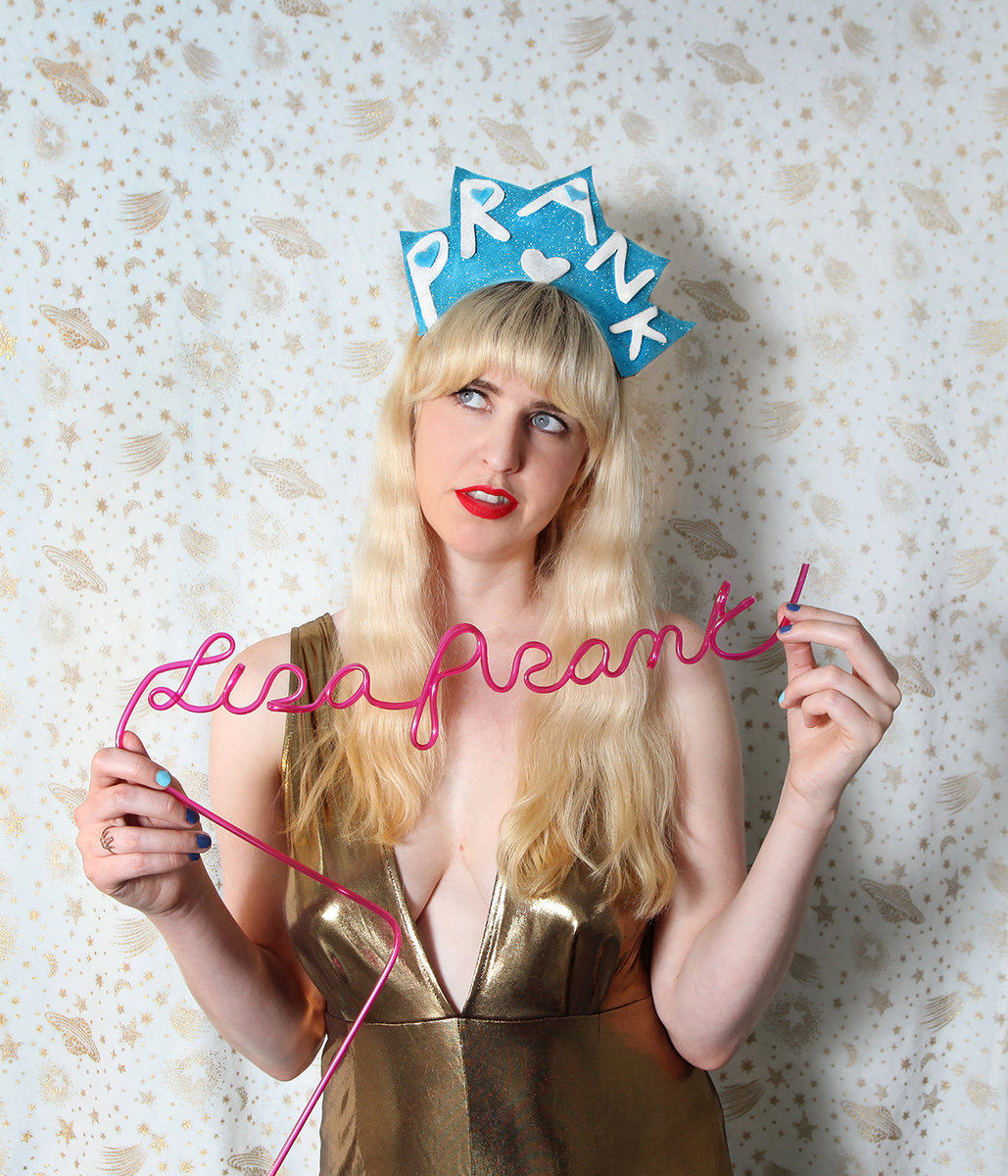
Lisa Prank is a true-blue romantic. In fact, “I’m very preoccupied with romance,” songwriter Robin Edwards admits. On her second full-length for Father/Daughter Records, Perfect Love Song, Edwards acknowledges the ultimate joke of love: that there is no perfect, so you’ll get tripped up while chasing it—but what else could possibly be more rich, more exhilarating, more everything, skinned knees be damned? Stitching together pop-punk panache and pillow talk introspection, Perfect Love Song finds Lisa Prank not in pursuit of the flawless impossible, as the title may suggest. Rather, she’s interested in the entire experience of love and learning through it. “I never learned how to get mad,” Edwards sings on the reflective “Get Mad”—but she did learn how to write totally gratifying pop songs about it. Perfect Love Song is an album that takes a soft-focus gaze at romance’s sharpest points and edges, both the exciting peaks and the scary cliffs.
As Edwards was navigating a drawn out, Lifetime-movie level heartbreak, she found herself drifting back towards the home she had in her friendships. She moved back into her old room in storied Seattle punk house, Spruce House, sharing a door with Tacocat’s Bree McKenna (who’s also her bandmate, along with Julia Shapiro, in the supergroup Who Is She?). She’d knock and ask McKenna for feedback on songs, who wound up playing bass on the record. To produce, Edwards tapped close friend and indie pop legend Rose Melberg of Tiger Trap, The Softies, and Go Sailor. Melberg’s artistic alignment and personal closeness to Edwards gave her near psychic insight into Lisa Prank’s sonic goals, but at enough remove to provide breakthroughs to Edwards at stuck points (Melberg also co-wrote “Telescope,” and sang harmonies on several tracks). It was a collaboration that felt like coaching, leading her achieve her ideal polished-punk sound, alongside Ian LeSage who engineered and mixed the record at the Vault Studios. Recording was fun, too. Friends were around, creating the kind of lighthearted, mutually supportive feeling one needs surrounding them feel like themselves again after retrieving their heart back from a breakup. Lisa Prank’s last record, Adult Teen, used a Roland MC-505 drum machine, for Perfect Love Song, she traded it in for real life drummer, Tom Fitzgibbon.
Writing Perfect Love Song was Edwards’ opportunity “to personally say all the things that I wanted to say, or wish I had said.” In “Scream the Truth,” a gaslighting extinguisher anthem about reclaiming your sanity, she gets to be mad on her terms: “I wasn’t losing my mind,” she sings. Says Edwards, “it’s about being frustrated seeing someone else navigate the world as a very surface-level nice person who is performatively feminist and social-justice minded, but knowing the truth of how they treat people in their personal life.” The opening track, “Rodeo,” likens the searing, sinking-in feeling of a post-fight realization—“‘cause ‘I don’t wanna be in love’/means I don’t wanna be in love/with you”—to the dangers and desires of the spectacle of love. “By now I know/this is the rodeo I chose,” she sings, electing to get back on her horse and ride, acknowledging the pain that’s part of that game.
“I wish a different emotion was so alive and exciting to me,” Edwards laughs, “but love is just the one that feels so visceral and consuming.” Perfect Love Song explodes the roller coaster snapshots of romance in bursts of poppy neon bright color, with Edwards’ cheeky perspective polished to full pop-punk shine. And the mission of that genre, one could argue, is to keep on bopping along through the bullshit of life. To stay buoyant, to find fun in the big what-ifs and whatevers. It what keeps the dream Lisa Prank afloat: as she sings on “Constellations,” “still I keep on hoping this is some perfect love song/and we’ll go on and on and on, and on and on, and on.”
Two stunning BBC sessions from the heyday of the british band fronted by Steve Winwood and Jim Capaldi. One shot recorded before the release of the debut album on Island Mr. Fantasy, the second – December the 11th – right after. Facing the beginning of a new groove revolution after the blues explosion.
Things are getting more sophisticated down here. The band just released his debut album and is ready to roll. Second self-titled album is almost there, so a number of key tracks like Pearly Queen,Who Knows What Tomorrow May Bring and Feeling Alright. Three different radio sessions from winter and the hot summer of ’68.
Classic Radio Broadcasts: On their formation in April 1967 Traffic experienced instant success and rapidly expanding popularity. That they accomplished so much in such a short space of time attests to the talent of the band s particular blend of creative forces, but also might explain why the first few years were so tumultuous. Although Steve Winwood was already a widely respected figure due to his time with The Spencer Davis Group, the strength of Traffic’s debut single, Paper Sun, took many observers by surprise. A number 5 hit in the UK, the song signaled that Winwood had matured into one of the most significant figures in British music and, as further material appeared over the course of 67, that Traffic were a major arrival on the scene – Dave Mason’sHole In My Shoe gave the band a UK number 2 in August and November s Here We Go Round The Mulberry Bush their third successive top ten hit. When the group s debut album, Mr. Fantasy, arrived in December, it was to rapturous acclaim on both sides of the Atlantic; but trouble lay ahead. In early 68 Dave Mason quit, citing artistic differences. Although he briefly re-joined the band during sessions for their second album, Traffic, he left again shortly after and Traffic never really recovered. Winwood exited in early 69 (to the shock and surprise of Jim Capaldi and Chris Wood) and formed Blind Faith alongside Eric Clapton & Ginger Baker.
Despite their eventual reformation in 1970 (minus Mason), 67- 68 thus stands alone as the original pure era in Traffic s history. With the impact that the band made on British music at the time, they fast became fixtures of radio programming, on John Peel s Top Gear show in particular. Collected here are the complete BBC performances by Traffic from across 1967-68, a fascinating journey that traces the evolution of the band over the course of its quintessential period, from Paper Sun in September 67 to Feelin Alright in July 68, Dave Mason’s last great gift before he walked.
The Shelters fan a fresh flame with classic fuel on their second full-length, “Jupiter Sidecar”. Ebbing and flowing between rock ‘n’ roll roots, surf swagger, synth swells, and unassuming pop ambition, the Los Angeles-based group thread it all together with catchy melodic hooks. This approach quietly cemented them as a fan and critical favorite following the release of their self-titled full-length in 2016, which was produced by Tom Petty.
The Shelters returned to his Malibu studio to craft Jupiter Sidecar and to mourn the loss of their friend and mentor – and in the process learned to rely on one another like never before.
Led by the indefatigable Brent Rademaker (Beachwood Sparks, the Tyde) the band’s sound on its third album is more or less a swirling stew of cosmic American country in the style of Gram Parsons, a kind of happy-go-lucky, Beach Boys-esque sunshiny pop and a rather careful Tom Petty and the Heartbreakers-influenced rock. – WINNIPEG FREE PRESS
The real success of GospelbeacH’s music is the effortless way that they combine different styles and influences within their classic Southern Californian sound. – FEAR AND LOATHING
The joy that emanates from each of these songs, is a beautiful thing to behold, and digs deep into the now quaint aspects of peace and love. For matters of the heart, smoke deep, dig it deep, and turn on. – ECHOES AND DUST
This album has layers. Taking Neal Casal out of it for the moment, Rademaker and songwriting partner Trevor Beld-Jiminez have brought GospelbeacH to a unique place with this latest effort – all three studio releases have three dramatically different, but complementary soundscapes. “Pacific Surf Line” has a heavy Crosby/McGuinn/Hillman Laurel Canyon vibe, 2017’s “Another Summer of Love” brings out more of the Tom Petty influences, especially with the Benmont Tench-like wizardry of keyboardist Jonny Niemann, and title track “Let It Burn” is something else. It’s somewhere between Bob Dylan’s “Blood On The Tracks” and Tom Petty’s very underrated “Echo.” – TAHOE ON STAGE
Let It Burn” is GospelbeacH’s exquisite follow up to “Another Summer Of Love” and the third proper studio album by the famous Los Angeles rock combo. The band’s prestigious collective resume includes members of Chris Robinson Brotherhood, Beachwood Sparks, Circles Around The Sun, The Tyde, and Hard Working Americans.
There’s probably no sweeter SoCal sound circa 2019 than this band. – BLURT MAGAZINE
Its mood is a winning blend of downbeat and defiant, in a way a reflection or snapshot of modern America itself. – HARMONIC DISTORTION
This record’s a real peach of an album, but one that is tempered by the tragic loss of guitarist/ vocalist Neal Casal. – TERRASCOPE