Catholics is quirky hodgepodge of musicians each varying in their respective musical backgrounds. Directionally, the music tends to be slightly more loose than the principles behind the process. The bands inclusionary approach often includes various satellite members both on the road and in the studio.Guilt is a time capsule of the band’s first few years, consolidating the songs they’ve perfected through live shows but haven’t yet shared through recordings. Pieced together over the past 2 years, Guilt features a handful of heavy hitting instrumental tracks proceeded by a cover of “Asphalt” by their Virginia-based friends, Pygmy Lush.
All songs written and performed by Catholics, except Asphalt. Asphalt originally written and performed by Pygmy Lush. “Chicago On Meth: Scene Two” co-written by John Shafer.
Catholics is Tyler Beall, Tallon Knight, Andy Krepelka, and Andrew Munz.
Drums on all songs performed by Price Smith. Additional guitar on Lowercase Agenda by Cameron Davidson. String arrangements on Chicago On Meth and Asphalt by James Anderson. Trumpet on Lowercase Agenda and Chicago On Meth by Patrick Marzett. Catholics releases debut Ep “Guilt” On Refresh Records
Chastity’s second full-length record, “Home Made Satan”, is a more barbed direction for Whitby, Canada-native Brandon Williams. It’s an emotional and political concept record, the 2nd instalment of a building trilogy, from the perspective of a young man who’s spent too much time alone, allowing paranoia to drown out the reality of the outside world. It’s an album about fear, an intense meditation on youth, suburban life and extremism in a sinking Western World.
Williams, who produces all his own music, created something with a strong cinematic nature, a record that sounds somewhere between My Chemical Romance and The Smiths (even as he cites Morrissey’s alignment with the UK’s far-right as the complete opposite of his own political view). Recorded in a small studio in London, Ontario, with his full live band in the few weeks between a European tour with Fucked Up and a seven-week North American tour, Williams crafted Home Made Satan like he was producing a film—his bandmates were the cast members, his engineer the cinematographer, and Williams the writer. “It’s visual,” he says. “I’m scoring this picture I have, and trying to get it as close to people’s ears as it is in my mind.”
The new songs are gothier and hookier than ever, recalling ‘80s goth staples like The Cure. Home Made Satan’s got more eyeshadow than 2018’s acclaimed shoegaze-meets-hardcore Death Lust, and it’s got pop sensibility for days. Williams has toned down the reverb, too, on the new record, with an emphasis on vocals and lyrics. Home Made Satan, with its lines about commies and masochism and the evangelical right, is meant to sing along to.
And when you do, you’ll mostly be singing about America’s fall. About hyper alienation and xenophobia, the people’s struggle for happiness, those without access to community who become afraid and more alone. “It feels like America’s constantly coming undone at its seams,” Williams says, “and it’s falling apart on its most vulnerable people first.” He’s jumped more into politics on this record, with an intent to represent those often unrepresented.
Through songs like “Flames”—a gauzy, hook-heavy, tongue-in-cheek tune that draws a line between sexual fetishism and the fetish of the “American dream,” and parallels bleak emotion with bleak economy—and “Last Year’s Lust,” a melancholy track about the dark thoughts we get when we’re alone for too long (“Today, I stay home / I make sure I’m not going to hell”), Williams sings the song of those trying to survive on their own.
Home Made Satan is acutely political, but it’s also romantic. “The Klan still meet in London, you should come,” goes the song “Spirit Meet Up” a fraught-sounding standout about a Bonnie and Clyde-style affair. “I’ll bring my weapons / Unmask ‘em, skin ‘em, cut ‘em
/ Watch them run, organs bleeding, falling, dying.” The young man is out to fight for what he believes, battling hate and discovering critical thought of his own (“With a full stomach and another plate to eat / You say commie like it’s a bad thing,” he sings.) The violence, Williams explains, is done with the belief that it will “net good” for the world at large. As the record moves on, “Sun Poisoning” is about the melancholy that often comes with the vulnerability of a new relationship, feeling happy and sad at the same time, “Do you want to see / How easily my teeth bleed?” Williams sings, “Do you really want to see / If you can make me happy?”
On “The Girls I Know Don’t Think So,” which Williams refined with the help of his bassist Julia Noel, he sticks up for the concerns outside of his own lived experience. Here, the young man finds his heart. He ridicules men who harass women, men who say “no need for hostility,” when there is a long list of reasons to be hostile. “Dead Relatives” is a mournful song in which the young man bemoans traditional American values and stews at home, hoping for the day of radical reform to come— “There’s a special place in hell for the Christian right,” Williams sings, “Bury your parents tonight.”
With Home Made Satan, Williams chooses a side. And that side is with youth on the fringe, those in the struggle, and the far-left. With this record, Chastity rises as a young voice for revolutionary thought, action and song.
Kim Gordon doesn’t put much stock in the superlatives that have piled up around her over the years: pioneer, visionary, icon, legend, beacon. “Being referred to as an ‘icon,’ blah blah blah,” she said recently in the New York Times. “What does that even mean?”
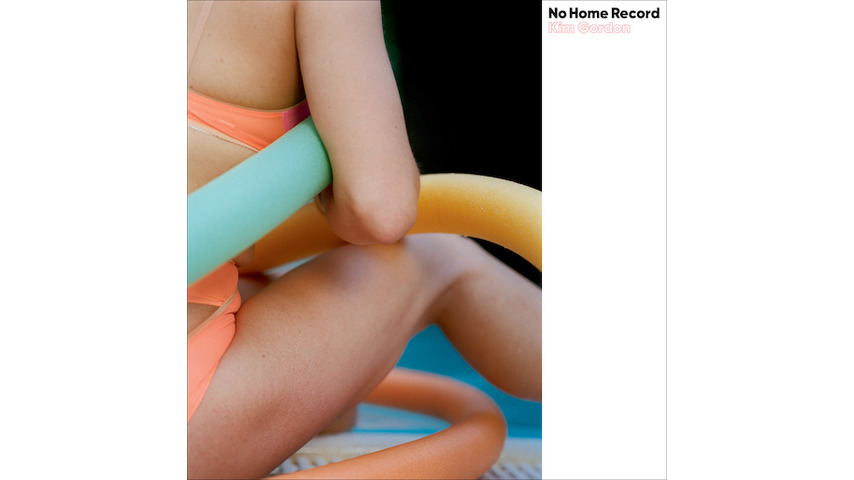
Fair enough, but you’d be forgiven for thinking she’s earned it. As a visual artist, co-founder of Sonic Youth, fashion designer and occasional actor, Gordon has been a magnetic, and inscrutable, focal point of indie cool for nearly 40 years. In all that time, her musical pursuits have come in group projects: 15 studio albums with Sonic Youth, three each as part of Free Kitten and Body/Head and one with Glitterbust, along with various EPs and singles scattered among them. Now, at the age of 66, Gordon steps out with No Home Record, a ferocious solo debut. It’s jagged, chaotic and mesmerizing in a way that pulls you inevitably into the thick of it, as if the songs were exerting their own inescapable gravity.
Though Gordon delivers these nine songs with supreme, unruffled confidence, there’s an unsettledness to them that reflects the sense of impermanence she has felt since moving back to Los Angeles, that most transient of cities. On “Air BnB,” the feeling manifests in the lyrics of her sardonic ode to the gig economy. She lists off amenities you might find in the web copy—something about towels, a flat-screen TV, a daybed—over gnashing guitars that sputter and grind before dropping into gear on the refrain as she wails, “Air BnB, gonna set me free.”
There’s a form of abnegation happening on “Murdered Out,” which Gordon first released as a single in 2016. She noticed that the low-rider car-culture trend of matte-black paint jobs was becoming more widely fashionable. The embrace of light-absorbing finishes struck her as “the supreme inward look, a culture collapsing in on itself, the outsider as an unwilling participant as the ‘it’ look,” she explained. Gordon pursues that idea in the lyrics, her voice alternating between breathless and abrupt on the verse and formidable full-throated keening on the refrain, accompanied by a massive, relentless beat from Warpaint drummer Stella Mozgawa and snakey blasts of guitar that writhe and churn. The overall effect is at once imposing and enthralling.
Gordon tinkers throughout with rhythms, intoning short, incisive lyrical phrases over a hypnotic mechanical beat on “Cookie Butter,” and letting the electro-clash drums on “Sketch Artist” drop out here and there for free-form interludes. Toward the end of No Home Record, she skips the beat altogether on “Earthquake,” singing in dusky tones over drifting guitars, crescendos of cymbal wash and some crumbly electronic noise in the background. It’s the most straightforward song on the album, but instead of ending there, Gordon takes one more foray into mercurial weirdness on album closer “Get Yr Life Back.” Her voice is often little more than a disquieting whisper surrounded by an eerie clanking rhythm and thickets of guitar feedback and brittle noise that blanket the song like some sinister fog.
The title, “Get Yr Life Back,” implies a prescriptive suggestion, but Gordon could be describing herself, too. After the end of Sonic Youth—and her marriage—in 2011, she has spent the intervening years taking her own life back, and shaping it into something different than it was before. No Home Record is the latest sign of how fully she has succeeded, which seems like the kind of thing that might get her mistaken for an icon.
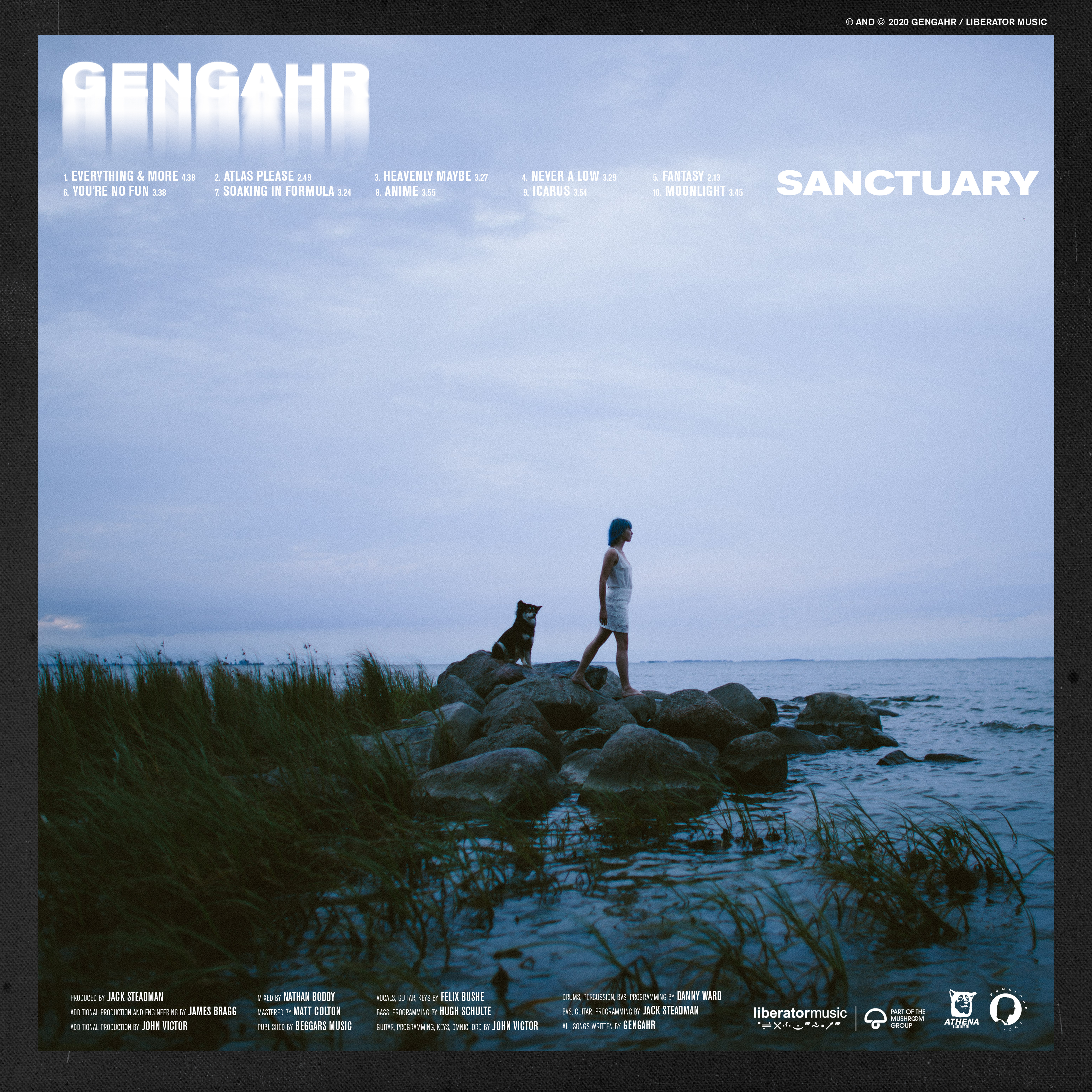
Gengahr release their much anticipated return with their third full- length album, “Sanctuary”, via Liberator Music (part of The Mushroom Group).
More expansive and ambitious than ever before, Sanctuary is the experimental alt-pop band’s finest body of work to date, a DIY triumph which welcomes old friend Jack Steadman of Bombay Bicycle Club as producer, adding his distinct brand of symphonic sparkle to Gengahr’s complex, layered sound and pushing the band further into all-out pop territory than they’d ever dared stray before.
Recorded at the brand new Propagation House way out in Bude in Cornwall, the album also recaptures the magic that old school friends Felix Bushe, John Victor, Hugh Schulte and Danny Ward felt when they were making their debut. With mixing from the hugely in-demand Nathan Boddy (James Blake, Nilufer Yanya, Shame), additional production from John Victor and engineering from A Dream Outside’s engineer James Bragg, Sanctuary is vibrant, intoxicating, intimate and alive; the product of friends having a good time and seizing control of their own destiny.
The band said :We are overjoyed to let you know that our new album ‘Sanctuary’ is released on 31st January 2020 and includes our new single ‘Everything & More’ which is available now. We are so happy to be back!
The album was produced by our pal Jack Steadman from Bombay Bicycle Club and we are so proud of what we have created together.
Alongside shows already announced, we’re also going on tour next year in the UK,
Wives debut LP, “So Removed”, opens with the timely and befitting lyrics: “Happy ever after / this place is a disaster.” According to Jay Beach, the vocalist, guitarist and primary songwriter of the four-piece Wives, this is the track that best embodies their sound. It’s Drone-y, crammed with clever observations, and still catchy enough to make you forget the world is ending despite being told straight to your face. “Waving Past Nirvana” embraces my favorite sentence in the band’s bio, which describes the sentiment of their debut as “tethered to daily anxiety without resorting to cynicism.”
Wives’ creation story plays out much like their sound: a confident teetering and self-assured stumbling that somehow leads you to the exact right place. Beach, guitarist Andrew Bailey, drummer Adam Sachs, and bassist Alex Crawford were all embedded in New York’s DIY music scene working on their own music projects when the unraveling of a previous project and an uncanceled studio session lured them into the studio. Beach puts it succinctly, sharing, “It was a lot of fun and when we heard the tapes we were like, ‘Wow, that’s really good.’ So, we just became Wives.” The album was created over a two-year span of time with the friends taking advantage of stolen moments in the studio, never taking it too seriously and just following what felt and sounded right.
“When the four of us came together, it was definitely a unique sound none of us had hit on before in our other musical lives. I think everyone brings something quite unique to the table. I write songs that are, I guess, more traditional. Our bass player is a huge My Bloody Valentine fan, and his vibe is really shoegaze-ey, our guitar player is more modern. Our drummer Andrew is super into death metal and hip-hop. I know the sound of WIives makes a lot of sense because I know where everyone is coming from, but everyone is coming from separate places,” Beach explains.
The band got their start in Queens, New York City’s largest borough, and the nation’s most diverse large county. Much like Wives, it’s full of people coming from different places, but it plays out harmoniously.
“We have mad Queens love, and I think Queens is the best borough in New York by far,” Beach shares when asked about the backdrop of their start. “People are a little more chill in Queens; it’s a little more of a family vibe, and there are still many ethnic communities that are intact. There’s [a] flourishing Polish community and Eastern European community, little Bangladesh, little Nepal,” Beach says. “It’s like a good social experiment. Like let’s take the most diverse amount of people you can and, like, throw them into a place, and it mostly works out, you know?”
That organic coming together can be heard in tracks like “Even The Dead.” It’s anything but over-practiced or contrived; it’s exactly what you would hear live. “There are no overdubs, no nothing,” Beach shares when asked about the track. “We just started playing this one riff and went for it for those five minutes and recorded it on tape. That’s it. That’s the final track. Obviously that kind of lightning in a bottle doesn’t happen all the time. That’s rare. But when we have a piece, like, we really believe in, we just keep it. We don’t fuck with it. It might not be perfect. It might not be a No. 1 single but it has something, a spontaneity, that’s really hard to find.”
One of the albums poppier moments comes by way of “The 20 Teens.” Beach shares that while listening to A Flock of Seagulls playing at a Bushwick restaurant, he had the thought that all the lyrics might as well have been “This is the ’80s, this is the ’80s,” since the track seemed to embody the decade so well. He decided to square up to that track, and create his own version for the 2010s, full of references to people reading paper magazines and donning dungarees. The track starts with a sharp and inquisitive “some records are so twisted that they actually happened,” a line Beach found in an old journal he’d been writing in while listening to old 45s.
“You could say it’s positively ironic; I think in our songs there’s a strain of sweetness and nostalgia,” Beach says, and laughs, when I share that the songs seem like perfect listening for both pre-party and post-breakup. “Even though there’s also this stance of New York cynicism, it’s in there too,” he adds.
There’s something in the way Beach sings that makes your ears perk up. Like Lou Reed from a pulpit, it feels biblical. You can’t help but attempt to decipher messages hidden in the lyrics, something that could save us from our present-day chaos, or at least make us more comfortable with it. The album has moments of respite, but it magnetizes you back toward careful chaos. See, you can dance through a track like “Hideaway” and move to forget, but then the closing track, “The Future is A Drag” reminds you of the state of things again. Much like the bustling Queens borough, there’s a calm, but not without a commotion.
“When I’m listening to music, it’s more about just being here and now in this time and place and listening to these sounds. Sometimes it’s an old blues record, sometimes it’s a T-Rex record, sometimes it’s Vince Staples — whatever it is. There’s something that just gets captured sometimes that I call ‘the slow within the fast.’ To me, it’s the most amazing thing I can think of experiencing. It’s this marriage between rhythm and, I guess, melody and, not to sound lame, but there’s a shifting thing that happens on really good records like My Bloody Valentine or something like that, where there’s something shifting underneath your feet. The ground is shifting. It could be a fast song — hip-hop does it really well — or it can be a really shoegaze-y thing that’s slower. But, that’s kind of what we’re going for. We want to move people in the way we know is possible to be moved because we’re just lovers of music.”
In the two years since releasing their second album Paint, it’s clear that Holy Holy have been making some changes and broadening their horizons. These efforts arrive in the form of their latest album, My Own Pool Of Light. The intricate melodies, soundscapes, and ever-present alluring hooks haven’t been left behind. One could say they’ve simply been given a new home amongst a plethora of fresh sounds and instrumentation.
Holy Holy’s third album My Own Pool of Light, arriving via Wonderlick/Sony Music Australia , is a twelve-track masterclass on how Holy Holy have grown into this messaging throughout the last five years, combining dizzying rhythms and flourishing melodies with some of current-day’s most important and prevalent topics – mental health, toxic masculinity, gender stereotypes and homophobia among them. “I wanted to write songs that really meant something on this album, that really had something at the core of why it was being written. Each song was trying to say something,” says Carroll on the album’s themes, and you can really feel this harnessed as the album’s punchy – yet, impactful – duration draws longer.
The first song we wrote for this album revolves around a 60s sounding vocal loop. We wanted to make it sound like an old sample and after many iterations, we got it there. The loop, built out of vocals from Ali Barter, Ainslie Wills and myself, is the bed upon which the song builds. Driving drums, menacing offbeat synths and fast tambourines back a wide-ranging spoken vocal approach.
This, and Tim’s vocal. It’s more based upon samples, and less on guitar. Faces is about a lot of things – online arguments; smartphone narcissism; the Australian treatment of refugees; and our ability to ignore inconvenient truths. It lays out a lot of the ideas that we’ve been wrestling with, and sets the tone for the rest of the record.
Pegged as the group’s biggest creative leap since the release of their debut album five years ago, ‘Maybe You Know’ kicks off the album with a steady drum beat and a sharp riff. It’s accompanied by songs like ‘Flight’, ‘Sandra’ and ‘Teach Me About Dying’, all of which provide the perfect marriage of the new and the old.
‘Hatswing’ is a taster of the musicality and creativity the duo has had hidden up their sleeve. It’s a rhythmically urgent tune that relies on the impeccable percussion to drive it along, yet still manages to maintain the anthemic vocals that fans have come to love from Holy Holy.
Vocalist Timothy Carroll comes through at the end of the record with a hauntingly slow and atmospheric vocal performance on ‘St Petersburg’. It’s one of the many songs on the 12-track album that give an idea of the creative freedom finally attained by Carroll and guitarist Oscar Dawson.
Band Members
Timothy Carroll, Oscar Dawson, Ryan Strathie (and special guests Graham Ritchie & Matt Redlich)
Holy Holy’s brand new album ‘My Own Pool Of light’ is out now!
“Shiny New Model,” from NYC band Bodega’s new EP of the same name, folds in quiet meditations on the sterility of late-capitalist innovations and the complicated realities of the gig economy. “Tell me don’t you relate to the state of that silver sepulchre?” frontman Ben Hozie asks in relation to ATMs. “Tell me don’t you feel used? Buttons pressed in the back of a bodega.” He’s singing over a pirouetting guitar line and an intimate bass groove. It’s not quite glam, not quite grunge, but just the right combination of both.
The mini album Shiny New Model covers various thematic ground: history alive in the present, the sadness of modern consumption, adultery via sexting, and a song set inside an actual bodega (Shiny New Model). In addition to the breezy hook-filled songs, the vinyl and CD feature an extended improvised version of the group’s staple track Truth Is Not Punishment.The band has been using this song as a vehicle for live improvisation for a year and decided to use a day of the session to experiment with capturing the song’s new, extended boundaries in the studio.
From the upcoming EP “Shiny New Model” out on What’s Your Rupture? Oct 11th.
Despite enduring as one of post-punk’s most iconic artists thanks to her work with Sonic Youth, Free Kitten and Body/Head, Kim Gordon has still yet to release a solo album. That’ll change this week in October with No Home Record, her first full-length under her own name, to be released by Matador Records. And from the bass bombs that punctuate advance track “Sketch Artist,” it sounds like she still has some new sounds in store for longtime fans.
Kim Gordon doesn’t put much stock in the superlatives that have piled up around her over the years: pioneer, visionary, icon, legend, beacon. “Being referred to as an ‘icon,’ blah blah blah,” she said recently in the New York Times. “What does that even mean?” Fair enough, but you’d be forgiven for thinking she’s earned it. As a visual artist, co-founder of Sonic Youth, fashion designer and occasional actor, Gordon has been a magnetic, and inscrutable, focal point of indie cool for nearly 40 years. In all that time, her musical pursuits have come in group projects: 15 studio albums with Sonic Youth, three each as part of Free Kitten and Body/Head and one with Glitterbust, along with various EPs and singles scattered among them. Now, at the age of 66, Gordon steps out with No Home Record, a ferocious solo debut. It’s jagged, chaotic and mesmerizing in a way that pulls you inevitably into the thick of it, as if the songs were exerting their own inescapable gravity. Gordon tinkers throughout with rhythms, intoning short, incisive lyrical phrases over a hypnotic mechanical beat on “Cookie Butter,” and letting the electro-clash drums on “Sketch Artist” drop out here and there for free-form interludes. Toward the end of No Home Record, she skips the beat altogether on “Earthquake,” singing in dusky tones over drifting guitars, crescendos of cymbal wash and some crumbly electronic noise in the background.
No Home Record is an eclectic surge of noise: Gordon dabbles in hip-hop production, rumbling rock ‘n’ roll, noise, and art-punk. It isn’t even the most bloody, distorted parts of her music that make for the most jarring. Take the captivating opener “Sketch Artist,” where there’s a sublime shift in instrumentation; her voice carries like a cool breeze as gentle guitar plucks reveal themselves like the sun breaking through a lightning storm. These nine tracks are a collage, sonically and pictorially, of where America stands today—a flurry of genres, of sales pitches, of desperate human cries waiting to be heard.
From Kim Gordon’s new album ‘“No Home Record” released on Matador Records on October 11th.
Los Angeles four-piece Allah Las are releasing a new album, LAHS, on October 11th via Mexican Summer. This week they shared another song from the album, “Prazer Em Te Conhecer,” via a video for the track. Drummer Matt Correia sings the song in Portuguese and the title translates to “Nice to Meet You.” A press release says the song “evokes George Harrison while also sounding like a rare 45 from a Brazilian flea market.” Correia also directed the video, which seems to have been filmed on Super-8 and perhaps shot in various cities on tour.
Previously Allah Las shared the album’s first single, “In the Air,” via a Weekend at Bernie’s-inspired video for the track that featured a cameo from Kirin J Callinan. Then they shared another song from the album, “Polar Onion,” via an animated video for the track.
The band features drummer Matt Correia, bassist Spencer Dunham, and guitarists Miles Michaud and Pedrum Siadatian. They started the album in their own studio in Los Angeles before producer/engineer Jarvis Taveniere (Woods) was “brought in to help polish it off.” The album’s title is “a reference to a common misspelling of the band’s name.” The band’s last album was 2016’s Calico Review.
This release on Mexican Summer finds the band turning in their most cohesive and ambitious work yet – a record inspired less by time, but by place.
The Allah Las seem to be transmitting from a place not found on any map. Those familiar with the band’s work will recognize their skillful melding of melodies and moods, but through that lens we see them venturing into new, exciting territories. Indeed, their growth not just as songwriters, but as performers, arrangers, and producers – is clearly audible. With LAHS we not only discover what souvenirs they’ve brought back for us; they’re inviting us aboard and taking us along for the ride.
Correia had this to say about the album in a previous press release: “We’ve been traveling a lot the past couple years and I think that played a role in influencing the broader variety of songs on this record…. LAHS to me feels like a soundtrack to the past five years or so. A sort of audio postcard to anyone who wants to listen.”
Allah Las – from the new album LAHS, out October 11th on Mexican Summer.
Big Thief are releasing the band’s second album of the year “Two Hands” following May’s U.F.O.F. They’ve only shared one single from it so far, “Not,” and today the band is back with another track, “Forgotten Eyes.” Two Hands is more the micro, zooming into the blood and tissue and guts of being a human, the raw, bare, naked bones, not much layering, capturing just our performances in the room, just very dry, no reverbs, just skin and flesh and human, finite, physical. But I think each of them contains parts of the others.
The second single from the project, a charming piece called “Forgotten Eyes” with a wistful energy perfectly suited to welcoming the changing of seasons into autumn.
Big Thief’s fourth studio album is also the band’s second LP of 2019, Described as the “earth twin” to that record’s “celestial twin,” Two Hands was recorded by Andrew Sarlo at the Sonic Ranch in Tornillo, Texas, in stark contrast to the barn in the woods outside Seattle where they recorded their third LP. In a statement paired with the album’s announcement, the band’s Adrianne Lenker said, “Two Hands has the songs that I’m the most proud of; I can imagine myself singing them when I’m old.”
While “Not,” the lead single of Two Hands, reached back to an aggressive, younger Big Thief sound accented by Adrienne Lenker’s abrasive vocals and an extended guitar solo, “Forgotten Eyes” is more relaxed. The song shows Big Thief at their most contemplative, Lenker meditating on the importance of “forgotten” objects that nonetheless guide us. Plants that once existed, she remarks, are “no less the dirt / of the common soil keeping us dry and warm.” It’s an affectionate reminder to take time to be aware of the often-unnoticed people and objects that have silent influence in our lives.
It exhibits the more viscerally textural side that they’re displaying on this album, a rootsy and strained song that addresses homelessness and those that slip into the margins: “The wound has no direction/ Everybody needs a home and deserves protection,” Adrienne Lenker sings on it.