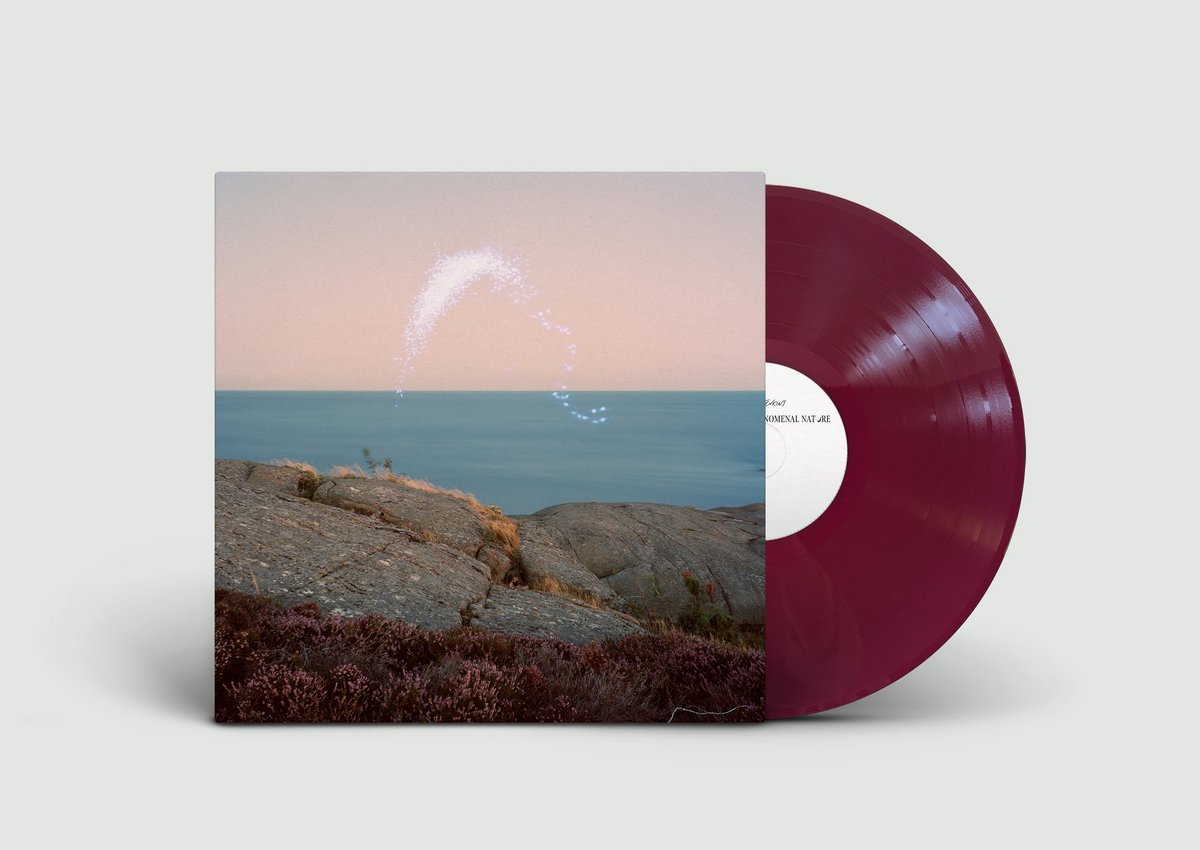
Steady Holiday is Dre Babinski and a large dog, “Take The Corners Gently” is the third LP from Steady Holiday, the musical project of Los Angeles songwriter Dre Babinski. Following up 2018’s Nobody’s Watching, Dre travelled to Nashville, Tennessee, to record the album with Blake Sennett, lead guitarist in the much loved Rilo Kiley, who helped bring these vibrant songs to life.
A document of complex, difficult times in her life, Corners is both buoyant and beautiful, a tight collection of smart, heartfelt pop songs that grow an inch taller thanks to the spiritedness with which Babinksi approaches them. Perhaps its key aspect is its vulnerability, however. There is real heart and soul in these songs, and the impulsiveness which always comes with such things is given centre stage, adding depth and warmth which radiates throughout the album’s eight songs.
Released into the world last week, you can stream the album at the bottom of this page, and be sure to listen along while reading this track by track guide written by Dre, for both us and for you.
Take The Corners Gently was written during a period of turmoil in my family. The details aren’t mine alone to share, but the lessons learned from the experience are threaded throughout these songs. It’s an album about embracing uncertainty, relinquishing what can’t be controlled, appreciating small moments as they happen. Humility.
I recorded with those things in mind too. At least… I tried to. I went to Nashville to work with Blake Sennett, an old friend who understood. Our best intentions weren’t always aligned. But we knew it. Embraced it. And in a way, that was the point. I also dragged my friend Chiffon Myst along. He makes everything better.
So that’s how we got here. That’s the quick version, anyway. I’ll probably try to thesaurus my way out of words like “acceptance” and “humility”, but that’s what I’ll be dancing around.
Allie Crow Buckley’s debut album “Moonlit and Devious” is intricate and powerful, her haunting melodies swirling around a heavy soundscape. Album opener “Nothing Sacred” makes a big first impression, with a blown-out bass carving out the song’s low end. Gnarly, fuzzy guitar licks embellish the singer’s alto stylings, making for a gripping listen. The album’s titular single shows Buckley’s talent as a songwriter and poet, with inventive verses like “Aloof and ambiguous / You deprive me of the sentiment / I love how you let me spin / Circles around you, dip in arabesque.” “Moonlit and Devious” also utilizes a subtle organ sound to add a huge, cinematic feel to the dark track.
There’s something bewitching about the self-released debut LP from Los Angeles’s Allie Crow Buckley—deeply embedded in each of the record’s ten folk-infused chamber pop tracks is a certain strand of occult psychedelia familiar to fellow LA rockers like Death Valley Girls. Among the most explicit examples is the album’s title track, which pares Buckley’s sound down to a droning, organ-like keyboard and spacious drum and guitar, while the singer’s moonlit and devious vocals soar over the arrangement.
Allie Crow Buckley’s music is like staring at the moon through an open window, not in wonder but with understanding. Her songs carry within them both a grounding earth-bound quality and an expansive sonic universe. Having grown up so close to where the ocean meets the land, it’s not surprising that her music is imbued with such a strong sense of power and natural balance.
The Los Angeles based singer-songwriter’s music is composed of Buckley’s lyrical use of imagery, her rhythmic structures and use of subtle sonic details accompanied by heavy, distorted guitar tones, layers of dreamy synths, soaring melodies, and deep low end.
It’s this track Buckley chose to play for her “Neighborhoods” set, sitting at a keyboard in a very green backyard. Without the inclusion of percussion or raging backing guitar riffs, the song takes on a whole new eeriness, with Allie Crow Buckley’s vocals interweaving with minimal organ accompaniment.
Official audio for the Moonlit and Devious single, performed by Allie Crow Buckley, taken from her debut album ‘Moonlit and Devious’, out 12th March 2021.
Paul McCartney had always been one for a homespun album, whether it be his 1970 debut “McCartney”, Chaos and Creation in the Backyard from 2005, or McCartney III, which he recorded in lockdown (or rockdown, as he called it). Last year, McCartney was the first of his albums to receive a half-speed remaster at Abbey Road, which was pressed up for Record Store Day. The Paul McCartney Half-Speed Remaster series continues with the indie favourite “RAM”, due May 14th to commemorate its 50th anniversary.
RAM saw Paul and Linda taking to the heart of the country and recording most of the album at his Scotland farm following some traditional tracking sessions in New York. This lo-fi approach practically created the “cottagecore” aesthetic routinely explored by today’s most prominent artists. And it’s said that any indie-pop musician who’s recorded an album out of their bedroom owes something to RAM. Indeed, with just one listen to “Dear Boy,” “Ram On,” “Uncle Albert/Admiral Halsey,” or “Back Seat of My Car,” it’s easy to draw the line through four-plus decades of indie-pop sounds.
But it wasn’t just Paul and Linda creating the music. The McCartneys also brought on Denny Seiwell, who’d go on to be part of the first incarnation of Wings, along with many other session musicians. As such, the album not only stands as a great piece of music, but also an important transitional piece in McCartney’s recorded history.
We’ll admit that other than the near-perfect track “Maybe I’m Amazed,” Paul McCartney’s 1970 debut solo album was pretty weak. However, his second attempt, 1971’s “Ram,” was unfairly grouped together with its predecessor. Jon Landau of Rolling Stone called it “so incredibly inconsequential and so monumentally irrelevant” and “unbearably inept” while trashing nearly every track. Elsewhere, Q described it as “frustratingly uneven,” Robert Christgau simply said it’s “a bad record” and NME settled on the term “mediocre.” Even Playboy wouldn’t recommend playing it. Fans had a different opinion. They helped the tune “Uncle Albert/Admiral Halsey” become McCartney’s first No. 1 single as a solo artist, heavily supported the singles “The Back Seat of My Car” and “Eat at Home” and caused critics to re-evaluate their stances on the album. More recently, publications have not only cited “Ram” as a predecessor of indie pop but also as one of the former Beatle’s best solo works.
RAM has gone on to become one of the most beloved of McCartney’s albums. Upon its release it was panned by critics, though it reached No. 1on the U.K. Albums Chart and yielded his first post-Beatles No. 1 in the States with the whimsical mini-suite “Uncle Albert/Admiral Halsey.” Now the album has been deemed “quintessentially McCartney,” a career highlight worthy of reappraisal.
For it’s 50th anniversary edition, “RAM” has been pressed from a new master cut at half-speed sourced from the original master tapes at Abbey Road. The LP is available to pre-order now, and will also be available on indie record stores’ shelves on the May 14th release date.
“L7 formed in Los Angeles in 1985 when Suzi Gardner (guitar, vocals) and Donita Sparks (guitar, vocals) joined forces with Jennifer Finch (bass, vocals). An all female band in a traditionally male-dominated, often sexist rock arena, L7 were happy to court controversy through spirited, occasionally infamous live performances, whilst playing songs often infused with humour as much as bite and bile. Having emerged from L.A.’s art punk scene, their music was a mixture of hard rock, alternative and punk, but they are arguably most synonymous with the grunge movement of the late 1980s and early 1990s.
Packed with bonus tracks, artwork and memorabilia, “Wargrasm: The Slash Years 1992-1997″ includes new, extensive liner notes based on interviews with the band.”
From the L7 album “Smell The Magic”,
Through Rock For Choice they proved to be a band with a sociopolitical conscience too. Their music was a mixture of hard rock, alternative rock and punk rock, but they are arguably most synonymous with the grunge movement of the late 1980s and early 1990s. Releasing their self-titled debut on Epitaph Records (home of The Offspring and Bad Religion), their grunge credentials were cemented by the release of second record “Smell The Magic” released on Seattle’s Sub Pop, some-time home for many grunge lynchpins, including Nirvana, Soundgarden and Mudhoney, among many others.
In 1990, the classic line-up was completed by Dee Plakas on drums. Signing to Slash Records (Faith No More, Violent Femmes), they released their major label debut “Bricks Are Heavy” in 1992, produced by Butch Vig (Nirvana, Smashing Pumpkins, Garbage). Lead single ‘Pretend We’re Dead’ gave L7 a massive worldwide hit, especially in the States, followed by the singles ‘Everglade’ and ‘Monster’. The expanded edition of “Bricks Are Heavy” includes ‘Pretend We’re Dead’ (Edit), ‘Lopsided Head’ (B-Side), ‘Used To Love Him’ (B-Side), a cover of the tongue-in-cheek Guns N’ Roses track and ‘Freak Magnet’ (B-Side).
Touring with Nirvana and Hole, as well as appearing on the main stage at Lollapalooza, L7 followed up “Bricks Are Heavy” with “Hungry For Stink” in 1994. Featuring the single ‘Andres’, this expanded edition features ‘Baggage’ (Live), ‘Punk Broke (My Heart)’ (B-Side), ‘Stuck Here Again’ (Edit) and ‘Interview’ (B-Side).
During the recording of their third album for Slash record, Jennifer Finch left the band, eventually replaced by Belly’s Gail Greenwood. Their fifth record, “The Beauty Process: Triple Platinum”, was released at the beginning of 1997, and although their shift in direction received plenty of critical praise, it was their last album for Slash Records. ‘Off The Wagon’ was issued as a single, with the B-Sides ‘Guera’ and ‘Worn Out’ included as bonus tracks, alongside ‘Drama (Piss Off Version)’.
L7 would record one more album during the 1990s before calling it a day in 2001. They would reform in 2014, touring extensively, and enjoying a creative renaissance, releasing their seventh album “Scatter The Rats” in 2019.
Packed with bonus tracks, artwork and memorabilia, “WARGASM – THE SLASH YEARS 1992-1997” includes a new, extensive liner note based on interviews with the band.
Cheap Trick have just unveiled the second preview from the upcoming album, “In Another World” which arrives April 9th. Produced by long-time associate Julian Raymond, Cheap Trick’s 20th studio album, The blistering new single, “Boys & Girls & Rock N Roll,” is a heavy-hitting love song set to distorted guitars, rock riffs and the sort of legendary monster hooks that make Cheap Trick such a legendary band.
In Another World will be Cheap Trick’s 20th album. The 13-track record LP also features the lead single “Light Up the Fire” and a previously released cover of John Lennon’s “Gimme Some Truth.”
A statement about the album said: “In Another World sees Cheap Trick doing what they do better than anyone – crafting indelible rock ‘n’ roll with oversized hooks, mischievous lyrics, and seemingly inexorable energy. Trademark anthems like “Light Up The Fire” and “Boys & Girls & Rock N Roll” are countered by more introspective – but no less exuberant.” Cheap Trick crafting indelible rock ’n’ roll with oversized hooks, mischievous lyrics and seemingly inexorable energy. Trademark anthems are countered by more introspective but no less exuberant — considerations of times past, present, and unknowable future on such strikingly potent new tracks as Another World and I’ll See You Again. In Another World further showcases Cheap Trick at their most eclectic, touching on a myriad of distinct sounds and song approaches, from the swampy Chicago blues number Final Days (featuring fiery harmonica from Grammy-nominated Wet Willie frontman Jimmy Hall)
“In Another World” will be available in standard CD, black vinyl and digital formats, along with a limited-edition picture disc. The album is due out on April 9th
A live acoustic version of ‘Marjorie’ from our debut album ‘deltas’, originally recorded for NPR’s Tiny Desk Contest in 2017. We’re re-releasing this on April 4th, 2021 — what would have been Marjorie’s 96th birthday. “’Marjorie’ is a haunting, immersive folk track that manages to keep the endearing folk-pop melodies in the instrumentals and the vocals. There’s a lot of space here, as if it were recorded in a very tall building such as a church; that sort of grandeur gives the track a blend of the intimate haunting melodies of Blind Pilot and the sweeping expanses of the The Barr Brothers..”
The song was inspired by the disappearance of USAF Flight 2469 in 1950 (bit.ly/2juz78q). Our singer’s grandfather was one of 44 passengers on board. The plane was never found.
In 1980, a new British independent record label was christened Axis, but discovered after its first batch of releases that another Axis already existed, so a new name was necessary to avoid legal problems. New name: 4AD.
Now, 41 years after its inception, 4AD came up with the idea to celebrate the label’s glorious past with current artists covering a song of their choice from 4AD’s impressive catalogue of releases.
In 2020, 4AD Records turned 40 years of age. Never one to be on time for a party, the label is commemorating that landmark this year with the release of “Bills and Aches and Blues”. The compilation features 18 of its current artists covering a song of their choosing from 4AD’s past: a creative experiment rooted in the spirit of collaboration and a snapshot of 4AD, 41 years after its inception.
Bills and Aches and Blues’ includes 18 recordings contain fascinating connections between artist and track. The earliest song chosen (by U.S. Girls) is The Birthday Party’sJunkyard, from 1981; the most recent are the two Grimes covers (‘Genesis’ and ‘Oblivion’, respectively by Spencer. and Dry Cleaning) from 2012. Suitably, for the one band that bridges 4AD past and present, The Breeders are all over Bills And Aches And Blues. They’re covered three times – ‘Cannonball’ by Tune-Yards, ‘Mountain Battles’ by Bradford Cox of Deerhunter and ‘Off You’ by Big Thief, whilst The Breeders cover ‘The Dirt Eaters’ by their ‘90s contemporaries His Name Is Alive.
Bills & Aches & Blues features 18 of the label’s current artists covering a song of their choosing from 4AD’s past: a creative experiment rooted in the spirit of collaboration and a snapshot of 4AD .
From 4AD’s 40th anniversary compilation Bills & Aches & Blues, SOHN does a double cover, taking on This Mortal Coil’s iconic, Liz Fraser-powered version of Tim Buckley’s“Song to the Siren” and doing so in a very reverential manner.
Landmark songs such as ‘Cannonball’, ‘Song To The Siren’ and Pixies’ ‘Where is My Mind?’, will feel comfortable to casual fans, however by contrast, much joy can be found in the album’s surprise choices, such as Air Miami’s ‘Seabird’ and the Lush B-side ‘Sunbathing’, covered respectively by new signings Maria Somerville and Jenny Hval.
Bills and Aches and Blues is named, arguably (as Elizabeth Fraser never published the lyrics) after the opening line of Cocteau Twins ‘Cherry-Coloured Funk’. Perhaps too unique and uncoverable in their own right, their legendary take on Tim Buckley’s ‘Song To The Siren’, under the name This Mortal Coil (along with Buckley’s pre-Starsailor acoustic version) informs SOHN’s cover.
Some tracks unearth hitherto hidden shared DNA, such as Future Islands’ and Colourbox’s ‘The Moon Is Blue’; other tracks are more akin to reinvention. Aldous Harding distils the melodic essence of Deerhunter’s ‘Revival’ and recasts it in her own uncanny image. U.S. Girls’ future-disco ‘Junkyard’ and Bing and Ruth’s neo-classical instrumental ‘Gigantic’ are even more radical interpretations. Leading off the album, Tkay Maidza brings both her Art Rap and R&B game, but also an unexpected ‘80s synth pop template, to Pixies’ ‘Where Is My Mind?’, a perfect title for these chaotic times.
TRACKLISTING: Side 1: 01 Tkay Maidza Where Is My Mind? (Pixies) 02 U.S. Girls Junkyard (The Birthday Party) 03 Aldous Harding Revival (Deerhunter) 04 The Breeders Dirt Eaters (His Name Is Alive) 05 Maria Somerville Seabird (Air Miami) Side 2: 06 Tune-Yards Cannonball (The Breeders) 07 Spencer. Genesis (Grimes) 08 Helado Negro Futurism (Deerhunter) 09 Efterklang Postal (Piano Magic) 10 Bing and Ruth Gigantic (Pixies) Side 3: 11 Future Islands The Moon Is Blue (Colourbox) 12 Jenny Hval Sunbathing (Lush) 13 Dry Cleaning Oblivion (Grimes) 14 Bradford Cox Mountain Battles (Breeders) Side 4: 15 SOHN Song To The Siren (Tim Buckley) 16 Becky and The Birds The Wolves Act I and II (Bon Iver) 17 Ex:Re Misery Is a Butterfly (Blonde Redhead) 18 Big Thief Off You (The Breeders)
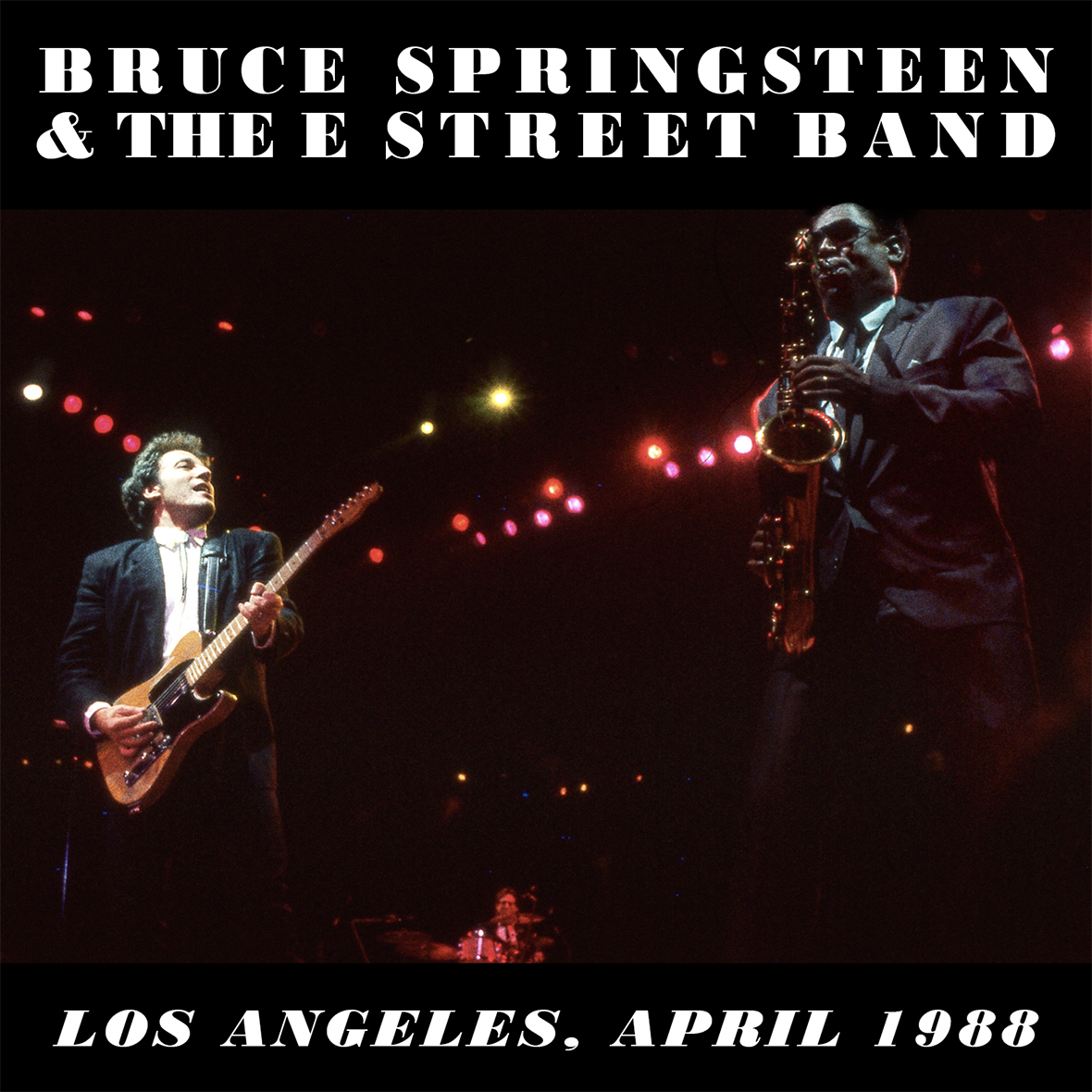
The Tunnel of Love Express Tour’s five-show station stop in Los Angeles wraps with this peak ’88 performance on April 28th. The core Tunnel setlist, including “Be True,” “Brilliant Disguise,” “Tougher Than The Rest,” “I’m A Coward” and “Part Man, Part Monkey,” has never sounded better. An irresistible encore features Arthur Conley’s “Sweet Soul Music” and a deserving homage to Northwest garage rock, as Bruce covers The Sonics’ “Have Love, Will Travel.” Rarer still and even more meaningful is the seminal cover of Ry Cooder’s majestic masterpiece, “Across The Borderline,” the sound of which echoes through Springsteen’s writing ever since.
Setlist consistency has historically been considered something of a demerit for the ’88 tour. As I rolled from town to town, show after show, I’ll admit I initially yearned for changes, though that was more to counter my own unusual circumstances than any sense that “the show needs them.” It didn’t.
I now admire the Tunnel of Love Express Tour for its commitment to Bruce’s creative expression. Back in ’88, once I made my peace with the lack of changes and focused more on what he was playing, I came to appreciate the shows even more. Certain gigs , still stand out for their performance energy and connection to the audience.
By the time the tour rolled into Los Angeles for a run of five shows (allowing me to sleep in the same bed for more than two nights), I was fully on board. Any changes, should we get them, were icing on an already delicious cake. The fifth and final LA performance on April 28, 1988 is peak Tunnel tour and, with the addition of one extra special song, warrants inclusion in the Live Archive series.
We have revisited this stand before, as the second show on April 23rd was released back in July 2015. The first thing you’ll notice about 4/28 by comparison is that the Man in Black has moved your seat forward about 10-15 rows closer to the stage, revealing more sonic detail and placing you right next to the band.
It remains a memorable show opening, as the E Streeters walk out in pairs, then Clarence Clemons, then Bruce, to take us on a ride through “Tunnel of Love” straight into the resurrection of River outtake and b-side “Be True,” carried so capably by Clarence. 1988 was a great year for “Adam Raised a Cain,” bolder than ever with the addition of the Horns of Love. Each version from ’88 released in the series has its own distinct appeal in how Springsteen sings it. The tone of this night is expressed in the slightly tweaked reading of the line, “From the dark heart, baby, from the dark heart of a dream.”
“Two Faces,” so rarely played after this tour, stands out for its pure song writing excellence. The sweet “All That Heaven Will Allow” prelude with the Big Man on the park bench is heartwarming, a moment of looking ahead in life, not reflecting on his passing as we do now. Bruce mentions that when the weather turns warm, “Girls dig out all their summer clothes,” clearly making a mental note that would be remembered 20 years later for Magic. Equally prescient, while looking at photos of Clarence’s new baby, Springsteen jokes, “In about 15 years, there’s gonna be an E Street Band Volume Two.” He was off by just ten years and one familial branch, in predicting Jake Clemons joining the band.
There’s serious high voltage in the back half of the first set. Springsteen’s full-throated vocals fuel the tractor pistons of “Seeds,” and this “Roulette” is a candidate for best-ever status. Every musical detail is vivid, in particular Max Weinberg’s drumming and Roy Bittan’s piano. “Roulette” melds into “Cover Me,” and perhaps because of the horns, the ’88 editions of the song are my favourites. “Cover Me” gallops with conviction, pace and power, twisted just a shade darker by a few snippets of the Rolling Stones’ “Gimme Shelter.”
“Brilliant Disguise” eases off the throttle a little, though one could argue the subject matter is darker still, as desire gives way to self-doubt. Roy and Danny’s gorgeous “Spare Parts” sonata prelude is one of those moments of E Street musical brilliance that never showed up on record but is nonetheless one of their most beautiful contributions to the cannon. The full band and horns bring “Spare Parts” to a roaring conclusion that stops on a dime and resets into Edwin Starr’s “War.” Bruce makes sure every line lands, shifting one for extra impact as he swaps “friend only to the undertaker” to “ain’t nothin’ but a widow-maker.”
The first set ends as it did every night on this leg with a fantastic “Born in the U.S.A.” I’ve written before about the emotive guitar solos that marked the long versions of the song performed on the ’88 tour, and this is a case in point. Jon Altschiller’s mix also reveals the multi-part layering of synthesizer and piano sounds by Federici and Bittan that give “Born in the U.S.A.” its staggering keyboard bite. Halftime.
The second set commences with “Tougher Than the Rest,” Bruce’s voice sounding slightly wearier and the swirling guitar sound (from a phaser pedal?) lusher than ever. In “She’s the One,” Springsteen’s vocal command is on point, pushing “She the onnnnnne” to the edge just before the bridge. In the land of malls that was ’80s LA, “You Can Look (But You Better Not Touch)” resonates, and from there the second set only gains momentum. “I’m a Coward” is goofy fun; “I’m on Fire” offers a radical, alternate view on love to the point of obsession; and “One Step Up” nails one of the bittersweet parts of human relationships, another masterclass in songwriting. “Part Man, Part Monkey” turns the mood playful again, reminding us it’s just evolution, baby.
At this point in the set, Springsteen had most frequently played “Walk Like a Man,” occasionally swapping in “Backstreets.” But for weeks, he and the band had sound checked Ry Cooder’s majestic “Across the Borderline,” and it finally made the setlist for the last two LA shows.
The song was written by Cooder, Jim Dickinson, and John Hiatt for the soundtrack to the movie The Border, in a version sung by Freddie Fender and featuring background vocals from future Springsteen backing singer Bobby King. Cooder put out his own rendition in 1987.
Despite fewer than a dozen performances ever, you can hear the influence of “Across the Borderline” in music Springsteen wrote for The Ghost of Tom Joad and beyond, as his fascination with the intersection of roots music on both sides of the border continues to this day.
The LASports Arena arrangement adds soulful scope while maintaining the Mexican elements of the original versions. The song fits so well because it feels like Springsteen could have written it himself, but that’s really a testament to the quality of the song writing of the original. “Across the Borderline” is a welcome and worthy addition to the Live Archive series.
From there, hit the party lights, as, aside from the sublime solo acoustic “Born to Run,” the last ten songs of the set turn into an E Street block party. Of note, “Sweet Soul Music,” in rare standalone, non-medley form, brings a fitting bit of Memphis to a horn-driven show. Equally fun is the rare cover of The Sonics’ “Have Love, Will Travel.”
“Have Love, Will Travel” was written by Richard Perry (who also penned “Louie Louie”) and popularized by Seattle garage-rock standard bearers The Sonics, who released their version in 1965 on the band’s debut album, Here Are the Sonics. As the story goes, back in 1984, a record store employee from Seattle slipped Springsteen a Northwest Garage Rock mixtape that included “Have Love”; Springsteen found the song and it became an encore feature for the last few weeks of the U.S. Tunnel tour.
As he so often does, Bruce makes “Have Love, Will Travel” his own, keeping the chorus of the original, but rewriting the verses to fit the nomadic love themes of the tour, while making the arrangement a showcase for the Horns of Love.
words by Erik Flannagan
When we regard several shows in a particular stand, setlist changes are often cited to distinguish good from great–the more changes the better being the general rule. Yet the 4/28/88 set differs by only one song from the previously released April 23rd show. Even when the addition is as significant as “Across the Borderline,” the takeaway is that setlist isn’t everything, as Tunnel tour fans already know and I learned out on the road 33 years ago.
The Band:
Bruce Springsteen – Lead vocals, guitar, harmonica; Roy Bittan – Piano, keyboards; Clarence Clemons – Tenor and baritone saxophones, percussion, backing vocal; Danny Federici – Organ, keyboards; accordion; Nils Lofgren – Guitars, backing vocal; Patti Scialfa – Guitar, percussion, backing vocal; Garry Tallent – Bass; Max Weinberg – Drums
Additional musicians: Mario Cruz – Tenor saxophone, backing vocal; Ed Manion – Baritone saxophone, backing vocal; Mark Pender – Trumpet, backing vocal; Richie “La Bamba” Rosenberg – Trombone, backing vocal; Mike Spengler – Trumpet, backing vocal
The Natvral is the new project of Kip Berman (formerly of The Pains of Being Pure at Heart). Look for new music coming in 2021. As the frontman of The Pains of Being Pure at Heart, Kip Berman wrote songs about the thrills and ills of young adult life with the care and concern of a cool older sibling. Enter Tethers, Berman’s first solo record as The Natvral, where Kip finds his new project more aligned with the sounds of Bob Dylan, Neil. Young, and his long time hero Leonard Cohen.
But in this time away from the life of a touring artist, Berman discovered an unvarnished, broken folk rock sound – a marked departure from his previous work. Recorded over 7 days with producer Andy Savours (My Bloody Valentine, Black Country New Road, The Pains of Being Pure at Heart), Tethers is as raw in sound as it is nuanced and empathetic in its lyricism. Without effect pedals, overdubs or even a metronome, the resulting album feels free and unpretentious, recalling the strident obliqueness of Bob Dylan and Neil Young’s sonic primitivism – but drawn from a set of vividly detailed experiences all Berman’s own. Throughout, he is supported by former The Pains of Being Pure at Heart collaborators Jacob Sloan (bass), Brian Alvarez (drums), Sarah Chihaya (backing vocals) and Crystal Stilts/Woods Kyle Forester (organ).
Wolf Parade’s Spencer Krug has announced new solo album Fading Graffiti which will be out April 16th via his own helpfully named label, Pronounced Kroog. His first album released under his own name, it takes songs that originated as piano ballads on Krug’s Patreon in 2019 and recontextualizes them as indie rock. After abandoning his Moonface moniker and successfully launching his Patreon subscription, Wolf Parade member Spencer Krug has announced his first album under his own name. Fading Graffiti is due on April 16th as the first release on the artist’s own label.
The album is composed of 10 full-band versions of songs that initially debuted on Krug’s Patreon account throughout 2019 as solo piano compositions. Krug and his new band recorded the songs at the tail-end of that year at the Noise Floor Recording Studio on Gabriola Island in British Columbia. According to the album’s pre-order page, the Patreon was “used to help fund the creation of the album.”
As heard on the newly released title track, the new version swaps out the original’s neoclassical slow burn for twanging rock fare augmented by slide guitar and synths. An accompanying lyric video by aitso draws out the song’s murmuring psychedelia by layering multiple videos of Krug dancing and singing along to the track.
Though this is Krug’s first album under his own name, it’s hardly his first solo album — Sunset Rubdown debuted in 2005 as Krug’s solo vehicle before becoming a full band, which led to the creation of Krug’s Moonface moniker in 2009. His final album as Moonface was 2018’s “This One’s for the Dancer & This One’s for the Dancer’s Bouquet”. WolfParade released “Thin Mind” in early 2020.
First single from the album by the same name Listen to “Fading Graffiti” coming April 16th.