A live acoustic version of ‘Marjorie’ from our debut album ‘deltas’, originally recorded for NPR’s Tiny Desk Contest in 2017. We’re re-releasing this on April 4th, 2021 — what would have been Marjorie’s 96th birthday. “’Marjorie’ is a haunting, immersive folk track that manages to keep the endearing folk-pop melodies in the instrumentals and the vocals. There’s a lot of space here, as if it were recorded in a very tall building such as a church; that sort of grandeur gives the track a blend of the intimate haunting melodies of Blind Pilot and the sweeping expanses of the The Barr Brothers..”
The song was inspired by the disappearance of USAF Flight 2469 in 1950 (bit.ly/2juz78q). Our singer’s grandfather was one of 44 passengers on board. The plane was never found.
In 1980, a new British independent record label was christened Axis, but discovered after its first batch of releases that another Axis already existed, so a new name was necessary to avoid legal problems. New name: 4AD.
Now, 41 years after its inception, 4AD came up with the idea to celebrate the label’s glorious past with current artists covering a song of their choice from 4AD’s impressive catalogue of releases.
In 2020, 4AD Records turned 40 years of age. Never one to be on time for a party, the label is commemorating that landmark this year with the release of “Bills and Aches and Blues”. The compilation features 18 of its current artists covering a song of their choosing from 4AD’s past: a creative experiment rooted in the spirit of collaboration and a snapshot of 4AD, 41 years after its inception.
Bills and Aches and Blues’ includes 18 recordings contain fascinating connections between artist and track. The earliest song chosen (by U.S. Girls) is The Birthday Party’sJunkyard, from 1981; the most recent are the two Grimes covers (‘Genesis’ and ‘Oblivion’, respectively by Spencer. and Dry Cleaning) from 2012. Suitably, for the one band that bridges 4AD past and present, The Breeders are all over Bills And Aches And Blues. They’re covered three times – ‘Cannonball’ by Tune-Yards, ‘Mountain Battles’ by Bradford Cox of Deerhunter and ‘Off You’ by Big Thief, whilst The Breeders cover ‘The Dirt Eaters’ by their ‘90s contemporaries His Name Is Alive.
Bills & Aches & Blues features 18 of the label’s current artists covering a song of their choosing from 4AD’s past: a creative experiment rooted in the spirit of collaboration and a snapshot of 4AD .
From 4AD’s 40th anniversary compilation Bills & Aches & Blues, SOHN does a double cover, taking on This Mortal Coil’s iconic, Liz Fraser-powered version of Tim Buckley’s“Song to the Siren” and doing so in a very reverential manner.
Landmark songs such as ‘Cannonball’, ‘Song To The Siren’ and Pixies’ ‘Where is My Mind?’, will feel comfortable to casual fans, however by contrast, much joy can be found in the album’s surprise choices, such as Air Miami’s ‘Seabird’ and the Lush B-side ‘Sunbathing’, covered respectively by new signings Maria Somerville and Jenny Hval.
Bills and Aches and Blues is named, arguably (as Elizabeth Fraser never published the lyrics) after the opening line of Cocteau Twins ‘Cherry-Coloured Funk’. Perhaps too unique and uncoverable in their own right, their legendary take on Tim Buckley’s ‘Song To The Siren’, under the name This Mortal Coil (along with Buckley’s pre-Starsailor acoustic version) informs SOHN’s cover.
Some tracks unearth hitherto hidden shared DNA, such as Future Islands’ and Colourbox’s ‘The Moon Is Blue’; other tracks are more akin to reinvention. Aldous Harding distils the melodic essence of Deerhunter’s ‘Revival’ and recasts it in her own uncanny image. U.S. Girls’ future-disco ‘Junkyard’ and Bing and Ruth’s neo-classical instrumental ‘Gigantic’ are even more radical interpretations. Leading off the album, Tkay Maidza brings both her Art Rap and R&B game, but also an unexpected ‘80s synth pop template, to Pixies’ ‘Where Is My Mind?’, a perfect title for these chaotic times.
TRACKLISTING: Side 1: 01 Tkay Maidza Where Is My Mind? (Pixies) 02 U.S. Girls Junkyard (The Birthday Party) 03 Aldous Harding Revival (Deerhunter) 04 The Breeders Dirt Eaters (His Name Is Alive) 05 Maria Somerville Seabird (Air Miami) Side 2: 06 Tune-Yards Cannonball (The Breeders) 07 Spencer. Genesis (Grimes) 08 Helado Negro Futurism (Deerhunter) 09 Efterklang Postal (Piano Magic) 10 Bing and Ruth Gigantic (Pixies) Side 3: 11 Future Islands The Moon Is Blue (Colourbox) 12 Jenny Hval Sunbathing (Lush) 13 Dry Cleaning Oblivion (Grimes) 14 Bradford Cox Mountain Battles (Breeders) Side 4: 15 SOHN Song To The Siren (Tim Buckley) 16 Becky and The Birds The Wolves Act I and II (Bon Iver) 17 Ex:Re Misery Is a Butterfly (Blonde Redhead) 18 Big Thief Off You (The Breeders)
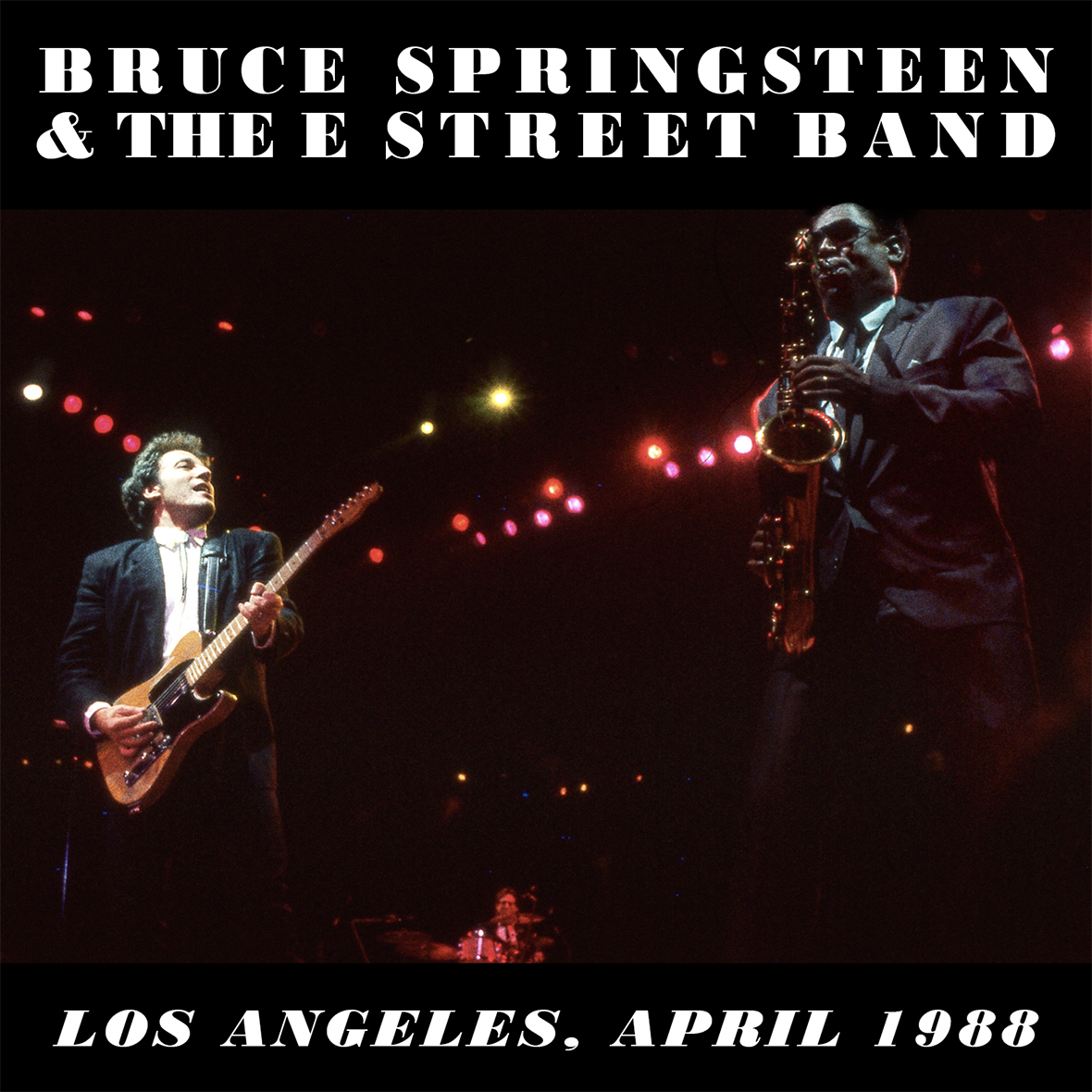
The Tunnel of Love Express Tour’s five-show station stop in Los Angeles wraps with this peak ’88 performance on April 28th. The core Tunnel setlist, including “Be True,” “Brilliant Disguise,” “Tougher Than The Rest,” “I’m A Coward” and “Part Man, Part Monkey,” has never sounded better. An irresistible encore features Arthur Conley’s “Sweet Soul Music” and a deserving homage to Northwest garage rock, as Bruce covers The Sonics’ “Have Love, Will Travel.” Rarer still and even more meaningful is the seminal cover of Ry Cooder’s majestic masterpiece, “Across The Borderline,” the sound of which echoes through Springsteen’s writing ever since.
Setlist consistency has historically been considered something of a demerit for the ’88 tour. As I rolled from town to town, show after show, I’ll admit I initially yearned for changes, though that was more to counter my own unusual circumstances than any sense that “the show needs them.” It didn’t.
I now admire the Tunnel of Love Express Tour for its commitment to Bruce’s creative expression. Back in ’88, once I made my peace with the lack of changes and focused more on what he was playing, I came to appreciate the shows even more. Certain gigs , still stand out for their performance energy and connection to the audience.
By the time the tour rolled into Los Angeles for a run of five shows (allowing me to sleep in the same bed for more than two nights), I was fully on board. Any changes, should we get them, were icing on an already delicious cake. The fifth and final LA performance on April 28, 1988 is peak Tunnel tour and, with the addition of one extra special song, warrants inclusion in the Live Archive series.
We have revisited this stand before, as the second show on April 23rd was released back in July 2015. The first thing you’ll notice about 4/28 by comparison is that the Man in Black has moved your seat forward about 10-15 rows closer to the stage, revealing more sonic detail and placing you right next to the band.
It remains a memorable show opening, as the E Streeters walk out in pairs, then Clarence Clemons, then Bruce, to take us on a ride through “Tunnel of Love” straight into the resurrection of River outtake and b-side “Be True,” carried so capably by Clarence. 1988 was a great year for “Adam Raised a Cain,” bolder than ever with the addition of the Horns of Love. Each version from ’88 released in the series has its own distinct appeal in how Springsteen sings it. The tone of this night is expressed in the slightly tweaked reading of the line, “From the dark heart, baby, from the dark heart of a dream.”
“Two Faces,” so rarely played after this tour, stands out for its pure song writing excellence. The sweet “All That Heaven Will Allow” prelude with the Big Man on the park bench is heartwarming, a moment of looking ahead in life, not reflecting on his passing as we do now. Bruce mentions that when the weather turns warm, “Girls dig out all their summer clothes,” clearly making a mental note that would be remembered 20 years later for Magic. Equally prescient, while looking at photos of Clarence’s new baby, Springsteen jokes, “In about 15 years, there’s gonna be an E Street Band Volume Two.” He was off by just ten years and one familial branch, in predicting Jake Clemons joining the band.
There’s serious high voltage in the back half of the first set. Springsteen’s full-throated vocals fuel the tractor pistons of “Seeds,” and this “Roulette” is a candidate for best-ever status. Every musical detail is vivid, in particular Max Weinberg’s drumming and Roy Bittan’s piano. “Roulette” melds into “Cover Me,” and perhaps because of the horns, the ’88 editions of the song are my favourites. “Cover Me” gallops with conviction, pace and power, twisted just a shade darker by a few snippets of the Rolling Stones’ “Gimme Shelter.”
“Brilliant Disguise” eases off the throttle a little, though one could argue the subject matter is darker still, as desire gives way to self-doubt. Roy and Danny’s gorgeous “Spare Parts” sonata prelude is one of those moments of E Street musical brilliance that never showed up on record but is nonetheless one of their most beautiful contributions to the cannon. The full band and horns bring “Spare Parts” to a roaring conclusion that stops on a dime and resets into Edwin Starr’s “War.” Bruce makes sure every line lands, shifting one for extra impact as he swaps “friend only to the undertaker” to “ain’t nothin’ but a widow-maker.”
The first set ends as it did every night on this leg with a fantastic “Born in the U.S.A.” I’ve written before about the emotive guitar solos that marked the long versions of the song performed on the ’88 tour, and this is a case in point. Jon Altschiller’s mix also reveals the multi-part layering of synthesizer and piano sounds by Federici and Bittan that give “Born in the U.S.A.” its staggering keyboard bite. Halftime.
The second set commences with “Tougher Than the Rest,” Bruce’s voice sounding slightly wearier and the swirling guitar sound (from a phaser pedal?) lusher than ever. In “She’s the One,” Springsteen’s vocal command is on point, pushing “She the onnnnnne” to the edge just before the bridge. In the land of malls that was ’80s LA, “You Can Look (But You Better Not Touch)” resonates, and from there the second set only gains momentum. “I’m a Coward” is goofy fun; “I’m on Fire” offers a radical, alternate view on love to the point of obsession; and “One Step Up” nails one of the bittersweet parts of human relationships, another masterclass in songwriting. “Part Man, Part Monkey” turns the mood playful again, reminding us it’s just evolution, baby.
At this point in the set, Springsteen had most frequently played “Walk Like a Man,” occasionally swapping in “Backstreets.” But for weeks, he and the band had sound checked Ry Cooder’s majestic “Across the Borderline,” and it finally made the setlist for the last two LA shows.
The song was written by Cooder, Jim Dickinson, and John Hiatt for the soundtrack to the movie The Border, in a version sung by Freddie Fender and featuring background vocals from future Springsteen backing singer Bobby King. Cooder put out his own rendition in 1987.
Despite fewer than a dozen performances ever, you can hear the influence of “Across the Borderline” in music Springsteen wrote for The Ghost of Tom Joad and beyond, as his fascination with the intersection of roots music on both sides of the border continues to this day.
The LASports Arena arrangement adds soulful scope while maintaining the Mexican elements of the original versions. The song fits so well because it feels like Springsteen could have written it himself, but that’s really a testament to the quality of the song writing of the original. “Across the Borderline” is a welcome and worthy addition to the Live Archive series.
From there, hit the party lights, as, aside from the sublime solo acoustic “Born to Run,” the last ten songs of the set turn into an E Street block party. Of note, “Sweet Soul Music,” in rare standalone, non-medley form, brings a fitting bit of Memphis to a horn-driven show. Equally fun is the rare cover of The Sonics’ “Have Love, Will Travel.”
“Have Love, Will Travel” was written by Richard Perry (who also penned “Louie Louie”) and popularized by Seattle garage-rock standard bearers The Sonics, who released their version in 1965 on the band’s debut album, Here Are the Sonics. As the story goes, back in 1984, a record store employee from Seattle slipped Springsteen a Northwest Garage Rock mixtape that included “Have Love”; Springsteen found the song and it became an encore feature for the last few weeks of the U.S. Tunnel tour.
As he so often does, Bruce makes “Have Love, Will Travel” his own, keeping the chorus of the original, but rewriting the verses to fit the nomadic love themes of the tour, while making the arrangement a showcase for the Horns of Love.
words by Erik Flannagan
When we regard several shows in a particular stand, setlist changes are often cited to distinguish good from great–the more changes the better being the general rule. Yet the 4/28/88 set differs by only one song from the previously released April 23rd show. Even when the addition is as significant as “Across the Borderline,” the takeaway is that setlist isn’t everything, as Tunnel tour fans already know and I learned out on the road 33 years ago.
The Band:
Bruce Springsteen – Lead vocals, guitar, harmonica; Roy Bittan – Piano, keyboards; Clarence Clemons – Tenor and baritone saxophones, percussion, backing vocal; Danny Federici – Organ, keyboards; accordion; Nils Lofgren – Guitars, backing vocal; Patti Scialfa – Guitar, percussion, backing vocal; Garry Tallent – Bass; Max Weinberg – Drums
Additional musicians: Mario Cruz – Tenor saxophone, backing vocal; Ed Manion – Baritone saxophone, backing vocal; Mark Pender – Trumpet, backing vocal; Richie “La Bamba” Rosenberg – Trombone, backing vocal; Mike Spengler – Trumpet, backing vocal
The Natvral is the new project of Kip Berman (formerly of The Pains of Being Pure at Heart). Look for new music coming in 2021. As the frontman of The Pains of Being Pure at Heart, Kip Berman wrote songs about the thrills and ills of young adult life with the care and concern of a cool older sibling. Enter Tethers, Berman’s first solo record as The Natvral, where Kip finds his new project more aligned with the sounds of Bob Dylan, Neil. Young, and his long time hero Leonard Cohen.
But in this time away from the life of a touring artist, Berman discovered an unvarnished, broken folk rock sound – a marked departure from his previous work. Recorded over 7 days with producer Andy Savours (My Bloody Valentine, Black Country New Road, The Pains of Being Pure at Heart), Tethers is as raw in sound as it is nuanced and empathetic in its lyricism. Without effect pedals, overdubs or even a metronome, the resulting album feels free and unpretentious, recalling the strident obliqueness of Bob Dylan and Neil Young’s sonic primitivism – but drawn from a set of vividly detailed experiences all Berman’s own. Throughout, he is supported by former The Pains of Being Pure at Heart collaborators Jacob Sloan (bass), Brian Alvarez (drums), Sarah Chihaya (backing vocals) and Crystal Stilts/Woods Kyle Forester (organ).
Wolf Parade’s Spencer Krug has announced new solo album Fading Graffiti which will be out April 16th via his own helpfully named label, Pronounced Kroog. His first album released under his own name, it takes songs that originated as piano ballads on Krug’s Patreon in 2019 and recontextualizes them as indie rock. After abandoning his Moonface moniker and successfully launching his Patreon subscription, Wolf Parade member Spencer Krug has announced his first album under his own name. Fading Graffiti is due on April 16th as the first release on the artist’s own label.
The album is composed of 10 full-band versions of songs that initially debuted on Krug’s Patreon account throughout 2019 as solo piano compositions. Krug and his new band recorded the songs at the tail-end of that year at the Noise Floor Recording Studio on Gabriola Island in British Columbia. According to the album’s pre-order page, the Patreon was “used to help fund the creation of the album.”
As heard on the newly released title track, the new version swaps out the original’s neoclassical slow burn for twanging rock fare augmented by slide guitar and synths. An accompanying lyric video by aitso draws out the song’s murmuring psychedelia by layering multiple videos of Krug dancing and singing along to the track.
Though this is Krug’s first album under his own name, it’s hardly his first solo album — Sunset Rubdown debuted in 2005 as Krug’s solo vehicle before becoming a full band, which led to the creation of Krug’s Moonface moniker in 2009. His final album as Moonface was 2018’s “This One’s for the Dancer & This One’s for the Dancer’s Bouquet”. WolfParade released “Thin Mind” in early 2020.
First single from the album by the same name Listen to “Fading Graffiti” coming April 16th.
King Buffalo is a psychedelic trio in the classic format, whose expansive and thunderous music is a powerful concoction of heavy psych, blues, and stoner rock. Texturally rich and oozing with psychedelic goodness, yet honed and driving in the next blink of an eye. Their efforts coupled with their impressive live show, quickly gained them an international audience. King Buffalo is the trio of vocalist/guitarist Sean McVay, bassist Dan Reynolds, and drummer Scott Donaldson. Since forming in 2013, the self-proclaimed “heavy psych” band has made its name via 4 EPs, 2 Full-lengths, and tours with the likes of The Sword, All Them Witches, and Elder.
The widely-hailed progressive heavy rock trio King Buffalo’s third full-length record, The Burden of Restlessness, will be released on June 4th, 2021.
“King Buffalo has always had a penchant for weaving deep grooves and heady atmospheres into tightly composed songs, and these qualities are very much present on TBOR.”
Self-recorded in late 2020 and early 2021 by guitarist/vocalist Sean McVay, bassist Dan Reynolds and drummer Scott Donaldson, “The Burden of Restlessness” continues to push King Buffalo’s progressive aspects forward into new avenues of melody and exploration.
At the same time, it is not mistitled. There are deep undercurrents of frustration and even an aggressive pulse that coincide with the spaciousness for which the band has been so widely lauded since their 2016 debut, Orion. Guitarist/vocalist Sean McVay drops what’s bound to become one of the record’s signature lyrics in opener “Burning” when he declares, “Another year lost in the wasteland,” and more succinct summaries of cancelled plans and rescheduled, lost or damaged lives are hard to come by.
“The Burden of Restlessness” was written over the course of what most would consider a pretty stark and stressful time period. The end result is our darkest, most aggressive, and most intimate work to date. We are extremely proud of what this record became.” – Sean McVay
Releases June 4th, 2021
King Buffalo – The Burden of Restlessness Written and recorded by King Buffalo in Rochester, NY at the Main Street Armory in December of 2020 & January of 2021
Moontype shared their debut single “Ferry” in late 2020, quickly capturing hearts and becoming a Best of the bands who’s next pick. Earthy and earnest tunes. sometimes hard, sometimes soft, always sincere purveyor of poppy liquid weirdness. makes its home on the porous border between dissonance and quiet beauty. Tuesday, the trio released a final single and music video, “Stuck on You,” ahead of their highly anticipated debut LP Bodies of Water, which arrives today, April 2nd, via Born Yesterday Records. The animated music video for “Stuck on You” was created by artist and DJ Lya Finston. The track is fresh and upbeat, playing on the strengths of the trio with singer Margaret McCarthy’s honest and imaginative lyricism, drummer Emerson Hunton’s complex rhythms, and a closing shredding solo from guitarist Ben Cruz.
The song’s light sound conceals the darker themes of its lyrics, as McCarthy tries to cope with having feelings for a person she shouldn’t. McCarthy elaborated on the song in a statement: “This song is about a crush I had on someone who had hurt my friend and really didn’t deserve that kind of love from me. It took me a long time to finally come to terms with what had been in front of me the whole time, that this person was not worth longing for. Despite the subject, it’s really a jaunty song, and it feels really joyful whenever we play it now.
Moontype is Margaret McCarthy, Emerson Hunton, and Ben Cruz.
From “Bodies of Water” out April 2nd on Born Yesterday Records.
On May 28th, Melbourne-via-Tasmania jangle-pop quartet Quivers will release “Golden Doubt”, their second album (and first on Ba Da Bing Records), and the follow-up to their 2018 debut We’ll Go Riding on the Hearses and 2021 full-length cover of R.E.M.’s Out of Time. Lead single and Golden Doubt opener “Gutters of Love” begins simply with singer Sam Nicholson’s voice and a three-chord progression, building patiently to an achingly anthemic climax. Gleaming guitar work, vocal harmonies from Quivers members Holly Thomas and Bella Quinlan, and keen production courtesy of Matthew Redlich (Holy Holy, Husky, Ainslie Wills) all elevate the song into a bruised, yet beautiful rock anthem that makes its home in the fleeting space between joy and pain. “‘Gutters of Love’ is a song about serotonin levels but mostly about love.
We wanted a guitar song that was in love with love, but also knows a comedown is coming and you might need your friends to help you get through it,” Nicholson says in a statement. “That’s why the song is all Holly and Bella harmonies, big guitars, broken Farfisa organ, piano, and a shouty choir. It will be OK.”
Coming from Australia and the strong indie rock area of Melbourne music scene, Quivers have been releasing music for half-a-decade, since their initially self-released debut, “We’ll Go Riding On The Hearses”. After last year’s R.E.M covers of “Out Of Time”, the band are about to release their third record, “Golden Doubt”, due out in June as a co-release between an impressive collaboration between a trio of wonderful labels. Ahead of that release, this week the band have shared a brand-new track, “Gutters Of Love”.
Described by the band as, “a song about serotonin levels but mostly about love”, “Gutters Of Love” muses on the amount of time we all spend talking and thinking about love, whether we’re shouting across dance-floors or sitting on bedroom floors trying to make sense of it all. The track comes in on a muted chord-sequence, slowly morphing into something altogether more melodic, as an abundance of vocals and a wavering Farfisa organ lift it to a scream-along crescendo as a make-shift choir ask as one, “after the serotonin’s gone, could you ever fall in love?”
Filmclip directed by the band from super 8 footage collected in late 2020 in Melbourne and Brisbane, Australia. Edited by Michael Panton. Thanks to our friends who appeared here & also Louie the dog and all the chickens.
Quivers have described Golden Doubt as a record about grief and what puts us back together; how with friends, music and a sense of humour, we somehow manage to find a way to keep-on-keeping-on.
Golden Doubt is out June 11th via Ba Da Bing Records (UK/North America), Bobo Integral (Europe).
St. Vincent has shared a second single from her upcoming album Daddy’s Home, “The Melting of the Sun.” This one’s mellow, groovy, soulful and funky in a ’70s sort of way. Watch the animated video below. On the new single, which St. Vincent (real name Annie Clark) co-produced with Jack Antonoff, she pays homage to several artists who have inspired her, including Joni Mitchell and Marilyn Monroe.
“Saint Joni ain’t no phony/Smoking reds where Furry sang the blues/My Marilyn shot her heroin/Hell she said it’s better than abuse,” she sings on the swirling, Seventies-vibed track. “So who am I trying to be? A benzo beauty queen?”
She recently discussed the women behind the lyric’s inspirations with Rolling Stone. “People tried to quiet them when they were saying something that was righteous or true or hard to hear,” Clark said. “[That song] in particular is a love letter to strong, brilliant female artists. Each of them survived in an environment that was in a lot of ways hostile to them.” “People tried to quiet them when they were saying something that was righteous or true or hard to hear,” Clark said in a statement. “[That song] in particular is a love letter to strong, brilliant female artists. Each of them survived in an environment that was in a lot of ways hostile to them.
“The Melting of the Sun” follows the previously released LP single “Pay Your Way in Pain.” However, this search for the distinct taste of late-night cocktail bars in the ’70s is one that St. Vincent manages to pull off with authenticity. As one might expect with such a subject, at times, the song does feel slightly contrived and perhaps too cliched.
Nevertheless, “Daddy’s Home” is shaping up to be a fascinating release from one of the most unpredictable artists around, who continues to shift into different personas for every single record. So far, the two singles released feel like they’re from two different artists. ‘Pay Your Way In Pain’ was a sassy, vigoured effort and followed up with a nostalgia-soaked ballad. A total contrast, but somehow St. Vincent has managed to make this style work on ‘The Melting Of The Sun’.
Daddy’s Home, which was co-produced by Jack Antonoff, is out May 14. St. Vincent will be the musical guest on Saturday Night Live this weekend
The album is about her father’s release from prison after serving a sentence for white-collar crime. Annie Clark announced the record last month with the glitzy comeback single, ‘Pay Your Way In Pain’. Now with ‘The Melting Of The Sun’, she has offered a moment of calm and contemplation,
New Haven band Mountain Movers are back with new album “World What World” which will be out June 18th via Trouble in Mind. “In 2018, I wrote five separate songs called ‘Way Back To The World’ (some with lyrics/ some instrumental) about how the effort to get away from the world needed to be matched by an effort to return to it,” says guitarist and songwriter Dan Greene of the album’s first single. “The first verse talks about how temporary life is, while the second talks about how deceptive space and time can be. This song— like others on our new record—seem to have a direct connection to the pandemic, but all of the lyrics were written before the pandemic started.”
Mountain Movers arguably are the perfect band for all the true “heads” out there. The New Haven quartet have been at it for 15 years, and the “newest” line-up (now at it for well over a decade; vocalist/guitarist Dan Greene, bassist Rick Omonte, guitarist Kryssi Battalene and drummer Ross Menze) have firmly grasped what it takes to fry brains; achingly beautiful melodies buoyed by a life raft of white-hot guitar scree and mind-melting feedback. “World What World” is the band’s eighth album and third for Trouble In MindRecords.
“World What World” is the newest chapter of the group’s continued explorations and efforts to refine their sound. The lyrics of “World What World”s songs all imply a protagonist on a quest; the title itself is an implied query with no question mark; is it a question, or a statement?. The one-two punch of opener “I Wanna See The Sun” and “Final Sunset” lay out what’s in store; Crazy Horse-inspired sandpaper melodies sit comfortably next to improvised, PSF-influenced six-string ragers. The group performs together effortlessly and telepathically, subverting the loud/quiet/loud dynamic that has saturated independent music since the late-Eighties. The loud parts and quiet parts are like waves; indistinguishable from each other, creating a fluid dynamism and intensity that swallows the listener up in its current, sweeping it toward oblivion. Hyperbole, you say? Watch out for midway through “Then The Moon” when the tune’s lilting waltz pivots into a casually blistering solo by Battalene before fading into the melancholic “Haunted Eyes” – beckoning you with a mournful sidelong glance. Side Two opens with “Staggering With A Lantern”, an elegant, lumbering instrumental improvisation again showcasing the synergistic shredding of the group’s guitarists. The sticky lyrical hooks and sideways jangle of “Way Back To The World” and “The Last City”s midnight-hour, mellow singe come next, before concluding “World What World’s” journey with “Flock of Swans”. The song is the perfect closer and culmination of the album’s mission statement.
The subjects that populate Greene’s songs and visual imagery augment his elegiac lyrics, awash in magical realism and fantastic symbolism; knights, knife throwers, dragons, masks. Poetic missives are launched from the heart straight into the neural pathways, guided by the rhythm section’s otherworldly chemistry and Battalene’s masterful control over her instrument. Mountain Movers have been at it too long to care about acclaim. They do it because the music calls out to them, and they let it carry them away.
Dan Greene – guitar/vocals Rick Omonte – Bass Kryssi Battalene – lead guitar Ross Menze – drums