Just announced! New recruits to the Rough Trade label come in the shape of Californian group Hello Forever, with a remarkable debut that fuses elements of the 60s West Coast sound with a steadfast DIY approach, recorded over the hill from After the Gold Rush, where Captain Beefheart laid down the tracks for Trout Mask Replica .
Limited Edition Pacific Blue & White Ink Spot LP w/ Bonus 7” featuring new single ‘Everything Is So Hard’. CD edition includes new singles via download code. Both LP and CD packages include lyrics and behind the scenes photos. Rough Trade Records are excited to release the debut album by Californian group Hello Forever.
Based in Topanga, California, the band live together in a pastoral setting high above the Pacific Ocean – not far from where Neil Young recorded After the Gold Rush or Captain Beefheart laid down the tracks for Trout Mask Replica, the group forever expanding and contracting, with members coming and going as they please. They fuse elements of the 60s West Coast sound with a DIY approach to music and creativity which has spawned their remarkable debut album, the aptly titled Whatever It Is. Samuel Joseph and company have created a contemporary throwback to a vibrant era with a set of songs that establish the collective’s exquisite harmonies and colourful instrumentation.
Band Members
Sam Joseph,
Andy Jimenez.
Joey Briggs,
Molly Pease,
Anand Darsie,
Jaron Crespi,
Lina Kay,
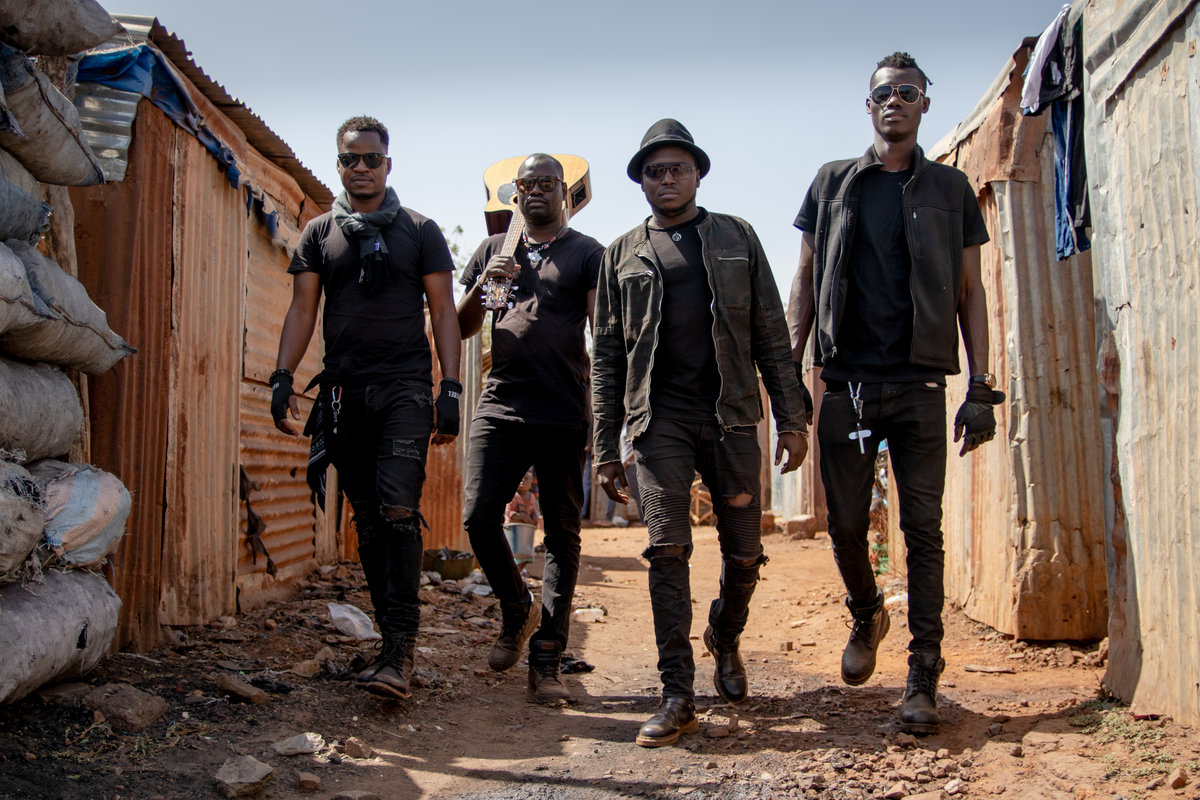
Songhoy Blues is a band whose experiences in Mali have opened their eyes to universal problems plaguing people everywhere. Using the pain and lessons learned from having to leave their hometowns in northern Mali, the band realizes that human rights is a concept that extends far beyond what they have seen with their own eyes and far beyond just the borders of Mali. In order for the band to see their homes restored, they understand the fight must be fought on all fronts, for everybody across the spectrum. They are no longer refugees or exiles or four people with instruments—they are Songhoy Blues, a musical voice for empowerment and equality.
Working with Matt Sweeney, who encouraged the band to make the album they want to make, “Optimisme” confronts our world today. On “Badala” and “Gabi,” Songhoy Blues seeks the empowerment of women, asking for centuries-old misogynistic practices to be done away with. With “Worry,” the band advises both the young and the old that positive vibes and persistence are the best tools to fight our struggles. In “Assada,” the band praises and thanks the everyday warriors who wake up everyday to sweat for the betterment of their communities and in “Dournia,” the band laments the lack of compassion and empathy between humans today in the face of increasing materialism and selfishness. “Bon Bon” warns of being fooled by shiny promises, and in “Barre” the band asks for the youth to get involved at home for change while warning off those who wish to divide in “Fey Fey.” Each time Songhoy Blues steps to the mic on Optimisme the band confronts, consoles, praises, thanks, and encourages the listener toward a better world tomorrow.
Sad 13 the project led by Sadie Dupuis of Speedy Ortiz, is a vampire who bakes cakes and other goodies to lure in her victims in the video for her new song “Oops…!” It’s the latest single to be taken from her new album, “Haunted Painting”, which is due out September 25th via Wax Nine. Kimber-Lee Alston wrote, directed, and edited the video remotely.
Dupuis had this to say about the song in a press release: “We recorded ‘Oops…!’ at New Monkey, which was Elliott Smith’s studio. This one has a magic drum sound—thanks entirely to engineer Sarah Tudzin (of Illuminati Hotties notoriety), and Zoë Brecher’s impeccable playing. Just before writing it, on tour with CHVRCHES, a venue employee became physically and verbally violent with one of my Speedy Ortiz bandmates. He directed his fake apology at me instead of the person he harmed, presumably because I am smaller and present feminine. My vengeance complex kicked in and I got a scary adrenaline high making sure this unsafe person was removed from the show. While I’m glad I have protective instincts, I wrote the song to process ways in which I’ve used people’s assumptions about me and my body to wield my own version of toxic masculinity. Kimber-Lee Alston, who directed remotely via Zoom, turned this story and song into an allegory about a 1950s prom queen vampire who lures in her bad boy victims with delicious, blood-filled treats.”
Previous Dupuis shared the album’s first single, “Ghost (of a Good Time),” via a video for the track, which Dupuis said is a “party song about not going out.” The album also includes “WTD?,” a new song Sad13 shared via Adult Swim Singles in May.
Haunted Painting is the sophomore Sad13 album, the follow-up to 2016’s Slugger. The album was recorded at Tiny Telephone in San Francisco and New Monkey Studio in Van Nuys, California, a studio that was built by Elliott Smith in the 2000s not long before he died. The album was made exclusively with women engineers, including mixer Sarah Tudzin (Weyes Blood, Illuminati Hotties), tracking engineers Erin Tonkon (David Bowie, Esperanza Spalding) and Maryam Qudus (Thao & The Get Down Stay Down, mxmtoon), and “mastering legend” Emily Lazar (Beck, Dolly Parton). It also features guest vocals from from Helado Negro’s Roberto Lange, Deerhoof’s Satomi Matsuzaki, Merrill Garbus of tUnE-yArDs, and Pile’s Rick Maguire. Zoë Brecher plays drums throughout the album.
Dupuis had this to say about the album in a previous press release: “I worked on Haunted Painting throughout 2019, writing, arranging and recording from home, then finishing the songs in studios around the country in between Speedy’s fly-in dates. It’s maximalist, and more true to me and my tastes than any record I’ve done.”
Rock autodidact Greg Sage had been kicking around Portland, Oregon, since the early ’70s, eventually forming Wipers in Year-Of-Punk 1977 to showcase his grungy, economical guitar work and shredded-nerve-ending songwriting. Their third LP would be the first to gain them a broader audience due to Brain Eater Records’ stronger distribution ties. Good thing it was essentially the apex of Wipers’—and Sage’s—art. The title track certainly has a life beyond the band, cited as influential by Kurt Cobain and covered by everyone from Hole to the Mono Men.
The Band Started life in Portland in 1977, Wipers are sometimes regarded as the band who brought punk rock to the drizzly Pacific Northwest – though their frontman Greg Sage disagrees. “We weren’t even really a punk band,” he later said in 2004. “See, we were even farther out in left field than the punk movement because we didn’t even wish to be classified, and that was kind of a new territory.”
Wipers’ taut, distorted music traded in sheer brawn and ferocity for a different kind of intensity: Sage messed about in the studio for hours and hours to achieve the group’s rich, overdrive-drenched guitar sound while other punk bands focused on breakneck speed. And the band’s sharp but distortion-slathered debut album ‘Is This Real?’ inspired countless future figureheads of the grunge scene. You can hear Wipers’ influence on everyone from Mudhoney and Melvins to Hole, Green River and most notably Nirvana. Kurt Cobain cited the group as a huge influence (and later covered Wipers’ songs ‘D-7’ and ‘Return of the Rat’).
Limited Edition clear colour vinyl with 7”. Limited to 2000. Celebrating the 40 year Anniversary of the debut LP by the Wipers. Includes individually AUTOGRAPHED concert poster by Greg Sage. Bonus 45 with four songs from the original 4 track sessions. Transparent Clear Audiophile Vinyl pressed at RTI with custom reflective mirror board jacket. Unquestionably Portland’s most well-loved punk group, the Wipers formed in the late 1970s and in 1980 released their debut LP, “Is This Real?”– twelve songs of stabbing, jittery guitar, snapped vocals, and unabashed teen angst. Full of desperation and yearning, the LP has stood as a blueprint for wretched youth for over 25 years. In the early 1990s “Is This Real?” was given mainstream attention when Nirvana covered two tracks off the record and Cobain announced it was one of the primary influences on his group.
Track listing: 1. Return Of The Rat 2. Mystery 3. Up Front 4. Let’s Go Let’s Go Away 5. Is This Real? 6. Tragedy 7. Alien Boy 8. D-7 9. Potential Suicide 10. Don’t Know What I Am 11. Window Shop For Love 12. Wait A Minute 13. Mystery (Original 4 Track Sessions) 14. Tragedy (Original 4 Track Sessions) 15. Let’s Go Away (Original 4 Track Sessions) 16. Is This Real? (Original 4 Track Sessions)
This 1971 collaboration between primal one-part-delta / one-part-Detroit singer-guitarist John Lee Hooker and southern california blues revivalists Canned Heat works in large part because all parties involved are a little off. Hooker, the most unsystematic of the major bluesmen of his generation, isn’t a good fit for disciplined players; rather, he requires sidemen who play by feel. In harp player-guitarist Alan Wilson, the crawling king snake found a particularly sympathetic foil; sadly, Wilson died shortly after these sessions were completed. roughly divided into spare, gritty delta exercises and full-on boogie stomps featuring the full band, Hooker ‘n’ Heat is surely one of Canned Heat’s crowning moments, which isn’t saying that much. But that it stands as a milestone in Hooker’s oeuvre is quite a statement indeed.
The double-album “Hooker ’N Heat”, which was released on 15th January 1971, is a fascinating meeting of mentor and protégés. Canned Heat had long admired John Lee Hooker and were delighted to find out that the revered blues guitarist-singer also enjoyed the band’s music. “I sure like the way you boys boogie,” Hooker told harmonica player Alan Wilson at a chance meeting in Los Angeles. Canned Heat floated the idea of recording together and, in April 1970, Hooker’s record company gave him permission to do just that. Just one month later they met up at Liberty Records in LA to record the album that was titled Hooker ’N Heat.
That real “Hooker sound”, In deference to Hooker’s genius, the boogie-rock band, who had a global hit with ‘On The Road Again’ in 1967, gave the first half of the album to him alone, and Hooker laid down compelling versions of five of his own compositions: ‘Messin’ With The Hook’, ‘The Feelin’ Is Gone’, ‘Send Me Your Pillow’, ‘Sittin’ Here Thinkin’’ and ‘Meet Me In The Bottom’. Hooker arrived for the recording session wearing a plaid cap, leather jacket, black satin shirt and some old dress slacks. He was carrying his favourite old Epiphone guitar. Producers Skip Taylor and Robert Hite were keen to capture the authentic Hooker blues sound. They tried out eight amplifiers before finding an old Silvertone amp that had that real “Hooker sound”. The engineers built a plywood platform for Hooker to sit on while he played, with one microphone on the amp, one to capture his vocals and a third to pick up his distinctive stomping. Nearby was a large bottle of Chivas Regal Scotch and a pitcher of water to keep him well refreshed.
“The most gifted harmonica player I’ve ever heard” For the second half of Hooker ’N Heat, Wilson joined in on piano, harmonica and guitar. “Blind Owl” Wilson, as he was known, died four months after the record was cut – at just 27 years of age – from a barbiturates overdose. He had suffered from depression and his death robbed the world of “the most gifted harmonica player I’ve ever heard”, as Hooker described him. Hooker ’N Heat captures his wonderful talent for music, including his piano playing on ‘Bottle Up And Go’ (written by the Delta blues musician Tommy McClennan) and ‘The World Today’, and his guitar work on ‘I Got My Eyes On You’.
After more Hooker solo songs, including ‘Alimonia Blues’, ‘Drifter’, ‘You Talk Too Much’ and ‘Burning Hell’, the whole band chimed in for the final songs, with Hooker and Wilson joined by lead guitarist Henry Vestine, bass player Antonio De La Parra and drummer Adolfo De La Parra on exuberant versions of ‘Just You And Me’, ‘Let’s Make It’ and ‘Peavine’. It all soars and moves, even though it seems like the band are sometimes frantically trying to keep up with Hooker’s vocals.
Hooker ’N Heat ended on a high, with a rambling and powerful 11-minute version of Hooker’s first record, the classic ‘Boogie Chillen’’. The song showed just how much fun Canned Heat were having recording with their musical hero, who died in 2001.
After the album came out, Hooker and Canned Heat – who hired guitarist-vocalist Joel Scott Hill to replace Wilson – played some live shows together, including one at New York’s Carnegie Hall. The memorable studio collaboration Hooker ’N Heat captured a natural fusion of empathetic musicians – and Hooker, who was 53 at the time, revelling in the occasion.
Tracks:
“Messin’ With The Hook” | “The Feelin’ Is Gone” | “Send Me Your Pillow” | “Sittin’ Here Thinkin’” | “Meet Me In The Bottom” | “Alimonia Blues” | “Drifter” | “You Talk Too Much” | “Burning Hell” | “Bottle Up And Go” | “The World Today” | “I Got My Eyes On You” | “Whiskey And Wimmen’” | “Just You And Me” | “Let’s Make It” | “Peavine” | “Boogie Chillen No. 2”
Since 2014, King Crimson has chronicled its annual tours by releasing a Tour Box that incorporates rehearsal tracks, live performance tracks, alternate tracks, and some previously unreleased live performance tracks from the past as far back as 1969. Compiled by Sid Smith for the band, the 2Cd boxes comes filled with music, photos, tour memorabilia, notes, and a lengthy essay. This has come to be expected by fans. But 2020 was unkind to the band with its constraints. However, King Crimson is resilient and non-conforming and so a 2CD Elements 2020 is now on the calendar.
On September 4th, King Crimson will release “The Elements 2020″ over 2CDs. As with previous sets, The Elements 2020 will include live performance tracks from the past previously unreleased on CD that will include some from the distant past, some as early as 1969.
The Elements 2020 will include a 24-page booklet that will include an introduction by Robert Fripp, the expected photos and memorabilia collection, and a 2000-word essay by compiler, Sid Smith.
The Elements 2020 will be housed in a DVD-style Digipak book case. The tradition continues. for fans, this is a happy moment.
For over a decade, Nika Roza Danilova has been recording music as Zola Jesus. She’s been on Sacred Bones Records for most of that time, and “Okovi” marks her reunion with the label.
Fittingly, the 11 electronics-driven songs on Okovi share musical DNA with her early work on Sacred Bones. The music was written in pure catharsis, and as a result, the sonics are heavy, dark, and exploratory. In addition to the contributions of Danilova’s longtime live bandmate Alex DeGroot, producer/musician Wife, cellist/noise-maker Shannon Kennedy from Pedestrian Deposit, and percussionist Ted Byrnes all helped build Okovi’s textural universe.
With Okovi, Zola Jesus has crafted a profound meditation on loss and reconciliation that stands tall alongside the major works of its genre. The album speaks of tragedy with great wisdom and clarity. Its songs plumb dark depths, but they reflect light as well. Nika Roza says Last year, I moved back to the woods in Wisconsin where I was raised. I built a little house just steps away from where my dilapidated childhood tree fort is slowly recombining into earth. Okovi was fed by this return to roots and several very personal traumas.
While writing Okovi, I endured people very close to me trying to die, and others trying desperately not to. Meanwhile, I was fighting through a haze so thick I wasn’t sure I’d find my way to the other side. Death, in all of its masks, has been encircling everyone I love, and with it the questions of legacy, worth, and will. Okovi is a Slavic word for shackles. We’re all shackled to something—to life, to death, to bodies, to minds, to illness, to people, to birthright, to duty. Each of us born with a unique debt, and we have until we die to pay it back. Without this cost, what gives us the right to live? And moreover, what gives us the right to die? Are we really even free to choose?
This album is a deeply personal snapshot of loss, reconciliation, and a sympathy for the chains that keep us all grounded to the unforgiving laws of nature. To bring it to life, I decided to enlist the help of Alex DeGroot, who has been the only constant in my live band and helped mix the Stridulum EP back in 2010. It will be released on Sacred Bones, the closest group of people I’ll ever have to blood-bound family. Zola Jesus signed to Sacred Bones in 2008. In the seven years that followed, we released eight albums together (three LPs, two EPs, two 7”s, a CD-R, and even a DVD). We discovered her via Myspace, which was the common A&R vehicle of the early- to mid-Aughts. Nika is the sole member of Zola Jesus.
There’s a moment in “Bueno,” one of the standout tracks on Dogleg‘s excellent full-length debut, “Melee”, where it feels like a ceiling is crashing down on your head. The song starts off all fire and brimstone, surging punk guitars and slammed drums, before settling into a groove — a funky one, possibly? It’s punk, it’s loud, but the melody is undeniable. It’s a full-on party … but then, halfway through the song, they slam on the brakes. The guitars ease up, leaving a simple bass line. You catch the touch of a cymbal. You think, for a second, that’s it, but then you realize Oh no. They’re just catching their breath. The guitars surge back in, and then the primal scream: “Little brother, was I ever a part of it?” Well, it’s screams — they take turns yelling the line, then, one more deep breath … and the explosion. It’s noise, and chaos, but it’s gorgeous, and perfect. The drums roll. Everyone screams. You’re screaming, too, and wondering: Why can’t all music sound like this?
Dogleg “Bueno” from the full length Melee
Band Members
Alex Stoitsiadis – guitar, vocals
Chase Macinski – bass, vocals
Parker Grissom – guitar
Jacob Hanlon – drums
With his sophomore album Shape & Destroy, Nashville-based artist Ruston Kelly now documents his experience in maintaining sobriety, and finally facing the demons that led him to drug abuse in the first place. But while Kelly recounts that journey with an unvarnished honesty, his grace and conviction as an artist ultimately turn Shape & Destroy into a work of unlikely transcendence.
With its unsparing reflection on what Kelly refers to as “the cycle of frustration and temptation after getting clean,” Shape & Destroy took form during a period of painful transformation. “It wasn’t surprising to me that getting sober was a challenge, but there were moments when it was challenging in a way I’d never experienced before,” Kelly says. “There’s so much repair your brain has to do—spiritually, emotionally, physically—and at one point I really felt like I was losing my mind.”
As a means of self-preservation and catharsis, Kelly eventually turned to the ritual of free writing, a practice that led him to the album’s title. “This phrase just came to me one day: ‘Shape the life you want by destroying what obstructs the soul,’” he recalls. “I realized that was the ticket to healing myself and healing my mind: figuring out what kind of person I want to become, and then getting rid of everything that keeps me from being that person.”
In light of that epiphany, Kelly felt a profound lucidness that soon catalyzed his creative process. “From reading about other artists who’ve gone through recovery, I was sort of expecting a dry spell after getting sober, but that didn’t happen,” he says. “Instead I felt this very heightened awareness that lent itself to so much more artistic output, and the songs just started pouring out.”
That momentum continued as Kelly headed into the studio, co-producing Shape & Destroy with his long time producer Jarrad K (Kate Nash, Weezer, Elohim). Working at Dreamland RecordingStudios in Upstate New York (a space converted from a 19th century church), Kelly enlisted musicians like Dr. Dog drummer Eric Slick, bassist Eli Beaird (who also performed on Dying Star), and a number of his own family members: his father Tim “TK” Kelly played steel guitar, while both his sister Abby Kelly and his wife Kacey Musgraves contributed background vocals. And in shaping the album’s nuanced yet potent sound, the band deliberately channeled the raw vitality Kelly continually brings to his live show.
“This was the first time I ever recorded completely sober, and I wanted to take the intensity of whatever it took to get me here and leave that splattered all over the wall,” says Kelly. “Rather than telling the band how or what to play, I translated that intention to them to get us all on the same page, and the songs came together exactly the way I needed them to.”
Though Kelly booked nine days at Dreamland, the sessions were so kinetic that the band tore through almost the entire album in the first 48 hours. That unchecked urgency is particularly evident on tracks like “Brave”—a plea for redemption made even more poignant by its stark recording, several times spotlighting a tearful crack in Kelly’s voice. “My father was supposed to play on ‘Brave’ with me, but I decided to do a take by myself to get my bearings,” says Kelly. “It was just me and my dad in a room late at night, him watching me sing this song about trying to live up to the principles he raised me with. I’ll never forgot how powerful that felt.”
Ruston Kelly has released a few great singles so far this year, including “Radio Cloud” ahead of his forthcoming album Shape & Destroy, out later this month via Rounder Records. “Radio Cloud” was the Nashville singer/songwriter’s third single from the album. It’s a cathartic country-folk ballad, following the release of the very Elliott Smith influenced “Rubber” and “Brave.” The album is sure to be an enchanting, emotional masterpiece.
Describing Shape & Destroy as a “mental-health record,” Kelly reveals all the false starts and setbacks in getting sober with a specificity that’s unflinching but never heavy-handed. As the album unfolds, his lyrics drift from forthright to poetic to sometimes even storybook-like (an element manifested in its recurring images of wishing wells and stars, flowers and wild storms). On the piano-laced and luminous “Mid-Morning Lament,” for instance, Kelly proves his gift for gracefully entwining wit and confession (sample lyric: “I wanna spike my coffee, but I know where that leads/And it ain’t the safest feeling when the angel on your shoulder falls asleep”). Another elegantly layered track, “Alive” twists classic love-song sentiment into a moment of tender revelation, its dreamy mood magnified by TK’s sighing steel tones and Kelly’s delicate storytelling (“On the horizon/The sun is setting pink/You’re cooking something in the house/Singing John Prine/What a beautiful thing/To be alive”). “To me ‘Alive’ is a testament to how powerful love can be, especially love from someone who embodies a very strong and empowering feminine spirit,” says Kelly. “It’s like they’re able to lend that spirit to you, so you can pick yourself back up and declare who you really want to be.”
Like most of Shape & Destroy, “Alive” was captured in one of the very first takes that Kelly and his band laid down. To make the most of their time at Dreamland, the musicians ended up recording two songs that weren’t initially intended for the album, including “Jubilee”—a warm and rumbling track with a magical backstory. “For a long time I’ve been a huge fan of the Carter Family, especially MotherMaybelle, and a while back John Carter Cash invited me to stay at his grandmother’s if I wanted a writing retreat,” says Kelly, referring to the son of Johnny Cash and June Carter Cash. “I wrote ‘Jubilee’ at Mother Maybelle’s dining room table and didn’t think it would ever make it on the record, but in the studio it turned into this train-song thing that felt really good. It’s just so strange to me that this Johnny Cash spirit came out without me even meaning it to.”
For the closing track to Shape & Destroy, Kelly chose “Hallelujah Anyway”: a minute-and-half-long piece centered on choir-like harmonies from Kelly and his collaborators (including recording engineer Gena Johnson), its lyrics nearly prayer-like in invocation (“And bury me in flowers/When I go I wanna bloom/And come back as the colour of a lovely afternoon”). “For me that’s probably the most important song I’ve ever written,” says Kelly. “It’s about having thankfulness for whatever it is that gives us this ability to be positive even in the thick of the blackest moments, and I can’t think of any greater weapon to turn against your lesser self. If I wrote that song and nothing else in my life, I’d be very pleased with what I’ve done as an artist.”
When Bright Eyes announced their first new album since 2011, the media excitedly reported on the band’s reconciliation. But, in reality, Bright Eyes never really broke up. They wandered in different directions, sure, but there were no hard feelings. Gathering to record “Down In The Weeds Where The Worlds Once Was” was a matter of good timing and schedules aligning. Frontman Conor Oberst suggested the idea for a new record at bandmate Nathaniel Walcott’s Christmas party in 2017, and the pair called the third member of their trio Mike Mogis from the bathroom to pitch the idea. “It was just something we wanted to do for ourselves, because we were all in this stage of our lives…” Oberst says. “Between kids being born and people dying and divorces and people falling in love and all of the crazy amount of life that’s transpired for the three of us, personally… It was just like, what are we going to do? Let’s do the thing we do best. Let’s make a record.” They certainly did some of their best work on Down In The Weeds… The album sounds undeniably like a Bright Eyes record, but it ebbs and flows with new anxieties and darknesses. Fans will delight in a true-to-style Bright Eyes record, but, at the same time, any music fan will be able to appreciate the gruesome grandeur of this folk-rock mastery.
“Mariana Trench” the new song by Bright Eyes off ‘Down in the Weeds, Where the World Once Was’ out August 21 on Dead Oceans.




 The Fat Angel Sings