It seemed like a huge loss nearly a year ago when LVL UP, the group behind Double Double Whammy and the presumed heirs to Robert Pollard’s eclectic lo-fi throne, called it quits after only three albums. But in the same way that band heroically rose from the ashes of the also-great Dave Benton–led Spook Houses, its split has led to a slew of promising recordings from several of its four members. On the heels of a stellar 2018 debut from Benton’sTrace Mountains, Am I is the first release from Mike Caridi’s project The Glow, and it doesn’t sound too far removed from the output of his former band. But as a solo endeavor, it’s evident from opener “Am I Good” that the project is an outlet for experimentation with sonic textures left unexplored by Caridi’s previous band—even “Orchard,” the single LVL UP released to announce their breakup, feels totally fresh here, redone with a more prominent drum beat and less tamed guitar riffs, along with the recurring flourish of higher-pitched vocal harmonies.
Despite its brief runtime, Am I feels entirely less claustrophobic than the equally brief Space Brothers, which crammed thirteen songs—not to mention three vocalists—into twenty-four minutes.
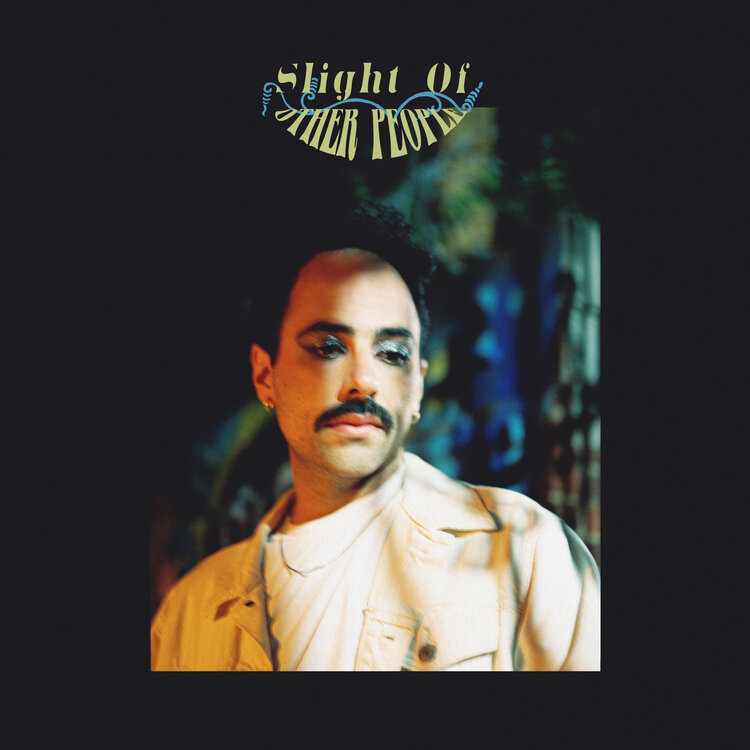
Empathy, often confused with sympathy, requires a little more push, surrendering yourself and embodying other people. On the follow up to Slight Of’s 2017 album Life Like, songwriter Jim Hill brought new depth to his music by looking outward, learning more about himself in the process and creating his most ambitious work to date. The appropriately titled sophomore album “Other People” is an exploration of different perspectives, an anthology of friends and strangers who helped him make sense of an ever-changing world.
Hailing from Rochester, New York, Hill sought to explore the sounds of his past with vintage keyboards, organs, and shimmering guitar licks. “I was listening to a lot of classic rock throughout the process of making this record,” Hill recalls, “stuff that was on the radio when I was forming my first memories.” The songs on Other People paint sonic landscapes of post-industrial cities, townie bars, and the working class. Tracks like “Sage”, “Americana” and “Sweet Caroline” utilize hypnotic harmonies that invoke comfort and familiarity while exploring the difficult space between patriotism and the dark realities of suburbia.
Other People kicks off with energetic synth-driven track “The Sims” — an ode to suburbia reminiscent of 80s pop and The Cars (“When we would shut ourselves in / All night just playing the Sims / The time we’ve wasted on a world / That doesn’t even exist”) From there, the title track follows to display the band’s knack for making the old sound new and epitomizes the graceful fusion of pop and classic rock elements that define the album.
In 2014 Hill left upstate New York to settle in Brooklyn. From there, Hill immersed himself in the DIY community, playing shows and spending time at now-defunct venues Silent Barn and Shea Stadium. The classic influences of his youth began to naturally intertwine with the sounds of his contemporaries. Hill spent years touring the US with Slight Of and other notable bands he joined (Trace Mountains, Painted Zeros, Bethlehem Steel). “On tour, you inevitably find yourself in some pretty strange situations with people you would never meet otherwise.” Hill remembers. “My bandmates started to recognize this pattern where I would attract all of these people who wanted to tell me their life story. There was a guy who cornered me at a house show in Illinois who had just gotten out of prison, a man at a bar in Omaha who told me he was possessed by a ghost, and an ex-Marine who threatened to kill me. We eventually had to come up with a code word so I could signal them to get me out of uncomfortable situations. I started to imagine larger stories for these people as a way to make sense of the pain they were trying to express to me.”
Moments like these incited a transition for Hill as an artist, shifting his focus outward for inspiration, and eventually leaving room for collaboration on his songs. After writing and recording 2017 album Life Like in isolation, Slight Of developed into a more familial and collaborative project. “It was really important to me that my bandmates be more involved with the arrangement and vocal textures of this album.” Hill says. Recorded in friend’s homes, practice spaces and studios in New York, Hill imagines Other People as “a study of American rock styles.” What’s a study without its subjects? It’s the friends, artists, strangers, places, and other people that give it all meaning.
Releases August 28th, 2020
All songs by Jim Hill with arrangements by the players.
Jim Hill: Vocals, Guitars, Bass, Synths, Piano
Alex Northrup: Organs, Electric Piano, Guitars
Jacob Rosse: Vocals, Synths
Bernard Casserly: Guitars
Izzy Rosse: Vocals, Bass
Alberto Casadevall: Vocals, Drums
Leah Beck: Vocals, Organ (track 8)
Erick Perrine: Guitar (track 6)
Brooklyn’s Jeanines specialize in ultra-short bursts of energetic but melancholy minor-key pop. With influences that run deep into the most crucial tributaries of DIY pop — Messthethics, the Television Personalities, Marine Girls, early Pastels, Dolly Mixture — they’ve crafted a style that is as individual as it is just plain pleasurable. Alicia Jeanine’s pure, unaffected voice muses wistfully on the illusions of time, while My Teenage Stride/Mick Trouble mastermind Jed Smith’s frantic Motown-esque drumming and inventive bass playing provide a thrilling rhythmic foundation.
“Winter In The Dark” and a lovely, jaunty cover of The Siddeleys’ “Falling Off Of My Feet Again” provide great insight into what Jeanines are about. 60s-meet-80s melodies combine with timeless guitar jangle in a way that recalls everything from The Aislers Set and Saturday Looks Good To Me to more recent DIY pop groups like Parsnip and Chook Race. Album opener “Either Way,” “Hits The Bone” and “Where We Go” hearken back to some of the most intriguing bands of the C86/C88 era, when bands like Jesse Garon & The Desperadoes crafted perfect pop gems enlivened by the inspiration of punk.
Gorgeous songs like “Where I Stand,” “Too Late” and “In This House” are windows into Alicia’s lyrical style and inspiration. She expands: “I’m kind of obsessed with mortality and how weird the passage of time is so I think my lyrics reflect that. I definitely lean into that kind of melancholy state of mind when trying to think of lyrics, while trying to avoid cliches!” The marriage of the minor-key melodies and melancholic lyrics is powerful and make Alicia’s songs all the more memorable, especially so on songs like “No Home,” with its echoes of girl harmony post-punk groups like Grass Widow and Household.
Clearly, with 16 great songs included, there is a lot at work here on this standout debut album. Jeanines have been compared to such cult pop icons as Dear Nora, Black Tambourine, and more recent acts like Veronica Falls and Girl Ray, but their dark, modal melodies and pensive, philosophical lyrics, along with Smith’s versatile but ever-economical musicality, ensure them a place of their own in today’s crowded but boisterously healthy DIY pop scene.
When Rachel Angel sings “I wanna be a renegade,” she is speaking to the experience of personal transformation and resilience, like putting on a protective coat of armour to meet the world with grace and courage. While the songs on the EP were inspired by the spirit of outlaw country, her sense of the outlaw is metaphorical rather than literal. These songs are about taking the unconventional artists path, and staring in the face of danger, fear, and pain. In her latest EP “Highway Songs,” the country-folk troubadour takes the listener on a wild journey— physical, emotional, spiritual, and everywhere in between.
These songs were written in the midst of a harrowing time for Angel— she was physically sick with an auto-immune disease, self-quarantined in her Brooklyn apartment, writing at a feverish pace. She reflected on her recent travels, both as a touring musician, and time spent in Mexico during a 7.1 earthquake with her family.
“Highway Songs” was recorded live in two days with an all star lineup at Figure 8 Studios in Brooklyn, NY.
Released August 21st, 2020 The Band:
Rachel Angel – Vocals/Guitar
Brian Betancourt – Bass
Sam Owens – Lead Guitar/Keys
Noah Hecht – Drums
Dan Iead – Pedal Steel Guitar
Clyde Daley – Trumpet on “Mexico”All songs written by Rachel Angel (BMI)
Sometimes it feels like you hear a Bright Eyes song with your whole body. From Conor Oberst’s early recordings in an Omaha basement in 1995 all the way up to 2020, Bright Eyes’ music tries to unravel the impossible tangles of dissent: personal and political, external and internal. It’s a study of the beauty in unsteadiness in all its forms – in a voice, beliefs, love, identity, and what fills up the spaces in-between. And in so many ways, it’s just about searching for a way through. When Bright Eyes announced their first new album since 2011, the media excitedly reported on the band’s reconciliation. But, in reality, Bright Eyes never really broke up. They wandered in different directions, sure, but there were no hard feelings. Gathering to record Down in the Weeds Where the World Once Was was a matter of good timing and schedules aligning. Frontman Conor Oberst suggested the idea for a new record at bandmate Nathaniel Walcott’s Christmas party in 2017, and the pair called the third member of their trio Mike Mogis from the bathroom to pitch the idea.
The year 2020 is full of significant anniversaries for Bright Eyes. Fevers and Mirrors was released 20 years ago this May, while Digital Ash in a Digital Urn and I’m Wide Awake It’s Morning both turned 15 years old in January. The latter, a singer-songwriter tour-de-force released amidst the Bush presidency and Iraq war, wades through incisive anti-war rhetoric and micro, intimate calamities. On the title track and throughout the record, Oberst sings about body counts in the newspaper, televised wars, the bottomless pit of American greed, struggling to understand the world alongside one’s own turmoil. In its own way, I’m Wide Awake It’s Morning carved out its place in the canon of great anti-war albums by being both present and prophetic, its urgency enduring 15 years later.
In 2011 the release of The People’s Key, Bright Eyes’ ninth and most recent album, ushered in an unofficial hiatus for the beloved project. In the time since, the work of the band’s core members – Oberst, multi-instrumentalist Mike Mogis, and multi-instrumentalist Nathaniel Walcott – has remained omnipresent, through both the members’ original work and collaboration.
In recent years, Mogis produced records for beloved folk acts First Aid Kit and Joseph, among others, as well as mixed the fine-spun ennui of Phoebe Bridgers’ breakthrough 2017 debut, Stranger in the Alps. Mogis and bandmate Walcott also teamed up to write the original scores for The Fault in Our Stars, Stuck in Love, and Lovely Still, and Walcott worked as a solo composer scoring number of independent feature-length films. Walcott spent extensive time on collaboration; in addition to his arrangement work for Mavis Staples, First Aid Kit, and M. Ward, he contributed studio work to artists ranging from U2 to jazz guitarist Jeff Parker, and also toured heavily as a member of the Red Hot Chili Peppers.
Oberst, who’s nearly 30 years into a prolific musical career, spent the last decade in similarly productive fashion. Across three years he released a string of solo albums: Salutations (2017), Ruminations (2016), and Upside Down Mountain (2014), as well as guested on records by First Aid Kit, Phoebe Bridgers, and Alt-J. His punk band, Desaparecidos, emerged from a 13-year hiatus in 2015 with the thunderous sophomore LP, Payola, a white-knuckled disarray of hollered political fury. And at the top of 2019, Oberst and Bridgers debuted their new band, Better Oblivion Community Center, digitally dropping the critically-lauded eponymous debut LP alongside a surprise performance on The Late Show with Stephen Colbert.
The heart at Bright Eyes’ songwriting still looms culturally, in films and TV shows and through re-imaginings by other artists. Mac Miller covered both Lua and First Day of My Life; Lorde’s version of the penultimate The People’s Key track, the funereal-waltz Ladder Song, was a focal point of The Hunger Games’ soundtrack; The Killers covered Four Winds for their Spaceman EP; and Lil Peep’s Worlds Away samples Something Vague while Young Thug’s Me Or Us samples First Day of My Life.
Bright Eyes’ expansive catalogue has traversed genre, sound, and countless players; unpolished demos or fuzzy folk, electrified rock or country twang. The sharp song writing and musicianship is all anchored in Bright Eyes’ singular ability to flip deep intimacy into something universal. For so many, for so long, listening to Bright Eyes has been like hearing yourself in someone else’s song – a moment of understanding or illumination, knowing you’re on the same team looking for a way to move through of all this shit.
And while 2020 is a year of milestones for the band, it’s also the year Bright Eyes returns, newly signed to indie label Dead Oceans. Amidst the current overwhelming uncertainty and upheaval of global and personal worlds, Oberst, Mogis, and Walcott reunited under the moniker as both an escape from, and a confrontation of, trying times. Getting the band back together felt right, and necessary, and the friendship at the core of the band has been a long time pillar of Bright Eyes’ output. For Bright Eyes, this long-awaited re-emergence feels like coming home.
They certainly did some of their best work on Down In The Weeds… The album sounds undeniably like a Bright Eyes record, but it ebbs and flows with new anxieties and darknesses. Fans will delight in a true-to-style Bright Eyes record, but, at the same time, any music fan will be able to appreciate the gruesome grandeur of this folk-rock mastery.
Bright Eyes’s Down in the Weeds, Where the World OnceWas feels less like a monumental happening and more like a seamless continuation, the sound of a band shrugging off a long hiatus and simply getting back to work. They’re still making deeply emotional indie rock songs, still flirting with the same grandiosity that helped cement the legacies of albums like Lifted and Fevers and Mirrors, and the songs still revolve around Conor Oberst’s warbling search for the reasons we insist on continuing to exist when the world quite frankly seems to be crumbling all around us. No matter how much time has passed, Bright Eyes continues to be unmatched at tackling the biggest questions with a profound, heart-wrenching intimacy.
Death Valley Girls are an indie rock quartet from Los Angeles, Calif. Through their punk-infused, fuzzy garage rock sound, they’ve caught the attention of Iggy Pop, who’s called the group “a gift to the world.” He even starred in their video for the single “Disaster (Is What We’re After).” While singer and multi-instrumentalist Bonnie Bloomgarden and guitarist Larry Schemel knew their intention for the album before a single note was written, the actual nature and direction of the music was a mystery. The initial inspiration for the record came from the jubilant spirit of Ethiopian funk records the band had been listening to on tour, but once they began to channel the songs it seemed like the music came from somewhere not in the past but in the future. In the weeks leading up to recording, Death Valley Girls relied on their subconscious and effortlessly conjured Under the Spell of Joy’s eleven tracks as if they’d tapped into the Akashic Chronicle and pulled the music from the ether.
The rockers have teamed up with the legendary shoe company Dr. Martens for a special mini-doc as part of their new Dr. Martens Music & Film Series. In the video, vocalist Bonnie Bloomgarden, guitarist Larry Schemel, bassist Nikki Pickle and drummer Rikki Styxx give a brief summary of their mission as a band, and there are also clips of the energetic live performances.
Death Valley girls recently released their new single “Dream Cleaver,”
“Making music and being in a band is like a religious conviction,” the band said in a Q&A with Dr. Martens. “We are nomads for most of the year, and a gang, and that’s the way we like it! When you travel around spreading the good word of rock and roll you are like a missionary!”. The album opens with “Hypnagogia,” an ode to the space between sleep and wakefulness where we are open to other realms of consciousness. The song slowly builds along a steady pulse provided by bassist Pickle (Nicole Smith) and drummer Rikki Styxx. Tripped out saxophone bleats from guest player Gabe Flores swirl on top of the organ drones laid out by guest keyboardist Gregg Foreman.
The band’s choral objectives for Under the Spell of Joy are established right off the bat, with Bloomgarden’s melodic invocations bolstered by a choir, giving the album a rich and vibrant wall-of-sound aesthetic. The song ominously builds on its hypnotic foundation until it opens up into a raucous revelry at the four-minute mark. The portentous simmer of the opening track yields to the ecstatic rocker “Hold My Hand,” where verses reminiscent of Velvet Underground’s “I’m Waiting For The Man” explode into big triumphant choruses. From there the band launches into the title track, which marries the griminess of The Stooges with an innocence provided by a children’s choir chanting the album’s primary mantra “under the spell of joy / under the spell of love.”
Death Valley Girls have always vacillated between lightness and darkness, and on “Bliss Out” they demonstrate their current exuberant focus with a patina-hued pop song driven by an irrepressibly buoyant organ line laid down by keyboardist The Kid (Laura Kelsey). A similar cosmic euphoria is obtained on “The Universe,” where alternating chords on the organ help elevate soaring saxophone and keyboard lines out beyond the stratosphere. If you’re looking for transcendental rock music, look no further.
Death Valley Girls Under the Spell of Joy out October 2nd, 2020, on Suicide Squeeze Records
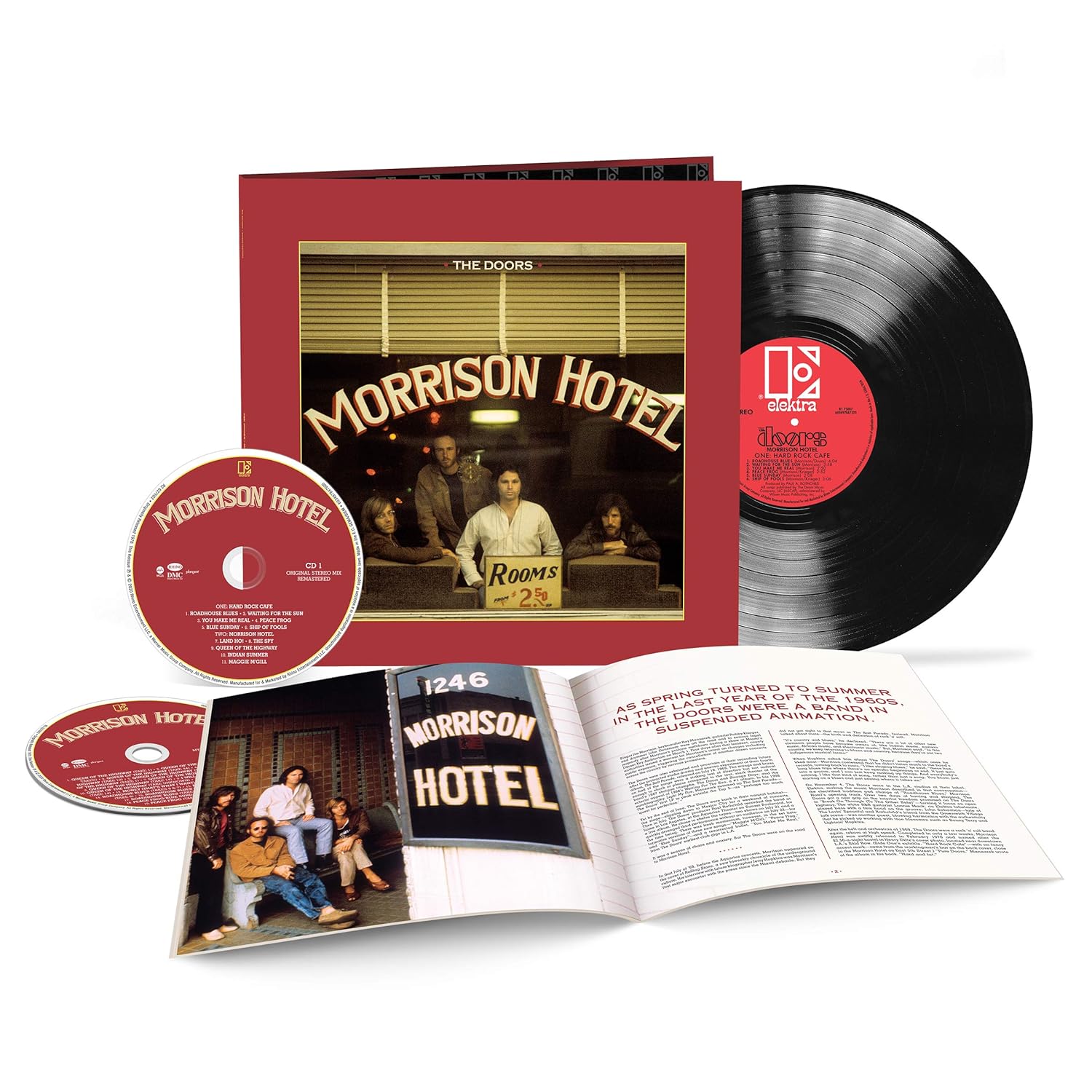
The Doors went back to basics when they checked into Morrison Hotel for their 1970 studio album. The band’s fifth LP, it’s now being reissued by Rhino on October 9th as a 2-CD/1-LP 50th Anniversary Deluxe Edition. This release follows the label’s similar reissues for The Doors’ first four albums including The Soft Parade which expanded their sound to include orchestration. Morrison Hotel got them back to blues-rock in striking fashion.
The box set features original engineer Bruce Botnick’s remastered version of the 1970 album produced by Paul Rothschild on both CD and vinyl. While Morrison Hotel didn’t yield any major chart hits – “You Make Me Real” b/w “Roadhouse Blues” only made it to No. 50 on the Billboard Hot 100 – it’s since been recognized as a powerful full-length album statement. Henry Diltz’s cover photography has since become one of rock’s most familiar images. The LP made it to No. 4 on the albums chart, and became the band’s highest-charting album in the United Kingdom with its No. 12 berth.
The new box set expands the original album with a second disc of 19 outtakes – totalling more than one hour’s worth of session material. Botnick states in the press release, “There are many takes, different arrangements, false starts, and insightful studio conversations between the band – who were in the studio – and producer Paul Rothchild – who was in the control room. It’s like being a fly on the wall.”
Disc Two kicks off with three sessions for “Queen of the Highway” and continues with another three for “Roadhouse Blues,” arguably the album’s most beloved track. The latter song evolved with different bass players including Soft Parade veteran Harvey Brooks and Lonnie Mack. The pseudonymous John Sebastian (appearing as “G. Puglese”) appeared on the final take with Mack on bass. The disc concludes with the “Peace Frog”/”Blue Sunday” session. Along the way, the set presents the previously released outtake “I Will Never Be Untrue” (indicated here as in an unissued version or mix) and outtake jams on Barrett Strong’s Motown classic “Money (That’s What I Want)” and B.B. King’s “Rock Me Baby.”
David Fricke has penned the liner notes which place the album in the context of its creation, when legal troubles plagued Jim Morrison and threatened to curtail the band’s activity. The Morrison Hotel: 50th Anniversary Deluxe Edition is due from Rhino on October 9th. You’ll find pre-order links and the track listing below!
The Doors, Morrison Hotel: Deluxe Edition (Elektra/Rhino, 2020) (Amazon U.S. / Amazon U.K. / Amazon Canada)
CD 1: The Original Album (Elektra EKS-75007, 1970)
Side One: Hard Rock Cafe
“Roadhouse Blues”
“Waiting For The Sun”
“You Make Me Real”
“Peace Frog”
“Blue Sunday”
“Ship Of Fools”
Side Two: Morrison Hotel
“Land Ho!”
“The Spy”
“Queen Of The Highway”
“Indian Summer”
“Maggie M’Gill”
CD 2: Mysterious Union
Black Dressed In Leather (“Queen Of The Highway” Sessions)
First Session (11/15/68)
“Queen Of The Highway” (Take 1, She Was A Princess) *
“Queen Of The Highway” (Various Takes) *
“Queen Of The Highway” (Take 44, He Was A Monster) *
Second Session (1/16/69)
“Queen Of The Highway” (Take 12, No One Could Save Her) *
“Queen Of The Highway” (Take 14, Save The Blind Tiger) *
Third Session (Date Unknown)
“Queen Of The Highway” (Take 1, American Boy – American Girl) *
“Queen Of The Highway” (Takes 5, 6 & 9, Dancing Through The Midnight Whirlpool) *
“Queen Of The Highway” (Take 14, Start It All Over) *
“I Will Never Be Untrue” *
“Queen Of The Highway” (Take Unknown) *
Money Beats Soul (“Roadhouse Blues” Sessions)
First Session
“Roadhouse Blues” (Take 14, Keep Your Eyes On The Road) *
“Money (That’s What I Want)” *
“Rock Me Baby” *
Second Session
“Roadhouse Blues” (Takes 6 & 7, Your Hands Upon The Wheel) *
“Roadhouse Blues” (Take 8, We’re Goin’ To The Roadhouse) *
Third Session
“Roadhouse Blues” (Takes 1 & 2, We’re Gonna Have A Real Good Time) *
“Roadhouse Blues” (Takes 5, 6 & 14, Let It Roll Baby Roll) *
Dawn’s Highway (Peace Frog/Blue Sunday Session)
To celebrate 50 years of Thin Lizzy Universal Music are proud to announce the first instalment of an archive release programme that will cover the career of one of the most iconic and respected bands of the 1970s.
“Rock Legends” is a six CD one DVD Super Deluxe Edition that features 99 Tracks in total, 74 of which are unreleased and 83 of which have never been released on CD or streaming. It is simply the ultimate Thin Lizzy boxset. Rock Legends’ covers the bands whole career over 6 discs newly mastered by Andy Pearce encompassing a raft of unreleased material including demos, radio sessions, live recordings and rare single edits. The track listing has been compiled by Thin Lizzy guitarist Scott Gorham and Lizzy expert Nick Sharp from a collection of newly discovered tapes most of which have never been heard before.
‘Running Back (Demo)’ is a previously unreleased track taken from Thin Lizzy‘ forthcoming “Rock Legends” box set.
The song is from the band’s breakthrough Jailbreak album from 1976 and was for a time being considered as the first single before Thin Lizzy opted for ‘The Boys Are Back In Town’ (good choice!). This unheard demo features saxophone which was not used on the released version, as well as some alternate vocals, guitar takes and keyboard parts.
The box is housed in a 10” x 6” slipcase and in addition to the six CDs contains a DVD with the hour long ‘Bad Reputation’ BBC documentary and the band’s legendary performance on the Rod Stewart ‘A Night on the Town’ TV Special from 1976. This DVD looks good too. As well as the Bad Reputation documentary which went out on BBC Four a few years back, we get four songs – ‘Jailbreak’, ‘Emerald’, ‘The Boys Are Back In Town’, and ‘Rosalie/Cowgirl Song’ – that were recorded for Rod Stewart’s A Night On The Town TV special in 1976. Just think about that for a minute, Rod and Philo and a night on the town. I’d say there wasn’t a bottle of plonk to be had for a square mile.
The set also contains replicas of the bands tour programmes bound into a hard-backed book, the very sought-after Phil Lynott Poetry books, 4 prints by legendary Lizzy cover artist Jim Fitzpatrick and a book containing quotes by all the members of the band about their experiences playing with Phil Lynott and Thin Lizzy. It also has a selection of famous fans such as Slash, Lemmy, Joe Elliot, Geddy Lee, James Hetfield, Ian Gillan, Henry Rollins, Billy Corgan, Bobby Gillespie, Craig Finn, John McEnroe and Pat Cash talking about the band.
On top of all of this, the full trailer for the life of the band frontman has been released on what would have been his 71st birthday. The synopsis reads: “Phil Lynott: Songs For While I’m Away is a feature documentary on the life and music of Phil Lynott, telling the story of how a young black boy from working class 1950’s Dublin, became Ireland’s greatest rock star.”
The new Tom Petty box set after a long time waiting is finally getting a release, Heartbreakers guitarist Mike Campbell tells usthat the group hopes to release a live set commemorating their 1997 residency at the Fillmore in San Francisco. They played 20 sold-out shows at the historic theatre in January and February of that year, radically changing the setlist each night. In 2009, seven songs from the Fillmore run were released on the Live Anthology compilation, but that was just a tiny sampling of their total collection.
“For me, that was almost the pinnacle of the band just being totally spontaneous night to night to night,” says Campbell. “We might throw in a Grateful Dead song that we just learned that afternoon. We recorded every show and we had guest artists from Bo Diddley to Roger McGuinn to John Lee Hooker. And I know, in my memory of those 20 nights, there’s an amazing album in there.”
Tom Petty estate finally release an expanded edition of his 1995 LP solo “Wildflowers”. Petty had said that he wanted to take the Heartbreakers and whoever else to reproduce every sound in a big way,” of that album. That album was really about sound in a big way. The plan was to go out there and perform the entire album as it was originally conceived with all of the songs.”
“Wildflowers” was initially envisioned as a double album, but was ultimately pared down to 15 songs on a single CD release. It became one of the most successful records of his career, with singles “You Don’t Know How It Feels,” “You Wreck Me” and “It’s Good To Be King” all getting extensive radio play. For years, Petty has been contemplating assembling the unreleased material into a deluxe package. The Super Deluxe Edition of the set features 70 tracks, spread out over five CDs, with nine songs that have never been released plus 34 alternate versions.
Curated by Tom’s daughters, Adria and Annakim Petty and his wife Dana Petty. A 2-CD set includes 25 songs, with ten previously unreleased cuts. A top of the line Super Deluxe Edition is a sprawling package available in a 5-CD or 9-LP 180g vinyl.
In addition to the original LP, the box contains a disc titled All the Rest that includes 10 outtakes from the sessions, five of which have never been heard. The third disc is comprised of 15 Petty home demos, with three of its 15 songs unreleased. The fourth CD consists of live versions of 14 songs recorded between 1995 and 2017, 12 available for the first time. The fifth disc, Finding Wallflowers, consists of 16 alternate studio versions.
“I think I put four of the [Wildflowers outtakes] on the She’s The One soundtrack just to fill out the album,” says Tom Petty. “But they were very hastily mixed. Take ‘Climb That Hill.’ There’s a version of that on She’s The One, but the Wildflowers one I think is extremely better. ‘Hung Up And Overdue’ is another one remixed and it turned into an epic. Carl Wilson [of the Beach Boys] and [Heartbreakers bassist] Howie Epstein singing quite a bit of harmony that didn’t come through on the original. Then again, there’s probably six songs that nobody has heard. There’s 11 or 12 [new] songs on the album. I think people are going to like it a lot. I like it a lot.”
The new version of Wildflowers will be released. “At one point the label really just wanted to put it out as a standalone album, And then there’s the point of view where they want to put both records together. There’s also the point of view that wants the box set with all the demos and all that.
The Wildflowers box set has been in the works for quite a long time, something that Petty frequently spoke of in his final years. The 1994 album was originally envisioned as a two-disc set, meaning many songs got cut for space when it was truncated. A sweet, tender melodic ballad opens Tom Petty’s acclaimed 1994 album Wildflowers. The title track’s initial chorus reveals a simple desire: freedom.
“You belong among the wildflowers / You belong in a boat out at sea / Sail away, kill off the hours / You belong somewhere you feel free.”
“I swear to god it’s all ad-lib from the word ‘go,’’ Petty told Paul Zollo in his 2005 book, Conversations with Tom Petty. “I turned on my tape deck, picked up my acoustic guitar, took a breath and played that from start to finish. And then sat back and went ‘Wow, what did I just do?’ And I listened to it. I didn’t change a word. Everything was just right there, off the top of my head. It’s a very sweet song. It’s got really good intentions.” Sonically, “Wildflowers” came from a different world than much of Petty’s work from the ’80s. There are no drums on the track at all, and the song features little more than a jangly acoustic guitar, piano, a spot or two of harmony and Petty’s pure vocals. Turning instead to a more stripped-down, raw and natural approach, he entered the studio with his bandmates from the Heartbreakers, unsure exactly of what the result would be. “Wildflowers” arrived like a breath of fresh air, or as Petty put it, a “stream of consciousness.”
“I actually only spent three and a half minutes on that whole song,” the rocker confessed to Zollo. “So I’d come back for days playing that tape, thinking there must be something wrong here because this just came too easy. And then I realized that there’s probably nothing wrong at all.”
Producer Rick Rubin was also taken aback by the flow of material pouring out of Petty.
“One day, between cassette recordings of songs he was working on, he began strumming the guitar,” said Rubin . “After a couple of minutes of strumming chords, he played me an intricate new song complete with lyrics and story. I asked him what it was about. He said he didn’t know, it just came out. He had written it, or more like channelled it, in that very moment. He didn’t know what it was about or what the inspiration was. It arrived fully formed. It was breath-taking.”
Though Rubin couldn’t remember the exact song Petty played — it could very well have been “Wildflowers” — the producer was amazed by the the ease with which Petty put tunes together. Rubin, also enamoured with the songwriting from Full Moon Fever (1989), would go on to produce the entire Wildflowers record.
“When we first met, I was impressed with his dedication to writing,” the producer recalled. “He wrote constantly and called me to come and hear new songs often. There is a poetry about them that spoke to me.” But that poetry wasn’t immediately clear to Petty when he wrote “Wildflowers,” and the direction the song was taking him was unclear, though he knew his crumbling marriage was likely playing a part.
“I’ve read that Echo is my ‘divorce album’, but Wildflowers is the divorce album,” Petty told biographer Warren Zanes in the 2015 book, Petty: The Biography. “That’s me getting ready to leave. I don’t even know how conscious I was of it when I was writing it. I don’t go into this stuff with elaborate plans. But I’m positive that’s what Wildflowers is. It just took me getting up the guts to leave this huge empire that we had built, to walk out.” When the title track came tumbling out of his head, Petty didn’t recognize his subject straight away. His therapist asked him who the song was about.
“I told him I wasn’t sure,” the musician recalled to Zanes. “And then he said ‘I know. The song is about you. That’s you singing to yourself what you needed to hear.’” It appeared the freedom the subject was seeking was Petty’s to find. Whatever had been bottled up inside had come out onto the page and had become an unforgettable three minute song about love and liberation. “It kind of knocked me back,” Petty admitted. “But I realized he was right. It was me singing to me.”
Petty had seen the Rolling Stones play Sticky Fingers at the Fonda Theatrer in Los Angeles and noticed they played it completely out of sequence. “Single album concerts often don’t scan right for a concert,” he said. “But with the amount of material I had for the Wildflowers double album, I think I’ve got enough tempos and types of songs that I could do a live show … And it’ll be fun for the audience since there’s a bunch of songs they’ll know.
The album, which features hits like You Don’t Know How It Feels,” “You Wreck Me” and “It’s Good To Be King,” has been due an extensive re-release.
Now that he’s gone, his former collaborators are determined to see the projection to fruition. “I see that in the cards,” says producer Ryan Ulyate. “It’s going to be fantastic.” There’s also talk of deluxe editions of key albums from Petty’s catalogue. “If there’s a market for something like that,” says Campbell, “we’ll do it.”
Wildflowers & All The Rest—Super Deluxe Edition: A 5-CD and 9-LP 180g Direct to Consumer, Limited Edition set that features 70 tracks, nine unreleased songs and 34 unreleased versions. Includes Rick Rubin introduction, David Fricke essay, track-by-track for all music and lyrics to all the songs on Wildflowers and All The Rest. This set also comes with a hardbound book, cloth patch of Wildflowers logo, sticker of Wildflowers logo, replica of “Dogs with Wings” tour program (the 1995 Tom Petty and The Heartbreakers tour), hand-written 4-song lyric reprints in vellum envelope, a litho of new and exclusive art by Blaze Ben Brooks for the song “Only A Broken Heart,” and a (numbered) Certificate of Authenticity.
Maxwell Stern has been writing music and touring in various bands since the early 2000s. He has released a slew of LPs and 7″singles, and has played shows pretty much everywhere including an abandoned restaurant in Wyoming, a mall in China, several squats in Germany and a pretty nice bookstore in Australia. Lately he’s been working a lot. I am super excited to share that Maxwell Stern’s new song featuring Laura Stevenson is officially out! Earlier this week, “Left in the Living Room” along with a personal excerpt about the record by Max.
Max shared: “I had the idea to ask one of my favourite vocalists, Laura Stevenson, to sing with me on something. I’m not sure if she remembers it, but we’d actually made music together once before. It was the fall of 2005, I had just turned 16 and I was watching Jeff Rosenstock’s old band Bomb The Music Industry! — a band in which Laura played keys and sang—play on the floor of a sports bar in my hometown of Cleveland, OH…BTMI! had a “Bring Your Own Band” policy that stated that if you knew any of their material, you could play it with the band. So here I am, bleached-blonde mop and all, underage in a college bar, freaking out about getting to play with a group of musicians who were nearly a decade younger than I am right now who were making frantic, catchy, and often unintelligible ska-punk-hardcore songs about drinking beer in the shower and not shaving your beard before a job interview. I loved that band — I still do.”
“Anyway, sometime around that show, Laura started writing her own songs, and quickly evolved from ‘extremely talented person in the scene with me and my dumb friends’ to ‘real-life grown-up genius-level songwriter.’ Her involvement with this song, “Left In The Living Room” happened pretty quickly once I gathered up the courage to send her a text message and a demo, and having her voice on this record is a true honour.
Personnel: Maxwell Stern – vocals, acoustic guitar, electric guitar, bass, Wurlitzer, Prophet Adam Edward Beck – drums on tracks 1-10, drum composition, auxiliary percussion, additional keyboards, electronics, and production Kyle Pulley – synth on track 1, additional electric guitar on track 6, bass on
track 8, drum programming on track 11 Jonathan Hernandez – electric guitar on tracks 3, 4, 8, vocals on tracks 3, 7, 8 Laura Stevenson – vocals on track 5 Mike “Slo-Mo” Brenner – various lap steels on tracks 4, 5, 6, 7, 10







 The Fat Angel Sings