Porches, the one-man-band project of New York-based musician Aaron Maine, is back with new single “I Miss That”. On top of a galloping pop tune carried along by bright, taut snare hits and warbling synths, Maine laments in his signature honey-coated raspy vocals, “I couldn’t believe what I had / So I threw it away I was bad / Just thinking I like that, I like that, I like that / I miss that, I miss that, now I miss that.”
“I Miss That” follows the release of Porches’ fourth album, “Ricky Music”. It arrived in March of 2020, featuring contributions from Zsela and Dev Hynes, with production by Jacob Portrait. Bonus track “Rangerover” recently underwent the remix treatment, courtesy of Frank Ocean collaborator Vegyn,
A veritable buzz kid just a few years ago, Aaron Maine’s last two releases as Porches — including this year’s Ricky Music haven’t quite resonated as much with indie rock’s always fickle critics. I have no idea why; the noirish synth hooks and glassy guitars he’s always brandished are here in full, enthralling effect, including the trembly, Guided By Voices-inspired “PFB” (a 33-second ditty that repeats the mantra, “It’s looking pretty fucking dad,”) and the woozy “Hair,” which contains the priceless snippet, “I’m kinda pretty/kinda busted too.” The real capper on this album is “Rangerover,” an insanely catchy and immediate burst of vocally-altered energy.
Critical Praise for Ricky Music: “his strongest collection yet.” – VICE “jagged sonic shards that come together with the indeterminate logic of a dream…ephemeral and enigmatic” – Interview Magazine “perfect imperfections and occasionally jaw-dropping moments of emotional clarity” – The FADER “his most varied and far-reaching batch of songs so far” – Paste “his shortest album, but it also feels like his most urgent and expressive…the most compelling portrait of the artist yet” – Office Magazine “the most ‘Porches’ record to date — an amalgamation of all of his previous releases that plays to his strengths” – i-D “the sound of strong emotions mediated by stronger technology, a very pure reflection of the world in which we live.” – AV Club
Porches – “I Miss That”, out now on Domino Record Co.
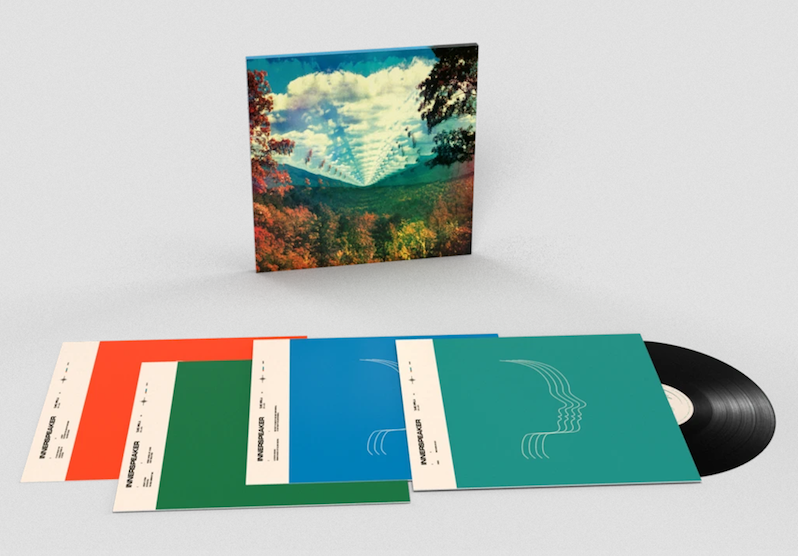
To celebrate the 10th anniversary of its release, Tame Impala present a deluxe, 4LP reissue of the debut album “InnerSpeaker” Recorded in 2009 in Western Australia, InnerSpeaker was Kevin Parker’s first full length missive and an explosive invitation into what would become his inimitable psych-tinged world.
This past May marked 10 years since the release of Tame Impala’s debut full-length Innerspeaker, and Kevin Parker has now shared plans to celebrate with a new expanded box set. Diehards will get excited at the inclusion of a previously unreleased ‘Wave House Live Jam’ – as in the studio property in WA where InnerSpeaker was made, and that Parker purchased recently.
Innerspeakerwill be reissued as a 4-LP box set in March 2021. The new package collects the original album alongside a newly unearthed side-long jam, instrumentals, song sketches, new “2020 mixes” of songs “Alter Ego” and “Runway, Houses, City, Clouds,” and a deluxe 40-page book.
This expanded deluxe edition of the album features the singles ‘Solitude Is Bliss’, ‘Lucidity’, ‘Expectation’ amongst the original album track list, plus: collage of album sketches, An unearthed, side-long jam New mixes of tracks off the original album Instrumentals deluxe 40-page booklet. The expanded deluxe edition of the album, will include new mixes of the tracks ‘Alter Ego’ and ‘Runway, Houses, City, Clouds’ as well as instrumentals, demos, and a previously unreleased side-long recording called ‘Wave House Live Jam’.
Parker also posted an alternative cover of the LP, and how it brought back “emotional” memories for him.
He said at the time: “My first album is 10 years old today. This version of the cover was 1 version out from the final, but i found it the other day for the first time since 2010 and it makes me very emotional to just look at because it reminds me of what I was going through about a week out from finishing and signing off on the whole album, which scared the shit out of me and at the time seemed like an insurmountable task.”
Peering into the telescoped treetops and dreamy skies on the album art for Tame Impala’s debut album Innerspeaker feels like slipping into a vortex of endless light, deviating perception and wonder, all before you’ve even heard a sound.
There’s a brief burst of static on opener ‘It Is Not Meant To Be’, which quickly leads to a coiling guitar and ruminating bass riff. It simulates that jolt of excitement (in a previous generation), when you found the right frequency to your favourite radio station, or clear reception to your favourite television channel.
It was like cracking a code and unlocking a hidden doorway to adventure and discovery. Innerspeaker is Kevin Parker‘s technicolour broadcast of the richness and complexity of his emotional landscapes, a place where words are secondary to the evocative nature of sound. In many cases, words themselves are an adjunct to the texture, rhythm, and solidity of the sounds. At other times, they fail our protagonist outright in his attempts at expressing his young heart’s desires.
InnerSpeaker won the 2010 J Award for Australian Album of the Year – we praised it as a “spiralling, trippy adventure” at the time. And just a few months back, the album came #3 in Double J’s list of the 50 Best Australian Debut Albums. hailed as a “timeless album that still hits like a mind-melting sonic adventure from another era.”
‘Why Don’t You Make Up Your Mind?’, with its reverberant, panning guitars evoke intensely bashful pangs of lust. You can’t help but blush listening to it at the risk of being caught eavesdropping on such a tender experience.
But Parker wants to let us in. We’re invited to an existential quandary on ‘Desire Be, Desire Go’ and ‘Alter Ego’. The energetic thrust is insistent, and forwards focused, intent on propelling him out of his statis and self-doubt, contrasted by the drift of his airy and detached voice.
There’s a similar push and pull, of an internal tug of war in ‘Expectation’, and ‘Lucidity’ feels like a euphoric tumble between oscillating states of clarity and a beautiful daze.
If there’s one song that sums up thematically the core of this album and the operational foundations of Kevin Parker, it’s ‘Solitude is Bliss’. With words like ‘there’s a party in my head and no one is invited’, it’s clear he is very much at home in his own company. Yet he understands he is perhaps more a case of society’s exception rather than rule.
Solitude is Bliss’ video shows a distressed and unstable individual going against the flow of society, out of place, out of touch with himself in decaying and derelict surroundings. The impact of solitude and isolation have been on our minds a lot this year yet Innerspeaker reminds us of the fortifying and fulfilling possibilities that await within our inner realms.
From his private universe, Parker has laid out an intriguing internal roadmap. It’s one that we can follow, or maybe veer off on our own adventures of self discovery. Whatever the case may be, its testament that solitude can indeed be a beautifully rewarding and strangely unifying kind of bliss.
The Super Deluxe 50th anniversary edition of The Beatles, a.k.a. “The White Album”, is a deep behind-the-scenes look at how that 30-song, double-album masterpiece came to be. It’s been a trope since the album’s U.K. release, on November. 22nd 1968, that the White Album—so nicknamed because its cover was all-white, save for a stamped serial number on each LP produced in the early pressings—was the sound of The Beatles dissolving. That’s true to a great extent—many of its tracks are the work of a sole Beatle or partial-group performances.
“The Beatles”, also known as “The White Album“, was the ninth studio album by the band, released on 22nd November 1968. It was a double album, its plain white sleeve has no graphics or text other than the band’s name embossed, which was intended as a direct contrast to the vivid cover artwork of the band’s earlier Sgt. Pepper’s Lonely Hearts Club Band. Although no singles were issued from The Beatles in Britain and the United States, the songs “Hey Jude” and “Revolution” originated from the same recording sessions and were issued on a single in August 1968.
Paul when asked about the 50th anniversary package” of the 1968 double album and responded by saying it’s really good.” He went on to say that “The album itself is very cool and it sounds like you’re in the room; that’s the great thing about doing remasters. But we’ve also got some demos of the songs, so you get things stripped right back to just John’s voice and a guitar. You just think, how fucking good was John?! Amazing. We were just doing it; it was amazing. We were having a good time.”
All The other tracks, and much of what we can now hear on Super Deluxe commemorative edition, display a quartet that still enjoys making music together—and takes the group quite seriously (some songs required dozens of takes in the studio until the band was happy with one). At the same time they were maturing, they were preparing to leave behind the phenomenon that was the Beatles.
The history has been meticulously documented: the arrival of Yoko Ono into John Lennon’s world: the group’s time together at the Indian meditation compound of the Maharishi Mahesh Yogi, where several of the White Album’s songs were written; Ringo Starr’s decision (short-lived) to walk out on the group. It’s all spelled out in vivid detail in the comprehensive, lavishly illustrated hardcover book that houses the CDs that comprise the Super Deluxe Edition.
Housed in its legendary plain white, subtly embossed sleeve, came out in November 1968. It arrived at a time when both the group and the world had changed irrevocably: the former since their first forays into fame and fortune, the latter scarred by the ongoing war in Vietnam and the assassination of Martin Luther King, to touch upon the tip of the iceberg.
The music on the original White Album is, like all of the Beatles’ output, the product of a very specific time; the new anniversary releases (also available in abbreviated standard and deluxe editions) aim to put it into context. In addition to the music of the original album, newly mixed by producer Giles Martin (the son of original Beatles producer George Martin) and Sam Okell in stereo and 5.1 surround sound, the Super Deluxe includes the 27 so-called “Esher Demos”: early, stripped-down working versions of songs that would appear on the album plus others that would find their way to other projects (including Abbey Road and solo albums). It also includes 50 session recordings of in-progress and outtakes galore. They are, to be sure, a revelation.
The Super Deluxe, like the similar treatment afforded Sgt. Pepper’s Lonely hearts Club Band in 2017, is nothing less than fascinating; even fans who have owned the bootleg releases containing much of this music will savoir the enhanced audio and newly discovered tracks that populate the six discs. There are in-studio jams, rehearsals, instrumental backing tracks, drastically different and unfinished lyrics and so much more.
For all of the excitement and revelation generated by the expanded releases though, in the end there remains—to paraphrase from the landmark they released the previous year—the album we’ve known for all these years.
From the inside looking out, maybe everything wasn’t going to be alright, despite John Lennon’s assurances on the rousing “Revolution 1″, just one of many highlights on what is perhaps The Beatles’ most ambitious studio album.
After writing dozens of songs while meditating in India in the spring, the group returned to Abbey Road and Trident, in Soho – to record over 30 tracks of new material up until the summer. During these sessions, arguments broke out among the foursome over creative differences. Another divisive element was the constant presence of John Lennon’s new partner, Yoko Ono, whose attendance at the sessions broke with the Beatles‘ policy regarding wives and girlfriends. After a series of problems, including producer George Martin taking a sudden leave of absence and engineer Geoff Emerick quitting, Ringo Starr left the band briefly in August. The same tensions continued throughout the following year, leading to the eventual break-up of the band in April 1970.
When you think of how unrest had started to simmer within the group’s ranks – Yoko Ono arriving in the studio; Apple forming; Ringo leaving and then returning – and how broad the album’s palette of sounds (blue beat, heavy metal, folk and doo-wop, to name a few), The Beatles still manages to hang together like few other works.
The John Lennon and Paul McCartney stereotypes are at once reinforced, yet also dismissed – few would have thought Good Night was the product of Lennon’s pen, and likewise “Helter Skelter” didn’t immediately scream McCartney. Away from such showpieces, it’s the doodles that delight – George Harrison’s “Savoy Truffle” is a fine counterweight to “While My Guitar Gently Weeps”, and “Everybody’s Got Something to Hide Except For Me and My Monkey” balances the gravitas of “Revolution 1”.
Given that it also contains Lennon, Ono and Harrison’s nine-minute noise collage “Revolution No 9″ and McCartney’s genuinely pointless “Wild Honey Pie”, it’s little wonder that producer George Martin always opined that The Beatles could have made a splendid single album. That said, without such variety on offer, the compiling of one’s own version wouldn’t be the national pastime it is today.
Side one
Back in the U.S.S.R.
One of many songs on the album written (this one by Paul) during the Beatles stay in Rishikesh, India, to study Transcendental Meditation with the Maharishi, the Beach Boys tribute/parody was recorded without Ringo, who had temporarily left the group due to what he said was criticism of his drumming. The song includes a mention of the Hoagy Carmichael composition “Georgia on My Mind,” included by Paul because the nation of Georgia was part of the Soviet Union at the time. Minutiae: The airplane sound effects are different on the mono and stereo versions.
Paul McCartney wrote “Back in the U.S.S.R.” as a surreal parody of Chuck Berry’s song “Back in the U.S.A.” field recording of a jet aeroplane taking off and landing was used at the start of the track, and intermittently throughout it, while the backing vocals were sung by Lennon and Harrison in the style of the Beach Boys at the request of Mike Love, who had accompanied the group to India. The track became widely bootlegged in the Soviet Union and became an underground hit.
Dear Prudence
Prudence Farrow, sister of actress Mia Farrow, was one of the Westerners meditating in India with the Maharishi the same time the Beatles were there. She was being reclusive, and John wrote the song to try to convince her to “come out and play. “Dear Prudence” was one of the songs recorded at Trident. The style is typical of the acoustic songs written in Rishikesh, using guitar arpeggios. Lennon wrote the track about Mia Farrow’s sister Prudence Farrow, who rarely left her room during the stay in commitment to the meditation.
The song was recorded sans Ringo, who was into his brief departure from the band. Sean Lennon later covered the track, as did Jerry Garcia, Siouxsie and the Banshees, Leslie West, Alanis Morissette and others.
Glass Onion
John refers to five other Beatles tunes in his lyrics: “I Am the Walrus,” “The Fool on the Hill,” “Strawberry Fields Forever,” “Fixing a Hole” and “Lady Madonna.” John later said that his line “The walrus was Paul” was a joke. Glass Onion was also a name suggested by Lennon for a new band originally called the Iveys that signed to the Beatles’ Apple label. They chose Badfinger instead.
“Glass Onion” was the first backing track recorded as a full band since Starr’s brief departure. MacDonald claimed Lennon deliberately wrote the lyrics to mock fans who claimed to find “hidden messages” in songs, and referenced other songs in the Beatles catalogue – “The Walrus was Paul” refers back to “I Am the Walrus” (which itself refers to “Lucy in the Sky with Diamonds”). McCartney, in turn, overdubbed a recorder part after the line “I told you about the Fool on the Hill”, as a deliberate parody of the earlier song.A string section was added to the track in October.
Ob-La-Di, Ob-La-Da
The title comes from an expression Paul heard spoken by Nigerian conga player Jimmy Scott-Emuakpor: “Ob-la-di, ob-la-da, life goes on, brah.” John reportedly hated the song and some fans must agree because it’s been named among the worst songs ever in several music polls. Nonetheless, the song, which took on a Jamaican ska-influenced rhythm after much studio experimentation with the tempo, was released as a single in some countries and topped the charts in Japan, Australia and a few others. That conga player, by the way, later tried to sue the Beatles for royalties—he did not prevail.
Lennon went straight to the piano and smashed the keys with an almighty amount of volume, twice the speed of how they’d done it before, and said “This is it! Come on!”
Recording engineer Richard Lush on the final take of “Ob-La-Di, Ob-La-Da”. Written by McCartney as a pastiche of ska music. The track took a surprising amount of time to complete, with McCartney demanding perfectionism that annoyed his colleagues. Jimmy Scott, a friend of McCartney, suggested the title and played bongos on the initial take. He demanded a cut of publishing when the song was released, but the song was credited to “Lennon-McCartney”. After working for three days on the backing track, the work was scrapped and replaced with a new recording. Lennon hated the song, calling it “granny music shit”,while engineer Richard Lush recalled that Starr disliked having to record the same backing track repetitively, and pinpoints this session as a key indication that the Beatles were going to break up McCartney attempted to remake the backing track for a third time, but this was abandoned after a few takes and the second version was used as the final mix. The group, save for McCartney, had lost interest in the track by the end of recording, and refused to release it as a single. British pop group Marmalade recorded a version that became a number one hit. In 2004, an online survey of 1,000 people in the UK by Mars ranked the song as the worst ever.
Wild Honey Pie
The recording lasts less than a minute and feels like something tossed off in the studio, which it basically was: Paul wrote it and is the only performer on the track, contributing all of the vocals and instruments. Most of what you hear in the background is a harpsichord.
McCartney recorded “Wild Honey Pie” on 20th August at the end of the session for “Mother Nature’s Son”. It is typical of the brief snippets of songs he recorded between takes during the album sessions.
The Continuing Story of Bungalow Bill
Another Lennon composition stemming from the Rishikesh visit, this one was inspired by John’s scorn for Richard Cooke III, a wealthy American college student who was present at the Maharishi’s ashram and went out on a tiger-hunting caravan. The little flamenco guitar line heard at the song’s start was actually played on a Mellotron by studio engineer Chris Thomas.
“The Continuing Story of Bungalow Bill” was written by Lennon after an American visitor to Rishikesh left for a few weeks to hunt tigers. It was recorded as an audio vérité exercise, featuring vocal performances from almost everyone who happened to be in the studio at the time. Ono sings one line and co-sings another, while Chris Thomas played the mellotron, including improvisations at the end of the track. The opening flamenco guitar flourish was a recording included in the Mellotron’s standard tape library.
While My Guitar Gently Weeps
No big secret that the lead guitar, uncredited on the album, was played by George’s friend Eric Clapton. Harrison wrote the song after returning from India and recorded an acoustic demo. The other Beatles were not all that impressed with it at first, perhaps because the lyrics partially reflect the disharmony that was brewing with the group. Upon the album’s release, and ever since, the track—one of four by Harrison on the White Album—became one of the band’s most popular.
“While My Guitar Gently Weeps” was written by Harrison during a visit he made to his parents’ home in Cheshire. He first recorded the song as a solo performance, on acoustic guitar, on 25th July – a version that remained unreleased until Anthology 3. He was unhappy with the group’s first attempt to record the track, and so invited his friend Eric Clapton to come and play on it. Clapton was unsure about guesting on a Beatles record, but Harrison said the decision was “nothing to do with them. It’s my song.” Clapton’s solo was treated with automatic double tracking to attain the desired effect; he gave Harrison the guitar he used, which Harrison later named “Lucy”.
Happiness is a WarmGun
“Happiness Is a Warm Gun” evolved out of song fragments that Lennon wrote in Rishikesh. According to MacDonald, this working method was inspired by the Incredible String Band’s song writing. The basic backing track ran to 95 takes, due to the irregular time signatures and variations in style throughout the song. The final version consisted of the best half of two takes edited together. Lennon later described the song as one of his favourites, while the rest of the band found the recording rejuvenating, as it forced them to re-hone their skills as a group playing together to get it right. Apple’s press officer Derek Taylor made an uncredited contribution to the song’s lyrics.
Considering how we lost John, it’s chilling to think that he wrote this song after seeing the title on the cover of a gun magazine. (What might be even more stunning is that the gun magazine was playing off the Peanuts cartoon’s phrase, “Happiness is a Warm Puppy.”) The track is one of few on the album that features the traditional Beatles configuration of John and George on guitars, Paul on bass and Ringo on drums, without any additional instrumentation or outside help.
Side two
Martha My Dear
It was written by Paul for his Old English Sheepdog, Martha, although some accounts have McCartney’s ex-girlfriend Jane Asher being the real inspiration (the lyric “You have always been my inspiration” was said to be the giveaway). John and Ringo do not appear on the recording.
The entire track is played by him backed with session musicians, and features no other Beatles. Martin composed a brass band arrangement for the track.
I’m So Tired
John missed Yoko Ono terribly while he was in India for the meditation retreat, and wrote this ballad while unable to sleep. The nonsensical mumbling at the beginning of the track is actually John saying, “”Monsieur, monsieur, how about another one?” Some fans, however, misheard it as a masked reference to Paul being dead, fueling a rumor that McCartney had died and been replaced by a look-alike/sound-alike.
“I’m So Tired” was written in India when Lennon was having difficulty sleeping. It was recorded at the same session as “The Continuing Story of Bungalow Bill”.The lyrics make reference to Walter Raleigh, calling him a “stupid git” for introducing tobacco to Europe, while the track ends with Lennon mumbling “Monsieur, monsieur, how about another one?”. This became part of the Paul is Dead conspiracy theory, when fans claimed that when the track was reversed, they could hear “Paul is dead man, miss him miss him”.
Blackbird
Paul wrote and recorded this solo after hearing a blackbird while in India. But he has long said that it actually refers to the Civil Rights movement in America at the time. The recording consists entirely of Paul’s acoustic guitar, double-tracked vocal and foot-tapping, as well as the sound of a blackbird singing. McCartney has performed the song during every tour he’s done since going solo. Among the many cover versions is a beautiful harmony-rich take by Crosby, Stills and Nash.
“Blackbird” features McCartney solo, accompanying himself on acoustic guitar. According to Lewisohn, the ticking in the background is a metronome, although Emerick recalls capturing the sound via a microphone placed beside McCartney’s shoes. The birdsong on the track was taken from the Abbey Road sound effects collection, and was recorded on one of the first EMI portable tape recorders.
Piggies
One of the four George Harrison-penned numbers on the album, “Piggies” was meant as social commentary—the word pig, at the time, referred to both a police officer and any “Establishment” type who was deemed to be greedy or ultra-conservative. Many found the song somewhat humorous, but one person who did not was Charles Manson, the California-based cult leader who believed the Beatles were speaking directly to him. Manson interpreted the song’s lyrics as a call for him to start a race war. When his followers committed their notorious murders, they wrote the word pig in their victims’ blood on the walls.
Harrison wrote “Piggies” as an attack on greed and materialism in modern society. His mother and Lennon helped him complete the lyrics. Thomas played harpsichord on the track, while Lennon supplied a tape loop of pigs grunting. The harpsichord was left in one of the studios at EMI after a classical session and Harrison decided to incorporate it into his song.
Rocky Raccoon
Paul’s attempt to write a cowboy song about a near-fatal love triangle began at the Rishikesh ashram. The piano on the recording was played by producer George Martin. Donovan, also present at the ashram, is said to have had some part in writing the song but was not credited.
“Rocky Raccoon” evolved from a jam session with McCartney, Lennon and Donovan in Rishikesh. The song was taped in a single session, and was one of the tracks that Martin felt was “filler” and only put on because the album was a double.
Don’t Pass Me By
This was Ringo’s first solo composition for a Beatles album but it was not new when he cut it with the group in 1968. In fact, “Don’t Pass Me By” dates all the way back to 1962, to shortly after the time he joined the band. The lyrics certainly underwent some changes over the years though, and the bizarre line “I’m sorry that I doubted you, I was so unfair, you were in a car crash and you lost your hair” was later cited as another clue by the conspiracy theorists who spread the “Paul is Dead” rumour, as McCartney had supposedly died in a car crash. Ringo and Paul are the only Beatles on the track—the wild violin solo was contributed by Jack Fallon, a British jazz musician.
“Don’t Pass Me By” was Ringo Starr’s first solo composition for the band, he had been toying with the idea of writing a self-reflective song for some time, possibly as far back as 1963. It went by the working titles of “Ringo’s Tune” and “This Is Some Friendly”. The basic track consisted of Starr drumming while McCartney played piano. Martin composed an orchestral introduction to the song but it was rejected as being “too bizarre” and left off the album.
Why Don’t We Do It In the Road?
Less than two minutes long, it was written by Paul after he witnessed two monkeys having sex in the open in India. Other than Paul, Ringo is the only musician on the track. “Why Don’t We Do It in the Road?” was written by McCartney in India after he saw two monkeys copulating in the street and wondered why humans were too civilised to do the same. He played all the instruments except drums, which were contributed by Starr. The simple lyric was very much in Lennon’s style, and Lennon was annoyed about not being asked to play on it. McCartney suggested it was “tit for tat” as he had not contributed to “Revolution No 9”.
I Will
There is no bass on this tune—Paul (who wrote it) supplies “vocal bass” instead. There is also no George Harrison on this all-acoustic song: Paul plays nearly everything except for some percussion from Ringo and John. Despite its simplicity, the Beatles did 67 takes of the song. During take 19, Paul improvised a bit that’s come to be known as “Can You Take Me Back?,” half a minute of which was later excised and included on the album between “Cry Baby Cry” and “Revolution 9.” (You can hear the full tune now on the Super Deluxe White Album.) “I Will” has been covered by everyone from Diana Ross to Phish to Art Garfunkel.
“I Will” was written and sung by McCartney, with Lennon and Starr accompanying on percussion. In between numerous takes, the three Beatles broke off to busk some other songs. While recordings of Cilla Black’s hit “Step Inside Love” and a joke number, “Los Paranoias”, were released on Anthology 3.
Julia
John is the only person who appears on the song, which was written about his late mother while the Beatles were in India. John employs a finger-picking acoustic guitar style he learned from singer Donovan. The phrase “ocean child” in the lyrics was, however, a nod to Yoko Ono, whose Japanese last name translates to Ocean Child. The opening line is taken directly from the poem “Sand and Foam” by Kahlil Gibran, which reads (in the original version), “Half of what I say is meaningless, but I say it so that the other half may reach you.”
“Julia” was the last track to be recorded for the album and features Lennon on solo acoustic guitar which he played in a style similar to McCartney’s on “Blackbird”. This is the only Beatles song on which Lennon performs alone and it was a tribute to his mother Julia Lennon, who was killed in 1958 in a road accident while Lennon was only seventeen, and the lyrics deal with the loss of his mother and his relationship with Ono, the “ocean child” referred to in the lyrics. Ono helped with the lyrics, but the song was still credited to Lennon-McCartney as expected.
Side three
Birthday
One of the rare instances of a song truly co-written by Lennon and McCartney (although mostly by Paul) in the latter Beatles years, “Birthday” was composed in Abbey Road Studios.
According to McCartney, the authorship of “Birthday” was “50–50 John and me, made up on the spot and recorded all on the same evening”. He and Lennon were inspired to write the song after seeing the first UK showing of the rock’n’roll film The Girl Can’t Help It on television, and sang the lead vocal in the style of the film’s musical star, Little Richard. After the Beatles had taped the track, Ono and Pattie Harrison added backing vocals.
Yer Blues
Another one from the India stay, it was written solely by John, who also sings the lead vocal. A basic blues progression, given a deliberate hard edge by John, it was recorded by the four Beatles in their original, basic guitar-bass-drums format sans additional instrumentation or personnel. John performed the song on the Rolling Stones Rock and Roll Circus concert with Eric Clapton, Keith Richards and the Jimi Hendrix Experience’s Mitch Mitchell. “Yer Blues” was originally written by Lennon in India. Despite meditating and the tranquil atmosphere, he still felt unhappy, which was reflected in the lyrics. The style was influenced by the British Blues Boom of 1968, which included groups such as Fleetwood Mac and Chicken Shack. The backing track was recorded in a small room next to the Studio 2 control room at Abbey Road. Unusually for a Beatles recording, the four-track source tape was edited directly, resulting in an abrupt cut-off at 3’17” into the start of another take (which ran into the fade out).
“Everybody’s Got Something to Hide Except Me and My Monkey” and “Sexy Sadie” were both written in reference to Maharishi Mahesh Yogi.
Mother Nature’s Son
Paul is the only Beatle on this acoustic beauty, with a brass arrangement by George Martin. The bongos-like sound was achieved by Paul playing timpani and bass drum at the far end of the studio so that the microphone dulled the sound. Among the cover versions: Harry Nilsson, Sheryl Crow, John Denver and jazz artists Ramsey Lewis and Brad Mehldau (separately). McCartney wrote “Mother Nature’s Son” in India, and worked on it in isolation from the other members of the band. He performed the track solo alongside a Martin-scored brass arrangement.
Everybody’s Got Something to Hide Except Me and My Monkey
One of the more raucous songs on the album, John wrote it (as he did so many songs) about Yoko. Some have commented that the song was about heroin, which the couple admitted using, but Lennon denied that. “Everybody’s Got Something to Hide Except Me and My Monkey” evolved from a jam session, and was originally untitled. The final mix was sped up by mixing the tape running at 43 hertz instead of the usual 50. Harrison claimed the title came from one of the Maharishi’s sayings (with “and my monkey” added later).
Sexy Sadie
John’s song was a thinly veiled critique of the Maharishi, with whom Lennon had become disillusioned. In fact, an original draft of John’s lyrics was filed with all sorts of obscenities directed at the guru. One of the surviving original lines, “What have you done?/You made a fool of everyone,” was inspired by a verse in a song by Smokey Robinson and the Miracles. “Sexy Sadie” was written as “Maharishi” by Lennon, shortly after he decided to leave Rishikesh. In a 1980 interview, Lennon acknowledged that the Maharishi was the inspiration for the song: “I just called him ‘Sexy Sadie’.
Helter Skelter
Probably the Beatles’ “heaviest” rock song, and often considered an influence on the developing metal genre, the fierce, raw McCartney-written rocker, has, unfortunately, become as closely associated with the Manson murders as with the Beatles—the murderous cult leader somehow interpreted the song to mean that he was to start a race war in the United States. A book on the Manson “family” took the title of the song as its own. McCartney has since re-embraced the song and includes it in his concerts to this day. “Helter Skelter” was written by McCartney and was initially recorded in July as a blues number. The initial takes were performed by the band live and included long passages during which they jammed on their instruments. Because these takes were too long to practically fit on an LP, the song was shelved until September, when a new, shorter, version was made. By all accounts, the session was chaotic, but nobody dared suggest to any of the Beatles that they were out of control. Harrison reportedly ran around the studio while holding a flaming ashtray above his head, “doing an Arthur Brown” The stereo version of the LP includes almost an extra minute of music compared to the mono, which culminates in Starr infamously shouting “I’ve got blisters on my fingers!” . Charles Manson was unaware that helter skelter is the British name for a spiral slide found on a playground or funfair, and assumed the track had something to do with hell. This was one of the key tracks that led Manson to believe the album had coded messages referring to apocalyptic war, and led to his movement of the same name.
Long, Long, Long
This folkish, placid, ethereal tune was penned by George in Rishikesh and, he said, was addressed at God, although it could also be interpreted as being directed toward a missed ex-lover. John sat this one out while Paul provided the Hammond organ as well as the bass, with engineer Chris Thomas playing piano and Ringo, of course, on the drums. It was the final song on side three is Harrison’s “Long, Long, Long”, part of the chord progression for which he took from Bob Dylan’s “Sad Eyed Lady of the Lowlands”. MacDonald describes the song as Harrison’s “touching token of exhausted, relieved reconciliation with God” and considered it to be his “finest moment on The Beatles”. The recording session for the basic track was one of the longest the Beatles ever undertook, running from the afternoon of 7th October through the night until 7 am the next day. McCartney played Hammond organ on the track, and an “eerie rattling” effect at the end was created by a note causing a wine bottle on top of the organ’s Leslie speaker to resonate.
Side four
Revolution 1
The Beatles recorded three “Revolution” songs in 1968: “Revolution 9,” the avant-garde sound collage; the un-numbered, hard-rocking “Revolution,” released as a single; and “Revolution 1,” a bluesy, slowed-down, shuffling version. That’s the one that appears on the White Album and, like the single, it found John expressing empathy with the revolutionary fervour of the tense time while simultaneously cautioning against violence. While Nicky Hopkins added piano to the single version, he’s not on the album cut, which instead includes horn players and backing vocals.
“Revolution 1” was the first track recorded for the album, with sessions for the backing track starting on 30th May. The initial takes were recorded with the aim of it being a possible single, but as the session progressed, the arrangement became slower, with more of a laid-back groove. The group ended the chosen take with a six-minute improvisation that had further overdubs added, before being cut to the length heard on the album. The brass arrangement was added later.
Honey Pie
Paul, whose father led a jazz big band, always harboured an appreciation for the British music hall style, and “Honey Pie,” which he wrote, is a direct tribute to the form. At one point the staticky crackle of a 78 RPM record was added to give the song an old-time feel. Although the others weren’t quite as enamoured of the old music as Paul, they each played on the track, as do a team of horn men, including one George Martin on sax and clarinet. “Honey Pie” was written by McCartney as a pastiche of the flapper dance style from the 1920s. The opening section of the track had the sound of an old 78 RPM record overdubbed while Martin arranged a saxophone and clarinet part in the same style. Lennon played the guitar solo on the track, but later said he hated the song, calling it “beyond redemption”.
Savoy Truffle
What might have been a throwaway from anyone else—the soul-flavoured song was written by George and inspired by Eric Clapton’s love of sweets—becomes a compelling tune in the Beatles’ hands. John takes a break from this session, and in addition to Ringo and Paul, plus a six-piece horn section and Chris Thomas on keyboards boosts up the sound. Strangely enough, Ella Fitzgerald once covered the tune. “Savoy Truffle” was named after one of the types of chocolate found in a box of Mackintosh’s Good News, which Clapton enjoyed eating. The track featured a saxophone sextet arranged by Thomas, who also played keyboards. Harrison later said that Derek Taylor helped him finish the lyrics.
Cry Baby Cry
This somewhat haunting number was written by John, with playing input from the other three plus George Martin on the harmonium. On the album, it’s followed by the brief uncredited snippet by Paul, “Can You Take Me Back?,” which actually originated during a jam session that arose out of one of the takes for “I Will.”
Lennon began writing “Cry Baby Cry” in late 1967 and the lyrics were partly derived from a tagline for an old television commercial. GeorgeMartin played harmonium on the track.
Revolution 9
The most controversial “song” on the White Album, the experimental “Revolution 9” was John’s creation, influenced heavily by Yoko. Paul and Ringo are nowhere to be found, but George was involved, contributing some guitar, vocals and sound effects. Ono can also be heard on the track. Largely constructed around tape loops and other snippets of sound, the audio collage has been interpreted in many different ways. Lennon said at the time that it was about death, but he discounted that explanation later and said it was just a collection of unrelated sounds. The spoken word snippet at the beginning is Alistair Taylor (late manager Brian Epstein’s personal assistant) saying to George Martin, “I would’ve gotten claret for you but I’ve realized I’ve forgotten all about it, George, I’m sorry. Will you forgive me?”
“Revolution No 9” evolved from the overdubs from the “Revolution 1” coda. Lennon, Harrison and Ono added further tape collages and spoken word extracts, in the style of Karlheinz Stockhausen. The track opens with an extract from a Royal Schools of Music examination tape, and ends with Ono’s infamous comment, “you become naked”. Ono was heavily involved in the production, and advised Lennon on what tape loops to use. McCartney did not contribute to the track, and was reportedly unhappy on it being included, though he had led similar tape experiments such as “Carnival of Light” in January 1967.The track has attracted both interest and disapproval from fans and music critics over the years.
Good Night
Ringo Starr, as the singer, is the only Beatle who appears on the track, which features a full orchestra arranged and conducted by George Martin. John wrote the lush ballad for his son Julian, who was five at the time. The final words on the White Album are, “Good night. Good night, everybody. Everybody, everywhere. Good night.” “Good Night” was a lullaby written by Lennon for his son Julian, and he specifically wanted Starr to sing it. The early takes featured just Lennon on acoustic guitar and Starr singing, Martin scored an orchestral and choral arrangement that replaced the guitar in the final mix, and also played the celesta.
Unreleased material
Some songs that the Beatles were working on individually during this period were revisited for inclusion on the group’s subsequent albums, while others were eventually released on the band members’ solo albums. According to the bootlegged album of the demos made at Kinfauns, the latter of these two categories includes Lennon’s “Look at Me” and “Child of Nature” (eventually reworked as “Jealous Guy”); McCartney’s “Junk”; and Harrison’s “Not Guilty” and “Circles”. In addition, Harrison gave “Sour Milk Sea” to the singer Jackie Lomax, whose recording, produced by Harrison, was released in August 1968 as Lomax’s debut single on Apple Records. Lennon’s “Mean Mr. Mustard” and “Polythene Pam” would be used for the medley on Abbey Road the following year.
The Lennon-written “What’s the New Mary Jane” was demoed at Kinfauns and recorded formally (by Lennon, Harrison and Ono) during the 1968 album sessions. McCartney taped demos of two compositions at Abbey Road – “Etcetera” and “The Long and Winding Road” – the last of which the Beatles recorded in 1969 for their album Let It Be. The Beatles versions of “Not Guilty” and “What’s the New Mary Jane”, and a demo of “Junk”, were ultimately released on Anthology 3.
“Revolution (Take 20)”, a previously uncirculated recording, surfaced in 2009 on a bootleg. This ten-minute take was later edited and overdubbed to create two separate tracks: “Revolution 1” and the avant-garde “Revolution 9”.
Bardo Pond guitarists, brothers John and Michael Gibbons revive their long-term sonic sparring side project Vapour Theories for a genre-shattering new release ‘Celestial Scuzz’.
Six years after a split LP with Loren Connors, and 15 years after ‘Joint Chiefs’ the duo have assembled a brand new Vapour Theories album that sees their symbiotic union travel deeper, shaping and re-shaping itself as the harmonious power struggle unravels…
Michael: “The balance of power definitely shifts. When the record is put together it is equal parts from me and my brother. The collaboration is complete and represents both sides of our taking the lead on material.”
‘Celestial Scuzz’ is a monumental sound piece created from hours of jam sessions and crafted into a cohesive mind-blowing trip. Featuring their take on Brian Eno’s ‘The Big Ship’ (‘Another Green World’, 1975), the album has a heavy ambience like Eno locked in a dark room with Sunn-O))))) rehearsing next door.
“When we play together there’s a kind of connection to vibrations for us. When it happens, we become vehicles for some unknown forces that work through us to create the music. A kind of spiritual. Most of the time it leaves us stunned; the more stunned we are the better the jam.”
While Bardo Pond’s trajectory takes them deep into rock music’s ever-imploding sound, the brothers Gibbons surf a more ethereal and eclectic plain; from a heady and consuming space, a “sanctuary; balm for the soul.” Released on limited edition gold vinyl, ‘Celestial Scuzz’ is available on 26th February on Fire Records.
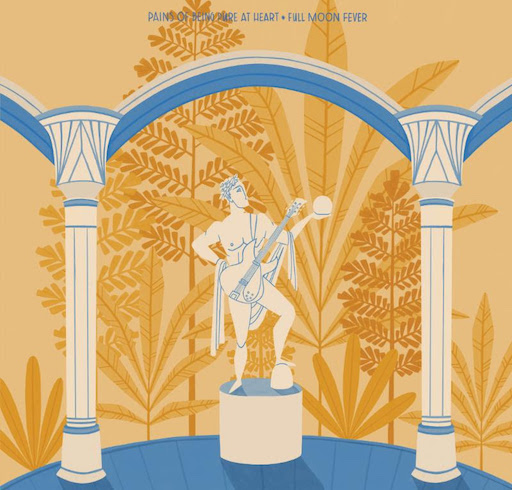
The latest installment in Turntable Kitchen’s series of releases featuring artists covering a full album of their choice is one of its most curious: The Pains of Being Pure At Heart tackling Full Moon Fever, the 1989 solo effort by Tom Petty. It’s a novel, unexpected choice for the band considering their core sound, but it’s also one that doesn’t make for the most gentle transition to a shoegaze/dreampop format. The otherwise sturdy songs have been made wispy and empty at their core, with even The Byrds’ “I’ll Feel A Whole Lot Better” turned into something dippy and fey. The key downfall is Kip Berman’s vocal performances throughout.
He didn’t need to try and replicate the twang-y tones of Petty but Berman makes the wrong choices throughout. He opts for his breathy croon when he should growl, and growls when he should get dreamy. It upends the more inventive moments like the band’s rendering of “A Face In The Crowd” as a synthpop dance classic and “A Mind With A Heart Of Its Own” as Beatles-esque blues. A pleasant diversion that will only inspire revisits to the Petty original. Maybe that was the point all along. Pains’ Kip Berman announced his debut solo EP Know Me More under the name the Natvral. Last year, the band released The Echo of Pleasure.
The Pains of Being Pure at Heart have covered Tom Petty’s 1989 solo debut Full Moon Fever in its entirety. It’s due out October 25th as part of Turntable Kitchen’s ongoing Sounds Delicious series—a monthly vinyl subscription of full-length cover albums, Full Moon Fever was Petty’s solo debut record and it is absolutely packed with hits. No less than 5 tracks charted on the Billboard Top 100: Free Fallin’, I Won’t Back Down, Runnin’ Down a Dream, Yer So Bad, and A Face in the Crowd. But even the tracks that didn’t chart could have been hits: Love Is A Long Road,Depending On You, A Mind With a Heart of its Own. The same could be said for so many of his albums. This dude’s catalogue is deep.
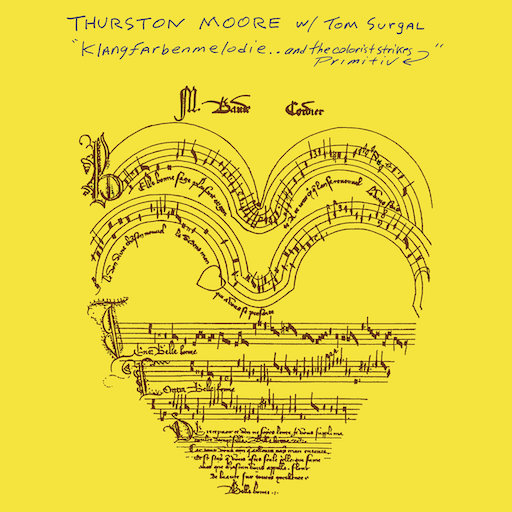
The solo discography of Sonic Youth co-founder Thurston Moore is littered with limited run work released on small indie labels amid his more blue chip LPs like Psychic Hearts and Demolished Thoughts. This 1995 recording of the guitarist making a free form racket with drummer Tom Surgal, for example, was originally issued only on CD in New Zealand by Bruce Russell of The Dead C. Did this need to be brought to a larger audience by U.K. label Glass Modern on a white vinyl pressing? Maybe not but we should still celebrate it.
Moore is as great an improviser as he is a songwriter and this explosive session is all the proof you’ll need of that. He sticks to a series of ringing tones, peppered with small sprays of feedback that builds and recedes with intensity as the mood and Surgal’s drums strike him. By the end, during the closing piece “Phase II,” he’s releasing little notes and squalls while the drums take control and drive them both toward infinity. Follow them into the light, brothers and sisters.
An extract from the Glass Modern Vinyl Reissue. First time on Vinyl. Originally released on CD only in New Zealand by the Dead C’s Bruce Russel’s label Corpus Hermeticum. New Liner notes by Bruce Russel too. “A 1995 release from the famed Sonic Youth guitarist, this recording sees him paired with free jazz drummer Tom Surgal for a blistering noise set, in keeping with New Zealand noise label Corpus Hermeticum’s aesthetic. The listener should not expect the sweet psychedelic pop of his Psychic Hearts album of the same year; rather, Moore explores his interest in freeform improvisation on this live set recorded in 1994. The recording is lo-fi, but that adds to it’s candid charm, as his guitar thrashing reaches peaks of noise only hinted at in early Sonic Youth. The duo works along lines that are more akin to the Blue Humans — with whom drummer Surgal began — and also seems influenced by such underground acts as Fushitsusha and the Dead C. Moore’s guitar is so distinct, however, that many parts here could be mistaken for a live Sonic Youth recording from that band’s more heady and chaotic ’80s period”
King Gizzard & The Lizard Wizard return with new album “K.G.”, their sixteenth since forming in 2010. In the wake of a global pandemic, it’s a collection of songs composed and recorded remotely after the six members of the band retreated to their own homes scattered around Melbourne,Australia. “K.G.” is a pure distillation of the King Gizzard sound, one that cherry picks the best aspects of previous albums and contorts them into new shapes via defiantly non-western rock scales. Over a ten-year span spent releasing an album every few weeks (or so it seemed) King Gizzard & the Lizard Wizard never repeated themselves, always pushing forward and trying new things whether it was lengthy jazz excursions, gloom-and-doom synth prog, or thundering thrash metal.
That changed some on 2020’s K.G., where the band revisit the approach used on Flying Microtonal Banana, the group’s 2017 album built around the avant-garde sounds of their custom-made guitars and altered instruments. Stuck in their various homes during the global pandemic, the band gravitated toward the unique instruments and built a batch of songs using their non-Western tunings and tones. Unlike that album, though, where that almost felt like a (mostly successful) gimmick, this time the guitars are more fully integrated into the songs. “Automation” and “Some of Us” kick and twist like classic King Gizzard-style psychedelic rockers, the acoustic guitars of “Straws in the Winds” have a snarling bite that matches the evil sneer of the vocals and sentiment of the lyrics, “Oddlife’s” guitar solos are pure prog, and “The Hungry Wolf of Fate” revisits the blown-out metal attack of their most recent studio LP with a nice mix of restraint and explosive power.
Even though much of the record transverses familiar sonic territory, the band still find some room for surprises. The acid house synths percolating behind the wall of guitars on “Minimum Brain Size” are a nice touch; the group work up a sweaty groove on “Ontolgy” and in the process sound something like Talking Heads butting heads with Kid Creole & the Coconuts; and in the album’s only real shocker, they drop some bubbly Madchester grooves on “Intrasport.” The sound is so slinky and giddily elastic, it makes one wonder what a full album of King Gizzard songs made for dancing would be like. Judging from this, and the band’s track record, probably pretty great. Apart from this one song, King Gizzard don’t break much new ground on K.G., and while that in itself might be something of a let down, the result is still quite pleasing. Listening to them tread a little bit of water is still better than listening to the fresh ideas of 99.9 percent of other groups, especially when it’s done with the energy and passion the band exhibit here.
Creating an immersive world in which to transport the listener to another plain, the songs meld into each other through percussive transitions that lead you through their world. Whether it is the stripped back Straws In The Wind, the jutting Ontology, or the pop-infused Intrasport, the band are firing on all cylinders to create a truly special album. Innovation, as ever, is the order of the day and, while the band are relying on the one concept of instrumentation, the variety of rhythms and grooves that they produce is dizzying.
They blend the mellower tracks with those that stomp and growl, songs that implore you to close your eyes and drift on their beauty with those that wrap you in swirling menace. Closing song, The Hungry Wolf Of Fate, distils all that down into one five-minute summary.
Sixteen albums in and King Gizzard & The Lizard Wizard show no sign of slowing their sonic experimentation and, with this album, again show that they have many avenues to choose from.
Born Riley B. King, he was nicknamed “Blues Boy” during his time on the Memphis radio station WDIA in the late 1940s, later abbreviated to B.B. But to the many millions who heard him in the years that followed, he was the Blues Man. Sure, others played faster and with greater fury; others may have sung better (and he was happy to share the stage with one, Bobby “Blue” Bland, on a number of tours together). But few if any blues artists (or rockers for that matter) did it all with the regal mix of majesty, gentility and heart implied by his surname. B.B. King earned his crown and wore it well. And though now no longer with us, his music will live on eternally.
From his beginnings on a cotton plantation in Mississippi in 1925 to duetting at the White House with President Obama in 2012, BB King certainly witnessed some changes in his lifetime. But one thing that remained largely unaltered during the course of his 70-plus years as a performer – a career that saw him release 59 albums, 138 singles and pick up countless awards (among them 18 Grammys) – was the essence of his music. If the ultimate goal of anyone who picks up a guitar is self-expression, then BB King is among a very select group of elite musicians who, through countless hours of work, not only perfected the art, but dug ever deeper without feeling the need for reinvention. Eric Clapton said of him: “The character of any great musician is usually identifiable by the individuality of their vibrato. Most players are recognisable by that particular facet of their playing… I can tell BB from one note – most of us can, I think.” Carlos Santana echoed the sentiment: “I can hear BB King with the sound off on the TV, just by looking at his face.” Buddy Guy also summed it up: “The way BB did it is the way we all do it now.”
B.B King gave his all to blues music, and as a result became its preeminent ambassador the world round. A kind, warm and dignified man, it seems he never forgot his rural Mississippi sharecropping roots and how music raised a boy who was on his own from age 14 out of abject poverty, exploitation and racism. But rather than let the pain of his past fester into anger and resentment, he channelled it into his music. Sadness and anguish suffused his voice, and it could be heard in the sting, sad howls and tearful quivering tremelo within his clean, economical and eloquent guitar lines. His music always bore his own immediately recognizable stamp, yet it blended not only both rural and urban blues but R&B, jazz, big band, classic pop and much more to fuel his wide appeal. Dynamics, phrasing, timing, improvisation, targetting chord notes, vibrato… BB King’s unique playing has influenced countless players and in its finer details, still holds innumerable lessons for guitarists. But the most important one is sadly the least-often heeded: “Notes are expensive,” King once said. “Spend them wisely.” You could spend many words summarizing all his awards, honours and accomplishments and listing the scores of classic rock guitarists who King influenced and inspired – all that is easily available elsewhere. But the best way to honour him is simply to listen to his music. We look at a mere 20 of BB King’s greatest guitar moments only scratches the surface of an exhaustive catalogue of playing; each entry aims to show a different facet of why the playing of the King Of The Blues will always have the power to excite and delight guitarists, regardless of genre and musical style.
20. Lucille
The title track from this 1968 album shows BB King finally putting on musical record what his beloved guitar – or actually a succession of ES-family guitars, all with the same nickname – means to him. Every BB King song foregrounds an aspect of his musicality, and over this laid-back spoken-word blues, it’s how intertwined his voice and guitar playing are. Mixed with King’s crystal-clear tone way out front, rather than the forced showcase of fancy licks that 99 per cent of other players would have indulged in – although there are a few choice jazzy nods here and there and a masterclass in BB’s approach to bends – Lucille’s contribution here is that of the ever-faithful sidekick, purring like a kitten throughout. The original Lucille can be heard on vinyl on the raw, energetic concert LPs Live at the Regal (1965) – recorded before a lively crowd at a longstanding black Chicago nightspot, and the perfect match between performer and audience, fire and enthusiasm – and Live at Cook County Jail (1971) , both classics of the genre.
The song’s off-the-cuff feel was captured when producer Bob Thiele ran tape as BB was telling him the story of his guitar: “He was idling through some runs and started to tell me the story of Lucille. I grabbed the switch, signalled the engineer, and flipped him on live”
19. The Blues Ain’t Nothing But A Woman Crying For Her Man (Live In Japan)
Two musical titans for the price of one on this 1990 guest appearance in Japan, which features Ray Charles, BB King and a ‘Super Band’ laying down a finale to an evening of perfectly crafted big-band schmaltz. Spectacular enough is Charles dusting off his keyboard’s pitch-bend wheel to skilfully imitate the character of King’s guitar, but when Gene Harris’ big band is eventually unleashed, King takes the spotlight, rolling off the tone control and letting rip over When I Get The Blues I Sit In My Rockin’ Chair with a series of cascading jazz-tinged improvisations that not only show his ability to morph his style to the occasion, but also offer an extended glimpse of the sophistication in his note choices that he would allude to throughout his career.
Charles and King often shared a stage during their careers; to hear them together in the studio, listen to the emotive jamming on Sinner’s Prayer on Charles’ final studio album before his death in 2004, Genius Loves Company
18. Instrumental (Live In Stockholm Konserthus)
With a minute of charming but starchy retrospective interview before the action, this clip from Swedish concert in 1974 is an absolute must for an appreciation of what made BB King’s playing so timeless. Over an extended three-minute solo, he creates mood by varying the dynamics of his solo from tender to strident, perfectly controlling the band’s accompaniment through the nuances of his playing and through subtle gestures: at one point, he unexpectedly silences them, embarks on a stunning jazzy exploration, then smoothly changes key, seemingly at random, before they come back in without missing a trick. Dynamic playing and musical telepathy with his fellow musicians are two qualities BB understood better than perhaps any other blues player before or since – and it’s all here.
At 7:00 in this Guitar Clinic, King explains how horn playing defined his approach to sustain in his phrasing
17. Japanese Boogie
A tireless tourer, King found time in his hectic schedule to record three albums in 1971 while also capitalising on the peak in his popularity – the unimpeachable Live At Cook County Jail, B.B. King In London, unfortunately lacklustre despite its stellar cast of musicians, and Live In Japan, recorded in Tokyo’s Sankei Hall – where this fiery up-tempo boogie is from. It’s a sprawling nine-minute instrumental that begins with a single-string take on the Chuck Berry lick before spending the majority of the rest of the song in the so-called BB box: having an area of the guitar neck named after you proves how much time BB spent in this territory, and this stomping instrumental, with its interlacing horns and piano, shows the endless variation King could summon out of the position on the fretboard he’d claimed as his own.
It’s not all down to B.B King – there’s even a rasping distorted bass solo, courtesy of King’s erstwhile low-end merchant Wilbert Freeman
16. Goin’ South (Calypso Blues)
1991 instrumental compilation Spotlight On Lucille is oft-lauded for illuminating King’s material from the Kent label vaults, from 1958-62, particularly the outstanding version of Louis Jordan’s Ain’t That Just Like A Woman which is an early tour-de-force of his jazz-inflected, horn-influenced and fluid lead style, and Jumpin’ With B.B., where he rides roughshod across an alternate time signature from the rhythm section in his phrasing. Yet its this shapeshifting Calypso instrumental that shows an undercelebrated side of King’s wide-ranging musical sensibilities. Listen out for the diminished runs and the outro, where he really loses himself in the tune, adding rare rhythmic double-stop stabs and controlling the song’s dynamics with a twist of his volume control.
B.B King was an ever-present in the studio in his early days; a boxset of the complete RPM-Kent recordings features over 400 tracks, including alternate takes
15. Days Of Old
2000’s Riding With The King saw 75-year-old B.B king rolling back the years on a collaboration with Eric Clapton that had finally come to fruition after years of mutual appreciation. The record featured five vintage B.B King songs, and on the uptempo Days Of Old from 1958, an elite band with Andy Fairweather-Low, Joe Sample et al offer a perfect substitute for the horn stabs of the original. Clapton pulls out all the stops throughout the record, mimics the intro line and staccato Q&A licks that leapt out of the original, and when it’s Lucille’s turn in the spotlight, King soars above the mix with a push-and-pull solo soaked in expressiveness that draws on all of his years of experience with the song – a highlight from a record brimming with mutual admiration from two guitar greats.
Fans of Texas blues should give Riding With The King a spin for the guest spots from Jimmie Vaughan and Doyle Bramhall II; the latter’s songs Marry You and I Wanna Be are covered
14. Guess Who
The cover image from King’s 1972 album Guess Who shows him laid out on the beach hovering in a state somewhere between relaxation and exhaustion, Lucille by his side – it was his 21st album, after all. But the title track shows there was still plenty more to come, and King transforms the smouldering sentimentality of this piano-blues into a consummate lesson in how his vocal and guitar were two sides of the same coin when it came to dynamics and phrasing. BB uses his full vocabulary of first-finger bends, string slides, passing notes, his magical vibrato and more to subtly transform the song’s basic melody into something only he could play.
King’s oft-imitated rapid vibrato technique relies on lateral movement of the wrist; unusually, the tip of his finger is the only part of his hand touching the fretboard, which contributes to its uniquely vocal quality
13. Don’t Answer The Door
This 1966 single, a cover of a Jimmy Johnson composition, was King’s highest-charting song for six years on release, but its success was modest compared to the smash that his signature song, Thrill Has Gone, became three years later. Undoubtedly, though, guitarists around the world were listening – just as important to the song’s success as the brooding electric organ and King’s impassioned vocal are the bursts of ghostly lead guitar, drenched in pools of sumptuous amp reverb, an effect also put to spine-chilling use by King’s favourite UK bluesman, Peter Green.
Listen also to the brooding live version on the outstanding half-live, half-studio Live & Well album from 1969, part of a set which King proclaimed was the best he’d ever played
12. Chains And Things
“I know the critics always name Live & Well or Live At The Regal as my best albums,” King once reflected, “but I think Indianola Mississippi Seeds was the best album I have ever made artistically.” The record came on the heels of his breakthrough hit Thrill Is Gone, from the Completely Well record, and young Bill Szymcyzk (who produced that album and would later go on to produce Hotel California) gently nudged King away from his well-trodden formula into fresh territory, with exceptional results. Chains And Things, also featuring Carole King on Fender Rhodes, is a case in point: simmering with world-weary minor-key indignation, BB delivers a haunting vocal and his guitar solo, embellished with interwoven string lines, seems to emanate from deep inside him.
The solo’s opening note was a mistake, according to BB: “I played the wrong note and followed it as best I could… then we got the arranger to make the strings follow it”
11. Gambler’s Blues
When you summon BB King’s playing to mind, chances are you’ll hear it floating serenely above a bed of horns of the kind that characterised Live At The Regal. But on the 1966 live album Blues Is King, BB took to the stage in Chicago with a stripped-down band featuring only organ, alto sax and a trumpet in their place, and the results were grittier and far more visceral as a result. There are many six-string highlights, including the stark, spiky lines of opener Waiting On You and the spills of feedback threatening the reverb-coated licks on Night Life (there’s also an unfortunate string break on Blind Love). But Gambler’s Blues is the guitar highpoint – a prowling beast of a performance, so real it feels as though he’s in the room with you.
BB King was in debt at this time due to a bus crash incident that left him personally liable and claims for back taxes from the IRS, hence the stripped-down line-up
10. How Blue Can You Get (aka Downhearted)
A crowd pleasing staple in King’s live sets on account of its clever wordplay, BB recorded the 1949 Jane and Leonard Feather composition twice; once in 1963 as Downhearted, and then in a revamped version the following year, which made the Billboard 100. This version – from a 1979 tour of Russia, filmed in what looks like an aircraft hangar, in Tblisi of all places – is a great watch, firstly for the extreme-close-up camerawork offering us an almost uncomfortably intimate view of his guitar technique, secondly for the noodling in the intro, and finally, for an appreciation of BB King as an out-and-out showman, acting out the lyrics as he goes.
There are many to choose from: definitive live versions are a toss-up between those on Live At The Regal, Sing Sing, Get Yer Ya-Ya’s Out! and Live AtCook County Jail
9. Blues At Midnight
A towering track included on King’s ABC-Paramount debut album Mr Blues, from 1963 – a record that combines the output of three separate sessions with a variety of groups into a stylistically varied but not entirely satisfying whole – Blues At Midnight enjoys the distinction of having an uncommonly great guitar tone that’s different from much of the rest of his output. Articulate, nasal and sounding almost-out-of-phase, how exactly he came across it remains a mystery. King had a famous preference for Gibson’s Lab series L-5 amps and used Fender models, but beyond that, was seemingly far from a gearhound.
It’s speculated that the tone on this record may be the product of one of the settings on King’s custom-ordered stereo ES-335 with Varitone switch, pictured on the cover
8. Hummingbird
The BB King/Bill Szymcyzk partnership bore further fruit with Indianola Mississippi Seeds’ closing epic, a most uncharacteristic, shapeshifting musical exploration written by singer-pianist Leon Russell, who contributes gutsy piano to the record. Beginning with a loping Albert King-esque strut and morphing into an ambitious rock-ballad arrangement, Hummingbird would’ve been a standout in King’s discography even without its closing section, where, over a chorus of angelic backing vocals from Sherlie Matthews, Merry Clayton, Clydie King and Venetta Fields, King offers his own unique take on the epic Layla-esque 70s rock outro, wringing almost Stones-y licks from Lucille’s neck for a satisfyingly bitter and earthy contrast to the song’s emotive crescendo.
The surreal cover image, featuring a watermelon guitar complete with pickups, neck and bridge, won a Grammy for photographer, Ivan Nagy and cover designer, Robert Lockart
7. Rock Me Baby
This early BB King song, recorded sometime between 1958 and 1962, was his first to hit the Top 40 in the US, and both it and Muddy Waters’ Rock Me share a common ancestor in Lil’ Son Jackson’s Rockin’ And Rollin’. King’s take is a prowling monster of a recording, bleeding into the red, that pairs a deep, barrelling piano bassline with a manky stray cat of a main lick; but what elevates it is the perfectly formed guitar solo, with its sophisticated manipulation of space, its visceral string rakes, mix of major and minor and its microtonal bends. It’s a rare glimpse of BB King in unadulterated macho-swagger mode and it’s since entered the blues canon.
Hendrix revamped the song somewhat for his mind blowing 1967 Monterey Pop Festival performance and BB King re-recorded the song in 2000 with Clapton for Riding With The King
6. Every Day I Have The Blues
A 1935 song by the Sparks brothers, updated by Memphis Slim, Count Basie And His Orchestra and others, King’s version of Every Day I Have The Blues recorded 20 years later became his “theme” on account of its novel DI’d guitar sound (resulting in extra cuthrough and twang) and “crisp and relaxed” horn arrangements from Maxwell Davis. It was a regular concert opener, opening both Live At The Regal and Live At Cook County Jail, and for all the charm of the original, it’s in performance that it comes to life. Here’s a great hyperactive version from circa 1969-70 where BB slickly sorts out his guitar issues before peeling out a stinging solo that dances around the horn lines and takes advantage of the sustain from his cranked amp.
Though King’s first version was recorded in 1955, it had to wait until 2004 for a Grammy Hall of Fame Award and until 2019 to be inducted into the Blues Hall Of Fame as a Classic Of Blues Recording,
5. Why I Sing The Blues
The closing song on BB’s classic 1969 album Completely Well catalogues the historical and contemporary racial injustices of US society head on, and with simmering dignity. Though the original is a cool slab of funk, driven by a propulsive bassline from Gerald ‘Jerry’ Jemmott, it’s best heard in the sweltering heat of the Zaire 74 concert: 80,000 people watch on as his band up the tempo and the bandleader closes his eyes and coaxes Lucille to sing. When describing his guitar phrasing, BB would often explain his approach in terms of a conversation, constructing complete sentences by repeating themes while varying the dynamics, bends and sustain in his licks; and this is a prime example of how he did it, with a bonus funky outro thrown in just for the hell of it.
King’s right-hand technique is an essential aspect of his sound: he played with a heavy pick and used mostly downstrokes to strike the notes, sacrificing the speed of alternate picking for more control and consistency of emphasis. He also exclusively damped the strings with his right hand
4. Three O’Clock Blues
BB had his first chart appearance in 1951 with a brooding take on Lowell Fulson’s Three O’Clock Blues, restlessly alternating soulful crooning with restless, barbed guitar licks over a bed of soporific horns. The influence of T-Bone Walker on King’s early style shines through here, in the emphatic use of bends and the abrupt, unexpected pauses for thought interrupting the flow of his lead lines to convey emotion through the power of silence. King’s raw and authoritative playing when he revisited the song for 2000’s Riding With The King makes for an interesting comparison: half a century of blues playing is a lot of water under the bridge, but his expressive power is completely undiminished
Beginning life as a Gibson L-30, Lucille took many forms before King settled on his iconic choice of centre block-equipped ES-355 and its less bling sister models, the 335 and 345. At this point in his career, Lucille was an ES-125; a hollow body model with a single P-90 pickup
3. Worry Worry Worry (Live In Cook County Jail)
Johnny Cash’s prison concerts (1968’s At Folsom Prison and 1969’s At San Quentin) set the precedent for BB King to accept an invitation to perform at Cook County Jail in Chicago in 1971, and the experience had a lasting effect on him: B.B King would go on to co-found the Foundation for the Advancement of Inmate Recreation and Rehabilitation (FAIRR) in 1972. The Cook County performance has many fine moments, but Worry Worry Worry, its 10-minute centrepiece, finds him using everything in his power – from spoken-word soliloquys and hummingbird falsetto to band dynamics and verse after verse of spectacularly emotive blues lead – to make a connection with the lost souls staring back at him.
BB King was a passionate advocate for prison reform, and played around 70 prison gigs over the course of his career, including the subject of the 1972 documentary AtSing Sing Prison</strong
2. Sweet Little Angel
Live At The Regal is forever praised as one of the greatest live albums of all time and even though its timelessness ultimately lies in the connection with the crowd and the ensemble performance, it’s also littered with exceptional, enormously varied guitar playing. An undoubted high point for many is King’s playing onSweet Little Angel, a reworking of Lucille Bogan’s1930 song Black Angel Blues. While B.B King had refined his guitar style on singles towards a more minimalist approach out of necessity, onstage, it could be a different story, and so it proves here: from its authoritative, melodic opening phrase onwards, his brief off-the-cuff solo covers so much ground, it’s virtually a song in itself.
At one point in his 60s career, Eric Clapton listened to this album every night before going onstage
1. The Thrill Is Gone
King’s signature song was a hit forRoy Hawkins, its co-writer, in 1951, but B.B King’s ground-up reworking of it reached No. 15 on the Billboard Hot 100 in 1970 and took his popularity to a new audience, and a new level. Its dramatic arrangment – immersing King’s angst-ridden vocals and laconic, reverb-shrouded stabs of guitar in a sea of heartbreak made up of pensive strings and atmospheric Wurlitzer, provided the established bluesman with an entirely fresh sonic setting. The song was masterminded by Bill Szymczyk, an up-and-coming staff producer at ABC Records who had lobbied hard to allow executives to pair him up with King in the studio. The result of their first collaboration was 1969’s Live & Wellalbum: a half-live, half-studio test exercise. For its follow-up, Completely Well, Szymczyk recruited session players Herbie Lovell on drums, bassist Gerry Jemmott, keys player Paul Harris and guitarist Hugh McCracken and set up in New York’s Hit Factory studio in September 1969. The producer asked string arranger Bert de Coteaux to come up with the song’s distinctive arrangement. Szymczyk told us “The thing I remember most vividly about that session was how BB smiled during it. This had never happened to him before – strings on a blues record. I’m not sure it had ever happened to anyone before.” The atmospheric backdrop stirred up an emotional response from King, whose terse, pent-up lines bristle with dynamic energy, swooping gracefully above and below the other elements in the mix before embarking on an outro that Szymcyk recalls went on a full eight minutes.
BB King recorded the song live with no guitar or vocal overdubs, using a Gibson ES-355 with Varitone through a Fender Twin Reverb, In 1980 Gibson began manufacturing the B.B. King signature “Lucille” model, a variation on the company’s combination hollow- and solid-body ES-355. But it was long before that the original “Lucille” got her name. After rescuing his $30 Gibson L-30 from a burning Arkansas dance hall in 1949, B.B. King learned that the fire was started by two men fighting over a woman named Lucille. He has used the name for each of his guitars since, and while they were all Gibsons, not all of his Lucilles were the ES-355 model with which B.B. is most often identified. The Gibson website points out that “As King’s career flourished, he got a fancier guitar. Launched in 1949, the ES-5 was then one of Gibson’sflashiest and sonically most versatile models – it had three P-90 pickups and came in blonde and sunburst, but B.B.’s was a blonde, with a trio of volume pots and a black pickguard. The ES-5 was discontinued in 1960.” Then came other Lucilles, including the ES-125, the ES-175 even a Gibson Byrdland was Lucille-ized. King has played ES-335s and ES-345s too, but the ES-355 was the one. By the time he became an international superstar, Gibson and King collaborated to create his own, exclusive Lucille model. And this one had to be fit for a King. As well as personalized pearl inlays, B.B. requested that Gibson remove the F-holes, to reduce feedback. In earlier years, King would often stuff his regular ES-355’s F-holes with cloth to inhibit feedback, so this was a much-needed modification for the bluesman.
When first arriving on the San FranciscoBay Area music scene in late 2014, Pllush made a dent with a powerful set of tracks that fit nicely within the rising wave of shoegaze/dream pop revival bands at the time. However, due to an undeniable song writing prowess that extends far beyond convoluted pedal-board setups or louder amps, Pllush had elevated themselves into a league of sonic mastery, not dissimilar from obvious touchstone influences (i.e. Mazzy Star, Slowdive, Portishead). The quartet’s second batch of songs, furthered their growing following and replaced their initial gravitation towards maxed-out guitars and splashed cymbals with an eerie, groove-filled bent, channeling Drop Nineteens at their most tender, and imbuing Grass Widow-esque layers of harmony into songs already dense with melody.
As the world around the band has changed in the interim between releases, they have followed suit- they added an “L” to the name, and undergone the whirlwinds of personal flux that naturally occur in such extended periods of time. But rest assured: the only dynamic of the band that has changed is by each member doubling down into the personal qualities that made this group so special in the first place. Which brings us to the year 2018, and the release of Pllush’s debut LP, “Stranger to the Pain”.
Whereas on earlier releases, singer/guitarist Karli Helm merely teased her abilities as a singer, here she fully embraces her natural pop-tinged mastery of the human voice, now sounding far more like a contemporary of Kate Bush and Alicia Keys on standouts like “Restart”, pushing the boundaries of the Rock and Roll genre while layering dizzying harmonies over an instrumental track that Built to Spill would kick themselves for not thinking of first. Meanwhile, Eva Treadway provides a perfect foil with an effortlessly cool approach to laying her sometimes light-hearted (“Ortega”) and frequently heartbreaking (“Fallout”) lyrics over her more driving style of guitar playing, as indebted to Slanted and Enchanted era Pavement as it is to the best work of The Donnas, seamlessly working clanging guitar abrasion into pop gems. Dylan Lockey and Sinclair Riley fill out the rhythm section on drums and bass, respectively, with Lockey’s snap-tight precision guiding the mood and tempo of the record (i.e. highlights such as “3:45”), and Riley’s complex bass work constructing a rich and deeply melodic backbone for Helm and Treadway to build upon. Stranger to the Pain is the kind of record that reintroduces a band whose previous catalogue stands assuredly on its own as a new and fresh face- and like a conversation with an old friend, once it’s over, you will want to restart.
Pllush! Stranger to the Pain is an emotional rollercoaster. Good for long drives on a dark highway, blurry street lamps, that kind of vibe. I’m not sure if it’s my album release week or the state of the world or my own biological workings, but I’ve been feeling particularly emotional lately. These Pllush songs have a keen way of pulling me out of my anxiety spiral and laying the feelings bare in front of me, creating a container for growth to occur. A great reminder that big emotions are not the exception, they can rule.
“I can’t find the answers for myself/ It’s easier to help somebody else,” Laura Fell laments on ‘Cold’, the second single from her upcoming debut album, “Safe from Me”. A psychotherapist by day, it’s perhaps no surprise that the London-based artist’s music is imbued with a sense of vulnerability and keen self-awareness, but it also serves as a subtle means by which to challenge some of those assumptions – the record is less about finding answers than the discoveries that arise simply from the process of introspection, and ‘Cold’ is a stunning embodiment of that.
The song started as a spare arrangement before it took on a new shape in the studio, and the final result is lavish and engrossing as Fell’s quietly elegant vocals crawl around layers of ominous percussion; ‘Bone of Contention’ unravels with a similar kind of mystical beauty and poetic suggestion as Fell explores a love triangle gone wrong.
The instrumentation throughout Safe from Me is wonderfully organic and refined, with Fell having recruited a group of classically trained musicians to help realize her artistic vision, but it’s the songwriter’s knack for penning empathetic, nuanced folk songs and wrapping them around her enchanting voice that renders it such a compelling listen.
A psychotherapist by day, Laura Fell’s upcoming debut album, ’Safe from Me’, is a search for answers from a woman always expected to have them to hand, and the self-punishing frustration that assumption brings. Fell’s dedication to this journey of self-discovery was unquestionable from the off, so much so that her peers questioned her sanity. Holding down three jobs to fund the record, Fell was determined that the songs would go far beyond their acoustic guitar genesis, assembling classically trained musicians and their flugelhorns, cellos, saxophones and double bass to fully realise her vision. Lead single ‘Bone of Contention’ was the first of those fully fleshed-out arrangements to be shared. Incredibly refined, ‘Bone of Contention’ shares the elegance of a painting that stands proudly at the top of a stately home staircase, more hidden details emerging with each glance – the airy synths, sweeping strings and the richness of Fell’s Aldous Harding-echoing vocal dawning on you with every play. “Bone of Contention” is an exercise in anger. I’ve always struggled to feel anger without also feeling out of control, and therefore disempowered. What this song is about is allowing myself to sit with my anger, and ending up finding clarity and power within it,” Fell explains.