Posts Tagged ‘singer songwriter’

Judee Sill performing on a British TV show in April 1972 while on tour to promote her first album.

Intervention Records have announced that Judee Sill’s classic 1971 debut, Judee Sill (Cat# IR-016), and her stellar followup Heart Food (Cat# IR-017) have both been re-issued. Each album is cut as a double-45RPM LP set and pressed on dead-quiet 180-gram vinyl. Both LPs are anticipated to street in June 2017 and are available for pre-order now. Sill’s rising stardom was one of misfortune and adversity that culminated in her death at the age of 35.

Judee Sill’s career had all the makings of a great singer-songwriter story. She was at the center of the 1970s folk-rock scene in California, alongside contemporaries like Jackson Browne and J.D. Souther. she toured with major musicians like Graham Nash and David Crosby, who both contributed to her debut album.

In a sea of male singers and songwriters, Sill emerged, along with Joni Mitchell and a handful of others, as one of the few women who wrote and sang their own songs.

The astonishing Judee Sill was the first artist signed to David Geffen’s Asylum Records, and Judee Sill the first album released on the label. Sill’s music is intensely spiritual, redolent of mystical and divine imagery, yet grounded by great songwriting and a pure but powerful singing talent. Her songs impart incredible intimacy that is enhanced by her sometimes complex string arrangements (remarkably Sill arranged and conducted the strings/orchestra on these albums!).  

Sill’s life was tragic personally and professionally. Her father and brother were killed when Sill was young, and her tempestuous relationship with her alcoholic (and remarried) mother resulted in her leaving home at 15. She committed robberies and began a battle she was destined to lose against drug addiction. When stardom didn’t follow the critical acclaim of these two albums her career never recovered. Sill was dead from a drug overdose in 1979 at just 35. Judee Sill was working on songs for her third album when she died.

To escape her fractured family, Sill made decisions that would land her in reform school and later, in jail.

After her first marriage, right out of high school, was quickly annulled, Sill sought a way to deflect from her unhappiness. An acquaintance introduced her to a man who was experienced in armed robbery, who brought her along on his excursions to liquor stores and gas stations. By the time she was 20, she had been caught and sent to reform school. Her second marriage, in her early 20s, was to a man she met while attending Los Angeles Valley Junior College. He introduced her to heroin. “I knew I was gonna become a junkie, and I did,” Sill told Rolling Stone. At one point she turned to prostitution to fund their habit.

Through it all, she dabbled in music. In each of the chapters that form her life — from spending time in her father’s bar, where, as a young girl, she “started playin’ piano and found out I could harmonize with myself,” to reform school, where she worked as the church organist, finding early inspiration from gospel music

It was during a stint in jail, having been caught for forgery and narcotics possession, that she started fantasizing about writing her own songs. After she was released, she immersed herself in the practice. Music became the central force in her life, and she found inspiration for her songs in books about religion and the occult. “I could see that I was gonna have to write songs that were about those things,” she told Rolling Stone. “I came to some important inner realizations, tryin’ to make the laws of nature work for me instead of against me. I felt instinctively that it was my duty to throw myself into it all the way, so I did.”

She sold one of her songs, “Lady-O,” to the rock band the Turtles, which released it as a single that made it onto the Billboard pop chart in 1969. She would record the song for her first album, two years later. Her debut album, called simply “Judee Sill.” From the first song, “Crayon Angels,” to the last, “Abracadabra,” her lyrics addressed the metaphysical.

“Jesus Was a Cross Maker,” the only song on the album produced by Graham Nash, was released as a single. (The rest of the album was produced by Henry Lewy.) After a devastating breakup with a fellow songwriter, Sill read Nikos Kazantzakis’s 1952 novel, “The Last Temptation of Christ,” as a salve, which led her to the seeds of the song.

“I was so excited when I was writing’ that song because it was not only the best thing I’d ever written, and I knew it, but it took the weight off my heart and turned it into somethin’ else, and I was able to forgive the guy for the horrible romantic bummer he’d put me on,” she said. “And I gained a new kind of strength from it, from that combination of forgiveness and creation.”

The brevity of Judee’s musical legacy is outweighed by the emotional power and weight of these two extraordinary albums. “Judee Sill” and “Heart Food” were AAA mastered directly from the original analog master tapes by Kevin Gray at Cohearent Audio. The master tapes are in beautiful shape, and listeners will be blown away by the revelatory inner detail and three-dimensionality retrieved from these achingly gorgeous recordings. These new Intervention reissues represent THE definitive listening experience for these classic LPs! The original LP art has been beautifully restored by IR’s Tom Vadakan and the old-style, “tip-on, brown-in” gatefold jackets are printed by Stoughton.

Warren Zevon, Shawn Colvin and others have covered her songs; the multi-hyphenate Greta Gerwig sang one, “Rugged Road,” in a scene in the 2010 film “Greenberg.” Every decade or so her music is reissued. Intervention Records obtained the rights to her albums in 2017.

In 1974 Judee Sill recorded material for a third album at the studio of Michael Nesmith, best known as a member of the Monkees. Those songs were released in 2005 as “Dreams Come True,” a double CD, by Water Records.

Image may contain: 1 person, suit

One of Canada’s most accomplished singer-songwriter, Ron Sexsmith has returned with new music. The single ‘You Don’t Wanna Hear It’ is the first single from his forthcoming album ‘Hermitage’, Ron’s first album since his move from his longtime home of Toronto to a more bucolic life in Stratford, Ontario. Ron partnered with producer Don Kerr to create ‘Hermitage’; the two set up in Ron’s living room to record the album, with Ron playing all the instruments except the drums. This album marks Ron’s 25th year as a recording artist.

Describing the new single Ron says, “It’s a song about someone who has their nose all out of joint about something and are not in the mood to hear the truth.”

Ron Sexsmith is one of Canada’s greatest singer songwriters.  He has collaborated with the likes of Daniel Lanois, Mitchell Froom, Ane Brun, Tchad Blake, and Bob Rock.  His songwriting appears on albums from Rod Stewart, Michael Bublé, k.d. lang, Emmylou Harris and Feist.  He has been awarded 3 Juno Awards, having been nominated 15 times including 8 nods for Songwriter of the Year.

“You Don’t Wanna Hear It” from Ron Sexsmith’s upcoming April 17th album “Hermitage”.

Image may contain: 1 person, night

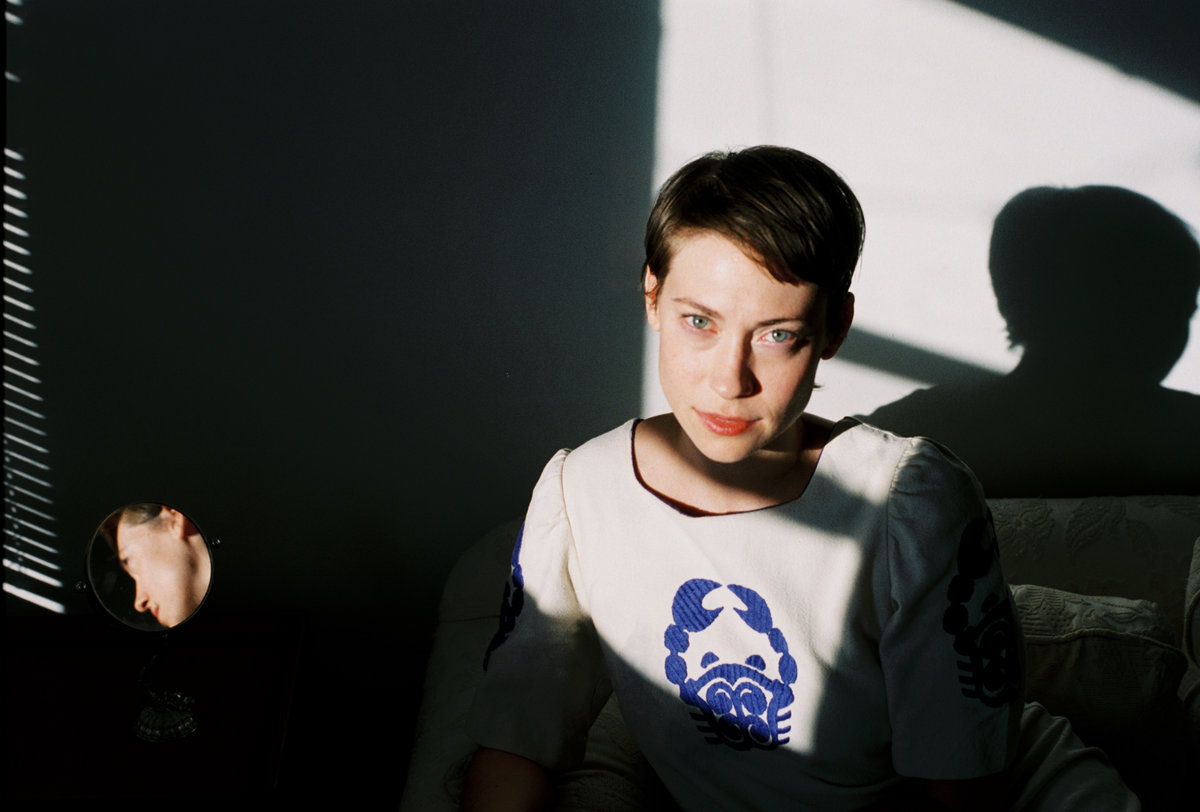
Melbourne singer Anna Cordell plays tender yet deceptively complex folk music that belies a
childhood spent her childhood learning the piano, guitar and musical theory. Her voice is rich and warm yet lyrically her music is filled with angst and conflict, a emotional impact heightened by her penchant for the minor key.

Next month will see the Melbourne based artist Anna Cordell release her long awaited and much anticipated debut album “Nobody Knows Us”. Having shared its first two singles, the subtle drama of ‘You’ and the spiritual title track late last year, she now shares the earnest and vexed third, ‘Tried So Hard’. Musically, a delicate underlying drift carries the song’s slow burning dynamic forward tracing both its contemplative subject matter and Cordell’s intimate and emotively inflected vocal as it oscillates between the breathily philosophical to the angelically quizzical. She explains the meaning behind of the track thus;

“It’s (about) asking for love in the face of different ways of seeing the world, a song that grapples with the insecurities so many of us have in understanding our capacity to love and be loved.”

http://

As far as debut album’s go, Nobody Knows Us comes via rather unconventional means. It’s one where Cordell’s lived experiences and long, albeit fragmented, symbiotic relationship with music palpably shines. Few artists releasing their debut album would have a backstory that involved quitting music for a decade, having and raising five children, and forging out a career and successful boutique label in another artistic endeavour — fashion design. At the same time, few artists could end up making a debut this thematically mature and delicately nuanced with such an un-guardedly honest self awareness.

Listen to ‘Tried so Hard’ will be self released on February 14th. the forthcoming album, ‘Nobody Knows Us’, 

Image may contain: night and outdoor

Canadian indie-folk musician Andy Shauf has already released a few charming singles from his forthcoming concept album “The Neon Skyline”, including “Things I Do.” Shauf’s captivating storytelling lays out a crumbling relationship on the single, one piece of the bigger tale told across the record. “Things I Do” opens with a laid-back groove highlighted by a soft chorus of saxophones that give way to Shauf’s anecdote. “Seems like I should have known better / Than to turn my head like it didn’t matter,” he sings at the beginning. In a similar fashion to Shauf’s 2016 record, The Party .

The Neon Skyline’s structure follows a storyline that takes place over the course of a night, according to a press release: “The interconnected songs on The Neon Skyline, all written, performed, arranged and produced by Shauf, follow a simple plot: The narrator goes to his neighborhood dive, finds out his ex is back in town, and she eventually shows up.

“Things I Do” by Andy Shauf from the album ‘The Neon Skyline,’ available January 24th, 2020

Image may contain: 1 person, selfie, text and closeup

The charismatic English singer-songwriter Jade Bird found her inspirations in the classic acoustic country rock music of the past (Bob Dylan, Neil Young, Bruce Springsteen). She transformed the style to the present through her youth (she’s only 21) and creativity. She’s also following in their footsteps by touring heavily and connecting with audiences through live performances. The ever-smiling artist conveys intelligence and heart. Sometimes that grin is a hidden sneer. In some songs, romance is just a knife.

Bird also puts the rock back in roots rock. She has a voice that sounds young and innocent, with an unsteady bottom that suggests experience and pain. Songs such as “Uh Huh” and “Love Has All Been Done Before” reveal her strength while others like “17” show the power in exposing one’s vulnerability as a singer. Jade Bird’s voice may be her greatest asset. However, this is not all she’s got. Bird also writes literate and dramatic material and plays her guitar and piano with energy and bravado. These elements combine to make her an outstanding new talent.

Glassnote Music distributed by AWAL

Image may contain: one or more people, people standing, tree and outdoor, possible text that says 'Everyday Nothing' The Debut Album Out 28th 8th Feb Feb Pre-Order Now'

Following on from the release of two well received EPs, London-based songwriter Brooke Bentham returned this week with her latest single, “All My Friends Are Drunk”. Brooke is just off the back of a tour with Bill Ryder-Jones, who produced this single, and will be following it up next month with huge shows supporting Sam Fender.

Much of the appeal of Brooke’s songwriting lies in her impressive lyricism, a songwriter detailing the post-university fog of your early 20s, a time when insecurity looms large and the world is simultaneously full of opportunity and utterly terrifying. All My Friends Are Drunk is a musing on growing apart, an attempt to capture “that wishful longing for what was”,set to a backing of driving rhythm guitars and the steady clatter of cymbals. Sliding in neatly alongside the likes of Soccer Mommy or Hazel English, Brooke Bentham creates a world of hazy, tumbling emotions, this feels like the start of something huge.

http://

All My Friends Are Drunk is out now on AllPoints.

Nadia_Reid_01.jpg

For those of us already in the know, the three years between New Zealand songwriter Nadia Reid’s albums have been an excruciating wait.  A wait no doubt earmarked by endless listens to her pristine sophomore album, Preservation.  On March 6th 2020, Nadia Reid will release her third album, “Out Of My Province”, on her own aptly named Slow Time Records.  The album will release outside of New Zealand on Spacebomb Records, and yes, she made the trek to Richmond, Virginia, to receive the full Spacebomb production treatment of strings and lush arrangements.  First single and video, “Best Thing” is already out.  Reid has a voice that is at once delicate, but also sturdy enough to command attention and instill an instant addiction.   A voice that stands up to any instrumentation thrown her way and earns whatever superlatives you care to apply.  Reid only first toured out of her native home to neighboring Australia in 2016 and maintained her job at a cafe up to that point.

Since then, Reid has performed in the U.K., Europe and barely in the U.S.  As her new album predicts, Reid will undoubtedly find herself extensively out of her province in the ensuing year.  Already having been nominated for numerous awards at home, the rest of the world will soon figure out that she is a necessary fixture in their listening libraries.

“Best Thing” off the album ‘Out of My Province’ due for release March 6th, 2020, on Spacebomb Records.

When Anna Burch introduced herself on her 2018 debut Quit the Curse, it was with a concentrated wash of energetic, serotonin-boosting pop. Jangly guitars, blithe vocal harmonies and an occasional undercurrent of grungy fuzz all converged in seemingly straightforward songs that hid their complexities under sunny hooks. The impact of the songs was immediate and exciting, presenting narratives of confusion and upheaval with melodies so bright it was hard to do anything but smile. Two years later, Burch’s follow up “If You’re Dreaming” takes us down a different path than its predecessor, shedding some nervous energy in favor of a deeper exploration of an internal world.

After months on the road in support of Quit the Curse, Burch disappeared for a while. The long stretches of touring had been broken up by only a few weeks off here and there, and a month spent writing in Berlin between European dates. The time she did get to spend at home in Detroit was disrupted by several unexpected housing changes, adding to the transient feelings brought on by constant touring. When things finally stabilized, Burch encamped into a slow, thoughtful and intentional writing process for what would become the second album. Days were spent playing guitar, exploring unconventional chord changes, ruminating on song structures and allowing her subconscious to wander until lyrics materialized. Though about half of the songs were already written, this time was dedicated to taking a closer look at the loose ends of three years of ideas and seeing if there were common threads that held them together.

If You’re Dreaming was tracked with producer Sam Evian in his home studio in the Catskill mountains of upstate New York. Where the first album had been a rush of inspired songwriting followed by a drawn-out process of arrangement and mixing, Burch and Evian worked with self-imposed time limitations to establish a sharper focus and get to the core of the new songs. The work was swift but somehow more relaxed, locking into a groove of tracking the basic elements and then expanding on the arrangements with overdubs and auxiliary instrumentation. The end goal was to present not just an assortment of new songs, but craft an album that moved dynamically through an interconnected emotional arc.

With recurring themes of isolation, weariness and longing, these songs deliver that emotional arc with a delicate but uncompromising execution. Burch’s intrinsically catchy songwriting dials down the urgency of her debut a notch, taking a turn towards airy, jazz-voiced chords, floating reverb and an expansion of the sonic palate with unexpected instrumentation. The soft-rock bass grooves and understated saxophone lines of “Not So Bad” push an impressive pop structure into exciting new territory, and the sweetly melancholic “Tell Me What’s True” centers around muted electric piano, its languid but metered vibe recalling the gentler side of Carole King.

The nuance of arrangements that could sometimes get buried on Quit the Curse rises to the surface on patient, opulent tunes like “Every Feeling” and in the twelve-string guitar hooks of “Party’s Over.” The album drifts dreamily as much as it hones in with a sharper clarity on some of Burch’s most personal songs.

Even at its most introverted, If You’re Dreaming is always warm and present. It’s a deliberately drawn chapter of Burch’s work, trading in the wild-eyed and sometimes neurotic party hopping of Quit the Curse for a more solitary walk after midnight. Daring and clear-headed, these songs cut deeper in their subtleties. If You’re Dreaming moves with intention, taking its time revealing new layers of sophistication and growth in Burch’s always charming songcraft.

Releases April 3rd, 2020

Image may contain: one or more people, ocean, text, outdoor, water and nature

Frazey Ford, recently announced her third album U kin B the Sun, will come out on February 7th, via Arts & Crafts. Ford made a point of preserving many of the lightning-in-a-bottle moments captured during those first sessions for U kin B the Sun. As a result, the album embodies the same untamed and ineffable energy that guided its creation. “There’s certain songs that just appear and there’s no art to it,” says Ford. “To me those songs have some kind of spiritual quality—sometimes I feel like they’re these different voices that you’re able to channel. There really was something magical about the improvisational aspect and how that shaped the album, and such a joy in the experience of really reveling in what we were all creating together.”

I’m excited to tell you that my new album, “U Kin B the Sun”, will be out on February 7th.

A new single, “Azad”, is out today, For those asking, the track Azad is named after my older sister pictured here. The song is partly about survival and a wild wolf child. She was born with a third eye birthmark and hence my hippy parents gave her a Sanskrit name. Azad Lotus Blythe Ford is the wildest human I’ve known.

Lead album single “Azad” reveals the rich emotional texture of U kin B the Sun, embedding Ford’s lyrical storytelling with sharply rendered memories of early childhood (a time she spent living on a commune in Canada as the daughter of American draft dodgers). With its brightly shuffling beats and soaring vocal work, “Azad” offers a poignant message of courage. “There’s something to that song that’s about survival, and about the love that my siblings and I have for each other in coming through an intense situation together,” says Ford.

Frazey Ford, founding member of The Be Good Tanyas, adds her soulful solo work to the show, and our achievement award winner shares the story of their up-cycling organization where victims of floods and those in need can obtain essential supplies.

Recorded at John Raham’s Afterlife Studios in Vancouver, British Columbia, featuring her Vancouver musicians, Darren Parris, Leon Power, Craig McCaul and Caroline Ballhorn along with Phil Cook on keys, U kin B the Sun follows Ford’s 2014 release Indian Ocean, an album made with members of legendary Memphis soul band The Hi Rhythm Section. U kin B the Sun partly draws inspiration from several instances of serendipity that transpired during her international touring in support of Indian Ocean.

Andy shauf photo credit colin medley 2

Few artists are storytellers as deft and disarmingly observational as Andy Shauf. The Toronto-based, Saskatchewan-raised musician’s songs unfold like short fiction: they’re densely layered with colorful characters and a rich emotional depth. On his new album The Neon Skyline(out January 24th via ANTI-Records), he sets a familiar scene of inviting a friend for beers on the opening title track: “I said, ‘Come to the Skyline, I’ll be washing my sins away.’ He just laughed, said ‘I’ll be late, you know how I can be.'” The LP’s 11 interconnected tracks follow a simple plot: the narrator goes to his neighborhood dive, finds out his ex is back in town, and she eventually shows up. While its overarching narrative is riveting, the real thrill of the album comes from how Shauf finds the humanity and humor in a typical night out and the ashes of a past relationship.

His last full-length 2016’s The Party was an impressive collection of ornate and affecting songs that followed different attendees of a house party. Shauf’s attention-to-detail in his writing evoked Randy Newman and his unorthodox, flowing lyrical phrasing recalled Joni Mitchell. Though that album was his breakthrough, his undeniable songwriting talent has been long evident. Raised in Bienfait, Saskatchewan, he cut his teeth in the nearby Regina music community. His 2012 LP The Bearer of Bad News documented his already-formed musical ambition and showcased Shauf’s burgeoning voice as a narrative songwriter with songs like “Hometown Hero,” “Wendell Walker,” and “My Dear Helen” feeling like standalone, self-contained worlds. In 2018, his band Foxwarren, formed over 10 years ago with childhood friends, released a self-titled album where Pitchfork recognized how “Shauf has diligently refined his storytelling during the last decade.”

The Party earned a spot on the Polaris Music Prize 2016 shortlist and launched Shauf to an appearance on The Late Late Show with James Corden as well as glowing accolades from NPR, The Washington Post, The Guardian, and more. “That LP was a concept record and it really made me want to do a better album. I wanted to have a more cohesive story,” says Shauf. Where the concept of The Party revealed itself midway through the writing process, he knew the story he wanted to tell on The Neon Skyline from the start. “I kept coming back to the same situation of one guy going to a bar, which was basically exactly what I was doing at the time. These songs are fictional but it’s not too far off from where my life was,” Shauf explains.

For The Neon Skyline, Shauf chose to start each composition on guitar instead of his usual piano. He says, “I wanted to be able to sit down and play each song with just a guitar without having to rely on some sort of a clever arrangement to make it whole.” The resulting album finds its immediacy in simplicity. While the arrangements on folksy “The Moon” are unfussy and song-centered like the best Gordon Lightfoot offerings, his drive to experiment is still obvious. This is especially so on the unmoored relationship autopsy “Thirteen Hours,” which boasts an arrangement that’s both jazzy and adventurous.

Like he’s done throughout his career, Shauf wrote, performed, arranged, and produced every song on The Neon Skyline, this time at his new studio space in the west end of Toronto. Happy accidents like Shauf testing out a new spring reverb pedal led to album cuts like the woozy closer “Changer” and experimenting with tape machines forced him to simplify how he’d arrange the tracks. Over the course of a year-and-a-half, Shauf ended up with almost 50 songs all about the same night at the bar. Though paring down his massive body of work to a single album’s worth of material was a challenge for Shauf, the final tracklist is seamless and fully-formed.

As much as The Neon Skyline is about a normal night at a bar with friends and a bartender who knows exactly what you’ll order before you sit down, the album is also about the painful processing of a lost love. Lead single “Things I Do” examines the dissolution of the narrator’s past relationship. Over tense and jazz-minded instrumentation, Shauf sings, “Seems like I should have known better than to turn my head like it didn’t matter. Why do I do the things I do when I know I am losing you?” He explains, “a lot of this record is a breakup record. I haven’t had a breakup in a long time, but a lot of relationships have had one of those nights where one person shows up somewhere when they weren’t supposed to and then picks a fight with their partner.” Elsewhere, songs like “Clove Cigarette” explore the better times, honing in on a memory that “takes me back to your summer dress.”

With any album about a lost love, the key ingredient is a generosity and kindness that can only come from a writer as empathic as Shauf. On the standout personality-filled single “Try Again,” the narrator, his friends, and his ex find themselves at a new bar. The former lovers’ reunion is awkwardly funny and even sweet, as he sings, “Somewhere between drunkenness and charity, she puts her hand on the sleeve of my coat. She says ‘I’ve missed this.’ I say “I know, I’ve missed you too.” She says, ‘I was actually talking about your coat.'” It’s a charming moment on a record filled with them. Shauf’s characters are all sympathetic here, people who share countless inside jokes, shots, and life-or-death musings on things like reincarnation when the night gets hazy.

On top of heartbreak, friendship, and the mundane moments of humanity that define his songwriting, Shauf makes music that explores how easy it is to find yourself in familiar patterns and repeat the same mistakes of your past. His characters wonder, “Did this relationship end too soon? Would going to another bar cheer my friend up?” Or in the case of the foreboding “Living Room,” where a character asks herself, “How hard is it to give a shit?” the songs on The Neon Skyline ultimately take solace in accepting that life goes on and things will be okay. Shauf says, “there’s moments on the album where the characters are thinking ‘this is the end of the world.’ But there are also moments with some clarity and perspective: Nothing is the end of the world.”