Magana creates haunted Alternative Pop, which is as emotional as it is atmospheric and as beautiful as it is beguiling. Golden Tongue is the debut EP but Jeni Magana has taken the long road to get here. Born in California, Magana was classically trained in her youth before attending Berklee College in Boston and moving once more to New York City where she found herself writing songs, working with a variety of bands (Oh Odessa, Annie & The Beekeepers), creating commercial jingles and even working as a studio and touring musician for artists as unexpected as the Dropkick Murphys. This bizarre musical education shines through on the masterfully eclectic Golden Tongue EP. Magana is a very whole artist but this debut sounds vital and energetic, full of microscopic melodies and shuddering instrumentation.
Sparse and haunting sounds made by electric guitar and voice. Haunted Alternative Pop from Brooklyn’s JeniMagana. “Golden Tongue” EP out now on Audio Antihero Records.
The ‘Cosmonauts’ are an alternative garage/psychedelic rock band from Orange County, California. If you mention Cosmonauts in most LA, nods of recognition will ensue, followed by a proud reference to someone’s friend doing a stint in the band, and several enthusiastic adolescent memories of shows gone by. A longstanding project of core members Alexander Ahmadi and Derek Cowart, Cosmonauts sit as one of the acts most strongly — and deservedly — associated with the boom of local label Burger Records. At 10 years, and countless shows in, Cosmonauts have solidified their status as both indie touchstone and hometown heroes, a source of cultural pride amongst suburban-bred kids who watched them make the scene.
It was apparent even then that Cosmonauts had a clear vision. They took their sound seriously, turning up their noses at effects pedals while simultaneously turning up their amps as far as they could go. They worshipped the drawn-out melodic drone of Spaceman 3 and The Jesus and Mary Chain, two bands whose influence was unabashedly apparent on the debut.
While Burger Records has grown to stand for, and sound like, any number of things, there’s always been more to Cosmonauts than lo-fi-surf and half-baked garage-pop. Razor-blade riffs and relentless walls of sound (see the audio assault of “Seven Sisters” and the fire-alarm guitars and self-destruction of the massive “Wicked City (Outer Space)”) shatter out the shambolic jangle of their psych-rock peers with power and intention. The punch-in-you-gut intensity comes courtesy of the duo’s mission to go back to basics.
Released June 11th, 2010.
All songs written and performed by Cosmonauts
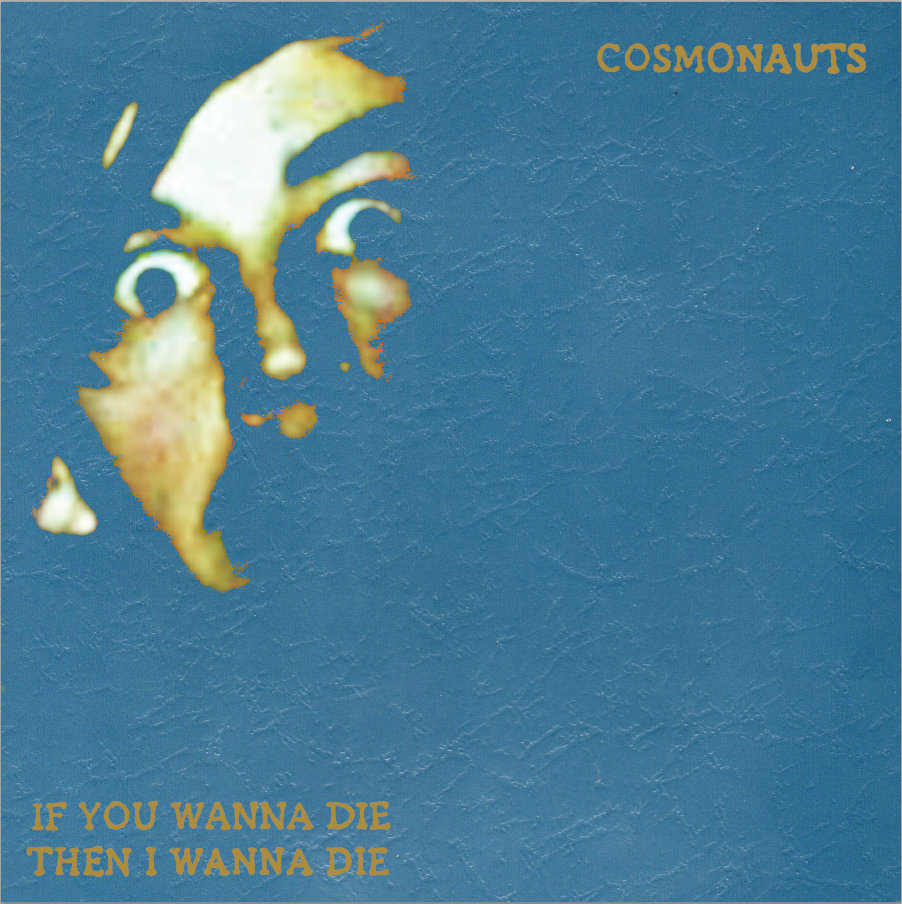
If You Wanna Die Then I Wanna Die 12″ LP
“If You Wanna Die Then I Wanna Die” Burger Records. ‘Motorcycle #1’ is by the amazing ‘Cosmonauts’. It was released in March 2012 as the b-side to the single ‘Emerald Green’. It is also the first track on the ‘Cosmonauts’ second album ‘If You Wanna Die I Wanna Die’. They don’t sound like this so much anymore, but every song on the record is a winner.
We should say that when ‘Motorcycle #1’ was first released there wasn’t a video so as it’s one of our favourite tracks of 2012 we just wanted to try and put something together for it so we edited the final scene from Ghost Rider II so, we hope its does some justice to what is such a cool tune.
“If You Wanna Die Then I Wanna Die” Burger Records The track ‘Motorcycle #1’ is by the amazing ‘Cosmonauts’. It was released in March 2012 as the b-side to the single to ‘Emerald Green’. It is also the first track on the ‘Cosmonauts’ second album ‘If You Wanna Die I Wanna Die’
All songs written & performed by Cosmonauts.
Recorded in August 2011 by Adam Ashe at Thee Men’s Warehouse in Anaheim, CA.
Persona Non Grata
“I was only 19 years old when Derek and I released the first Cosmonauts record,” explains Ahmadi, “So pretty much everything I’ve learned as an adult, I learned from being in the band.”
“Yeah, clearly we haven’t learned much,” Cowart adds, “I guess I’ve learned that hype and trends come and go, but great songs last forever, The dynamic between Cowart and Ahmadi has always been the foundation of Cosmonauts’ sound and the evolution of their musical partnership deepens with every new release. Though they’ve always sung in unison (but never harmony), they’ve increasingly started to employ call-and-response in their music, singing different things at the same time to each other and to the audience, balancing two opposing points of view within one song. While it’s tempting to divide Cosmonauts’ catalogue into “Alex songs” and “Derek songs,” the band doesn’t approach their songwriting in a bifurcated way.
California sun-soaked shoegaze songs about boredom, feeling out of place, and trying to work through weird relationships.
It’s an idea that’s toyed with throughout “Star 69”, the band’s fifth studio album and follow-up to 2016’s A-OK!. “Love my little bubble / love my little scene,” they sing over the drug-laden slide guitar and back beat of the Odelay-like opener “Crystal,” the sneer in the delivery hinting that the love may be double-edged. Then there’s the entirety of “Medio Litro,” an ode to conversations we’ve all had out on smoking patios at varying stages of that night’s bad decision-making. Lines like “We’ll go to the party / If we can find parking” and “Get another manager / and another publicist / Call me when you get this / Make it on the guest list” are delivered with the perfect detachment of a band that is well-acquainted with the game, and still has no intention of playing by the rules.
“It was really important that Star 69 was recorded as live as possible,” explains Ahmadi. “We needed to record the album in a more immediate and demanding environment. I think in the age of Ableton, the energy and urgency of a live band really can’t be overstated.”
Psych, punk, shoegaze, and always something else, the Cosmonauts sound is Spaceman 3, Brian Jonestown Massacre, Jesus and Mary Chain through a 75-and-sunny, strip-mall lens–it’s UK by way of So-Cal, the lucid lyrics and heat-shimmer guitars so indicative of the now-familiar sound they created.
Star 69 finds them at the height of those powers, the trip or two around the block injecting the album with a confidence and completeness that gives tossed-off lines like “I wish I was high or dead, or something” (the gorgeous and unexpected “Heart Of Texas”) a kind of hungover, squinty-eyed poetry. Everything from almost-love songs (“The Gold Line”) and odes to untimely death (“Suburban Hearts”) are given the usual yawn and stretch treatment–a deceptive casualness that underpins the level-up songwriting and intricate musicality of the band’s strongest effort yet.
Released September 6th, 2019
A-OK!
The band, for this album is made up of Ahmadi and Cowart plus bassist James Sanderson III and drummer Mark Marones, their fourth albumA-OK!. It’s their first LP in 3 years, and is perhaps the prettiest record Cosmonauts have ever made. The vocals are clearer, the beats dancier, the tones janglier, and there’s more diverse instrumentation than on records past (plus for one: they use pedals now). They have a preternatural ability to transpose their many musical influences into songs that capture the feel of an era rather than imitating an exact style. While the band is still, and probably always will be, very much indebted to ‘80s and ‘90s.
The songs on A-OK! show a natural progression from the leaner sound of 2013’s Persona Non Grata, fleshing out Cosmonauts’ talent for bending noise into irresistible pop. They’ve dialed down the noise and started favoring subtle atmospheric shifts and sweetly melodic sections, which balance out the darker elements that have always underpinned their sound. The vocals are less affectless than before, giving A-OK! a sonic depth that’s new for the band. The menacing creep of “Doom Generation” slowly ramps up the anxiety before plunging the listener into a well of reverberating guitar.
Cosmonauts – Short Wave Communication feat. Shannon Lay. On “Heavenspeak,” Cosmonauts punctuate an undulating dance rock groove with a wash of white noise. Though (lots and lots of) guitars are still the anchor of Cosmonauts’ sound, A-OK! has instrumental surprises aplenty: a synth burbling below swaths of reverb on “Shortwave Communication” (which also features honey sweet backing vocals courtesy of Shannon Lay of Los Angeles band Feels) or a Wurlitzer going toe-to-toe with the guitars on the buoyant “Good Lucky Blessing.”
“Party at Sunday,” the record’s first single, is a languid, longform lullaby with a placid guitar lead that’s as soothing as it is sad. The accompanying video, a flickering array of beautiful people moving through a softly-lit, pink-and-blue world with an extended shower make-out scene at the conclusion, has racked up 20,000 views on YouTube. In typical Cosmonauts fashion, despite its gorgeous imagery, the song itself is a complete bummer. The denouement: “I fell in love and I hated it.”.
Released August 19th, 2016 Cosmonauts – “A-OK!” from album, ‘A-OK!,’ out August 2016 on Burger Records.
In early 2003 a young Steve McBean was living in Vancouver and in the midst of a transition from his sorely overlooked rock band Jerk With A Bomb into an auspicious new chapter. JWAB was his umpteenth band in as many years woodshedding as both a front-man and a supporting musician in countless punk & hard core bands in the Canadian wilds starting in his teens and going through his twenties. JWAB was arguably the band in which he’d finally found his signature singing voice and started collaborating with drummer Joshua Wells and vocalist Amber Webber.
Around this time his friend Dan Bejar (Destroyer, New Pornographers) sent to Jagjaguwar a demo tape of new songs that Steve had been writing. He wasn’t sure if it they were JWAB songs or something new entirely. The songs were randy & ribald, with a primitive drum machine beat and a Bo Diddley guitar swagger. They were scintillating and taught us things that our parents were too scared to teach. These were the demos for the songs that would be re-recorded as the debut album by Pink Mountaintops, a sister project to the other McBean-fronted rock band that was being born at the same time — Black Mountain. This was an exciting time not only for McBean — who was bubbling with songs & ideas — but a turning point for Jagjaguwar, thrilled to sign two of its most significant projects simultaneously.
Ariel Rosenberg—a.k.a. the trailblazing lo-fi pop eccentric, Ariel Pink—has released more albums over the past twenty years than many bands do in their entire careers. Some of his most beloved releases, recorded under his Ariel Pink’s Haunted Graffiti moniker, came from the artist’s days on Animal Collective’s now-defunct Paw Tracks label. However, these versions weren’t mixed properly, resulting in a subpar, mono audio transfer.
Now, Pink and the folks at Mexican Summer are making things right with the Ariel Archive Series, an ambitious project of remasters and reissues of the artist’s vast back catalog. The amount of time covered is staggering—starting from Pink’s scrappy debut, 1999’s Underground tape, all the way to a fresh odds-and-ends collection, Oddities Sodomies Vol. 2, which even has new songs from the Dedicated to Bobby Jameson sessions.
This week, the next wave of remasters is here, with some fan-favorite deep cuts—2000’s The Doldrums, 2002’s House Arrest, and 2003’s Worn Copy. There’s even a new experimental film on the way as a part of the series, entitled Dedicated to Boris Karloff, directed by Argentinian artist Salvador Cresta.
With Pink, hunkered down in his Los Angeles home, He talks about the archive series. He reflected on his legacy, praised his collaborators, and scoffed at the notion of giving his younger self advice.
When I originally recorded these things, I built up several generations’ worth of mistakes. There was so much slippage and waste. Remastering the albums was a matter of finding the original mixes I made on those master cassette tapes and using those to remaster to the proper stereo mix. We managed to find a bunch of them. Some of them were lost, but in the case of House Arrest, The Doldrums, and Loverboy, we managed to salvage true stereo mixes. In certain cases we weren’t able to find the originals. In those instances we had to make a mix that was comparable to the original from just straight off the eight-track.
House Arrest
Our favourite omnivorous media junkie from LA still has a few tricks left up his sleeve like the left-of-center House Arrest. Sure The Doldrums and Worn Copy had some hits and humdingers on them, but House Arrest never lets up.
It’s hit after hit after hit. Sorta like if you listened to your friend’s boom box mix tape from top 40 radio around 1985.
The Doldrums
After years of recording in relative seclusion in the hills of Los Angeles, Ariel Pink (the first non-Animal Collective member on the Paw Tracks roster) made his official Paw Tracks debut with The Doldrums. Originally a handmade CD-R release a couple years back,
The Doldrums by Ariel Pink’s Haunted Grafitti was discovered by the Animal Collective during one of their west coast tours and became an immediate favourite.
Recording at home with only a guitar, keyboard, and 8-track (the drum sounds are all unbelievably created with his vocals), Ariel Pink blends Lite FM and warped lo-fi pop into something beautiful and confusing, yet highly addictive.
Loverboy
More than just fetish material for Pink completists, the reissues are most notable because Pink’s equally demonized, glorified, and debated lo-fidelity has been officially tampered with. The original master tapes were made available to credible engineers with good intentions. Unlike the flawed Paw Tracks reissues, the squashed mono mixes of both Loverboy and Underground have been cracked open into a wide stereo field. While a thin layer of tape hiss still hangs above each record like freeway smog, the depths unlocked by the remaster clear space for us to participate in Pink’s original fantasy more than ever. The tumbling AM-radio confections “My Molly” and “Doggone (Shegone)” can be imagined, faintly at least, as actual AM-radio hits, lost soft-rock artifacts recovered on a Saturday morning drive pouring out from a busted rear speaker.
Loverboy is a futurist pop cycle. From the spectral, pulsing organs on “Ghosts” and “Don’t Talk to Strangers” to the shuffling mouth drums on “She’s My Girl,” Pink’s bedroom feels palatial, some hyper-baroque synth chamber hovering between this dimension and the next. It’s all very “time out of joint” as the French philosopher Jacques Derrida described his original concept of “hauntology.”
Loverboy and Underground’s newfound fidelity muddies the bigger picture of Pink’s legacy. Specifically, the idea that his work as Haunted Graffiti was a mere prelude to studio budgets, the dismal sonics of these albums an arbitrary choice, a condition of some broke musician recording in a squat. Instead, the precision remastering bolsters the minority opinion of what Fisher described as “anamorphic sonic objects.” The anamorphic being the idea of sounds working on the periphery of comprehension, combining into something radically different.
Ariel Archives revisits Ariel Pink’s historic run of albums as Ariel Pink’s Haunted Graffiti with a series of definitive reissues and new collections. The first installment begins with Underground, the inaugural album in the series, Odditties Sodomies Vol. 2, a long-awaited second volume of outtakes and non-album tracks, and finally Loverboy, an exemplary disc recorded between October 2001 and July 2002, at which time Ariel also recorded House Arrest.
It was fun to do because I had [recording engineer] Paul Millar with me. He’s an amazing, thorough audiophile. He just really knows the technical stuff and fixates on things I didn’t even pay attention to. He’s very, very well-versed in the material. He came with his own notes and questions and curiosities. His energy really kind of carried the process, to tell you the truth. It was a pleasure to have him in my house.
I don’t know if it’s the right time. It’s the easiest time for me because all the rights reverted back to me after the licensing with Paw Tracks. Those were five- seven-year relationships that came and went. Paw Tracks folded, so those records were unavailable for a long time, unless I went on tour and they allowed me the albums for the tour merchandise.
But really, this is almost a perfect twenty-year anniversary. I’m forty-one now and I was twenty years old when I made a lot of these, roughly. It’s half of my life ago. It’s a nice twenty year retrospective. I probably won’t have to do it again for another twenty years, hopefully.
Los Angeles was a much different place when X released its debut album, Los Angeles, named for the city that the band had adopted. Forty years ago, Los Angeles still had a reliably seedy link to its noir roots, which was catnip to people like John Doe, who fled the East Coast for L.A.’s sunny days and debauched nights. Doe found kindred spirits in Exene Cervenka, Billy Zoom and D.J. Bonebrake, and with X they helped establish the West Coast’s punk scene. With 1980’s Los Angeles, they became a nationally recognized leading voice on the scene.
They were a motley bunch. Doe and Cervenka were writers and poets. Zoom was a session guitarist who had trained as an electronics repairman and played a dozen instruments, fluent in both big band jazz and Gene Vincent. Bonebrake had studied classical music and played a mean jazz vibraphone as well as he drummed. All except Bonebrake were from somewhere else.
But in the sordid backwash of Hollywood and the near-nuclear fallout of the Ramones and Sex Pistols, they transformed into X. As we celebrate the 40th birthday of the band’s debut album, Los Angeles has lost none of its power, fury or artfulness, and remains a showcase for how the spirit of punk can be filtered through the familiar lens of rock and roll that had come before.
The heart of “Los Angeles” is clearly punk; Zoom’s lethally precise power chords and Bonebrake’s metronome-on-steroids drums propel the songs at a breakneck pace while Cervenka’s unhinged vocals speak to one of punk’s central tenets: Anyone can do it. But there’s a higher level of musicianship at work here. Zoom is an encyclopedia of roots-rock guitar and he tosses in echoes of Chuck Berry and Scotty Moore. Doe is the Paul McCartney of punk bassists, always finding inventive ways to melodically underpin the songs without losing intensity, and his smoked honey of a voice in harmony with Cervenka’s squall is one of the band’s signature sounds.
Doe and Cervenka filled Los Angeles with lyrics straight out of a poetry workshop — elliptical, evocative, blunt, beautiful and violent, like if Dashiell Hammett did slam poetry — and the combination of bohemia, musicianship and aggression made Los Angeles soar. And if Ray Manzarek seems an unlikely producer, consider that The Doors were legends in L.A. and he had considerable street cred.
X begins with a triple shot of “Your Phone’s Off the Hook, But You’re Not,” “Johny Hit and Run Paulene” and a cover of the Doors’ “Soul Kitchen.” Of the three, “Johny Hit and Run Paulene” is quintessential X, a seamy narrative about drugs, rape and possibly (probably?) murder.
“Sex and Dying in High Society” reads like a film noir treatment about a woman who has sold herself for the security of a connected marriage. Not an incredibly original premise, but the details are what make it work, especially the bit where the woman makes her maid use a curling iron to burn her back just to feel something. Manzarek spices the song with a perfectly placed flourish of synthesizer. “The Unheard Music” is an efficient summation of punk culture, ominously set to a dirge-like metal riff. “Friends warehouse pain/Attack their own kind/A thousand kids bury their parents” conjures the desperate physical release of a mosh pit, teenagers cutting themselves loose from families they don’t want to be with the family that they choose.
“The World’s a Mess; It’s in My Kiss,” besides being a rare example of the proper use of a semi-colon, is also a love song that doesn’t back down from how terror and wonderment walk hand in hand when two people try to make a life together. It comes off as an update of 1950s teeny-bopper love songs with Zoom busting out his best Berry licks behind Cervenka and Doe’s anti-harmonies.
The album’s best-known song is the muscular title track, which is intoxicating in its ferocity and concision. As political correctness has grown into a casual hobby, there have been efforts to paint the song as racist, which is at best a ridiculous argument. It’s clearly about a racist, not to mention a homophobe, and the song’s impact and meaning would be neutered by euphemisms that dance around the truth. That truth is what makes the song so powerful, as well as the sledgehammer authority with which Zoom, Bonebrake and Doe attack every second of the brief 2:25 it lasts.
The album’s overall effect and impact is visceral, literary and uncompromising. X went on to make six more studio albums, embracing more of the band’s folk, country and rockabilly roots as the years passed. The first four albums are considered classics, but “Los Angeles” remains the gold standard.
Clean original Slash pressings of Los Angeles have been climbing in price but the record has been remastered and reissued several times by Rhino, Porterhouse, Music On Vinyl and most recently Fat Possum; other than the acclaimed Porterhouse pressings, the consensus seems to be that they’re all roughly equivalent to an original.
Whichever one you track down, you need to own it — assuming you have a thing for punk, or just good music — as it’s a touchstone of the genre and a keeper for any well-curated collection.
The band recognized the significance of Los Angeles with the surprise release of a new album, Alphabetland, nearly 40 years to the day after their debut. It’s the band’s first studio album since 1985 to feature the original quartet, which was fractured when Zoom left following Ain’t Love Grand. His return brings X full circle as Alphabetland is classic Los Angeles-era X: hard, fast, uncompromising.
2020 became the year Ramonda Hammer graduated from being the Los Angeles grunge scene’s best-kept secret to the songwriters of network TV’s angstiest title theme when the band’s single “Hoax” was picked to soundtrack the intro to Bill Burr’s Comedy Central program The Ringers. The recognition was well-deserved—the single comes from their powerhouse debut released last year, which feels like the beginning of a momentous career.
The band is keeping that momentum going today with their latest one-off single, “Big Hands,” which was produced by Illuminati Hotties’ Sarah Tudzin. It’s an earnest hard-rock ballad split between soft verses and heavy choruses, detailing vocalist Devin Davis’ recent relationship woes.
“I wrote ‘Big Hands’ during a time when I thought I was losing the love of my life,” shares Davis. “It’s a desperate apology. But It’s the kind of apology where you can’t find the words to say you’re sorry, so you make an offering, a token of affection that can’t undo what’s been done, but it’s the best you can do at the time. The song repeats several times: ‘It’s the thought that counts,’ and thoughtfulness has to mean something, right? It’s about working on emotional intelligence. Not condoning bad behavior, but it’s pointing out all the good that comes with the bad.”
Formed in January 2016. Mapache is a new folk / blues / rock / bluegrass / psychadelic duo born in Los AngelesCalifornia. Mapache is interested in spreading good feelings of love as well as raw musical talent to anyone and everyone. Mapache is an experience both live and in the studio presenting a memorable and honest sound.
Produced by longtime collaborator Dan Horne (Circles Around the Sun, Allah Las), Mapache’s new album From Liberty Street promises angelic harmonies weaving somewhere between traditional folk and modern cosmic country music. These songs are inspired by everything from Mexican boleros, to Bakersfield twang, to lonesome cowboy campfire tunes.
Clay Finch and Sam Blasucci, both born and raised in Glendale, California, display their brotherly chemistry and casual Cali attitude in the country tune and video premiering today. Directed by Nicole Hawkins, the visual features the pair wandering around New Orleans, past trees laced with Spanish moss and across green fields, a small dog in a hot pink jacket trotting at their side.
“We chose to shoot the video in New Orleans because we love it there,” Blasucci shares. “Besides the spots in the video, we like to visit many other places: the Made Market uptown (RIP), the music and wine at Bacchanal, Euclid Records, the lovely fountain in Audubon park (great for a dip on a hot day), and lots of other beautiful places.”
Hawkins adds, “We shot the video in and around the greater New Orleans area. It jumps from different times of day and different places within one continuous wandering walk. I wanted the video to feel as familiar and unpretentious as Mapache, without too many distracting elements that might take away from the nuances of the song and from their personalities. The Boston Terrier, Roscoe, is a part of the family, so it only seemed right that he wear his pink sweater and wander with us. “
Clay Finch: vocals, guitar Sam Blasucci: vocals, guitar Dan Horne: bass Austin Beede: drums Dusty Ineman: percussion
“Life On Fire” is from Mapache’s album, From Liberty Street.
With her debut full-length album, Wake UP!, Hazel English has traded the hazy, reverb drenched production styles prevalent in her earlier work for sounds synonymous with classic pop records from the late 60’s. Production isn’t the only dramatic change, however. A move from San Francisco to Los Angeles to explore a collaborative relationship with producer Justin Raisen (Sky Ferreira, Charli XCX, Angel Olsen) proved to bring a fine tuned sense of pop craftsmanship to the songs that would become Wake UP!
On tracks like Shaking, Off My Mind, and Five and Dime, English’s sharpened sense for song writing are on full display with timeless pop hooks and addictive melodies. Wake UP! casts a wry, appraising eye over modern life and promises to be one of the highlights of 2020.
Straw-man time: If it’s hard to make a truly bad dream-pop album, it’s equally tricky to make a really good one, and for identical reasons. The essential ingredients are the same in either case. You need reverb, introspection and hazy melodies that evoke ’60s pop. How you fit them together is what makes all the difference. Australian-born Los Angeles transplant Hazel English puts those elements to use in service of 10 songs that glide by comfortably on her full-length debut, Wake Up!. It’s a respectable enough effort, full of chiming guitars and sleek vocals as English delivers lyrics that parse feelings of isolation and explore power dynamics from romantic relationships to capitalism. Despite the sometimes fraught subject matter, her songs are engaging and pleasant, as well as a reminder to be present and engaged with herself and the world around her.
They also feel more fussed-over than the EPs she released in 2016 and 2017, which had an immediacy these songs sometimes lack. After demonstrating intimacy and charm on her earlier material, English shows with Wake Up! that she’s capable of making a bright, big-sounding album. Once she gets around to combining those sensibilities, well, look out.
Formed in 1977, X quickly established themselves as one of the best bands in the first wave of LA’s flourishing punk scene; becoming legendary leaders of a punk generation. In 2020 – they released their first new album in 35 years, “ALPHABETLAND”. Musically, Los Angeles is almost infallible. originally released on April 26th, 1980 by Slash Records. Slash magazine started a record company and its first release was an album by the Germs. Now they’ve released a new album from X. The LP is the powerful debut “Los Angeles”. The band worked on a $10,000 budget and finished the recording and mixing in just three weeks.
They’re managed by Danny Sugarman, who also manages the surviving members of the Doors. This probably explains how Doors keyboardist Ray Manzarek (a rabid X fan) appeared as a guest musician on the LP, and how the band cut a blistering rave-up of the Doors song “Soul Kitchen.” But Manzarek did far more than just put in a few guest appearances. He also produced the album. There was Billy Zoom playing the loudest guitar, yet doing it so smoothly and efftortlessly. I was amazed at the edge and the rawness but he attacked the guitar strings with such grace and finesse. And the drummer, DJ Bonebreak, is so solid and strong and powerful..
“Your Phone’s Off the Hook, But You‘re Not” kicks off with relentless immediacy as if you’ve jumped into a speeding car on a midnight tour. Doe and Cervenka trade lead vocals and occasionally Cervenka veers stunningly off course in vivid and blistering wails, a Siouxsie Sioux in Southern California. On top of Bonebrake’s motoring drums, the songs are dark and doom-laden, fiery and mordant.
X sings about drugs and violence and cruising and ennui, conjuring a mood that prefigures Hüsker Dü’s “Diane” and Sonic Youth’s Bad Moon Rising. They stick it to the upper class with “Sex and Dying in High Society” and they finish with one of the best punk love songs of all time, “The World’s a Mess, It’s in My Kiss.” “Go to hell, see if you like it/Then come home with me”—the musical equivalent of cigarette ashes and red lipstick—the end to a wild ride through Los Angeles’ underworld.
This is a masterpiece. In this “less fun in the new world” full of tossed together sample library un-imagination, do yourselves a favour: sit down and listen to this record in its entirety. Not only is this release an iconic example of the art of the full album narrative, it also stands as a reminder that this form of art is sadly fading.
The Dollyrots are poised to build on the success of 2017’s breakout hit Whiplash Splash. Whiplash indeed made a splash in Billboard, debuting on the Heatseekers chart . The band’s 2016 live album/DVD Family Vacation: Live In Los Angeles also hit the charts, while previous studio album Barefoot And Pregnant showed lots of interest.
Long a staple in rotation on Little Steven’s Underground Garage, the band’s recent output perked up the ears of Wicked Cool founder Stevie Van Zandt. “Their songwriting has reached a consistent level of greatness,” he says.
The alliance with Wicked Cool, which began with the singles “Get Radical” in 2018 and “Everything” this spring, is a return to a label after several DIY, fan-funded releases since 2012. Their 2004 debut was released by legendary Punk label Lookout! while the next two were on Joan Jett’s Blackheart Records.
The Dollyrots are a female-fronted rock n’ roll band from California. “Whiplash Splash” on AQUA BLUE vinyl! Mastered off the “dynamic” mastered version of the LP… really WARM and analog goodness!
INCLUDES:
• Aqua Blue 12” Vinyl with full-color jacket
• Full album download in any format you choose
*If you pick the “Autograph to Vinyl” option and would like your signed record personalized, please include a note with your order indicating the name you’d like it made out to…we love writing notes to our fans – just let us know who to make it out to!*
All songs written by Kelly Ogden & Luis Cabezas
(Except Track 13)
All songs performed by The Dollyrots Kelly Ogden: Vocals, Bass, Keys Luis Cabezas: Guitar, Vocals