Posts Tagged ‘Best Albums Of 2018’

Image may contain: 1 person, close-up and text

Miya Folick may be a relative newbie, dropping her first album Premonitions this year, but she shouldn’t be discounted. Following the release of two previous EPs, Premonitions is a record marked by her at times angelic and other times burly vocals and a lyrical voice that’s emotionally nuanced, purposeful and accessible. After watching her at last years Dot to Dot weekend, my immediate thought was that any headliner would be doomed to follow that performance. Her bubbly energy and impassioned, unusually operatic pop vocals clearly set her apart from the typical carefree indie-rock opener.

The audience, who had largely never heard her music before, was hanging on her every word in a way that many headliners would be jealous of—let alone a support act. If the crowd wasn’t already convinced she was something special, her fiery closing performance of “Give It To Me” certainly made that obvious.

Since she appeared on our list last year, the O.C. native has done nothing to diminish her standing as somebody we can’t wait to get an album from. A fierce talent.

http://

written by miya folick
produced by david tolomei and miya folick
miya folick – vocals, synth, programming
josh menashe – guitar
bryant fox – bass
garet powell – drums
derrick baseck – additional synth

Four-piece Teleman are something of a strange proposition in 2018: an English art-pop band, formed in their early thirties, who have built up a keen fanbase and substantial critical acclaim across their last two albums without any gimmicks, just great songs and excellent live gigs.

After rising from the ashes of Reading’s underrated Pete & The Pirates in 2012, the quartet of vocalist Thomas Sanders, bassist Pete Cattermoul, synth/keys player Jonny Sanders and drummer Hiro Amamiya added metronomic Krautrock rhythms and cosmic synths to the indie-garage of their former work. Bernard Butler produced their debut, Breakfast, so it was naturally a glossy, sleek thing – yet Family Of Aliens, this their third album, produced by Boxed In’s Oli Bayston, is, if anything, even more electronic. Submarine Life is driven by aquatic Vocodered vocals, while the synth-pop of Cactus sounds like prime Ladytron or Hot Chip at their most relaxed. Starlight, conversely, is a loping six-minute ballad driven by woozy synths, like something from Gorillaz’s debut album, while Sea Of Wine springs from rippling piano and a vocal melody that recalls Gorky’s Zygotic Mynci or Robert Wyatt.

The band’s musical progression works throughout, though, highlighting Thomas Sanders’ wry, subdued vocals and enigmatic lyrics. “Use your imagination,” he mutters in the opening title track, and it’s almost a key to understanding his bookish lyrics. Family Of Aliens itself is a propulsive delight with an almost motorik beat, but this isn’t the Autobahn – instead Sanders is “driving along the M1… I saw the lights calling me onwards…”

Somebody’s Island looks at love and support: “I could have just left you dancing on your own/I could have just run but I didn’t know where to go…” Teleman clearly have no such problem – for those who haven’t heard them yet, it may be time to turn on and tune in.

Armed with a freer, more collaborative approach to both writing and recording, Teleman’s new 11-track album “Family of Aliens”, is a fluid collection of glorious pop-songs fluent with new electronic textures and united by the sharp lyricism, buoyant guitars and instantaneous melodies that are synonymous with Teleman.

“We want to keep evolving and keep discovering. This band is one long journey for us, and we never want to stop developing and finding new ways of creating music. I’m always wanting to better what we’ve done before. To go deeper, to find something more beautiful, more catchy, more challenging, more interesting … just more.”

http://

It’s evident the much-loved quartet have evolved, cultivating and honing their sound as a very-welcome and anticipated proposition for 2018.

Released September 7th, 2018

Swearin' to Release New Album This Year, Share North American Tour Dates

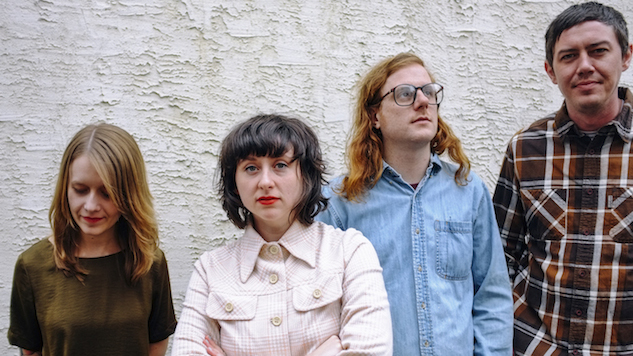
Philadelphia-based indie-rock band Swearin’, featuring Allison Crutchfield, Kyle Gilbride, Jeff Bolt and Amanda Bartley, will release their first new music since 2013’s Surfing Strange this year.

The band recently played their first live shows in three years, opening for Superchunk on tour in the northeast U.S. Swearin’ have now signed a record deal with Merge Records and are set to release a new album later this year.

Gilbride said of the band’s reunion, forthcoming album and recent record deal:

If time were real, it would have healed our wounds, but it’s not, so we decided to make a rock record. And to make one the way we always have! Quickly, at home, and for no one in particular. Fortunately for us, Merge hadn’t dismissed us as an oddity from earlier in the decade and said, “sup with that record?”And with their help, we’ve been reintroduced to polite society. Sometimes a band takes on a life of its own, and it seems this one came back to us when it was ready, and in its new form, to stay for the foreseeable future.

The band also announced a new joint tour with Mike Krol in August on the West Coast, Swearin’ will play a pair of U.S. shows with Ought in as well.

Their record label, Merge, hinted that fans should stay tuned for upcoming Swearin’ news by following the band on Facebook and by following Allison Crutchfield on Instagram, too. after releasing two beloved full-lengths, 2012’s Swearin’ and 2013’s Surfing Strange, the Philadelphian band quietly put things on hold.

It was due, at least in part, to the band’s main songwriters, Allison Crutchfield and Kyle Gilbride, ending their romantic relationship. but when the band found themselves in a room again years later, the conversation turned back to Swearin’. “without any hesitation or inhibitions,” said Crutchfield, “we asked, ‘what would it take from each of us? what would we want to accomplish if we decided to be a band again?’” they realized that what they all wanted was to not just play shows, but to make a new record. they wanted to do something that reflected the people they’d become during those intervening years. before long, Crutchfield and Gilbride had a new batch of Swearin’ songs, ones that meshed with the sound they’d originally developed together but boldly pushed things forward. Fall Into the Sun is a Swearin’ record that doesn’t try to obscure the passage of time but instead embraces it. “getting older, your tastes change, and what you want to do changes,” said Bolt. that can be seen in songs like “big change,” where Crutchfield says goodbye to Philly and the scene that she came up in, or in “dogpile,” where Gilbride offers the line any aging punk can relate to: “by pure dumb luck i’ve gotten where i’m going.” “there was a lot on our minds, and it was a super fertile time to put a bunch of songs together,” said Gilbride. it’s true of the material found on Fall Into the Sun, but it’s noticeable in the album’s production, too. much like the band’s previous albums, Gilbride anchored the recording and producing of the record, but this time around, the band worked to make the process feel more collaborative than ever before. “i feel like this was the first time i could look at a Swearin’ record and say that i co-produced it, and that felt really good,” said Crutchfield. Listening to Fall Into the Sun, Swearin’ is a more confident, collaborative version than the one people first came to know.

http://

Released October 5th, 2018
Swearin’ is
Jeff Bolt 
Kyle Gilbride 
Allison Crutchfield 

All songs written by Allison Crutchfield and Kyle Gilbride


100000x100000 999

It makes all the sense in the world that Gregory Alan Isakov owns and tends a farm on Boulder, Colorado’s outskirts when he’s not touring. He’s a man who appreciates the peace of mind one finds only in nature; “Nature is a reference point for sanity, I draw a lot from it, just like every other living thing,” he mentioned in an interview back in 2016. You get the sense of his ideology listening Evening Machines, his latest album, a piece of work written in the language of the natural world. Isakov strikes as too humble to claim fluency in that language, but he’s well versed enough. Environmental imagery peppers the album, from the earth beneath us all the way up to the galaxy. “Those bright crooked stars, man they’re howlin’ out,” he muses on the record’s closing track, “Wings in All Black.”

The sky is a recurring image throughout Evening Machines, as seen in the title of “Wings in All Black,” the lyrics of “Caves” (“I used to love caves / Stumble out into that pink sky”), or the lyrics of “Dark, Dark, Dark,” where he sings about Maria, who’s “got wings, she’s got legs for the sea.” Maybe Isakov has destinations in mind other than the open plain; maybe he’s a drifter, or a bit of a loner. The album cover hints at the truth, depicting Isakov keeping vigil among fields of grass, staring ahead at a gathering storm, but even so he remains an elusive, almost capricious figure. He likes his quiet, and he’s clearly prone to reflection, but in Evening Machines he finds himself at home, contemplating his past and present in modest spirit. It’s an album of small intentions with a grand sweep, intimate and boundless at the same time.


Lenker

Adrianne Lenker has been writing songs since she was ten years old. Her “back story” has been well documented in various interviews and profiles for Big Thief over the last three years. Despite, or more likely because of the constant touring and studio work, the last few years have been some of the most prolific for Lenker as a writer. Songs pop out at soundcheck. They pop out on late night drives between cities. They pop out in green rooms, hotel stairwells, gardens, and kitchens around the world. In the hands of Lenker songwriting is not an old dead craft. It is alive. It is vital. With little regard for standard album cycle practice or the idea of resting at all, Lenker set out to make a document. Songs can be slippery and following a 2+ years on the road with Big Thief, Lenker felt a growing need to document this particular time in her life in an intimate, immediate way. The result is her new album, abysskiss.

The Big Thief singer Adrianne Lenker excels by tapping into the core of the human soul in the most tender, gentle and vivid way possible and her new solo LP, absysskiss, is no exception. Through just vocals, acoustic guitar and intermittent keyboards, Lenker conjures up something magical and weighty with so few elements. The 10 songs that make up abysskiss toggle from intoxicating love to somber grief and it spans many feelings in between. Lenker uses nature metaphors to tackle heavy subject matters like mortality, love, birth, friendship and youth, but she doesn’t hide behind these metaphors. She uses them to boil down complex topics into something familiar, immediate and sentimental.

The album’s two singles, “Cradle” and “Symbol,” are highlights with the candid, understated beauty of the former and the haunting, hypnotic mysticism of the latter. Fans of Big Thief should latch on to this record as Lenker’s evocative storytelling, oneness with nature, unique vocal tones and her ability to arouse grandeur from the mundane are all apparent on this record. Lenker has proved herself to be one of the most captivating songwriters, not just in indie-folk, but of the present day. Providing newfound comfort and warm familiarity, abysskiss is a record that will quickly find its way into your heart and slowly caress your soul.

Across her first two albums, Emma Louise mainly sang in her own voice, a clear soprano offered up without much overt processing. While this Australian singer/songwriter was in the studio making her debut record, 2013’s Vs. Head Vs. Heart, she heard a snippet of her backing vocals slowed and pitched down to a tenor range. A new character named Joseph was born in her mind and, five years later, she’s released the first single off an album in which Joseph sings lead.

This is from the new album, Lilac Everything; A Project by Emma Louise. She tells us, “Just The Way I Am” is my favourite song from the album, and it means the most to me. I wrote it after having a falling out with a friend and I came to realise how special it is to have people in your life who love absolutely everything about you.”

“Wish You Well,” taken off the album “Lilac Everything”, is a straightforward and mournful piano ballad that makes creative use of the “audio drag” technique pioneered by sound artist Laurie Anderson in the 1980s. “Lie to me/Say there’s still some place we can meet/But if not/I wish you well,” Louise sings as Joseph. She sounds different not just because her voice is lower and shrouded in woozy effects, but because she’s adopted new, slightly more masculine vocal tics, like repeated “woah-ohs” and notes that trail off half a beat early.

She gets to explore a new kind of confidence and play out romantic dramas in a fantasy space, relieving her of the notion that singers—especially female singers—must always be writing in the confessional mode about things that have happened to them. By inhabiting this character, Louise is free to explore a whole new side to her craft, and “Wish You Well” proves it to be an exciting one.

On his follow Up album, Kyle Craft continues to cement his place as one of the top songwriters around. His musical inspirations are rooted in the music of the 70s and his ability to spin a good yarns stems from his love of the folk, “I’m really just into that ’60s folk rock stuff. That’s where my heart is.”

“Full Circle Nightmare” is a rock ‘n’ roll album that tells rock ‘n’ stories. It is the type of music that lit up the airwaves during the 70s. Unlike Dolls Of Highland, Craft mines his own life on the autobiographical Full Circle Nightmare. Exile Rag mashes up a Southern twang riff with a boogie-woogie piano that The Stones mastered in the 70s as he sings of a femme fatale that leave him in the dust.

It’s a subject that he hits often, such as Heartbreak Junky & Fake Magic Angel. Slick & Delta Queen puts a nice spin on it, as he measures an ex’s current relationship with the relationship he once had. The tune features a horn that conveys a mournful, almost wistful sound as he longs for the times that were.

For the Kyle Craft experience I’d also suggest checking out “Girl Crazy“, an album where he covered only female artists. If he’s on the road . I strongly suggest you take in a set.

Sara Beth Tomberlin’s debut album, At Weddings, is an ode to the uncertainty and overall dishevelment of your late teens and early twenties: bogged down by self-doubt, seeking validation from others, rebelling against unsolicited religious beliefs that were pressed upon you as a child (the 23-year-old singer/songwriter was born to strict Baptist parents) and longing for someone even though you know they’re a bad influence.

Much of the record details her shift from a home-schooled daughter of a Baptist pastor, into a young woman striving to find her place in the world and questioning, perhaps rejecting, the faith that shaped her upbringing. At Weddings is released today on Saddle Creek Records, and this week Tomberlin has shared the latest track from it Any Other Way.

Influenced more by hymns than any modern artist, there’s certainly a clarity and power to Tomberlin’s sound more often associated with religious music, as well as a lyrical intensity that comes with those songs of judgement and revelation. Sarah Beth describes the moment she found herself singing in church and realising she wasn’t sure she believed the words in front of her, “I felt nauseous and shaky reading these words I was singing and feeling their intensity. If I did believe this, how could I sing these words without being scared out of my mind? That’s what’s influenced how I write”. On, Any Other Way, Tomberlin offers a candid snapshot of that moment, and the emptiness that came with it, “feeling bad for saying oh my god, no I’m not kidding, gave me a sudden feeling that I didn’t have a place”.

Throughout, atop a backing of muted guitar strums and gentle piano runs, Sarah Beth is struggling for answers, now they’re no longer found in, “a book off the shelf”, and despite others reassuring her it’s a brave decision, you can hear the doubt and the temptation to run back to the world she knows. Tomberlin’s music feels vital, a lifeline to those going through difficult times and wondering if there’s a light at the end of the tunnel, “my number one goal with my music is for honesty and transparency that helps other people find ways to exist”, this certainly seems like a very impressive start towards achieving her goals.

Featuring only an acoustic guitar and various keyboards and effects, the record centers on Tomberlin’s Joni Mitchell-esque pipes, loud in their softness and tenderness and unsuspectedly moving you to your absolute core. The naked instrumentation mirrors the transparency of her lyrics and while the songs consist of just a few elements, her overflowing emotions make the tracks feel full and warm. At Weddings is filled with such a powerful, saintly aura that even the most ugly subject matters can spur flawless, beautiful results.

Tomberlin “Self-Help” from the album At Weddings

It’s official: critics love Rolling Blackouts Coastal Fever’s album Hope Downs. And they absolutely should—it’s one of the best guitar pop records of the year, strongly evoking both the literate pop of Australia’s the Go-Betweens and the intricate but rough-hewn rock that flourished in New Zealand in the 1980s. Rolling Blackouts Coastal Fever are part of a brilliant music scene in Melbourne, Australia, that exhumes those college radio sounds for the streaming times of today. They have a much higher profile in America than their fellow travelers, if only because they’ve benefited from the promotional support of a large label in the form of Sub Pop, but that doesn’t mean the other bands in their scene are any less worthy of notice today. In fact, Rolling Blackouts aren’t even the best of the current wave of amazing Australian and New Zealand rock bands.

The five members of Rolling Blackouts Coastal Fever have effectively just stepped off a plane. The band were on the road for over two months, sprinting through the festival circuits of America and Europe: Primavera Sound, the Great Escape, Coachella.

Now, they’re sitting bleary-eyed in a beer hall in Collingwood in their hometown of Melbourne. I’m speaking to each member one by one, which feels rather like speed-dating or maybe an inter-school sports round-robin. Vinyl copies of the band’s new album, Hope Downs.

The record sleeve shows a near-empty public swimming pool in the town of Gundagai: against an arid background, a slick of water is holding out against the heat. It’s a fitting image for an album that, after chewing through some hefty thoughts about a turbulent world, chooses to reach for optimism.

The band recorded Hope Downs a year ago, while holed up in a beautiful house near drummer Marcel Tussie’s hometown of Bellingen in northern NSW. As with Rolling Blackouts’ previous EP releases, the songs on Hope Downs have a wiry energy, propelled by the band’s three guitars and vocal melodies that are at once sweet and pinching.

Fran Keany, one of the bands vocalists and guitarists, was a drummer before he picked up guitar a few years ago. In Rolling Blackouts, he plays his acoustic with a percussive bent, adding to the drive of the songs. He says Hope Downs tells small stories about large, daunting themes.

A lot of the songs are about characters dealing with uncertainties. We only became conscious of it after we had finished writing. A lot of our songs involve characters, they’re fictionalised. Although on this album I think we’re far more personal than in our other songs — these ones are a bit closer to reality and ourselves.

The song ‘The Hammer’

is about fate. The “hammer” represents that — when the bell tolls, the death knell, y’know, when you die. The song is thinking about: “What have you done with the life that you’ve had?” It’s morbid in a way, but there is some optimism to it. A lot of the album is about that: being faced with the sheer enormity and uncertainties of the big, vast abyss, and trying to find some kind of certainty within that. But that only became apparent to us afterwards. It’s what we were all thinking about.

The album pushes forth Rolling Blackouts’ bright and sheeny guitar sound — the kind that is sometimes thought of as an Antipodean trademark and means that the band often gets pegged with Go-Betweens comparisons. Fran says the comparisons have weight: classic Australian guitar bands — as well as ideas about Australia as a place — loom large in their songwriting.

I think we all have wanted to make some something that’s particular to our place and time. There are a lot of bands from the UK and America that have a consciousness of where they’re from and when you listen to [their music] you’re sort of immediately transported to those places. It’s got this really galvanising feel to it — particularly UK bands.

So we’ve always wanted to do something like that with Australia. There have been a lot of great Australian bands that have done that, so we want to carry that tradition forward — sing about what’s around you, rather than sing about being in New York, or something. We don’t want to be too hammy or cliche about it, y’know, no green and gold type of Australia stuff, but we’ve wanted to have a particular Australian feel about it.

While it may not be immediately apparent amid the album’s musical buoyancy, many songs have a sharp political undertow, sparked by recent global shifts.

Up until recently there’s been no real desire to change things and break things much. It’s been a mediocre time. And now there’s been this jag against it more pronounced in the US and UK, but a little bit here. A restlessness that has shown itself in some weird political developments.

In a way it’s cool that things have been shaken up. Nothing should be set in stone. Nothing should be certain. Politicians need to get better at talking to the people that are not being looked after properly. The Weinsteins and the Cosbys … are getting their comeuppance and the corporate world is changing a lot. Everybody is thinking about all that stuff at the moment.

Tom Russo, another of the band’s guitarists and vocalists, was churning through similar thoughts when writing for this album particularly when he was on a holiday with his girlfriend, now wife, in Italy.

We went on tour and then had a trip to the Aeolian Islands off the coast of Sicily, where my dad’s from. I’d never been there before, but they’re these beautiful islands in the middle of the Mediterranean — surrounded by blue.

The song ‘Mainland’

came about because we were over there staying in a shack on the top of a hill and it was this kind of magical, enchanting time. We were away from everything civilisation. I was going in to town every day and reading the newspaper and having wine and good food, but at the same time looking at the paper and reading that the refugee crisis was happening literally 20 kilometres away. There was really horrible stuff happening.That song was me coming to terms with being in such a privileged position: being in love and on this island and having this amazing time, and then reflecting on the vagaries of fate meaning that other people, born in a different place and time, were having this life and death struggle. I guess it was me trying to make some sort of sense of it all.

He borrowed the song’s chord progression from the band’s bassist, his younger brother Joe. Throughout Hope Downs, the band’s three guitarists maintain their complementary but distinct styles. Tom says he favours a minimalistic approach.

I think of a melodic idea and I just try to hammer it in to the ground. Same with chords; I try to be as minimal as possible. I guess our styles kind of complement each other. Fran uses the guitar almost as a percussive instrument. He’s got really good rhythm. It’s used in conjunction with hi-hats and cymbals to tick through the beat.

I have this big heavy Gretsch. I’m not much of a technical player; I have a pretty heavy hand. I play leads and stuff, but I tend to do really simple kind of leads. I just keep banging on and on, kind of like Neil Young

really heavy one-note solos and stuff.I tend to like things that are clean and strong, whereas Joe White, the other lead guitarist, he’s probably technically a lot better than me and he can make things up off the top of his head and is probably a bit more wild and out there — a bit more nimble.

Rolling Blackouts maintain a steadfastly democratic songwriting process, perhaps aided by their long-time friendships and family ties.

We’ve all known each other for a long time. Fran and I went to school together and we’ve been best friends since year seven. Joe White is his cousin. And I’ve known Joe for a long time as well. We’ve written music together for ten years in various little, other bands all kinds of different versions of the same band in a way.

We all know what we like and we’re not precious about any of the songs. If someone comes up with an idea, we bring it to the group and we trust each other enough to develop it and everyone’s welcome to do something to it. I think that’s what makes our songs what they are — there’s all these different perspectives.

When it came time to record, the band were keen to escape the Melbourne winter. Drummer Marcel Tussie put the word out and found a spare house outside of his hometown of Bellingen. They temporarily relocated north, along with producer and engineer Liam Judson. Marcel says it was slightly challenging, but worth it.

It was a bit of a logistical — not a nightmare, but there was a lot more involved than just heading down to a studio in Brunswick for two weeks. We packed up the van with all of our equipment, drove for two days to get up there, organised for Liam who is from Sydney to be up there.

We had two weeks up there. We did probably 85 to 90 percent of it there and then did a couple of tracks in our studio back here and did some overdubs and vocal takes and bits and pieces.

The house is an interesting design it’s sort of built up into the trees. This particular room [where we recorded] is sort of separated from the main living space of the house in that it’s got a big long walkway that goes out in to one room. There were a lot books in there and a bed — we cleared it out and made it into our studio space. One of the walls of the house opens up completely, with a kind of pulley system, so we basically opened up the wall and looked out onto the rainforest and a creek.

I think at different points in the recording we all had our own individual moments of, “Holy fuck, where are we?” And I hadn’t been back there in 10 years, so it was really nice for me to go back there and be in that space, personally.

I remember Fran telling me about one moment when we were halfway through a take and he was feeling really good about it and then this kookaburra just came down and went flying right past in front he could have reached out and touched it — and he had this freak-out moment of “What’s going on?” So, I’m glad we did it there.

Marcel’s drumming is key to the propulsion of the songs on Hope Downs, but he says joining the band presented a stylistic learning curve.

I’d never really played in a rock band before this. I’d always sort of played in funk bands and Afro-beat bands and soul bands and more groove-based stuff, so it was a weird transition for me to be in a rock band. I didn’t really know what the fuck was going on — it was a weird adjustment.

I’d always listened to a lot of Midnight Oil growing up, so Rob Hirst is a huge influence. I started listening a lot more to him and his approach to getting the songs to drive when I started playing with these guys.

He describes the band’s writing process for the album as a typically “no-bullshit” affair.

It’s never tense. The focus has always been on what’s best for the song and really it’s quite remarkable how egos don’t even come close to getting involved in the way of writing the song or recording the song. Everyone’s really open and honest with each other — there’s no bullshit. If something needs to be changed, someone will say something and there’s never any arguments.

Joe White, the band’s other lead guitarist and vocalist, plays a “pawn shop Mustang”.

I used to have a Telecaster but it was stolen, from my car which I guess was my own fault. I had that for 10 years, and it was my favourite thing. I’m slowly working my to getting another one emotionally bringing myself back to playing a different Telecaster.

He agrees that throughout the band’s writing process, egos are set aside.

We have a collective consciousness when it comes to coming up with parts. I don’t really see myself as bringing my own personal style to it — we just try to make it a Rolling Blackouts song.

Joe’s guitar lines are the most intricate of each of the band’s guitarists. On many Hope Downs songs, his solos unfurl gleefully, such as on the album’s lead

As well as focusing on melody, Joe says he’s also interested in an “ugly” kind of playing.

I mean we all try and pick out melodies. I’ve also played a lot of music with Cash Savage,

which has got a bit more of a bluesy, loose style. I’ve been enjoying bending notes and less pretty type of things. I’ve been trying to bring that in. Trying to make it a bit ugly for a little while and then bringing back the prettiness.

He says Rolling Blackouts have influences that may not be immediately apparent — based on the functionality of two lead guitars. The Sleepy Jackson comes in a fair bit. It’s kind of easy to bring in those eighties Australiana bands, but it comes from everywhere.

The band’s bassist, Joe Russo, has fond memories of the album’s recording process. However, he says playing across a valley presented some unique challenges.

It’s an amazing part of the world; a good space to spend two weeks with everybody. The first couple of days we had this door of the room open. We were one storey up and playing to palm fronds that were waving in the breeze. Then, ’cause we were making so much noise in the valley, there was a ring around. It eventually got to the person who lived there, who was in Europe at the time, and they got in touch with Marcel and said, “Can you please keep it down?”

A famous neighbour made a subtle cameo throughout their stay. You know the movie Shine, with Geoffery Rush? The one based on [pianist] David Helfgott.

He lives next door and you could hear him at night playing Rachmaninoff and stuff while we were sitting by the fire. So it was a pretty beautiful place. We were super lucky to get up there.

After spending the past couple of years consistently touring, Rolling Blackouts have gained a reputation as a taut live act. Joe says the band wanted to capture as much of their on-stage energy as they could, so they tracked bass, drums and some guitar live. This comes through in the takes that made it to Hope Downs, which crack along at a manic pace.

We’re probably at the height of our game musically after doing a couple of EPs and just playing constantly. We seem to just be one organism at times. I think [the album] captures that energy. We did shitloads of takes of each thing and we picked the best one mostly because of the feel of it. So I think if we managed to capture that I guess it’s a very diffuse and hard thing to capture it’d be great.

thanks lnwy.co

Image may contain: one or more people and text

Pure Comedy brought the universe into his musical world, grand-scaling both Tillman’s cleverness and an earnest love for humanity, On God’s Favorite Customer, he sounds all by himself wracked with self-doubt, on the verge (perhaps at the apex) of hopelessness. He’s his comically dark self during hazy nightmare “Mr. Tillman,” mind fractured and teetering at the edge of bender doom in a hallucinogenic hotel. “Hangout At The Gallows” is positively, dreamily dour, and “The Palace” is nearly cripplingly lonesome. There’s little to adorn most of these songs lyrically economical, sonically without much pageantry—but the intimacy and honesty results in some of Tillman’s most stunning songwriting. On the aching “Just Dumb Enough To Try,” he forces a death grip on hope for the victory of love and self-betterment, against all odds, and “The Songwriter” deftly examines the destruction that can be inherent when your partner is your muse.

“Please Don’t Die” rolls easy with an understated twang, howling harmonica, and twinkling piano, combining some of Tillman’s best moves heart-baring vulnerability, swirling melodies, and just a touch of the surreal—to convey that familiar feeling of when we just can’t stand to lose someone.

Father John Misty is a contentious character. His last album, Pure Comedy, He ruthlessly bashed most aspects of human nature for over an hour, upping the ante of cynicism found on his two previous albums. But on June’s God’s Favorite Customer, Joshua Tillman turns his ever-critical gaze inward to write an album full of both touching self-reflective ballads and ironic psychedelic pop singles. These songs return to themes Tillman has previously tackled: battling alcoholism, his dedication to his wife and general critiques of humanity, but in a way that seems more hopeful or, perhaps, more trivialized. This slight positivity is amplified in a sonic change:

He turns from the safe, Randy Newman-styled of piano-lead singer-songwriter tunes to embody elements of vintage psychedelic pop and flex his vocal range. “Date Night” and “Mr. Tillman” are both short, funny songs perfectly poised to become radio hits. Ballads “The Songwriter” and “The Palace” sound more like traditional Misty, but are more sad than purely cynical. It seems Tillman has gotten over his hatred of everyone and everything, and given us an album with songs that both put us in our feels and deserve to be belted out in angst.

Father John Misty has announced he’ll be coming to Leicester’s De Montfort Hall and The Forum, Bath (Official) later this year as part of his 2018 World Tour! see dates on the top header.