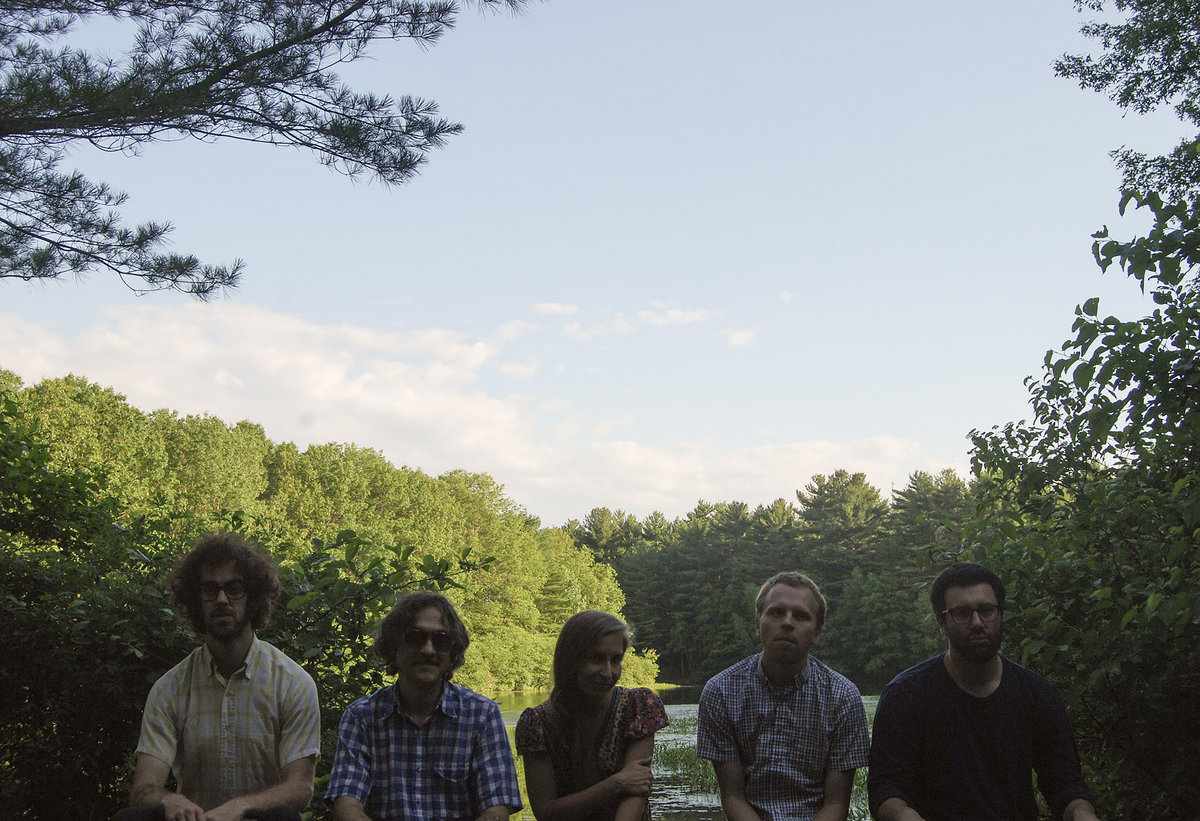
Kindsight is a new act from the Copenhagen indie scene and the first act outside of Sweden to sign with Rama Lama Records (Melby, Chez Ali, Steve Buscemi’s Dreamy Eyes etc.). Last fall, the young quartet released their two very promising debut tracks ‘Who Are You’ and ‘ Terminal Daze’. Two warm, nostalgic and atmospheric indie pop songs that got them praise such as “your new favourite band”. Now, the slow-burner ‘How I Feel’ follows and expands the sound of this promising act.
Kindsight are Nina, Søren, Anders and Johannes and formed out of Nina and Sørens shared love for The Sugarcubes. According to the band, the two of them then recruited drummer Johannes to “drag him out of an unsettling obsession with jazz-music” and bass player Anders was chosen “only because of his looks and his ability to fit into small bags.”.
The quartet makes retro-tinged indie pop that is instantly appealing and addictive. Nina’s vocals crowns the atmospheric soundscape perfectly and makes Kindsight something that’s been missing in Scandinavia for a long time.
Kindsight on ‘How I Feel’: Nina was once gripped by an overwhelming need to tell the world how she felt. Everyone agreed that it seemed like a fair deal, as she is the lead-singer. A longing ballad with a hazy view was built to heed her demand. But as it turns out, Nina hasn’t got a clue how she feels.
How I Feel is out now on all platforms via Rama Lama Records.
Babehoven are a band who featured on the site back in May last year, when they shared the single “Dissociative Tally”. That was originally penned as the first taste of an upcoming EP, “Yellow Has A Pretty Good Reputation”, a record that was subsequently delayed, and will finally see the light of day at the end of this month. The record is the follow-up to last year’s, “Demonstrating Visible Difference of Height”, both EPs being recorded in the band’s current home of Vermont.
Led by singer, songwriter and producer Maya Bon, Babehoven have gradually been growing a following as Maya wound her way between Portland and Los Angeles, honing her craft and using music as a way of, “externalizing my deepest, most vulnerable sense of self through song”. Discussing the inspiration behind Yellow Has A Pretty Good Reputation, Maya has described it as an exploration of, “dissociation, loss, and the quest for self-love”. Musically, this manifests in a certain warped quality, as the warm fuzz of tape-distortion adds a wobbly quality to both Maya’s lightly muffled vocals and the steady rhythmic quality of her guitar playing. Working with producer Ryan Albert, Maya seems to have created an insulated musical world, a place for us all to sit with our discomfort, and learn to come out the other side stronger and more sure of who we are. Keep this up and even yellow might have to bow down to Babehoven and their rapidly burgeoning reputation.
The song writing project of Diane Jean, Clever Girls have subsequently expanded into a four-piece band, based out of Burlington, Vermont. Signed to Egghunt Records, the band have recently announced details of their latest album, “Constellations”, the follow-up to their 2018 debut, Luck. With the album due in March, Clever Girls recently shared the first taste of the record, in the shape of new single, “Baby Blue“.
Like much of Constellations, Baby Blue actually predates the release of Luck, much of the album was written years back when front-person Diane first came-out as a gender-nonconforming person. The album tackles all the complex emotions that come with announcing that to the world, and learning to commit to your own happiness. Discussing Baby Blue, Diane has suggested the track has taken on a new meaning during the current pandemic, focusing in on the isolation Diane felt while stuck inside with only their trusty cat Hank for company, “it was exactly the type of experience that the song was born out of in the first place. The feeling of being isolated, and cut off from the world even when it was still turning“. Musically, Baby Blue has a lush, textural quality and the bristling, 1980’s inspired guitar line, and prominent bass sit in perfect contrast to Diane’s light, dextrous vocal delivery.
Ultimately for all the talk of isolation and loneliness, there’s a sense of euphoria running through the music of Clever Girls, a feeling of coming through the dark time and learning to find delight in the possibility of the light; less a record of feeling alone and more one of learning not to, this is the sound of a songwriter growing into their role and moving their music to a thrilling new place.
When Clever Girls began writing Constellations, it was early in 2018 and they had not yet finished recording what would become their first full length album, Luck. Constellations was primarily an album written between weeks of tour dates, at the height of exhaustion, and amidst self-discovery. Having just come out of the closet as a queer and gender-nonconforming person, one can find the album set in both front-person Diane Jean’s fantasies, as well as the intimate and impressionistic frontier of their every-day personal life. It is an album about a self-corrected second coming of age that was born in the corners of science fiction and projected onto the walls of Jean’s bedroom. Constellations speaks to Jean’s desire for both personal autonomy that they have not yet experienced, but further, the growth often gained in young adulthood that as a closeted queer person, was lost on them.
Johanna Samuels broadens the definition of pop music. The melodically and lyrically focused singer-songwriter stands on the shoulders of the great musicians of the 1960’s and 70’s she manages to create a sound and sense of musical place that is completely her own. Although Johanna Samuels has been sharing her music with the world since back in 2016, there’s a certain buzz around her of late that suggests an artist very much on the up. Back in October, Johanna shared a new single, “High Tide for One”, the first offering from her upcoming Sam Evian-produced album, due this Spring as a co-release between up-and-coming UK label, Basin Rock and Mama Bird Recording Co. The album was recorded in the Castskill Mountains alongside a small band of musicians, and features guest vocals from a stunning array of female singers, including the likes of A.O. Gerber, Lomelda and Courtney Marie Andrews.
Born in New York, and named after a Bob Dylan song, Johanna’s path to music was never really in doubt. After re-locating to Los Angeles, Johanna has spent the best part of a decade honing her song writing craft and learning to find a way to balance her inherent way with a melody while crucially finding plenty to say. Thankfully, High Tide for One was a particularly exciting example of Johanna achieving exactly that. The track was written in response to watching Dr. Blasey Ford’s testimony against Supreme Court nominee Brett Kavanaugh, as Johanna recalls, “it felt a bit hopeless. I felt exhausted, and for a while, I didn’t have the strength to explain it or try to talk it through with anyone who wasn’t working to change it”. These feelings are set to a perhaps contrastingly lush backing, as warm Rhodes-piano and a gorgeous-meander of slide-guitar, the breeziness of the musical backing set against the steely quality of the vocal, as she sings, “last night I saw that man on TV, his tears tasted like silver bullets and supremacy“. It may only be a single track, yet there was plenty within it to suggest Johanna Samuels might just be one of 2021’s most important musical voices.
Released October 27th, 2020 2020 Mama Bird Recording Co.
An emerging new talent on the Glasgow music-scene, Lizzie Reid has previously caught the ear of the likes of 6Music, The Line Of Best Fit and The Great Escape festival. Signed to Seven Four Seven Six, home to the likes of Matt Maltese and Matilda Mann, Lizzie has recently announced the release of her debut EP, “Cubicle”, which will arrive next month.
Ahead of the EP’s release, Lizzie has already shared a number of tracks from “Cubicle” from the pensive introspection of “Always Lovely” to the beautiful break-up anthem, “Seamless”, with its gorgeous string-led crescendos. Last week Lizzie shared the latest offering, “Been Thinking About You”, adding a certain jazzy-flourish to her acoustic led compositions as she sings a tale of admiration for a friend who, “was such a support for me at a time I wasn’t feeling my best”.
Perhaps the most exciting thing about Lizzie Reid’s music is the progress it is already showing; with every new song, she seems to take us, as listeners, to somewhere different, the sign of an artist in charge of her own vision, and increasingly sounding like someone for whom acclaim is an inevitability.
Lizzie Reid under exclusive license to Seven Four Seven Six
Released on: 13th January 2021 Author: Elizabeth Reid-Boulter
Founded in New Haven in 2016 Headroom is a project initiated and headed by guitarist Kryssi Battalene. With changing collaborators on her side the band is offering psychedelic and partially trippy songs with a proper noise factor due to some distorted guitars as a special trademark.
When it comes to grandiosity, Pete Townshend takes the cake. He’s always had huge ambitions, as his numerous concept albums—both with The Who(Tommy, Quadrophenia, the abandoned Lifehouse project, and on his own—demonstrate. And I suppose I always took it he had an ego as big as his ambitions. But what is one to make of his 1972 debut solo album, “Who Came First”, on which he turns things over on two of the LPs nine tracks to other people? And performs a third song he didn’t even write? Certainly that’s an act of humility, if not abject self-abasement.
And Who Came First isn’t particularly ambitious, either: he throws on a song that would later appear on The Who’s Odds and Sods, along with a prayer set to music for his spiritual guru Meher Baba, and so on. But there’s something becoming about Pete’s laid-back approach on Who Came First he’s not trying to conquer the world for once, just to be content in it. And the LP includes a cool bunch of tunes that you’re guaranteed to love, even if “Parvardigar” (his salute to Meher Baba) isn’t one of them.
Pete isn’t entirely without ego. While he admirably declined to fill the studio with a star-studded cast of ringers, he went too far in the other direction, recording almost the entire LP all by his lonesome. The great Small Faces/Faces bassist and singer Ronnie Lane makes a cameo, as do musical gadfly Billy Nicholls and percussionist Caleb Quaye, best known for his work with EltonJohn and Hall & Oates, and that’s it. Townshend even plays the drums, adequately if not inspired, and who knew? I wouldn’t be surprised to find out that he also took charge of mopping the studio WC.
Opener “Pure and Easy” is real pretty, lovely actually, but it doesn’t measure up to The Who version on Odds and Sods, with its powerhouse closing and great drumming by Keith Moon. But Pete’s take is still quite nice, and well worth a listen, for his guitar solo, his equally cool keyboards, and the song’s takeout, which features some nice drumming and Townshend repeating, “There once was a note, listen,” which may be cooler on The Who version, but still packs a punch here.
Next up is Ronnie Lane’s homespun “Evolution,” on which Townshend contributes guitar. It’s not one of Lane’s best songs, but the guitar work is stellar, and you can’t beat Lane’s great vocals (and the enthusiasm he demonstrates) with a stick. The two always worked well together, and I can’t help but think a duet would have been sweet.
Billy Nicholls’ “Forever’s No Time At All” follows, and opens with a funky beat, complete with Townshend’s drumming and handclaps. Nicholls sings in a high voice, the tune sounds like great AM radio, and no way would anyone anywhere identify this baby as a Townshend song. And no wonder, as he hardly lifts a finger. “Nothing Is Everything (Let’s See Action)” is a great tune that The Who would later release as a single.
It has great propulsion, and makes you want to dance, and Townshend’s impassioned vocals and nice guitar solo work their magic until the song’s midsection, when things slow down long enough for Pete to admit that he doesn’t know where he’s going, but that’s all right with him. Then he practically goes Beach Boys on your ass, before the song takes off again, Pete backing himself on vocals, singing “Nothing is” before following himself with an echoing “Everything.” Nice. Nicer even, in my opinion, than The Who’s piano-dominated version, although the vocals on the latter are more top of the pops.
“Content” was co-written by Townshend and Maud Kennedy (another Baba acolyte) and features some lovely piano and Townshend at his most tender and devout. A quiet song with great guitars and Townshend’s voice dissolving into an echo, it’s over before you know it, and while I don’t particularly like the content (I have a low threshold for spiritual claptrap) I’m happy if he’s happy, and I just do my best not to listen to the words.
Pete’s cover of Ray Baker’s country tune “There’s a Heartache Following Me” is divine, with its keyboard and guitars and Pete’s vocals sounding as delicate as cut glass. I love the instrumental interlude, and I’d love to know who joins him on the second half of the song, but the album credits are taking the Fifth. Pete’s choice of a country cover might seem odd, but he proved he could work in the idiom on collaboration with Ronnie Lane on “When the Rivers All Run Dry” on 1977’s Rough Mix. “Sheraton Gibson” is a natty up-tempo tune with Pete sitting in the Cleveland Sheraton playing his Gibson and wishing he was home, and he does some cool stuff on the synthesizer and if it’s not a great song it’s a damn good one.
“Time Is Passing” is a bouncy domestic idyll with a catchy melody and a great bridge, some very delicate keyboards, and nice lyrics, and it all builds to a climax in which he declares it’s only through his music that he’ll be free. Which brings us to the mawkish closer “Parvardigar,” a Baba Meher prayer set to music. It’s a nice enough tune, a bit on the repetitive side, and almost sucks me in when Pete gets all passionate about his God’s attributes. Then he sings, “Before you we cower” and I turn my ears off, because there’s nothing that irks me, a devout agnostic, like a vindictive God. I have to handle it to Pete, though; the song builds to several nice climaxes, and they come close (but not close enough) to reconcile me to what amounts to a sermon set to music.
Several subsequent versions have emerged with bonus tracks, but none of them move me. He performs a version of “The Seeker” that is decidedly inferior to The Who version, and as with “There’s a Heartache Following Me” I’d love to know who’s singing along with Townshend on the song. And the Who Came First version also demonstrates the supernatural talents of the late Keith Moon; without him, the song lacks whump and urgency, and who wants that?
Pete Townshend is one of the immortals—I’d grant him that status based on “Baba O’Riley” and “Won’t Get Fooled Again” alone—and it’s nice to hear him in a more relaxed mode. Well, sort of nice. I’ve always put him in the same category as Bob Dylan; to wit, they’re both artists who have done their best when they were discontented, scornful, lost, you name it. A happy PeteTownshend is a good thing for Pete Townshend, but not particularly for the rest of us. In the gutter looking at the stars; to use Oscar Wilde’s words, that’s where Townshend has always done his best work. He’s the seeker, and his contentment is, alas, our loss.
Formed in Buckinghamshire, the dreamy-pop quartet Bleach Lab have subsequently relocated to South London, where they’ve been squirrelled away working on the tracks that make up their debut EP, “A Calm Sense Of Surrounding”, out later in the Spring. After the break-out moment that was their last single, “Never Be”, which was something of a sensation with the online blogging community, this week the band have returned with a brand new single, “Old Ways”.
Discussing the inspiration behind Old Ways, vocalist Jenna Kyle has suggested it is about, “the angry side of the grieving process at the end of a relationship”, and how that anger is aimed both at the way the other person treated you, and, “towards oneself for still missing them regardless”. The band’s exploration of a relationship in collapse is set to a backing of lush, textural guitars and distant rumbling drums, a perfect back-drop to Jenna’s soaring vocal, reminiscent of the likes of Night Flowers or Winter Gardens. As the band note, anger is the first stage of grief; with the rest of the record they seek to explore the other stages, and while that might not be the easiest journey, it’s going to be intriguing to follow Bleach Lab every step of the way.
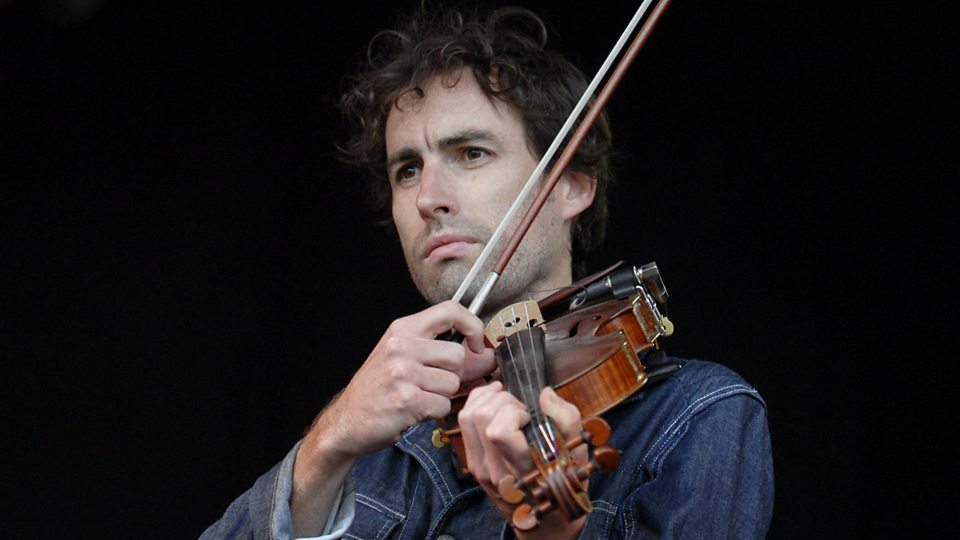
It’s been a joy to hear the music of Andrew Bird shift and change. Bird’s early music, from the late ’90s, was steeped in hot jazz and blues music from the early days of the phonograph, then later shifted to new technologies using loop pedals to layer voice, whistling and violin. His lyrics often have a calculated quality, filled with abundant wordplay and observations. Last year, Bird made one of his most personal albums, “Are You Serious”. So it felt appropriate that he would play some of his most personal work in this most intimate of settings, the Tiny Desk Concert. For this performance of three new songs, Bird came with a stripped-down acoustic band: just drums, upright bass and acoustic guitar, with Bird himself on violin. It functioned something like a hot jazz ensemble, with no effects pedals; just the songs, front and centre, sounding perfect.
When you watch the video for “Badlands” the first single from Cristina Vane’s forthcoming debut LP Nowhere Sounds Lovely, the first thing that catches your eye is the bottleneck on her finger. Like a young Bonnie Raitt, Vane sings from both her voice and her supple, bluesy guitar playing almost simultaneously–her sound as earthen as the South Dakota landscape with which she sings about on “Badlands.”
“This song was an exercise in trying to capture the energy of a place,” Vane says about the song. “Until this record, I seldom wrote about anything besides human emotion and relationships. My first cross-country tour lasted five months, and opened up my experiences to visions and sensations I had never seen or felt. Contemplating a place like the Badlands of South Dakota for the first time inspired me to write a song to do it justice.
“Out of the flat, wind-strewn setting of the prairie, the Badlands emanate and draw your attention to them immediately, much like the swallows that seemed drawn to my car as I drove through long stretches of the Dakotas (hence, ‘dead birds’),” she continued. “You are constantly seen, for there is nowhere to hide on the plains. The toughness of the weather and soil year around, paired with the menacing, jutting, mineral rocks are what give the Badlands their name, and they are what birthed this song.”
Yet Nowhere Sounds Lovely was recorded in Tennessee, where Vane and an A Team of studio pros–including bassist Dow Tomlin, Tommy Hannum on pedal steel and fiddle man Nate Leath among others–convened inside The Embassy in Leipers Fork with acclaimed producer Cactus Moser to create an album that chronicles her first cross-country trip in the United States.
I had hit a wall in Los Angeles trying to pursue music and decided it might be worth seeing if other people around the country respond to it, Having been born and raised in Europe, it was a way for me to get closer to understanding my American side as well as to reconnect with my musical purpose- to connect with and inspire people through performance. I recorded Nowhere Sounds Lovely pretty soon after ending the tour and deciding to move to Nashville, and I think it reflects elements I gleaned from my travels and discovering country and bluegrass music so late in my life.”
Nate Leath layed down some really impressive fiddle, and I would never have thought to include that on my previous records,” she proclaims. “Similarly, Tommy Hannum plays pedal steel and dobro on the record. ‘Dreaming of Utah’ and ‘Satisfied Souls’ are both waltzes which nod to the classic country style.
Born in Italy to a Sicilian-American father and a Guatemalan mother, Cristina Vane has always had a tenuous relationship with geography. She grew up between England, France and Italy, and was fluent in four languages by the time she moved to her fathers’ native United States for university at the age of 18. And when you listen to “Badlands” and watch its accompanying video.
Vocals, and guitar – Cristina Vane Percussion- Cactus Moser Bass – Dow Tomlin Pedal Steel- Tommy Hannum “Nowhere Sounds Lovely” comes out on April 2nd.