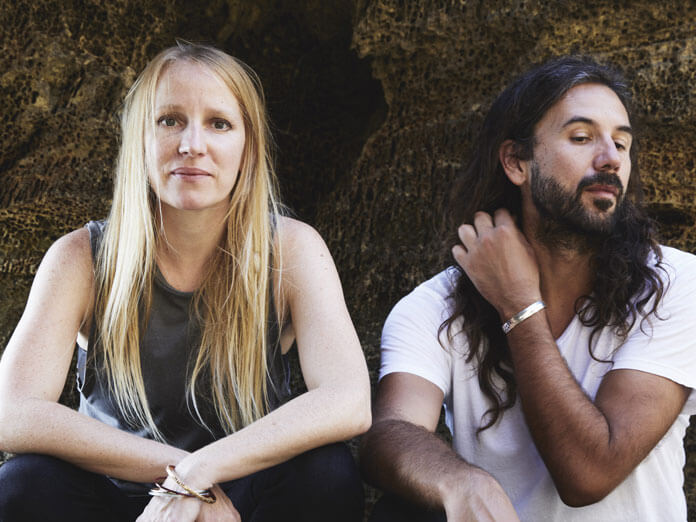
As unexpected as it is to find Luluc closing out 2020 sharing a producer with pop behemoth Taylor Swift, it seems like a fitting end to this liminal, otherworldly year. The kinetic Aaron Dessner beat that opens the Australian duo’s fourth album is as much of a departure from the more muted tones of their previous work as its siblings brought to folklore – and yet, just as those propelled Swift’s heroine east from St Louis, this synthesised pulse also takes the listener on a journey.

The opening “Emerald City” began in a world halfway between the Melbourne of Luluc’s beginnings and the Brooklyn the duo have since come to call home: in Berlin in August 2018, where, on an invitation from Dessner, Zoë Randell and Steve Hassett flew out to perform at the PEOPLE festival. There, in an old East German radio-station-turned-venue-and-studio, the frequent collaborators – together with drummers JT Yates and Jason Treuting, and CJ Camerieri on trumpet – sought to translate the restless energy of the streets of New York into music.

Friends, festivals, transatlantic flights: the “Emerald City” origin story couldn’t be further from the Australian coast where Randell and Hassett finished mixing the album, seeing out the pandemic in isolation. And yet the thread that runs through “Dreamboat” is primarily an introspective one: of wild horses and weatherbirds, Wizard Of Oz metaphors and waking in the night. Luluc’s dream world, like the real one, is still complicated: at times as idyllic as the vision of “blue water and sunshine” in the Carpenters-esque “Dreaming”; at times a claustrophobic nightmare roping you in against your will.

The frantic buzz of that opening track is straight from the fast-paced, pre-pandemic world in which it was occasionally played live – but the anxieties tied up in its frenetic layers, punctuated by panicked bursts of trumpet, will be familiar to anyone who has lain awake these past few months, “tumbling and twisting” with “too much” in their head. The song is a stream of consciousness set in those anxious moments before sleep; above the noise, Randell’s voice a steady ship, with lines that seem prescient now. “Like Dorothy on the run,” she sings, “breaking my will, I stay in”.

The track is one of two to feature a Dessner co-production credit, Randell and Hassett handling the majority of the album solo. Combined with their decision to release independently rather than through long-time label Sub Pop – an amicable decision, Randell explains, driven by the duo’s desire to release this music into the world at their own pace – the implication is of full creative control. The simplicity at the core of the duo’s song writing remains intact, but the confidence that comes with experience allows them to lean into different choices as the songs dictate, be it duelling drummers, tenor saxophone or a touch of New York jazz guitar.

Wurlitzer and walking bass lend “Hey Hey” a vintage country feel, jazz drummer Dalton Hart working with Hassett to keep the song at a simmer until a melodic burst of sunshine shoots through the middle. “Weatherbirds” is built around another Dessner beat, but it’s the brightness of Hassett’s guitar and backing vocals that carry the song; and Arcade Fire touring member Stuart Bogie’s saxophone brings the pink flush of sundown to “Out Beyond”, a harmonious Randell-Hassett duet from the edge of the world.

http://

But sometimes, the songs call for nothing at all. “All The Pretty Scenery”, a feather-light beauty in which the narrator’s gaze turns from her own interior world to that of another, features only Randell and Hassett, some vocal doubling the closest thing to trickery. “Gentle Steed”, recorded live in Berlin with Hassett on piano and Caimin Gilmore on double bass, falls somewhere between old folk song and mythology, Randell’s vocals timeless and pure. Her voice carries something of a myth-making quality in its timbre, making the everyday details that creep into her lyrics – a reference to “booze”, an affectionate “my man” designation for a partner – twice as charming.

The real world creeps in as it must: as the sound of cars “rolling their way into my notebook” among the diary-esque lyrics of “Hey Hey”; in the shape of an arachnid in “Spider”. But behind it all, a self-possessed Luluc in isolation, daydreaming of friends apart until they can once again cross the sea.

“Dreamboat” released through Sun Chaser Records  October 23rd, 2020

See the source image

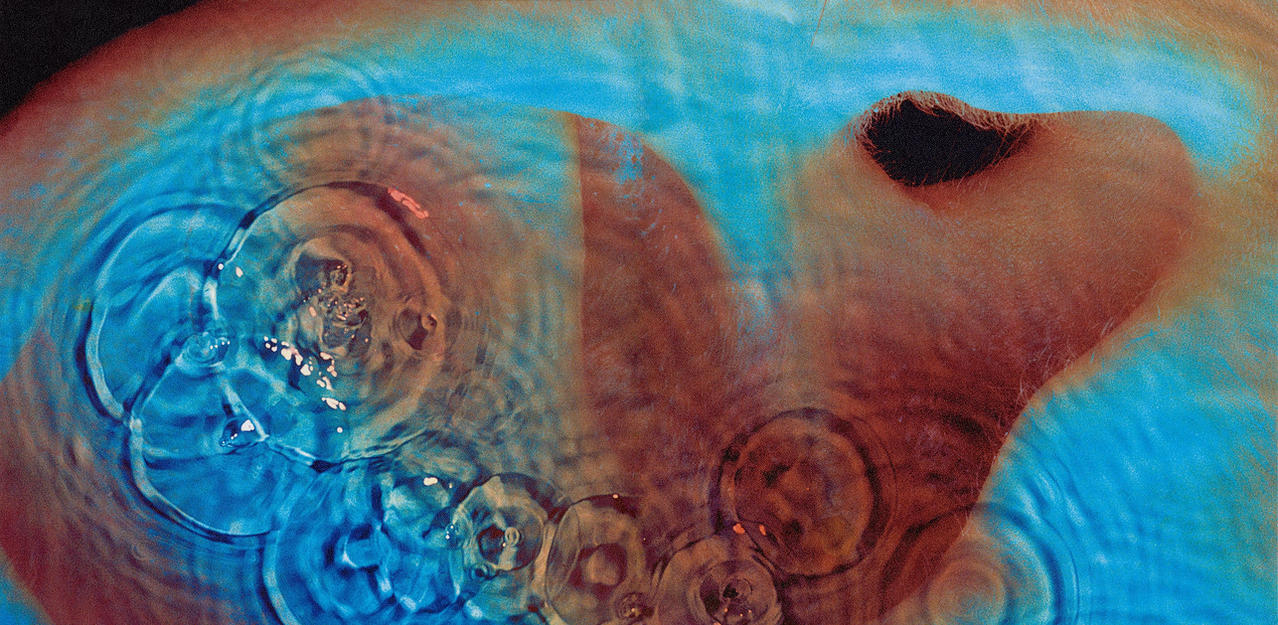
‘Meddle’ didn’t have a very auspicious start, having evolved out of a series of experiments in music making with everyday objects titled ‘Nothings,’ ‘Son of Nothings’ and then ‘Return of the Son of Nothings.’ Yet, in exploring so far outside of the realm of the every day, they were clearly onto something. ‘One of These Days’ and ‘Echoes’ (both featuring weirdly involving instrumental elements) became signature favorites, while an unused song evolved into ‘Brain Damage’ for ‘The Dark Side of the Moon.’ They were mere steps away from greatness.

Arriving bereft of ideas, Pink Floyd did something that was becoming increasingly rare on Meddle: They collaborated together in the studio.

At first, this didn’t lead to much. The album, before its arrival on October. 31st, 1971, was actually known as Nothing, Parts 1-24. Recorded in a series of locales around London between concert dates, Meddle eventually came together with help – both instrumentally and lyrically – from all four members, a stark contrast to the Roger Waters-dominated albums to come in the ’70s.

“When we started on Meddle, we went into it with a very different working basis to any previous album in so much that we went into the studios with nothing prepared, and did a month of – well, we just called them nothings,” Nick Mason said Ted Alvy of KPPC-FM in 1971. “I mean, they were ideas that were put down extremely roughly. They might have been just a few chords, or they might have been a rhythm idea, or something else – and this was just put down, and then we took a month and examined what we got.”

What emerged was the bridge between their earliest recordings and the career-making triumph of 1973’s The Dark Side of the Moon. Meddle still boasted the wide-open improvisational gumption of transitional albums like 1968’s A Saucerful of Secrets, 1969’s Ummagumma and 1970’s Atom Heart Mother, but their focus started to narrow. In some ways, the LP represents the best of both worlds.

They got there together, swapping musical ideas and – in the case of the album-opening “One of These Days” – even swapping places. David Gilmour took up the bass as the song opens, before being joined by Waters. (You’ll notice the second double-tracked instrument has a flatter sound. “We didn’t have a spare set of strings for the spare bass guitar, so the second bass is very dull sounding,” Gilmour told Guitar World in 1993. “We sent a roadie out to buy some strings, but he wandered off to see his girlfriend instead.”) Mason takes a rare vocal turn on “One of These Days,” as well.

A swirling breeze links that song to the tender “A Pillow of Winds,” which was inspired by time spent by Waters and Mason with their wives in the south of France. Waters’ “San Tropez” – the only song here not co-written with Gilmour – also recalls trips to the French Riviera. Together, Pink Floyd bring an impish humor to songs like “Fearless,” which features a field recording of a Liverpool soccer club singing “You’ll Never Walk Alone” – forcing Pink Floyd to co-credit Rodgers and Hammerstein – while “Seamus” includes the howling of Small Faces/Humble Pie vocalist Steve Marriott’s dog, whom Gilmour was watching.

Meddle will always be defined, however, by its side two-encompassing closing track, “Echoes.” The song, which stretched to 23 minutes, again grew out of a collaborative moment – this time onstage, when the song was reportedly introduced as “Return of the Son of Nothing.”

Richard Wright wrote the long piano intro and the chord progression, while Waters added lyrics – after coming up with the idea of running Wright’s original “ping” sound through a Leslie rotating speaker. Gilmour achieved the seagull sounds by reversing the inputs on a wah pedal.

“Things like ‘Echoes’ would be all of us in a rehearsal room, just sitting there thinking, playing – working out ideas to see if they went anywhere,” Wright told Rolling Stone in 1987. “It’s a nice way to work – and I think, in a way, the most ‘Floyd-ian’ material we ever did came about that way.”

“Echoes,” which later provided the title to a career-spanning retrospective, was Pink Floyd’s breakthrough moment. An complex and stirring finale, “Echoes” holds together as one narrative piece, unlike the lengthy title track from Atom Heart Mother.

‘Meddle’ (1971): “Echoes”

Pink Floyd spreads way, way, way out on this extended epic – at 23-plus minutes, the length of an entire side of vinyl. It’s not the duration of “Echoes” that’s noteworthy, only that the extra running time allows for such a wealth of noises and ideas. If the early, psychedelic Floyd stuff was “space rock,” this is “deep sea rock,” and just as enchanting. Wright creates a submarine-like “ping” while Gilmour dreams up a pod of whales by plugging a wah-wah pedal in backwards. Nick Mason guides the ever-changing song, and Roger Waters writes of wind, water and, more importantly, humanity. The band believed this mix of outward-looking lyricism and dynamic sounds was the stepping stone to full album suites, like Dark Side of the Moon. (And, if you agree with Waters, this descending chord motif led to Andrew Lloyd Webber’s Phantom of the Opera.)

“I think ‘Echoes’ is the masterwork of the album – the one where we were all discovering what Pink Floyd is about,” Gilmour told Guitar World. “Meddle is really the album where all four of us were finding our feet – the way we wanted Pink Floyd to be, much more than on Ummagumma or Atom Heart Mother. Although Atom Heart Mother has some pointers and directions as to where we would finally go, it’s not as important as Meddle was.”

Even though Meddle reached No. 3 in the U.K., the U.S. was proving a tougher market to conquer. The album actually finished 15 spots further back from Atom Heart Mother, at a paltry No. 70. Still, the stage was set – as evidenced by the appearance in these sessions of “Brain Damage,” which would later help close out The Dark Side of the Moon.

“All those stages are part of a general evolution, made of progression and dead times,” Mason mused in 1973, as Pink Floyd found themselves finally on the cusp of superstardom. “They weren’t exactly succeeding experiments, but rather exercises about a particular aspect of music, so you could evolve after that. Anyway, we never did an album saying, ‘That’s it, we reached the zenith.’ On the contrary, we always asked ourselves: ‘What will we do next?’”

Pink Floyd’s sixth album was a turning point of sorts, as the band inched closer to more structured songs, as opposed to the atmospheric set pieces that dominated their previous records. ‘Echoes,’ ‘Meddle”s highlight, still runs more than 23 minutes, but its mix of long instrumental passages and vocal patches is a precursor to the career-changing ‘The Dark Side of the Moon.’

Pink Floyd, released on 31st October 1971 by Harvest Records.

See the source image

Black Pumas have shared The Electric Deluxe Sessions , a new EP featuring reimagined versions of three of the group’s hit songs and a cover.

The Amazon Music-exclusive release contains new takes on “Colors”, “Fire”, “You Don’t Know Better”, and Jimmy Webb‘s “Wichita Lineman”. This new EP follows Black Pumas’ Grammy-winning, self-titled debut album from 2019. The Electric Deluxe Sessions finds the Austin-bred soul-psych duo consisting of Eric Burton and Adrian Quesada examining themselves and the direction of their short career. Even as the songs are already familiar, Black Pumas are able to make them into something completely new while still containing many of the musical hallmarks that took the group’s debut album to the top of Billboard‘s Heatseekers Album chart. “When we recorded the record [Black Pumas] we’d only been working together for a few months,” Quesada said in a press statement shared with this week’s release. “All the touring we did over the last year, the live show has elevated all the songs arrangement-wise, everyone gets to shine a little bit and we don’t get to put that down too often.”

The EP’s only new offering, which is ironically a cover, features Black Pumas taking on the Webb tune that has been made famous by Glen Campbell, The Meters, and more. This “Wichita Lineman” contains a more classic kind of Black Pumas, with Burton adding a vintage crooner flair to his vocal stylings. Meanwhile, the background floats with reverberated guitar melodies that further add to the feelings of nostalgia that make Black Pumas an anomaly of new-age sounds combined with vintage techniques.

Genesis reveal brand new behind-the-scenes rehearsal photos

Genesis have released a teaser video of the band in rehearsal for their upcoming The Last Domino tour. The new clip, which features the band performing the intro to “Behind The Lines” from The 1980’s album “Duke”, it gives fans a chance to view a very impressive looking stage set and lighting rig. Tony Banks, Phil Collins and Mike Rutherford are joined by longstanding live guitarist/bassist Daryl Stuermer and Collins’ son Nic on drums. Two male backing vocalists are also visible. Yesterday the band announced that they’d rescheduled their dates to September and October due to ongoing problems with Covid-19. The band originally announced the dates for November last year back in March of last year, and have already rescheduled once, moving the dates to April.

“The decision to move the tour again is due to the global pandemic, and even with the roll out of the vaccine, there are still a huge amount of uncertainties and unanswered questions that make a tour in April difficult for everyone,” the band said in a statement. “It is appreciated, that for whatever reason, those planning on attending the shows may not feel comfortable doing so, so by moving the tour we can alleviate some of those concerns and in turn that will allow the band and the crew to prepare with less unpredictability and create a show that both the band and fans alike will treasure and enjoy.”

The Last Domino? tour will be the first gigs Genesis have played since 2007, with Phil Collins previously saying: “There were more reasons to do it than not to do it. If we had to do it the way we used to tour, I don’t think I’d be doing it. But nowadays it can be done differently, and I’ve been doing that for the last couple of years.”

Genesis are re-scheduling their April UK and Irish tour dates for autumn 2021 in light of the ongoing pandemic. ‘The Last Domino?’ Tour 2021 will now start in Dublin on 15th September and is set to be Tony Banks, Phil Collins and Mike Rutherford’s first live outing together since the globe-trotting, sell-out ‘Turn It On Again: The Tour’ in 2007. They will be joined on stage by Nic Collins on drums, and the band’s long time lead guitar and bass player Daryl Stuermer.

No photo description available.
JS ROSE GRAPHIC.jpg

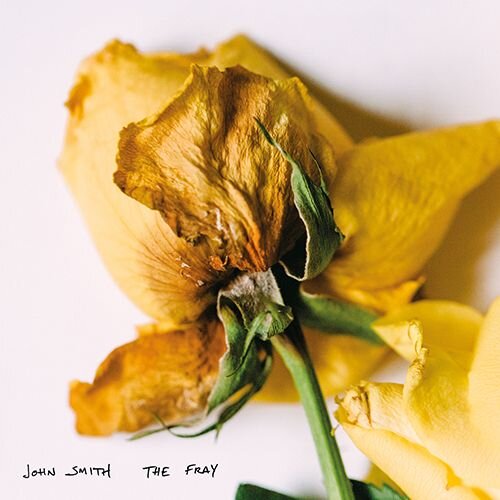
I think we all had a tough time of it last year. I felt myself going through the mill, along with so many others. However, the experience resulted in a new collection of songs. Songs about love, loss and ultimately hope. And so my new album ‘The Fray’ will be released March 26th on Commoner Records/Thirty Tigers worldwide. Recorded at Real World Studios in Wiltshire and produced by Sam Lakeman and myself, ‘The Fray’ features guest performances from Sarah Jarosz, Bill Frisell, Lisa Hannigan, The Milk Carton Kids, Jess Staveley-Taylor and Courtney Hartman. Ordinarily I would hit the road for fifty nights to tour a new record. For this release however, I’ve put together a bunch of special signed pre-order packages, available only through my website. There are T-Shirt bundles, exclusive recordings, guitar lessons, private concerts, a high-quality ticketed livestream event on the weekend of release and more. ‘The Fray’ comprises twelve of the most personal and, I think, the most honest songs I’ve ever written. I can’t wait for you to hear it.

Born in Essex, raised by the Devon seaside, and making his bones in the bars and clubs of Liverpool, John has released five albums with over 33 million Spotify streams.  He has played to audiences all over the world in living rooms, festival tents and sold-out concert halls. He is a genuine folksinger, an inquisitive truth-seeker, devoted song interpreter and enchanting writer.

Steeped in the lineage of British folk, taking his cue from Richard Thompson and John Martyn, Smith has evolved a transatlantic blend of fingerstyle and slide guitar techniques. John’s intimate takes on love, loss and the journey we make, combined with his innovative guitar work, have won him a loyal following.  His honey-on-gravel voice and mesmerizing fingerstyle guitar are undeniable. Sometimes using a slide, sometimes with guitar on his lap, sometimes detuning mid-song, John Smith’s obsession with the instrument has made a master of him. Whether by way of album or concert, he leads the listener, enthralled in his presence, on a viscerally emotional journey.

My new record ‘The Fray’ will be released March 26th on Commoner Records/Thirty Tigers worldwide! Ordinarily I would hit the road for fifty nights to tour a new record, but for this release I’ve put together a bunch of special signed pre-order packages, available only through my website.

May be an image of ‎text that says '‎THIRTY ی TIGERS #STORYTELLERS AMERICANAFEST UK 2021 STAYING CONNECTED Hosts: Emily Barker Robert Vincent LIVE PERFORMANCES BY Jason Isbell and the 400 Unit, Lucinda Williams Blackberry Smoke, The Mavericks, Brent Cobb Charley Crockett, Emily Barker, Lucero Robert Vincent, Darlingside, Tre Burt, John Smith Diana Demuth, Ida Mae JANUARY 26 -9.30 PM Get your tickets now! theamauk.or NN COWBOY Orchard‎'‎

Beast of a lineup, this. It’s happening on my birthday & I always wanted to open for Jason Isbell – so it’ll be a nice start to a fresh trip around the sun. I hope to see you there! Thirty Tigers & Americana Music Association UK

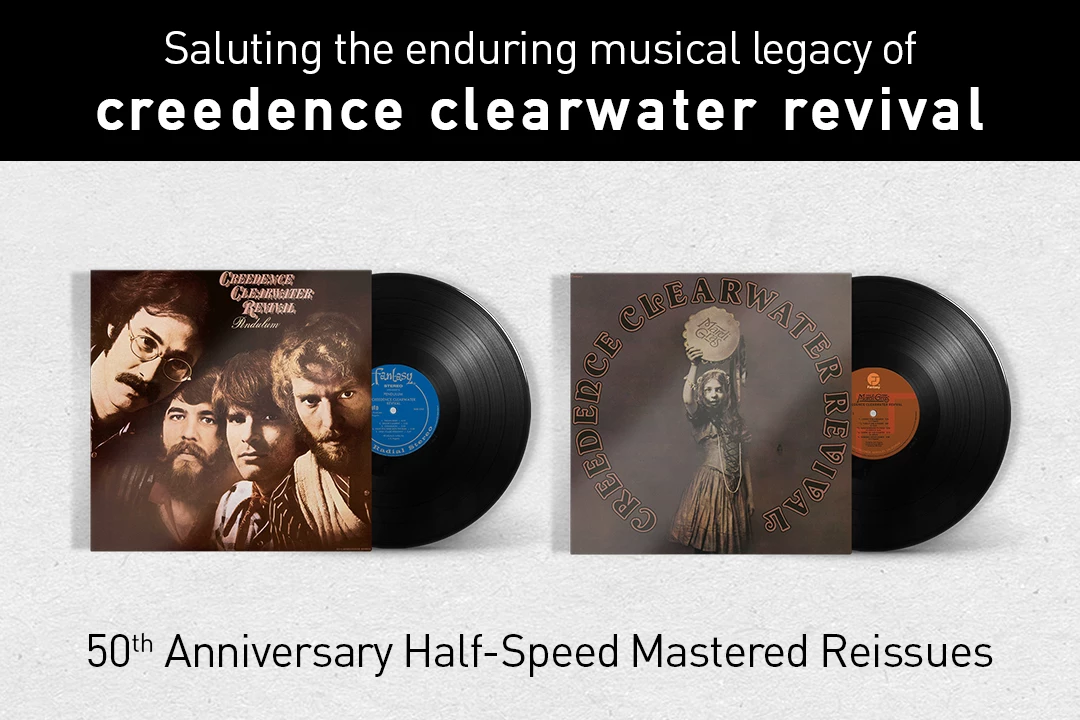
Craft Recordings continue their salute to the enduring musical legacy of Creedence Clearwater Revival with the official release of half speed mastered editions of the band’s two final albums: 1970’s Pendulum and 1972’s Mardi Gras.

Continuing the 50th anniversary celebration of America’s all-time greatest rock ‘n’ roll band, with the release of 180-gram, half-speed mastered editions of Creedence Clearwater Revival’s final two studio albums; 1970’s Pendulum and 1972’s Mardi Gras. Both LPs were mastered at Abbey Road Studios and come housed in beautifully crafted jackets replicating the albums’ original packaging.

Pendulum marked CCR’s second release of 1970—following Cosmo’s Factory—and was the group’s sole record to feature all original material. The album found the guitar-heavy group expanding their sonic palate—experimenting with new sounds (including the use of saxophones, vocal choirs, and keyboards) and even venturing into psychedelia. Pendulum spawned two global Top Ten hits: “Have You Ever Seen the Rain” and “Hey Tonight.”

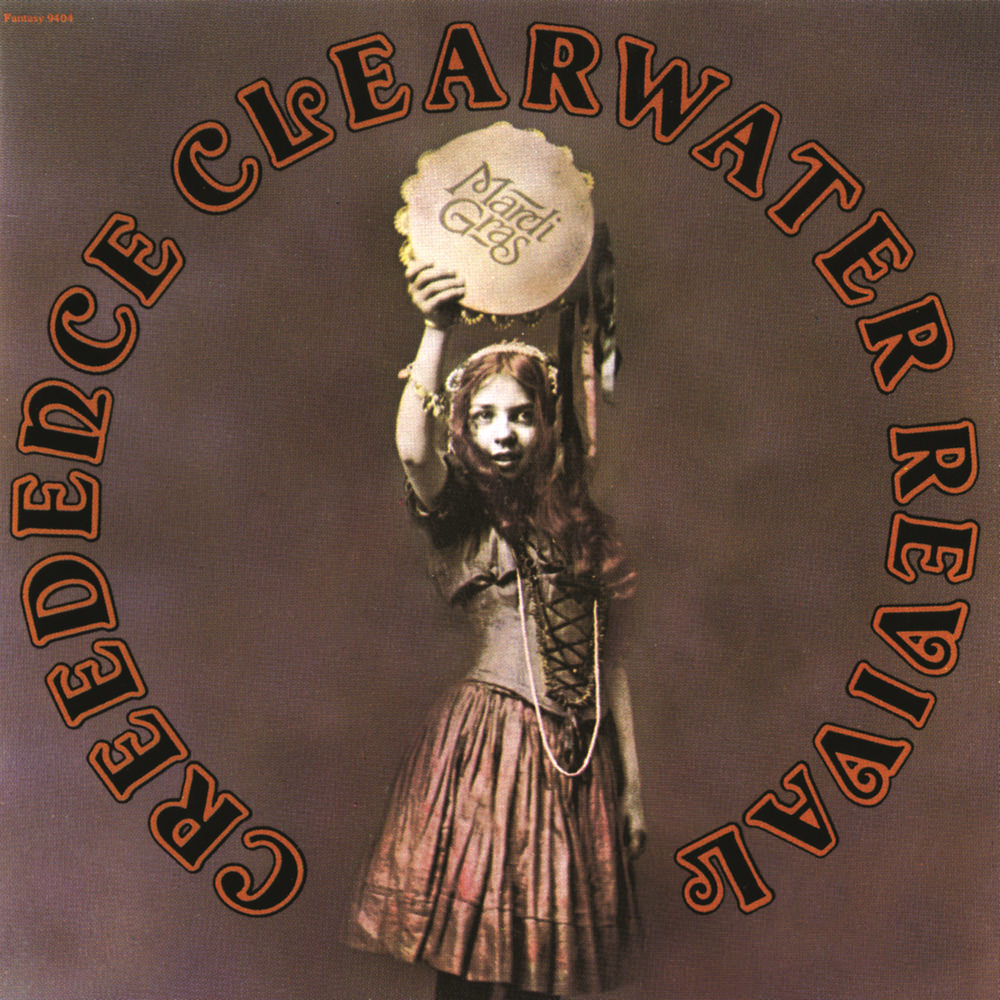
CCR’s seventh and final studio album, Mardi Gras, followed the departure of founding member and rhythm guitarist Tom Fogerty. Highlights off the album include a cover of the rockabilly classic “Hello Mary Lou,” as well as the John Fogerty-penned rocker “Sweet Hitch-Hiker.” The poignant “Someday Never Comes,” meanwhile, marked the group’s final single.

Roughly half a century later, fans can enjoy a new vibrancy when they revisit these albums, thanks to the exacting process of half-speed mastering. Working from high-res transfers from the original analogue tapes, the half-speed mastering technique allows more time to cut a micro-precise groove, resulting in more accuracy with frequency extremes and dynamic contrasts. The result on the turntables is an exceptional level of sonic clarity and punch.

Both titles are available now via Craft Recordings. 

See the source image

Pendulum

50th anniversary pressing of the penultimate studio album from America’s greatest rock ‘n’ roll band; first released in 1970 at the peak of Creedence’s prolific career. Includes the hits “Have You Ever Seen The Rain,” “Hey Tonight” and more. The album was mastered at half-speed at Abbey Road Studios, benefiting from an exacting process that allows for an exceptional level of sonic clarity and punch. This 180-gram vinyl comes housed in a tip-on jacket replicating the original pressing packaging. During 1969 and 1970, CCR was dismissed by hipsters as a bubblegum pop band and the sniping had grown intolerable, at least to John Fogerty, who designed “Pendulum” as a rebuke to critics.

He spent time polishing the production, bringing in keyboards, horns, even a vocal choir. His songs became self-consciously serious and tighter, working with the aesthetic of the rock underground Pendulum was constructed as a proper album, contrasting dramatically with CCR’s previous records, all throwbacks to joyous early rock records where covers sat nicely next to hits and overlooked gems tucked away at the end of the second side. To some fans of classic CCR, this approach may feel a little odd since only “Have You Ever Seen the Rain” and maybe its B-side “Hey Tonight” sound undeniably like prime Creedence. But, given time, the album is a real grower, revealing many overlooked Fogerty gems. Yes, it isn’t transcendent like the albums they made from Bayou Country through Cosmo’s Factory, but most bands never even come close to that kind of hot streak. Instead, Pendulum finds a first-class songwriter and craftsman pushing himself and his band to try new sounds, styles, and textures. His ambition results in a stumble — “Rude Awakening 2” portentously teeters on the verge of prog-rock, something CCR just can’t pull off — but the rest of the record is excellent, with such great numbers as the bluesy groove “Pagan Baby” the soulful vamp “Chameleon” the moody “It’s Just a Thought,” and the raver “Molina” Most bands would kill for this to be their best stuff, and the fact that it’s tucked away on an album that even some fans forget illustrates what a tremendous band Creedence Clearwater Revival was.

See the source image

Mardi Gras

50th anniversary pressing of the final studio album from America’s greatest rock ‘n’ roll band; first released in 1972. Highlights include a cover of “Hello Mary Lou,” as well as the Fogerty-penned rocker “Sweet Hitch-Hiker”a Top Ten hit in the US, Australia, Canada, and across Europe. The poignant “Someday Never Comes,” marked the group’s final single. Mastered at half-speed at Abbey Road Studios, benefiting from an exacting process that allows for an exceptional level of sonic clarity and punch. This 180-gram vinyl comes housed in an embossed jacket replicating the original packaging. Pared down to a trio, Creedence Clearwater Revival had to find a new way of doing business, since already their sound had changed, so they split creative duties evenly. It wasn’t just that each member wrote songs  they produced them, too.

Doug Clifford and Stu Cook claim John Fogerty needed time to creatively recharge, while Fogerty says he simply bowed to the duo’s relentless pressure for equal time. Both arguments make sense, but either way, the end result was the same: “Mardi Gras” was a mess. Not a disaster, which it was dismissed as upon its release, since there are a couple of bright moments. Typically, Fogerty is reliable, with the solid rocker “Sweet Hitch-Hiker” the country ramble “Lookin’ for a Reason” a good cover of Ricky Nelson’s “Hello Mary Lou,” and the pretty good ballad “Someday Never Comes” These don’t match the brilliance of previous CCR records, but they sparkle next to Clifford and Cook’s efforts.

That implies that their contributions are terrible, which they’re usually not they’re just pedestrian. Only “Sail Away” is difficult to listen to, due to Cook’s flat, overemphasized vocals, but he makes up for it with the solid rocker “Door to Door” and the Fogerty soundalike “Take It Like a Friend.” Clifford fares a little better since his voice is warmer and he wisely channels it into amiable country-rock, yet these are pretty average songs by two guys beginning to find their own song writing voice. If Clifford and Cook had started their own band (which they did after this album) it would be easier to be charitable, but when held up against Creedence’s other work, Mardi Gras withers. It’s an unpretty end to a great band.

Pendulum was the follow-up to the band’s chart-topping Cosmo’s Factory, and peaked at #5 on the Billboard 200. The accompanying Mardi Gras is CCR’s swan song, with it being the only album the band made without rhythm guitarist Tom Fogerty, who left the group in 1971

ccr ad v3 (1)

See the source image

Orange Juice were a Scottish post-punk band founded in the Glasgow suburb of Bearsden as the Nu-Sonics in 1976. Edwyn Collins formed the Nu-Sonics (named after a cheap brand of guitar) with his school-mate Alan Duncan and was subsequently joined by James Kirk and Steven Daly, who left a band called The Machetes. The band became Orange Juice in 1979. The band released their first singles during 1980 and 1981 on the independent Postcard Records label founded by Alan Horne, along with fellow Scottish bands Josef K and Aztec Camera. These included ‘Blue Boy’ and ‘Simply Thrilled Honey’. Shortly afterwards this line-up signed to Polydor Records and recorded their first album, ‘You Can’t Hide Your Love Forever’.

Peel regularly played Orange Juice’s early singles on the Postcard label, which used the slogan “The Sound Of Young Scotland”. Peel’s introduction to the band came when he was accosted outside the BBC by Postcard boss Alan Horne, who brandished a copy of their debut 45, ‘Falling and Laughing’, and told the DJ: ”All those Manchester and Liverpool bands you play. It’s all a nice bore. You need to wise up, old man. Forget all that Bunnymen and Teardrop Explodes shit. This is the future. Get wise to it now or you’re going to look really stupid.

Peel confirmed the basic story a few days later, on 21st February 1980, when he gave airtime to the record for the first time. The DJ also saw Orange Juice live, at a John Peel Roadshow event with the Fall at Manchester Polytechnic at the start of November 1980. (John Peel: “On Monday night I met a couple of people from a band called Orange Juice who brought me a copy of their single and I played it and said I would play it on Wednesday’s programme, which I failed to do, so they probably thought, “Well, we won’t listen to him again, in which case they’ll have missed hearing the record, which is in tonight’s programme and is called ‘Falling And Laughing’.”)

Nevertheless, Orange Juice subsequently came to be seen as pioneers for a generation of indie-pop outfits played on Peel’s shows.

The complete session recorded by Orange Juice on 21st October 1980 for the John Peel show on BBC Radio 1 and broadcast on the 30th of that month.

Setlist:

1. Poor Old Soul (0:07)
2. You Old Eccentric You (2:38)
3. Falling and Laughing (4:55)
4. Lovesick (8:16)

The first track recorded for the first Peel Session Orange Juice recorded (21/10/1980) was a fierce take on ‘Falling and Laughing’, which some have called the definitive version of the song. This Peel Session was left out (unfortunately) out of the ‘Glasgow School’ compilation and originally appeared as the bonus tracks from the re-issue of ‘Ostrich Churchyard’.

The Band: Edwyn Collins (Guitar, Vocals) James Kirk (Guitar, Vocals) David Mcclymont (Bass, Backing Vocals) Steven Daly (Drums, Percussion, Backing Vocals)

The complete session recorded by Orange Juice on 3rd August 1981 for the John Peel show on BBC Radio 1 and broadcast on the 10th of that month. This recording is taken from the repeat on 6th October 1981.

Setlist:

1. Three Cheers From Our Side (0:43)
2. Holiday Hymn (3:51)
3. Dying Day (6:57)
4. Blokes On 45 (10:23)

On 25th March 1981, the DJ interviewed singer Edwin Collins at length during a week of BBC shows from Scotland. Peel appeared nonplussed that Collins was already looking to aim for higher production values and commercial success. In the same interview, the Orange Juice vocalist was also forthright in his criticisms of Peel’s shows, suggesting that they should include more vintage “classic” material for the musical education of listeners. In the event, the band soon signed for major label Polydor and largely dropped off Peel’s playlists. Both of their Peel sessions were recorded before the switch.

See the source image

Even if you hate every note that Glasgow’s Orange Juice recorded in their early 1980s heyday, it would be almost impossible not to admire their guts. Scotland had caught on to punk late. When it did, audiences steadfastly clung to the troglodytic cartoon peddled by Sham 69 and Sid Vicious. Gigs were big on spitting and violence. There may have been more dangerous places to perform the songs collected on “The Glasgow School” – alternately sarcastic and romantic, invariably limp-wristed, and equipped with fruity lyrics about frolicking in the dew and doting on awfully pretty girls – but you couldn’t have reached them without joining the SAS.

Orange Juice fused new wave vibrancy with sun-dappled mid-1960s pop and disco. Under punk’s scorched-earth policy, the former was strictly verboten, but the latter constituted a flagrant incitement to public disorder. Orange Juice’s three albums, along with compilations of various shapes and sizes, have floated in and out of print throughout the years.

The four singles and unreleased debut album Orange Juice recorded for indie label Postcard in 1980 and 1981 still seem faintly miraculous. That is partly because of their remarkable musical content: there has never really been anything like it since, although not for want of trying. It is partly down to the subversive tang that clings to their greatest songs. The gleeful chant of “no more rock’n’roll for you!” on 1981’s Poor Old Soul sounds like a manifesto.

Instead, Orange Juice became, first, Britain’s hippest band, then bona fide pop stars – their big hit was 1983’s “Rip It Up” – and finally, an influence on everyone from the Smiths to Belle and Sebastian and Franz Ferdinand. The Glasgow School explains why. They were the first band to notice that the Velvet Underground’s agitated, trebly strumming bore a surprising correspondence to both the scratchy funk guitar of Chic’s peerless disco anthems and Northern Soul’s staccato chords. Both songs on their 1980 single “Blue Boy/Love Sick” sound breathlessly thrilled at this discovery: stomping Wigan Casino drums, funk basslines, piercing solos and jangling guitars all fighting for space. Even today, the excitement is infectious.

Orange Juice just couldn’t stop themselves writing gorgeous melodies. The starry-eyed swoon of Dying Day and the dizzy ebullience of Wan Light or Tender Object were strong enough to withstand the cheap studios and the band’s endearingly ramshackle musicianship. The unlikely mainstream success of Edwyn Collins’ “A Girl Like You,” the history of post-punk, or the birth of indie pop. “The Glasgow School”, released in 2005 by Domino Recordings, contains the band’s four singles for Postcard, the bulk of Ostrich Churchyard (a disc released in 1992, containing early versions of what would become 1982’s You Can’t Hide Your Love Forever), a Stars on 45-style version of “Simply Thrilled Honey,” and a crude cover of the Ramones’ “I Don’t Care.”

See the source image

For a lot of people, the material here (dating no later than 1981) is where Orange Juice begins and ends. The band signed to Polydor soon after the latest song on this disc was recorded, and they promptly gave their sound a coat of shiny wax — so they helped invent indie pop, only to abandon it before their first album. Though the notion extends throughout Orange Juice’s discography, they were nothing if not fearless. What other way is there to describe lyrics like “I wore my fringe like Roger McGuinn’s/I was hoping to impress/So frightfully camp — you laughed,” or their wholly convincing (if occasionally gawky) way of bouncing the jangly folk-rock of the Byrds off the fat-bottomed disco drive of Chic, all the while creating an identity all their own? Both the singles and the Ostrich Churchyard takes are as crafty as they are crude, and if you can’t get past the amateurishness, there’s plenty of winsome attitude to win you over. This disc serves as proof that, along with Josef K, Associates, Altered Images, Simple Minds, Cocteau Twins, and the Scars, Orange Juice helped make Scotland a very productive resource during the post-punk/new wave era.

Weaker tunes would certainly have buckled beneath Edwyn Collins’ unique approach to vocals. A couple of months ago, the website where Grace Collins has courageously documented her husband’s recovery from a cerebral haemorrhage reported that he had been singing again, adding that “his tuning needs working on”. “Grace,” one fan gently replied, “his tuning always did need work.” In fact, you could spend all day throwing adjectives at Collins’ voice on The Glasgow School and still not come up with a satisfactory description. Occasionally, he sounded like a Caledonian Bryan Ferry attempting to croon while balancing marbles on his tongue and stifling a fit of the giggles. Usually he sounded more peculiar than that.

What should have been irritatingly affected is charming. This may have something to do with the words Collins sang. Displaying his famed capacity for candour and even-handedness, Morrissey has never conceded his debt, but he was definitely taking notes. Collins‘ lyrics are rich with the same jaded sarcasm, arcane language and rarefied romantic longing. Striking lines whizz past with startling regularity: “The fun begins as soon as you stop your whining”; “To put it in a nutshell, you’re a heartless mercenary”; “Sorry to moan but it’s what I do best”.

Inevitably, perception of The Glasgow School has been changed by Collins’ illness. For a brief and horrible moment, it looked as if an album intended to reaffirm Orange Juice’s place among the pantheon of truly great British bands might become a memorial for their former leader. Now, with Collins apparently improving, it feels like a particularly potent get well soon message. Pop music needs unique and innovative talent. As The Glasgow School proves, they come no more unique and innovative than this.

See the source image


A debut to look forward to!

Ahead of her upcoming album, emerging Nashville indie rocker Katy Kirby has dropped the track “Juniper,” Working on her own debut album a few years ago was also a process of figuring things out. There were setbacks and fall-throughs that she described as “a series of painful failures” to see the songs through, true to their form. 

“Over the years I had met a couple of people this has happened twice now  who I’ve been excited about working with,” she said. “We’ve gotten started on songs, and they’ve stalled and then been left to decay in some sort of purgatory. I was young, and didn’t know what I was doing at the time, and didn’t know how to make that not happen. When I started trying to make this record I just had zero idea what I was doing. I would try to demo things myself, or do ‘producer-y’ work of visualizing and arranging a song in my head, imagining those textures sort of over the words and structure. And I had no idea how to do that.”

To overcome it, she turned to those close to her. “My partner at the time was incredible at helping me find ways to do that ways to teach myself how to do that, which I’m very grateful for. They actually co-produced the record,” she said.

While none of those involved had ever tackled a project of this scale, “Cool Dry Place”, set for release February 19th on Keeled Scales, was created by going through the motions: a labour of doing, and re-doing. “With people with you, or behind you, who you really trust and enjoy, it’s very fun the working out and scrapping process, rather than demoralizing,” she said. “So the series of painful failures were of the physical kind. Of those songs literally disappearing on me. But also genuinely just me, and us, sort of learning how to make a record.”

Perspective is prevalent and changing throughout Kirby’s tracks, in a subtle way. The earnest gut-wrenching exists symbiotically with an ironic callousness on tracks like “Traffic!”; its quirkily upbeat production brushes off and pokes fun at the aching beneath it. But outside of their sonic context, her words come as blows. “And I see you in the future / You look just the same but older / And I wave to you but I don’t slow my pace,” she sings on “Tap Twice.”

Now based in Nashville, the indie-rocker returned home to Texas mid-pandemic, like many whose work had run dry and were struggling with rent. She spent early lockdown making friends with unfamiliar records and genres, old and new.

“Something I’m often guilty of feeling is that I have homework to catch up on in terms of consuming art that I want to consume, in a good way. It allowed me to go down a few rabbit holes that I wouldn’t have otherwise,” she said. She cited M for Empathy by Lomelda as one of them, along with lap steel guitar instrumentals 

“Cool Dry Place” is the debut full-length from Texas-bred, Nashville-based indie rocker, Katy Kirby

Katy Kirby Cool Dry Place

“The less I process something or the less I’ve sat with something, the more likely I am to write from a place of, or to make a song that sounds like “Traffic!” I think my initial impulse isn’t to take my sadness very seriously. I tend to get a little flippant with it. I’m not sure why that’s my go-to, but it is,” she offered. “Songs like ‘Portals’ and ‘Eyelids’ are technically the healthier version of me thinking about things that are upsetting or difficult.”

The presence of friends adds a genuine quality to the album tracks, making it feel like a record made together, if born alone. Earlier this year, Kirby solo-recorded five songs from the track list for Audiotree, most of which are full-band on the record.

“I really love some of those recordings because the majority were tracked live with all of us in a room,” she said, a happy accident that came about as they tried to track drums and rehearse at the same time. “There’s a couple of moments where it felt like A Band, rather than a solo project, which I loved.”

Katy Kirby is a buoyant post-folk songwriter whose elastic, pristine vocal delivery wraps around and within experimental song constructions. The Keeled Scales signee continues to hone her craft with each release; perfecting a divine blend of stylish song writing. Check out the performance by Katy Kirby “Live at Audiotree”

. Tracklist 1. 00:00 – Juniper 2. 03:02 – Portals 3. 06:02 – Traffic! 4. 09:36 – Tap Twice 5. 12:17 – Cool Dry Place

Recorded on October 26th, 2020 in Chicago, IL.

With both an upcoming album cycle and a vaccine roll-out looming, how does Kirby feel about the next phases of life, and the potential for a return to the old ones? “I love trying to charm the pants off of people at shows. I love people… but I think a lot of the wonderful things that have happened with this record, in producing it and releasing it networking doesn’t exist entirely right now. Except for talking at people on Twitter, there’s not really a way to network. And things have been fine! I’ll still be psyched to go to things, whenever things are a thing again. But I think the main shift that will remain in me is that I’ll leave things much sooner than I would otherwise, or whenever I want to leave. That’s the main pain point that I have defeated, personally,” she concludes.

For now, she’s spending the rest of the day in Alabama with Gizmo and her friends, smoking cigarettes and chasing down the nearby ocean

“Cool Dry Place” is the debut full-length from Texas-bred, Nashville-based indie rocker, Katy Kirby