For singer-songwriter Madison Cunningham, the year 2020 seemed to be all lined up for her, until it wasn’t. And suddenly, instead of touring, all that was left was to stay at home and try to write. I was going to open for Mandy Moore. I was going to do, like, my first headlining tour, which would have been super fun. And that would have dropped me into playing a show at Madison Square Garden,
She explores this sense of loss and finding what’s truly important to her in her contribution to titled “Broken Harvest.” “It was interesting to figure out how to find myself in that again and to detach what it was that I was doing from success,” Cunningham says. “In retrospect, it was a really sweet thing, too — where I was getting to come back to square one, getting reacquainted with the reason that I first came into music and the reason that I fell in love with it.”
When NPR Morning Edition asked me to write a song around the theme “Dreams Deferred” for their Song Project Series, it resonated with me immediately. Not only as an artist but also as a person alive in 2020. A year that had us all cashing in our plan B’s like we could’ve never expected. To anyone with a dream, the feeling of being robbed of opportunity, growth, promise, or success, was annoyingly abrasive. And though it was collective, it was easy to think it was only happening to you.
So I wanted to touch on the idea that we’ve always had to face loss. We’ve always had to deal with death. We’ve always had to deal with failure, with all of those things. And it forced us all to look at not only the deeper illness, not just the symptoms, but just what’s most important in our lives and what we value most — and who are the people that we need to tell right here, now, that we love. So, that was where I got the line, “All things fade away.”
As fatalist as it sounds, it was a very hopeful idea to me, that we were literally born into this reality — we’re made to face this, so, we can get through it. That was my attempt at being somewhat hopeful on the heels of 2020.
Madison Cunningham spoke of dashed plans and how the imagery of “Broken Harvest” grew from revisiting a beloved old TV series. Hear the radio version at the audio link, and read on for an edited transcript.
The past year has been stuck on pause. Before the pandemic, time travelled on a superhighway at a million miles an hour, but since March, we’ve all been in a traffic jam. There have been plenty of huge challenges in that standstill, but the break from a consistent surge of momentum has actually been good in some respects. It’s been a chance to reflect and recognize that we’ve all been fooling ourselves as we speed through life seeking somewhere new. ‘Fits and Starts’ is a song about making the concept of time meaningless so that it feels okay to keep holding that pause button.” David McMillin, Fort Frances
21-year-old songwriter Meskerem Mees drew international attention with her first single “Joe”, and now she’s proving she’s a talent to watch with her new song “Seasons Shift”.
Mees enchants from the moment she opens her mouth, with an ethereal voice and cosmopolitan accent (she’s Belgian with Ethiopian roots). Alongside her friend the cellist Febe Lazou, she crafts gentle music out of turbulent emotions. “Seasons Shift” is more about a variable person than the changing weather, with lyrics that track differences over time. She sings of someone who “got serious in December/ Lonely in July, though you wouldn’t tell me why/ It might have been easier just to call me but you preferred to cry.” At first she seems to be sketching out a failed relationship, but as the song progresses, her concerns become metaphysical. “Seasons Shift” ends on a sombre note, though the melody is as sweet as ever: “Lord, Lord, Lord would you please set us free?/ If not inside our rotting graves forever we shall be/ All that’s left of you right next to all that’s left of me.”
Check out “Seasons Shift” below. Both that song and “Joe” are expected to appear on her as-yet untitled debut album, which is currently set for a November release.
Jenn Wasner launched Flock of Dimes, a solo project formed in 2011 to explore the more atmospheric side of pop. Flock ofDimes allows Wasner to experience more experimental recording techniques and song writing outside of the burgeoning success of her main musical outlet Wye Oak.
On her second full-length record, “Head of Roses”, Jenn Wasner follows a winding thread of intuition into the unknown and into healing, led by gut feelings and the near-spiritual experience of visceral songwriting. The result is a combination of Wasner’s ability to embrace new levels of vulnerability, honesty and openness, with the self-assuredness that comes with a decade-plus career as a songwriter, producer, multi-instrumentalist and prolific collaborator.
On the surface, the record is about heartbreak–but it is just as much about the many joys of connection. It’s about the search for intimacy, in all its wonder and complexity. And it’s about learning to accept the reality that hurting others, and being hurt in turn, is an inescapable part of being human. Making it has been, for me, part of a larger process of learning how to care for and forgive myself, with the hope that I can learn how to show up more fully for those I love the most. With so many existential crises looming, so many threats to our survival, so much fear and pain and misery–it’s a strange moment to be releasing music about love. But still the small dramas of our lives play out, and there is so much beauty to be found in them–even as existence itself becomes increasingly wilder and weirder and more terrifying.
It is my tendency to want to trivialize the things I make, but I do think music plays a part in helping our species to progress, in its way. I believe that music can help us learn to heal ourselves. It is a force that is capable of circumventing the barriers we create to connection–all the ways in which we hide from ourselves and others in order to avoid pain–so that, in learning to feel deeply, we can discover the parts of ourselves that are most in need of healing. I believe if we want to change the world, we have to start by understanding ourselves. It’s a cliche because it’s true, you know? The ways in which we relate to those around us send out reverberations far beyond ourselves.
If we cannot learn to love each other, to need others and be needed in turn–we are lost. If we cannot heal ourselves, we can’t care for each other. If we cannot accept and embrace each other in all of our infinite complexity, then we might not be a species worth saving. But I think that we are–or, at least, we could be.
I will tell you much more about the record (and the amazing people who helped make it) in due time. For now, thank you for listening with an open heart.
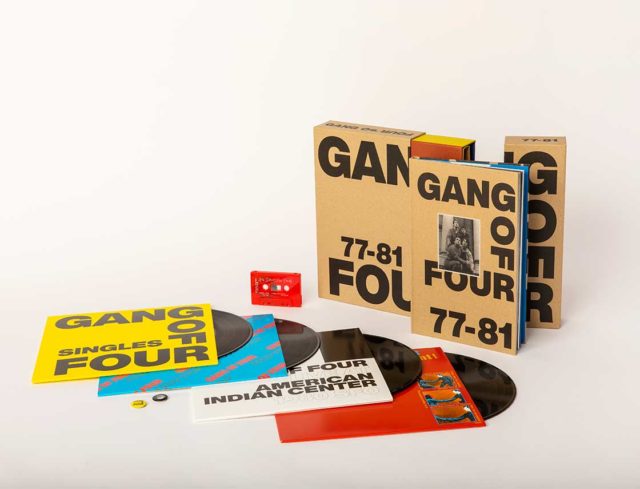
Gang Of Four have announced a release date for their limited-edition box set, “Gang Of Four: 77-81”, which was initially scheduled for release last year, but delayed due to production issues.
The brilliant, limited-edition box set gathers Gang Of Four’s influential early work – including “Entertainment!” and “Solid Gold” (both remastered from the original analogue tapes), an exclusive singles LP, and an exclusive double LP of the never officially released Live At American Indian Center 1980.
Additionally, the package includes two new badges, a C90 cassette tape compiling 26 never-before-issued outtakes, rarities and studio demos from Entertainment! and Solid Gold, and an epic 100-page, full-colour hardbound book. The book details the history and legacy of the original Gang Of Four with never-before-seen photos, contributions from surviving original band members, rare posters, ephemera, flyers, essays, artwork, liner notes and more. It also marks the first official publication of their lyrics.
Gang of Four was formed in Leeds in 1976 by bassist Dave Allen, drummer Hugo Burnham, guitarist Andy Gill, and singer Jon King. The band pioneered a style of music that inverted punk’s blunt and explosive energies — favouring tense rhythms, percussive guitars, and lyrics that traded in Marxist theory and situationism. They put every element of the traditional “rock band” format to question, from notions of harmony and rhythm to presentation and performance.
This original line-up of the band released two monumental albums, Entertainment! (1979) and Solid Gold (1981). A third, Songs Of The Free (1982), was recorded with bassist Sara Lee replacing Dave Allen. After Songs Of The Free, Burnham departed the band and Andy Gill and Jon King continued on to release Hard in 1983. After this release, the band broke up. In 2004, the original quartet reformed for tour dates and released Return The Gift (2005). Andy Gill died on 1st February 2020.
To mark the release of Gang Of Four 77-81, fans can watch a lyric video for the song “Damaged Goods”, as well as hearing the demo of the unreleased song, “Elevator”, which is included on the cassette in the box set.
Speaking about Elevator, Jon King said:
“Andy & I both lived in a shitty house in Leeds where we used to sing The Band or Muddy Waters songs, chugging disgusting homebrew beer that I fermented in a dustbin. We started writing songs – mostly homages to Dr. Feelgood or the Velvets – recording them on a crappy cassette player. Inspired by the New York scene and with UK punk rock on a thrilling rampage, Hugo, Gill, and I formed a band.
The first couple of gigs were those early songs and a fast Beatles cover. Dave joining us raised the bar. He was really good, and we quickly came up with new material we all wrote together, built on grooves from Dave & Hugo, over which Andy and I would improvise until we’d got somewhere. Elevator always worked well live. It was a keeper until it wasn’t. By the time we got into the Workhouse studio to record ‘Entertainment’, it was in the dumper. I’d forgotten ever writing it until it was dug up for the box set cassette. I like it: the jangly riff, propulsive rhythm, and dopey lyrics take me right back to the day.”
The post-punk legends’ first two albums – 1979’s Entertainment! and 1981’s Solid Gold – are remastered for this excellent four-disc set, which also includes a disc of singles from the four-year period covered. Also included: an unreleased concert, Live at the American Indian Center, recorded in San Francisco in May 1980. Almost everything you need by Gang of Four – who’ve re-formed and issued more albums over the years – can be found on 77-81.
The limited edition box set, Gang Of Four: 77-81 will be available on vinyl on 12th March, and on CD on 23rd April.
A new tribute album, The Problem Of Leisure: A Celebration Of Andy Gill And Gang Of Four, will be released in May via Gill Music and features contributions from Flea and John Frusciante, Warpaint, La Roux, and more.
Take It from the Man! is the third studio album by American psychedelic rock band The Brian Jonestown Massacre. After recording their shoegaze-influenced debut album Methodrone (1995) and releasing a collection of early recordings, Spacegirl & Other Favorites, the band took influence from 1960s British psychedelic garage rock and recorded Take it from the Man! from November 1995–February 1996.
After recording the entire album with an unnamed producer who scrapped the recordings, the band re-recorded the album on a minimal budget, mostly at Lifesource Studios in Emeryville, California with production from Psychic TV’s Larry Thrasher, whose usual “studio” approach was vetoed out by the band’s back-to-basics approach.
The album’s psychedelic garage rock has often been compared to the Rolling Stones. Released by Bomp! Records on May 28th, 1996, it is the first of three full-length albums released by the band in 1996, preceding Their Satanic Majesties’ Second Request and Thank God for Mental Illness. The album was released to critical acclaim, with journalists praising the exuding of its influences and spirit. AntonNewcombe has since named the album as one of his favourites by the band. The album has featured in several “best of” lists and has been cited by several musicians as an influence. “Straight Up and Down”, which is featured in two alternate versions on the album, later became the theme music for Boardwalk Empire.
According to the liner notes, “Take it from the Man!” was recorded “live” between November 1995 and February 1996 at Dance Home Studio and Larry Thrasher’s Lifesource Studios in Emeryville, California, with digital editing undertaken at Music Box, Hollywood. The band initially recorded Take it from the Man! with an unnamed producer who, in wanting to “get on board”, recorded the album and “chopped it up to make it like so perfect” and then requested 3% of the royalties, leading the band to “just [laugh] in his face.”
As a result, the producer, as Newcombe recalled it, “got so pissed and he said he was going to destroy the recording. I was like, ‘Fuck you dude. Then I’m gonna kick your ass the minute I see you on the street.’ He did end up destroying it but I let him off the hook as far as the violence.” With the band needing to re-record the album in its entirety, Larry Thrasher from Psychic TV became interested in the band and producing the album, and borrowed a recording studio, possibly belonging to the Counting Crows, for the band to record in, presumably his Lifesource Studios credited in the liner notes.
Newcombe stated that, with a line-up of Newcombe, Dean Taylor (guitar), Matt Hollywood (bass) and Brian Glaze (drums), the band showed up on the day of recording without guitarist Jeff Davies because “he was a junkie” and so Newcombe’s girlfriend Dawn played guitar instead. The album was recorded on a minimal budget. When the band turned up to the studio, they were surprised to find that Thrasher had “about sixteen microphones set up for the drums,” because the band preferred a stripped down studio approach; Newcombe stated that “I asked him, ‘What the hell is this?’ and he said, ‘Well, these are for the drums…’ and I was like, ‘We don’t need sixteen mics for the drums. Take all of these away. I’m gonna use three mics for the drums and we’re gonna record it live, all at once. We’re just gonna put all the guitar amps down the hallway, the drums will be in here, and we’ll put on headphones and we’ll just play our set.’
We record everything the same way, so that’s what we did and then at the end he whipped out all of these effects when mixing at his studio and I just asked him, ‘What are all of these for?’ and he said, ‘You can’t have it sound the same on every song’ and I’m like ‘Bullshit, that’s the charm of this,’ we just try and get a certain sound.” Newcombe noted that “Straight Up and Down” was mixed to cassette. The band were recording their follow up album Their Satanic Majesties’ Second Request (1996) concurrently with Take it from the Man!, although not in the same studio or with the same producer. Newcombe recalled “recording “Take It from the Man” in the day time and then recording Their Satanic Majesties’ Second Request in the night time.
I was doing them simultaneously. I would go and stay at this one studio and then take the train out to the other one so instead of being homeless I was going between these two studios and crashing on the couches and doing two, 18 song records at the same time. Released May 28th, 1996
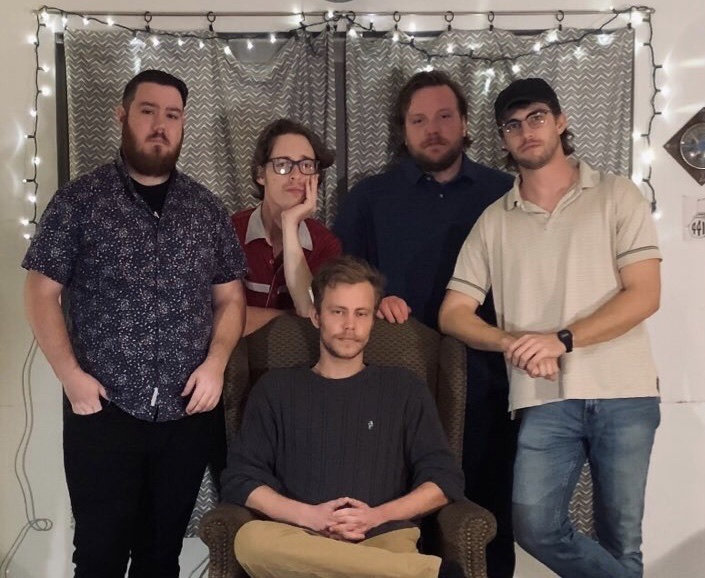
An indie-rock quintet out of St. Petersburg, Fla., Snacking will release their new EP “Painted Gold” on February. 8th via Chillwavve Records. Lead single “Blacked Out on a Train” is a song of transition, taking liminal space—like the titular train car moving from a dark past to an uncertain future (“We’re leaving town alive / Without saying goodbye”), or the stylistic space between Minus the Bear-style math rock and emo revival—as its setting. Snacking show off effortlessly melodic guitars, forceful low end and emotionally complex lyricism, building “Blacked Out on a Train” up into an invigorating instrumental firestorm. “We chose ‘Blacked Out On A Train’ as the single because it’s a step in a different direction for us,” the band said upon the song’s premiere. “It’s more dissonant and hectic than anything we’ve written previously. We thought it would do a good job of attracting new listeners and hopefully surprise those who are already familiar with our prior material.”
Track List: 01. Blacked Out On A Train (0:00) 02. Crossword (2:59) 03. Edward (6:21) 04. Painted Gold (10:10)
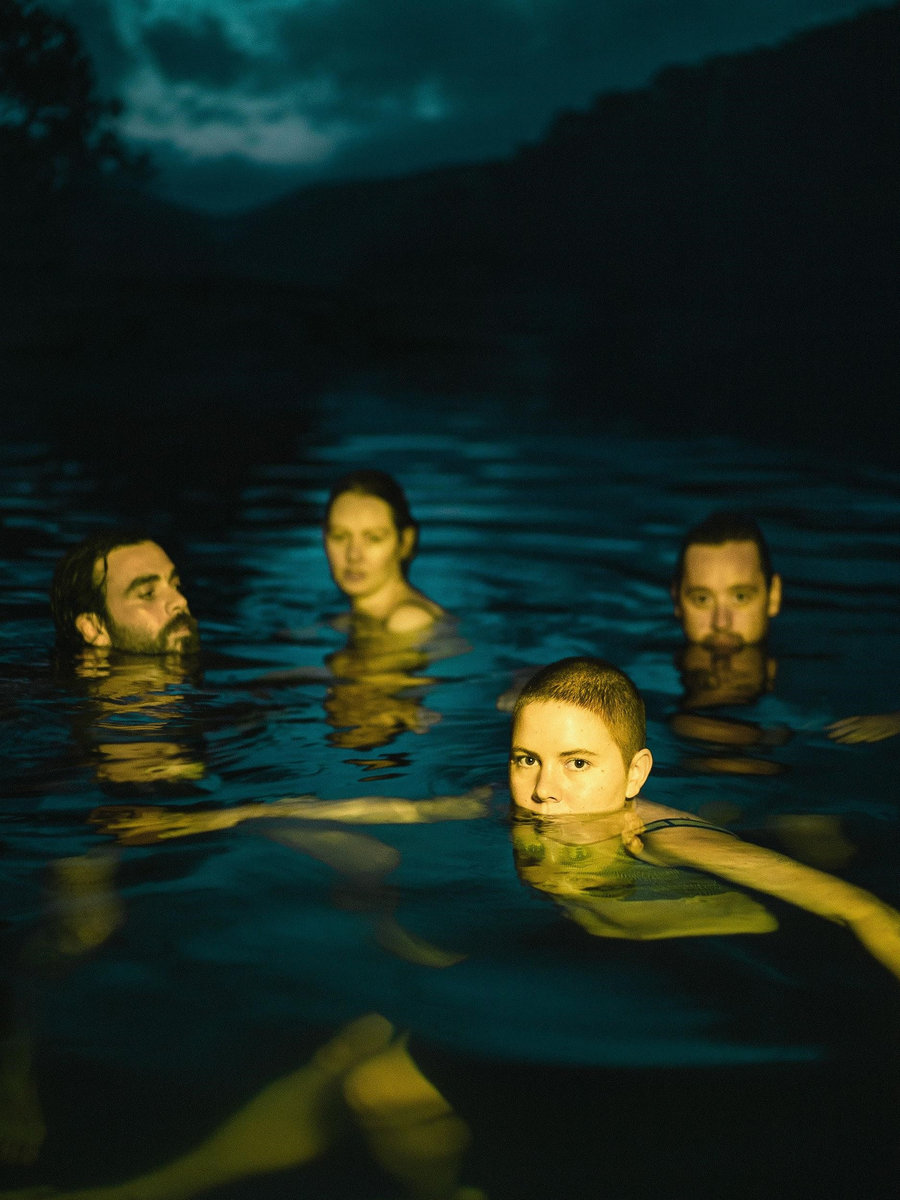
Music from Sydney, Australia, Mere Women are back with a divine new offering song ‘Romantic Notions’ the title-track from their eagerly awaited fourth album due 5th March 2021 via Poison City Records. We are excited to premiere the song’s clip directed and lovingly crafted by the band, shot on the land of the Kuing-gai and Eora Peoples. Vocalist Amy Wilson gives us an insight into the track, We wrote the majority of the record at our place on the Hawkesbury River where three of us live. It’s a stunning spot right on the water, surrounded by national park. The record has soaked up this place over the writing process and as a result is more spacious and considered I think. Living here has made me feel like more of an outsider and this really comes through lyrically. As an album it’s dark and self-reflective but hopeful.
‘Romantic Notions’ the theme came from. It explores the idea that love can be used as a tool to control someone or can be used as a reason to make destructive life choices. As a band at that time we were inspired sonically by groups like TFS, White Hex and BAMBARA and wanting to create something that sounded sludgy and enveloping.
We were trying to create this sense of ‘becoming’ something new and leaving the old behind with the clip. It was filmed at our cottage and in the surrounding bushland by Flyn and Mac from the Band. Mac edited the clip and made the opening titles. Our friend Kim from White Lion Cosmetica got on board to do makeup and created this really cool monsteresque look that changes and grows throughout the clip. We’re so happy to be releasing again and getting back to playing music. Thanks for watching and listening to ‘Romantic Notions’ – it means a lot and we hope that you enjoy it.
.”W.Y.G” follows a trail of destruction left behind by family violence. It travels through distressing family resemblances and conflicting feelings of loving someone and hating them all at once”.
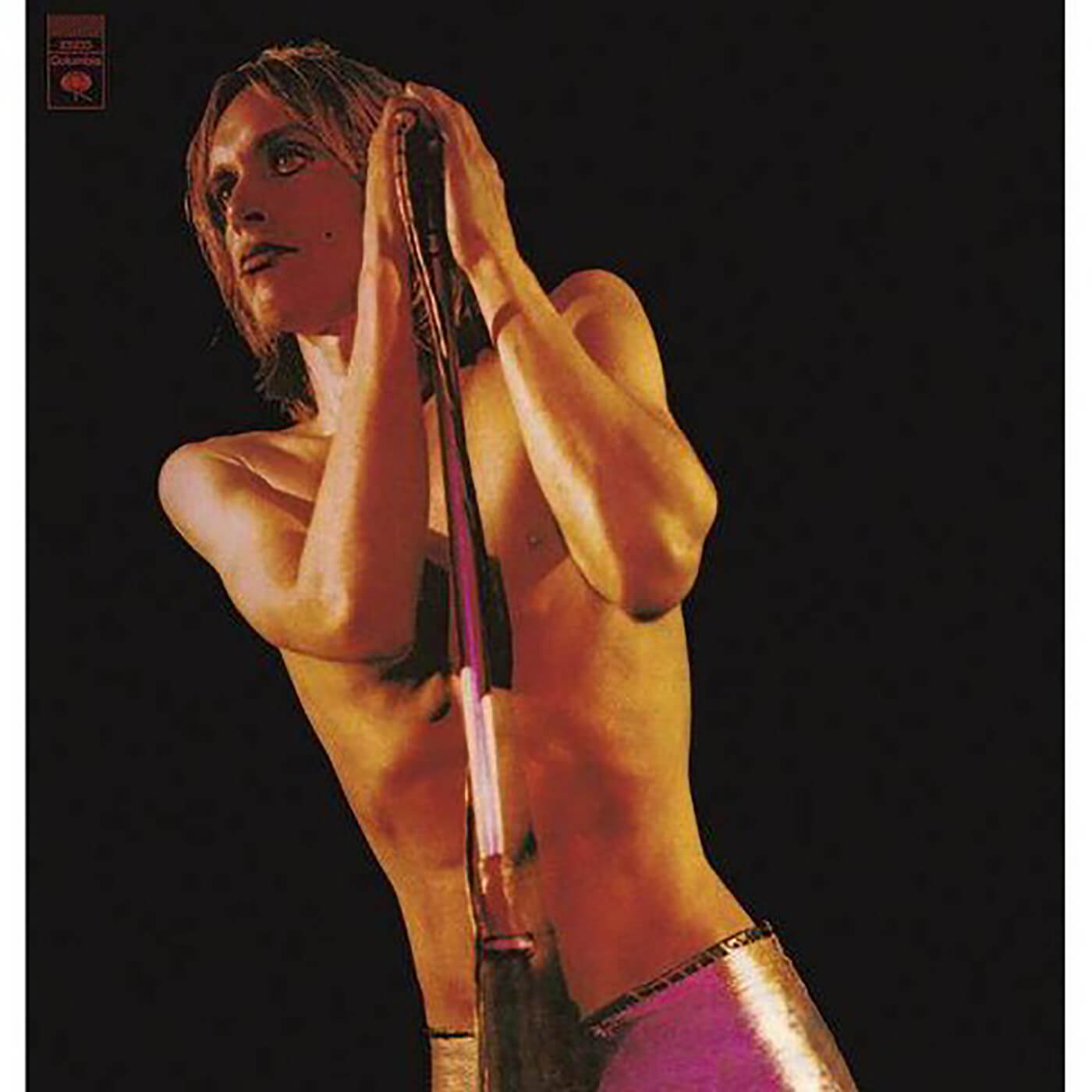
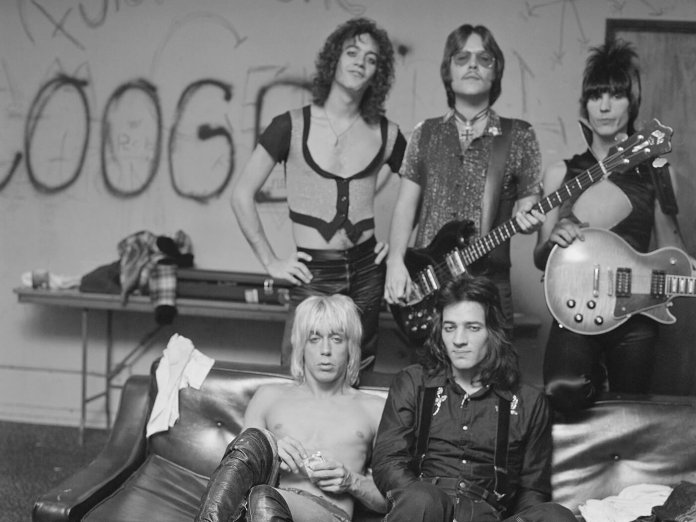
The Stooges released their classic third studio album, “Raw Power”, on this day in 1973. As one of the first punk albums, Raw Power didn’t initially find a audience to appreciate it until years after, but it’s now considered an integral part of both the rock and punk canons.
The Iggy Pop and David Bowie-produced Raw Power possessed the kind of playful, dangerous smirk, take no prisoners attitude and fiery energy that made it hard to resist. Tracks like “Search and Destroy” and “Gimme Danger” were marked by pumping guitars and Iggy Pop’s grimy, snarling vocals, and though many tend to classify this LP as a garage rock album or punk rock forerunner, it’s also been cited as a major influence on heavy metal and hard rock.
“Raw Power” is a total absolution. For 34 minutes, Iggy Pop pummels you with unadulterated human rage, painting the loudest and most succinct portrait in his career. It’s the voice of an uncontrollable artist, one who’s fighting a brutal war against rejection and addiction, and it’s through that fight that he went on to define himself to the world. Because, at this point in his career, very few people outside of soothsayer David Bowie believed in the Detroit rock ‘n’ roll statesman. Though, that miserable sense of marginalization is what wound up fueling the album, starting with the nuclear opening salvo of “Search and Destroy” and ending with the napalm drop of six-minute closer “Death Trip”. By then, everyone who was anyone was listening.
If ever an album was wholly encapsulated by its title, it’s The Stooges’ incendiary third album, “Raw Power”. Released in 1973, it set the bar for a wave of punk bands to try and, in most cases, fail to eclipse. It remains one of the most visceral, electrifying pieces of musical savagery you’ll ever hear. And as its chief creator James Newell Osterberg Jr, aka Iggy Pop, recalls: “It was done with drugs, youth, attitude and a record collection”.
Playing the Keef to Iggy’s Mick was a guitarist whose influence is threaded inexorably through the development of punk rock, James Williamson. Sex Pistol Steve Jones famously admitted he learnt to play by taking speed and listening to “Raw Power”. Johnny Marr said of Williamson: “He has the technical ability of Jimmy Page without being as studious, and the swagger of Keith Richards without being sloppy. He’s both demonic and intellectual, almost how you would imagine Darth Vader to sound if he was in a band.”
“As a guitarist, James fills the space as if somebody’s just let a drug dog into your house… and it’s big,” is how Iggy describes his bandmate’s playing. “He finds every corner of a musical premise and fills it up with detail.”
Born in Texas, Williamson joined The Stooges in 1970 aged 19, initially as second guitarist, before Ron Asheton switched reluctantly to bass. His raw, bluesy style was instrumental in Raw Power having a harder edge and more adrenal tempo than predecessor Funhouse, and he co-wrote all eight songs – much to the chagrin of Asheton, who felt he’d been usurped. Throughout the narcotic mayhem of the Raw Power sessions, Williamson played a Cherry Red Les Paul Custom that Iggy had encouraged him to trade in an SG and Jaguar to buy. Plugged into a cranked Vox AC30, it sounded like… well, raw power.
By the time the Michigan band regrouped in England to record Raw Power they’d already hit rock bottom, splitting in 1971 due to a combination of Iggy’s voracious appetite for heroin, extreme poverty, dangerously violent gigs and the lukewarm response to their first two albums. David Bowie came to the rescue, finding Iggy a label and management deal and setting up the recording sessions in London.
Iggy may have overdosed and been out cold for 14 hours at one point while writing the lyrics for Raw Power, but how about Search And Destroy’s “I’m a streetwalking cheetah with a hide full of napalm, I’m a runaway son of a nuclear A-bomb” for an opening couplet? And the frantic lead playing from Williamson, based around the C♯ minor pentatonic scale, is nothing short of blistering, the song a furious rallying cry for the anti-Vietnam war movement.
You can hear the influence of Chuck Berry on Williamson’s rock-solid rhythm and histrionic soloing on Your Pretty Face Is Going To Hell, while the heroin horrors of the title track and the swaggering Shake Appeal also have their roots firmly in 50s rock’n’roll, the latter enabling Pop to “get to my dream of being Little Richard for a minute”.
Gimme Danger, with Williamson’s menacing acoustic riff in E♭ tuning, is there to fulfil the label’s demand for a ballad on each side of the album. As slow songs go, it’s pretty demonic, simmering with sexual tension as Iggy broods, “there’s nothing left alive but a pair of glassy eyes” before careering into the bloodthirsty chorus, Williamson’s lead playing and an insistent piano tangling lustily before the guitar wins out with a corking solo.
The album’s other ballad is the Doors-esque “I Need Somebody”, a moody blues vamp in G written on an acoustic guitar by Williamson. Iggy thought it sounded like the inside of “a bordello” and his celesta part is a seductive counterpoint. Williamson’s final flourish comes as his virtuosic yet barbarous soloing envelopes the six-minute closer Death Trip, the album’s longest track.
Recording and mixing Raw Power was a suitably shambolic affair, with at least one member of the band by that point lucky to be alive. Unlike the first two Stooges albums, it was self-produced, resulting in a clueless Iggy mixing the whole band on one channel, the lead guitar on another and his vocals on a third of the 24-track desk. Handing the tapes to Bowie to sort out was the ultimate hospital pass. “He said ‘See what you can do with this’,” Bowie later recalled. “I said, ‘Jim, there’s nothing to mix’.” As Williamson remembers, “The fact of the matter is, when we made Raw Power, we really didn’t know what we were doing.”
In the circumstances, Bowie did a commendable job. Among his tweaks was feeding the guitar track on Gimme Danger through the Cooper Time Cube, a garden-hose based delay unit devised two years earlier, and of the several mixes of the album, Bowie’s is still widely regarded as the definitive version. Iggy was finally given the opportunity for some closure when he was invited to remix the album at New York’s Sony Music Studios in 1996, modern studio technology and all. While that incarnation has been dubbed “the loudest album ever made”, with every fader pushed deep into the red, it did little to halt the arguments, with Williamson complaining it “sucked” and Bowie saying his version had more “wound-up ferocity and chaos”.
Raw Power was a commercial flop, peaking at 182 in the Billboard Chart, but the reviews were positive, Lenny Kaye praising the “ongoing swirl of sound that virtually drags you into the speakers”. It didn’t stop Iggy being dropped by both his label and management company, but the record’s legend has grown exponentially over the years. Kurt Cobain said Raw Power was his favourite album of all time, British rock critic Nick Kent called it “the greatest, meanest-eyed, coldest-blooded hard rock tour de force ever summoned up in a recording studio” and Ted Maider of Consequence Of Sound “by far the most important punk record ever”.
In 1973, Iggy Pop may have been, unjustly, the world’s forgotten boy, but today The Stooges’ influence looms large over a generation of guitar bands. When a topless Iggy and the surviving Stooges tore wantonly through Search And Destroy at their induction into the Rock & Roll Hall of Fame in 2010, it felt like long-overdue recognition of the ultimate rock’n’roll album. “Raw Power” indeed.
Iggy And The Stooges, Raw Power (1973, Columbia Records)
Hayley Williams has announced that she is releasing ‘Flowers For Vases / Descansos’ on February 5th. The follow-up to Williams’ May 2020 debut solo album ‘Petals For Armor’ has been teased by the Paramore frontwoman in recent weeks, with Williams’ official website redirecting to a site called ‘Flowers For Vases’. In late January, Paramore singer Hayley Williams began teasing a new project. She posted cryptic social media posts and mailed mysterious packages to fans that included doll limbs and handwritten notes that said “Plant me.” It turns out she has a brand-new full-length album that she wrote, performed and recorded on her own, at home during quarantine, called Flowers for Vases – descanos. It comes just eight months after Williams released her solo debut, “Petals for Armor”.
Williams also ‘leaked’ a new track from the project late last month after she hand-delivered a CD to one fan in the US. After fans noted that the Genius page for ‘Flowers For Vases / Descansos’ showed a release date of February 5th, Williams tweeted early this morning the title of her next solo project, its imminent release date.
The ‘Flowers For Vases / Descansos’ release news follows on from Williams revealing last month that she was in the process of recording her equivalent of Taylor Swift’s surprise-released album ‘Folklore’. “We don’t need drums if this is my ‘Folklore’,” she said of a since-deleted behind-the-scenes clip.