Sharon Van Etten's new EP, I Don't Want To Let You Down, is due out June 9 on Jagjaguwar.

Sharon Van Etten releasesed her new EP, ‘I Don’t Want to Let You Down,’ on June 9th! 

Sharon Van Etten 2014 album, “Are We There”, was one of the more focused, devastating recordings of the year, an unflinching set of songs that trace the contours of a doomed relationship. The album doesn’t spare either party — Van Etten is as critical of her own decisions as she is damning of her lover’s minor cruelties and missteps. It’s an uncut catharsis machine, and listening to it can wring you out.

Amazingly, there’s more where Are We There came from. Van Etten’s new EP, came out June 9th, called I Don’t Want To Let You Down, and it covers some of the same musical and lyrical ground as the album. We’re happy to share not only the music — you can listen to all five of the EP’s songs below — but also a behind-the-scenes peek into the story behind the EP and the album, in Sharon Van Etten’s own words. As she tells it, the growth of her musical career itself was the catalyst for the end of the relationship.

Van Etten’s way with a melody, and her remarkable voice, can make these stories seem epic, almost mythical. But they all center on the kind of tough, essential, everyday dilemmas that are the heart of living a satisfying life, the same ones that break your heart the hardest.

1. I Don’t Want To Let You Down
“I knew that the choices that I’d made in deciding to pursue music full time, I knew that it was going to be a struggle in my real life. And I still wanted to make — whether it be my family or friends or in my personal relationship — I wanted people to be proud of me and know that I still felt like I was doing what I needed to do. And loving [them] as much as I can, but knowing that I was letting somebody down in the process. It was somebody that I was with off and on for ten years and someone that supported me from the very beginning. And our relationship in my New York, adult life developed over time. And it’s really intense how things can grow from a place of support to when you get to a place where the reasons they were supporting you overtake your life a little bit. And you have to put your relationship on hold to pursue that. It’s someone I still care about but don’t speak with any more. It was a hard decision to make, but I had to pursue music. In the end it turned into a choice between the two. And it’s not just me making a sacrifice, it’s me hurting someone. I have to acknowledge the pain the other person has been going through.”

2. Just Like Blood

“I’m not very good at communicating my emotions. And usually it’s when I’m really sad and or in a dark place, and this song was when I was pretty angry. Sometimes in those situations I feel like I go into a victim role and completely shut down. I’m not aware of my surroundings and I can’t connect with people. And it feels really intense and I’m not able to talk about it. And I have to retreat and write and record and listen back to it. It’s all part of how I write anyway. But it was one of those times where I was having a fight about going on tour versus being at home and deciding to take the tour. It was the Nick Cave tour I decided to take instead of being home after I had promised to be home for a while. We were just fighting a lot around that time. And for something I was really passionate about and someone he even admired, I had a really hard time understanding why it was a battle all the time. I’m not an angry person and I don’t like fighting. I like being able to have a conversation when both parties are open to it. When somebody is really shut down and not really listening and set in their ways, it’s obviously something they’re going through that you can’t connect with them. So it was really frustrating. He definitely knew how to push my buttons and every now and then I had a moment I wasn’t proud of for sure.”

3. I Always Fall Apart
“I think it’s a half-joke. I actually wrote this one about Ben Goldberg and Ba Da Bing Records and missing the old times, and acknowledging how he took me under his wing. And because of that how I haven’t even been home. Things are growing and it’s been really overwhelming. He tried to nurture me and look out for me and all of a sudden I’m gone. I don’t see him anymore and I miss him! So when I say, ‘Where have you been?,’ it’s a half-joke. I try to say it like ‘Ben,’ like ‘Where have you, Ben?'” [Note: Ba Da Bing Records is a Brooklyn-based label founded by Ben Goldberg, who employed Van Etten as a publicist from 2007 to 2010, when Ba Da Bing released her album Epic. Van Etten is now on Jagjaguwar.)

4. Pay My Debts
“This was just kind of a freak song. I had just started learning how to do digital drums in Garage Band. The demo version is a little bit different, but as soon as I added the electronic drums it sounded like Peter Gabriel. So I kind of set it aside. It just wasn’t fitting with everything else we were working on.

“The lyrics have changed in the year or two I worked on it. It started off where, with [the 2012 album] Tramp, I literally was able to pay off all my debts, and was able to get my first apartment in a while and my first place on my own. So it’s one of the first songs I wrote when I got my own apartment. But in that process, also [I was] returning home, reconnecting with people from home who seemed to resent you for being gone. And that time travel that seems to take place when you go on tour and you’re gone for six months and you come back home and you’re excited to see everybody. But every now and then there’s a friend of yours you reconnect with and you realize life goes on without you. There are some people where you can’t just go and pick back up with them. A lot happens when you’re gone. So in that way, the debts you have to pay by coming back and catching up and reconnecting and making that effort. I mean, that’s an intense thing to come home to.”

5. Tell Me [Live] (Previously only available on the Tramp demos)
“This is a song I’ve tried in different contexts and the only way it ever feels real to me is just as a straight-up band song. I tried a minimal version that just wasn’t working. I love it as a song, it just never came together in the studio. But as I got to know my new band we started playing B-sides and outtakes at live shows to keep it fresh for us and for returning fans. I can’t think of any other way to do this song now. Just the live energy of it, it just makes sense. It has this natural momentum that’s hard to create in a studio environment.

http://

“I wrote this toward the end of recording Tramp, so it did overlap with [the 2014 album Are We There?] some. It’s still a love song and has that drawn out narrative I do. I wrote it during one of the ‘off periods’ with the person who Are We There is centered around. We were off and on for so long that it was one of those times where I really didn’t understand, ‘Are we in a relationship? Do you want this to happen? You’re not communicating with me.’ Because of my work I fall off the face of the earth for a while. But as a person he’d fall off the face of the earth for a while. But whenever we were together we had so much fun. I felt we both challenged each other. I just don’t know why he could never be completely open with me. And I was frustrated as hell.”
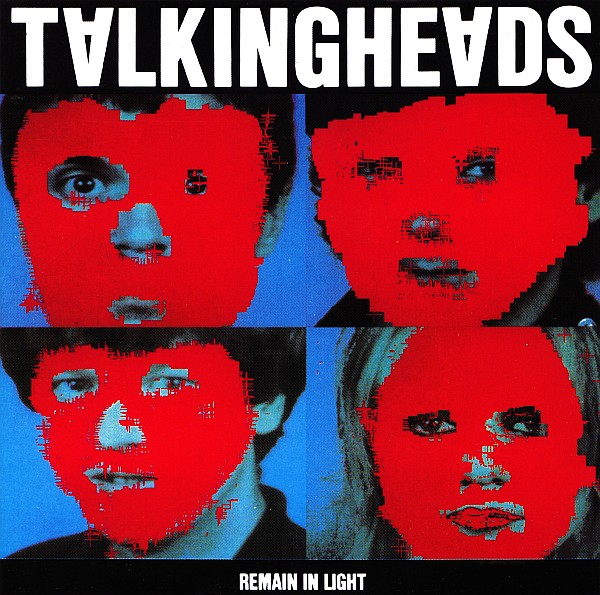
 

remain in light

“Remain in Light” is the fourth studio album by the Talking Heads, In January 1980, the members of Talking Heads returned to New York City after the tours in support of their 1979 critically acclaimed third album, Fear of Music, and decided to take time off to pursue personal interests. Byrne worked with Eno, the record’s producer, on an experimental collaboration named My Life in the Bush of Ghosts. Jerry Harrison produced an album for soul singer Nona Hendryx at the Sigma Sound Studios branch in New York City; the singer and the location were later used during the recording of Remain in Light on Harrison’s advice. Husband and wife Chris Frantz and Tina Weymouth discussed the possibility of leaving the band after the latter suggested that Byrne’s level of control was excessive. Frantz did not want the ending Talking Heads, and the two decided to take a long vacation in the Caribbean to ponder the state of the band. During the trip, the couple became involved in Haitian Vodou religious ceremonies and practiced with several types of native percussion instruments. In Jamaica, they socialized with the famous reggae rhythm section of Sly and Robbie.

Instead of the band writing music to Byrne’s lyrics, Talking Heads performed instrumental jam sessions without words using the Fear of Music song “I Zimbra” as a starting point.

Talking Heads’ contribution to the avant-punk scene they helped create was their emphasis on rhythm over beat. The Heads’ early songs pulsed, winding their way past jitteriness to achieve the compelling tension that defined a particular moment in rock & roll history such a moment when white rock fans wanted to dance so badly, and yet were so intimidated by the idea, that they started hopping straight up and down for instant relief. By 1978, punk and disco had divided the pop audience. What did Talking Heads do? They recorded Al Green’s “Take Me to the River.”

Despite David Byrne’s vocal restraint and certain puritanical tendencies in his lyrics to value work over pleasure (“Artists Only,” “Don’t Worry about the Government”), Talking Heads never stopped learning from the sensuous music that existed in a world parallel to theirs. On 1979’s Fear of Music, they made a defiant connection with funk and disco in “I Zimbra” and “Life during Wartime,” both of which aid in preparing us for Remain in Light’s startling avant-primitivism.
On Remain in Light, rhythm takes over. Each of the eight compositions adheres to a single guitar-drum riff repeated endlessly, creating what funk musicians commonly refer to as a groove. A series of thin, shifting layers is then added: more jiggly percussion, glancing and contrasting guitar figures, singing by Byrne that represents a sharp and exhilarating break with the neurotic and intentionally wooden vocals that had previously characterized all Talking Heads albums.

Though the tunes take their time (side one has just three cuts), nobody steps out to solo here. There isn’t any elaboration of the initial unifying riff either. Because of this, these songs resemble the African music that the band has taken great pains to acknowledge as Remain in Light’s guiding structure.

In addition to its African influences, Remain in Light also flashes the ecstatic freedom of current American funk, across which any number of complex emotions and topics can roam. In both “Born under Punches (the Heat Goes On)” and “Crosseyed and Painless,” the rhythm lurches about while always moving forward, thrust ahead by the tough, serene beat of the bass and percussion. Throughout, instruments are so tightly meshed that it’s often difficult to pick out what you’re hearing—or even who’s playing. As part of their let’s-rethink-this-music attitude, Talking Heads occasionally play one another’s instruments, and guests as disparate as Robert Palmer and Nona Hendryx are enlisted.  Far from being confusing, however, such density contributes greatly to the mesmerizing power exerted by these elaborate dance tunes.

Though you can follow, to some extent, the story lines of, say, “Listening Wind” (in which an Indian stores up weaponry to launch an assault on plundering Americans) and the spoken fable, “Seen and Not Seen,” Remain in Light’s lyrics are more frequently utilized to describe or embody abstract concepts. Thus, beneath the wild dance patterns of “Crosseyed and Painless,” there lurks a dementedly sober disquisition on the nature of facts that culminates in a hilarious, rapidly recited list of characteristics (“Facts are simple and facts are straight/Facts are lazy and facts are late… “) that could go on forever —and probably does, since the song fades out before the singer can finish reading what’s on the lyric sheet. Elsewhere, strings of words convey meaning only through Byrne’s intonation and emphasis: his throaty, conspiratorial murmur in “Houses in Motion” adds implications you can’t extract from lines as flyaway as “I’m walking a line— I’m thinking about empty motion.”

In all of this lies a solution to a problem that was clearly bothering David Byrne on Fear of Music: how to write rock lyrics that don’t yield to easy analysis and yet aren’t pretentious. Talking Heads’ most radical attempt at an answer was the use of da-daist Hugo Ball’s nonsense words as a mock-African chant in “I Zimbra.” The strategy on Remain in Light is much more complicated and risky. In compositions like “Born under Punches” and “Crosseyed and Painless,” phrases are suggested and measured, repeated and turned inside out, in reaction to the spins and spirals of their organizing riff-melodies.

Once in a while, the experiments backfire on the experimenters. Both “The Great Curve” and “The Overload” are droning drags, full of screeching guitar noise that’s more freaked-out than felt. Usually, however, the gambler’s aesthetic operating within Remain in Light yields scary, funny music to which you can dance and think, think and dance, dance and think .

The album featured the new Talking Heads – a multi-personnel band with added percussionists, backing vocalists and guitarist Adrian Belew, who put the wah-wah pedal to its most tasteful use since Jimi Hendrix. The difference was noticeable immediately. Talking Heads songs had always been monologues in the past, but now there were two or three different vocal sections contrasting perspectives on the same issues.

The music was funkier, with more embellishments than before, and ‘Remain in Light’ represented a completely new approach, rather than an alteration of the old one. The album’s most striking track was ‘Once In A Lifetime’ which – with the help of a dramatically simple and effective video – became the band’s first British top 20 single. Talking Heads toured around the world with their extended line-up.

Portland’s Wild Ones drop their infectious pop album “Mirror Touch” off Topshelf Records today. The record, inspired by the condition “Mirror-Touch synesthesia,” explores themes of isolation, loneliness, and the self. In celebration of their latest release, we’re excited to share the music video for “Standing In The Back At Your Show.” The dreamy track sonically captures the messy, beginning stages of new love when you’re simultaneously hyper aware of and intoxicated by every single fleeting interaction.
Danielle Sullivan of Wild Ones on Mirror Touch: and the band’s songwriting process

“Mirror Touch considers the boundaries between self and other when creating art. How do you know yourself when there are a thousand voices considering every angle, analyzing every choice? On this record there are love songs, anxious songs, and songs of isolation. My favorite pop songs contain heartache in seductive packaging, like some kind of emotional Trojan horse. This is our version. It took us two years to make and we went through multiple renditions of everything. What you have now is our truest, most honest expression of the last few years. We’re happy to share it with you.”

Today marks the anniversary of the release of Boys and Girls in America. People often mention to me that this album had a huge impact on them.

The Hold Steady made a new generation of indie kids feel like they were reborn when they first heard Boys and Girls In America. Released October. 3rd, 2006, it was the Brooklyn band’s third album turned them into darlings of the indie rock world. It was among the Best Album’s of 2006. The Guardian gave it five out of five stars, saying, “Finn’s lyrics, combining precise observation with poetic sensibility — he is an astonishing writer — would mean less without the power of the band behind him.”

While Separation Sunday had done really well , Boys & Girls kicked everything into a higher gear- more shows, bigger shows, more travel, more craziness. Craig Finn explains

The album was the first written with Franz and piano fully integrated into the band. We were also coming off a lot of touring for SepSunday, and had built and tested a well oiled rock and roll machine (and also a well oiled rock and roll lifestyle). We had fans that were eagerly awaiting the next release- that was new. And we worked with a top notch producer in John Agnello, who brought out some things that we hadn’t previously thought of. The recording at Water Music in Hoboken was an absolute blast. One thing that I still marvel at is “You Can Make Him Like You”– it came together in about 10 minutes, and still is a song I love to play.

A lot of the praise was centered on frontman’s Craig Finn’s ability to use Springsteen-like storytelling and instrumentation to tell tales of modern skater kids, hood rats and druggies. Boys and Girls in America sounded like a punk rock take on Darkness On The Edge Of Town there’s a piano break in opening track “Stuck Between Stations” so reminiscent of E Streeter Roy Bittan that for a moment the song could be a Boss outtake.

Finn acknowledged the similarities even while pushing back against them

“Obviously that classic bar-rock thing is something we go for, and Springsteen has done it very well,” Finn said. “But I hate to make such a one-to-one comparison because a lot has happened musically since the E Street Band made those records 30 years ago.” “I think the [Springsteen] comparison ends with the guitars,” guitarist Tad Kubler said

He was right, a lot had happened. And nearly every trend in straight-ahead rock ‘n’ roll was absorbed by the Hold Steady to make Boys and Girls in America. Obviously alternative icons such as the Clash and the Replacements but so were mainstream rock in ’70s bands like Kiss and particulary Cheap Trick sounds, fans found plenty to dig on the LP. Perhaps one of the reasons this album still connects with people is that Boys and Girls in America STILL have such a sad time together. Some of the mysteries discussed on this album are far from being solved.

Early adopters of the album championed this hybrid style and its rejection of the strutting, preening soundtrack of New York. The album gave the Hold Steady a massive cult following, but it didn’t turn them into stars. Finn believed that their less-commercial sound may have proved difficult in turning their critical acclaim into massive sales.

Still, for a moment, it seemed as if the band would become huge, and the Hold Steady became the first band in 15 years to make the cover of the Village Voice. The Boys and Girls in America tour unfolded with a feel of you-gotta-see-this-band-before-they-are-huge.

But for the band, it still represented a watershed moment — selling 100,000 physical copies isn’t something most rock bands can do these days. And thankfully, a cult can keep a career alive for a long time.

Beaches have an appropriate name, evoking the California coastline where the first psych purveyors congregated. This Melbourne quintet takes their DIY philosophy seriously—everyone plays an instrument, everyone sings, and the various members design their own album artwork and direct their videos. Their third album, “Second of Spring”, is their most ambitious yet, a double-LP filled with sunny melodies and motorik beats. It swings between brittle post-punk riffing and delightful pop harmonies, occupying that dreamlike state right before sunrise.

http://

This Iconic Australian psych rock quintet Beaches return with epic double LP Second Of Spring – Chapter Music’s first ever double album by a single artist.

Second Of Spring takes Beaches even further out, to where the pyramid meets the eye – a vast, enveloping sonic landscape, filled with extended instrumentals, overdriven psych-outs and propulsive pop nuggets.
The double album was recorded in Melbourne with engineer/producer John Lee (Totally Mild, Lost Animal) and mastered by David Walker. Artwork is by the band‘s own Ali McCann, with design by renowned artist Darren Sylvester.
Beaches’ self-titled 2008 debut was shortlisted for the Australian Music Prize, and included in glossy coffee table book 100 Best Australian Albums. The band released a standalone 12” on New York label Mexican Summer in 2010. They have toured the US twice, playing SXSW and Austin Psych Fest, and shared stages with Roky Erickson, Deerhunter, The Cult, Thee Oh Sees, Lightning Bolt, Mogwai, Best Coast and more.
Already revered as sprawling, swirling psych overlords, Second Of Spring is Beaches’ undeniable magnum opus.

No automatic alt text available.

Melina Duerte is one of the new favourite artists of the blogging scene. Her work as Jay Som is one of those lovely shaded areas of a venn diagram where emotion meets intelligence and her ability to display this through a selection of genteel indie pop is enticing to say the least.

We were thrilled then to hear that she had covered The Beatles hit ‘Strawberry Fields Forever’. Her bedroom-pop style works perfectly on this cover and the delicate approach she employs for all her work is even more greatly admired while covering such a well-observed track.

On SoundCloud, she writes, “I was commissioned to make this and they didn’t use it LOL well enjoy!!!

http://

The legendary finale of the Reunion tour released in full for the first time from a new mix by Jon Altschiller. An emotional closing night at MSG beautifully blends the 1999-2000 tour core setlist with special songs for the occasion, including a solo piano “The Promise,” the tour debut of “Lost in the Flood,” “E Street Shuffle” and a poignant, show-closing “Blood Brothers” performed with a fitting new final verse.  The live Jul 2000 performance of “Blood Brothers” at Madison Square Garden in New York City, NY, during The Reunion Tour. The song was the show closer on this tour finale, and featured a rewritten last verse. As the music settled after the “houses of the dead” verse, Springsteen paused and motioned for everyone not behind a drum kit or keyboard to come to the front of the stage, where they joined hands to form a line, facing the crowd. He sang an entirely new closing verse that surprised everyone and many were moved to tears. The music built back up and the band soared, led by Springsteen’s harmonica and Clarence Clemons’ saxophone, before gently ending the song, the show, the stand, and the tour in an absolutely perfect way. 

  • Bruce Springsteen – Lead vocal, electric and acoustic guitars, harmonica; Roy Bittan – Piano, electric keyboards; Clarence Clemons – Tenor and Baritone saxophones, percussion, pennywhistle, backing vocals; Danny Federici: keyboards and organ; Nils Lofgren – Electric and acoustic guitar, pedal steel, vocal, harmonica; Garry Tallent – Bass; Stevie Van Zandt – Electric guitars, mandolin, vocal; Max Weinberg – Drums; Patti Scialfa – Acoustic guitar, backing vocal
Setlist;
CODE OF SILENCE
MY LOVE WILL NOT LET YOU DOWN
PROVE IT ALL NIGHT
TWO HEARTS
ATLANTIC CITY
MANSION ON THE HILL
THE RIVER
AMERICAN SKIN (41 SHOTS)
THE PROMISED LAND
YOUNGSTOWN
MURDER INCORPORATED
BADLANDS
OUT IN THE STREET
TENTH AVENUE FREEZE-OUT
THE E STREET SHUFFLE
LOST IN THE FLOOD
BORN IN THE U.S.A.
BACKSTREETS
LIGHT OF DAY
THE PROMISE
RAMROD
BOBBY JEAN
BORN TO RUN
FURTHER ON (UP THE ROAD)
THUNDER ROAD
IF I SHOULD FALL BEHIND
THE LAND OF HOPE AND DREAMS
BLOOD BROTHERS

Image may contain: 4 people, people standing

The demise of the label Fortuna Pop, which we’re still not okay about by the way – has left a number of superb bands, musically homeless. At the top of the list of bands we didn’t think would have to rough it outside for long were The Spook School, and this week they’ve announced they’ve found a new home on Alcopop Records. The band’s third album, Could It Be Different?, is out early next year, and the Glasgow-based quartet have this week shared their new single, Still Alive.

A live favourite, with a chorus so catchy it’s been in our head almost constantly since The Spook School’s set at End Of The Road, Still Alive, is a fuzzy and furiously energetic slice of hook-laden pop. Discussing the track, Nye Todd has suggested it is, “about no longer being in an abusive relationship”. It’s a track that’s laced with anger at abusers, but also pride, as Nye explains, “I think there’s a kind of pride in it as well though, recognition that you had the strength to get through a shitty situation and to do what you needed to do, and that you don’t need to feel shame”. Confident, inspiring and as catchy as ever, The Spook School sound more alive than ever.

‘Could It Be Different?‘ out January 26th on Alcopop! Records

It’s hard to tell if Smoke intend their name as a noun or a verb, but either one feels appropriate. They claim to be influenced by Hawkwind, Black Sabbath, Hendrix, and Ornette Coleman; that’s accurate, but doesn’t tell the full story. What’s really impressive is their ability to combine the heavy sounds of the first two with the freewheeling weightlessness of the latter two. After taking a break for a couple years, the group has recently returned, ready to spread their smog all over Brisbane and its surrounding environs once more. Set the time machine dial for 1969.

http://

Smoke is:
Jimi Kent (Guitar, Vocals)
Rick Wallett (Guitar, Vocals)
Fergus Smith (Bass)
Joel Bourke (Drums)