Image result

R.E.M. announced on October. 30th, 1997 that drummer Bill Berry was leaving the group, Long-running fans of the alternative rockers took the news hard. After all, R.E.M. were a democratic unit, who had maintained order by remaining friends as their band became more and more popular in the late ’80s and early ’90s. They credited all of their songs to Berry, Peter Buck, Mike Mills and Michael Stipe, no matter who created them. And just a couple of years prior to this big reveal, the quartet had infamously claimed that if any member left the band, R.E.M. would cease to exist.

Fans who had taken R.E.M. at their earnest word had to wonder, would Berry’s departure mean the end of the band?. “The first thing he said when he dropped this bombshell on us is if it was going to break up the band, he wasn’t going to leave,” frontman Stipe said. the day after the announcement. Berry concurred: “I was prepared to [stay]. I said it and I meant it.” . The drummer explained that when the group had reconvened in Hawaii to begin working on their new record (what would become 1998’s Up), he no longer felt the same passion for making music that Buck, Mills and Stipe shared.

But, after a multi-week process of denial, anger, sadness and acceptance, it became clear to the other members of R.E.M. that Berry was no longer happy in the band. The 39-year-old was ready to retire and become a hay farmer, trading in his drumsticks for a pitchfork.

“I found myself wandering out to the beach and looking at the waves and stuff while the other guys were inside working away,” Berry said. “I put some things on tape, but my heart wasn’t in it.”

After careful consideration and lots of conversations with his bandmates, Berry decided it was time for him to redirect his focus to something other than music. The drummer, who had always been an early riser, decided to put his energy into his hay farm in Farmington, outside of Athens.

“I’ve been playing the drums since age nine,” Berry said in an official statement from the band. “I’m at a point in my life where my priorities have shifted. I loved my 17 years with R.E.M. but I’m ready to … move on to a different phase of my life.”

The other three members of R.E.M. noticed Berry’s physical and creative absence. After all, he wasn’t “just” the drummer in the band. Since the four guys had founded the band in 1980 in Athens, Ga., Berry had contributed guitar, bass, mandolin, piano and vocals to R.E.M. performances, demos and album recordings. He was R.E.M.’s editor, a voice for getting to the hook and a force against getting too fussy.

And he’d been a significant melodic contributor alongside guitarist Buck and bassist/keyboardist Mills, coming up with the initial ideals for “Man on the Moon,” “Perfect Circle” and “Everybody Hurts” among many other songs.

Other Berry songs included “Driver 8”, “Cant Get There from Here” and “I Took Your Name”. The song Berry was also responsible for toning down the lyrics of the song “Welcome to the Occupation.” Stipe’s original lyric was “Hang your freedom fighters” which, given the Reagan administration’s active support for the contra “freedom fighters” in Nicaragua, sounded very violent and militant, although Stipe himself countered that the line could be taken multiple ways (“hang” as in either “lynch” or “frame on a wall”). Berry’s objection ultimately led the line to be changed to “hang your freedom higher.”

On the final R.E.M. studio album to feature Berry, 1996’s New Adventures in Hi-Fi, he had co-written the appropriately titled “Leave.”

When asked if his uneasy feelings dated back to working on the previous album, Berry said they did not – although it had been a tumultuous couple of years. R.E.M. had been cobbling together New Adventures while they were touring the world in 1995, their first huge trek in six years. It was also the tour that saw three of R.E.M.’s four members land in the hospital, with the most serious circumstance involving Berry.

On March 1st, 1995, in Lausanne, Switzerland, Berry collapsed on stage mid-set, the result of what turned out to be two aneurysms on the right side of his brain. The drummer underwent a successful craniotomy, rested up and made a full recovery. Before long, he was playing golf and back to touring with his bandmates. Even though Berry had survived, the experience had an effect on his future.

“I would say that the opportunity I had to reflect while lying on my back in a Swiss hospital bed,” Berry said in 1997. “I began to sense that my priorities had shifted somewhat and that I was looking forward to maybe a simpler life… with less travel involved.” Mills, who had known Berry since they were teenagers in Macon, Ga, said he noticed that his friend had grown increasingly weary of life on the road. Berry also admitted to having grown tired of being in the media spotlight, doing interviews, existing as a public figure and appearing in videos.


In the meantime, R.E.M. moved into a different phase of their career. Buck, Mills and Stipe claimed they would not replace Berry with a full-time drummer, instead becoming a trio that would rely on the assistance of hired hands. The transition wasn’t easy. With Berry’s exit, Stipe entered a depression that carried over into writer’s block. The first recording sessions without R.E.M.’s founding drummer were difficult and didn’t always feature the band members working together. They nearly broke up, almost breaking the promise they had given Berry.

But the dense, electronic tangle of Up arrived just under a year after Berry’s official departure and R.E.M. continued on. A 1999 tour helped them congeal as a three-piece, augmented by drummer Joey Waronker, and touring multi-instrumentalists Scott McCaughey and Ken Stringfellow. Ministry thumper Bill Rieflin would eventually become R.E.M.’s go-to percussionist as they performed and recorded in the ’00s, before calling it a day in 2011.

Although Berry never rejoined R.E.M. on a permanent basis, he did partner with his old band mates on a variety of one-off occasions between 2003 and 2007, usually for shows that did require him to travel too far (i.e. concerts in Raleigh, N. C., and Athens and a wedding reception for an R.E.M. guitar tech). When the band were welcomed into the Rock and Roll Hall of Fame in 2007, Berry agreed to man the drums at the induction ceremony.

“It’s a great chance to get back together and perform with R.E.M., which I always loved doing,” he said ahead of the performance. “This opportunity also does not require me to climb onto [a] bus or plane to do it again and again for several consecutive months.”

In the lead-up to the ceremony, Berry also made one last recording with Buck, Mills and Stipe – a cover of John Lennon’s “#9 Dream” for a charity album. And, following R.E.M.’s 2011 breakup, Berry and Mills have been known to join Buck onstage to play songs like “(Don’t Go Back to) Rockville” or “(I Am) Superman” when the Minus 5 (of which Buck and McCaughey are members) come to Athens and play the 40 Watt Club.

Looking back on R.E.M.’s 31 years as a band, it’s difficult not to see the drummer’s exit as one of a few signposts in the band’s career. Coming as R.E.M.’s records were about to stop becoming event releases (as mainstream music tastes were shifting), the departure of Bill Berry is an easy demarcation point for when the band entered a popular and – some would say – creative decline. “They were never the same without Berry” is both a true statement and a lazy criticism.

“It’s the end of an era for us… Berry, Buck, Mills, Stipe... and that’s sad,” Stipe said in 1997. “For me, Mike and Peter, as R.E.M., are we still R.E.M.? I guess a three-legged dog is still a dog. It just has to learn how to run differently.”

thanks to diffuser.
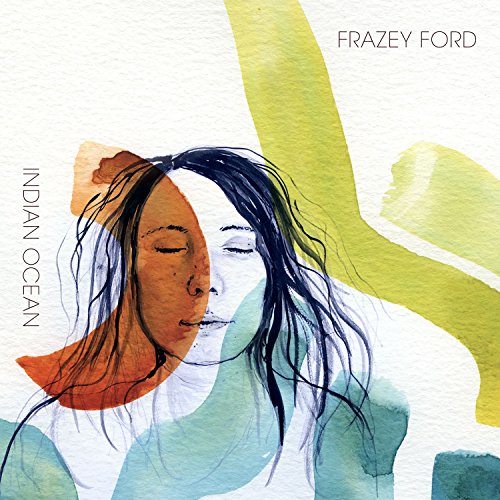
September Fields

Indian Ocean’s lead track “September Fields” is its strongest moment by a mile. Casting a long shadow over everything else that comes after, a massive song with a strong hook, strutting soul backing from, appropriately enough, the Rev. Green’s band the Hi Rhythm Section an assuredness of character not possessed by the remaining tracks on the album. It doesn’t hurt that it’s one of the few up-tempo numbers on Indian Ocean, moving at a comparably brisk pace and clearly set up for lead single status.


Ford’s formerly folk-heavy phrasing easily slides into full-on soul mode, turning syllables over in her mouth and stretching consonants and vowels with equal aplomb.

Maura-Lynch-of-Blush.jpg

Blush is the new project from Maura Lynch, formerly of cult New York-favourites Darlings. Inspired by a stint touring with Beverley, Maura was inspired to revisit the bedroom demos she’s been stashing away under the pseudonym Blush. Maura went into the studio with members of Pop 1280 and Pill and the first Blush album was born.

That self-titled debut will be out in December, and ahead of its release, this week has seen Blush share their debut single, Daisy Chain. A wash of fuzzy bass, gentle ringing guitars, and perfectly hushed, intimate vocals, it’s a track that seems to exist as two minutes of escapism, a flash of wistful summer sunshine breaking through an overcast skyline. As Maura repeats the line, “good morning baby, let the sun shine to your toes”, you can hear her genuine support, her desire for this person to not just have a good day, but to fulfil their wildest hopes and dreams. It’s a magical introduction, to a record Maura describes as “a diary of my late 20s”, a special record that simply can’t come quick enough. This album began as bedroom demos I recorded while playing with my longtime friends in Darlings. Once that band called it a day, I got together with Andy (producer: Pop. 1280, Yvette, Bambara) and the Campolos (Pill) to turn my demos into real songs.

Over nights and weekends in 2016, we recorded at Andy’s Gilded Audio studio, in both its first location in Chinatown and, later, in Dumbo. We ate many pizzas and watched many ridiculous YouTube videos. It was one of the breeziest, most fun music-making experiences I’ve ever had. Maura M Lynch.

http://

Blush is out December 8th via ArrowHawk Records. 

Zappa Records is to issue a new box set, Halloween 77 , which features all six shows that Frank Zappa performed at The Palladium in New York City at the end of October 1977.
This set includes all six shows in their entirety chronicled in the concert film Baby Snakes  although they’ve chosen to put the audio (24-bit WAV files) on a USB stick, rather than give you CDs. So it’s hi-res (good), but not physical (not so good). If you find that annoying, then the fact that the USB stick is shaped like a shaped like a ‘Zappa’s Oh Punky!’ candy bar might not sway you. Incidentally, the audio was mixed in 2016 from original vault masters.

There are 158 tracks in total and you do get a 128-page ‘digital booklet’ with photos and sleeve notes from co-producer Joe Travers, musicians Adrian Belew and Ed Mann, tour manager Phil Kaufman and famous fan Janet “The Planet” Walley.

As you can’t have failed to notice from the images, you do also you get a Zappa mask and costume. Obviously.

If USB stick and fancy dress don’t constitute your idea great music box set, you can opt for a three-CD edition, although annoyingly, that only delivers the actual Halloween show from 31st October 1977 (plus a few bonus tracks from the previous evening’s show). That’s 32 tracks – 126 less than what’s on that USB stick.

Image result for frank zappa the palladium shows 1977

Frank’s son Ahmet Zappa said “This box set was a very special experience for me to work on. I wanted to make sure we honoured these legendary shows, so it was important to me that this box set felt of the era. It was a blast working with our partners to create the late ‘70s-inspired Frank Zappa mask and costume and the candy-shaped USB stick filled with tons of Zappa goodness. It was yet again a labor of love gathering up all the archival materials, reading notes by people who were there, and most importantly making sure the audio was up to par. All of us at Zappa Records are mighty pleased with it, and hope that fans of Frank Zappa and of Halloween will be too.”

There is going to be a digital download version of the fancy (dress) box so I guess buying the CDs for ‘casual’ listening and the download for an archive of the whole thing might be an option.

Halloween 77 is released on 20th October 2017.

Image may contain: 2 people, people on stage, people playing musical instruments, guitar and concert

With a stadium-sized statement that cuts through the fragile count-in strum. A burst of crunchy guitar grandeur that’s short-lived as an equally-striking stab of self-deprecation steps up: “I hate myself for feeling like I’m burning up”. So goes the opening thirty seconds of Robert Muinos′ new song “Weeks At All” The opening track from his latest EP3 from the Melbourne singer-songwriter’s forthcoming.

Recalling both the bare-boned expression and burst/settle contrast of Jason Molina, “Weeks At All” is a raw, cathartic-chasing journey through pain, pity and frustration. In a constant state of flux between knife-edge fragility and worry-weighted collapse, Muinos steers the song through both recalled scenes and blunt pick-me-downs, aimed both indirectly (“let it out”) and as more targeted blows (“your hate comes pouring like a waterfall”). All leading to a line that equally serves as a smirk-and-a-shrug that undos all before it and as a brutally poignant self-summary: “I run away and sing my little songs.” then the huge guitar break, in this amazing release. Muinos — who is also currently a member of soul outfit Saskwatch and pop-weirdos Dorsal Fins.

http://

All songs written by Robert Muinos. Drums and backing vocals by Jim Lawrie. Bass guitar by Tom Pettit. Keyboards by Olaf Scott. Guitar, singing, recording and mixing by Robert Muinos. Rocorded at The Curtin in March 2017.

Image may contain: 1 person, on stage, playing a musical instrument and night

Angie McMahon‘s songs were written for live performances. Her captivating presence and soulful, warm vocals transfixes the audience. She writes lyrics that capture life experiences in her own unique way.

Her debut single ‘Slow Mover’ is a song that etched itself into the back of my mind after first hearing it live. Weeks later it would randomly pop into the forefront of my mind. Maybe it’s the way the song slowly builds, or that infectious chorus, or the fried chicken lyric. Probably best if you just hit play.

‘Slow Mover’ is a compelling introduction to what this young singer-songwriter is capable of.

http://

When we first heard of Madeline Kenney, there was always a preface summarizing her curious range of expertise aside from music — modern dance, baking, neuroscience. Then more new music kept arriving, and though those biographical facts remain curious trivia, the songs overshadow everything else. Produced by Toro Y Moi, Kenney’s full-length debut Night Night At The First Landing arrived at the end of the summer.

http://

True to its nocturnal name and cover, it’s an album for solitary, meandering nights, flitting between painterly dreamscapes and ‘90s alt-rock catharses. Songs like “Rita” and “Always” are big distorted guitar monuments that drown rather than pummel (in the best way) and the album as a whole is frequently gorgeous. It’s a promising beginning: Kenney’s built her early career on taking well-worn touchstones and managing to wring something new out of them, making them her own in the process.

http://

“Big One” is taken from Madeline Kenney’s forthcoming debut, “Night Night At The First Landing,” out September 1st on Company Records.

bnb-kellyleeowens-1508523603

Initially, the music on Kelly Lee Owens’ self-titled debut comes across a certain way. Owens has already proven herself adept at chilly, claustrophobic electronic arrangements that nevertheless still move. But her record is a deeper and more paradoxical work than first impressions might suggest. Her background includes both childhood choirs and young adulthood stints in the indie-rock world, and you can hear the lingering influence of both in the music she makes now: choir vocals in the ghostly or cooing way she sings and produces vocals, a songwriter’s eye applied to the limitless boundaries of dance music. Kelly Lee Owens feels removed and hypnotizing as much as it feels intimate and emotive, a personal work abstracted and reconstructed to the point where listeners can find their own way in no matter which direction they’re coming from.

http://

As the band Modern Baseball headed towards an extended hiatus, Jake Ewald — one of the band’s primary two primary songwriters has been investing more energy into his Slaughter Beach, Dog side project. He started it a couple years ago to release a handful of demos but picked it up in earnest last fall with Welcome, a charmingly low-stakes concept album about a fictional town called Slaughter Beach inhabited by characters that shared Ewald’s familiar sense of suburban disillusion. The project’s freedom from pressure and more freeform aspirations blossomed with the Motorcycle.jpg EP and Birdie LP this year. His newer tracks take cues from folk standards and confessional diaries, and they rival the great work he did with his main band, solidifying him as one of this generation’s most talented and adaptable young songwriters.

http://

Image result for warren zevon

On October 30th, 2002,Warren  Zevon was featured on the Late Show with David Letterman as the only guest for the entire hour. The band played “I’ll Sleep When I’m Dead” as his introduction. Zevon performed several songs and spoke at length about his illness. Zevon had been a frequent guest and occasional substitute bandleader on Letterman’s television shows since Late Night was first broadcast in 1982. He noted, “I might have made a tactical error in not going to a physician for 20 years.” It was during this broadcast that, when asked by Letterman if he knew something more about life and death now, he first offered his oft-quoted insight on dying: “Enjoy every sandwich.”  .

Letterman was a huge Zevon fan and he’d featured the singer on his show dozens of times, often subbing him in for Paul Shaffer when the bandleader was busy with other projects.

He also thanked Letterman for his years of support, calling him “the best friend my music’s ever had”. For his final song of the evening, and his final public performance, Zevon performed “Roland The Headless Thompson Gunner” at Letterman’s request. In the green room after the show, Zevon presented Letterman with the guitar that he always used on the show, with a single request: “Here, I want you to have this, take good care of it.”  The day after Zevon’s death, Letterman paid tribute to Zevon by replaying his performance of “Mutineer” from his last appearance. The Late Show band played Zevon’s songs throughout the night.

The show on October 30th, 2002 was one of the most emotional Letterman broadcasts ever, but Zevon did his best to keep things light. he said. “I have a form of lung cancer that spread. It means you better get your dry cleaning done on special.” He also talked about his in-progress album The Wind, which came out the following August. “They certainly don’t discourage you from doing whatever you want,” he said. “It’s not like bed rest and a lot of water will straighten you out.” .

Warren Zevon had no plans to tour at this point, so he knew that his live renditions of “Mutineer,” “Genius” and “Roland the Headless Gunner” would probably be his final public performances. Many in the audience probably had trouble maintaining their composure, but Zevon never wavered. He was absolutely brilliant.

“After the show, it was heartbreaking he was in his dressing room,” Letterman told Rolling Stone in an interview in 2008. “We were talking and this and that. Here’s a guy who had months to live and we’re making small talk. And as we’re talking, he’s taking his guitar strap and hooking it, wrapping it around, then he puts the guitar into the case and he flips the snaps on the case and says,

‘Here, I want you to have this, take good care of it.’ And I just started sobbing. He was giving me the guitar that he always used on the show. I felt like, ‘I can’t be in this movie, I didn’t get my lines.’ That was very tough.”

Contrary to the predictions of many doctors, Zevon lived another 11 months after his Letterman appearance, Zevon stated previously that his illness was expected to be terminal within months after the diagnosis in the fall of 2002; however, he lived to see the birth of twin grandsons in June 2003 and the release of The Wind on August 26th, 2003

More so than any other musical guest Letterman has had on his two late-night TV shows over the past 33 years, Zevon was a perennial favorite, appearing more than a dozen times. Not just because he wrote and sang some great songs, but because he was funny, self-deprecating and a cynical bastard — just like Letterman. Zevon played two songs on his first Letterman appearance “Excitable Boy‘s” title track and “The Overdraft” from the new LP — and he sat down to talk with the host, and he proved to be a charming, witty and biting guest, unlike most musicians (which is why they mostly just perform their hit song and get out of there). No doubt Letterman saw something of himself in Zevon,