First Aid Kit have announced the full details of their fourth album Ruinswhich will be out on January 19th, it is the follow up to 2014’s acclaimed Stay Gold.
The Söderberg sisters announced their return at the end of September with ‘It’s A Shame’. Ruins will come out on 19th January, and the band have shared another sample of the new record with ‘Postcard’.
The single leans heavily on the style of classic country ballads about a fading romance, with sliding guitar swells and ambling rhythms accented by sophisticated piano lines. The duo’s seamlessly blended harmonies bid a lover farewell: “Send me a postcard when you get to where you’re going / Send me a line to everything you’ve left behind.”
“‘Postcard’ is one of the most traditional-sounding songs we’ve ever written, and we wanted the production to mirror that,” the sisters have said . “It’s not a resentful song, but more of a reaching out to a lover to wish them well on their journey in the midst of having to let them go.”
The Swedish band’s Instagram reveals Ruins was produced by Tucker Martine and recorded at Flora Studios in Portland, Oregon. the girls collaborated with R.E.M.’s Peter Buck, Wilco’s Glenn Kotche and Midlake’s McKenzie Smith.
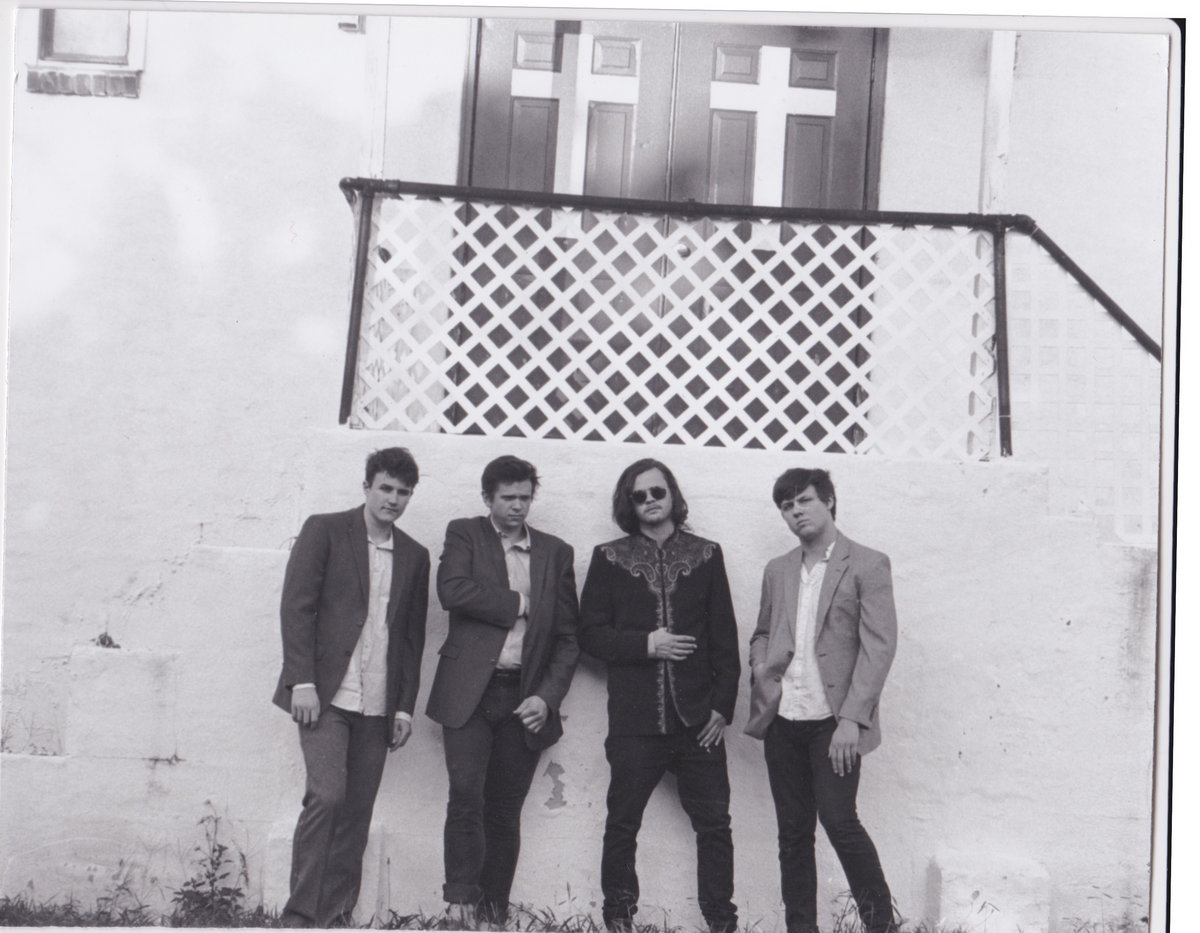
Lifting their name from a Greek maritime explorer in the service of King Philip II of Spain was a pretty boldly high-brow move for Athens, Georgia based band Juan De Fuca. The band, which began life as the solo project of Jack Cherry, have now morphed into a five-piece band, and will release their debut LP, “Solve/Resolve” early next year on Arrowhawk Records. Shortly after singer/songwriter Jack Cherry released a 6 song solo EP cavern of in 2015, he was fervently encouraged by friends in the Athens, GA scene to make something bigger happen with his material. Bassist Jack Webster and drummer Howard Stewart pushed for the formation of a full band, and when guitarists Clark Brown and Declan Farisee signed on, the group began work in earnest developing their sound.
Ahead of that release, this week has seen the band share their sprightly new single, All The Time. The track is a winningly shambolic affair, recalling the precise yet jagged guitar work of The Walkmen and the densely, layered experimentation of Cheatahs. The track seems to always teeter on the edge of collapse, an idea that ties into the lyricism, as Jack half sings/half yells, “I can’t escape, everything all the time, I can’t all deal with, or raise a fist at everything, all of the time”. There’s a real feel of cathartic anguish here; much of the record was inspired by a close friend’s suicide, and Jack has suggested Solve/Resolve is a record about not overcoming grief, but simply learning to live with it, as he explains,“it’s about trying to overcome something that you are just absolutely living with for the rest of your life”. In this blissful musical chaos, Juan De Fuca offer no resolution, just a helping hand that says we are not alone.
In Rachel Lightner, Nervous Dater boast one of the finest emerging lyricists in indie rock, one whose every neurotic couplet could be a self-contained story. Consider the chorus from “Bad Spanish,” the anthemic opener from debut album Don’t Be A Stranger: “It’s hard to ask for help if you don’t really want it/ Passed out on the train in your own vomit.” Or the many layers in this line on “Fun Dumpster,” the subsequent track: “I wore a dress for you/ ‘Cause you’re nicer when I do.” Or the breathlessly vulgar “Stockton Syndrome” climax: “Jackie’s got the drugs, and holy fuck he’s gonna take ‘em!” Lightner deploys these turns of phrase with a wide-eyed gusto that amplifies Nervous Dater’s prevailing feeling of barreling ahead while barely keeping it together, elevating their tremendous guitar-powered songwriting to ridiculous heights. Take the album title’s advice and get to know this band now.
Tom Herman Jr. aka Old Smile’s solo debut LP, Elusive Day a “Greatest Hits”? The twelve, snappy psychedelic jangle-pop jingles recorded over the course of two years, 2013-2015, range from derisive dirges to elated exclamations about lost loves, missed opportunities, and self-exploration. From the spirited psychedelia of “It Was Lie,” to soporific soundscape of “Slipping Away,” to the ear-worm licks on “Empty Lines,” the familiar feel of Herman’s compositions can be reminiscent of his former outfit, Philly-based Arches, or other-Jersey locals, Real Estate, but the influences run even deeper and maybe more classic, like The Rolling Stones, The Zombies, or early Rundgren. Sonically and Lyrically. On “Simple,”Herman paints a striking tableau of quotidian romance that resonates with just about anyone who’s been in love. Same on “No Reason,” a song that encapsulates a precise hopeless emotion we’ve all struggled with but can never quite enumerate.
Though the songs were recorded over a long period of time, they never lead you astray. The glue that binds it all together is Herman himself, who wrote, recorded, mixed, and played every instrument in this collection.
Tom Herman‘s featured video for his outstanding record that top-notch indie outfit Two Syllable Records. This whole album is exquisite, tempered with easy waves and washes of sunset strips. To know that it’s come from one man’s heart excites me to no end. You’ll thank me when you get the whole record and keep it spinning during the melting heat. From “Elusive Day”, out now on Two Syllable Records
Despite her last name, Anna St. Louis was born and raised in Kansas City. She grew up a painter and singing in punk bands, eventually leaving her hometown to attend art school in Philadelphia. After graduating she made the move to Los Angeles where she began teaching herself guitar, writing songs and recording them on her own in her bedroom. First Songs is the sound of someone discovering their talent in real time – a peak into the collage of a wonderful mind that is absorbing their new surroundings and using new tools to put them into the room. Listening to this collection you can feel the sun coming in through the window – Anna on the foot of the bed with a guitar on her knee, finding her voice. St. Louis wears her influences well – think Patsy Cline singing over John Fahey – but has a style all her own. And while you can take the artist out of the midwest, you can’t take the midwest out of the artist – so let this be known; this is Midwestern music ran through a California filter. I believe Anna will have many more releases in her lifetime, but let it all begin here – First Songs.
This ain’t your great grandpa’s Great Grandpa. Despite the name, Great Grandpa are planted firmly in their 20s, with all of the attendant disaffection, indecision, and general ennui that that entails. But, like a few other famous musicians from Seattle, they’ve turned the gray fog of youth into searing, lopsided guitar music, with the capacious depths of Alex Menne’s voice sounding just at home over the fiery squalls of “No Hair” as it does on the tender balladry of “All Things Must Behave.” Oh, and also, there are zombies.
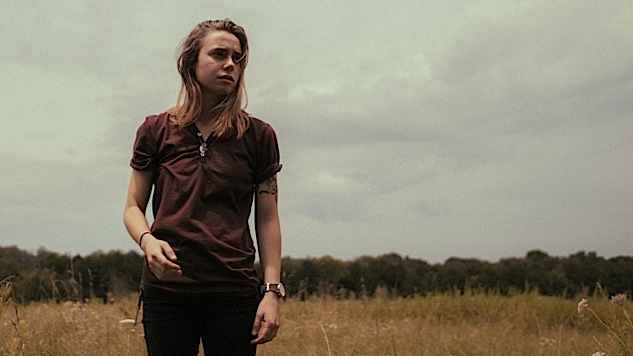
It’s impossible to assess Julien Baker’s sophomore effort, Turn Out the Lights, without acknowledging the considerable shadow of its its predecessor, Sprained Ankle. released two years ago, the debut snuck up on all but a handful of people. Turn Out the Lights hopefully will sneak up on no one. It sounds lush and meticulously made. Sprained Ankle was stripped to the bone, sonically speaking, but its followup features lots of keyboards, plus string sections, vocal harmonies and more atmosphere.
From the new album ‘Turn Out the Lights’ out October 27th on Matador Records.
The Van Thompson twins Hannah and Chloe are joined by bassist Joanne Forbes and drummer Shaun Hood to create their grunge/surf-rock sound. They recently played a sold-out headline gig at King Tut’s and were overwhelmed by the love they felt from the crowd, who knew every word and were more than ready for a good dance. With two EPs and a whole host of brilliant gigs under their belts, as well as their singles being featured on TV shows like Tattoo Fixers and Made in Chelsea, they’re one of the hottest bands on the scene right now, and are clearly going places.
‘Bittersweet’, the latest single from Glasgow’s The Van T’s, now accompanied by a video . The clip, features the four live on stage at Jumpin’ Jacks in Newcastle, hanging out back stage, and out on the street having fun.
Catch The Van T’s live at the following dates:
NOVEMBER
11 North Britain Festival, Stockton
21 The End Festival – The Social, London
22 Jimmys, Manchester
Before she started putting out music under her own name, Carla Dal Forno cut her teeth on scratchy lo-fi punk and murky experimental soundscapes. On her debut full-length, You Know What It’s Like, and its follow-up EP, The Garden, she plays with a fusion of the two, marrying pointed urgency with an atmospheric foreboding. Her music is characterized by a pervasive haunting, unfurling in smoke wisps and snaking base lines. Like a hypnotic soundtrack to the witching hour, where elements of sedulous noise, experimental pop, cheery dark wave and gentle drones artfully coalesce into a thoroughly fantastic listen!
Songs like the creeping “What You Gonna Do Now?” and the bruised “Make Up Talk” explore not the unsettling unknown but the sort of everyday monsters that surround us,
In 1972 The Rolling Stones With Stevie Wonder at Madison Square Garden, New York, NY July 26th
On JULY 26, 1972, Mick Jagger celebrated his 29th birthday on stage at Madison Square Garden as The Rolling Stones brought down the curtain on what was arguably the most chaotic tour of their career.
Promoting their Exile On Main St album, musically speaking The Stones were in ferocious form, as this rough-edged soundboard recording of Jumping Jack Flash taken from the soundboard at their NY show proves.
1972 was the year that the Rolling Stones became, as they loudly proclaimed on tour, the “Greatest Rock ’N’ Roll Band in the World!” Following the violent disaster of their Hell’s Angels–policed Altamont mega-festival outside of San Francisco on December 6th, 1969—where three people were killed in accidents and another, Meredith Hunter, was murdered—the Stones disappeared for a while. They went into exile, both real and imagined. Exile from the tax man in England that gazed hungrily on their collected bank accounts and exile as culture warriors—street fighting men—dedicated to the fanciful belief that they could change the world.
The Stones didn’t sit idle in their time out of from the spotlight. They locked themselves away in the sweaty, dank basement of Keith Richards’s mansion in Nellcôte, France, for months on end and came out with their magnum opus: Exile on Main Street. It was a double-album, 18 tracks total, that recounted the near-entire history of blues, country, soul and rock ’n’ roll in the grittiest, most exhilarating way imaginable. Released on May 12th, 1972, it sold nearly a million copies in its first week alone.
When plotting their upcoming tour of the United States, the band was intent on making a different impression than they had on their previous jaunt. These shows were going to produce some of the most in-demand tickets of all time, and the Stones and their handlers wanted to be professionals about it. They would do their best to mitigate the violence and mania that seemed to follow their every stop on their last tour, while moving through the country with a degree of style and class that rivaled any visiting foreign dignitary that the U.S. had ever hosted.
Everything about the outing was over the top. The Stones surrounded themselves with the beautiful and the important—Truman Capote, Hugh Hefner, Zsa Zsa Gabor, Woody Allen and Bob Dylan. They heavily courted the press. They blew their minds out with weed, cocaine and tequila, all while staging some of the most incredible sets of live rock music ever seen. Music was just part of what informed The Stones’ touring cavalcade. By this point in their career, the band had managed to bisect the worlds of music and celebrity, creating their own social enclaves, and enjoying what Keith Richards described as a piratical lifestyle.
Said the band’s tour manager of the time, Pete Rudge: “With the Stones you’ll meet Mick’s little gang – the Truman Capotes and the Princess Lee Radziwills. Then on the other hand you’ll meet Keith’s little gang – the Kenneth Angers and William Burroughs. You can be exposed to every aspect. You can meet anybody, and that tends to rub off.
Over 500,000 people mailed in postcards for the mere chance to buy a pass to one of the four shows at Madison Square Garden. Purchases were limited to two per customer at a sticker price of $6.50, but the market was soon flooded with scalped passes that were being hawked at $50 or more.
After months of anticipation, the S.T.P. tour—which, depending on who you asked, either stood for the synthetic hallucinogenic of the same name or simply the Stones Tour Party—kicked off in Vancouver on June 3rd, 1972. The band and its managers picked this far-flung locale to start their summer swing so that they could knock off the rust before taking their show to more media-saturated markets in San Francisco and Los Angeles. The gig went well. The stop in Seattle went better, and by the time they made it to the Winterland Ballroom in the “City by the Bay,” they were cooking.
Over the next two months, the Rolling Stones and their coterie of crew members and hangers-on crisscrossed North America. At each stop along the way, the local citizenry paused their lives long enough to gawk at, rejoice in or denounce the “event of the year.” In Chicago, the band stayed at Hugh Hefner’s Playboy Mansion when they couldn’t get secure enough hotel rooms elsewhere. In Houston and Fort Worth, Texas, they brought out a Hollywood film crew to capture the show for posterity. Eventually, that footage would get chopped up and released as Ladies and Gentlemen: The Rolling Stones.
A separate, more illicit documentary was also in the works that captured the band’s candid offstage exploits. That film, titled Cocksucker Blues, was produced by Stones manager Marshall Chess and directed by Robert Frank. Though it would never receive an official release, if you search down some of the darker corners of the Internet, it’s not too hard to find. Viewer discretion is advised.
“New York is New York is New York,” famed concert promoter Bill Graham explained to author Robert Greenfield, who tagged along for most of the tour and penned the book A Journey Through America with the Rolling Stones. “’Til you do it there, it hasn’t happened. They could have sold the Garden out for a year. They are the biggest draw in the history of mankind. Only one other guy ever came close—Gandhi.”
New York was ready for the Stones, and the Stones were more than ready to take a bite out of the Big Apple. The band’s four shows spread over three nights at Madison Square Garden were the unquestioned highlights of the tour, with the final night pegged as the can’t-miss gig. Everyone wanted in on the action.
The scene backstage before the last show is a madhouse. Television host Dick Cavett is on hand to interview MickJagger and the rest of the band for an hour-long special. This famous face and that famous face drift in and out of view hoping to get a coveted moment of personal time with someone in the band before they make their way out in front of the masses. Few are successful. Makeup is applied, last-minute documents are signed and the tequila sunrises flow like water.
Before the Stones can take the stage at MSG, the audience is treated to a searing set of music from the opening act, Stevie Wonder, who is just then promoting his latest album, Music of My Mind while on the verge of putting out an even greater work, Talking Book. It was a huge coup for the headliners to get the Motown piano virtuoso at this precise moment. His single “Superstition” is one of the biggest songs of 1972, well on its way to claiming the top spot on the charts a few months down the road.
Stevie Wonder is the perfect foil for the Rolling Stones. He isn’t going to compete with them on their terms like another white blues-based rock band like Humble Pie or the Allman Brothers might. He’s a different thing entirely. His stage show, while rapturous, is centered on his superb musicianship, his incredible songwriting and his own joyful persona.
A little under an hour after Wonder leaves, the Stones make their grand entrance and launch into “Brown Sugar.”Jagger appears dazzling in his sleeveless white jumpsuit, dotted with big sparkling sequins, and a long red sash tethered at the waist. A single, large aquamarine jewel is glued to the center of his forehead. His main foil and “Glimmer Twin” Keith Richards, ever the rock ’n’ roll pirate, is decked out in black leather pants and a flowing, white blouse, which is left unbuttoned to reveal his gleaming white, sweat-glazed chest.
Jagger eats up most of the attention, hopping across the stage, preening like a prized turkey. His arms flail all around, pointing in multiple directions one moment and enticing the crowd to clap along in the next. “Gold coast slave ship bound for cotton fields / Sold in the market down in New Orleans.” The subject matter is chilling, but the thousands singing along sound positively ebullient shouting back each word at their puffy-lipped Messiah.
The pace picks up even more on the next song, “Bitch,” which is played at a far faster clip than the recorded version. By the time they get to “Gimme Shelter” they’re locked in. The shot of adrenaline that comes from getting smacked in the face by 18,000 people simultaneously has worn off, and the Stones settle into their regular groove.
“They had a unique lighting system that they invented,” photographer Bob Gruen told me. The rig was designed by Woodstock MC Chip Monck, who installed a 40-foot by 8-foot array of mirrors near the top of the front of the stage. It was set at a 45-degree angle and had lights shined into it and reflected back onto the band.
Gruen explained, “Up until then in arenas, you had a large spotlight called a Super Trooper, this big carbon arc light up around the rafters in the arena shining down on the stage. They had eight Super Troopers at the back of the stage shining into this Mylar mirror, shining back onto the band. It was the brightest show I’ve ever seen.”
The Stones hit their marks with precision. Keith sounds appropriately cheery during his turn on the microphone for “Happy.” Charlie Watts keeps the party chugging along, crashing cymbals and kicking the hell out of his bass drum on “Bye Bye Johnny.” Mick Taylor sounds like a man possessed during his regular extended solo on “Midnight Rambler,” proving that he is the best pure musician in the band.
Still, it’s Jagger that the fans have come to see, and he doesn’t disappoint. The singer remains the ultimate icon of style and panache. Even with all the obvious effort and energy he expends on stage, he does so in a way that screams cool. When they reach the final song of the main set, “Street Fighting Man,” he’s flinging blood red rose petals over the heads of those screaming their vocal cords to shreds in the front row.
The night isn’t quite over yet. A few moments pass and the band reemerges for a rare encore with Stevie Wonder in tow to perform the latter’s hit “Uptight (Everything’s Alright).” As that song comes to an end, Richards kicks into the instantly recognizable riff to “Satisfaction,” and he and the rest of the band take flight.
The performance is breathtaking. Bobby Keys’s sax mingles with Wonder’s backing band, transforming the straight-ahead rocker into a full, swinging soul sensation. Jagger is giving everything he’s got left in the tank, pushing his voice harder and harder, straining to be heard above the cacophony.
As the last notes of their biggest hit ping across the cavernous walls of the basketball arena, a giant, burning cake is brought onto the stage to commemorate Jagger’s 29th birthday. The crowd is enticed to sing “Happy Birthday.” Somewhere, someone picks up a pie and a full-on food fight takes place in front of thousands of fans. Only Watts seems to be off-limits from the chaos. Once the supply of pies runs out, Mick jumps forward to give the crowd a salute and then he and the rest of the band depart for the last time.
A few hours later, the Stones and their crew, along with a host of the well-to-do, find themselves at the St. Regis Hotel to take part in a final party hosted by Atlantic Records head Ahmet Ertegun. In jarring contrast to the friendly atmosphere inside the Garden, the mood here is almost somber. Everyone in the band are all physically and emotionally spent. The party wraps sometime around dawn and they all scatter to the wind.
Set List
Brown Sugar
Bitch
Rocks Off
Gimme Shelter
Happy
Tumbling Dice
Love in Vain
Sweet Virginia
You Can’t Always Get What You Want
All Down the Line
Midnight Rambler
Bye Bye Johnny
Rip This Joint
Jumpin’ Jack Flash
Street Fighting Man
Uptight (Everything’s Alright)
(I Can’t Get No) Satisfaction
Musicians:
Mick Jagger: Vocals
Keith Richards: Guitar
Mick Taylor: Guitar
Charlie Watts: Drums
Bill Wyman: Bass
Bobby Keys: Saxophone
chek out Corbin Reiff who will release his first-ever book, Lighters in the Sky: The All-Time Greatest Concerts, 1960-2016.