Dan Bejar, aka Destroyer, has announced a new album today called Ken. The title is apparently lifted from the original title of Suede’s “Wild Ones”. Ken will be Bejar’s first album since 2015’s Poison Season. It’s out October 20th on Merge Records . Chaos strikes in a hospital. Satan haunts a fashion show. Tinseltown swims in blood. Destroyer’s twelfth album, ken, is full of unforgettable scenes from Dan Bejar, one of indie rock’s finest lyricists, with a macabre bent suiting his newfound penchant for gothy synths.
This day in 1979, I walked home from Virgin Records exactly 38 years ago today with a plastic bag containing the double album by The Clash. It was priced as a single LP but had two vinyl records tucked inside. The inner sleeves had “hand written” lyrics and it has to be the lyrics I’ve read most often. Both historically and personally The Clash, London Calling had a huge profound impact.
The Punk-Rock legends’ third album was released in 1979 by CBS Records. Like so many great albums included on the Best Of’s lists: genres switch and there is an ambitious mix of sounds and musical ideas. London Calling addresses social displacement, unemployment and racial conflict – drug use and responsibility was also touched upon. From Lover’s Rock’s messages of safe sex to the anthemic rally of the title track; it is an album that has defined the decade and continues to influence bands. It has sold over five-million copies and is thought of as one of the defining records of the Punk era. London Calling captured The Clash’s energy and primal urges; their loud and vital voice and social consciousness. If previous albums (from the band) focused on British sounds and ideas: London Calling incorporated more American sounds and suggestions. Rebellious, romantic and exhilarating: a true one-of-a-kind treasure from one of Britain’s greatest bands of all time.
It was released in the United Kingdom on 14th December 1979 through CBS Records, and in the United States in January 1980 through Epic Records. The album represented a change in The Clash’s musical style, featuring elements of ska, funk, pop, soul, jazz, rockabilly, and reggae more prominently than in their previous two albums.
London Calling was widely regarded as one of the greatest albums of all time. In 1987, it was ranked on RollingStone magazine’s “100 Best Albums of the Last Twenty Years”. In 1993, NME ranked the album at number six on its list of The Greatest Albums of the ’70s. Vibe magazine included the double album on its list of the 100 Essential Albums of the 20th Century. Q magazine ranked London Calling at number four on its 1999 list of the 100 Greatest British Albums, and, in 2002, included the album in its list of the 100 Best Punk Albums
This fantastic catchy song was not listed on the cover of the original album so it was my first experience with so called bonus tracks that is so common these days. The Lyrics was however printed on the inner sleeve.
This album has been in my top ten since it was released, it is a classic rock’n roll album that everyone should own. I do not concider it a punk rock album musically but the attitude that reeks off this album is quintessential punk. The styles and genres are excitingly mixed and woven together, but laid on top of a punk rock foundation.
Depending on the source, the working title for what would become London Calling was either The New Testament or The Last Testament. The story works better if you believe Kosmo Vinyl’s argument for The Last Testament—thatThe Clash intended London Callingto be the last rock ‘n’ roll album, the paired bookend to Elvis’ first album, right down to the pink-and-green lettering.
Since The Clash continued to make rock music afterLondon Calling, it’s silly to take the “last rock ‘n’ roll album” assertion literally or as evidence of a collective ego gone mad. I think it’s more accurate to say that The Clash approached London Calling from the perspective of “What if this were the last rock ‘n’ roll record—what would that sound like, feel like, be like?” Given their concern about impending world doom expressed so clearly in the title track, they may well have felt on a subconscious level that London Calling could very well be the last rock ‘n’ roll record.
I can’t think of any other album that triggers as many different emotions, ignites so much passion and authenticates so many deeply held personal values. A work of tremendous energy, London Calling is also extraordinarily energizing. At the end of the record you may not be any clearer than Joe Strummer was about what we can do to change this fucked-up world of ours, but you leave with more confidence that somehow we’ll figure it out. More than any other record in my collection, London Calling can pick me up when I’m down, and give me hope whenever I feel all is hopeless.
Emi Knight, the woman behind Strawberry Runners’ magical In The Garden, In The Night EP, has come along way since, as a seven-year-old in Indiana, she picked up the guitar and learnt to strum along to church hymns and Bob Dylan tunes. After a number of years drifting in and out of various musical projects, Emi seems to have stumbled upon something special in Strawberry Runners. Now based in Brooklyn, Emi formed Strawberry Runners back in 2013, and has been crafting the tracks that would go on to make this most magical of records ever since.
The resulting record is an exploration of adolescence, presented from the point of view of an older songwriter reflecting on the experiences that shaped her. Emi paints beautiful lyrical pictures, rich musical canvases where joy and sadness co-exist; entwining, shifting and growing together. Take the stunning Dog Days, a track that contrasts the sheer joy of slipping off your shoes and dipping them into a winding river, with the shocking death of a friend’s child, ultimately concluding, “search your whole life long, there ain’t nothing strong as a Kentucky woman”. It reads like a teenager’s diary entry, fluttering from the usual everyday self-doubt, to moments of beautiful tranquillity and devastating loss. The brilliant Brother is an apology and a promise to a sibling, “born five years after me”.It reflects on how Emi never picked up on his loneliness, She never realised how her teenage exploits and nights outs left him with nobody, and concludes with the most beautiful of sisterly sentiments, “when you’re a little older I’ll explain it all to you, why the good will never stay and all the dark and scary things will never go away but we’ll be bigger than them someday”.
Musically it is a record that drifts easily between styles, one second recalling the indie-pop of Allo Darlin’, the next drifting off into rich orchestral pop and then off to sweet honest alt-country that Lucinda Williams would be proud of. The record’s finest moment comes at it’s finale, Your Bed Was Tall is a tribute to Emi’s mother, who “stand’s tall in spite of the mighty tempest”. The tracks builds to a crescendo of entwined guitar lines and steady, booming drum beats, as Emi sings into the musical storm, “when the world ain’t crumbling, do you think we’ll stop fighting? When the world ain’t crumbling, will I let you in, will I let you in”. In a world where life can be a struggle, In The Garden, In The Night, was a reminder that we must always battle to shape the world we want to see, that compassion, effort and, yes, music, can help us all make a little more sense of it all.
Drahla’s new EP, “Third Article”, coming out at the back end of November, Recorded with Hookworm’s MJ,“Third Article” showcased why this Leeds-based trio are so hotly tipped, and why excellent Canadian racket makers Metz took them along on a European tour.
The lushly-produced EP showcased the band’s gentle evolution into a unique and formidable act, mixing the no-wave energy of post-punk with the creativity and angularity of art-rock. Opening track, Form Of Luxury, is one of the year’s great statement of intents; squalling, swirling guitar lines joined by crisp drum battering and languid bass, before Lucile Brown’s anxious, spirited vocal enters, and blows the whole thing apart. Elsewhere, Silk Spirit fused gritty swagger with wonderfully jagged guitar noise, while New Living Creation adds some bonkers saxophone to the mix and comes out reminding us just how exciting Your Code Name Is: Milo sounded when they first burst onto the scene. Bristling with energy and ideas, Third Article shows Drahla to be one of the most ambitious and intriguing newcomers of 2017: utterly thrilling.
All tracks written and performed by Luciel Brown, Rob Riggs and Mike Ainsley.
Saxophone written and performed by Christopher Duffin.
Additional guitar on Circuit by Mr J.
Recorded by Matthew Johnson at Suburban Home Studios, Leeds, July 2017.
In a year when the influence of 1990’s alt-rock was all the rage, few injected the sometimes stale genre with as much fresh energy and excitement as the Manchester/Oxford-trio False Advertising. The band’s excellent EP, I Would Be So Much Happier If I Just Stopped Caring, was partly recorded at Abbey Road, before the band were forced to leave because they were, “too loud”. The EP collects a number of stand-alone singles that FalseAdvertising put out over the last year, but is none the less a remarkably coherent affair. The sound of the ’90s is alive and well with Manchester-based fuzz lovers False Advertising. Guitarist Jen Hingley lays down thick octave riffs and chiming chords with the best of them, catalogued on EP I Would Be So Much Happier If I Just Stopped Caring.
The five tracks that make up the EP, are a winning blend of angst, anger and grunge. For the most part, singer JenHingley’s guttural vocal howl is accompanied by fuzzy walls of guitars, clattering cymbal heavy drum beats and propulsive, strutting bass-lines. Lyrically these tracks are a dissection of growing up in a world where monotony and stupidity still seem to run the planet; Hey You is a rallying call for gender equality, Not My Fault asked whether it is okay to attempt to detach yourself from the political landscape, while the excellent Honest, dealt with the toxic nature of media bias. 2017 is a year where politics and music became reacquainted, and few people have sound tracked it better than False Advertising.
Five new tracks each recorded with a different producer: Timothy J. Fairplay, Ghost Culture, Bullion, Boxed In, Moscoman . Teleman announce new EP titled Fünf, the band’s third body of work following two critically acclaimed albums Breakfast [2014] and Brilliant Sanity [2016]. Having always wondered what it would be like to make a record with each song recorded by a different producer, the band enlisted five different producers from electronic/dance backgrounds to see if they could bring anything new to their sound, working with Timothy J. Fairplay, Ghost Culture, Bullion, Oli Bayston of Boxed In, and Moscoman.
The band say of the EP, “It was kind of tricky cos just as we were settling into the process it was time to up and off to another studio to meet the next guy. But mostly it was a great experience, we all enjoyed it a lot. The producers we worked with came mostly from dance backgrounds and some had never recorded a band before, so we were all pushed out of our comfort zones a bit which was great. All said and done, it still sounds like Teleman but each song has a different flavour which is what we were hoping for. ”
Starting life at the beginning of 2015, Mt. Doubt is the project of Edinburgh-based musician Leo Bargery. Mt. Doubt has received radio airplay on Amazing Radio, Xfm, KEXP, and BBC Radio Scotland.
Releases have gained praise from The Herald, The National, and many bloggers. Mt Doubt were tipped as one of Vic Galloway’s ’25 Scottish Artists to Watch in 2016′
Lovely Bad Things are a quintet from the California town of La Mirada, a place the band describe as, “a fitting place to find solace in music”.The band offer a DIY-take on early 90’s rock, fusing layered melodious vocals with a vicious three-pronged guitar assault and powerful rhythm section. Having honed their sound for the best part of eight years, Lovely Bad Things released EP Homebodied this year sharing the debut single of the single, Hiding To Nothing.
With its prominent rolling basslines, arsenal of jangling guitar tones, and heavily beaten drums,finds the potent middle ground between the alt-rock of Dinosaur Jr and the poppy melodies of The Goon Sax. The stars of the show are the contrasting vocals lines, Camron Ward’s easy-going Stephen Malkmus-like delivery set against LaurenCurtius’ powerfully melodic tones – The Pixies comparisons are as accurate as they are predictable. A band who’ve taken their time to perfect their sound, Lovely Bad Things now emerge as a thrilling prospect, and with a full length release and European tour to come they are a band who might just be.
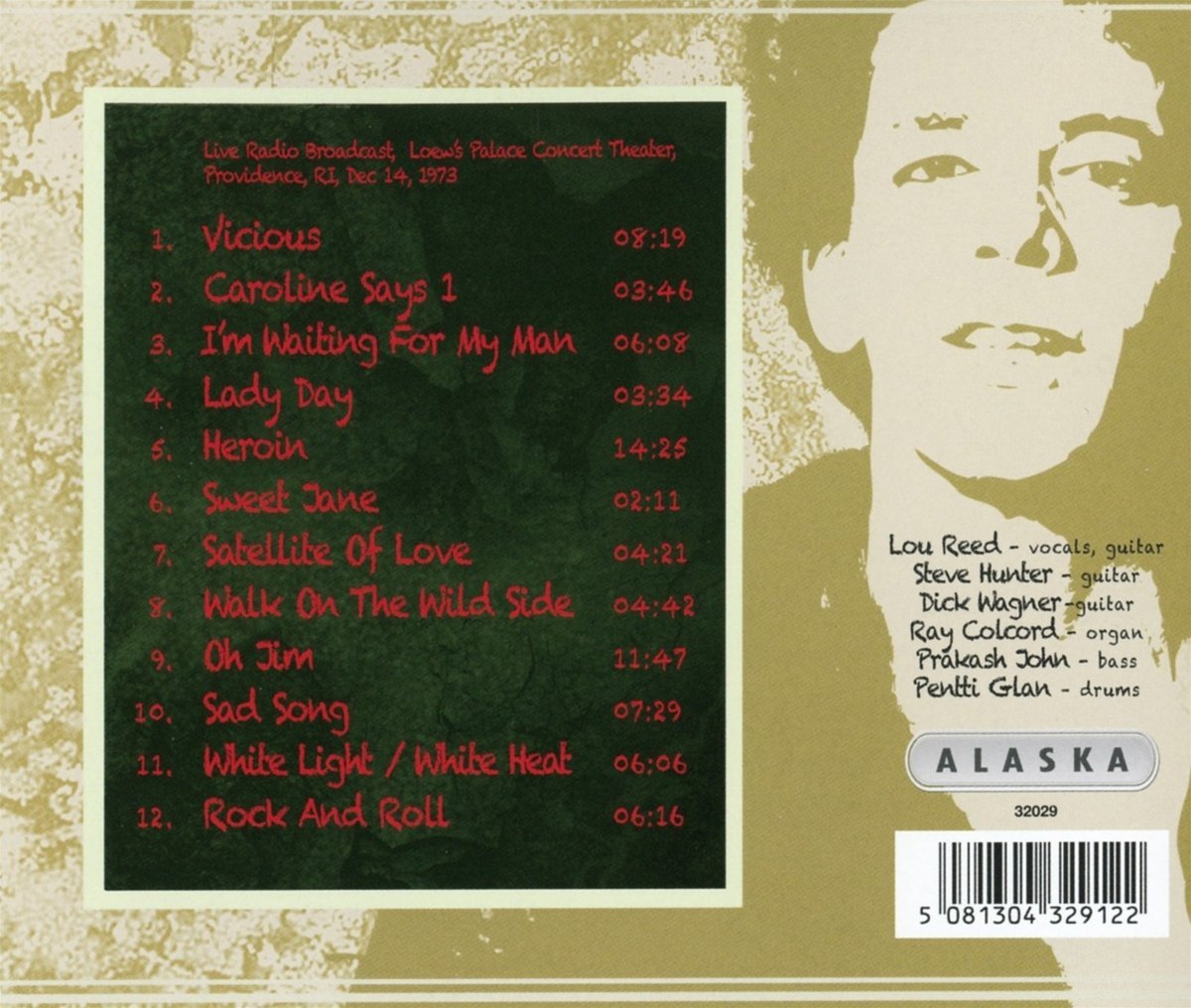
This is the same material as released on the albums “Rock’n’Roll Animal” and “Lou Reed Live” and from the recordings of the same tour. Although the band are as tight as they were on the seventies albums, The bonus tracks on Rock’n’Roll Animal were originally withheld because Lou wasn’t completely satisfied with his vocal performance . It’s a worthwhile addition to Lou’s live collection. Recorded a few weeks before what was to become the classic that is the ‘Rock ‘n’ Roll Animal’ album . It’s a slightly different ordered set, but tight and immensely powerful. Lou’s voice is indeed ‘strained’ to put it politely, but it doesn’t detract too much, and I can’t stop playing this album. A great curiosity I guess, but one well worth acquiring. I loved this era of Lou’s career for all it’s perceived faults, and I loved this band One of rock’s greatest bands.
Lou Reed – vocals, guitar; Steve Hunter – guitar; Dick Wagner -guitar; Ray Colcord – organ; Prakash John – bass; Pentti Glan – drums
This set, recorded at Loew’s Palace Concert Theater in Providence a week prior to the classic live album recording, captures this moment in time when Reed was creating emotionally honest musical turbulence on stage.
This recording begins with the band developing the soon-to-be classic opening jam for “Sweet Jane” that would eventually come to define the sound and creativity of this band. However here it is utilized as a prelude to “Vicious” instead. This opening jam clearly points the way toward the sound Reed fans would soon experience on his live Rock & Roll Animal album. The ambiguous “How Do You Think It Feels,” “Caroline Says 1” and “LadyDay,” all from the “Berlin” album follow in sneering style. Despite the first and third of these being incomplete, it is tantalizing to hear these musicians beginning to tackle the Berlin material. A tough, undulating “I’m Waiting For The Man” is up next, with this propulsive rhythm section taking this classic Velvets song to another level.
Following some tuning, the group eases into “Heroin,” and audible applause of recognition is heard from the audience. Every group added their own dimensions to this song and this band is no exception. One of the key elements is Ray Colcord, whose organ work greatly enhances the rush feeling following the verses leading into each jam sequence. Although all of the preceding material is engaging, “Heroin” finds the band fully hitting their stride and features an inspired vocal from Reed. The cascading flow of music from this band engulfs the lyrics as Reed battles his way through the highs and lows of addiction.
From here on out, most of the songs segue directly from one to the other. Upon the conclusion of the last frenzied rush in “Heroin,” where the group is fully cooking away, an incredibly abrupt transition occurs, where they suddenly ease into the opening bars of “Sweet Jane.” Both “Sweet Jane” and the “Satellite of Love” that follows, are incomplete, but the latter song is particularly interesting here. While “Satellite” was a dreamy, downright romantic ballad during the European tour leg earlier in the year, here the song has become far more forceful and upon it’s conclusion another remarkable transition occurs, as the band skillfully drops into the opening bars of “Walk On The Wild Side.” This segue is so well done that Reed can clearly be heard spontaneously exclaiming “Perfect! Alright!” to his band members. Also of note here is the wonderful bass work of new recruit Prakash John and the entire band providing background vocals much like the album arrangement. Certainly one of Reed’s most fully realized character studies, this is followed by another in the form of “Oh Jim.” Clocking in at nearly 12 minutes, “Oh Jim” gradually ratchets up the tension before blazing into a searing jam featuring plenty of great call and response guitar work from Hunter and Wagner. Another skillful segue occurs out of “Oh Jim” as the band transitions into the lurching beat of “Sad Song.” Once again, Reed cannot contain his elation and he exclaims “Beautiful!” as they begin. This is another great example of this band in top form, with fine vocal arrangements and the guitarists playing unison leads that couldn’t possibly be tighter. Just as a brief organ interlude from Colcord ends this number, the group immediately launches into the set closer, “White Light / White Heat.” This classic Velvets number is taken at a fast clip, with both guitarists reinforcing the chugging rhythm section. Colcord serves up a frantic electric piano solo, in addition to playing organ here, adding a whole new dimension to this song. This is a blazing conclusion to an extraordinary sequence that leaves the audience wanting more. Reed and the band return for an encore of “Rock And Roll.” A strong rendition all around, this features a highly engaged instrumental rave-up at the end and a standout contribution from Prakash John, whose bass is very prominent in the mix. A downright awesome performance, this number becomes an anthem for the only thing that can save Reed’s life: rock and roll.
In retrospect, 1973 was a year of massive growth for Lou Reed and certainly a critical step in his approach to live performing. Regardless of how the shows on this tour were perceived at the time, something important was clearly going on here. The melding of Reed’s unique brand of decadent, literate music with a big arena rock sound would eventually reach the masses in a way The Velvet Underground never could. The strange contrast between Reed’s detached, blasé vocals and the hard rocking professionalism of his backup band is the essence of its appeal.