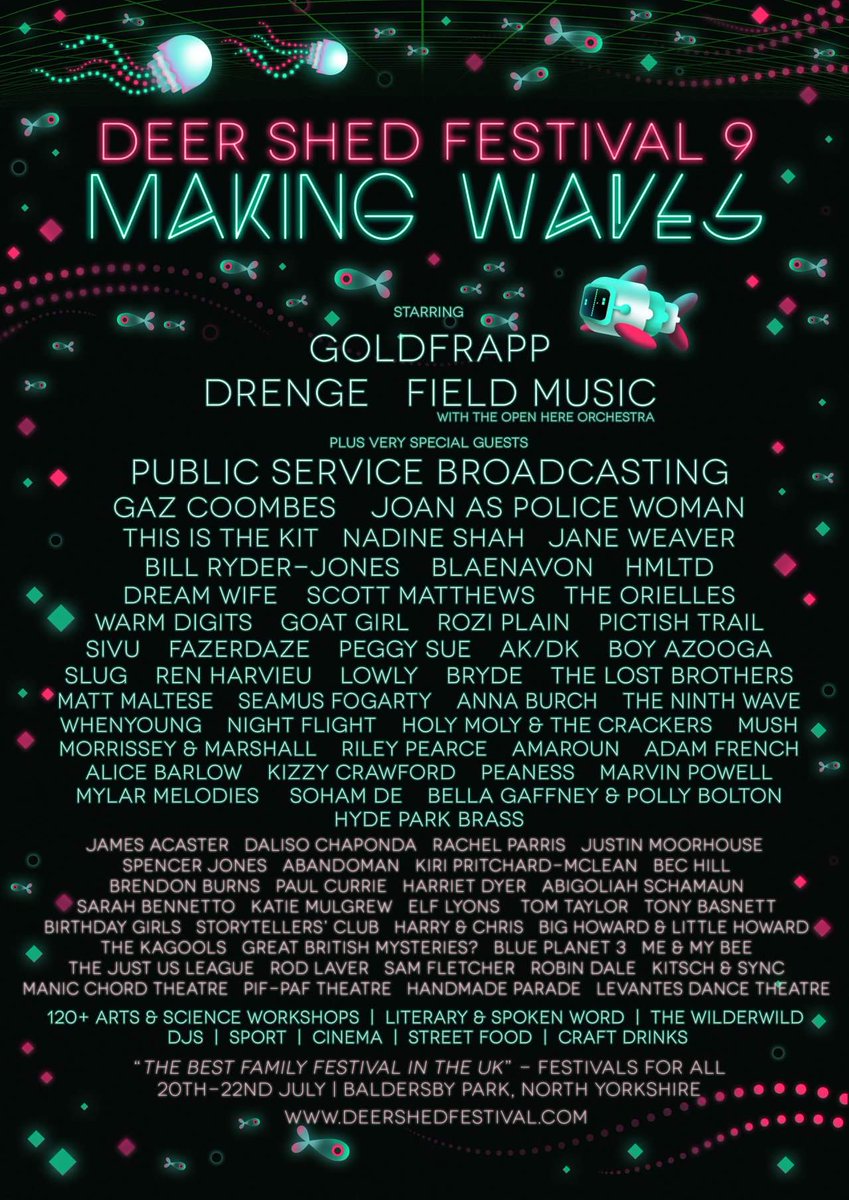
The Deer Shed Festival is among my favourite festival events of the year, I have only missed two of these yearly events the first one I didnt know about the other was due to a car mishap Its always the week after the larger and more hetic Latitude the Deer Shed is a wonder, a small site easy to navigate your way around and full of family led  people that just want to find a few new bands and let their children thoroughly find themselves in the vast array of things to do . At Deer Shed you are probably more likely to come across a small person going a bit wild after too many fruit juices than an adult getting drunk and rowdy. Deer Shed Festival could quite possibly be the best family festival in the UK ever.

Friday

Everything is a delight on this opening day all I can say is that every band is worth seeing, so how do you decide who to see, My top choices are Blaenavon, they should surely warm up the crowd with their infectious indie rock and insanely energetic performance, Ben Gregory introduces them with: “We’re Blaenavon. It’s difficult to spell and even harder to say!” their incredible debut album “That’s Your Lot” released last year. Received with critical acclaim, the band have been festival faves ever since it came out and if you haven’t caught them live yet, well, you’re really missing out. released last year.
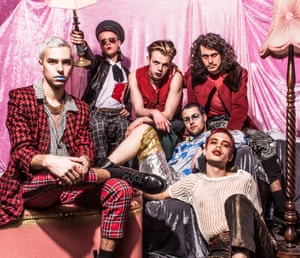
Image result for tell me about HMLTD

Then the visually new romantic punks and creatures of the night: whatever you describe them HMLTD are, they’re absolutely ace. Outlandish, strange and on the rampage, HMLTD are all dressed up with somewhere to go.

Dream Wife  the Icelandic-Brightonian star trio, From their Riot Grrrl roots right up to their raucous live show, we been waiting a long time for a band like Dream Wife. They’ve got the art school cred – they all met while studying down in Brighton but are now based in London – they’ve got the slamming tunes and they’ve got the kind of attitude that, were you able to bottle it and sell it to shy and retiring 14-year-olds, you’d make millions. ‘Cool’ is a word that’s chucked about far too lightly these days, but cool is what Dream Wife are. The trio are made up of Rakel Mjöll on lead vocals, Alice Go on guitar and Bella Podpadec on bass, and their glimmering punk-pop is the most exciting thing you’re going to hear this weekend.

but in the Lodge Stage there is not one act to be missed too Joan Wasser aka Joan As Police Woman is the colossal Friday night headliner. Simon Raymonde of Bella Union Records ( surely the best indie label in this world) bass player in legendary Cocteau Twins. For his new venture Simon has teamed up with Richie Thomas, ex-Dif Juz member, to release some more tunes of their own. They’re called Lost Horizons, and their stunning debut album, Ojalá, is a rare sighting of two gifted musicians who, for different reasons, have been largely absent from music-making for the last twenty years.

Check out Art School Girlfriend and girl band Peaness, and finally friday night headliner Drenge , Drenge may be from the Peak District but they often gig in Sheffield, have not performed live for nearly three years all intents and purposes a Sheffield band with echoes of Jack White or the Black Keys. Their heavy riffage of Black Sabbath and sounds as though Messrs Iommi and Ward dropped by the shack where they recorded it to help out, Drenge are an English three-piece rock band made up of Eoin Loveless, on guitar and vocals, his younger brother Rory, on drums, and Rob Graham on bass. The brothers grew up in Castleton, Derbyshire, where they formed the band in 2010, relocating to Sheffield in 2014. The band take their name from something “that would sound like a noise that we would be playing onstage.” Their name also translates into “Boys” in Danish. They have released two albums, Drenge (2013) and Undertow (2015).

Saturday

Goldfrapp the Electronic synth pop duo, comprised of Alison Goldfrapp and Will Gregory headline the saturday night along with the return of the excellent Public Service Broadcasting to Deer Shed consisting of J. Willgoose, Esq. on guitar, banjo, other stringed instruments, samplings and electronic musical instruments, Wrigglesworth on drums, piano and electronic musical instruments, and J F Abraham on flugelhorn, bass guitar, drums and assorted other instruments. The band mostly plays instrumental music; Willgoose has said that “singing is never going to work. I’m not going to be happy with it, I’m not going to be comfortable playing it to other people.”They take samples from old public information films, archive footage and propaganda material.

This Is The Kit, featuring Kate Stables’ her angelic voice and her magnificent band of musicians, After making a long-awaited breakthrough with 2015’s Bashed Out – which featured PJ Harvey collaborator John Parish and the National’s Aaron Dessner – last year’s Moonshine Freeze a certain Best Album of the Year cemented the Winchester-born, Paris resident’s position as the rising star of contemporary folk. Although her music nods to Sandy Denny, Beth Orton and Robert Wyatt, she’s carving her own niche in a notoriously tough field. Her songs veer from achingly stripped down – just voice and banjo – to deliciously more complex, with layers of trumpet, clubbier grooves and psychedelic folk mantras.

Young Halifax band The Orielles first caught our attention with their jangly brand of surf-pop, Consisting of sisters Esme and Sidonie, with friend Henry on guitar, The Orielles are skilled at creating sunny melodies, fused with reverb-strewn harmonies and their own trademark sparkling, youthful energy. 

Cardiff-based Boy Azooga is piloted by Davey Newington, a young man with much musical heritage currently making waves.. The gifted vocal of Matt Maltese, but my highlight of the day is Gaz Coombes and his band the ex-Supergrass frontman, if you saw his set on Jools Holland it was just sublime.  A key inspiration for the album was reading Grayson Perry’s assessment of contemporary manhood The Descent Of Man. The book resonated on a personal level, making him contemplate his conduct as a man in the context of being a partner, a father to two daughters, a son, and a songwriter, but also as a male who feels compelled more generally to be an active participant in deconstructing and rebuilding masculinity in order to create a better, fairer, more equal society. Check out his latest solo album World’s Strongest Man, So here’s an album by a male songwriter who feels deeply affected by the conversations happening around men and masculinity right now in light of #MeToo, Time’s Up and gender inequality in all its forms. Gaz Coombes isn’t congratulating himself on having these thoughts, he’s just trying to be more like the man he wants himself and other men to be. There’s room for a lot more of those.

Psychedelic super vocalist Jane Weaver with her latest album Modern Kosmology leads us to the claim that she could well be the queen of psychedelia.,

One of the many multi-talented members of This Is the Kit is singer songwriter Rozi Plain as a solo performer pleases both the traditional folkies and those with more experimental tastes. Dreamy electronic synth riffs and fluttering soundscapes surround her vocals layered with lovely harmonies.,

Someone I really need to see is American singer songwriter Anna Burch. Burch’s debut album, “Quit The Curse”,  released in early February. The nine tracks of pop rock generously glazed with her honeyed vocals. It’s “about processing unhealthy and tumultuous relationships” from the Detroit singer-songwriter. Though, on first listen, the album’s many difficult themes are rarely given away by the breezy production that shrouds the lyrics like a beautiful, catchy cocoon. If singles ‘2 Cool 2 Care’ and ‘Tea-Soaked Letter’ are anything to go by, it’s going to be a phenomenal set with Burch’s super-sweet vocals and song subjects.

Sunday

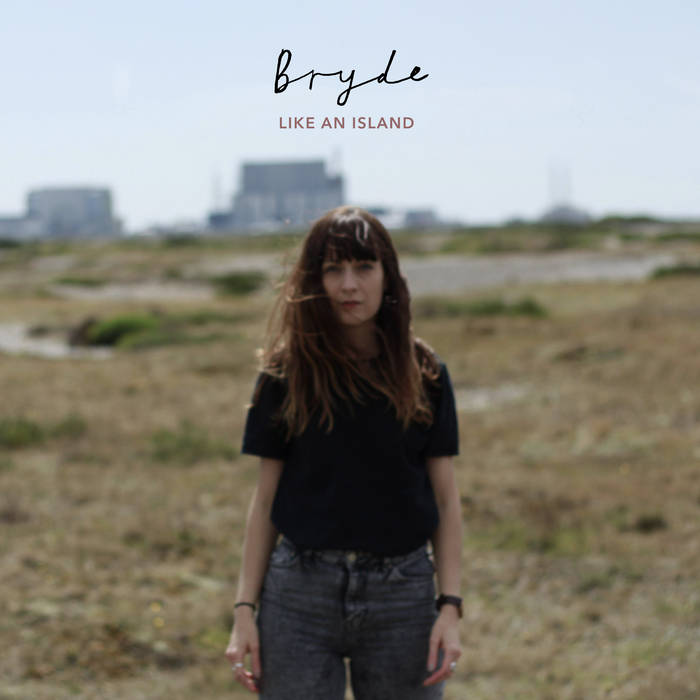
Field Music  brothers David and Peter Brewis are that awesome band from Sunderland  What a Sunday afternoon finale to Deer Shed Festival 9 this should be! co-founder and former guitarist of The Coral, a producer extraordnare is pretty much Merseyside music royalty. Bill Ryder-Jones, one of the most intelligent and moving guitar-driven singer songwriters around. Scottish band and Lost Map act Pictish Trail  also I’ll be checking out one woman and her guitar. who after 3 super EP’s released her debut album “Like An Island” Sarah Howells is beginning to make seismic waves in the British music scene. as Wales based songwriter Bryde formerly part of the duo Paper Aeroplanes 
Make sure you check out the Big Top and the comedy of James Acaster  and over in the new Buckends tent is legendary songwriter Chris Difford from the band Squeeze hopefully playing a few songs and talking about his time with the much loved quintessionally english group.

Head over to the legendary Science tents where the Deer Shed offers a fantastic selection of activities for all ages with craft activities and workshops going on during the day. a huge effort to ensure that older children had interesting and age appropriate things to do as well as the younger ones. There are workshops galore, one where you could  screen print your own festival poster,

Don’t forget the other highlights the run around the park on sunday morning and of course who does’nt love a game of Swingball or the chance to construct something at Cardboard City.

Recently, Seattle trio Dude York surprised fans with a new digital single, “Moon.” Today, we are sharing another track from their Springtime recording session at Different Fur Studios in San Francisco. Guitarist Peter Richards handles vocal duties on “What Would You Do If You Had Some Money Now?”

Dude York’s next performance is Friday, July 20th on the main stage at the Capitol Hill Block Party.

waxahatchee-great.jpg

On September 7th, Katie Crutchfield’s ever-shifting musical project Waxahatchee returns with the Great Thunder EP. Featuring a collection of songs written with now-dormant experimental recording group Great Thunder while Crutchfield was also writing the Waxahatchee albums Cerulean Salt and Ivy Tripp, the original recordings have mostly faded into obscurity. Unearthing and reimagining them with producer Brad Cook at Justin Vernon’s April Base studio in Wisconsin was a cathartic experience, she says.

Crutchfield shares Great Thunder’s release details as well as a music video for the solemn “Chapel of Pines,” directed by Christopher Good and starring Crutchfield and Kevin Morby. Watch and share, then pre-order Great Thunder on CD, 12-inch EP, and limited-edition opaque yellow Peak Vinyl in the Merge Records store .

On the heels of last year’s critically acclaimed Out in the Storm, Crutchfield found herself looking to take a sharp turn away from the more rock-oriented influences of her recent records towards her more folk and country roots. “I would say that it is a complete 180 from the last record: super stripped-down, quiet, and with me performing solo, it’s a throwback to how I started,” writes Crutchfield. “Overall, the EP is a warm, kind of vibey recording.”

Crutchfield will take Waxahatchee out on the road solo for the remainder of the year, first at headlining shows in September before linking up with Courtney Barnett through October.

One of two standout Washington D.C. post-punk records released this year, Flasher’s Constant Image is the group’s big-time debut LP; the tight group of friends found themselves a step beyond their DIY roots upon signing to Domino Recordings. They’ve taken full advantage of their access to studio resources here; Constant Image is a sly, smart, fun record that never sounds too slick or overproduced and really shows off the trio’s ability to wind dry, oblique observations about commercial culture around killer pop hooks. Standout tracks like “Pressure,” “Material,” and “Skim Milk” elegantly balance space and tension, elastic bass and minimal yet melodic guitar, and a rhythmic sense of urgency and discomfort with blase vocal delivery. There are clear ‘80s sonic referents here, but this is no indistinguishable pastiche too backwards-facing to sound contemporary; instead, Flasher’s deft work highlights that we’re still dealing with the legacies of the Reagan/Thatcher era in many, many ways.

http://

Flasher has such an 80’s goth post punk kinda style. remind me of The Lords of the New Church. quirky tempo changes and really cool vocal harmonies. great live. a must see.

Echo Ladies make expert use of ghostly vocals, a style employed by everyone from Ian Curtis to CHVRCHES, where the words feel far away—like they’re coming through a radio in another room. Echo Ladies, like Makthaverskan and Agent blå are part of a flurry of post-punk-leaning pop to flood out of Sweden. New on the scene and released by the excellent U.K. label Sonic Cathedral, “Pink Noise”, could be the soundtrack to a dark high school comedy (called Pink Noise, of course) that follows an all-girl post-punk band trying to make it. It’s their liberal use of synths, classic pop song arrangements, and simplistic drum machine beats that set this album apart.

http://

Released June 8th, 2018

All songs by Echo Ladies

Bambara is a grimy noise-rock band whose recent release “Shadow on Everything” is a cinematic achievement. The loose concept record mashes cowboy jangle with aggressive post-punk to form a scummy, empty landscape for characters to inhabit. Laced throughout is a winding, poetic tale of relationship strife and vignettes from the character’s hometown.

These guys are killing it and are unmatched in their intensity when it comes to live performances.

http://

Band Members:
Reid Bateh – Vocals
Blaze Bateh – Drums
William Brookshire – Bass
Bryan Keller Jr. – Guitar
Sammy Zalta – Guitar
Released July 19th, 2018

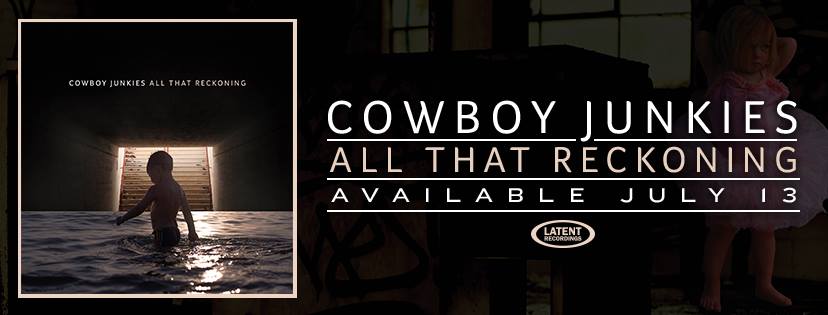
The Canadian Cowboy Junkies made slowcore before the term was invented. They have now existed for more than twenty years and their music still sounds as provocative as titillating. Cowboy Junkies was founded in 1985. The big breakthrough followed in 1988 and was mainly due to the great success of their debut album ‘ The Trinity Sessions ‘, in which especially their covers by Lou Reed and Hank Williams were praised.

Cowboy Junkies have revealed that their new album “All That Reckoning” it will be their first release in six years released on July 13th. All That Reckoning, have just released a second video and song entitled “The Things We Do To Each Other”. Take a look and let us know what you think.

“Fear is not so far from hate, so if you get the folks to fear, it only takes one small twist to kick it up a gear.”…know what I mean? You should also check out brother Pete’s video for the title track of the album while you are in the watching mood.There is lots more music to come, so please stay tuned. We hope to see a lot of you on the road in the coming months. “Welcome to the age of disillusion,” sings Margo Timmins toward the beginning of All That Reckoning, 

“The Things We Do To Each Other” is from the Cowboy Junkies new album All That Reckoning releasing on July 13, 2018.

The Junkies’ stock in trade is the ease with which they navigate the mysterious terrain of human intimacy and longing, yet here they are, bearing witness to our collective anxieties with their usual solemn gravitas. It might be a slight stretch to say that this is their take-it-to-the-streets punk rock record—they’re too regal, too elegant for anything so mercenary, preferring instead to comment from a vantage point of weary and hard-won wisdom—and yet, it may be the most aggressive Cowboy Junkies album yet, as visceral and emotionally direct as anything they’ve ever done.

All That Reckoning pulses with rock and roll energy: “Sing Me a Song” pushes into the red with brawny riffs and a thunderous backbeat, Margo’s distorted vocals fighting to be heard amidst the din. “All That Reckoning Part 1” and “When We Arrive” both nod toward early-’90s alt-rock with woozy bass pushing through electric guitar strumming. And even when the songs are slow, as they often are, they still tend to sound oceanic: “The Things We Do to Each Other” starts folksy but roars in the end, while “Wooden Stairs” updates the Trinity Session quietude with a swirl of dissonance and minimal piano plunking. By the time the spare, acoustic “The Possessed” shows up to close the album—the most featherweight song here, and the most in-character for the Junkies—it feels like a massive sea change.

The world has never been smaller than it is right at this moment. With increased internet connectivity for everyone and the proliferation of social media, human beings are connected to one another to a level unimaginable even ten years ago. The one barrier that continues to separate, however, remains language. With their latest single “Nearer My God,” which also happens to be the title track to their upcoming album, the band Foxing attempted to break down those walls, and put together five different language versions of the song,

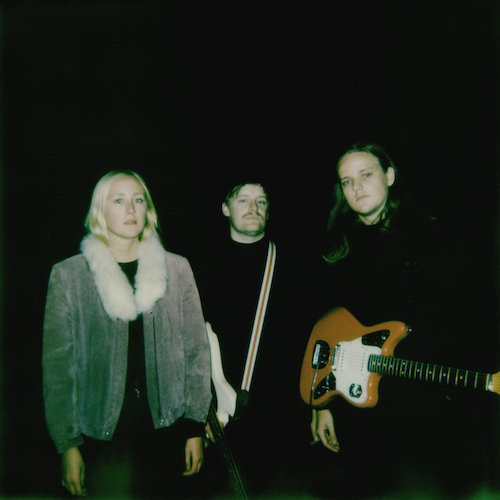
Los Angeles band The Feels, are desribed as  “Psych punk future rock+roll post-everything melody music,” goes the effusive run-on sentence, “from LA.” it closes. Even as someone paid to write about how music sounds, feels, and fits into the grand scheme of things, I can’t think of any better way to describe Feels, so I’m going to go with that.

Fronted by Laena Geronimo previously of the band Raw Geronimo  Feels’ self-titled debut came out in 2016 on Castle Face Records and was produced by Ty Segall. The rest of the band is made up of Shannon Lay (backup vocals, guitar), Amy Allen (bass), and Michael Rudes (drums), to compose a formidable four-piece who play the kind of garage rock that makes talk of rock being “dead” sound downright ridiculous. The record is just nine songs and twenty-nine minutes long, but it’s still impressive enough to cement them as one of LA’s best new bands. Given their last record came out two years ago, the band is ripe to release some new music.

http://

Band Members
Laena Geronimo,
Shannon Lay,
Michael Rudes,
Amy Allen,

Later this month, The Feels are playing a free show in downtown Los Angeles on July 28, check out Feels’ debut album .

Image result for the band at big pink images

The Band emerged in the late sixties as part of the roots movement that would come to counter the psychedelic influence that had taken a grip on popular music. This group of four Canadians and one Arkansas musician, who once backed Ronnie Hawkins and Bob Dylan, exploded onto the scene with arguably two of the greatest albums of all time – Music From Big Pink and the self-titled second album The Band. Rustic and encompassing various genres, performed with musicianship of the highest order and with a great trio of vocalists in Levon Helm, Rick Danko and Richard Manuel, the albums are like timeless storybooks, documenting a long-gone era with nostalgia, bitterness and regret.

Flanked by a guitarist of the highest order in Robbie Robertson and the almost mythical layer-adding Garth Hudson, these are soundscapes like no other. Songs like The Weight, Whispering Pines, Lonesome Suzie, The Night they Drove Old Dixie Down and King Harvest represent a group in full mastery of their abilities and are rightly regarded as classics.

The problem with The Band is that they peaked too early. The dirty habits of the rock and roll life style set in, drugs and alcohol the corrupting influences that saw the group decline after the third album Stage Fright. In addition to this, Robertson has also alluded to the pressures of being on the road that only served to exasperate the issues facing these talented musicians. By the early seventies, Manuel, once the main songwriter for the group, could no longer pen material. His voice remained entrancing but onstage he could barely perform beyond a few numbers.
The Band would continue to show sparks of their former selves throughout the remaining seven years they spent together. Moondog Matinee, a covers album, is pretty fine and there are a few nuggets to be found on Northern Lights-Southern Cross, one of the original setup’s final albums. By the time they called it quits following the Last Waltz they were burned out. Robertson could no longer tour and Manuel would tragically take his own life in 1986. A reunited Band in the nineties (minus Robertson) was unable to capture the magic, with very little new original material penned. Here are some of their classic songs.

A Musical History

The Weight

Gram Parsons might have coined the phrase “cosmic American music”, but has any piece of music ever sounded so cosmic, or indeed so American, as the Band’s signature track? By the time Levon Helm’s road-weary traveller has pulled into Nazareth – not in biblical Galilee, but eastern Pennsylvania, where CF Martin founded the oldest guitar company in the US in 1833 – he’s already “feeling ’bout half-past dead”, with light years on the clock, and no end to his journey in sight. So ingrained is The Weight’s sense of the mythological and metaphysical that even after you learn the more prosaic truth behind its cast of characters – that “Luke” refers to their former Hawks bandmate Jimmy Ray Paulman, “Anna Lee” was a childhood friend of Helm’s and “Crazy Chester” was an eccentric club owner from North Carolina – it still feels as esoteric and inscrutable it did on your first listen. It’s a song that doesn’t sound like it was written, so much as divined – a nugget of gold panned from the riverbed of American musical tradition, even if four-fifths of the group who happened upon it were Canadian.

Chest Fever

According to guitarist Robbie Robertson: “If you like Chest Fever, it’s for god knows what reason … it doesn’t make any kind of sense in the lyrics, in the music, in the arrangement, in anything.” Yet it’s hard to see how the reason could be any more obvious: if you like Chest Fever, it’s because of Garth Hudson. The multi-instrumentalist didn’t sing, and his songwriting credits were scarce, but his peerless ability and technical know-how were a huge, if often overlooked, asset to the Band. Ophelia – on which he almost single-handedly constructs a Dixieland-jazz wall of sound – is perhaps the greater testament to his musicality and versatility, but personal preference means Chest Fever sneaks on to this list ahead of it. Sure, the lyrics were ad-libbed and largely meaningless, but Hudson’s extraordinary Lowrey organ intro (improvised from Bach’s Toccata and Fugue in D minor) and the heaving, inexorable groove of the song’s central riff elevates what might have been a throwaway number into a thing of indomitable power and majesty, which for many years served as the centrepiece of their live set.

The Night They Drove Old Dixie Down

In later life, drummer Levon Helm began to dabble in acting, appearing in movies such as Coal Miner’s Daughter, The Right Stuff and, bizarrely, the Steven Seagal eco-thriller Fire Down Below. His greatest performance, however, will always be that of Virgil Caine, the defeated but stoically defiant protagonist of what is possibly the Band’s finest track. Helm inhabits the role of a forlorn Confederate veteran so completely that when he sings – in that high, lonesome, cigarettes-and-rye rasp – about how the last days of the US civil war are “a time I remember oh so well”, you find yourself believing him. In writing it, meanwhile, Robertson displayed remarkable nuance: the lyrics are not an expression of sympathy or support for the Confederacy, much less slavery; they’re the lament of an ordinary man who knows he’s on the wrong side of history, aware that his own suffering – and the excesses of the victors – has already been written out it.

Whispering Pines

Much of the Band’s early magic lay in their rejection of clearly defined roles. Each member had a primary instrument but would chop and change as the music required; songwriting duties were mostly shared between Robertson and nominal lead vocalist Richard Manuel, but there was no de facto leader; they were adaptive, instinctual, egalitarian; a band – the band – rather than a vehicle for individual talent. That began to change after their self-titled second album, as much because of Manuel’s drug-induced inertia as the bitter disputes over Robertson’s royalty shares, but the heartrending Whispering Pines stands out as perhaps the greatest collaboration between the group’s two main songwriters. Manuel composed the melody – so haunting it would have given Brian Wilson shivers – on an out-of-tune piano he kept at home before tasking Robertson with finishing the lyrics; the guitarist responded with a poetic meditation on loneliness that Manuel’s fragile falsetto managed to wring every last ounce of pathos from. It was no accident, as Robertson later explained: “Richard always had this very plaintive attitude in his voice, and in his sensitivity as a person. I tried to follow that, to go with it and find it musically. We both felt very good about this song.”

Up on Cripple Creek

There’s an argument for 1969’s The Band – also known as The Brown Album – as a loose concept album about the people, places and shared experiences of an older, more innocent and fast-vanishing America, an idea not entirely dissimilar to what Ray Davies was doing on the other side of the pond with The Village Green Preservation Society and Arthur. The Band’s worldview, however, was decidedly more blue-collar: they gravitated towards earthier tales of stricken sharecroppers, down-at-heel outlaws and charismatic drunkards. Up on Cripple Creek is the epitome of that, the story of a sanguine, free-wheeling hobo’s cross-country adventures with his “little Bessie”, and likened by the critic Greil Marcus to Harry McClintock’s Big Rock Candy Mountain as “a place where all fears vanish beyond memory”. Underpinned by the bright, sure-handed bounce of Helm’s drumming and Hudson’s funky, undulating wah-wah clavinet, it’s possessed of a roguish, irresistible charm that never fails to have you reaching for the nearest bottle.

Stage Fright

All five members of the Band had cut their teeth as working musicians in the 1950s, when the concept of success was very different to what it would be a decade later when they finally achieved it for themselves. “If you’ve never made a million dollars overnight, like we did, you have no concept of what it can do,” reflected bassist Rick Danko. “Suddenly, we had all the money we needed and people were falling over themselves to make us happy, which meant giving us all the dope we could stand.” Stage Fright was the sound of the Band choking on fame’s poisoned chalice, a theme that ran through the album of the same name – see also WS Walcott Medicine Show’s mockery of showbiz artifice, or Daniel and the Sacred Harp’s Faustian parable about a musician selling his soul – and yielded some of its strongest material. In this case, the creeping anxiety and psychosis – “Your brow is sweating and your mouth gets dry / Fancy people go drifting by / The moment of truth is right at hand / Just one more nightmare you can stand” – belonged to Robertson, whose writing was taking a darker, more personal turn, but the song is brought to life by Danko’s twitchy, nervous vocals.

The Shape I’m In

By 1970, the shy, sweet-natured Richard Manuel had started down the self-destructive path that would ultimately consume him. A heavy drinker since his teens, Manuel subsequently developed a fondness for hard drugs that made him unreliable and accident-prone, and he seemed content to let his considerable songwriting gifts wane – after that year, he never wrote again. Robertson would later recall: “I begged him, I pleaded with him, I offered to become his partner in songwriting, I’d pull him into a song I was working on just to get him in the mood or give him a taste of it, thinking he would go on to follow it up. But he didn’t.” It’s tempting to wonder if The Shape I’m In was one of those songs. It was certainly written about the pianist’s physical and psychological deterioration, and not withstanding the mischievous twinkle in its eye or the Stax beat in its step, the lyrics – “Out of nine lives, I’ve spent seven / Now, how in the world do you get to heaven?” – have the air of an intervention. Manuel sings it with a gruff, haggard charm, but the real stinger comes close to the end, when he lays out the dilemma his bandmates were wrestling with: “Save your neck, or save your brother / Looks like it’s one or the other.” Manuel took his life in a Florida hotel room 16 years later.

When I Paint My Masterpiece

Cahoots, the group’s misfiring fourth album, brought to an end to one of rock’n’roll’s most febrile creative streaks, containing what Rolling Stone would later (and to these ears unfairly) call “Robertson’s first truly awful song”, the unloved The Moon Struck One. Yet it still had its moments, principally this one – a song written by their former paymaster Bob Dylan, but which belongs, in the broader sense of the word, to the Band, and to Levon Helm in particular. The drummer’s characterful vocal captures the essence of a Yankee outsider’s odyssey through Europe – romancing “a pretty little girl from Greece,” dodging lions in the Coliseum, navigating a near-riot in Brussels – far better than Dylan’s own sub-par version, released a couple of months later. Special mention must also go to Garth Hudson’s sparkling turn on the accordion, which lends the song a discombobulating layer of faux-continental sleaze.

It Makes No Difference

Though it might seem like the kind of song more suited to Richard Manuel’s wheelhouse, Robertson wrote It Makes No Difference with Rick Danko in mind, and the bassist knocked it out of the park, out of the neighbourhood, and several area-codes down the road. Simply put, this is one of the rawest, most devastating vocal performances committed to tape, by this band or any other: a seemingly straightforward torch song about the void left by an absent lover, Danko’s high, keening delivery amplifies it to levels of hurt and desperation that are almost as uncomfortable for the listener to hear as they were for Danko. It’s a song that you can’t turn away from, an apocalypse-by-melancholy, whose heartsick protagonist is ceaselessly pursued by low-hanging storm clouds, torrential rains and – just when you think things couldn’t possibly get any worse – a herd of stampeding cattle.

Acadian Driftwood

This list concludes in 1975 with the release of Northern Lights – Southern Cross, after which the original lineup would record only one more studio album, the contractually obligated (and how it showed) Islands. Yet their penultimate effort – discounting those of their latter-day iterations, which featured neither Robertson nor Manuel  was a welcome return to form, and even fitful greatness. Acadian Driftwood, the album’s big moment, tells the story of the Great Upheaval of the 1750s, when tens of thousands of Acadian colonists were forcibly deported from Canada by the British, who “signed a treaty and our homes were taken / Loved ones forsaken, they didn’t give a damn”. As a meticulously researched song of historical record, it shares some DNA with The Night They Drove Old Dixie Down, but it’s arguably even more ambitious. Though it’s never made explicit, once Manuel, Helm and Danko start intuitively trading verses, there’s a sense that this story is not being told from a single perspective, but several, with each man expelled from his home into an uncertain future. It was the last time the group’s three lead vocalists would share a song between them, and they couldn’t have chosen a better or more quintessentially Bandish one for the occasion.

  • Rick Danko – bass, vocals, double bass, fiddle, trombone
  • Levon Helm – drums, vocals, mandolin, guitar, percussion
  • Garth Hudson – organ, keyboards, saxophone, accordion, pedalboard, woodwinds, brass
  • Richard Manuel – piano, organ, vocals, lap steel guitar, drums
  • Robbie Robertson – guitars, vocals, percussion

The band