Summer 1968 was a transitional time for the Belfast Cowboy Van Morrison. Recently departed from his garage rock band Them and unsatisfied with the release of debut solo album “Blowin’ Your Mind”, he was determined to move his music from the peppy pop of “Brown Eyed Girl” to someplace deeper. He was briefly living in the Boston area, where he conceived of the mystical blend of soul, jazz, folk, and Celtic music that would define his masterpiece of a second album Astral Weeks.
Crucial to the development of that sound were a series of live performances in August at a small subterranean club called the Catacombs, backed by a local bassist and flautist. Writer and musician Ryan Walsh, in his book about the album and wider happenings in Boston at the time (also called Astral Weeks), He describes a recording of one of those Catacombs gigs, perhaps the only known document of this embryonic stage of an album that is routinely cited as among the greatest of all time. The recording was never released, nor was it circulated as a bootleg. Much of the Astral Weeks book is spent documenting Walsh’s own heroic efforts to find a recording copy.
Then, on Wednesday of this week, an official download of the recording, simply titled Live in Boston 1968, suddenly appeared online as an official download. It was only available via iTunes UK, and the cover art was essentially blank. But by Thursday afternoon, this rarest of rare recordings had disappeared again, wiped from the store. Van Morrison has always been a bit of a strange guy, but this was bizarre even for him.
Today, @vanmorrison unceremoniously released the ’68 “Catacombs Tapes” as a live album on iTunes UK. This is the legendary recording I spend the whole #AstralWeeks1968 book trying to track down & hear…— Ryan H. Walsh (@JahHills) November 8, 2018
Walsh has a pretty good theory about what’s happening here. He speculated that the release was intended as a “copyright dump.” By officially making the recording available for purchase, according to Walsh, Morrison is asserting and preserving his copyright over it before it defaults to the public domain in January, 50 years after it was made. The optimistic interpretation of this move is that Morrison is gearing up to release the show officially; the pessimistic interpretation is that he’s moving to block anyone who would attempt do so themselves after it became public domain. Either way, it would not be surprising if this were spurred on by Walsh’s book, which was published in March of this year. If you missed out on downloading the show yourself, it seems likely that it will soon pop up via various non-sanctioned channels if it hasn’t already, now that it’s out there.
William Tyler will follow his sweeping 2016 album Modern Country with a new record entitled Goes West, the great Nashville-bred guitarist he’s released a new track called “Fail Safe,” a brief but luminous instrumental built on Tyler’s own graceful playing and a thwacking polyrhythmic backbeat.
A prodigiously skilled player with roots in folk, country, and rock’n’roll, Tyler got his start with stints in Lambchop and Silver Jews in the late ’90s before releasing a string of increasingly acclaimed solo albums beginning with 2010’s Behold the Spirit.That record found him toying with the borders of the so-called “American primitive” tradition, the style named and popularized by John Fahey in the 1960s, featuring elaborate compositions based on folk forms for solo fingerpicked steel-string acoustic guitar. (Tyler’s twists on the genre’s conventions included occasional trombone accompaniment and snippets of nocturnal field recordings.) He’s expanded his sound gradually since then, often playing electric guitar and with a full backing ensemble, culminating so far with Modern Country, an album that sounded as much like the widescreen productions of Daniel Lanois and Brian Eno as it did like down-home folk.
This trajectory continues with “Fail Safe,” a breezy melodic tune whose arrangement reveals new layers of resonance with each listen. According to a press release, Tyler is back to playing acoustic guitar only for this album, though he is accompanied by two great electric players in Meg Duffy and jazz legend Bill Frisell. Goes West will be released via Merge January 25th.
From the album Goes West, out January 25, 2019 on Merge Records.
Ian Brown has shared the video for his new single ‘First World Problems’, taken from his forthcoming new album ‘Ripples’.
The track was released last week (October 26th) after posters advertising the song were spotted in Liverpool. This follows a similar pattern to when The Stone Roses plastered their iconic ‘Lemon Posters’ across Manchester in 2016 – before returning with new music and tour dates.
‘First World Problems’ marks Brown’s first new material in nine years. He produced the new album ‘Ripples’, out March 1, 2019, as well as writing the majority of the tracks. The LP also includes three songs co-written with his sons, plus covers of Barrington Levy’s ‘Black Roses’ and ‘Break Down The Walls’ by Mikey Dread.
Stardust Birthday Party is about human evolution. Specifically, one humans evolution: mine, Ron Gallo. That’s the name my parents gave me. At one point, I was a very lost mid-twenties person living in Philadelphia, in a relationship with someone struggling with mental health issues and crippling heroin addiction. I was asleep. I didn’t know how to handle my life. I was also writing songs for Heavy Meta – my “frustrated with humanity” album. I laugh about it all now, but at the time it all felt like an absolute nightmare. It was the perfect doorway to look inside the place I’d been avoiding forever: myself.
Stardust Birthday Party is about what is happening underneath all of this life stuff. My path inward. The details of my path are pointless because everyone’s path is different. It is about me sitting with myself for the first time and confronting the big question “WHAT AM I, REALLY?” It’s about the love and compassion for all things that enters when you find out you are nothing and everything. I think at one point I wanted to change the world, but now I know I can only change myself, or rather just strip away everything that is not me to reveal the only thing that’s ever been there. And that’s what this album is about, it’s me dancing while destroying the person I thought I was, and hopefully forever.
In the liner notes of John Coltrane’s album A Love Supreme (which we pay tribute to on this album) he wrote: “During the year 1957, I experienced, by the grace of God, a spiritual awakening which was to lead me to a richer, fuller, more productive life. At that time, in gratitude, I humbly asked to be given the means and privilege to make others happy through music.” That’s it. That is the pure essence of creativity. Someone embodying what they have realized about themselves and the world that surrounds them. That is why this album exists. Thank you for letting me share this with you. Ron Gallo.
Ron Gallo’s debut LP Heavy Meta was released toward the very beginning of 2017, making it easy to forget that its opening cut, “Young Lady, You’re Scaring Me” was one of the most electrifying songs of the year. Gallo combines balls-to-the-wall garage psych with the kind of social anger and biting snark that keeps getting him compared to a young Bob Dylan (the voluminous ‘fro helps too.) The bitter humor of “Why Do You Have Kids?” and “All the Punks Are Domesticated” show there’re some real brains behind all the fuzzed-out brawn, while the stellar stand-alone singles he released last month (“Temporary Slave” “Sorry Not Everybody Is You”), have us hopeful he’s not slowing down anytime soon. it’s a classic album.
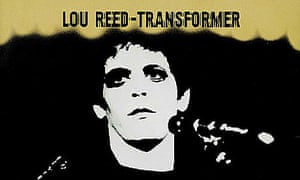
Lou Reed’s second solo studio album, “Transformer,” was released in November 1972. The glam rock landmark features Reed’s most successful single, “Walk on the Wild Side,” which addressed then-controversial topics like sexual orientation, gender identity, prostitution, and drug use. Mick Ronson and David Bowie produced the album, who was a fan of Reed’s former band The Velvet Underground and used his celebrity to promote Reed, who had yet to achieve mainstream success.
Commercial success and critical acclaim together or apart are not really the true measure of an artist’s work. History and public acceptance can ‘transform’ the perspective and create a re-evaluation, or revisionist history towards how the art is viewed. No other work quite typifies this more than Lou Reed with his second solo effort “Transformer”.
Transformer is an incarnation of Reed at his most tuneful and accessible, just right for an almost-teenager. Just wrong, you might say. If the swooping basslines and whooping choruses drew me in, the lyrics kept me riveted and puzzling. “Shaved her legs and then he was a she” I could work out. But what was the “Up-all-oh”? “Angel dust”? “Giving head”? What about “hustler”? Oh, how Google would have helped me then
With the Velvet Underground, Reed became a beacon to the outsider experience and while album sales were low, critics and musicians had found a kind of anti-hero on whom to heap praise. Once the Velvets had broken up, Reed continued his stories and of counter-culture misfits but to a more commercialized effect on Transformer. Produced by David Bowie and his guitarist Mick Ronson, Transformer would be heavily influenced by Bowie’s then ‘glam’ movement and blur the same androgynous lines can be heard singing backing vocals (his falsetto seems obvious on Satellite of Love, . However, Reed would use his own brand of wry observation and deadpan delivery to create characters that lived with and amongst his crowd as opposed to embodying the characters space as Bowie did with Ziggy and Aladdin Sane.
As with its predecessor Lou Reed, Transformer contains songs Reed composed while still in the Velvet Underground (here, four out of ten). “Andy’s Chest” was first recorded by the band in 1969 and “Satellite of Love” demoed in 1970; these versions were released on VU and Peel Slowly and See, respectively. For Transformer, the original up-tempo pace of these songs was slowed down.
“New York Telephone Conversation” and “Goodnight Ladies” are known to have been played live during the band’s summer 1970 residency at Max’s Kansas City; the latter takes its title refrain from the last line of the second section (“A Game of Chess”) of T. S. Eliot’s poem, The Waste Land: “Good night, ladies, good night, sweet ladies, good night, good night.”, which is itself a quote from Ophelia in Hamlet.
As in Reed’s Velvet Underground days, the connection to artist Andy Warhol remained strong. According to Reed, Warhol told him he should write a song about someone vicious. When Reed asked what he meant by vicious, Warhol replied, “Oh, you know, like I hit you with a flower”,resulting in the song “Vicious”.
Oddly, it was “Walk On The Wild Side” a song that spoke of transsexuality, oral sex and drug use that propelled the album to heights neither seen by the Velvet Underground or Reed himself in previous efforts. It wouldn’t be until the 1990’s that “Perfect Day” would become an underground hit. The supposed ode to his drug habit, Perfect Day, only works because, no matter who the song is dedicated to, it is a beautiful ballad. Then there is the epic, neon-drenched goodbye to his association with Andy Warhol and his factory acolytes,
On its release in 1972, Transformer was given mixed reviews by critics who claimed it was overly “art-y” and overly sexual. History of course has shed new light and Transformer has made just about every magazines ‘Best All-Time’ list. There was a BBC documentary devoted entirely to Walk on the Wild Side. My questions were answered. There was Holly, who did indeed “come from Miami FLA”. It turned out “Up-all-oh” was the Apollo theatre in Harlem, and “Sugar Plum fairy” a drug dealer. Though Candy and Jackie had departed this world, Joe Dallesandro was there, wistfully contemplating wasted opportunities. And then there was Lou – decked out in leather jacket and leathery skin – complaining about people using Walk on the Wild Side without permission.
Despite, or maybe due to its recognition, finding vinyl editions of Transformer is pretty easy, but figuring out what works best for you might get a little more difficult. You can find used copies pretty much anywhere. I’m sure a lot of people who bought Transformer to get similar material to “Walk On The Wild Side” only to find that it wasn’t like that. As for new, eight official vinyl editions have come out since 2004 with four in just the last three years. On RSD 2012 a straight re-issue was put out in record stores, and is still the most common new copy you will find. In 2013 – 2014 unofficial green and blue versions were released in the UK. Finally, a few weeks ago Newbury Comics put out a Limited Edition half black and half gold version. There were 1200 copies printed and each was gold stamp numbered.
Due to the sheer amount of what is available, you can get most copies of Transformer for less than $30.00 (including the unofficial UK copies). Only the Newbury edition is commanding high prices on the resale market, and that’s pretty damn silly, because you can still get a copy from Newbury for less than $30.00. The split colour looks awesome and indeed sounds great.
You can get it here. Anyway, with his recent induction into the “Rock Hall of fame” you can expect some renewed interest and copies of Transformer may begin to disappear. You might want to give that some thought this time if you’ve been sitting on the fence.
Last November, on the 45th anniversary of Lou Reed’s legendary Transformer album, photographer Mick Rock joined Rolling Stone editor David Fricke in a conversation for readers at the New York Public Library. Marking the anniversary, Mick kindly signed 45 bookplates specially for readers around the globe. Accordingly, 45 Collector copies are now available, each additionally including:
The new 24-page booklet with an essay by Mick Rock and 50 previously unpublished photographs
The looseleaf ‘Rock and Roll Heart’ facsimile handwritten lyric sheet
The commemorative New York Public Library bookplate signed by Mick Rock on the occasion of the 45th anniversary of Transformer
New Indie-rock godsends Boygenius aka Phoebe Bridgers, Julien Baker and Lucy Dacus made their TV debut on Monday’s Late Night with Seth Meyers, performing the song “Me & My Dog,” one of the three singles from their self-titled debut EP.
Bridgers takes lead on “Me & My Dog,” and if her opening lines (“We had a great day / even though we forgot to eat / and you had a bad dream”) don’t send shivers down your spine, you may want to verify that you have a heartbeat. Seeing Bridgers, Baker and Dacus step to their mics to sing in unison—to say nothing of Bridgers’ towering sustained note at the song’s climax is nearly sublime enough to make one forget what an anxiety-ridden day today is.
The trio surprise-released boygenius on digital platforms on October. 26th, two weeks ahead of its official physical release this Friday, November 9th. Bridgers, Baker and Dacus wll embark on a North American tour together .
On ‘The Perfect Life’, the stunning final single taken from this record, we find the Preston-native lamenting to a life of “allowing yourself to be controlled by the people around you and thinking they’re so much higher up than you” and the challenge of breaking free from that cycle. A beautifully crafted piece of dark-pop it lushly pairs lofi, chunky guitars with Hall’s soaring vocal.
With the record written, recorded and produced by Pip this is the deeply personal sound of an artist navigating the impending doom of adulthood with gloriously universal wit, charm and beauty.
“6ft 2 and I’m walking with you I’ll catch my breath when you tell me to
And all my efforts and all my time were wasted on you with the perfect life
And I’ll tell you now what I told you then, I’m alright on the sub bench
take a look in my eyes and what do you see, your world is too much for me
6ft 2 and I’m talking to you I’ll hold my breath till you want me to
‘cause all my blessings and all my crimes will be wasted on you with the perfect life
Now I’m breaking from the cycle ‘cause I’ll make it all on my own
I won’t break my pride and I won’t waste your time anymore.”
“Somnium” is a nod to the novel of the same name, written in 1608 by Johannes Kepler and is regarded as the first ever science fiction novel. “This book fascinates me because it was basically Kepler travelling in his mind to a non-existent world while describing it, and his journey, with amazing detail. Many of his imagined sensations are actually really what happens when one travels into space, which happened almost four hundred years later. You could call it a vision of the future through his dreams, and I find this aspect very mysterious and powerful.”
This form of mind travel is what Jacco has set out to create in a sonic, almost alchemic, capacity. Hence the reason for his vocals to be left out of this spiritual journey. “I deliberately removed my voice from the experience, as it made it more difficult for me to achieve the intended state of mind. I think it makes the journey more interesting, more deep, and more intimate. I didn’t feel the need to show my face while one drifts away into thought. Somnium is a visionary experience. The album is more than just a trip, it is about contact with a deeper – hidden – reality.”
If the concepts behind this record sound otherworldly and intricately woven then Jacco has also succeeded in making a record that does the same. Analogue synths hum and glide pristinely, bass lines dance buoyantly, dense atmospheres build and form and thoughtfully crafted melodies come and go, floating around as though in space. There are nods to early pioneers of such dreamlike ambience and cosmic exploration – Bo Hansson, Vangelis, Cluster, Tangerine Dream, Eno and Oldfield (the album was mastered by Simon Heyworth whose production credits include the latter three, including Tubular Bells) – but it also exists as a futuristic pursuit, one that is chasing something ahead as well as exploring the past. This is because to Jacco both are equally valid. “The past has always felt very much alive to me and so full of mystery that I have to conclude that the present and the future are probably no different.”
Now living in Lisbon and immersed in literature, cinema, philosophy and with new winding streets to wander, Gardner’s ideal listening scenario is to take the album for a walk yourselves, consume it complete and without interruption. “Somnium could be seen as a tribute to the album, a dying format in today’s fast-paced society. It can often be difficult to enjoy a meaningful uninterrupted moment. This album is where true mystery and wonder is waiting to be discovered.”
ILL present a new reworking of their menacing and atmospheric slow-burner ‘Bears’ by electronic artist Tiiva. It’s the perfect soundtrack for a dark winter’s night.
ILL is a genre-evading band which believes in the power of disobedient noise. With a repertoire of precarious pop songs andfrequent improvised departures, ILL revel in the right to be weird, exploring the borders between the funny and the sinister, the personal and the political, the mundane and the surreal.
Tiiva enjoys stretching the boundaries of organic and synthetic, fusing sampled vocals with intricately crafted rhythms – a real nod to the darker edges of pop. After a debut album this year, Tiiva is now remixing other artists, relishing in chopping up vocals, applying growling bass lines and unique drum samples to create a whole new picture from the music that inspires them.
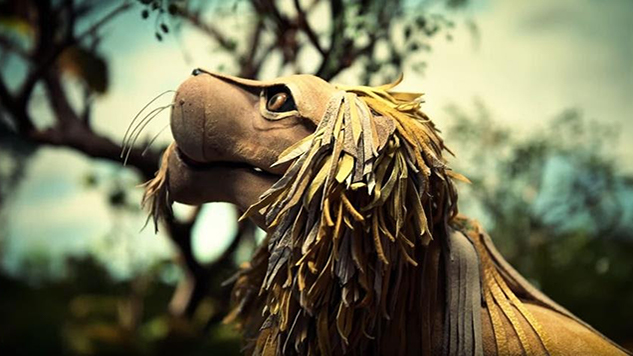
“Last Lion of Albion” is a post-humanity track through and through. The video imagines a world in which the titular lion, long since disappeared from the industrial land of Albion (aka Great Britain), has returned to its kingdom once again, free from the crushing grip of people. Beautifully designed by artist Laura Plansker, the video features handmade miniatures and props that combine into a surrealist dreamland of verdant plastic trees. “She has a way of making something so artificial so very alive,” Case says of Plansker’s designs. “The turning of the lion’s head to look at the sky, or its own reflection makes me cry my eyes out. There is so much straight ahead compassion in Laura’s work, there’s no need to manipulate emotion of the viewer, it is the perfect balance.”
Neko Case is currently touring Europe, and will be returning to the U.S. for a West Coast tour at the end of November for a live show featuring glowing, life-size wasp nests and Case as the wasp queen
“Last Lion of Albion” by Neko Case from the album ‘Hell-On’ available now