Julian Casablancas was partly inspired to write his new Voidz single, “Did My Best,” by Algerian street vendors in Paris — specifically the Auto-Tuned Arabic music they listened to while “selling tourist crap. That seeped into my subconscious,” .

When he acquired an Auto-Tune pedal, his imagination took off. “In Indian music and Middle Eastern music, they use more notes [than in Western music],” he says. “But the truth is, those notes are secretly in Western music. … When you do a melody with Auto-Tune, it’s almost a different melody. Ten percent of the melodies jump off to a new level with Auto-Tune. It’s a whole other level of harmony.”

Auto-Tune colors the end of the song, where Casablancas repeats the phrase, “I can only change what I can change,” and features heavily on “The Eternal Tao,” released in May of this year. That song and “Did My Best” appear in a new video from the Voidz , which features the band having a party with a bunch of sex dolls. Mac DeMarco and Kirin J Callinan also appear in the video; DeMarco engineered both songs, while Callinan “dream weaved,” Casablancas says.

“I started the way I start most things, with a vague, blurry end vision in mind,” he says of the video. “It’s like one of those videos people make at parties. It’s like, ‘What is this world? Who are these people?’ It was [a] simple, dumb idea that could have been 10 seconds long, but I decided to [do that and add] robots.” The video was directed by Johann Rashid (Promiseland), with animation by Benjamin Portas.

Despite the Auto-Tune, “Did My Best” sounds more like a traditional Casablancas track and is, in part, about the singer’s disdain for nostalgia. “Some people might hear the political stuff, some people might hear the ‘hanging out in a bar’ stuff, some people might hear the philosophical stuff,” he says. “That song is about nostalgia and not giving a shit about it personally, but that’s only one of many topics in the song.”

“Eternal Tao” was inspired by Tao Te Ching — and it’s much more out-there than “Did My Best.” “That book is insane,” Casablancas says. “It seems like the ancient wisdoms of the old world, the top minds, got together and wrote this universal truths thing. It has so much in it and it’s so amazing. That took over my life for a second.”

With his trusty pedal in tow, the singer says he has more than 50 songs in the can. He’s not sure how the band will release them, but says they’ll likely come out as singles. “I think we’re just going to put out songs here and there. Does it matter, this day and age?” he says.

As for the Strokes, he says the band is similarly in limbo — and that there’s no plans for new music. “If you ask me in a week, the answer might be different. Right now not, but it could change at any moment,” he says. The Strokes are currently set to play a slew of dates, including a New Year’s show in New York, 2020’s Shaky Knees Festival, and several iterations of Lollapalooza overseas. Their last album was 2013’s Comedown Machine, while Voidz dropped their more recent album, Virtue, in 2018. Casablancas’ Strokes bandmates Albert Hammond Jr. and Fabrizio Moretti also recently put out new music; Hammond Jr.’s Francis Trouble dropped in 2018 and Moretti’s Conduit came out this week under the name Machinegum.
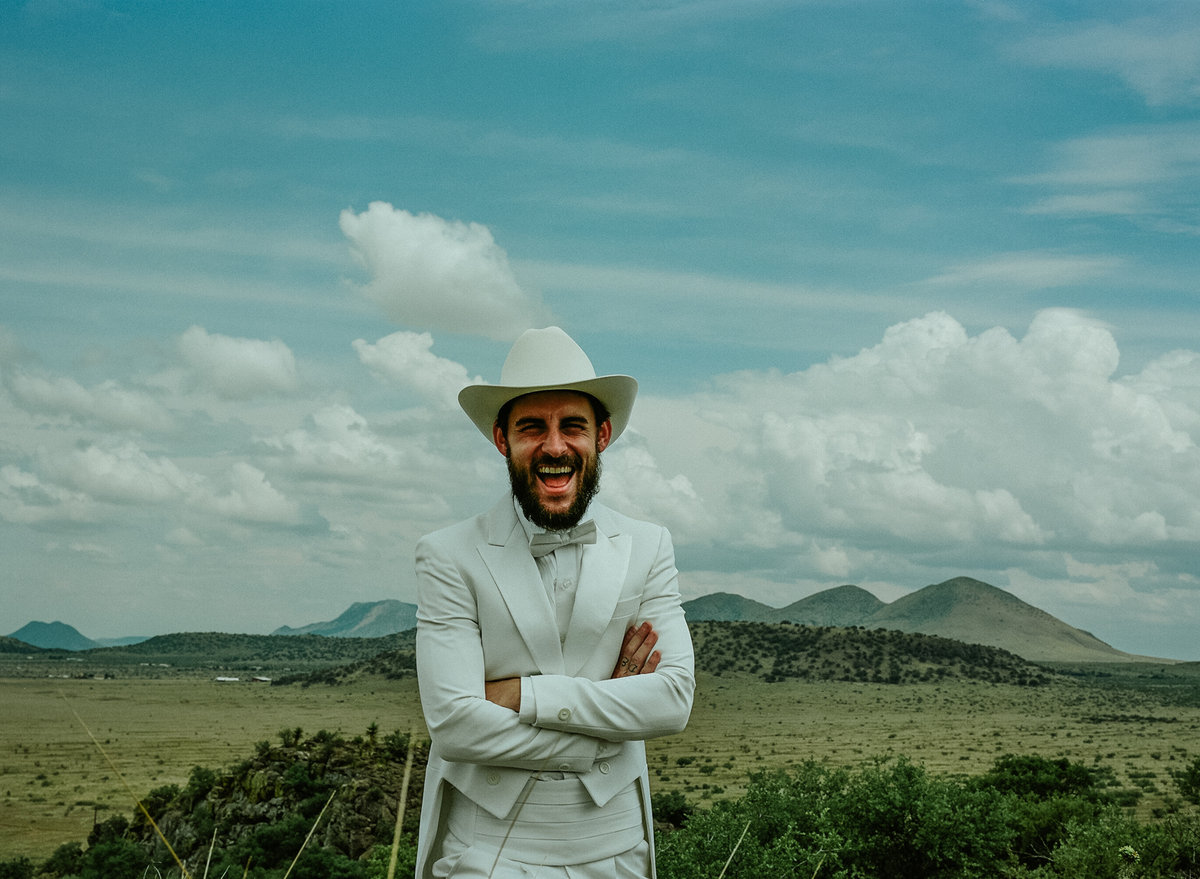
Robert Ellis recasts himself from an alt-country guitar-slinging troubadour to a white-suited, top-hatted barroom pianist making an album full of jaunty stompers about growing up and growing sober (“Topo Chico” and “Nobody Smokes Anymore”) and acerbic, affecting love songs (“Fucking Crazy” and “Passive Aggressive”). Ellis teared down a set at SXSW , The album  is among our music highlights of 2019, and this record is a perfect companion for all the turns 365 days can throw at you.

http://

Released February 14th, 2019

Pianos and Keyboards – Robert Ellis
Guitars – Kelly Doyle
Bass Guitar – Geoffrey Muller
Drums and Percussion – Michael “Tank” Lisenbe
Congas and Auxiliary Percussion – Josh Block
Background Vocals and Vocal Arrangements by Robert Ellis and Michael Lisenbe

All songs written by Robert Ellis

Image may contain: 4 people, people sitting, tree, grass, child, shoes, outdoor and nature

Quivers’ new single ‘When It Breaks’ has a golden jangle that glows so brightly I’m honestly a little bit worried I might get sunburnt listening to it. The band, led by Sam J Nicholson, have a knack for taking dark subject matter and moulding it into euphoric and uplifting pop.

It wouldn’t be a Quivers song without a grin-inducing group chorus, and this one delivers emphatically. If you don’t feel the urge to sing along, you’re dead inside for sure.

Quivers make cathartic guitar pop that jangles and shimmers somewhere between 1980s Australia and 1990s America. Started by Sam Nicholson in Hobart, the now Melbourne band has since toured Australia, NZ, Canada and most recently the US where they showcased at SXSW and filmed a session for KEXP in Seattle. 2018’s debut record ‘We’ll Go Riding on the Hearses’ came out through Hotel Motel Records. On it you might hear the ghosts of early R.E.M. guitars, the earnest lost pop moments of The Triffids or The Church, or the loud melancholy of Teenage Fanclub.
Band Members
Sam J Nicholson, Michael Panton, Bella Quinlan, Holly Thomas.

Official video for Quivers “When It Breaks” Single released on 30/10/2019

Image may contain: 4 people, people on stage and people playing musical instruments

Graham Nash was on a helicopter with drummer Dallas Taylor flying into Bethel, N.Y., where their band was scheduled to perform at a festival. As they neared their destination, Taylor asked what lake they were flying over. It wasn’t water, the pilot replied. It was the audience.

The gig was Woodstock. The band was Crosby, Stills, Nash & Young. The gathering on Max Yasgur’s farm would be only their second-ever live performance, after recently solidifying a touring lineup with Neil Young, Taylor and bassist Greg Reeves. The weekend would prove to be a high point for the counterculture that Woodstock quickly came to represent—and for Crosby, Stills, Nash & (sometimes) Young, the ensemble that was in some ways the house band for the Woodstock generation.

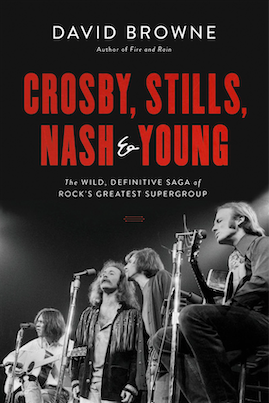
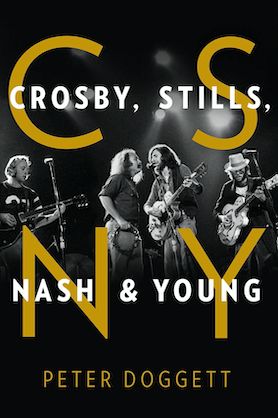
“Their music and their image became indissolubly linked with the fate of the baby-boomer era,” music historian Peter Doggett writes in CSNY, one of two engaging biographies released tracing the band’s fractious history. The other is Crosby, Stills, Nash & Young by David Browne, a senior writer for Rolling Stone magazine.

crosby stills book cover.png

Browne covers the full arc of the band’s career, from its members’ musical origins in other groups in the ‘60s to the present. Doggett focuses on the musicians’ early lives and careers through 1974, when David Crosby, Stephen Stills, Graham Nash and Neil Young toured together for the last time. Though both books cover some of the same ground, Doggett’s is far more detailed about the beginnings of the band and the musicians’ upbringings. Browne takes on the monumental task of summarizing a half-century’s worth of conflict, self-sabotage and, when the musicians managed to get out of their own way, music.

Crosby, Stills & Nash wasn’t intended to be a “band” at all, at least not in the late-‘60s sense of the word, which implied a specific identity, expectations and business commitments. Those things amounted to limitations, in the minds of Crosby, Stills and Nash, who had each dealt with all that in the Byrds, Buffalo Springfield and the Hollies, respectively. They started singing together for the thrill of it, and they quickly realized that they harmonized with an uncommon purity that astonished their friends. That feeling of amazement carried over to the listening public when the trio released Crosby, Stills & Nash at the end of May 1969, thanks to songs including “Suite: Judy Blue Eyes,” “Long Time Gone” and “Helplessly Hoping.”

The singers intended CSN to be a sort of “mothership” situation that would, between group efforts, permit solo projects, outside collaborations and plenty of musical experimentation. Yet converting their “party trick” harmonies (Browne and Doggett both use the term) into something that certainly looked like a band, with a record deal and all the attendant obligations, quickly subsumed the idea of singing together for its own sake. If bringing in Young to help flesh out the songs onstage made sense from a musical standpoint, each book illustrates how adding a fourth massive ego also hastened the band’s descent into creative disputes and power struggles.

csny book cover.png

Though both authors admire the group and its songs, the musicians come off as intensely dislikable, especially as money and fame transform them. Stills is a taskmaster perfectionist with control issues. Crosby is a blowhard, a drug-addled hedonist with an attitude toward women that is startlingly chauvinistic, even for the era. Young, who had been part of Buffalo Springfield with Stills, is a cynical opportunist who sees joining CSN as a way to jumpstart his own then-lackluster career. Only Nash sometimes seems sympathetic; the most level-headed, he tries to act as a go-between among warring factions with limited success.

Together (and, just as often, separately), they cut a path through popular music in the late ‘60s and early ‘70s. Doggett writes vividly about the L.A. scene that produced Crosby, Stills & Nash, chronicling their interactions with Cass Elliot of the Mamas and the Papas, Peter Tork of the Monkees, Joni Mitchell (who was romantically involved with Crosby, then Nash), Judy Collins (whose relationship with Stills inspired “Suite: Judy Blue Eyes”), Jimi Hendrix, Atlantic Records impresario Ahmet Ertegun, David Geffen and more. Doggett does his best to tame the mythology of CSN, sorting through various stories and inconsistent recollections about when and where they first sang together (Was it at Elliot’s house, or Mitchell’s? The night the Hollies played the Whisky in February 1968, or sometime afterward?) and when various songs were written and recorded.

Browne in many ways has the harder task, as the band’s earlier years were its most thrilling and creatively rewarding. Surprisingly little of the music they made together still resonates; after their first two studio LPs, CSN and 1970’s Déjà Vu with Young, and the 1971 live album 4 Way Street, the Crosby, Stills, Nash (and Young) catalog is a study in diminishing returns. In the latter half of Browne’s book, there’s almost a numb inevitability to the musicians’ fumbling attempts in the ‘80s to contemporize their sound, Crosby’s ever-deeper descent into drug addiction that led to a stint in prison, and Young’s inability to stop dangling the possibility of a full-scale reunion in front of his bandmates, only to flake out nearly every time for inscrutable reasons of his own.

Taken together, CSNY and Crosby, Stills, Nash & Young present as full a picture of the group as is ever likely to emerge. It’s not a triumphant story. Beneath the promise of those early songs—and that initial camaraderie—lurks a mostly unwritten, certainly unanswerable question that poses itself again and again: What if?

Much like the dream of the Woodstock generation, the tale of Crosby, Stills, Nash & Young is awash in senseless vanity, squandered chances and potential left tragically unfulfilled. Yet it’s often hard to look away—just like with any car wreck.

Be it on her more minimalist, acoustic-leaning 2009 debut album Me Oh My or critically acclaimed, liquid-riffed 2013 LP Mug Museum as well as 2016’s Crab Day, Cate Le Bon’s solo work – and indeed also her production work, such as that carried out on recent Deerhunter album Why Hasn’t Everything Already Disappeared? (2019) – has always resisted pigeonholing, walking the tightrope between krautrock aloofness and heartbreaking tenderness; deadpan served with a twinkle in the eye, a flick of the fringe and a lick of the Telecaster. The multifaceted nature of Le Bon’s art – its ability to take on multiple meanings and hold motivations which are not immediately obvious – is evident right down to the album’s very name, Reward. “Cate Le Bon writes songs in the absurdist tradition, as both as an escape and a mirror to the world. Her music is elliptical and sparse, using familiar sounds—chiming electric guitar, saxophone—to create her own alien landscape. ‘Daylight Matters’, the swooning first single from her new album Reward, isn’t so much a reinvention as it is a grand unveiling.”

The Welsh singer/songwriter/guitarist Cate Le Bon released a new album, Reward, this year via Mexican Summer. It was among our essential new releases . Now that the album is out, one of its best album tracks that wasn’t already released as a pre-release single, album opener “Miami.” Le Bon’s music is hard to define, she’s truly her own artist, and “Miami” is fantastic introduction to Reward.

Previously Le Bon shared Reward’s first single, “Daylight Matters,” as well as a video for “Daylight Matters.” Then she shared another new song from the album, “Home to You,” via a video for the track. Le Bon doesn’t feature in the video directed by Phil Collins (no, not that Phil Collins). It was filmed in Lunik IX neighborhood of Košice (Eastern Slovakia), which houses a Roma community who, as a press release states, “due to successive governmental and municipal policies, often live in slums and on isolated, dilapidated estates. Then she shared another song from the album, “The Light” .

In terms of her solo work, Reward is the follow-up to 2016’s Crab Day, although last year she also released Hippo Lite, her second album with DRINKS, a collaboration with Tim Presley of White Fence. 

Le Bon has spent a year living in isolation in the Lake District in the UK, by day making wood furniture and by night playing piano and writing songs. “There’s a strange romanticism to going a little bit crazy and playing the piano to yourself and singing into the night,” Le Bon said in a previous press release.

Of the album title, Le Bon said: “People hear the word ‘reward’ and they think that it’s a positive word, and to me it’s quite a sinister word in that it depends on the relationship between the giver and the receiver. I feel like it’s really indicative of the times we’re living in where words are used as slogans, and everything is slowly losing its meaning.”

The album features Stella Mozgawa of Warpaint, H. Hawkline, and Samur Khouja. The latter co-produced Reward with Le Bon.

Image may contain: 1 person, text that says 'KINGFISH'

Once a generation, a blues artist comes along who not only reminds mainstream audiences how deeply satisfying and emotionally moving the best blues music can be, but shakes the genre to its core. With both eyes on the future and the blues in his blood, 20-year-old guitarist, vocalist and songwriter Christone “Kingfish” Ingram is set to take the music world by storm with the long-awaited release of his debut album, “KINGFISH”, on Alligator Records. Sprung from the same earth as so many of the Delta blues masters, Kingfish comes bursting out of Clarksdale, Mississippi, just ten miles from the legendary crossroads of Highways 61 and 49. A student of the Delta’s musical history, he is acutely aware of the musicians and the music that emerged from his corner of the world. “I do think I have an old soul, that I’ve been here before.

The 20-year-old Kingfish plays the blues like he was unfrozen from 1972, sent here via an Alligator Records experiment to play juke joint blues guitar like the Beatles, and disco, and rap, and everything else, never happened. His debut album is like a lost Albert Collins record, which is to say it’s the best new blues album released this year by a mile, in a year when not a lot of notable blues albums came out. Put this on when the weariness of existence gets to be too much, where Kingfish will pick you up.

Image may contain: 1 person, hat

A new patron saint of sad girls, Elizabeth is a glamorous tragic, a queer pop anti-heroine holding a curtain of glittering melodies and catchy veneers over ugly truths. “Parties” is a sparkling, slowburn sad-banger, an exorcism in excess, and an awakening. Channelling the energy of Marissa Cooper dumping her banana lounge into the pool, ‘Parties‘ is messy, glamorous, and demands your attention. The Wonderful World of Nature is made up of pop songs that leave a lasting mark; they bruise and linger. Tasked with building out the world in Elizabeth’s deepest imagination was producer John Castle, who now adds Elizabeth to his roster of collaborators alongside Hatchie, Cub Sport, Jack River and Vance Joy. Operating with an absolute absence of ego, together Castle and Elizabeth succumbed to their purest pop whims.

released November 1st, 2019

Written by Elizabeth

French Vanilla use slick and bouncy saxophone punk to explore new love and new identities with songs that feel as bold as the outsized subject matter deserves. Every left-field rhythmic breakdown, every zig-zagging blast of saxophone, every oddball post-punk chord change is shot through with infectious wonder. Always a super charismatic and well-recorded band, “How Am I Not Myself” takes French Vanilla’s sound into an even more stylish stratosphere for a record that sounds like it came from Planet Claire—or at least, some far groovier utopian future where the patriarchy has been smashed and everyone is free to be their true selves. But despite its self-declared quest for outrageous self-actualization, this is outward facing music. How Am I Not Myself wants you to believe wholeheartedly in your own magical self, whether that’s in front of a crowd or in front of the bedroom mirror.

http://

Reminds me of Martha and the Muffins mixed with a pinch of the B-52s and my ears love it!

All songs written and performed by French Vanilla (Ali Day, Greg Shilton, Sally Spitz and Daniel Trautfield).

No photo description available.

Journey through the music of a generation in one of the UK’s most vibrant and creative cities.

Sheffield in the 1970s…. a city in decline, its steel mills and factories closing and its vast housing estates beginning to crumble. Even the city’s two football teams were both experiencing the worst form in their long histories. An unlikely setting, then, for a musical revolution, but aren’t they always? As it transpired, in the aftermath of punk this industrial backdrop, alive with frustrated young talent and peppered with accessible and affordable rehearsal and performance spaces, became a hotbed of uniquely informed new bands that challenged both the constraints of genre and the dominance of music from London, Liverpool and Manchester.

Dreams To Fill The Vacuum charts the revival of Sheffield and its music in the latter half of the 1970s and throughout the 1980s, from The Human League to Pulp, via Aardvark, Pax and Native Records, and onto the chart successes of Heaven 17, ABC, Thompson Twins and many others. Featuring cornerstone contributions from the city’s brightest stars – Oakey, Cocker, Ware, Marsh, Hawley, Newton and co – alongside many more lesser-known legends, this is a tale of a city and its people rediscovering itself.

Packed with first-hand artist sleeve notes, insightful essays, revealing imagery and brilliant, essential music, Dreams To Fill The Vacuum offers a story in need of telling.

In the late 70s, the city’s bands set out to create the sound of the future – while trying to avoid getting beaten up. Jarvis Cocker and other leading lights recall a revolutionary scene Sheffield in 1977 had a slight feeling of being the city of the future,” recalls Jarvis Cocker. “I didn’t realise that it was all going to go to shit. It was Sheffield before the fall.”

That pre-fall year is the starting point for a new box set: Dreams to Fill the Vacuum: The Sound of Sheffield 1977-1988. Familiar names appear – Pulp, Heaven 17, the Human League, ABC – but they are joined by a wealth of other acts, such as I’m So Hollow, Stunt Kites, They Must Be Russians and Surface Mutants, spanning punk, post-punk, indie and electronic with that droll outsider energy particular to South Yorkshire.In 1977, Paul Bower was producing a local fanzine, Gun Rubber, and playing in the Buzzcocks-indebted 2.3. Like Cocker, he recalls the late-70s as being a time of optimism and flux. “There’s this myth of northern miserablism, that everything was shut down and shit,” he says. “But it wasn’t – that came later. It was a really interesting, bustling and creative time.”

Sheffield had plenty of dirt-cheap “little mester” workshops, once used by master craftsmen working in the city’s cutlery industry, and these provided room for bands to move in and experiment. Bower’s band 2.3 shared a space with the Future, an early incarnation of the Human League that featured Martyn Ware and Ian Craig Marsh along with Adi Newton before he formed Clock DVA. “We were enamoured with the New York scene,” says Ware. “In our own little way we were imitating the Exploding Plastic Inevitable.” Bower describes it as: “Andy Warhol’s Factory in the land of Bobby Knutt.”

The pioneering industrial and electronic outfit Cabaret Voltaire had been active since 1973. “They were the godfathers of Sheffield’s new music,” says Simon Hinkler, who played in bands such as TV Product and Artery, as well as producing early Pulp. “You can’t overstate how important they were.” Ware echoes this. “They were our mentors,” he recalls. “Their methodology and lifestyle was something we aspired to. Not so much musically, but as a template for doing your own thing.”

“In Our Element,” fittingly, finds Kate Teague inhabiting her twang-tinged indie-rock sweet spot, her rhythm guitar subdued and built upon by slow-burning, oft-bent lead notes. “It’s in my head, I’ll push it away / I’m glad to have you here anyway,” she sings. Teague explains that she “wrote this song in response to completely misinterpreting someone’s body language at a series of parties. I began falling in love with the idea that someone was falling in love with me, but I ultimately realized it was all in my head.” “In Our Element” is the latest in Teague’s aforementioned string of killer singles, following “Gilly,” “Good to You” and “Low Life,” all three of which were released in 2018. As for her debut album, all we know for now is that it’s coming sometime in early 2019.

Kate Teague’s songs are dreamy and narrative, threading interpersonal connections throughout the cosmos. The Oxford, Mississippi musician has a classic folky voice, but that voice is surprisingly malleable. On her debut EP, she adapts to a disco shimmer on “Good To You” and bristles up on “Sweetheart,” where Teague insists, “I can frown if I want to/ Don’t call me a sweetheart.” She’s most in her element when she’s languishing in rootsy malaise, when her voice is able to spread out and take hold through dusty, mournful coos. melodic electric guitar soft rock, with a slight county pop twang, to be expected from a Mississippi gal recording in Memphis. For lovers of Christine McVie & Stevie Nicks in Fleetwood Mac, Pernice Brothers, Lloyd Cole & The Commotions, even The Sundays. And that’s damn good company.

http://

“In Our Element” is out now on Muscle Beach Records.