In 1971 and a song comes on the radio called “I’m Eighteen” The DJ didn’t announce who performed it, but what does that matter? All that does is the pull of the chords—that cool, ascending guitar line that leads to a slamming riff I can’t get out of my head. Everything about the song is instantly great—the punch of the beat, the crunch of the guitar, the cry of the lead and a voice that screams, with generational resonance, “I’m Eighteen and I LIKE IT!!!”

When the DJ back-announces the artist as Alice Cooper, I think, ‘that’s strange. It didn’t sound like a girl.” Either way, I Have to have that album. So, I find the vinyl, and barely look at the cover before running home to play it. Turns out, every song on the album is as great, if not better than “I’m Eighteen.” But I still don’t know who, or what, Alice is.

Alice was the first guy to daub his face in witchy make-up, his band the first to brazenly dress in women’s clothes. The Alice Cooper Band’s first fistful of albums laid the groundwork for every sleazy gang of gutter level guitar slingers to come along since, from The Sex Pistols to Guns N’ Roses and beyond, and Alice himself has managed to successfully make the leap from underground rock’n’roll freak show to mainstream pop-culture hero, embracing everything from hard-core horror movies to hard-core Christianity along the way.

In a perfect world, everyone would have discovered Alice Cooper this way—First, as a band who play great music; second, as a guy with a girl’s name. Of course, in 1971, when you have a front-man who calls himself Alice, distorts his face with monstrous make-up, dances around with a boa constrictor, and sings about mental patients and dead babies, it’s pretty hard for that not to overwhelm the conversation. And, so it has for the last fifty years. But Alice Cooper was much more than a clever front-person with a killer sense of PR. It was a band of musicians blessed with genuine range and skill. In fact, those “other guys” in the group—lead guitarist Glen Buxton, bassist Dennis Dunaway, drummer Neal Smith and, especially, rhythm guitarist Michael Bruce who wrote nearly all of the songs Alice sang, and played them in a way no other band could. They had a patented style, a tight, coiled take on garage-rock that proved crucial to the later creation of punk. At the same time, they could play, and write, pieces with theatrical flair, referencing everything from Broadway show-tunes to Looney Tunes. More, they had humour. The songs that Bruce, Buxton, Dunaway and Smith wrote translated into sound what Alice created with his lyrics and persona, moving seamlessly between slamming rock ‘n roll and moments of cinematic scope.

In their recordings, all four musicians stood out, not just the star guitarists but the primal drum patterns of Neal Smith and the uncommonly melodic bass lines of Dennis Dunaway. In all, the Alice Cooper band released seven albums, sandwiched between 1969 and 1975, four of which stand with the classics. The two that fall furthest from that mark, their first tries, had their own appeal, if one defined more by daring than focus.

See the source image

Pretties For You

In fact, it’s hard to think of a more chaotic debut than Alice Cooper’s 1969 release, ‘Pretties for You” Then again, one reason they got to record it in the first place was their crazy spirit. Frank Zappa discovered the band playing in a club in L.A. in a performance judged by the audience to be so appalling, nearly everyone in the crowd ran for the exits within the first ten minutes. For a life-long contrarian like Zappa, that was a definite plus. Any band extreme enough to horrify so many people, so fast, had to have something going for them. So, he signed them to his label, Bizarre, and, essentially, let them have their way in the studio—so long as they did it fast and cheap. The songs on ‘Pretties’ sounded like the kind the Beatles might have recorded had they dropped ten tabs of acid before they wrote them. They’re full of Fab Four-style harmonies, but skewed by cracked harmonies, perverse time changes and rampaging solos. To achieve those harmonies, Alice used a smoother voice than the one fans later loved. Bruce even got to sing lead on a track. The album offered just one strong melody, “Reflected” and, clearly the band knew it because four years later, they recycled it for their hit “Elected” Much of the rest seemed improvised, which, if nothing else, gave the musicians the chance to show off their chops.

See the source image

Easy Action

Their follow-up, ‘Easy Action” issued in 1970, harnessed those skills to some degree by offering shorter songs, though not necessarily more melodically sure ones. The music also found Alice beginning to sing in the snarling style that would become his signature. For a visual record of the band’s sound in this era, check out the classic 1970 film Diary of A Mad Housewife. In it, the band perform at a wild party scene. Oddly, they chose to play a stabbing cover of a song that wasn’t theirs but, instead, belonged to Steppenwolf—”Ride with Me” though, soon enough it devolved into a freak-out jam, echoing the anarchic closing track on ‘Easy Action’ titled “Lay Down and Die, Goodbye”.

This was the first album where they looked like the skinny, drug-damaged, long-haired reptiles we would come to know and love/loathe,

See the source image

Love It To Death

Given such excesses, no one could have predicted the ruthless precision that would make their third album, ‘Love It to Death” a hit. Not that the transition happened easily. It took a move to a new city and the wrangling of a visionary producer to pull it off. In 1969, when Alice Cooper got their contract with Bizarre, they were based in a place entirely hostile to them: L.A. In reaction, the group relocated to Cooper’s birthplace, Detroit, a down-and-dirty city far more in tune with their hard rocking sensibility. There, they absorbed the sounds that helped define that town’s rock scene, found in the proto-punk attack of MC5 and the Stooges. Their bracing styles both encouraged, and mirrored, Alice Cooper’s attraction to the most ferocious brand of guitar rock.

The Alice Cooper Band’s first post-garbage psychedelia album remains one of their most iconic, from the spider eyes gatefold and the slithery death-glam band pose on the cover, to the creepy voodoo zombie metal of Black Juju and the harrowing, timeless goth-glam dirge of The Ballad Of Dwight Frye (oh yeah, Alice invented goth, too). The album also put them on the rock’n’roll map with I’m Eighteen (which was a fib even in ’71) and established the snaky, perverse and surprisingly accomplished hard rock sound that would send the band into arenas around the world for the next half-decade. Inarguably classic downer rock, despite a couple of final stabs at hippy-trippy psyche.

The other piece of the puzzle fell into place via their manager Shep Gordon. He tried to correct the band’s excesses by connecting them with as focused a producer as possible: Jack Richardson, who oversaw the catchy hits of the Guess Who. Though Richardson found both the group’s sound and image repugnant, his 19-year-old assistant Bob Ezrin recognized a hidden brilliance. With his tough-love guidance, Alice Cooper wound up shaping music that was, in some ways, the inverse of what they’d recorded before. Everything that had been untamed became tight: What meandered was now honed, while the band’s sense of melody moved from undefined to undeniable. Better, every player found a way to hook the listener. On bass, Dunaway created lines as purposeful as a great axe break; Even the drum patterns pulled you in.

The two songs that surrounded “I’m Eighteen” on the album—“Caught in a Dream and “Long Way to Go” featured some of the hottest guitar parts of early ’70s. Both were written by Bruce, who played his coiled riffs off Buxton’s terse leads, underscored by Ezrin’s rollicking piano. It was, at once, raging rock and perfect pop. In “Is It My Body” Dunaway’s bass provided a rumbling counter-rhythm to the crunching guitar, while “Hallowed Be My Name” penned by Smith, contrasted a sacred organ with Buxton’s profane cries. For “Second Coming” written by Cooper, the band finally found a way to harness their Beatlemania, creating a song John Lennon himself might have penned. Not that they entirely banished their arty side. The nine-minute “Black Juju” written by Dunaway, refigured Pink Floyd’s “Set the Controls for the Heart of the Sun as a voodoo curse, while, in “Ballad of Dwight Fry” Bruce created the perfect creepy-crawly music to fit a lyrical scenario straight out of Hammer Film Studios”.
See the source image

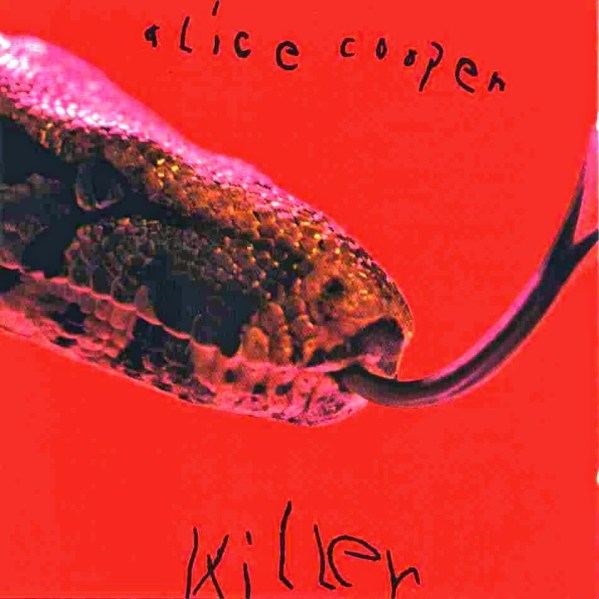
Killer

Together, it made for an instant classic—no easy feat to repeat. Yet, somehow, the band’s 1971 chaser, ‘Killer” not only matched ‘Death’, it exceeded it. Again, the band toggled between mean little rockers and elaborate theatrical pieces. While the singles “Under My Wheels” and “Be My Lover” both relied on standard-issue glitter riffs—the latter even ripping off “Sweet Jane they augmented them with smart twists. “Under My Wheels” opened with a frantic guitar outburst from Buxton that was as exciting as the song’s melody, while Smith followed with drum break of equal distinction.

In “Lover,” penned by Bruce, the band augmented the riff they lifted from Velvet Underground with an original chorus, an irresistible braid of guitars, as well as a campy finale in which Cooper served up his best Mae West impression. Still, the biggest stretch, was the eight-minute “Halo of Flies” which found these garage rockers pulling off a legit prog-rock epic, complete with multiple time signature changes, grand flourishes, and intricate musicianship, all while sounding tight as a drum.

For gut- level shock rock thrills, nothing before or since can match the raw death trip power of Killer. From the enclosed 1972 calendar of Alice twisting gorily from a rope, to the astonishingly bleak doom epic “Halo Of Flies”, to a mind scrambling stab at gallows-black humour called Dead Babies, “Killers” is arguably the first and most vital punk rock album; a still-menacing slice of primo American ugly at the dawn of the feel-bad decade. “Killers” also ends with the jarring, mean-spirited jab of a whining electric drill noise that can throw you into panic if you’re not prepared for it. So maybe Alice invented industrial music too. Somebody ask Throbbing Gristle.

See the source image

School’s Out

Improbably, the band upped its ante yet again with their 1972 release ‘School’s Out” A concept album inspired by the angst of teen life, ‘School’s Out’ was both more theatrical and more focused than anything they’d release to that point. It found them interpolating original music with bits of West Side Story, as well as pieces penned by Disney writer Mack David and soundtrack czar Elmer Bernstein. Two years earlier, the band previewed their love of West Side Story by titling their second album ‘Easy Action’. This time, they referenced the musical in “Gutter Cat vs. the Jets ,” penned by Buxton and Dunaway. Their take gave the bass a lead role, buttressed by the glam panache of the guitars, before quoting the classic creations of Leonard Bernstein-Stephen Sondheim directly.

In “Street Fight ” Dunaway’s bass offered its own rumble, while, for “Blue Turk” Bruce wrote a swaggering jazz rave-up, elaborated by a swinging trombone solo from guest Wayne Andre. Even some classical influences turned up, in the gorgeous piano piece Ezrin wrote, “My Stars” all culminating in a “Grande Finale that underscored the musical ambition that lay below the band’s swagger.

A sort of drug-addled, dirtbag reworking of West Side Story, School’s Out is a trippy teenage rampage that mood-swings wildly from the grubby hard rock of the timeless bratty title track, to the head-stomping Public Animal #9 (surely the genesis of every self-destructo punk-pose, from Sid Vicious to GG Allin) and the slinky Luney Tune, to the acid-head, high-school-production-gone-wrong Broadway schmaltz that rounds off the album. It’s completely schizophrenic and, frankly, half-baked, yet it retains a sense of timeless killer cool that transcends the gloppy jazz-hands bullshit between the rock’n’roll parts. After all, when you’re a Jet you’re a Jet all the way.

See the source image

Billion Dollar Babies

Remarkably, less than eight months after ‘School’s Out’ charged up to No. 2 on the charts, the band came back with ‘Billion Dollar Babies” which got to No. 1. Another concept album, ‘Babies’ both satirized, and celebrated, our collective taste for outrage—the very qualities that helped make this band stars in the first place. In today’s reality show era, the album’s embrace of base desires seems more relevant than ever. Hit single No More Mister Nice Guy, a relatively straight (by Alice standards) FM rock nugget, propelled “Billion Dollar Babies” into the charts and turned these slimy Detroit cobras into the least likely rock superstars of 1973. They responded to the accolades and attention with an endless tour filled with drugs, booze, blood, snakes, backstage in-fighting, and enough money for a lifetime’s worth of trouble. Meanwhile, the album, while more polished than previous records, spewed up plenty of pop-infused crunchers like “Elected” and the classic “Generation Landslide”, as well as “Sick Things”, one of the most alarmingly weird rock’n’roll songs ever written.

Its single, “Elected”—about a charismatic, but demented, guy who runs for office—seems downright visionary. “Elected” doubled as the most pop-friendly song the band ever recorded, a leap equaled by “No More Mr. Nice Guy” whose bouncy tune was penned by Bruce. For a left curve, the album opened with a cover of a song previously recorded by Judy Collins (“Hello Hooray”) chased by a hip-shaking glam-rocker, “Raped and Freezin’ that, in its last, mad minute, somehow turned into a Latin dance song. The band’s theatrical side returned in a cinematic, six-minute ode to hellish dentistry “Unfinished Sweet” topped by a salute to necrophilia “I Love the Dead” that could have come from the score of a David Lean epic.

See the source image

Muscle Of Love

Though clearly the band was riding a creative high, trouble brewed in their ranks. Buxton’s long-term drinking had gotten so out of control, he had to be treated for pancreatitis, rendering him useless for much of the recording. Instead guest Steve Hunter played of the guitar solos, designed to mimic Buxton’s wiry style. The wear and tear on the band became even more apparent on what turned out to be their final album, ‘Muscle of Love”
This time, Buxton didn’t even make a cameo appearance, though management gave him a credit in the liner notes to keep the image of the band intact. In fact, guest Dick Wagner performed his parts. Also, Ezrin wasn’t at the dials, but, instead, Jack Douglas. Worse, the material wasn’t up to snuff. Even so, the band managed to serve up a few gems. The title song had the old metal thunder, while Smith contributed one of the most stirring melodies in the band’s history in “Teenage Lament ’74” A ravishing ballad, the song’s lyrics captured the inner turmoil of a kid who tries to fit in by dolling himself up in glitter garb only to feel shame over the ridiculousness of the look and the conformity it implies. Considering the boost that glam gave the band’s career, it took genuine guts to write a tale like this. Regardless, neither this song, not any other on the album, became a hit, so the group drifted apart, making way for what turned out to be Alice Cooper’s solo career. For his new band, Cooper hired the two guitarists who subbed for Buxton on the original group’s last few albums (Wagner and Hunter).

Meanwhile, the three other functioning members—Bruce, Dunaway and Smith—struggled to rally by rebranding themselves as Billion Dollar Babies, an assemblage that released one album in 1977, titled ‘Battle Axe’. Unfortunately, it lacked the old punch. So did a solo album released by Bruce, titled ‘In My Own Way Any hope for a full reunion of the classic line-up ended in 1997, when Buxton died of pneumonia. More than a decade later, all of the original members were inducted into the Rock & Roll Hall of Fame—an important gesture. It offered as least some acknowledgement that what made Alice Cooper a legend wasn’t the image created by one man but the music made by five.

The last and least of the original band’s incredible 70’s run, this is still a pretty solid album, albeit one that trades in a lot of the spit, fire, and venom of their last few albums for a stab at 70’s AOR radio accessibility. The glammy Teenage Lament ’74 is really the only enduring hit, and if anything, the record is mostly remembered for its bulky cardboard box packaging. Still, if you like FM rock and cheeky odes to masturbation, there’s plenty to like about this one.

Throughout his long and storied career there have been lean times, mean times, times of oddball D-list celebrity status and times when a man just wants to play golf and talk about Jesus. And through it all Alice Cooper has remained one of the most consistently entertaining and iconic figures in rock’n’roll. And that’s why we love him To death.


Image may contain: house and text

“What’s New, Tomboy?” could be considered Damien Jurado’s finest collection of music to date, with songs exuding the inviting warmth of a lone porch light gleaming amidst the disorienting darkness. Though more stripped and grounded in their execution, songs like “Sandra”, “Ochoa” and “Alice Hyatt” are generous and candid in their vocabulary, eschewing the sometimes abstruse imagery of Jurado’s previous releases. “There is no hiding on these tracks.” Though What’s New, Tomboy? is the first Damien Jurado record that ends with a question mark, he has never sounded more assured and content in giving up his ghosts: “I’m only living sentences // That were long before I got here.”

http://

Damien Jurado: Guitar, Vocals, Percussion, Mellotron
Josh Gordon: Bass, Electric Guitar, Drums, Percussion, Hammond C3, Rhodes, Mellotron, Drum Machines

All songs written & performed by Damien Jurado
Released May 1st, 2020
Mama Bird Recording Co.

Mute Records is arguably one of the most important independent music labels of all time, and certainly most successful and prolific. Since founding the label to release his debut single, The Normal’s ‘Warm Leatherette’ / ’T.V.O.D’ in 1978, Daniel Miller went on to spearhead the careers of such music luminaries such as Fad Gadget, Depeche Mode, Einstürzende Neubauten, curating an enviable roster of artists that culminated recently with the signing of defunct rival Factory Records most popular act: New Order.

Now Daniel Miller is curating Mute: A Visual Document—a 320 page book of comprehensive discographies, including photography and video stills from legendary photographers, conceptual artworks, and “rare ephemera and equipment”. Also included is a family tree of Mute artists,  and anecdotal and photographic contributions from important figures in the label’s history that include Moby, Alison Goldfrapp, Anton Corbijn, Bleddyn Butcher, Brian Griffin, Jon Spencer, Barry Adamson, Ivan Novak (Laibach), Angus Andrew (Liars), Adrian Shaughnessy and Tom Hingston.

The book follows the comprehensive 10-disc singles and b-sides boxset Mute: Audio Documents 1978 – 84, which was released in 2007. Exhaustive 10 CD box set from Mute Records, a collection of their singles, a and B-sides, released between 1978 – 84. The box contains four two-CD sets, each covering a specific time period (1978-81, 1982, 1983 and 1984) plus a bonus two disc set that contains 20 rarities by most of the artists featured in this box including Depeche Mode, Yazoo, Fad Gadget, Nick Cave, Non, Silicon Teens and the Normal. The first four volumes will be available separately later in 2007, but the bonus two CD set will only be available with this box! 128 groundbreaking tracks by one of the finest independent labels to emerge during the ‘new wave’ revolution. Also features cuts from D.A.F., Boyd Rice, Smegma, Robert Rental and more. 2008.

Sure, it’s definitely just label friends, to which I only partially count myself. So I was all the more surprised by what there was to discover.
For those interested in buying: Here on 10CDs you will find the complete back catalogue of all MUTE 7″ singles from 1978- 1984 nice with A & B-page.
From this not only “things that are on the books and are also on the albums”. I’ve discovered a lot, I was amazed at what was pressed on vinyl at the time.
The rarities are all rather live stuff, of which the concert by The Normal & Robert Rental 1978 was the absolute highlight for me. (The label connoisseur already knows this as a vinyl bootleg) If you ignore the sound quality, the gig was 25 years ahead of its time. That could have rocked the club in 1993.

The only shortcoming is the price. But maybe there are for those who don’t need everything, download the single tracks at Mute The box should probably also be picked and the CDs appear individually – apart from the rarities, this definitely should not give any more. Who knows? I’m looking forward to part 2! 85- 91 I also find exciting.

Mute Audio Documents / Various

Mute: A Visual Document, is a project helmed by author and musician Terry Burrows is being released by Thames & Hudson on November 28th

Image may contain: one or more people, people on stage, people playing musical instruments and night

Sometimes a synth-pop song’s only purpose is to make you feel alive on the dance floor, and that’s fine. You can still feel a deep emotional connection as you latch onto its pulse and forget your worries. But the kind of life-affirming synth-pop that makes you cry—think giants like Robyn or LCD Soundsystem—are the artists that will ruin your life (in the best possible way). New York City’s Nation of Language have been releasing singles since 2016, and their lead singer and songwriter Ian Devaney recently collaborated with Strokes drummer Fab Moretti on a project called machinegum for an album last year. It was obvious, even several years ago, that Devaney was an unusually consistent songwriter—every song was capable of making you pull over your car for a quick sob or triumphantly stick your head out of the sunroof with outstretched arms. His ’80s-indebted electro-pop meshed beautifully with the dance-punk sounds of the city’s yesteryear, and his songs had an emotional immediacy that was un-rivalled. Now, having finally unveiled their debut full-length, which contains some of those incredible early singles, it feels like Nation of Language have more of a right to claim the “soaring synth-pop” mantle than anyone else right now.

http://

Released March 26th, 2020
Written by Nation of Language

Image may contain: 3 people

Stonefox’s “Time” acoustic video invites us to dwell in a moment of hopelessness and hurt, fracture and fragility. There are numerous ways to create intimacy through music, and Stonefox know them all very well. The Melbourne indie pop trio have been creating safe spaces full of sonic and emotional depth for years now, and their latest release is only the icing on the cake: Raw, vulnerable, and stripped-down.

Stonefox’s new song “Time,” originally released April 9th via Seeking Blue Records. The latest single off the band’s forthcoming EP (due to release in early August), “Time” finds the Australian indie band in a particularly contemplative headspace – waxing philosophical over purpose, place, and meaning, the group wonder aloud in a sea of “what it’s all about” and “why we’re here“.  They’re classic questions, for which there are no answers; and yet, these topics never go stale.

Nuance and poignance have long been a part of Stonefox’s ethos: Their very first single, 2014’s “All I Want,” introduced Jenna Russo, Monica Spasaro, and Tim Carroll as a minimalist, introspective musical project along the same vein as The xx and Daughter. Six years after their debut, Stonefox retain that intimate composure and minimalist edge that makes so much of their earlier work as compelling as they are engulfed in feeling.

“Time” is, in all respects, a quintessential Stonefox song. “’Time’ is about looking at a difficult time in your life from an outside perspective,” Stonefox’s lead singer Jenna Russo “It describes the second stage of being hurt, feeling hopeless and defeated. One of the more philosophical moments on the record, it’s about feeling so low that everything you do in life seems like wasted time. Like looking at the night sky and feeling insignificant in the scale of it all. It’s about realising that everyday life can be exhausting and wanting to have someone alongside you to go through the motions with.”

The “Time” acoustic video marks a special moment for the band, as it is drummer Monica Spasaro’s first time on lead vocals. “It’s something I’ve wanted to do for a little while now but the right moment hadn’t really ever presented itself,” Spasaro explains. “When we had the idea to make the acoustic video we were all sitting around our home studio deciding the best way to pull it off, and there was this moment we all looked at each other, a little smirk on Tim and Jenna’s face. If I was ever going to try my hand in backing vocals this was it. It was nice that there wasn’t ever any pressure, Tim and Jen gave me lots of great pointers and were always encouraging about it all, and practising and singing three part harmonies with them just seemed to work.

All of that hard work paid off for Spasaro and her bandmates, as she so beautifully wraps listeners in waves of haunting emotion. Stonefox tap into a moment of a raw clarity in their chorus, as Spasaro bears her soul:

Shot at Princes Pier in Port Melbourne by Dan Parish (The Hybrid Minds), Stonefox’s acoustic performance is truly a knockout. Stonefox have completely transformed their song without tampering with its core – it’s as pained and aching as its more dressed-up, electric alternate.

“The song is all about looking at the bigger picture and coming at things from an outside perspective during difficult moments. We wanted the setting to be vast, moody and capture the message behind the song,” Russo says of the video concept. “As songwriters we draw a lot of inspiration from the ocean and there are a lot of references to it throughout the EP.”

Image may contain: 1 person, guitar and indoor

Rollicking electric guitars set up a lush, rock-forward background out of which Gaffney soars, her voice hot on the mic and pouring out a diary-like entry of unrequited love and restless hearts. “I wrote ‘Can’t Escape’ on an old ’60s vintage acoustic my tour manager had lent me,” Gaffney recently said. “At first it was a lot more stripped back and rough but the feeling was there. It is definitely a lament to being lost in love. I was pretty heartbroken at the time and felt like I couldn’t see the world clearly. I’d lost all sense of myself to someone who’d never feel the same. I took inspiration from Radiohead’s ‘In Rainbows’, initially, particularly ‘Nude’ and ‘House of Cards’. Thom Yorke’s sultry deadpan vocal has always been a huge inspiration for me vocally and Jonny Greenwood’s guitar exudes so much emotion with it. My biggest vocal inspirations in music have always been Damon Albarn, Dolores O’Riordan, Thom Yorke, Chrissy Hynde, Robert Smith, Neil Young and Sinead O’Connor. I love a voice that Isn’t perfect but can cut to your core.”

She continues, “In March 2019, after a tour in Ireland supporting The Coral, I met James Skelly. He watched my full band sound on stage and told me after it was like Toy and My Bloody Valentine and he wanted to produce us. We went into Parr Street Studios with James and we stripped both songs back to quickly develop a vibe that captured cool, low key vocals with jangly guitars and synth riffs.”

Gaffney injects an emotional weight deep into “Can’t Escape,” such that we ourselves feel her feelings of entrapment and uncertainty. Meanwhile, the song itself has this inimitable uplifting quality to it, such that we (the audience) are never fully drowned in sound – only submerged in a feeling. Such is the musical genius of Lucy Gaffney, a name I cannot wait to hear more from – and hopefully sooner rather than later!

“Can’t Escape” · Lucy Gaffney, under exclusive license to Run On Records Producer: James Skelly
Released on: 2020-04-17

Image may contain: 4 people

Yumi Zouma returns with EP III, completing the trilogy they started with EPs I and II. This new collection finds the international act stronger than ever, sculpting effortless atmospheres, winsome hooks and stadium-ready finishes. I think for us, we always like to be working on stuff.  A really good analogy I heard from Ed Sheeran is when you turn on tap water, you have to let the dirty water go through until the pure water flows. I think that’s pretty true for Yumi Zouma – sometimes you have to push through the stuff that doesn’t feel that great. I would prefer to be trying something new than a better version of something you’ve already done, and I think a way to be on the track is just to be constantly working. While it’s rare that we sit down to talk about exactly what we want to do next, we all agree we want to keep on working and keep the train rolling.

http://

EP III was released on 10″ vinyl November 16th, 2018.Yumi Zouma 

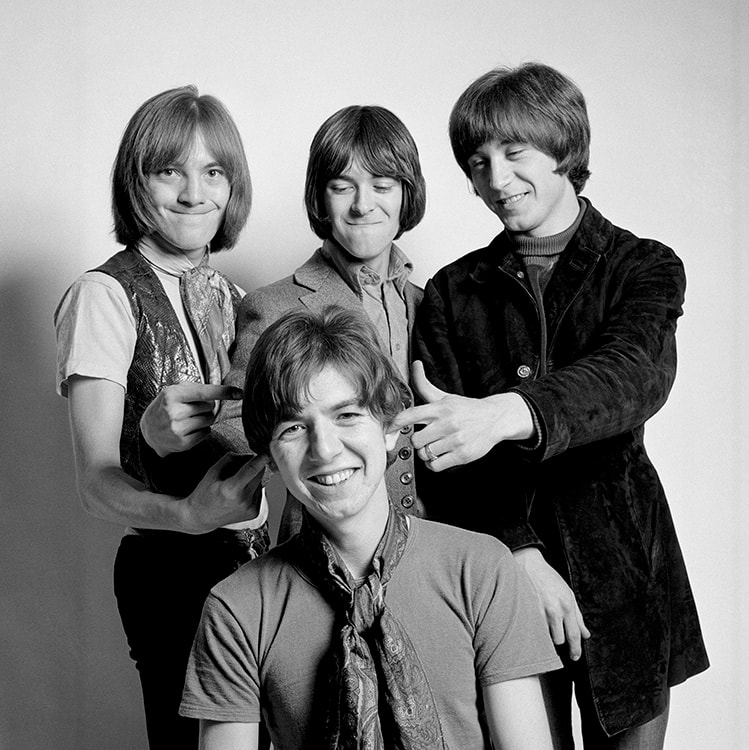
Released this day May 24th, 1968: The Small Faces third and final studio album “Ogden’s Nutgone Flake!” Watch this one time only Small Faces theatrical performance of this amazing concept album on the BBC’s Colour Me Pop . Songs featured: “Song of a Baker”, “Happiness Stan”, “Rollin’ Over”, “The Hungry Intruder”, “The Journey”, “Mad John” and “Happydaystoytown”, narrated by ringmaster Stanley Unwin!.

Ogdens’ Nut Gone Flake is the third (and final) studio album and the first concept album by English rock band Small Faces their Ogdens’LP peaked at number one on the UK Album Charts on June 29th, ​where it remained for a total of six weeks. Ogdens’ Nut Gone Flake only reached No. 159 in the US.

Widely regarded as a classic album, and featured an innovative round cover, the first of its kind, designed to resemble an antique tobacco tin. The title and the design of the distinctive packaging was a parody of Ogden’s Nut-brown Flake​, a brand of tobacco that was produced in Liverpool from 1899 on wards by Thomas Ogden.

The two-act concept album consisted of six original songs on side one and a whimsical psychedelic fairy tale on side two relating the adventures of “Happiness Stan” and his need to find out where the moon went when it waned. It was narrated by Stanley Unwin, after original plans to have Spike Milligan narrate the album went awry when he turned them down.

Critics were enthusiastic, and the album sold well, but the band were confronted by the practical problem that they had created a studio masterpiece which was virtually impossible to recreate on the road.

Because of the album’s complexities, it was never performed live. It was performed as a whole once on the BBC’s television programme “Colour Me Pop” on Friday 21st June 1968.

​Although the band mimed to the studio recordings, their microphones were left on to capture ad libs.

Find more fab Ogdens’ Nutgone Flake facts at https://www.ronnielane.com/small-faces-ogdens-nut-gone-flak…

The Small Faces on the UK TV Program ‘Colour Me Pop’ in 1968.

Set List: 01. Song Of A Baker 02. Happiness Stan 03. Rollin’ Over 04. The Hungry Intruder 05. The Journey 06. Mad John 07. Happydaystoytown From 1968.

The Small Faces set is a mix of live performance, studio material and video. The centrepiece is the performance of songs from Ogden’s Nutgone Flake, complete with appearance from Stanley Unwin.

Small Faces Ogdens 1968 Image credit Gered Mankowitz

Image may contain: 1 person

Emily Keener has marked her 2020 return with unbridled honesty, intimate reflection, and a hauntingly poignant indie folk sound. It’s a winning combination for the 21-year-old Cleveland-based singer/songwriter, and one that makes her sophomore solo record a tremendous success: A stirring coming-of-age soundtrack to life and love, isolation and connection, “I Do Not Have to Be Good” hails Emily Keener’s rise as a vulnerable lyricist and a breathtaking songwriter.

I Do Not Have to Be Good by Emily Keener was independently released Friday, May 22nd , 2020. An ambitious project four years in the making, Emily Keener’s new album is a sophomore triumph: She was a former Voice Season 10 competitor but please let that not put you off,  Keener’s music takes a refreshingly clear, thoughtful approach to significant coming-of-age questions of intimacy and purpose, sex and identity, connection and living with intent. Her songs are haunting like those of Phoebe Bridgers, and equally moving; there is no question that this young up-and-comer is going places.

In premiering the album’s lead single “Do You Love Me Lately?” critics praised Keener for crafting “a raw indie folk song exploring vulnerability and insecurity,” calling it “heart-wrenchingly beautiful in its grace and overwhelming honesty.” The singer’s depiction of grief and anguish through delicate vocals and expressive, nuanced melodies also earned her a spot on which further highlighted how the track covers so much more than the descriptions of breakup or love’s loss would suggest: “The song is about finding oneself in a haze of uncertainty and self-doubt; it’s about learning to let go of expectations, and learning to be vulnerable; about diving headfirst into our fears, and dwelling in the darker spaces of our psyche.”

While certainly buoyed by the inimitable beauty of its lead single, I Do Not Have to Be Good is a wondrous, enchanting journey in and of itself. The album expands the breadth of Keener’s art and artistry through juxtaposed moments of serenity and turmoil, characterized as much through sonic highs and lows as by moments of emotional tranquility and intensity. The haunting opening track “Nap” released earlier this May as a third single, sets the record’s tone perfectly with its evocative depth, percussive resonance, and achingly stripped, raw arrangement:

Thus begins Keener’s complete unveiling: a true odyssey into the mind’s eye, “I Do Not Have to Be Good” brings us closer to the artist than ever before through diary-like entries spelled out in song after heart-aching song. Whether it’s the touching interplay of guitar and piano subverting her second single “Boats” or the emotionally resonant heart-on-sleeve performance in Keener’s record elevates real life – those special, little moments of understanding, longing, love, belonging, and so on. It’s a testament not only to her growth as an artist, but also to her handle on the magic of our shared human experience.

Spiritual, immersive, and unabashedly true: This album could be a soundtrack to our darkest days, as well as our lighter ones. It’s a beautiful listening experience through and through, and one that feels fresh and inviting every time we listen. Emily Keener has tapped into greatness on her sophomore effort; here’s to hoping we hear much more of this artist-to-watch in the years to come.  peek inside Emily Keener’s “I Do Not Have to Be Good”  as the artist goes track-by-track through the music and lyrics of this her sophomore album!.

Nap

I wrote Nap in my late-teens as I was starting to navigate adulthood. It’s about the desire to become enmeshed with someone when the world feels too overwhelming to process alone. In the midst of the chaos of 2020, I relate to it even more. I hear my past self differentiating between what was familiar and what I actually believed to be true. Dan Fernandez plays a dynamic percussion part that echoes in the distance, along with layers of spectral vocals I created with Lexicon effects processors. Dalton Brand wove together the ethereal effects that make the track feel like it’s inhaling and exhaling. “I would take a nap with you/Over anything that god could do/You’re not going to bed without me/Not going anywhere without me” The lyrics are informed by the deep confusion and discomfort I felt as I let go of the religious certainty that was my foundation in childhood. Life felt like too much to handle. I wanted to hole up and sleep forever. That feeling has dissipated over time, but it comes and goes in waves still. My hope is that the song can be a reminder of common humanity; the struggles and coping mechanisms we share.

Do You Love Me Lately?

We had to record three or four different versions of this one before it felt right, and I guess that’s fitting for a song that’s about questioning yourself romantically. It’s set in the hollow space where openness isn’t reciprocated, movement isn’t mirrored; you’re waiting around for someone to figure out whether they care for you or not. The meaning has morphed over time for me, but the story started off as a fantasy about an unavailable dreamgirl. “Look at me, I’m taking it badly/Nose to my knees, I’m wondering madly/You say you didn’t love me then/But do you love me lately?” The chorus is a plea to this spectre I had imagined so much with, and I wanted it to sound raw and sheepish and insecure; a cry for reassurance within an uncertain dynamic. It touches on what we truly desire from our partners, the things that we project onto others unconsciously, and the types of love we idealize.

I Know (feat. Cathalyn)

This song is a reflection on feeling a reciprocal ‘knowing’ with someone. The kind of connection that transforms simple shared experiences into a loving space that you’re both fully present in. A pining is woven in with small intimacies like blankets and morning coffee. There’s this assertion throughout the song– ”I know, I know, I know” — and the lyrics eventually reduce to nothing more than short, sure phrases. When you’re apart from someone you really care for, it’s almost like you have to be extra adamant to ground it all in reality. “We belong, we belong, we do/You know my soul and my soul knows you.” I was lucky enough to be joined by my friend Cathalyn (of The Katy) on this track. She lent lovely melodies that color the ending with warm, anthemic energy.

I Don’t Know Anything

This song is about self-betrayal and the micro-interactions that cause a person to distrust themselves over time. When I listen to it, I hear my past self writing from an insular world; a cocoon, safe and separate. “I feel years behind the people/In the places I go/So much I could say, so much I should know.” I felt like a stranger to my peers, almost like there was an out-of-print book about existing that everyone else had read but I’d missed out on somehow. No one had to say “wow, you don’t know anything” outright. That was just a given to me, a core belief I held. Within the haze, though, there were some guiding lights that brought me back to myself. I’m striving to trust my own perception and intuition, and maybe know one or two more things eventually.

Boats

I wrote this one after sailing Lake Erie on a summer night under the stars. It was my first and only time on a sailboat, so it’s nice to have a musical snapshot of it. Everything was calm and there weren’t any other boats or people in sight. I felt very present and at peace, no thoughts running through my head other than to notice how beautiful it all was. I wanted to make something simple to reflect that serenity. There’s a bittersweet aspect to it, a recognition that every experience comes to an end. “I’ll start building a boat/Late into every night/To sail us both away from the passing of time” I sing it to appreciate the loves in my life and the moments I get lucky enough to end up in every now and again.

Static

Static was recorded live in-studio with Curtis Leonard. We were both playing acoustics, and doing full take after full take. The energy of the performance we chose is really special to me and it’s exactly what I hoped it could be. The song observes the decline of a relationship and the fundamental differences that have worn it down over time. Even things as simple as disagreements about what music to listen to can speak to resentments that have built up as a result of unconscious patterns and unrealized desires. “What were we doing on that couch?/No one in that room was gonna figure anybody out.” I associate Static with a loss of connection. A transmission that’s been blocked, communication between two entities that has devolved into something unrecognizable. In essence, the song is about sifting through that convolution to find a solid truth to hold. The chorus is a flashback to my childhood. A house nestled in thick forest, a dinner bell on the side, we’re facing the barn, a song’s playing somewhere. “Clear as a bell on a cabin wall/Calling me home when the sun goes down and the chorus falls” We listened to a lot of country music when I was little. I felt inexplicable comfort and satisfaction when the chorus would arrive, when the singer finally got to the hook they’d been setting up the whole time. The song could be ridiculous or heartbreaking, and it would still feel like a great relief to me. A high, even. It’s what made me want to write music. “I don’t need your 3 AM commiserations/Cause there’s a hook for every lonely minute/On this radio station” I look for closure and familiarity in songs when there is little to be found elsewhere. In uncertain times, I still find myself listening for the hook.

Mary, I Love Her

I wrote this song as a tribute to Mary Oliver, a couple of weeks after she passed away. Her poetry made a deep impression on me, and always seemed to pop up in my life when I needed it most. The first line (“I do not have to be good”) is also the album title, and it is a response to Mary’s poem ‘Wild Geese’ which reads:
You do not have to be good
You do not have to walk on your knees
for a hundred miles through the desert repenting.
You only have to let the soft animal of your body
love what it loves.
I’ve always found these lines to be deeply affirming. Having spent years mired in self-doubt and perfectionism, the idea of presenting as anything other than good and perfect was alien to me. But this poem in particular got through to me time and again. It helped shape me into a more compassionate person, toward myself and others. I thank Mary for her direct, heart-opening truth.

Elbow

This takes me back to the attic apartment; its rain-speckled windows framing rows of slate gray roofs and patches of light gray Cleveland sky. The tone of the song itself is gray, and the lyrics describe what it feels like to hide from myself in my own body, in my own home. I’d begun to notice how suppressing certain emotions had affected my sense of self over time. “Never been worse/Never been better/Sleepwalking in the strangest weather” It’s true that when we push things down, they just show up in other ways. I started having vivid, disturbing dreams. I was keeping my mouth closed because I had no idea what it might say. Eli Hanley plays the erratic piano part, an lilting undercurrent of chaos. When I wrote the song, I was afraid of myself and I wanted to retreat from everything. The emotional qualities remind me of fog, and the shapes of things concealed in fog.

Comfort

I didn’t write Comfort in a motel room, but I think the song lives in one. The recording itself is rough and smoke stained, and it feels like paper that’s slowly singeing. I remember sitting at the console alone, working on vocal arrangements all night. Layers and layers of Echoplex, rough transmission. The lyrics describe a breaking point; the moment I realized that the role I was playing with someone had been causing me pain. “I can be your comfort or your blinding light/Tell me how you want me to leave you tonight” Leaving felt like too big of a thing to do alone, so I found myself waiting and asking–consciously and unconsciously–for them to help me move on. But that defeats the purpose, doesn’t it? Separating from someone reminds me: I’m stuck with myself. I have to walk my own path, do hard things, shift my own patterns. It’s not easy to accept that. When people disentangle from each other, the pain feels elemental. The sense of safety and comfort you built together is no longer there. It’s bewildering. I found myself questioning reality, wondering what the hell had happened, what context I must have missed that might explain my situation to me. “They burned like angels together/They thought that playing house could make a home/Oh, is this how the story goes?/All my waking hours are blurry pictures/And I’m falling asleep to static on the radio” I lost parts of myself through entanglement with another. It’s like when you forget to clasp the ends of necklaces, and all the chains become a messy knot. Trying to force it apart feels dangerous; what if something snaps? Studying the chains to see where they lead is frustrating, they all form one entity at this point and nothing makes sense to the eye. Disentanglement happens somewhere between the two points. It’s gently tugging on strands to see what gives and what doesn’t, and keeping your eyes open to notice patterns and signs that you’re moving in the right direction. I’ll probably go my whole life seeking comfort and looking for home in people and in things, like most everyone. But hopefully that won’t drive my choices every day. Maybe only sometimes.

I Do Not Have to Be Good by Emily Keener was independently released Friday, May 22nd , 2020

Image may contain: 1 person, standing, sky, text and outdoor

Image may contain: outdoor and nature, text that says 'LISTEN το THE LATEST SINGLE FROM MOONTOWER GOT MY WAY'

Sometimes it takes going through the toughest of times to be able to see your life from a different perspective and realize just how much you have. For Moontower’s lead singer Jacob Culver it was his mother’s sudden heart attack that made him see how he had taken her for granted and kicked him into looking at life through a new lens. The Los Angeles trio hope to take this message and share it’s importance with the masses in their new single “Got My Way.”

Among vibrant indie electro melodies and swirling synthscapes, the three-piece have crafted an uplifting anthem, encouraging others to show appreciation. Culver shares, “This song is about the regrets I would have had if we had lost her that day, and I hope it serves as a reminder to tell the ones you love that you love them when you can.” So take note folks – now more than ever, we need to be calling up our loved ones and showing them they’re valued.

From Jacob Culver:
“Got My Way was written about almost losing my mother to a heart attack. Last year on Mother’s Day, I played her this song right after I wrote it, and we put out the finished track this Mother’s Day. Sadly, I wasn’t able to spend Mother’s Day with her this year as her heart attack puts her at risk for serious complications with COVID-19. It all happened so quickly by the time my father was able to tell me she had a heart attack she was already recovering in the hospital. In that moment, I experienced intense sadness, love, relief, and regret all at once. My mother and I have had a beautiful relationship, but the idea that I could have lost her made me feel ashamed for even a split second I took for granted. This song is about the regrets I would have had if we had lost her that day, and I hope it serves as a reminder to tell the ones you love that you love them when you can.”

“Got My Way” · Moontower Released on: 2020-05-08