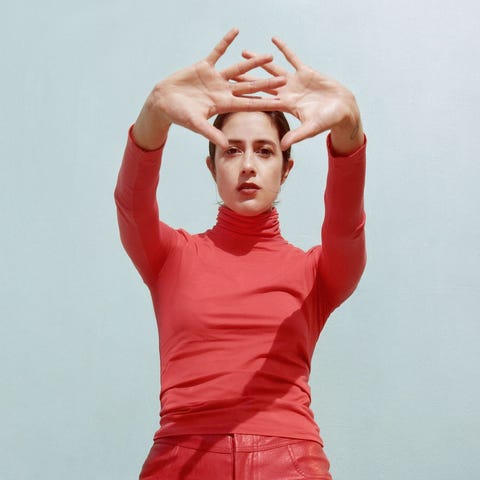
Brooklyn songwriter Katie Lau has used the time to add the finishing touches to her new album “When You Found Forever”, her first project to be released in five years under the Painted Zeros name. It’s an uncompromising journey into a person stricken with a battle of the psyche, overcoming a tumultuous relationship with alcohol and breaking free from the clutches of an old love (see “”). Lau is fearless in showing the pains of addiction mixed with the beautiful colour palette that returns once its been abandoned. On her latest single that we’re thrilled to premiere, “I Will Try” Lau takes the various shades that make up ourselves to create an anthem endowed with a restored affirmation in her identity and making the best of the future.
A beacon of hope soars high as Lau’s ever so graceful guitar tugs at your heart strings, championed by an endearing drum pattern guiding her along the path. Swells of emotion pour out as the track weaves its way across glistening lyrics emboldened by Lau’s honesty, “When it comes, I’m still here / The dark dissolves, to stay another year”. As Lau details, “I wrote this song channeling the feeling of gratitude I have for what really feels like getting a second chance at life thanks to getting sober, and getting on the other side of a difficult time onto a path of emotional/mental health in general. Now, every day I wake, I’m just trying to do the right thing/live an honest, useful life, and trying to help others however I can. When I was still drinking and using, life had become so dark and miserable, and now, being in recovery for three years, my life has changed beyond recognition; it’s better than I ever could have imagined it could be.”
Classic-sounding post-rock energy fuses with gently-communicated truths then blazes on “I Will Try” the powerful, pristine new single from Katie Lau’s Painted Zeros The track is taken from the “When You Found Forever” LP that she releases this Friday, May 29th. You can order digital and vinyl versions of it from and it’s available from her Bandcamp page as well.
Releases May 29th, 2020
Written, performed, engineered, and mixed by Katie Lau
Drums played by Jared Kaner on tracks 3 & 8
Bass played by Jim Hill on tracks 3 & 8
From jamming in a basement in a London record store to bagging the biggest recording deal in the history of popular music, Led Zeppelin’s rise to super-stardom took only a few short months. The band that would come to redefine hard rock music and influence generations of future rockers is here captured in all its thundering sonic glory as it embarked on a tour of Scandinavia in the spring of 1969. Led Zeppelin perform ‘How Many More Times’ on Danish TV channel Danmarks Radio on March 17th, 1969.
The 1969 tour of the United Kingdom and Scandinavia was a concert tour of the United Kingdom and Scandinavia by the English rock band. The tour commenced on 1st March and concluded on 17th April 1969. During this tour, Led Zeppelin made a number of live television appearances, including one date in Denmark on 17th March, and a session at BBC TV studios on March 21st and a session at Staines on March 25th, the last for the filming of the Supershow. Some of these early filmed sessions were later released on the Led Zeppelin DVD (2003). They were part of manager Peter Grant’s early strategy to build public awareness of the group. However, his dissatisfaction with the medium (particularly its inferior audio quality), would soon lead him to make the band unavailable for television again
Performed live at Stockholm’s Konserthuset on 14th March, broadcast by Sveriges Radio and Copenhagen’s Gladaxe on 17th March, broadcast by TV-BYEN, these gigs are an early taste of the virtuoso rock performances that would break stadium attendance records across the globe and change the genre forever.
Two incredible performances, live from Stockholm and Copenhagen, 1969
Includes the entire Sveriges radio and TV-BYEN broadcasts
Digitally remastered for greatly enhanced sound quality
Whoever said that the second chances are never good did not imagine that we would experience something like what is happening this 2020. With the whole world on pause due to the evolution of the global pandemic and with the live music sector holding its breath facing a summer without festivals, we can only look forward: towards 2021, specifically, the year in which we are going to recover everything that will be pending from 2020. So, we are especially proud to announce that the first names in the Primavera Sound Barcelona 2021 lineup feature a majority of artists who reconfirm their presence at the festival as well as the occasional very special new addition. A first selection of artists that condenses the spirit of the festival for an edition that is as long awaited as this 20th anniversary edition is, and that will be updated soon with new names, both from the 2020 lineup and new surprises. There is no doubt: in 2021, Primavera Sound will still be Primavera Sound.
With an amalgamation of genres, an intriguing mix of pop, punk and alternative rock, Milo Gore draws influence from a variety of artists such as The 1975, Bears Den and Idles. In turn, their own sound sits closer to the likes of The Strokes, The Hunna and Blossoms. “Green Eyes” A song about the rise and fall of a past relationship.
“The ‘Green Eyes’ music video is about the rise and fall of Milo’s past relationship. The video depicts the story of how he and his girlfriend first met, and consequently, how they drifted apart. The two should have never ended up together – they both had issues with their mental health, issues that were clearly going unchecked. Perhaps that’s what initially brought them together? However, it was sadly the thing that also tore them apart.”
“A video about self-discovery, that eventually ends with a smile, as Robi, the actor who plays Milo, ends up in the same place he had initially met his ex-girlfriend. The song, and the video, are both about learning to be content on your own again. Hindsight is a beautiful thing…”
Latest single, Green Eyes is an effervescent slab of indie rock that bounces along on a tide of exuberant guitars and anthemic vocals. It comes from upcoming album How Do You Cope WhileGrieving For The Living?, which is out on the 20th August. The five-piece met while studying at Falmouth University in Cornwall, a quartet brought together by mutual interests and a shared sense of humour.
“Green Eyes” is the second single released from my up-coming debut album; ‘How Do You Cope While Grieving For The Living?’, which is to be released 20.08.20.
Original song written by Milo Gore. Original track recorded by Pete Prokopiw,
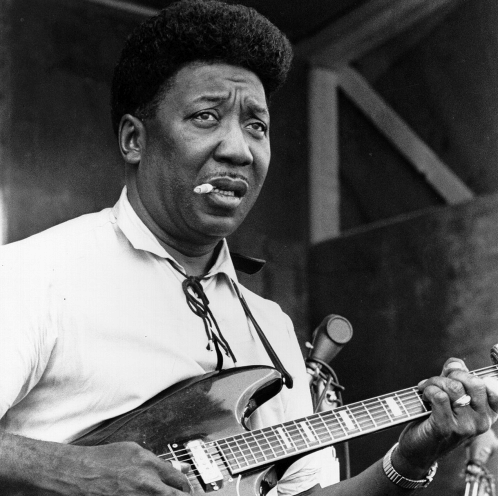
Muddy Waters was arguably the greatest and most famous bluesmen who migrated from Mississippi north to Chicago bent on a making a name for himself. It was a long, hard road out of the Mississippi Delta and almost unimaginable for Waters to go from picking cotton on Stovall’s Plantation in Mississippi to the Library of Congress recordings made by Alan Lomax of Waters on the farm in 1941. But from there he went on to the pinnacle of success in Chicago as the premier post-War blues master. Muddy Waters transcended all obstacles in reaching his goal, becoming the reigning Chess king in Chicago for nearly 25 years.
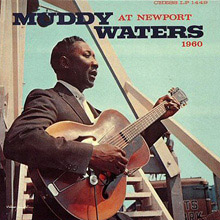
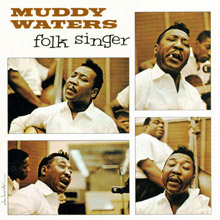
After moving to Chicago in 1943 and making a few sides for Columbia Records, Waters first recorded for the Chess brothers’ Aristocrat label in 1947, and by 1953 had hit his stride with one of the great Blues songwriters, Willie Dixon, providing the hits, and his seminal band with Little Walter Jacobs on harmonica, Jimmy Rogers on guitar, Elgin Evans on drums and Otis Spann on piano providing the groove. In 1960, Waters recorded the Blues classic “Muddy Waters at Newport,” “Folk Singer,” in 1964, the dreaded “Electric Mud,” in 1968, and the all-star “Fathers and Sons,” set in 1969. Waters reigned until Chess closed shop in the 1970s but got a second life with Johnny Winter later in the decade with four Blue Sky albums produced by the Beaumont Blaster. Grammy Award winners were “Hard Again,” (1977), and “I’m Ready,” (1978) and “King Bee,” (1981), all studio albums, and the acclaimed live set “Muddy “Mississippi” Waters.” which was released in 1979. The Rolling Stones came under his sway, recording many of his songs, and Rolling Stone magazine paid homage to both the Stones and Waters in the title of its publication. Waters was the template, setting the table for other Windy City Bluesmen that came in his wake such as Buddy Guy. He was the Hoochie Coochie Man – one of the greatest of the post-war Blues masters.
Muddy Waters was bandleader, songwriter, guitarist, singer, song interpreter and the prime mover of the Chicago electric Blues scene, Muddy from the Mississippi Delta, like almost all the great electric bluesman of the post-war era. He was also a good man, who helped many younger or struggling musicians as they later bore witness. But whatever else he was, he will forever be the once and future King of the Chicago Blues. “No I ain’t no millionaire, but I had a lot of managers that became millionaires.” Muddy Waters got his nickname from his grandmother, because he was always playing in a nearby creek as a child. It is a name that resonates way beyond the confines of the Blues. As the man who claimed that “The Blues had a baby and they named it rock ‘n’ roll,” he certainly had a point and his reputation among young white boy wannabe blues musicians was second to none. It was from a track on his 1958 album, from whicha young British band took their name in 1962… and they went on to become, “The Greatest Rock and Roll Band in the World”.
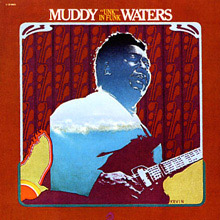
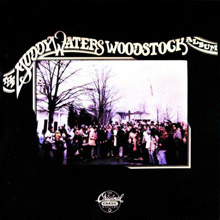
Muddy Waters Folk Singer shows the depth of Muddy’s talent, his understanding of the Blues and his brilliance in playing them in whatever form he wanted. It is fair to say that without the album Muddy Waters Live at Newport 1960, no self-respecting white Blues band would dare not play at least half the numbers Muddy performed. The success of rock bands helped many a Bluesman’s career, both in the USA and as international acts; Muddy was no exception and in fact his recording career benefitted more than most. Albums including The Muddy Waters Woodstock Album and Unk in Funk offer a real insight into the thirty year recording career of the real legends of the Blues.
When he was about three years old McKinley Morganfield’s Mother died so he was sent to the Stovall farm to stay with his grandmother. After he grew up he began working on the plantation, while at the same time teaching himself the harmonica and later the guitar. He began playing in juke joints, at parties and dances in and around the Clarksdale area from about 1935 onwards.
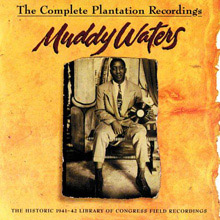
When in the mid summer 1941 Alan Lomax recorded Muddy at Stovall’s for the Library of Congress; Muddy sang “Country Blues” and “Burr Clover Country Blues”. According to Howard Stovall whose family still own the farm. “He was the burr clover man, which was a cover crop to put nitrogen back in the soil. It’s drudge work, you hand rake it up and put it in bags and then spread the burrs around to improve next year’s crop. I had the honour of that job one summer, apparently Muddy felt about it the same way I did, only he was able to express it more eloquently.”
In 1943 Muddy moved north and like many before him, took the train to Chicago’s Illinois Central Station; initially finding work in a paper factory. Muddy began playing for tips on Maxwell Street soon after arriving in the city; Big Bill Broonzy helped the country boy break into the urban scene. He started working in clubs, playing with Eddie Boyd, as well as backing Sonny Boy Williamson No.1 at the Plantation Club. A switch from acoustic to electric guitar in 1944 galvanised Muddy’s career. He continued to play traditional Delta bottleneck, but the electric guitar transformed his sound and helped to “invent” post-war Chicago Blues. His 1946 recordings for Columbia with the doyen of Chicago Blues, Lester Melrose, went unreleased. It was not until the following year that Muddy would be heard playing on record, in the role of backing guitarist to Sunnyland Slim.
Waters and bass player Big Crawford recorded two other songs on the day he worked with Slim, but Leonard Chess was unimpressed and so they went unreleased. However, the following year Muddy and Crawford were back and cut ‘I Can’t Be Satisfied’ and ‘Feel Like Going Home’, which Leonard Chess released on the Checker label. The former was a reworking of ‘I Be’s Troubled’, a song Muddy recorded for Lomax in 1941 and often played live. ‘Feel Like Going Home’ was a reworking of Son House’s ‘Walking Blues’. Muddy had huge respect for House and this is another song Muddy must have sang many times before this recording. The record sold out in less than a day, going on to make No.11 on the R&B charts in September 1948; years later Muddy recalled that he even had trouble buying a copy. Chess was anxious not to upset a winning formula and despite the fact that Muddy had his own band he continued to record Muddy as a duo or with Leroy Foster on guitar.
By the late 1940s his band included Leroy Foster on guitar or drums, Big Crawford on bass, Jimmy Rogers on guitar and harmonica and not long afterwards Little Walter Jacobs was added as the featured harmonica player. Muddy was only in his early 30s but he became the patriarch of the Chicago blues scene. With the pick of the city’s musicians in the 1950s, it was more a question of who didn’t play in Muddy Waters Band than who did. The Muddy Waters Blues Band was recording as an entity by 1951, the epitome of the hard-edged, driving electric Blues band of Chicago, a cornerstone of what we call rock music today.
In 1951 ‘Louisiana Blues’ became the second in his run of sixteen chart hits, which included classics like, ‘I’m Your Hoochie Coochie Man’, ‘Just Make Love to Me’, ‘Mannish Boy’ and ‘Forty Days and Nights’. The man born in Rolling Fork, Mississippi also cut ‘Rollin’ and Tumblin”, ‘Rollin’ Stone’ and ‘They Call Me Muddy Waters’, in which he sings “I’m the most bluest man in this whole Chicago town”… few would disagree. Any and every one of these recordings captures the very essence of 1950s Chicago Blues.
In 1959 Muddy released Muddy Sings Big Bill, a tribute album to his former mentor who had died a year earlier. Muddy considered Big Bill to be “the Daddy of the Country Blues singers”, so when he first moved to the city it must have been amazing for the younger man to find such a star taking an interest in him. It also shows the similarity in style between the two singers. On the album Muddy is accompanied by his band of the moment, James Cotton on harp, Pat Hare on guitar and the brilliant Otis Spann on piano they perform ‘Just a Dream’, a perfect testimony to both men, while Muddy makes the song his own, Big Bill comes shining through.
‘I Feel So Good’ from the album exemplifies Muddy’s approach, brilliant interpretation and vocal delivery that is underpinned by tight ensemble playing. Otis Spann on piano, James Cotton’s harmonica and Pat Hare’s guitar are nothing but perfect. The following year at the Newport Festival Muddy performed the song, predominantly to a white audience, and it was captured for his album Muddy Waters at Newport; one of the great live albums and a favourite of many blues’ fans. As the band powers through the song the crowd can be heard responding to their brilliance with spontaneous shouts. Not that this one song was any different from many that Muddy performed, he affected everything he did with style and class.
Throughout the 1950s and early 1960s Muddy’s band was the city’s premier recording outfit, a veritable academy of the Blues. Among those who played with Muddy were guitarists Jimmy Rogers, Luther Tucker, and Earl Hooker; harmonica players Junior Wells, Big Walter Horton and James Cotton, Willie Dixon on bass; pianists Memphis Slim, Otis Spann, and Pinetop Perkins along with drummer Fred Below. Another was Buddy Guy who played on Muddy’s essential 1964 album, Muddy Waters “Folk Singer”. He was another musician who had a lot to thank Muddy for…
“My mother had a stroke and I left Baton Rouge, Louisiana September 25th 1957 and I went to Chicago. I actually was looking for just a regular job to help my mum, but I ran into a bad situation. I couldn’t get work, nobody would hire me. I played on the street first, one day this man grabbed me by the hand and walked me in this club. It was Otis playing, the guy told Otis to call me up and I played ‘Things I Used to Do’, and someone called Muddy on the phone. I was pretty hungry ‘cos it was the third day without food. Muddy came in and just smacked me and said wait a minute, I heard about you, they done call me and got me out the bed. He said you hungry, I said you Muddy Waters, I’m not hungry, I’m full, I met you.”
Muddy like many of his contemporaries toured Britain in the 1960s as part of the American Folk Blues Festivals; his reception was better than when he had previously visited Britain at the invitation of Chris Barber in 1958, the jazz trombonist. Many people in the jazz fraternity, who were the keepers of the blues flame in 50s Britain decided it was a travesty for Muddy to play with amplification. Somehow these blues zealots decided that the only pure blues was acoustic thank goodness ideas changed. In May 1964 Otis Spann cut a single at Decca studios in London with producer Mike Vernon. On ‘Pretty Girls Everywhere’ and ‘Stirs Me Up’ Otis was accompanied by Muddy Waters on rhythm guitar and Eric Clapton on lead. Some years later Eric recalled “they were both very friendly, and they had beautiful shiny silk suits, with big trousers!”
As the Blues languished somewhat in the late 60s, then so did Muddy’s career. In the 1970s he toured constantly and by 1977 he had signed with CBS Records. Collaborating with Johnny Winter, Muddy’s career took an upturn with the release of the album Hard Again in 1977, winning him a Grammy. A second album, I’m Ready, was followed by a tour of the U.S. including a performance at the White House for President Jimmy Carter.
Muddy worked live with Johnny Winter in the early 80s before succumbing to a heart attack in his sleep aged sixty-eight in 1983. Muddy’s influence as well as the respect that he commanded among the Rock community was acknowledged when he was inducted into the Rock & Roll Hall of Fame in 1987.
On this day (May 26th) in 1982: Los Angeles psych/garage rock revival band The Salvation Army released their self-titled, debut album on influential indie label, Frontier Records; (Since Reissued on Burger Records) after the charitable organization objected, they changed their name to The Three O’Clock and became one of the leading lights of the city’s burgeoning ‘Paisley Underground’ neo-psych scene…
In March 1981, South Bay, CA, teenager Michael Quercio formed theSalvation Army a punky, psych-influenced garage band that took most of its stylistic and musical cues from Lenny Kaye’s Nuggets anthology. Before the year was out, the Salvation Army had a single out on the Minutemen’s New Alliance label, a new guitarist (Greggory Louis Gutierrez), and a batch of new songs to demo.
After this demo was played on Rodney Bingenheimer’s massively influential Rodney on the ROQ radio show, signed the Salvation Army to Frontier Records and released the trio’s self-titled debut in May 1982.
The philanthropic organization took umbrage over the name and the Salvation Army politely changed their name to the meaningless but suitably psychedelic the Three O’Clock The band replaced drummer Troy Howell with ex-Quick drummer Danny Benair added keyboardist Michael Mariano, and transformed themselves into the leading lights of the paisley underground, a phrase invented apparently by Quercio that’s dogged him ever since. Fancher Records reissued the Salvation Army album under the clever name Befour Three O’Clock after the group misguidedly left Frontier for IRS, and in 1992, collected the full album, that pivotal five-song demo, and all four songs recorded during the sessions for the New Alliance single for a comprehensive collection of every Salvation Army studio recording.
As such, “Happen Happened” (named for the trippy A-side of that single, which appears in two versions) is a priceless document of the early days of the L.A. psych-pop revival scene. Fans of the Three O’Clock’s much glossier music might be surprised by the punky speed and noisy guitars, but the simple two- and three-chord songs are bracing and surprisingly melodic, and flashes of Quercio’s skewed lyrical bent are already visible in songs like “While We Were in Your Room Talking to Your Wall.” Six songs are repeated, though there are only notable differences in a couple of cases and invariably the album versions are superior to the demos. Regardless, this is both a definitive historical collection and a great piece of early-’80s post-new wave punk-pop.
a.k.a. The Three O’clock, power pop / paisley underground
from Los Angeles, California… 1992 “Happen Happened” CD Reissue of 1982 “Salvation Army” Album, plus 9 bonus tracks [Frontier Records, 01866 34639 2]
IDLES have returned with their brand new single “Mr. Motivator,” the first taste of their highly anticipated third album that will be released later this year via Partisan Records. It’s another pummeling rocker that features the amped up and hyper-aware social commentary from vocalist Joe Talbot. The instrumentation is fierce but the production allows each member a chance to shine. The song’s title and subject matter is one that is certainly timely and relevant – as you’d come to expect from these guys by now.
The track is a battering ram of positivity that’s also the first preview of their highly anticipated third LP due out later this year. The song doubles down on the (self-admitted) sloganeering and social commentary that’s become the band’s signature, yet here more than ever they’re able to take clichés and turn them into music that’s deeply complex and brutally relevant.
Beautifully poignant, IDLES have captured the spirit of humanity despite being in lockdown. The video for ‘Mr. Motivator’ is comprised of numerous home-made workout clips filmed by fans of the post-punk band. Frontman Joe Talbot had this to say about the song:
“We want to start this journey with a means to not only encapsulate the album’s sentiment but to encourage our audience to dance like no one is watching and plough through these dark times with a two-tonne machete of a song and the most beautiful community of scumbags ever assembled. Let’s go. All is love.”
Idles followed up their acclaimed second album, “Joy as an Act of Resistance”, with 2019 single ‘Mercedes Marxist’ and its subsequent B-side ‘I Dream Guillotine’.
The single’s release features a brand new music video is self-directed and features fan-sourced exercise footage and the bandmembers themselves.
Sonic Youth are continuing to upload items to their Bandcamp archive and today it’s the live record “Hold That Tiger” which was recorded in 1987 and released in 1991. Here’s the backstory from drummer Steve Shelley:
Originally released as a semi-official bootleg LP in 1991 by friend and music writer, Byron Coley, on his Goofin’ imprint (we would eventually hijack the Goofin’ moniker for our own band-run label a few years later). The recording was nearly 60-minutes in length, so to prevent manufacturing a cost-prohibitive double lp, the master was slightly sped-up to fit the entire concert (us blasting through a finely-tuned set of songs from Sister, EVOL and a nightly encore tribute to the Ramones), on one single lp. Cramming the grooves of the vinyl in such a way resulted in “Hold That Tiger” playing at a lower volume on the stereo, thus the “one hour long – don’t have a cow! – crank it up’ sticker affixed to the front of the original lp cover. A few years later in 1998, “Hold That Tiger” was remastered for CD re-issue. The audio quality was improved from the lower fidelity lp but unfortunately the slightly sped-up performance was not corrected – until today. We are pleased to make available the best-sounding version of Hold That Tiger – SY performing full-on in 1987 – via Sonic Youth Archive on bandcamp.
“Hold That Tiger” — now at its proper speed and volume — below.
Sonic Youth Archive is a home to live SY recordings and unreleased, self-released or stray SY recordings.
In other news: Kim Gordon is appearing on the debut album by LXB (the duo of The Cure’s Lol Tolhurst and Siouxsie/Creatures drummer Budgie); Thurston Moore has been expanding his Bandcamp archives, too, as has Lee Ranaldo.
Yeah Yeah Yeahs were scheduled to play some live shows this year, and while their headlining set at Pitchfork Music Festival 2020 is unfortunately off, being stuck at home isn’t stopping the band from performing together. Last night (May 23rd), they shared a video of a remote performance of the Show Your Bones track “Phenomena.” Instead of doing the typical split-screen setup, the camera focuses on Karen O in a darkened closet while Nick Zinner plays guitar on a laptop in front of her. There are costumes, streamers, strobe lights, and a fog machine. “Fuckin’ party on,” Karen yells at the end of the performance. Watch it below.
Yeah Yeah Yeahs haven’t released a new album since 2013’s Mosquito. Yeah Yeah Yeahs Jam to ‘Phenomena’ During Quarantine Closet Party . The members of Yeah Yeah Yeahs aren’t going to let the coronavirus pandemic stop them from throwing a party, even if it’s at home alone in a closet.
Half Waif is singer-songwriter Nandi Rose. Her new album The Caretaker, her first for ANTI-Records, is named for a fictional character, “someone who has been entrusted with taking care of this estate, taking care of the land, and she’s not doing a very good job,” Rose said. “The weeds are growing everywhere, and she’s not taking care of herself.” Check out Half Waif’s “Halogen 2” video. The last album was so much about protecting myself – facing the night, bearing teeth and howling, shutting down an apocalypse, all so I could contain my world and build a fragrant shelter. I asked to be buried in the mother’s arms. But then I read Braiding Sweetgrass by Robin Wall Kimmerer, and I felt it change my life. My shelter was here all along, in the embrace of the weeping pine and the scalloped leaves who wave to me in the wind. I have never felt so at home. And now it is time to be a mother and a caretaker, to nourish myself by opening my heart to others, to all people – human, plant, animal, everything endowed with the spark of life and the will to survive.
Growing up means better understanding what you need. For me, right now, that’s a sweet summer of being a nobody, humble before the fierce kindness of these trees.
With a new album that was scheduled out on March 27th, I had lined up a New York release show and a subsequent North American headline tour—shows that had been in the works since last fall. This is my first record since signing with a new label, ANTI-Records, and I’d been banking on these headline shows (my first in over a year and biggest to date) to help build momentum around the release. Instead I spent an afternoon last week deleting all the events from my Google calendar one by one, feeling something crumble with every click. Disappointment made visual: this won’t happen, and this, and this. Entire blocks of colors disappeared, leaving behind a blank gray grid. What was worse was breaking the news to my band members and touring crew, knowing they were counting on these shows for income. Of course it wasn’t anything I could control, but it’s still devastating to know that the domino effect of this dismantling machine means we all fall down.
“Clouds Rest” by Half Waif from the album ‘The Caretaker,’ available now