Archive for the ‘MUSIC’ Category

The year 1973 came and went without Joni Mitchell releasing a record, the first year she’d skipped since her debut five years earlier, and when 1974 arrived, January brought “Court and Spark”, adorned by a sophisticated sonic sensibility that would define her career from that moment forward. Joni Mitchell was an emblem of female empowerment, Mitchell has always retained publishing rights to her music and has produced, often solely, her own albums. Though primarily considered a pop artist, the songs she wrote carried a signature folk rock sound with a jazz influence. Mitchell’s success as a solo songwriter and singer in the 1970s music scene certainly gets us going.

As a woman, as an artist, Mitchell engages with and pushes against the norms of the industry, all the while retaining a singular sound and reputation.

“Court and Spark” the 1974 album, Mitchell’s sixth album release,  a concentrated effort for a hit record. This analysis pushes Mitchell toward the pop star image, but the album retains her signature influences from rock, including guest performers, as well as folk and jazz; the electric guitar features just as strongly as wind instruments. Court and Spark reached second spot in the United States in March of 1974, eventually receiving double-platinum certification. “Help Me,” “Free Man in Paris” and “Raised on Robbery” all became hit singles.

The construction of the album’s songs is complicated—and sounds it. Contoured, carefully interlocked arrangements provide inviting frames into which sober, pretty poetry nestles, masking sharp lyrical edges that emerge upon deeper listening. Backed by Tom Scott’s L.A. Express, the popular “Help Me” shows how it’s done, cloaking a heady contemplation of love and loneliness in an alluring sway. Mitchell scatters memorable refrains across its lyrical structure, with repeating bookends in each verse of, “Help me/I think I’m falling” to one side, and variations on “But not like we love our freedom” on the other.

Though over 40 years old, this album is surprisingly relevant today. For anyone sequestered in their home but still trying to navigate the online dating scene, “Help Me” resonates. The narrator frets about falling in love too quickly, while “hoping for the future/And worrying about the past.” We cannot help but think of the future and how good it will be—to wander outside, to sit in a bar, to hug someone—but we’ll never get to live in our future, post-COVID-19, the way we lived in our past. The catchy chorus finishes with “We love our lovin’/But not like we love our freedom,” which in this crisis I interpret as the collective freedom we will achieve when the spread of disease slows, which will happen faster if we refrain from breaking quarantine to date.

What lies between is decorated tastefully by the cool ring of Joe Sample’s electric piano and soft, punctuating inlays of Larry Carlton’s electric guitar. Engaging and plush, the arrangement ascends into a billowing bridge capped by an affirming “Didn’t it feel good,” wherein Mitchell’s singing entrances with percussive traces amid a shifting-yet-certain rhythm. Busy and finicky as it may be, the assembly has a natural flow and hits the ear beautifully, right down to the bass drum taps placed curiously high in the mix during its fadeout. “Help Me” would prove the biggest hit of her career, reaching as high as No#7 on the singles chart.

In relation to “Same Situation” Mitchell’s lyrics call for “somebody/Who’s strong and somewhat sincere,” suggesting a much more nuanced, if embittered, plea for partnership. The perennial search for love in music does not always call to mind the sacrifices we anticipate in the continual bargaining of partnership. The chorus ends with “Caught in my struggle for higher achievements/And my search for love,” echoing the dichotomy faced by countless women who have given up careers and other personal achievements in exchange for a partner and family in the decades before and since Court and Spark. In Mitchell’s lyrics, the female voice and figure receives a more nuanced, complicated, and bittersweet appraisal than one is accustomed to in comparable records of the time.

This also applies to “Raised on Robbery,” which is sonically different than most of the album. The opening bars are played on the electric guitar. Mitchell’s voice, supported by back-up vocalists, cuts in, in a style reminiscent of the vocalists of World War II-era songs like Glenn Miller’s “In the Mood” or “Boogie Woogie Bugle Boy.” I’ll describe it as sharp, harmonized vocals with understated instrumentals in the background. In Mitchell’s case, this style shortly gives way to a more contemporary style. Meanwhile, the lyrics quickly subvert the upbeat music with the sad tale of a woman struggling to make rent after a male relation drinks away the money that was supposed to help them survive. If anything, the fast-paced music, which adopts a jazz-folk feel, is indicative of the woman’s resolve in light of her unfortunate circumstances. Far more direct in every way is the crowd-pleasing “Raised on Robbery,” which lightens the album’s tone with its fun, funny yarn-spinning atop a propulsive groove for which Robbie Robertson’s electric guitar etchings are an ideal complement.

The craft on display in the song, “Free Man in Paris,” is equally noteworthy. Opening with a segue that sounds like an extension of “Help Me” (the album is among the most seamless ever assembled), “Free Man in Paris” establishes a complex yet airy structure richly decorated by the electric guitars of Carlton and Jose Feliciano, with background vocals from David Crosby and Graham Nash as polished support. It’s catchy and agreeable—the tribute to her friend David Geffen would chart as high as #22—and offers insight into Mitchell’s process. Its cadence never quite settles down, and she keeps it off-kilter on purpose, as when she jams “unfettered” into a line whose meter it doesn’t quite match, prioritizing the specific term over a concession to any number of two-syllable words that would have fit more comfortably.

The album is a deeply personal experience, a dance into the confessional softened by artful twists of observation. The subject matter aligns with sparse piano melodies like the one beneath the clear-eyed musing on romance “Same Situation.” The horn-dressed “Car on a Hill” is peppered with small flourishes, many of them murky, as it makes a haunting choral ascent for which Wayne Perkins’ electric guitar provides a sharp edge. Mitchell inhabits each turn with a worldly, matter-of-fact vocal approach, bringing a gently rendered urgency to the title track as she tells a story that purposefully avoids closure by song’s end.

One of Mitchell’s gifts is for lyrics that seem to be part of a stream of consciousness until they hit a punchline that makes them coalesce. “People’s Parties” is a dense 2:15, loaded with ideas and images like the clever reduction of its characters to owners of “passport smiles.” Evocative imaginings spill from the supple “Just Like This Train,” an easygoing jazz reminiscence on lost love that is equal parts sweetness and bite. “Down to You” is like a lengthy exhale. A mesmerizing contemplation of isolation summarized in the lyric “Everything comes and goes/Marked by lovers and styles of clothes,” it is a gloomy, utterly lovely piece of work, with climactic moments delivered in a tempo akin to sobbing. Tracing a lustrous piano melody across 5 ½ minutes, it resonates on multiple levels. It would earn an award the following year for Best Arrangement Accompanying Vocalist, to mark the first of Mitchell’s nine Grammy wins.

The album’s closes by changing directions, in a pair of songs that share mental infirmity as a core concept. The first of them, “Trouble Child,” is a slinky shimmer punctuated by Chuck Findley’s cool trumpeting, John Guerin’s slender drum rattle and a mood-imposing electric guitar line from Dennis Budimir, which combine to create a ruminative flow that aligns with the tone and structure of the rest of the record. Less characteristic of the collection, and arguably anything in Mitchell’s catalogue, is a sprightly cover of the 1952 Annie Ross/Wardell Gray song “Twisted,” whose amusing personality (which includes a cameo from Cheech and Chong) and springy vocalese structure send off the record with a lively bounce.

The album was received warmly by critics and the marketplace, where it reached as high as #2 on the album chart, and would in the long term rank as the best-selling record in Mitchell’s catalogue. It also served as a signpost, highlighting an artist intent on following her muse wherever it might lead, which soon would entail far more experimental paths. As much as it sounds on its surface like an easy-listening jazz-pop record, Court and Spark was a significant pivot point, angling toward a future in which its creator would champion experimentation, and defy expectation.

May we all strive to achieve Joni Mitchell’s level of career power and lyrical grace.

Raised in California and steeped in the unique elements of the West Coast, Dream Phases filters the magic that emanates from all that surrounds them. From the sun-soaked beaches, verdant valleys, and soaring mountains, to the hard-boiled legacy of Los Angeles and the bright, neon promise of Hollywood, the band is a reflection of the environment in which they are immersed.

Dream Phases began with a vision of evolving the sounds launched by legendary L.A. bands such as The Byrds, The Beach Boys, and Crosby, Stills, Nash & Young, as well as those who followed, including The Rain Parade, Elliott Smith, Darker My Love, and Autolux. As the synths on the song attest, ‘Helen Highway’ was written while listening to a lot of Gary Numan, with the synthesizer tracks layered in a way that lets the listener fall into the song and be swept along. The lyrics relate how we only get one chance at life, reminding us not to be complacent and to remember we can change continually, pursuing the life we truly want to live. With the influences of not only Gary Numan, but The Verve and The Velvet Underground, the song builds to an ending of pure release. ‘Tandy’ is about reflecting on a past relationship and questioning its outcome. Written with a garage-psych feel influenced by L.A.’s Paisley Underground movement (The Rain Parade, The Dream Syndicate, The Three O’Clock), it’s a song writer Brandon Graham envisions being played by DJ friends at local psych club nights. Like The Creation, the band uses a bow on some of the guitars to create an especially unmistakable psychedelic sound. A 12-string Rickenbacker overdub on the bridge is evidence of Brandon’s immersion in a massive book on The Byrds (especially their 1965-68 heyday) while making the song.

http://

Releases October 30th, 2020

Recorded by Dream Phases Spring/Summer 2020
Written by Brandon Graham

Brandon Graham – Vocals, guitar, bass, synths, engineer
Shane Graham – Drums, percussion, engineer
Keveen Baudouin – Bass, guitar, synth

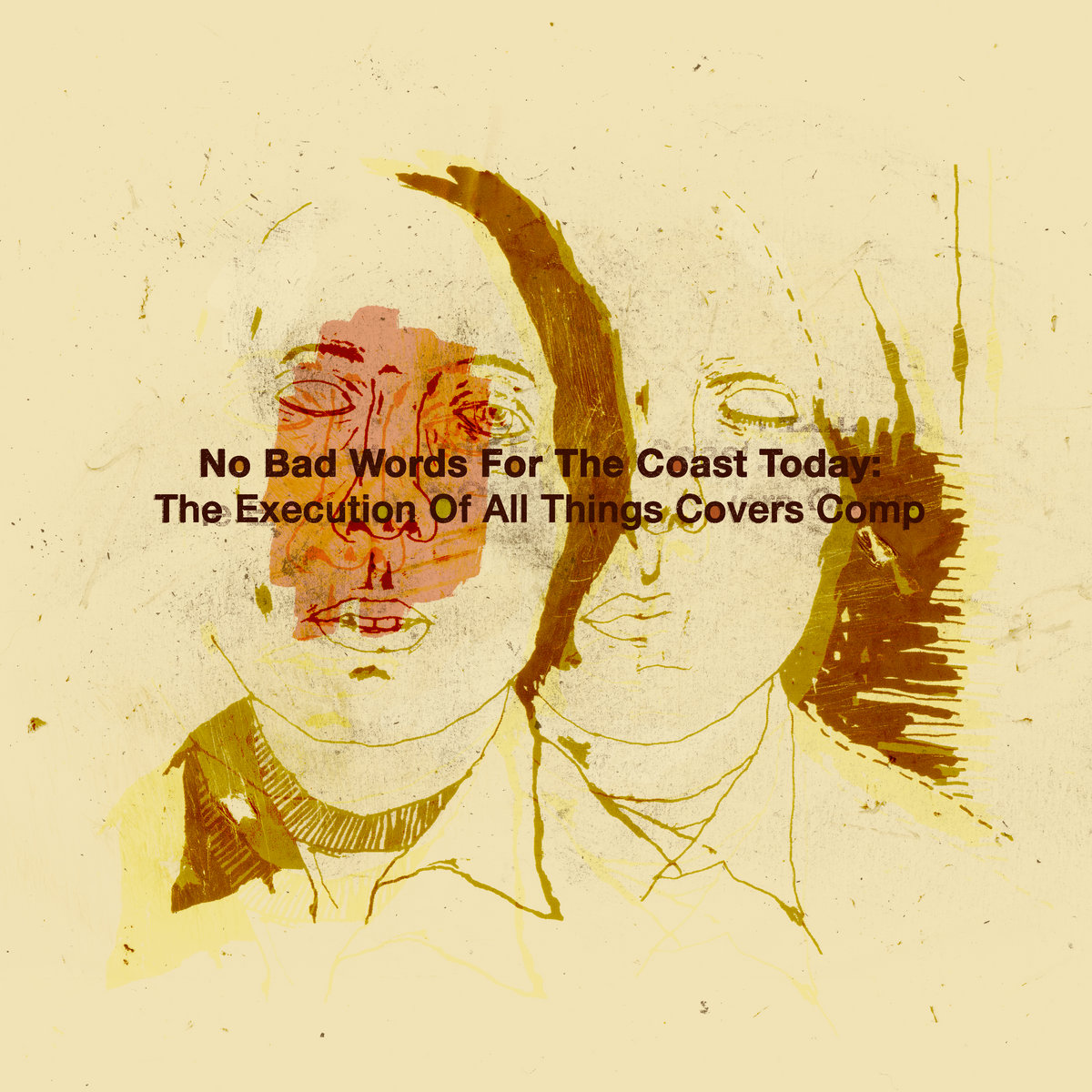
There’s a new Rilo Kiley covers compilation titled No Bad Words For The Coast Today: The Execution Of All Things Covers Comp, out today via Bandcamp. The compilation features Sad13, Mannequin Pussy, Diet Cig, Adult Mom, Lisa Prank, Anika Pyle, Gladie and more. Half of the proceeds will go to the artists and the other half will go to G.L.I.T.S., a NYC-based non-profit, social justice, advocacy and service organization addressing the health and rights crises faced by transgender sex workers.

http://

No Bad Words For The Coast Today: The Execution Of All Things Covers Comp is a compilation featuring 14 artists, celebrating Rilo Kiley and their seminal 2002 album.

Released November 6th, 2020

Positive Mental Health Music is the first full-length to be released by London label Speedy Wunderground (black midi, Black Country New Road, Squid). Produced by Dan Carey, the album is full of playful indie rock and psych-pop, soundtracking what happens when mental health crises and inner demons threaten to get the best of you. Joshua Loftin’s high-pitched vocals, along with their rollicking guitars and keys, are a welcome break in the clouds.

Despite this landmark moment and its loaded title, frontman Joshua Loftin is keen to downplay the potentially profound nature of the LP.

“I wouldn’t call it a concept record,” he tells us. “We didn’t even come up with the title. A friend came to a show at the Five Bells in New Cross, and afterwards he was like, ‘I like it, it’s like positive mental health music’. I thought it was cool and it just stuck. The mental health thing became a bit more of a focus for me because I had a breakdown about two years ago and that’s where the songs came from.”

‘Rosalina’ is taken from the forthcoming debut Tiña album ‘Positive Mental Health Music’ out 6th November 2020 on Speedy Wunderground.

Exclusive: L.A. Noise Pop Band Dummy Announce <i>EP2</i>, Share New Single "Pool Dizzy"

Earlier this year, Los Angeles noise pop band Dummy shared their debut release, “Dummy EP”, via Pop Wig Records. Now the group has put out their second release “EP2”, Last month, they shared “Pool Dizzy”—the first taste of EP2. Their debut was rooted in krautrock and synth-laden noise pop, and they even threw in a foggy folk tune and an eight-minute new age-esque closer. EP2, on the other hand, leans more on hypnotic synths than driving guitars—apart from “Pool Dizzy.” The track’s throbbing beat, murky guitars and retro keyboards are rejuvenating, and their heavenly, overlapping vocals are the cherry on top. It’s the sound of droning pop euphoria.

Dummy returns five months later with “EP2”, their second release of 2020. Featuring a mix of screeching feedback-laden pop songs woven with non-sequitur ambient soundscapes, “EP2” sees the band further developing their drone-pop style with inspiration taken from kosmische, Japanese ambient, new age, and video game music. Recorded mostly at home using freeware and a smartphone, the six tracks forgo polished production in favour of a kaleidoscopic collage of improvisational sketches.

Available on cassette from Born Yesterday Records.

Dummy – Dummy EP2 Thursday Morning 00:00 Pool Dizzy 04:35 Nuages 07:31 Mediocre Garden 10:38 Second Contact 14:52 Prime Mover Unmoved 17:04

When it comes to volume, Sarah Tudzin likes to keep listeners on their toes. “Kiss Yr Frenemies”, was her debut album as Illuminati Hotties, playfully leaps between a variety of decibel-dictated sonic moods from the indie-pop canon. Hushed acoustic reveries give way to knife-sharp stabs of guitar; contemplative, finger-picked tranquility crescendos to giant slabs of post-rock feedback and trumpet fanfare. “You only like me when I’m sad,” she sweetly sings during a quiet interlude on “Pressed 2 Death,” an otherwise boisterous rambler that’s dotted with kiss-offs.

Tudzin—who is technically Illuminati Hotties’ sole permanent member, although she records with a full band—is a veteran studio rat, and it shows in the album’s dynamic sounds. In addition to working as a production and engineering assistant to big-time indie producer Chris Coady (Beach House, TV on the Radio), she’s logged studio time with acts ranging from Porches to Macklemore and worked on the sound design for the original Broadway cast recording of Hamilton.

Her expertise gives her own tracks a funhouse-like quality, with an eruption of noise, six-stringed squeal, or purposely lo-fi effect around every corner. Even without knowing that additional vocals on the album are credited to “Everyone at Jesse’s Party,” you get the sense that she had fun making this record. Tudzin describes the sound of Illuminati Hotties as “tenderpunk,” and that feels right. Every emotional abrasion and pang of longing on Kiss Yr Frenemies is conveyed with just the right mix of sadness and acerbity. On the single “(You’re Better) Than Ever,” she confesses, “All the baddest words I knew came pouring out/When I heard you feel better/Better than ever.” Along with stylistic forebears Los Campesinos!,

Tudzin’s sound sometimes recalls indie-pop lifer Rose Melberg’s many projects, as well as 1990s Vancouver punks Cub—all acts that have regularly challenged the common notion that indie pop is all cloying sentiments and bookishly restrained instrumentation.

http://

Released May 11th, 2018


Painted Zeros is Katie Lau’s recording project. Her debut full-length album “Floriography” was released 10/30/2015 on Don Giovanni Records, and demonstrates the breadth of her musicality while being unmistakably punk at heart. Lush strings colour the spaces between melodic guitar hooks and Lau’s dreamy (often buried) vocal delivery, offering the listener an intimate look inside a world that echoes the heyday of shoegaze and demands that they listen closely–and loud. Based out of Brooklyn, NY, the band is a trio live, and in concert Lau’s songs burst to life with the help of two of her best friends. Love the fuzzy sound, and the guitar work is wonderful. I wish I had better words to describe how much I enjoy this album. Despite, or maybe because of, the subject matter throughout, this album often feels like the beginnings of a triumphant breakthrough to the other side. 

http://

Her new album “When You Found Forever”, her first project to be released in five years under the Painted Zeros name. It’s an uncompromising journey into a person stricken with a battle of the psyche, overcoming a tumultuous relationship with alcohol and breaking free from the clutches of an old love (see “”). Lau is fearless in showing the pains of addiction mixed with the beautiful colour palette that returns once its been abandoned. On her latest single that we’re thrilled to premiere, “I Will Try” Lau takes the various shades that make up ourselves to create an anthem endowed with a restored affirmation in her identity and making the best of the future.

Written, performed, engineered, and mixed by Katie Lau

Drums played by Jared Kaner on tracks 3 & 8
Bass played by Jim Hill on tracks 3 & 8

Released May 29th, 2020

I’ll never forget where I was when I first discovered The Cranberries’ “Dreams”: as they put the song on repeat all afternoon. I may someday forget where I was when I first heard Living Hour’s kinda dreamy cover version, While it’s far from the heat-stroke shoegaze that first drew me to Sam Sarty’s project, this cover shares its unique deep-exhalation appeal. Oh, and careful—when you google “living hour dreams” it autocorrects to “living your dreams,” which is apparently a song from Beverly Hills Chihuahua 3. This is not that song.

Living Hour’s expansive, gentle and slow indie rock is distinguished by lovelorn melodies, transient polyrhythms, and a dreamy instrument palette that includes heavenly interlocking guitars, casiotone keyboards, and brass. Floating over these warm sparkles of sound are Sam Sarty’s emotive lead vocals, which are intoxicatingly smokey and vulnerable.

Living Hour recorded their early songs with friend and producer Riley Hill in the west end of their hometown, Winnipeg, Canada. Their self-titled debut album was released on cassette in early 2016 on Bloomington’s Tree Machine Records, introducing the band’s cinematic sound and propelling years of DIY touring in Canada, USA, and Europe.

Living Hour’s Softer Faces was released by Brooklyn’s Kanine Records in February 2019 with production by Kurt Feldman (The Pains of Being Pure at Heart, DIIV, Depreciation Guild) and Jarvis Taveniere (Woods, Purple Mountains, Parquet Courts).

 The album received acclaim from NPR, Stereogum, Paste, Vice, Bandcamp, AllMusic, The Grey Estates, Gold Flake Paint and more.

 “Some of the most heartsick synth-pop since Cocteau Twins.” – Noisey

Winnipeg rockers Living Hour dream big with grandiose, all-encompassing shoegaze that stretches to the ends of the earth.” -Stereogum

Loss is one of life’s most challenging experiences. There is no universal path to solace, no prescriptive behaviours to mitigate its pain. But as we process the death of a loved one, at some point in the days and weeks that follow, the one undeniable truth of the situation is eventually revealed: Life goes on.

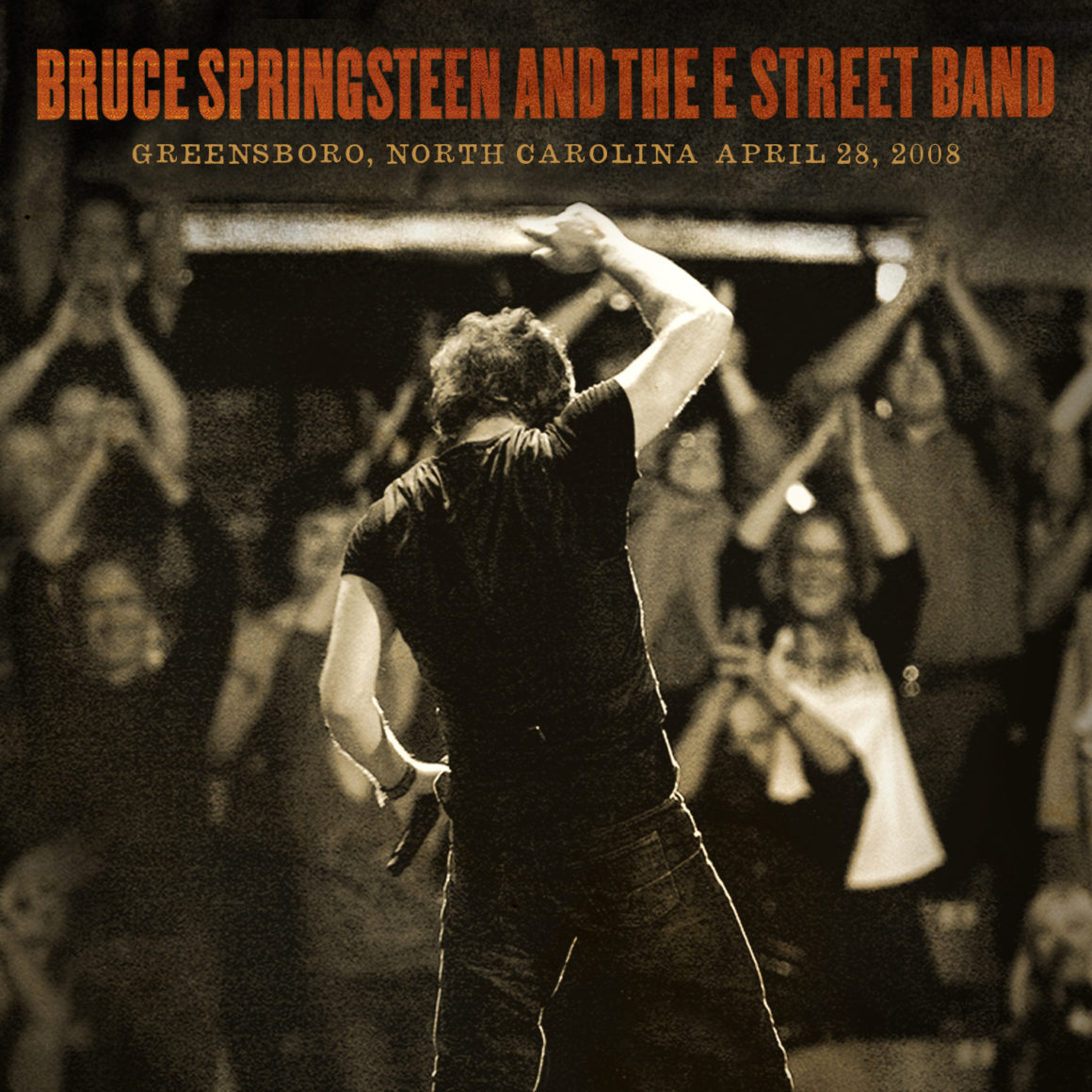
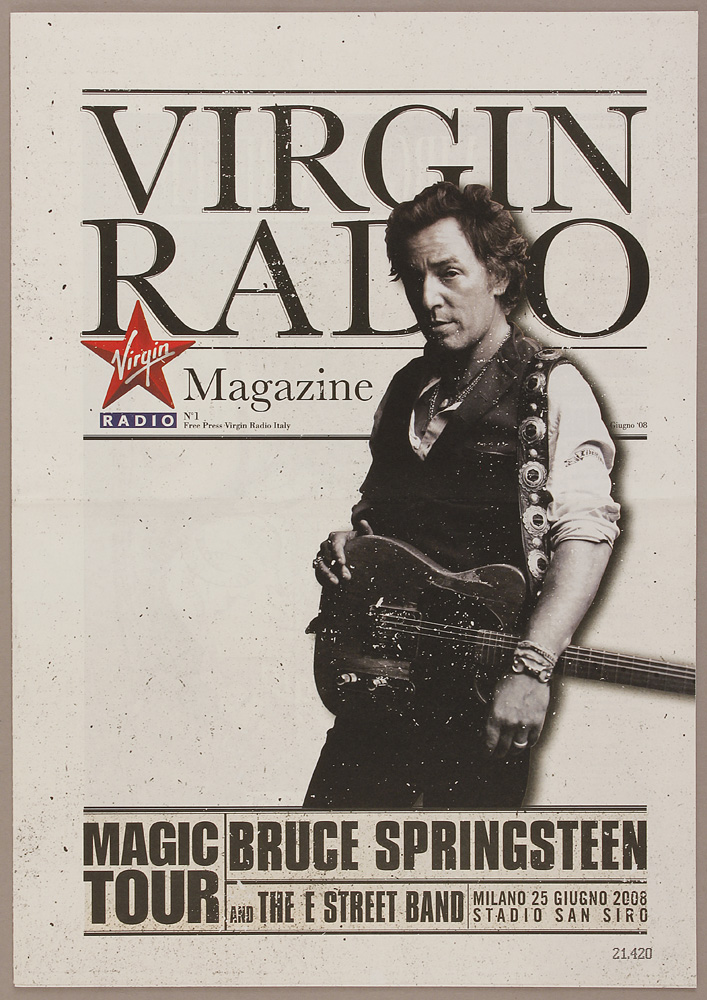
Just 11 days removed from the passing of Danny Federici, Greensboro opens with a video tribute to the band’s fallen comrade set to the music of “Blood Brothers.” But from there the mood shifts markedly. At the first four shows performed after Federici’s funeral, setlists dipped back to Springsteen’s first two albums for songs like “Blinded By the Light,” “Does This Bus Stop at 82nd Street?” and “Growin’ Up” in tribute to Phantom Dan. There would be time for that this night too, but to open Greensboro, something more cathartic was delivered.

The pairing of “Roulette” into “Don’t Look Back” rivals the best one-two punch from any Springsteen show in any decade. Two stunning, underplayed rockers—one haunting, one life-affirming—blow off the doors of the Greensboro Coliseum, and the release of energy is unmistakably liberating for all.

As the diehard collectors well know, “Roulette” has a very tricky arrangement, especially as a one-off, and here it is played with full conviction in what has to be one of its best modern performances. How convicted? Listen to Bruce declare, “They say they wanna help me but with the stuff they keep on sayin’, I think those guys just wanna keep on playin’.” The guitar solo is searing as well, and Max crushes one of his signature drum parts.

The same can be said for “Don’t Look Back,” which faithfully follows the 1977 arrangement in its only live outing circa 2000-2012 and one of only 31 performances ever. Short-listed for, but ultimately left off of Darkness on the Edge of Town, “Don’t Look Back” remains one of Springsteen’s greatest non-album tracks. In fact, “Don’t Look Back” was so “ready” for Darkness, it is the only song that wasn’t newly remixed for Tracks in 1998. The performance in Greensboro is a faultless rebirth.

One could argue the top of the show isn’t merely a perfect pairing, but a trio, quartet, or even quintet of brilliantly linked performances. The momentum of “Roulette” and “Don’t Look Back” pushes kindred spirit “Radio Nowhere” to new heights. “Out in the Street” (a phrase also uttered in “Don’t Look Back”) bears renewed vivacity and “The Promised Land” brings us home, riding Roy Bittan’s piano and Stevie’s guitar.

Bruce finally catches his breath as we move into Magic territory with a solemn (and timely as ever) reading of the title track with Soozie subbing admirably for Patti. “Gypsy Biker” was a Magic tour highlight every night and continues to deserve consideration as one of the finest E Street Band songs of the 2000s. A heartfelt story follows, as Bruce describes meeting Danny for the first time, preceding a momentarily tentative but ultimately winning “Saint in the City.”

Setlists on the Magic tour were notably tight, and that bang-bang approach is in evidence as Bruce steers “Saint” left into a very fine “Trapped” and follows that with graceful right turn into the Nils Lofgren (and Soozie, too, in Ms. Scialfa’s absence) showcase, “Because the Night.”

The night’s crackling atmosphere sparks a terrific “Darkness on the Edge of Town.” Jon Altschiller’s mix positions piano and guitar ideally. The performance is anchored by an impassioned Springsteen vocal that drops in defeat when he sings the slight variant, “I lost my faith when I lost you,” only to rise to that arresting heightened register to deliver the rest of the verse starting with, “Tonight I’ll be on that hill, ‘cause I can’t stop.” “Darkness” and the “She’s the One” that follows are equal parts vintage and in-the-moment.

By the halftime arrival of “Living in the Future,” the score Bruce has put on the board is at MJ/Lebron levels. And to continue the analogy, those games still make for great, memorable wins, even if the superstars don’t hit quite as many downtown three-pointers or monster dunks in the second half.

The return of a newly streamlined “Mary’s Place” registers as another highlight. “Let’s see if we remember this one…debut on this tour. Come on, let’s try it,” says Bruce with undeniable glee. There is something fresh about “Mary’s Place” mk2, with more echoes of the kind of updated “Thundercrack” or “Santa Ana” vibe that he seemed to be going for in the first place, compared to what the song morphed into on the Rising tour.

Sure, there is something peculiar about spending your sign request on “Waiting on a Sunny Day.” The motivation may have had more to do with being picked for the singalong (which, as it turns out, didn’t even happen for this tidy performance), but we’ll excuse it as well-meaning if slightly misguided. From there, Greensboro moves through a solid back ten that may lack a bit of the first half’s urgency but holds its own, especially the Magic songs: “Last to Die, “Long Walk Home,” and “Devil’s Arcade.” The last of these and “Magic” make their first appearances in the Live Archive series from 2008 performances.

Springsteen and the band ultimately bring Greensboro home in fine form through a long and lively “Badlands,” a musically rich and beautifully sung “Backstreets,” the fitting farewell of “Bobby Jean” (kudos to Clarence for nailing the solo), and the high-spirited finale, “American Land” with Charlie Giordano eloquently deputizing for Danny on accordion.

The recent release of Letter to You on record and film reinforces that life does go on for the E Street Band, and equally that the spirit of those who have departed continue to inspire those who carry on. Greensboro is a wonderful reflection on the process of loss and the power of perseverance.

  • Bruce Springsteen – Lead vocal, electric and acoustic guitars, harmonica; Roy Bittan – Piano, keyboards, accordion; Clarence Clemons – Tenor and baritone saxophones, percussion, backing vocal; Nils Lofgren – Electric and acoustic guitars, backing vocal; Garry Tallent – Bass; Stevie Van Zandt – Electric and acoustic guitars, mandolin, backing vocal; Max Weinberg: Drums; Charlie Giordano – Organ, keyboards, accordion; Soozie Tyrell – Violin, acoustic guitar, percussion, backing vocal

words by Erik Flanagan

See the source image

gyrate (2020 reissue)

And how about Pylon? You remember Pylon, right? Oh lord. Pull up a chair… While the B52’s were the first to break the seal on Athens, Georgia as a hotbed of artistic intrigue in the late-70’s, and R.E.M. would become the cities most famous sons, Pylon were arguably the city’s favourite band and deepest influence on their emerging peers.

In the late 1970’s Athens, Georgia was buzzing with a raw but sophisticated music scene.

The turn of the decade began producing new sounds from bands like the B-52’s, R.E.M. and art-rock luminaries, Pylon. before they were a band, Pylon were art-school students at the university of Georgia: four kids invigorated by big ideas about art and creativity and society. in 1980 the band released its first record, “Gyrate” and began touring across the country in support of the release. they would soon develop a following across the country. shortly thereafter, Pylon went back into the studio. they gleefully pulled their songs apart and put them back together in new shapes, revealing a band of self-proclaimed non-musicians who had transformed gradually but noticeably into real ones. Now more than three decades later, both studio recordings have been remastered from their original audio tapes and are set for release on New West Records

Athens, Georgia may have been the breeding ground for the B-52’s, but in 1978 it was, for the most part, still a sleepy college town with few places for bands to play when Pylon began to cohere. (It’s worth remembering that the B-52’s had almost exclusively played house parties before moving to New York and becoming a sensation.) Like more than a few great and original groups, Pylon came together without much of a support system or many first hand influences; they were young people creating their own art and making their own fun with it. While it wasn’t their first release (the epochal “Cool”/”Dub” single preceded it by seven months), 1980’s Gyrate caught Pylon on tape when they were still clearly fascinated with their own creative possibilities, though they were tight enough to sound elemental and straightforward rather than amateurish. The skittery chiming of Randy Bewley’s guitar and the expressive whisper-to-a-scream report of Vanessa Briscoe Hay’s vocals give this music plenty of brains, and the lean, minimal rhythms generated by bassist Michael Lachowski and drummer Curtis Crowe lend it all a strong, muscular body; at a time when America was just falling out of love with disco, Gyrate was a reminder that there was more than one way to make music for dancing. As smart as this music was, it was also fun and engaging in a way that many of their peers and followers were not.

Gyrate is full of joy and subtle, surreal wit, and if it sometimes sounds like the work of arty grad students, they’re still grad students who want to cut loose and get in the groove, and that’s exactly what they do. Gyrate is a classic touchstone of the American underground scene of the ’80s, and it sounds as fresh, challenging, and exciting as the day it was released. R.E.M. would become a lot more famous, but Pylon were the band that made the world aware that there was something remarkable happening in Athens, and this was their first triumph.