Archive for the ‘MUSIC’ Category

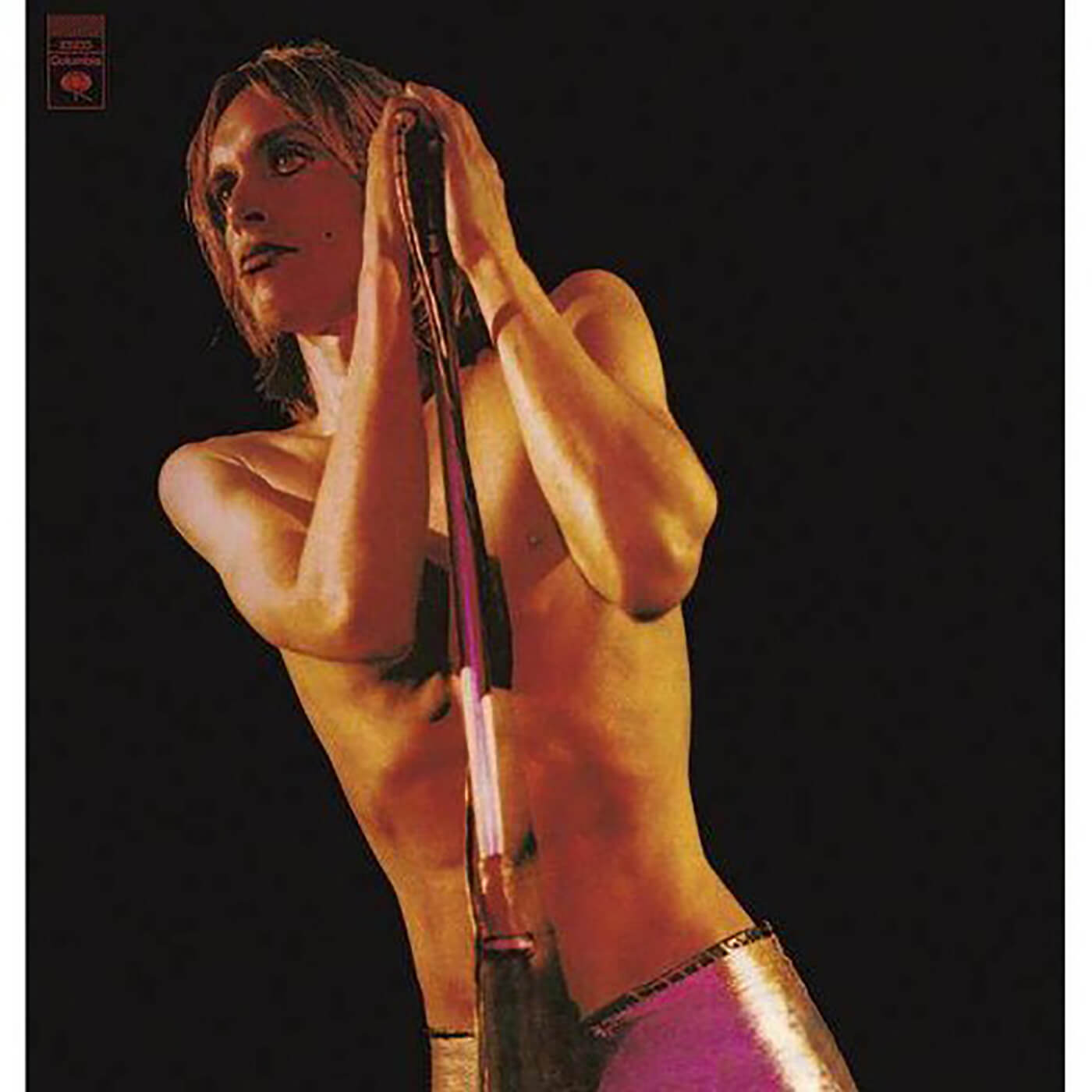
Iggy & The Stooges - Raw Power

The Stooges released their classic third studio album, “Raw Power”, on this day in 1973. As one of the first punk albums, Raw Power didn’t initially find a audience to appreciate it until years after, but it’s now considered an integral part of both the rock and punk canons.

The Iggy Pop and David Bowie-produced Raw Power possessed the kind of playful, dangerous smirk, take no prisoners attitude and fiery energy that made it hard to resist. Tracks like “Search and Destroy” and “Gimme Danger” were marked by pumping guitars and Iggy Pop’s grimy, snarling vocals, and though many tend to classify this LP as a garage rock album or punk rock forerunner, it’s also been cited as a major influence on heavy metal and hard rock.

“Raw Power” is a total absolution. For 34 minutes, Iggy Pop pummels you with unadulterated human rage, painting the loudest and most succinct portrait in his career. It’s the voice of an uncontrollable artist, one who’s fighting a brutal war against rejection and addiction, and it’s through that fight that he went on to define himself to the world. Because, at this point in his career, very few people outside of soothsayer David Bowie believed in the Detroit rock ‘n’ roll statesman. Though, that miserable sense of marginalization is what wound up fueling the album, starting with the nuclear opening salvo of “Search and Destroy” and ending with the napalm drop of six-minute closer “Death Trip”. By then, everyone who was anyone was listening.

If ever an album was wholly encapsulated by its title, it’s The Stooges’ incendiary third album, “Raw Power”. Released in 1973, it set the bar for a wave of punk bands to try and, in most cases, fail to eclipse. It remains one of the most visceral, electrifying pieces of musical savagery you’ll ever hear. And as its chief creator James Newell Osterberg Jr, aka Iggy Pop, recalls: “It was done with drugs, youth, attitude and a record collection”.

Playing the Keef to Iggy’s Mick was a guitarist whose influence is threaded inexorably through the development of punk rock, James Williamson. Sex Pistol Steve Jones famously admitted he learnt to play by taking speed and listening to “Raw Power”. Johnny Marr said of Williamson: “He has the technical ability of Jimmy Page without being as studious, and the swagger of Keith Richards without being sloppy. He’s both demonic and intellectual, almost how you would imagine Darth Vader to sound if he was in a band.”

“As a guitarist, James fills the space as if somebody’s just let a drug dog into your house… and it’s big,” is how Iggy describes his bandmate’s playing. “He finds every corner of a musical premise and fills it up with detail.”

Born in Texas, Williamson joined The Stooges in 1970 aged 19, initially as second guitarist, before Ron Asheton switched reluctantly to bass. His raw, bluesy style was instrumental in Raw Power having a harder edge and more adrenal tempo than predecessor Funhouse, and he co-wrote all eight songs – much to the chagrin of Asheton, who felt he’d been usurped. Throughout the narcotic mayhem of the Raw Power sessions, Williamson played a Cherry Red Les Paul Custom that Iggy had encouraged him to trade in an SG and Jaguar to buy. Plugged into a cranked Vox AC30, it sounded like… well, raw power.

By the time the Michigan band regrouped in England to record Raw Power they’d already hit rock bottom, splitting in 1971 due to a combination of Iggy’s voracious appetite for heroin, extreme poverty, dangerously violent gigs and the lukewarm response to their first two albums. David Bowie came to the rescue, finding Iggy a label and management deal and setting up the recording sessions in London.

Iggy may have overdosed and been out cold for 14 hours at one point while writing the lyrics for Raw Power, but how about Search And Destroy’s “I’m a streetwalking cheetah with a hide full of napalm, I’m a runaway son of a nuclear A-bomb” for an opening couplet? And the frantic lead playing from Williamson, based around the C♯ minor pentatonic scale, is nothing short of blistering, the song a furious rallying cry for the anti-Vietnam war movement.

You can hear the influence of Chuck Berry on Williamson’s rock-solid rhythm and histrionic soloing on Your Pretty Face Is Going To Hell, while the heroin horrors of the title track and the swaggering Shake Appeal also have their roots firmly in 50s rock’n’roll, the latter enabling Pop to “get to my dream of being Little Richard for a minute”.

Gimme Danger, with Williamson’s menacing acoustic riff in E♭ tuning, is there to fulfil the label’s demand for a ballad on each side of the album. As slow songs go, it’s pretty demonic, simmering with sexual tension as Iggy broods, “there’s nothing left alive but a pair of glassy eyes” before careering into the bloodthirsty chorus, Williamson’s lead playing and an insistent piano tangling lustily before the guitar wins out with a corking solo.
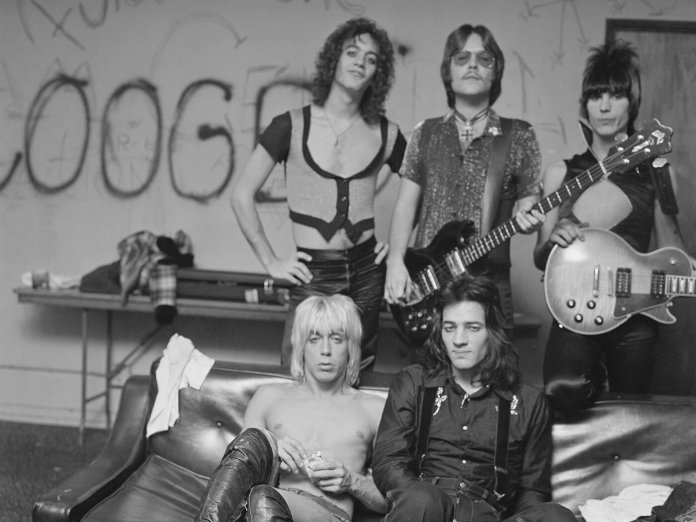
Iggy & The Stooges

The album’s other ballad is the Doors-esque “I Need Somebody”, a moody blues vamp in G written on an acoustic guitar by Williamson. Iggy thought it sounded like the inside of “a bordello” and his celesta part is a seductive counterpoint. Williamson’s final flourish comes as his virtuosic yet barbarous soloing envelopes the six-minute closer Death Trip, the album’s longest track.

Recording and mixing Raw Power was a suitably shambolic affair, with at least one member of the band by that point lucky to be alive. Unlike the first two Stooges albums, it was self-produced, resulting in a clueless Iggy mixing the whole band on one channel, the lead guitar on another and his vocals on a third of the 24-track desk. Handing the tapes to Bowie to sort out was the ultimate hospital pass. “He said ‘See what you can do with this’,” Bowie later recalled. “I said, ‘Jim, there’s nothing to mix’.” As Williamson remembers, “The fact of the matter is, when we made Raw Power, we really didn’t know what we were doing.”

In the circumstances, Bowie did a commendable job. Among his tweaks was feeding the guitar track on Gimme Danger through the Cooper Time Cube, a garden-hose based delay unit devised two years earlier, and of the several mixes of the album, Bowie’s is still widely regarded as the definitive version. Iggy was finally given the opportunity for some closure when he was invited to remix the album at New York’s Sony Music Studios in 1996, modern studio technology and all. While that incarnation has been dubbed “the loudest album ever made”, with every fader pushed deep into the red, it did little to halt the arguments, with Williamson complaining it “sucked” and Bowie saying his version had more “wound-up ferocity and chaos”.

Raw Power was a commercial flop, peaking at 182 in the Billboard Chart, but the reviews were positive, Lenny Kaye praising the “ongoing swirl of sound that virtually drags you into the speakers”. It didn’t stop Iggy being dropped by both his label and management company, but the record’s legend has grown exponentially over the years. Kurt Cobain said Raw Power was his favourite album of all time, British rock critic Nick Kent called it “the greatest, meanest-eyed, coldest-blooded hard rock tour de force ever summoned up in a recording studio” and Ted Maider of Consequence Of Sound “by far the most important punk record ever”.

In 1973, Iggy Pop may have been, unjustly, the world’s forgotten boy, but today The Stooges’ influence looms large over a generation of guitar bands. When a topless Iggy and the surviving Stooges tore wantonly through Search And Destroy at their induction into the Rock & Roll Hall of Fame in 2010, it felt like long-overdue recognition of the ultimate rock’n’roll album. “Raw Power” indeed.

Iggy And The Stooges, Raw Power (1973, Columbia Records)

  • Iggy Pop, vocals, celesta, piano
  • James Williamson, guitar
  • Ron Asheton, bass guitar, backing vocals
  • Scott Asheton, drums

Hayley Williams has announced that she is releasing ‘Flowers For Vases / Descansos’ on February 5th. The follow-up to Williams’ May 2020 debut solo album ‘Petals For Armor’ has been teased by the Paramore frontwoman in recent weeks, with Williams’ official website redirecting to a site called ‘Flowers For Vases’. In late January, Paramore singer Hayley Williams began teasing a new project. She posted cryptic social media posts and mailed mysterious packages to fans that included doll limbs and handwritten notes that said “Plant me.” It turns out she has a brand-new full-length album that she wrote, performed and recorded on her own, at home during quarantine, called Flowers for Vases – descanos. It comes just eight months after Williams released her solo debut, “Petals for Armor”.

Williams also ‘leaked’ a new track from the project late last month after she hand-delivered a CD to one fan in the US. After fans noted that the Genius page for ‘Flowers For Vases / Descansos’ showed a release date of February 5th, Williams tweeted early this morning the title of her next solo project, its imminent release date.

The ‘Flowers For Vases / Descansos’ release news follows on from Williams revealing last month that she was in the process of recording her equivalent of Taylor Swift’s surprise-released album ‘Folklore’. “We don’t need drums if this is my ‘Folklore’,” she said of a since-deleted behind-the-scenes clip.

May be an image of flower and text that says 'adrianne lenker SONGS and instrumentals out now'

Adrianne Lenker of Big Thief has released a new video for her song “forwards beckon rebound” from her 2020 solo album “Songs”. The video features Lenker’s silhouette shot floating around the screen accompanied by her elucidative dancing at dusk in the desert. Filmed at Wild Heart Ranch in Joshua Tree, the “forwards beckon rebound” video was self-directed by Lenker but brought to life by cinematographer Adam Gundersheimer and producer V Haddad.

Last fall, Lenker released two solo albums titled “Songs” and “Instrumentals”, which featured her strong song writing abilities and indie-folk sound seeping through each track.

Both albums were written and recorded in April 2020 while under quarantine. After Big Thief’s European tour ended early due to COVID-19, Lenker retreated to a one-room cabin in the mountains of western Massachusetts and set up a studio there with the aid of engineer Philip Weinrobe.

“I grew really connected to the space itself,” said Lenker in a previous press release. “The one-room cabin felt like the inside of an acoustic guitar—it was such a joy to hear the notes reverberate in the space.”

May be an image of one or more people, people standing, outerwear and outdoors

Saint Seneca is back with another dose of the gorgeous, triumphant indie folk that they’ve become best known for. Main member Zac Little says, “I wanted to write a Christmas song, but it didn’t feel right this time, so I thought about old new years and made a Valentine. I miss everyone, and I figure a song is kind of like a little tent. A place in space and time – you can pack it up and take it with you, get it out when you need it, and I like to imagine being together inside. Columbus-based folk-punk artist Saint Seneca  has returned to the scene with his latest single, “All You’ve Got Is Everyone.” The song is out now via ANTI-records

This track has a moderate tempo, accompanied by Little’s longing vocals and dreamscape guitar synth that blends harmoniously to create a story of ardent longing. Written during the pandemic and in the midst of a global lockdown, Little wrote the track to embody a hug—something that is not attainable at the current moment.  

“All You’ve Got Is Everyone” is Saintseneca’s first single since 2019 and it features less folk and more lo-fi drum/bass that sounds something like a new beginning. Saintseneca’s last album was 2018’s Pillar of Nawhich was produced by Mike Mogis.

I really admire this band on so many fronts: the musicianship, the songcraft, the ranging harmonies, the tender vocals, the sweet tunes, the ease with which they move from gentle melody to riotous foot-stomping, and more. This particular song covers a lot of emotional ground, and I detect a hint of their Dark Arc work in the play of the bass and the lead vocal. 

Official Site: http://saintseneca.com

See the source image

Country music’s influence on rock ’n’ roll is nearly as old as rock itself, a dominant gene in rockabilly and vocal touchstone for seminal artists from Elvis to Buddy Holly and the Everly Brothers. in 1968 the rise of a school of artists consciously bridging those genres, accelerating the pace that two of the sub-genre’s defining albums would overlap in conception even as the bands creating them buckled under internal strain.

The Byrds had enjoyed first mover advantage in recording “Sweetheart of the Rodeo”, spurred on by Gram Parsons, a 21-year-old singer-songwriter whose deep love for Southern country and R&B found a kindred spirit in bassist Chris Hillman and pragmatic support from lead guitarist Roger McGuinn. Country influences were already in the air, not only in originals and covers from the Beatles, the Lovin’ Spoonful, Buffalo Springfield and the Byrds themselves, but also in up and coming artists like Bobbie Gentry and Linda Ronstadt.

Before “Sweetheart of the Rodeo” hit stores in late August, Parsons had bolted from the band on the eve of South African dates and veered into a bromance with Keith Richards that injected the Rolling Stones with country influences while fanning Parsons’ own dreams of rock glory. After hanging out in London with Richards, Parsons returned to Los Angeles in early August weighing his next move.

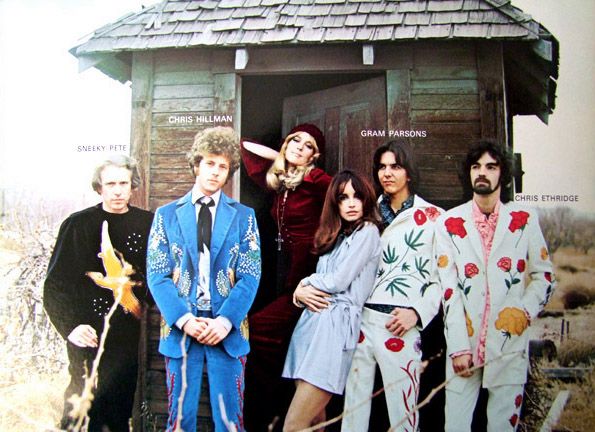
The Flying Burrito Brothers’ original line up: Sneaky Pete Kleinow, Gram Parsons, Chris Ethridge and Chris Hillman. The recording line up had yet to add a drummer

Meanwhile, Chris Hillman had left the Byrds’ coop after increasing tensions with management. Despite an earlier falling out with Parsons, Hillman reconciled with the Florida-born, Georgia-raised musician. The erstwhile combatants once more bonded over music and even became roommates, writing the bulk of what would become the original material on the debut for the Flying Burrito Brothers. Chris Ethridge was recruited as bassist, freeing Hillman to play guitar and mandolin, and the duo tapped Sneaky Pete Kleinow on pedal steel guitar.

The chance to snag a new band with two Byrds quickly drew competing bids from Warner Bros. and A&M Records, with A&M winning the battle. In contrast to the sessions for Sweetheart, shepherded by a seasoned producer and crack session players, the Burritos entered the studio with a big advance, a lot of ideas, a fledgling co-producer who was no match for the strong-willed Parsons and Hillman, and no drummer. The Burritos would share producer credits with A&M’s Larry Marks and engineer Henry Lewy, reflecting a more chaotic studio environment that would find them going through a collection of drummers.

Gram Parsons had envisioned the Burritos as “his” band, but The Gilded Palace of Sin, released in early February of ’69, underscores the partnership between Parsons and Hillman, who co-wrote six of the album’s eight originals. The opening track, “Christine’s Tune,” finds them sharing lead vocals and driving acoustic rhythm guitars, with harmonies built on classic thirds that harken back to the Louvin Brothers, the Everlys and other high, lonesome harmony singers. An overly ripe bassline evidently designed to emphasize rock power loses its edge to muddiness, but Sneaky Pete’s pedal steel commands centre stage with an aggressive, fuzz-toned attack and his own unorthodox tunings.

A stop-motion animator and special effects craftsman, Kleinow provides a potent departure from the more traditional steel parts heard on Sweetheart, leaning here into the rock side of the sub-genre’s equation. Kleinow unleashes that power elsewhere on Gilded Palace while proving his skill with more traditional accents on the ballads, starting with “Sin City,” a country waltz that trades in the sin and salvation polarity central to Parsons’ vision for an amalgam of country, rhythm ’n’ blues and rock.

Its synthesis of country soundscape with urban modernism strikes an apocalyptic tone. “On the thirty-first floor, a gold-plated door won’t keep out the Lord’s burning rain,” the duo sings in a prophesy that warns “this old earthquake’s gonna leave me in the poor house.” They could be singing about L.A. or Las Vegas; heard today, it’s hard not to envision the gilded escalators in Trump Tower.

The R&B component in Parsons’ “cosmic” Southern synthesis leads him back to Memphis, source for Sweetheart’s countrified R&B cover (“You Don’t Miss Your Water”). this time yielding two superb ballads sharing lyrics from Dan Penn. “Do Right Woman,” written with Chips Moman, was a sensuous Aretha Franklin cut demanding equal sexual satisfaction from her man, a contract that survives its gender flip as another gliding country waltz. Instead of changing the mood or their compass bearings, the Burritos follow with the darker sexual torment of “Dark End of the Street,” a Penn collaboration with Spooner Oldham. Parsons dominates the vocals with an audible anguish over a locked battle between passion and guilt for two lovers “hiding in shadows where we don’t belong,” resigned to the inevitability of discovery and shame in a tableau of illicit love familiar in both country and soul tropes.

For two self-referential album tracks, Parsons wrote with Chris Ethridge. “Hot Burrito #1” is another soulful ballad that dispenses with any hint of sexual guilt to remind an ex-lover that “I’m the one who showed you how/To do the things you’re doing now” in frank sexual metaphors. With “Hot Burrito #2,” Ethridge grounds the track in a strutting bassline as Parsons rants about a lover’s quarrel with an eyebrow-raising opening “Yes, you loved me and you sold all my clothes.” If the lyrics verge on incoherence, the track itself is a lively standout.

Elsewhere, Parsons and Hillman nod to the tension between their music’s Southern roots and their countercultural instincts. On “My Uncle,” Hillman takes the lead on vocals and mandolin as a young American pondering the draft who’s “heading for the nearest northern border” against a fleet bluegrass backdrop. And on the closing “Hippie Boy,” Hillman reverses roles for a poker-faced, spoken word sermon as a redneck whose encounter with a hippie brings something like peace, love, understanding and the sage advice to “never carry more than you can eat.”

With the album completed, the Burritos recruited a third Byrd, drummer Michael Clarke, but chaotic behavior sabotaged supporting tour dates as they burned through the label’s advance, missing a crucial New York date. The Gilded Palace of Sin stalled on the Billboard chart, considerably worse than Sweetheart’s disappointing tally months earlier. The addition of Bernie Leadon would strengthen them musically, but Gram Parsons was already restless. He would leave “his” band after the Burritos completed a scattershot follow-up, Burrito Deluxe.

Gone missing years before the death of Gram Parsons, one of the four iconic outfits worn on the cover of the Burritos’ The Gilded Palace of Sin, and unknowingly bought by Elton John, resurfaces

Thanks Sam Sutherland

May be an image of text that says 'SATURDAY NIGHT LIVE SATURDAYS'

Phoebe Bridgers knows how to leave an impression. The singer-songwriter made her debut as the musical guest on the February. 6th episode of Saturday Night Live, which was hosted by Schitt’s Creek star Dan Levy, with a memorable performance.

Bridgers kicked off her two-song set with “Kyoto,” the second single off her sophomore album, 2020’s Punisher. Like in the song’s video, the artist and her backup musicians sport the skeleton onesies while performing the tune, which is up for the best rock song and best rock performance Grammys.

For her second song, the 26-year-old offered up Punisher’s “I Know the End” on a darkened stage bathed in soft red lights, her skeleton onesie gone, though the baubles she wore resembled a rib cage. She once again started soft and dreamy, but about two thirds of the way into the tune, Bridgers let loose, her guitar roaring, the singer-songwriter screaming at the top of her lungs.

Bridgers eventually walked to the front of the stage toward an amp, and for the last 30 seconds or so, repeatedly smashed her guitar against the amp — causing sparks to fly — eventually giving the amp a kick for good measure and finally dropping her instrument to end the set.

Bridgers, who is based in Los Angeles, is up for a total of four Grammys this year. In addition to the two she’s earned for “Kyoto,” the musician is up for best new artist — in which she’s up against Megan Thee Stallion, Doja Cat, Ingrid Andress and others — and best alternative music album for “Punisher“. The Grammys are set to air March 14th on CBS.

Musical guest Phoebe Bridgers performs “Kyoto” and “I Know The End” on Saturday Night Live.

May be an image of 1 person

Bruce Springsteen, who traditionally shuns any kind of corporate tie-in, has partnered with Jeep for “The Middle,” a two-minute ad that debuted on the car brand’s social media platforms at midnight ET on Sunday (February. 7th) and will air during the Super Bowl. “Olivier Francois [global chief marketing officer for Jeep parent Stellantis] and I have been discussing ideas for the last 10 years and when he showed us the outline for ‘The Middle,’ our immediate reaction was, ‘Let’s do it,’” Springsteen’s manager Jon Landau said in a statement. “Our goal was to do something surprising, relevant, immediate and artful. I believe that’s just what Bruce has done with ‘The Middle.’”

Jeep® kicks off Game Day by reminding us we are stronger than the obstacles in our way, and invites us to remember all the ways we are connected as Americans. A timeless CJ-5 takes us on a journey to the U.S. Centre# Chapel in Kansas in search of common ground. We have spanned deserts and climbed the highest peaks. We can cross this divide.

Like those previous short films, “The Middle” features sweeping footage of great expanses of America’s heartland, as Springsteen voices a narrative about a chapel in Lebanon, Kansas — “standing on the exact centre of the lower 48. It never closes, all are more than welcome” — before going into broader themes about how divided we have become. “It’s no secret, the middle has been a hard place to get to lately, between red and blue…between our freedom and our fear,” he continues.

Springsteen appears in the ad, driving a Jeep through snow-lined streets, as the commercial’s elegiac score,

Wyndow is a collaboration between Laura J Martin and Lavinia Blackwall (Trembling Bells). A set of musical postcards sent across the wires from Liverpool to Clydebank and once described by a four year old boy as a complete nightmare. Voices intertwine on a bed of homebrewed minimalism with words detailing the quiet moments. ‘Take My Picture.  Laura J Martin has released three acclaimed solo albums and supported the likes of PJ Harvey and Cate Le Bon. Lavinia Blackwall is a solo-artist in her own right, as well as a member of Trembling Bells who have released seven albums, The pair first met when they were both playing Moseley Folk Festival in Birmingham.

The band recently shared their first single, “Take My Picture”

Written by Wyndow

Laura J Martin (vocals, flute, piano)
Lavinia Blackwall (vocals, autopharp)
Marco Rea (bouzouki, guitar, bass, synth)
Iwan Morgan (synth, beat)

Released January 19th, 2021

See the source image

With a sound oscillating between psychedelic pop and space rock, Triptides’ album “Alter Echoes” channels both The Byrds at their most hallucinogenic and Floyd at their most cosmically composed while creating something immediate and new. The band has established itself as a preeminent part of the Los Angeles new wave psych music. With “Alter Echoes,” they pull away from the pack, thanks to the quality of their song writing, performance and production.  

Triptides have become a staple of Southern California’s sun-baked, surf-tinged psych-rock scene over the last decade, and now the Los Angeles trio is gearing up to release a new album called Alter Echoes, due next month via Alive Naturalsound Records. Today, the band continues to live up to its name with a dreamy, hallucinogenic new single premiering below. “Perhaps the most laid back track on the record, ‘Moonlight Reflection’ is a love song gliding through the darkness of a clear night,” vocalist and multi-instrumentalist Glenn Brigman says.

The track opens with a breezy, undulating intro, but the first verse sets the scene: “In the dead of night, see the moon reflecting the light / Do you feel alright? Don’t run and hide.” Brigman’s spaced out vocals are barely tethered to the instrumentation below. Eventually those vocals give way to a heady, transcendent guitar solo the kind of guitar solo that begs to be performed outside on a warm summer night. “We drew upon the dreamy moods of Erasmo Carlos,” explains Brigman, “and the heroic melodies of the Isley Brothers, letting the vocal track ebb and flow while the lush chords glisten in anticipation of the climactic conclusion: a final jet-phased guitar solo that ascends like the first light of a new day.”

“Moonlight Reflection” is the second single off Alter Ehoes following the more driving “It Won’t Hurt You,” which arrived last month. Both tracks follow a string of singles and double-singles released over 2019 and 2020. 

For our new record, we decided to create something more organic, performing together in a classic Hollywood studio and recording it live to tape,” says Brigman. “We wanted to make sure we were expressing the true sound of the three of us in a room before elevating the recordings with additional overdubs.”

The band recorded the album at Boulevard Recording Studio. Formerly the Producer’s Workshop then Westbeach Recorders, the studio was upgraded in 2010 when engineer Clay Blair decided to revamp it. “I came across this Craigslist ad,” Blair told an interviewer in 2016. “It said, ‘Recording Studio.’ There was only a picture of the building outside.” In its previous eras, the studio hosted Pink Floyd, Ringo Starr, Bad Religion, Blink-182, and plenty of other pop, rock, and punk hitmakers (it also housed Epitaph Records at one point).

“We kept the writing spontaneous and let our influences drift from 70’s fuzz rock (‘Hand of Time’) to bossa nova (‘She Doesn’t Want To Know’) to electric jazz (‘Another Dream’),” says Brigman of Triptides’ new material. “Through our collaborative mind we were able to weave these vibrations together to form “Alter Echoes.”

Alter Echoes comes after the self-described “sun-warped psychedelic rock” band’s 2018 albums Visitors and Estrela Magica (with Winter), as well as 2017’s Afterglow. Triptides is led by multi-instrumentalist Glenn Brigman, the trio is rounded by bassist Stephen Burns and drummer Brendan Peleo-Lazar.

“Moonlight Reflection” is out February 5th. Alter Echoes arrives March 19th via Alive Naturalsound Records.

Phantom Handshakes are the New York- based duo of Matt Sklar (Exiles) and Federica Tassano (Sooner, Mônetre), a band who have pretty much only existed in the age of social distancing. Last year saw the band release their debut album, “Be Estranged”, recorded in their respective homes in Brooklyn and Manhattan at the end of Spring 2020. The album was released by Slovakian cassette-label Z Tapes, who will also release their second offering, No More Summer Songs, recorded in the same manner as their debut, and due out in April. Ahead of that release, today Phantom Handshakes are sharing the first single from the album, No Better Plan.

In Phantom Handshakes’ Instagram bio, the project is described as “a band born to cope with the quarantine’s gloom,” but it would be just as accurate to say the dream-pop duo has been helping us cope, with gorgeous songs that have offered some serious sonic solace during what’s certainly been the strangest of years.

Now, about five months after the release of the NYC duo’s excellent debut EP “Be Estranged”, plus the newest track from Phantom Handshakes

Musically, Phantom Handshakes’ sound seems to exist in-between worlds, the guitars have a certain to the production of early-90’s shoegaze and the catchy unforget-ability of indie-pop. Through this heady mixture of influences, they seem to mark a path of their own, while there’s touchstones to the likes of Chorusgirl or Hazel English, ultimately Phantom Handshakes are plotting their own course, and sounding increasingly compelling doing it.

New single ‘No Better Plan’ available now From the upcoming LP ‘No More Summer Songs’ out April 30th Written and recorded by Phantom Handshakes (Federica Tassano & Matt Sklar)