In December of 2013, Phosphorescentplayed a four-night run of sold-out shows at the Music Hall of Williamsburg, finishing out a leg of tour dates in support of his excellent latest full-length Muchacho.Matthew Houck, the man behind the project that can range from a solo setup to a six-piece band, played for over ten hours, all of which was recorded and ultimately whittled down to 19 tracks for “Live at the Music Hall”, a three-album set to be released via Dead Oceans on Feb. 17. Houck talked to Paste about playing with his band, the concept of a live album and the way ceremony played into these live performances
Recorded over three nights at The Music Hall of Williamsburg, this triple LP is a veritable best-of from a band at the height of their performative powers. Featuring scorching renditions of the best-loved songs of the Phosphorescent catalog, from “Los Angeles” to “Song for Zula”, Phosphorescent delivers a live album for all-time.
Merge Records hits the three-decade mark. Founded by Superchunk’s Mac McCaughan and Laura Ballance in 1989, the imprint initially issued a series of 7-inches and cassettes before releasing the first full-length LP, Superchunk’s Tossing Seeds singles compilation.
Of course, it’s grown quite a bit since then. Though at first it was a DIY affair that saw their now-iconic logo slapped on recordings by a handful of local Chapel Hill groups along with bands from Kansas (Butterglory) and New York (Bricks), eventually the roster expanded to include some up-and-coming acts from Canada (Arcade Fire, Destroyer) and London (The Clientele, Ibibio Sound Machine), as well as some artists that even influenced the bands on the Merge roster (Bob Mould). It was once an outpost for promising young underground bands, and it still is. But it’s also become a respected brand, and home to too many great bands to mention.
As the label launches a year’s worth of anniversary festivities, we’ve assembled a list of 30 of our favorite tracks from Merge Records’ history. There are, of course, plenty more where these came from. So think of it as a starter’s sampler of essentials, and then go from there.
There is no Merge Records without Superchunk, but there is arguably no Superchunk without this song. Merge’s seventh release overall would define both the label and the band, their first single not credited under their old name Chunk. Superchunk’s version of power pop with fuzzed-out punk guitars and screamed melodies wouldn’t propel a full album until at least 1991’s No Pocky for Kitty on the Matador label. Instead, it was early vinyl sides like “Slack Motherfucker” that showed them in their best light for the first few years of their career. They could not have kicked things off better and tighter than with Mac McCaughan’s desperate, matter-of-fact portrait of a lazy coworker. If members of the freaking Minutemen themselves were keen enough to cover it, surely Superchunk were on to something.
Founded by Superchunk’s Mac McCaughan and Laura Ballance in 1989, the North Carolina based indepenent label MERGE RECORDS grew to become one of America’s respected and essential indie labels for 25 years. Merge has always stayed true to its Indie roots with some highly acclaimed and influential releases over the years. from bands like Arcade Fire, Neutral Milk Hotel, Magnetic Fields. and The Mountain Goats.
Drive Like Jehu only released 20 songs during their career, which is an astonishing bit of trivia to be sure, considering the influence and legend of the band. Two years before they issued their landmark album Yank Crime, the San Diego post-hardcore quartet released a double-sided selection of bruisers on Merge—along with a couple of singles from John Reis’ other band Rocket from the Crypt and the Reis-produced Superchunk album On the Mouth. The b-side to “Hand Over Fist” is the explosive standout, a song that sounds like it’s speeding toward oblivion without brakes. That’s what a lot of the band’s taut, intense anthems sounded like, but even so this one feels just a little bit more like an impending collision, one of the most dangerous-sounding things the label ever released.
There has been enough written about In the Aeroplane Over the Sea at this point that adding much more to the analysis, discussion and legacy of the piece is practially impossible. However, “Two Headed Boy” Jeff Mangum’s lyrically cryptic lo-fi solo endeavor is a haunting, mysterious masterpiece. Mangum’s vocal range here feels like a full band, overshadowing his own guitar work with nuanced pace, breathy, at times smooth like velvet, at times pensive and afraid of its power. The guitar tone and work is perfectly serviceable, but it’s the lyrics with perhaps allusions to Anne Frank, or the exposure of fame and success, that regardless become a powerful, spellbinding communion between listener and artist.
The 3-CD psalmbook 69 Love Songs—arguably the most adored self-imposed homework assignment in music history—is just as overwhelming a presence now as it was 20 years ago, even as a few of its lesser-acclaimed tracks have sifted themselves off the cubicle playlists of sub-romantics. About a third of its songs could plausibly be in this article, but “Papa Was a Rodeo” is as close to a centerpiece as it can claim, and probably the most popular track by points. As one generally does when they’re writing 69 love songs in one go, Stephin Merritt rendered down a bunch of pop styles and personas for closer examination. “Papa Was a Rodeo” benefits the most from his off-hand gender agnosticism and very careful romantic distance. That this collision between two down-on-their-luck saloon dwellers has an atypically happy ending enhances its charm. If you’d rather, substitute it with any 69 Love Songs track that clocks in at 90 seconds or more (except “Love Is Like Jazz”).
Nashville’s Lambchop have never quite fit in comfortably anywhere someone would have them. Though they sometimes feature pedal steel and hail from country music’s capital, they’re not exactly country themselves. Sometimes they’ll Auto-Tune the better part of a double album, sometimes they’ll sound more like ’70s soul. But “Up With People,” the highlight of their career-high Nixon—a kinda-sorta concept album about our former president (kinda)—-more than anything showcases them as a powerful ensemble guided by the songwriting talents of KurtWagner. A backing choir implores “Come on progeny!” against an alternately noisy and jazzy Americana strut that feels a bit like Glen Campbell playing through Lee Ranaldo’s amps, and though on a marketing level it’s probably a head-scratcher, through headphones it’s sublime listen.
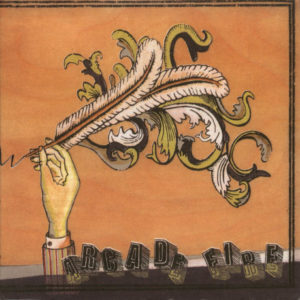
It just had to be. Arcade Fire have had more popular songs as their success has skyrocketed, but nothing captures the rise of the Canadian indie powerhouse quite like “Wake Up.” Though they eventually made the move to major label Columbia, Arcade Fire actually remained loyal to the independent label for a long time after they’d achieved superstar level fame. That’s in no small part thanks to the shot Merge gave them due to the songs on Funeral. There’s something undeniably exhilarating about it, the crunching guitar quartets and that indomitable chorus of “aah aah aaaaaah”s get the blood going in a way that inspires action and made it the obvious choice for soundtracking a plethora of adventures, from Where the Wild Things Are to Walter Mitty. Bigger things have come from Arcade Fire, but “Wake Up” is a snapshot of a time when their raw energy was enough to sustain them.
“Wasting your days chasing some girls alright, chasing cocaine through the backrooms of the world all night.” The opening lines of ‘Kaputt’ easily play into the vibe of the song; washed out, decadent and indulgent. But as with everything Dan Bejar and Destroyer do, there’s far more layers to unwrap here. Kaputt means broken, and that’s exactly where Bejar stands on such a life. Drawing on the lush sounds of the early ’80s, the smoothest of saxophones gamboling through the reverb-drenched chords; the title track of Destroyer’s ninth album and fifth with Merge explores the emptiness of hedonism with a numb and dreamlike quality. “I wrote a song for America, who knew?” Bejar wryly muses; ever subversive and critical, this is some of his finest songwriting from his finest album to date.
M. Ward has always made new music that’s sounded like it might have been found on an old cassette, or even an antiquated 78, though he gradually embraced a less lo-fi, less stylistically vintage approach. Transistor Radio is essentially the middle point between his higher fidelity later recordings and the warm, fuzzy plucks of his earlier records. Many of the songs are really short, though on something like “Sweethearts on Parade,” it does all it needs to in just over two minutes. A dense, almost shoegaze-like fuzz fills the background, letting effects-pedal distortion win out over tape hiss as Ward crafts a climactic melody that gets out just as it gets going
M.C. Taylor’s prolific songwriting has been a large part of Hiss Golden Messenger’s story—ten albums in ten years for those playing at home—with his country infused folk-rock stylings praised more for their consistency than any kind of broken ground. But this perception is elevated by the true gems that lie within the catalogue. “When the Wall Comes Down,” the lovely folk closer to 2017’s exemplary Hallelujah Anyhow, is one such. Playing out almost as bonafide gospel classic, it feels plucked out of the pages of history to be buried in the back-end of one of Taylor’s collections, discovered only by the lucky few. “What’cha gonna do when the wall comes down, what you oughta do is let it lie,” his whisky-soaked gravel voice sings over his strummed acoustic. Drawing further on the gospel traditions, the talk of walls and message of togetherness and reconciliation takes on weight now more than ever – even in two short years.
Based in North Carolina Merge Records is celebrating its 25th anniversary this year. From taking over baseballgames to planning their own four-day festival, they’ve been doing so in style. The next part of their celebration is a 24-minute documentary chronicling the rise of their indie label. It features interviews with employees and artists and narration from Daniel Handler, the author of A Series Of Unfortunate Events who has his own history with Stephin Merritt and the Magnetic Fields. In addition to the documentary, the label has also shared videos of Merge Recording artists covering each other as part of a free sampler with contributions from Superchunk,Telekinesis, the Mountain Goats, Saint Rich, and Hiss Golden Messenger. Watch the documentary.
The hugely influential 1970s melodic rock band Big Star will have the feature length documentary about their life and times, ‘Nothing Can Hurt Me,’ released by USM on DVD and Blu-Ray next month. The group’s many admirers will also be excited to learn that a deluxe package will be available that adds the first two of the three albums they released in their initial incarnation.
Their debut LP was ‘No#1 Record,’ first released on the Ardent label via Stax in 1972, and this will be in the package along with the 1974 follow-up ‘Radio City.’ The band released ‘Third’ in 1978 before their split, and were then “discovered” by the next generation of rock fans after being cited as an influence by the likes of R.E.M., the Replacements and later favourites such as Flaming Lips. ‘Third’ was reissued as ‘Sister Lovers’ in 1992 and the band reformed for a fourth and final new studio record, ‘In Space,’ in 2005.
‘Nothing Can Hurt Me,’ a feature length documentary about Big Star, was first shown in cinemas last summer, and its new DVD and Blu-Ray release will be on March 2nd. Alex Chilton, who had been the original band’s frontman and co-songwriter with Chris Bell, died in 2010.
The Church, a mystical indie band from down under; known well for the imagery layered under lush guitars and stand out riffs, absolutely met the expectation of a one of a kind, dreamlike experience. On this day in 1988, The Church released its fifth album, ‘Starfish,’ featuring the singles “Under the Milky Way,”“Reptile” and “Destination” One of that decade’s best works. it certainally has aged so much better than most albums of that era. Starfish is the fifth studio album by Australian alternative rock band The Church, released in February 1988. It was the band’s big breakthrough album, “Starfish” went gold in America and has remained the band’s most commercially successful release. The first single, “Under the Milky Way”, charted well into the USA Top 40, leading to significant exposure of the then relatively underground Australian act.
Starfish is a beautiful, magical album that stood out “Under the Milky Way”. The track has continued to be a from it’s usage in the movie Donnie Darko, “Reptile” is another specific track from Starfish that has just held so much power from the opening riff both powerful and sinister; the overall message of learning from your mistakes and moving on, but always seeing the past as it was, not through the rose colored glasses that color reality given enough elapsed time.
“A New Season” sung by Peter Koppes, was even better live that it was on the album. The band took a break after completing “Starfish” . The album was recorded/produced in Los Angeles by L.A. session musicians Waddy WachtelandGreg Ladanyi. The recording is more sparse and open than its predecessor, “Heyday“, which featured orchestral arrangements with brass and strings. Many of its songs have seen heavy rotation in live set lists, and the album remains a favorite among many fans.
The song “Under the Milky Way” was co-written by Steve Kilbey with his then-girlfriend Karin Jansson of Pink Champagne. Because the band was unable to get a drum track which sounded right live in the studio by Richard Ploog, the band played to a click track and later session musician Russ Kunkel was brought in to add drums and percussion.
The album’s title was taken from singer/bassist Steve Kilbey‘s nickname for friend/ musical partner DonnetteThayer, who signed herself that way on postcards she sent to Kilbey. Kilbey contributed a long untitled poem to the album’s liner notes. “Hotel Womb” has dream-themed lyrics relating to an imagined wedding. Music videos were filmed for “Under The Milky Way” and “Reptile.” The fifth season of the US TV show, Miami Vice, featured two songs from the album. “Under the Milky Way” was used in an episode called “Asian Cut” and “Blood Money” was showcased throughout “Heart Of Night” (18 November 1988).
Steve Kilbey – bass guitar, lead vocals
Peter Koppes – guitars, lead vocal on “A New Season”
Marty Willson-Piper – guitars, lead vocal on “Spark”
Richard Ploog – drums, percussion
Additional musicians
Greg Kuehn – keyboards
Russ Kunkel– drums and percussion on “Under The Milky Way
Speaking of frequently covered songs, ’30 Days in the Hole’ ranks with Humble Pie’s most oft-revisited tracks since it was first unveiled as the second-side opener on 1972’s ‘Smokin’’ LP. Not only does the song absolutely cook with a funky vengeance, but its virtual catalog of chemical bad habits makes it an irresistible fix for bad boy rockers of all ages. Indeed, Humble Pie never sounded more addictive, and we therefore had no choice but to tap out ‘30 Days in the Hole’ as one of the Top Humble Pie songs.
Smokin’ comes as close to any Humble Pie LP ever did to achieving classic status. My advice to the neophyte is to check out Eat It, Smokin’,and 1971’s Rock On (the last Humble Pie LP to feature the work of Peter Frampton)
Fresh mix from multi-track of New Year’s Eve show at Tower Theater
For Bruce Springsteen, 1975 was a year that changed everything, 12 months of milestones which included recording the majority of and releasing the seminal “Born to Run” to critical acclaim; his first true national and international tour in support of the album; and appearing simultaneously on the covers of the National magazines Time and Newsweek.
The year and the Born to Run tour came to a close with a four-night stand on friendly turf at the Tower Theater in Upper Darby, PA, on the outskirts of Philadelphia, with the final show ringing in 1976. The band marked the occasion by wearing tuxedos, in response to which Bruce said, “If I’d known you guys would dress like this, I wouldn’t have come.” That memorable performance arrives today at live.brucespringsteen.net as the third archival release in Springsteen’s live Archive Series .
December 31, 1975 is newly mixed from 16-track master reels by Toby Scott and mastered by Adam Ayan at Bob Ludwig’s Gateway Mastering. It’s being released in standard and ultra-high-resolution 24-bit/192Khz digital files, as well as being available for CD pre-orders which will ship in another month, says Brad Serling, founder and CEO of Nugs.net which powers the Springsteen download store.
“In looking for the next release,” Serling tells Backstreets, “we wanted to go for the highest quality sources we could find. With Agora, we found the highest-quality two-track, but we didn’t want to go down that road with the next release. Toby was going through the list of what Sony had in their archive, and up came a complete set of multi-track reels from the last night of the Born to Run tour. So that was pretty compelling.”
Things moved impressively fast from there, as Scott got the tapes from Sony and shipped them to Sonicraft, which specializes in multi-track analog-to-digital transfers and just happens to be based in Bruce’s hometown of Freehold, NJ.
“It didn’t require the level of work of a Plangent transfer,” Serling explains. “The tapes just needed to be baked and sampled.” The 24/192 transfer made its way back to Thrill Hill, where Toby Scott began to mix “as purely as possible, with no gadgetry” through his SSL console. “He built the mix in a way he knew Bruce would like a live show to sound, particularly from that era,” Serling adds. Scott sent the results to Jon Landau and to Bruce for them to listen and approve, and then on to Gateway for mastering. The process wrapped up the first week in February.
The show was recorded by a young Jimmy Iovine in the Record Plant’s remote truck, one of a few select dates (including CW Post College on Long Island and Seneca College in Toronto) captured at the request of Mike Appel for a possible live album. Rough mixes of the show were made back in early 1976 for consideration, but the live album plan was scrapped.
Nine tracks from those ’76 mixes surfaced to collectors a few years ago, and a rough two-track board tape has been around for decades from the collection of the Philadelphia DJ Ed Sciaky. But this all-new Toby Scott mix marks the first time the complete performance has been heard, and the quality is undoubtedly unprecedented.
In terms of setlist, Philadelphia 12/31/75 varies materially from the other high-quality document we have of the Born to Run tour, Hammersmith Odeon, London ’75,recorded just six weeks earlier on November 18. The set includes the show jump-starter “Night,” “Does This Bus Stop at 82nd Street?,” the stunning and short-lived slow piano arrangement of “Tenth Avenue Freeze-out,” plus extraordinary covers of The Animals’ “It’s My Life,” Manfred Mann’s “Pretty Flamingo” and Harold Dorman’s “Mountain of Love” (also made famous by Johnny Rivers) before closing out the night with “Twist and Shout.”
“It is amazing how young Bruce sounds,” notes Serling. “It’s the end of this monumental tour, at a pivotal point in his career, and it is thrilling to listen to.” Thanks to Erik Flannagan
Early in 1985 the band released their second album, “Meat Is Murder“. This album was more strident and political than its predecessor, including the pro-vegetarian title track (Morrissey forbade the rest of the group from being photographed eating meat), the light-hearted republicanism of “Nowhere Fast”, and the anti-corporal punishment“The Headmaster Ritual” and “Barbarism Begins at Home”. The band had also grown more diverse musically, with Johnny Marr adding rockabilly riffs to “Rusholme Ruffians” and Rourke playing a funk bass solo on “Barbarism Begins at Home”. The album was preceded by the re-release of the B-side “How Soon Is Now?“ as a single, and although that song was not on the original LP, it has been added to subsequent releases. “Meat Is Murder” was the band’s only album to reach number one in the UK charts. To set the scene, let’s talk about music in 1985. In February of that year, two songs held the No. 1 spot: “I Want to Know What Love Is” by Foreigner and “Careless Whisper” by Wham! Schmaltz and sax riffs were reigning supreme. The only other album of importance to the latter-day post-punk movement to be released that month was “Night Time” by Killing Joke. Tears for Fears’ “Songs from the Big Chair”dropped too, just in case you were wondering what kind of rad pop music was available to consumers during that month. Then in walk The Smiths ready for their round two.
Allow yourself to feel small in the presence of the group’s overwhelming talent. Johnny Marr was 21 when this record was released. This means he’d written “How Soon is Now?” at that point in his life, and all I’m doing is writing about how amazing that is. Andy Rourke and Mike Joyce’s rhythm section never gripes for unnecessary authority over the songs but when they’re in the spotlight, they always shine. Morrissey’s eloquence and command over the English language can be deceptive. Sometimes it’s easy to forget how recently these Manchester masterminds graduated from the institutions they decry. Their music is so fully formed it’s hard to believe it was being written by people in their early to mid twenties. Since they were so beyond their years, the music doesn’t sound very dated. Sure, it’s easy to identify “Meat is Murder” as an ’80s record, but more because of mood and jangle than anything else. In the age of synthesizers, this is a guitar rock album through and through. Johnny Marr could shred as well as any metal band popping up back then, but he keeps everything so tasteful and necessary. Each layered riff and strumming pattern adds to a unified whole which never comes off as an ego stroke.
Morrissey brought a political stance to many of his interviews, courting further controversy. Among his targets were the Thatcher government, the British monarchy, and the famine relief project Band Aid. Morrissey famously quipped of the last, “One can have great concern for the people of Ethiopia, but it’s another thing to inflict daily torture on the people of England” (“torture” being a reference to the music that resulted from the project). The subsequent single-only release “Shakespeare’s Sister” reached number 26 on the UK Singles Chart, although the only single taken from the album, “That Joke Isn’t Funny Anymore“, was less successful, barely making the top 50.
Marika Hackman has unveiled another cut from her forthcoming debut album, ‘We Slept At Last’.
“Skin” is a collaboration between Marika Hackman and London-based singer Sivu. The song was written by Hackman as a duet for the two artists after she was asked by Sivu to sing on one of his own tracks.
The song was distributed for free on cassette tapes as a Christmas Present to fans on Marika’s Tour at the end of 2013, and was released digitally through SoundCloud a few months later. Lyrically, the song is archetypal Marika Hackman, with disturbing anatomical descriptions and beguiling imagery of love.
Out 16th February, ‘Skin’ links up with ‘Before I Sleep’, ‘Drown’, ‘Ophelia’ and ‘Open Wide’ in previewing the record, which comes produced by Charlie Andrew and follows two EPs. She also managed to become a werewolf and eat Laura Marling – that too. Having already released three stunning EPs, and now she’s readying the release of her debut album, “We Slept At Last”. presenting the premiere of a new track, Skin, the fourth to be unveiled from the album.
The gentle folk tune is a haunting peek into We Slept At Last. The intimacy of Hackman’s words are matched by equally intimate instrumentation, delicate guitar and brooding textures. It’s the most gentle song to come from the album so far and follows the profound Animal Fear, which has been picking up spins
“Skin is, in essence, a love song, although I’m loathe to describe anything I write in that way,” Hackman said of the song’s theme. “I knew it was going to be a duet before I wrote it and it’s the imagined conversation between myself and the object of my desires, then coming to the conclusion that I’m not capable of loving so freely any more, and feeling completely isolated. Chirpy stuff.”
She added that it will act as a kind of “interlude” on the forthcoming the album, which she describes as sonically diverse. “I was worried that it might stick out like a sore thumb but actually I think the record is so diverse anyway that it doesn’t come across like that,” said Hackman. “I love that fact that we lifted lots of the instrumental lines straight off the demo, which I recorded in my bedroom at my parents house, so it feels even more personal in that sense.” The album was crafted with producer Charlie Andrew, who worked on Alt-J‘s An Awesome Wave and the follow-up This Is All Yours, and also produced Matt Corby‘sResolution.
Alongside the album, Hackman has compiled a 28-page art book with photographer Glen Erler. She’ll be exhibiting those photos as well as debuting the album live in full at Camden’s Cob Gallery. The debut album by the 22-year-old Brit is due to be released on Friday, 13th February via Sony.
Marika Hackman heads out on tour from late March, beginning in Leicester on 23rd March, and carrying on until 15th April in Southampton.
MARCH
23 Leicester The Musician
24 Hull Adelphi
25 Stoke Sugarmill
26 Birmingham The Rainbow
28 Nottingham Bodega
30 Milton Keynes Craufurd Arms
31 London Bush Hall
APRIL
1 Leeds Brudenell Social Club
2 Newcastle Think Tank
3 York Duchess
4 Manchester Night and Day
5 Glasgow King Tuts
9 Bristol Thekla
10 Cardiff St John’s Church
11 Aldershot West End Centre
12 Bedford Esquires
14 Cambridge Portland Arms
15 Southampton Joiners
David Crosby has the distinction of being a founding member of both the Byrds and Crosby, Stills & Nash who has survived drug busts in Texas (nine months in state prison for possession of heroin and cocaine), a hit-and-run driving accident, possession of a concealed pistol and drug paraphernalia, an arrest for driving into a fence in Marin County, a transplanted liver, the ire of Graham Nash, and fathering two children by Melissa Etheridge. He is a bit of a lightning rod to be sure! Love him or hate him, Crosby, now 79 years old, has had a stellar career. A singer-songwriter and guitarist, he wrote or co-wrote “Wooden Ships,” “Deja Vu,” “Guinnevere,” and “Lady Friend,” among others.
He is also noted for his soaring high harmonies, a trademark of his songs. In addition to performing on the Byrds first five albums (their best in my opinion), he also played on eight Crosby Stills & Nash albums including three with Neil Young), he has made solo albums, and collaborated with Graham Nash on five long players. Croz is pretty prolific workhorse. He has been inducted into the Rock and Roll Hall of Fame twice with the Byrds and Crosby, Stills & Nash. He can be seen in an excellent 2019 documentary “Remember My Name,” in which he pulls no punches about his failed relationships, scrapes with the law, and regrets about years lost to drug abuse. Crosby is certainly a survivor.
David Crosby’s 1971 solo album “If I Could Only Remember My Name” was developed in a time of great emotional upheaval but also intense creativity for David Crosby and the contributing musicians. Many if not most of the finest San Francisco musician’s fingerprints can be found on this record. Often referred to as the ‘Planet Earth Rock and Roll Orchestra’ the combination of talents can also be discovered adding their unique abilities to other albums of that era. Jefferson Starship’s Blows Against the Empire, Graham Nash’s Songs for Beginners,Mickey Hart’s Rolling Thunder as well as Paul Kantner/Grace Slick’s solo excursions feature many of the same artists. David Freiberg, Neil Young, Michael Shrieve, Graham Nash, Joni Mitchell as well as the members of the Grateful Dead and Jefferson Airplane all make appearances in various combinations equaling some mind expanding and amazing music created in the early 1970’s. This amazing time in rock history will never be witnessed again, a time where wonderful collaborations and a shared love of musical discovery took precedent over record contracts, royalties and tour receipts.
David Crosby’s 1971 masterpiece “If I could Only Remember My Name”. Emotionally recovering from the loss of his lover Christine Hinton from a devistating car crash,
“If I Could Only Remember My Name” is the result of David Crosby’s escape from depression and his eventual refuge found through music and his friends. The collaborations featured on the recordings did not occur in a vacuum, the relationships were developed early on in the respective musicians careers. Paul Kantner, Crosby and StephenStills collaborated on the songwriting of the CSN track ‘Wooden Ships’, Jerry Garcia was a ‘spiritual advisor’/producer for the Jefferson Airplane’s Surrealistic Pillow album and David Freiberg, Kantner and Crosby often cross pollinated each others work in the early stages of their careers.
Crosby gathered a superb supporting cast, one that featured the communal contributions of friends and fellow travellers, among them, members of the Grateful Dead (Jerry Garcia, Phil Lesh, Bill Kreutzmann and Mickey Hart), Jefferson Airplane (Grace Slick, Paul Kantner. Jorma Kaukonen, Jack Casady), Santana (Gregg Rolie and Michael Shrieve) and Quicksilver Messenger Service (David Freiberg), along with faithful standbys Graham Nash, Neil Young and Joni Mitchell.
The LP opens fittingly opens with the aptly titled ‘Music Is Love’. The song features three of the four principals of Crosby, Stills, Nash and Young, with Stills the only member not appearing. The song encapsulates the pervading attitude of the record with the ‘Music Is Love’ mantra harmonized by Nash and Young while Crosby spreads a soaring free form vocal over the top. Young, Crosby and Nash interweave crystalline acoustic guitars with Young offering his personal rhythm section of bass and congas and a ghostly vibraphone. The campfire vibe song rises weightless like smoke, soaking into the glorious melodic sunshine.
The cinematic and epic ‘Cowboy Movie’ follows, spotlighting the rhythm section of the Grateful Dead with Hart, Kreutzman and Lesh in addition to featuring a Jerry Garcia and Neil Young in a dusty ten paces and turn guitar duel. The story line of the tail fictionalizes the CSNY break up through the premise of a spaghetti western and comments on some of the personal issues that haunted the band, like certain principals relationship with the ‘Raven’ (Rita Coolage). Garcia and Young go toe to toe through deft uses of moaning feedback and the perfect finishing of each other’s guitar phrases. The heavy footed groove slowly gains in intensity, Crosby shreds his vocals thrillingly eventually climaxing in an instrumental orgasm that fades out much too soon. (There is a thrilling and extended version of this track available on the David Crosby box set Voyage)
The cool night air of ‘Tamalpais High (At About 3)” settles in, again featuring the Grateful Dead’s Billy K. on drums and Phil Lesh on bass. Garcia and the Airplane’s Jorma Kaukonen hold the six strings while Nash and Crosby handle the delicate wordless melody. Crosby stated that this song was not really ‘received’ by ‘CSNY’ so it ended up on his solo record. A quintessential Crosby melody, circular and umbrageous in its design, lyrical content is not required due to the aural portrait conjured by the instrumental and vocal alchemy. The organic blending of Crosby and Nash’s melody lines slither over the morphing jazz groove driven by Lesh’s thumping Alembic bass and Kreutzman’s multiple arms. Garcia and Kaukonen trade virginal clean tone lines over the additively shifty composition.
One of Crosby’s most enduring melodies and enchanted compositions, ‘Laughing’ follows and closes the first side of the record. Opening like the birth of a vibrant sunrise, the songs design is again built around the Grateful Dead rhythm section featuring Lesh’s well timed and plump detonations. Crosby’s glistening twelve string strums sparkle like solar rays through rain drops. On top of all of the swirling magic Garcia lays a sleek and spectral pedal steel line that is extremely emotive, acting as its own independent star sailing melody line. The song lyrically is the search for answers and according to Crosby directed to George Harrison and expressed psychedelically through a collaborative chorus highlighted by the smooth styling of Joni Mitchell.
Flipping over the LP, the second side of the record begins with ‘What Are Their Names’ a still relevant song that still features in CSN and CSNY set lists , but now performed acapella. This original rendition is a full band performance constructed around a descending set of changes. Three crisp guitars wrap themselves around a central pole to open the song, Crosby, Garcia and Young gently caressing the songs internal melody. As the drums and bass enter (Shrieve and Casady) the song gains a slightly disturbing and dramatic edge, Young and Garcia’s guitars bite deep. The finger pointing lyrics are sung in huge super group choral fashion featuring but not limited to Crosby, Nash, Grace Slick, Paul Kantner, Laura Allen and possibly Crosby’s brother Ethan. A stunning start to side two and a commentary on the organic creation of the music contained on the record.
‘Traction in the Rain’ follows next and allows time for Crosby acoustic introspection. The drumless melody hangs weightless on woody strums and finds Crosby and Nash on shimmering acoustics and Laura Allen contributing on beautiful and cascading auto harp. Crosby’s vocals are some of the finest on the record and the song would become a highlight of future Crosby/Nash duo performances.
‘Song with No Words (Tree with No Leaves)’ is a prismatic meditation where in a role reversal, the music colours and supports the stunning wordless Crosby/Nash vocal melody. The supporting players act as one swirling instrument enveloped into each other through intent listening. The players cannot always be confirmed on these resulting tracks, but my ear hears, Garcia, Kaukonen, Shreive, Nash and possibly Young on piano. In the ‘rock room’s humble opinion one of the finest tracks on the record.
The final two songs of the LP are also wordless compositions. In many ways this increases the emotional effectiveness and melodic strength contained within the numbers. ‘Orleans’ is a traditional French children’s song that lists the cathedrals of France. Of course Crosby arranges it into a strange and weaving mood piece based around overdubbed acoustics and his perfectly stratified vocals.
The album closes with the exhilarating and supernatural ‘I’d Swear There Was Somebody Here’. A vocal only movement, Crosby is quoted as saying he was in a good place, high as a kite and experimenting with the echo chamber in Wally Heider’s studio. Crosby sang six different parts developed on the spot, vocally improvised and bringing into existence a masterful representation of his recently departed love. Crosby felt that the creation of this song was initiated by Christine visiting him and/or making her presence known to him during the song’s genesis. Something is definitely happening during the brief apparitional and aural experience. This song epitomizes what this music is all about, remembering, feeling, expressing and being in the moment. The track is a fitting conclusion to the record and inspiring statement of Crosby’s talent and the towering importance of the record in the pantheon of rock history.
David Crosby’s musical journey is a tale rife with contradictions. There’s the obvious brilliance he first shared while with the Byrds and then, later, his contributions to America’s first true supergroup, Crosby, Stills, Nash and (at times) Young. By having a hand in the writing of songs that helped define both bands—among them, such enduring classics as “Lady Friend,” “Why” and “Eight Miles High” for the former, and “Guinnevere,” “Wooden Ships,” “Almost Cut My Hair” and “Déjà Vu” for the latter—he played a major role in establishing a timeless template that reflected a freedom-first attitude of the ’60s that resonates even today. Likewise, his rich tenor and unmistakable jazz-like sensibilities imbued each group with a firm foundation for their exacting vocal harmonies. Crosby also helped establish a free-flowing communal kind of creativity, another distinctive element that led to a more synchronous sound.
Engineer Stephen Barncard had his reservations when he was assigned to do the record, referring to Crosby’s reputation as being that of an “asshole.” However in Crosby’s autobiography Long Time Gone, he describes the recording, which began in November 1970, as “the most exhilarating project I’ve ever done in my life…It was a loose setup…but I learned to relax with it and before we knew it we were ready to mix.”
Crosby and chief Byrd watcher Roger McGuinn clashed when Crosby insisted the group record his ode to hedonism, “Triad,” a song that celebrated the joys of a ménage à trois (they didn’t record it, but Jefferson Airplane happily included it on one of their albums). During 1967’s Monterey Pop Festival, Crosby broke ranks with a rant about a Kennedy assassination coverup, after which he famously took the stage with Buffalo Springfield, filling in for an absent Neil Young.
If I Could Only Remember My Name is not only a career defining statement for David Crosby it is also a commentary on the collaborative and communal environment surrounding music in the 1960’s and 1970’s. Friends created music on this record, credits or royalties did not matter. What mattered was sharing in the making of something bigger and better than its individual components. The songs contained on this record are inspired by the joy of giving and creating and the proof lies within the jagged grooves of its vinyl. The record is arguably David Crosby’s finest achievement and a photographic capture of some of the contributing musician’s finest moments ever committed to tape. The record is a standard of the rock room and a must have addition to any rock collection . (Note: an outtake from the sessions, “Kids and Dogs,” later included on Crosby’s Voyage anthology, would also have found a fit within that surreal setting.)(There are also a multitude of outtakes of the sessions available for those willing to search)
Fuzz Club Records and The Reverberation Appreciation Society are set to co-release The ReverbConspiracy Volume III on the 25th January 2014. As usual, it will feature some of the best acts from the underground scene at the old continent.
Goat’s “Hide From The Sun” remixed by Antone Newcombe and Lola Colt’s “Away From The Water”. Anton about his continual support and involvement with the underground psych movement.




 The show was recorded by a young Jimmy Iovine in the Record Plant’s remote truck, one of a few select dates (including CW Post College on Long Island and Seneca College in Toronto) captured at the request of Mike Appel for a possible live album. Rough mixes of the show were made back in early 1976 for consideration, but the live album plan was scrapped.


