Comprised of previously released EPs and previously released as an album overseas before finally receiving a stateside street date from Mom + Pop records in 2014, “A Sea of Split Peas” it’s the kind of album that withstands endlessly repeated listens, it doesn’t much matter. Serving as Australian Courtney Barnett’s debut,
A Sea Of Split Peas introduces the world to the (s)lackadaisical troubadour’s unforgettable steez: droll and dreamy, with the perfectly worn feel of your favorite hoodie. CourtneyBarnett plays guitar and sings, and the shrug with which she delivers her wry observations obscures how incisive they can be. “I’m having trouble breathing in,” she frets, ostensibly about an asthma attack, on “Avant Gardner,” a rolling, note-perfect rock song wherein a well-intentioned day in the yard becomes a metaphor for just trying to get by in the world. Such gems abound on Peas, sprouting like the vegetables Barnett so earnestly wishes she could grow. Courtney Barnett is an Australian singer-songwriter and guitarist from Melbourne. Known for her witty, rambling lyrics and deadpan singing style,
The Allman Brothers Band’s classic 1971 live album “At Fillmore East” will be expanded into a six-disc box set, The 1971 Fillmore East Recordings, to include 15 previously unreleased performances. The group originally compiled the album from four sets recorded over a weekend in March 1971, and the new box set also includes a complete performance recorded at the venue that June. For that performance, promoter Bill Graham handpicked them to headline the Fillmore East’s final night. The new box set features liner notes by “Allmanologist” John Lynskey .
“That weekend in March of ’71, when we recorded At Fillmore East, most of the time it clicked,” drummer Butch Trucks said in a statement. “We were finally starting to catch up with what we were listening to. We had lived together. . . we got in trouble together; we all just moved as a unit. And then, when we got onstage to play, that’s what it was all about – and it just happened to all come together that weekend.”
The four March sets were recorded by Tom Dowd, who produced the Allman Brothers’ second album, “IdlewildSouth”, and the Derek and the Dominos album Layla (the latter of which paired Duane Allman with Eric Clapton). With so much going on around the band at the time, Dowd and Atlantic Records decided to put out the live album to show what the Allman Brothers were capable of outside of the studio.
One of the best live albums of all time The Allman Brothers Band’s cornerstone LP, At Fillmore East, compiled from the four sets recorded on the weekend of March 12-13, 1971, has been expanded, stretching over six CDs with fifteen unreleased tracks. Additionally, The 1971 Fillmore East Recordings contains the complete June 27 performance during the iconic venue-s final weekend, after the band was handpicked by impresario Bill Graham to headline closing night. The 1971 Fillmore East Recordings captures the most inspired improvisational rock unit ever at the peak of their prodigious powers, blazing their way through extended instrumental elaborations, so taut and virtuosic, that the crowds that packed the Fillmore East on those memorable nights were utterly transfixed. When it came to live performance, no other band could touch the Allmans.
‘The 1971 Fillmore East Recordings’ includes 37 tracks, 15 previously unreleased and a 36 page booklet with extended liner notes and never-before-seen images of the Fillmore concerts.
This very english band has now made three of my favorite albums of the 21st century. alt-J weaves unimaginable and otherworldly tales. Sometimes their art-rock songs lean heavily on folk traditions — their version of “House Of The Rising Sun” or their inclusion of lines from the Irish tune “The Auld Triangle” on “Adeline” or Shakespearean references in “3WW” come to mind.
(That title refers to “3 worn words”: “I love you.”) And there are also lots of other literary references, including “Pleader,” inspired by Richard Llewellyn’s book How Green Was My Valley and Truman Capote’s In Cold Blood. But with all that said, it’s the sonic soundscapes that make these eight songs an album worth spending time with; no one makes music like this. “Relaxer” is choral, quirky and bewildering.
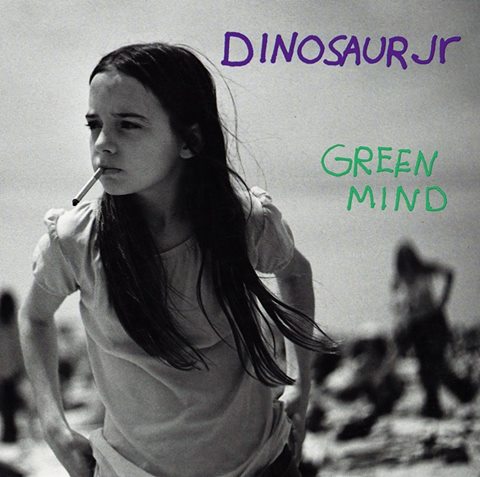
On this day in 1991, Dinosaur Jr released its fourth album, ‘Green Mind,’ featuring the single “The Wagon”
Despite the ongoing lineup turmoil, Dinosaur Jr. signed with Sire Records in 1990. They made their major-label debut Green Mindin 1991. The new record was virtually a J. Mascis solo album, with Murph playing drums on only a few songs, as well as minimal contributions from Fleming and Spiegel, who were out of the band by the time the album was released. Mascis, whose first instrument was a drum kit, recorded many of the drum parts by himself, layering the various instrumental parts through overdubbing. While Mascis’ guitar, voice and songwriting ensured that the album had its share of the band’s old sound, it was much quieter and more layered, with more use of keyboards and acoustic guitar, and with a noticeable lack of the power-trio roar for which the original lineup had been known.
For touring purposes, J Mascis first added Van Conner, and then Mike Johnson to handle the bass parts and embarked on several tours to support “Green Mind”, with support acts that included Nirvana. In 1991, Sire Records released an EP titled “Whatever’s Cool with Me“ that featured old B-sides coupled with one new track. In 1992, the band was part of the Rollercoaster Tour, a package tour based on the successful Lollapoloozafestival, which featured The Jesus and Mary Chain, My Bloody Valentine and Blur.
The band found their live shows well received in the changing musical climate of the early ’90s, and decided to record new material with the new lineup. This time, the recording sessions were with full participation from Murph and Johnson, with the former playing most of the drums and the latter playing all of the bass parts, singing harmony vocals and even contributing a few guitar solos. This material represented the peak of the band’s commercial success, with the single “Start Choppin'” reaching the top 20 in the UK, and the album that followed, Where You Been, reaching the UK top 10 and the US top 50. The opening track, “Out There”, had an accompanying video and was aired on MTV for a short time, as the show 120 Minutes was still popular as a late-night “alternative” video show. Although the new material was more accessible than the band’s 1980s albums, in terms of playing it represented a partial return to the more unrestrained power-trio sound of the original lineup.
Savages performing live in the KEXP studio. Recorded April 16, 2013. They are more than a band, Savages is an idea. Guitarist Gemma Thompson said it herself during our interview at KEXP: “We had the idea originally and wanted to put everything we’d all accumulated individually into creating a performance that had a sonic representation of the name Savages.”
The British post-punk group spent a year developing its ferocious live attack before successfully solidifying its sound for an album. When they arrived at KEXP, its members told us that this would be their first performance live on the air in the U.S. If they were nervous, you’d never know it, as they ripped through four songs from “Silence Yourself” with elegant brutality.
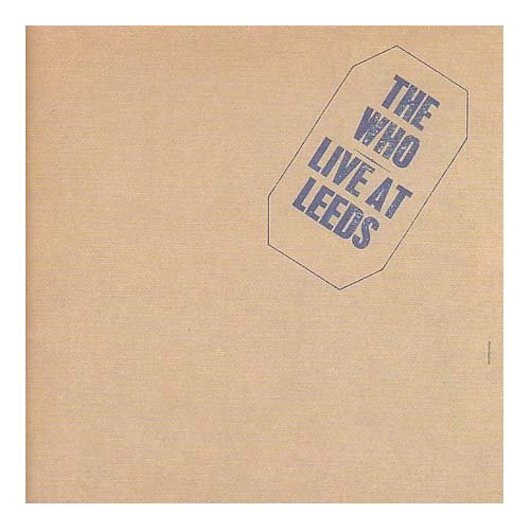
Rock history took place on a university campus on this day 45 years ago. It may have been Valentine’s Day, but that was of little consequence when one of the UK’s greatest-ever rock bands took to the stage of the refectory of the University of Leeds. February 14, 1970 was the night that The Whorecorded the performance that became their first live LP, described on release by the New York Times as the “best live rock album ever made,” ‘Live At Leeds.’
University gigs and tours have always been a common part of the British live music circuit, although the Leeds campus was not one of the most regularly used.The Moody Bluesplayed there, for example, during their early days as a rhythm and blues combo, in 1965, but it was one night with The Who that brought it to prominence.Two weeks later, Pink Floyd performed there; The Who returned to the venue later in the year, as did Floyd in 1971. Then the Rolling Stones also included it on the ‘Goodbye Britain’ tour that preceded their departure for tax exile status and the ‘Exile On Main St.’ album.
The Who’s already outstanding reputation as a live band in 1970 had been further enhanced by their appearance the previous summer at Woodstock. Their live set was now a fascinating mixture of their early mod days of R&B covers and material that had added to their growing status as exponents of conceptual rock.
Thus they delivered a set to the Leeds audience that still included their cover of Benny Spellman’s ‘Fortune Teller,’ as well as Mose Allison’s ‘Young Man Blues’ and Sonny Boy Williamson’s ‘Eyesight To The Blind.’ But it also featured early hits like ‘I Can’t Explain’ and ‘Happy Jack,’ as well as an extensive run through PeteTownshend’s new ‘Tommy’ opus. A medley at the end featured ‘My Generation,’ ‘Magic Bus’ and others.
Later in 1970, Roger Daltrey told the weekly music paper Sounds that he was very happy with the album. “It was one show and it was a very valid bit of plastic, you know. There was hardly anything dubbed on it – there were more things taken off than put on. Two backing voices were added, but that was only because the mike fell over. The whole thing is as it happened. We even pulled a lot of the crowd out because it was like, distracting to listen to.”
The ‘Live At Leeds’ album was released in May and made the top five in both the UK and US. In 2012, Who devotees finally had the chance to buy the recording of the band’s next gig, 24 hours after Leeds, on the ‘Live AtHull’ set. The Who had always intended to record this show to gather material for the original album, but sound problems meant that unless they were there at the time, fans had to wait more than 40 years to hear it.
On this rare occasion, at the site of the first BBC transmission (Alexandra Palace), J.Willgoose gives a rare talk about their unique approach and creative process, he introduces PSB’s upcoming album ‘The Race For Space’ followed by a mesmerising set of their past material. We eagerly await the release in Feb 2015.
In 2015, it’s easy to take for granted how important and far-reaching the space race was. But imagine yourself in 1957: News breaks that there’s something in the sky — in space — and if you tune your shortwave radio to an especially high frequency, you can hear its signal chirping back to you as it circles the Earth. It’s called Sputnik, the first man-made satellite launched into orbit. The Soviet Union’s groundbreaking success ushered in a new era, and nothing has been the same since.
Five years later, John F. Kennedy’s “We choose to go to the moon” speech persuaded the American public that space was a frontier beckoning to be pioneered. Ascending to the stars would be the next step in mankind’s evolution. To many, that idea of space and the awe of discovery permeated practically every aspect of American culture with a sense of possibility and excitement — but also deeply felt dread as we pondered life’s meaning in the cosmos.
These themes lie at the core of Public Service Broadcasting’s new album, The Race For Space, a song cycle that retells the American and Soviet tentpole events between 1957 and 1972 — roughly from Sputnik to Apollo 17 — and lets us hear that historical arc the way many experienced it at the time.
Part musical group, part performance-art outfit, Public Service Broadcasting is the innovative and geeky work of LondonersJ. Willgoose, Esq. and Wrigglesworth. The two earned their reputation for marrying looped dance beats and electronics with spoken-word passages culled from old public-service messages, synced to meticulously edited film footage projected while they perform. With The Race For Space, Willgoose and Wrigglesworth incorporate original news broadcasts and communications between the astronauts and NASA’s master control. From song to song, this tapestry of source material narrates each chapter chronologically, placing the listener inside the drama of the moment — propelled by futuristic Kraftwerk-meets-Aphex Twin-meets-Daft Punk sounds suitable for a laser show at the local planetarium.
“The Race For Space” opens with a mood-altering choral overture and JFK’s inspirational speech as a haunting invocation. “Space is there, and we’re going to climb it. And the moon and the planets are there, and new hopes for knowledge and peace are there,” Kennedy says, as a soaring choir gives every line extra resonance.
The duo crafts tiny instrumental flourishes that illuminate the story. “Sputnik” includes the distant yet unmistakable bleeping of a satellite. In “Valentina,” chiming wordless voices from folk duo Smoke Fairies honor cosmonaut Valentina Vladimirovna Tereshkova, the first woman to fly in space. And the somber celestial silence in “Fire In The Cockpit” recounts the deaths of Apollo 1’s three crew members.
Yet The Race For Space’s biggest showstoppers use sound to build cinematic excitement — as in the exuberant “Gagarin,” which bursts with slinky disco riffs and funked-up horn blasts while playing reports about cosmonaut Yuri Gagarin, the first human in space. Meanwhile, “Go!” channels fiery, motorik beats, intricate guitar licks and TRON-era synths as the Apollo 11 team counts down before landing on the moon — a moment punctuated by Neil Armstrong’s famous line, “The Eagle has landed.”
The most stirring moment of all comes in “The Other Side,” about Apollo 8 slingshotting itself around the dark side of the moon. Public Service Broadcasting demonstrates its masterful touch for storytelling when the dusty drum machines momentarily drop out — just as the astronauts lose contact with NASA ground control. The song builds anxiety and tension as we sit nervously for what feels like an eternity — and then swells to a joyful release when the voices from space finally reconnect.
Public Service Broadcasting fittingly closes with “Tomorrow,” a melancholic and meditative final statement that admires how far we’ve come. Decades later, all this can seem like far-off history. But Willgoose and Wrigglesworth’s ambitious concept music allows listeners to rekindle that same wonder again. Space still has the capacity to captivate.
This debut from Adult Jazz shows a lightness of touch that’s few and far between on first albums. The songs seem to start at a small point in an undefined centre before pulsing outwards in all directions, changing form and structure as they go, it’s almost impossible to describe what this music sounds like, or how it might make you feel.
You get the feeling that the next record might be entirely different given how unpredictable this one is, but for now, here, this is an album without boundaries .
“It feels like “Gist” came out of nowhere, fully formed. Full of wonder and joy – it’s both texturally ravishing and textually fascinating: songs, in other words, that tackle big subjects – the mediation of (homo)sexuality by church and society; what it means to be a man – with a transporting grace and music whose unexpected richness, space and invention creates a profound resonance.”
Five piece The Asteroid No 4– once of Philly and now relocated to San Francisco have been conjuring this kind of cosmicness since the mid-Nineties. Over a period of eight albums, including a 2013 collaboration with psych royalty Peter Daltrey of 60’s acid prog act Kaleidoscope (who’s ’67 classic Tangerine Dreamnamed that band), they’ve peddled a krautrocky, proggy, psych sound throughout. Unfashionable for many of those years, and always slightly overshadowed by Anton Newcombe’s Brian Jonestown Massacre, the timing is perfect this time. Krautrock’s re-emergence as a favoured sound is in turn leading to a slow re-acceptance of kraut’s much unloved cousin, prog rock, and this self-titled release has them excelling in such sounds.
Ranging from grimy Spaceman 3 influences (note their influence on their name) and stoner rock to Asian vibes and metronomic rhythms, “The River” even takes in Deep South country rock andThe Beta Band’s baggy shuffle, with backwards guitar and sitar sounds. This ain’t Kasabianwe’re talking about – a far more hippyish air pervades the whole affair. The grungy “Rukma Vimana” is driving psychedelic rock with quasi-mystical lyrics referencing a Sanskrit text about flying machines which will “Take you to places that you’ve never seen”, and “The Windmill of the Autumn Sky” is lovely, lilting country-tinged Americana, taking references from Gram Parsonsand Fleet Foxes and encasing them in a smoky fragrant fog. It’s the least ‘out there’ track, but it nonetheless proves to be a highlight.
Their Americana and Asian influences are most apparent on the Rickenbacker and sitar-led “Ropeless Free Climber” – which manages to contemporise the raga rock of a late 60’s Byrds – and “Mount Maru”, a lysergic piece of 5am desert rock and wordless chants augmented by tabla, sitar and a spooked-out spoken word passage which indulges their passions of bothSyd Barrettand a 1968 George Harrison to eerie, bummed out effect. It’s not all looking at the castles in your cortex or whatever – they operate just as effectively when they come across as snotty. The grinding riffs on “Back Of Uour Mind” (yes, really), give the album a much welcome kick ofThe Stooges‘ rock swagger, and “Revolution Prevail” is a welcome break from all things double denim led, sharp, oppressive and druggy.
Through dogged determination, The Asteroid No. 4 have continued down their particular path, managing to avoid being written off as revisionist. It’s encouraging that the success of the likes of Tame Impala and Ty Segall has led to precursors such as these also getting a look in guys have been doing it for so long now that they could, certainly on the evidence of this album, be cast as one of the originators of the new psych scene.
TRACKLIST
The River – 0:00
Rukma Vimana – 5:45
Ghost of Dos Erres – 12:33
The Windmill of the Autumn Sky – 16:49
Mount Meru – 22:54
Back of Your Mind – 26:37
Ropeless Free Climber – 31:09
Ode to Cosmo – 36:08
Revolution Prevail – 38:05
Yuba – 41:37
We know it’s only February but there will be no better Indie Pop album in 2015 Than The Fireworks . The album continues where the two sold out singles left off with an intoxicating head-bobbing indie pop noise with Emma and Matthew’s vocals surrounded by layers of chainsaw fuzz and feedback. However, each cut has a pop hook that’s instant that will take you to Indie pop heaven. The album is made up of thirteen A sides that you will fall in love with forever. Fireworks uphold the values from those special records from 1984-86, when bands like The Jesus and Mary Chain, The Shop Assistants, The Flatmates, My Bloody Valentine, and Razorcuts changed our lives. Seriously do not miss out on this wonderful album.