Archive for the ‘CLASSIC ALBUMS’ Category

Weld - neil young and crazy horse.jpg

In the late ’80s, Neil Young re-embraced distortion. He cut “Rockin’ in the Free World.” He teamed up with Crazy Horse for 1990’s album Ragged Glory  And then he and his Crazy friends hit the road in the winter of 1991, for what Young termed the “Smell the Horse” tour, which was documented on the Arc-Weld album.

These were loud, noisy shows, a commitment that ran even to the support acts, Sonic Youth and Social Distortion, both of whom Neil had hand picked for that purpose. Extended, tangled performances were akin to the electric music captured on the “Live Rust” album more than a decade earlier. But Young with Crazy Horse  bassist Billy Talbot, drummer Ralph Molina plus guitarist/keyboardist Frank “Poncho” Sampedro weren’t trying to relive the past so much as they were inspired to the present. Apparently, the band watched CNN reports from the first Gulf War every night before taking the stage.

“It blew my head off during that tour,” Young said about the war in Iraq in Johnny Rogen’s Zero to Sixty: A Critical Biography. “When we were playing that stuff, it was intense. It was real. I could see people dying in my mind. I could see bombs falling, buildings collapsing on families.”

The nasty images and violent news spurned the singer-guitarist to play some of his roughest material from the new record along with enshrined tunes about death and genocide such as “Powderfinger” and “Cortez the Killer.” He and Crazy Horse also debuted a version of Dylan’s “Blowin’ in the Wind,” accompanied by the sound of a blaring air raid sirens  and gunfire. Weld consists of rock and roll songs by Young and Crazy Horse, duplicating seven songs that had appeared on either “Rust Never Sleeps” Or “Live Rust” from twelve years earlier. It also echoes those albums as Young, in both cases having spent most of a previous decade pursuing different musical avenues, returned to straightforward rock and roll via the acclaimed Ragged Glory album with Crazy Horse, then celebrating that return with an accompanying multi-disc live document and concert film.

After coming off the road, Neil Young assembled recordings from the shows to document the four-month tour in the form of a double-live album. The concerts had been loud enough, but Young did further damage to his hearing while mixing the live record, which he would give the appropriately metallic title of Weld.

“I made Harvest Moon[after Weld] because I didn’t want to hear any loud sounds,” he said in 1995. “I still have a little bit of tinnitus but fortunately now I’m not as sensitive to loud sounds as I was for a year after the mixing of Weld.”

But Weld wasn’t the only thing Young was putting together in the summer of 1991. In addition to the live album, he began playing with fragments of concert sounds, weaving together layers of guitar distortion, drums, crowd noise, lyric fragments and stage chatter into an abrasive collage.

The experimental record, to be titled Arc, evolved in a 1987 film project called Muddy Track, for which Young recorded beginnings and endings of live performances and edited them together. He showed the piece to Sonic Youth’s Thurston Moore, who encouraged the rock legend to attempt a similar treatment with the professional recordings from the current tour.

Young came away with a one-track, 35-minute album that featured snippets of him singing “Like a Hurricane” and “Love and Only Love” (which repeat, almost like a refrain), as well as squealing feedback and low-end rumbling that was a ringer for constant explosions. Many would compare it to Lou Reeds Metal Machine Music.

“It’s new-age metal,” Young said in April 1992. “That’s what I would call it because you can listen to it really quiet. It’s soothing… It’s a generic rock ’n’ roll sound; it has no identity. It’s the tone, the metal tone. It’s like being inside a giant milkshake blender. It’s another dimension. Most bands’ beat defines who they are. There is no beat on Arc.”

In a limited release, Young packaged his conventional live album with Arc, which he called “more art and expression than anything I’ve done in a long time.” Via Reprise, he released 25,000 of the three-disc set, Arc-Weld, on October. 22nd, 1991. He ended up putting out the records separately, as well. (A VHS concert video was released too, although it has gone out of print.) Fans and critics reacted positively to the intensity of the performances on Weld while regarding Arc as, at best, something of a curiosity.

Although Neil Young would take a short hiatus from loud music following the release of Arc-Weld, he wouldn’t stay away for long. As the “godfather of grunge,” he’d soon team up with Grunge rockers Pearl Jam and reconvene with Crazy Horse multiple times throughout the ’90s.

1. “Hey Hey, My My (Into the Black)” – 0:00
2. “Crime in the City” – 5:42
3. “Blowin’ in the Wind” (Bob Dylan) – 12:14
4. “Welfare Mothers” – 19:04
5. “Love to Burn” – 26:08
6. “Cinnamon Girl” – 36:06
7. “Mansion on the Hill” – 40:54
8. “F*!#in‘ Up” – 47:08

Of course the second cd is mandatory listen after the first one

1. “Cortez the Killer” – 0:00
2. “Powderfinger” – 9:46
3. “Love and Only Love” – 15:42
4. “Rockin’ in the Free World” – 25:03
5. “Like a Hurricane” – 34:23
6. “Farmer John” (Don Harris, Dewey Terry) – 48:25
7. “Tonight’s the Night” – 53:24
8. “Roll Another Number” – 1:02:05


jls_4613_by_john_sturdy

Drop City created wildly psychedelic paintings on acrylic, one of which, ‘Ultimate Painting’, inspired the London duo of James Hoare and Jack Cooper. It’s telling that “Lead The Way”, from Ultimate Painting’s third album, Dusk, features the lyric, ‘turn your back on society’ – they seem driven by a similar impulse to reduce and simplify. Both Cooper and Hoare have prior form in indie groups: the former with Mazes, and the latter with Proper Ornaments and Veronica Falls. If some of those groups access the creative energy of the ’60s through the refracting prism of ’60s independent music, Ultimate Painting return to the source direct, but they avoid the slavish copyism of any number of romanticising nostalgia acts, from Mod revivalists to limp psych-rockers, by tightening the focus, sketching the mise-en-scène with just the bare necessities.

Initial listens to Dusk, the duo’s third album, are similar to encounters with their other two (the self-titled 2014 debut, and last year’s Green Lanes); first impressions, of a muted slightness, give way to increasing wonder at the evocative qualities of the songs’ mindful minimalism. It’s uncluttered, spare, and open, and the production and arrangement has the feel of a group breathing together in the same room, capturing the recording space’s acoustic qualities, and playing only the essential notes, the better to let the room sing in tandem with the interactions between buzzing strings and humming valve amplifiers.

It kicks off with deceptive diffidence  “Bills” comes across, at first, like a paper-cut version of the crystalline excellence of Television’s third, oft-underrated comeback album from 1992; it’s a nudge away from the latter’s “1880 Or So”. But it soon blossoms, finding its own community of sound, and quietly ascending into a mantric chorus, as a huffing organ buzzes out the back of the studio. The guitar playing is particularly seductive – one guitar trebly and warbled by tremolo, the other lightly distorted but still pin-sharp, their relationship is one of mutual fascination, tiptoeing around each other and respectfully finding ways to weave around each other’s tonal spectrum. The jangling charm of the following “Song For Brian Jones” hymns the titular character via guitars that toll in consort with the gentle psych-folk of The Byrds circa Fifth Dimension; “Lead The Day”’s chiming piano positions the gracefully understated melody on an early solo McCartney album.

Cooper and Hoare have no qualms about drawing from some of pop and rock’s most distinguished as Cooper once said, “We accepted the fact that we’re influenced by the biggest bands that have ever been, because a lot of them are really good.” That kind of comfort with the canon is writ across Dusk, but it also risks games of spot-the-reference: it’d be pretty easy to draw a Venn diagram of, say, the gentler climes of psychedelic pop from the ’60s, the click and fizz of the quieter end of ’70s power-pop, and the pastoral lilt of the Flying Nun label in the ’80s, and locate Ultimate Painting at their intersection.

The Rolling Stones will release ‘Blue & Lonesome’, their first studio album in over a decade. Recorded in just three days in London, England, this is an album full of their passion for the music that has always been at the heart and soul of the band – Blues.
Recorded in three days in December last year at British Grove Studios in West London, just a stone’s throw from Richmond and Eel Pie Island where the Stones started out as a young blues band playing pubs and clubs.

The credits say it all, in the way this project was approached to play live in the studio without overdubs. Mick Jagger (vocals & harp), Keith Richards (guitar), Charlie Watts (drums), and Ronnie Wood (guitar), plus their long time touring sidemen Darryl Jones (bass), Chuck Leavell (keyboards) and Matt Clifford (keyboards). For two of the twelve tracks the Rolling Stones were also joined by old friend Eric Clapton, who happened to be in the next studio making his own album.

‘Blue & Lonesome’ sees the Rolling Stones tipping their hats to the blues roots with tracks of intense spontaneity. It’s hard to believe that this is a record made by musicians in their sixth decade of recording. In their very early days the Stones played the music of Jimmy Reed, Willie Dixon, Eddie Taylor, Little Walter and Howlin’ Wolf – artists whose songs are featured on this album.

Producer Don Was commented “This album is manifest testament to the purity of their love for making music, and the blues is, for the Stones, the fountainhead of everything they do.”

1.Just Your Fool
2.Commit A Crime
3.Blue And Lonesome
4.All Of Your Love
5.I Gotta Go
6.Everybody Knows About My Good Thing
7.Ride ‘Em On Down
8.Hate To See You Go
9.Hoo Doo Blues
10.Little Rain
11.Just Like I Treat You
12.I Can’t Quit You Baby

billie-marten-writing-blues-yellows-cover-413x413

Billie Marten She writes of yellows, certainly, and the blues arrive later; big, inky, blue-black blotches of melancholy that fall and then blossom on fading parchment paper, the only thing left to surprise the listener about Writings of Blues and Yellows is that she sat in one place long enough to learn the piano.

Now at the grand age of 17, Billie Marten already sounds world-weary. “La Lune” opens the album with a skipping-stone touch, setting out her stall as a songwriter who creates quiet, almost ambient textures, so that the minor chords twist like a knife when they arrive. “Bird” takes the template a step further, a brooding string part’s vibrato matching the quiver in her voice. As the album progresses, it becomes apparent that the strings are rarely entirely absent, but have the good grace to spend most of their time quietly complementing Marten’s guitar and voice, only rushing forward to meet them at the record’s stormiest moments.

Occasionally, the pace is allowed to gather into something approaching a jaunt, as on “Milk & Honey”, a dig at the world’s unfettered consumerism. But mostly, the songs here are stripped for their saddest parts, channeling the spirit of her contemporaries: Daughter, and, Laura Marling. The temptation to buy into a tortured prodigy narrative here will prove irresistible for some, painting a bruised, teenage heart too pure for this cruel world. Certainly, Marten is honest about her own struggles – there is no lack of candour on “Teeth” (“I’m writing this in a bad way… No one can hear what my head says”).

In truth, whether Lionhearted or lying through her teeth, the songwriting never veers into self-pity, and the whole record feels absurdly confident. For Billie Marten, the blues are as much a gift to the world as the yellows.

Release: 23rd September 2016, Chess Club Records / RCA

London three-piece Doe spit fire with words. On their debut full-length each song packs a punch with snarky lyrics and heated vibes, delivered with feeling by vocalist Nicola Leel. “Some Things Last Longer Than You” is intense and insanely hooky with each track evoking volumes of emotion from sinister to personal to raw.

Doe is particularly interesting due to their lack of a bass player. But with the efforts of Leeds producer Matthew Johnson (Hookworms) intensifying Doe’s sound, you can’t even tell the bass doesn’t exist. Doe has made it very prevalent on Some Things Last Longer Than You that they are A-OK. One of the standout things about this record is the constant dueling of male and female vocals being a huge focal point, making for delicious harmonies.

Doe is Nicola Leel, Jake Popyura and Dean Smitten. The trio formed in early 2013 when Leel and Popyura met through an ad and bonded over a mutual love of horror flicks. Since then, Doe has been pumping out infectious indie rock sprinkled with punk. The band pulls from artists like Sleater-Kinney, Weezer and The Breeders with crunching guitars and pounding drums.

Some Things Last Longer Than You is mean. It’s perfect for when you’re feeling extra angsty and want that feeling of satisfaction and a little vengeance so elegantly lined with punk-tinged indie pop. The record begins with “No. 1” which is not only clever, but also incredibly catchy. Who doesn’t like a song about not taking shit from anyone? . “Monopoly” gives off Los Campesinos! vibes throughout its chorus, with buzzy guitars and catchy riffs. It’s a pop tune that is super pissed off. You can hear Nicola executing lyrics about having to bite your tongue until the chorus comes about with its total release and emotional explosion.

“Sincere” features back and forth vocals between Nicola and Jake make such a great contrast, evoking the confrontation that is happening throughout. The end of the track is just so solid with “sincere” being screamed repeatedly, trying to get its point across to the listener. “Turn Around” features distorted guitars balanced with vocal back and forth play, making for really good pop garage punk tunes. The harmonies on this record are so juicy.

http://

Some Things Last Longer Than You is confrontational, exposing a look inside the personal thoughts in someone’s head. The closing track “Something To Tell You” is sung as a confessional about self-doubt and mixed emotions how to be a good person. It’s got nasty screeching guitars that have lyrics to match, making it feel extra raw.
You can buy Doe’s debut album via Old Flame Records.

Sam Kogon

Brooklyn’s Sam Kogon cites the late-’60s baroque/psych era as his main inspiration, and he’s actually gone on to play with some of his heroes. He sang lead vocals in the 2015 line up of the legendary band The Left Banke, and has also backed original Beach Boy Al Jardine in his band Al Jardine & Friends. His next solo album, “Psychic Tears”, which was produced by Sam Evian and comes out on October 28th via Beyond Beyond Is Beyond Records. The album features the song “I Was Always Talking,” a collaboration with Frankie Cosmos (aka Greta Kline).

http://

Greta duets with Sam and also sings some harmonies, and her style pairs well with Sam’s. Here’s what he tells us about the song:

The song is about a friend break-up. Without giving away too much, I wrote it when I was beginning to realize that some of my friends I still knew from college were no longer my friends anymore. Funny how that works…Anyways, in my head I heard it as a duet, with each verse sung by each friend. So after my band and I recorded the song, I asked my friend Greta to see if she’d be interested in singing on the track. She listened to a rough mix and (luckily) dug it. One evening this past February she came over and tracked her vocals in my guest bedroom closet. It was a great session.

http://

Thanks To Brooklyn Vegan

Gurr

Gurr, the Berlin-based duo of Andreya Casablanca and Laura Lee, were looking for a new way to describe the music on their first full-length LP, In My Head, so they held a contest on social media. The band has a devoted fanbase—nicknamed GurrScouts—who, according to Casablanca and Lee, have been incredibly supportive of the band over the past four years.

Fans of Bratmobile, the Raincoats and Sleater-Kinney will find plenty to love in Gurr. And for a band only now releasing their first full-length, they have received the kind of attention that bands with much longer discographies would envy: An early single “Metropole” was included on the soundtrack for the film Desire Will Set You Free, directed by Yony Leyser (which also featured cameos by Berlin legends Nina Hagen, Peaches, and Einstürzende Neubauten’s Blixa Bargeld). They have toured with the Coathangers, Bleached, Jimmy Eat World, and Best Coast, with whom they share a left-coast surf-rock vibe.

The day we met, they had just returned from the Reeperbahn festival (where they were named one of the Top Ten New Bands by Musik Express). They’ve also received plenty of attention in the United States: American feminist magazine Bitch noticed their first EP  “We’re going to SXSW,” says Casablanca. “We are so happy to go to this country that inspired us so much.

“Some artists just want to release an album,” says Lee. “They use all their money, they never play live, then look for a label, then look for shows.” But Gurr flipped that trajectory on its head. They recorded a bunch of demos on cassette, then sent them out to venues. Soon after, they both went to college in the United States: Casablanca to the University of California Santa Cruz; Lee to the University of Pennsylvania. “We got to see all this music we loved firsthand,” Lee says.

http://

They followed their first EP with, in Lee’s words, “excessive touring”—six months—and the used the money to fund the their first LP, which was recorded at Kosmic World at Berlin’s Funkhaus, a recording complex housed in the former headquarters of GDR radio. The studio engineer used all analog equipment and strictly recorded to tape, with no digital effects

Gurr

The band also pays close attention to their lyrics, including lyric sheets and entertaining anecdotes with both their physical and digital releases (that’s how fans know that Velvet was inspired by a trip to Nico’s grave just outside of Berlin; “The Tragedy of S.T.” is an ode to a hungover morning spent looking up Shania Twain’s Wikipedia page; and “Super Tired” recalls an evening involving vomit, a French dude, and the Berlin Ringbahn.) With that in mind, we asked them to annotate a few of the songs off their new album.

Casablanca: It was finished really close to the end of the album. And I was staying in [Laura’s] living room. And I heard this riff, and we weren’t sure if it was going to be on the album.

Lee: This riff was just a recording on my phone. When our label heard it, it was so light and sunny and they were like, ‘This is our feel-good summer song!’ And Andreya wrote the darkest lyrics to it—it’s actually really sad.

Casablanca: A lot of crazy things happened here with refugees—a lot of violence against people who were just seeking a new home. In my Masters’ studies, I had this project where I wanted to talk about my own ignorance about these things, because I’m always reading about it and talking about it with my friends, but never really taking action. I’m so into pop culture and reading about what’s going on on Jezebel. But there’s this line, Moby Dick isn’t white anymore. It’s self-reflective: I should care about what’s going on in front of my own house.

The renaming of the band formerly known as Viet Cong was, depending on your opinion, either a fuss about nothing or something they dragged their heels over and should’ve sorted out ages ago.  I love the gravity of this record. The vocals are stern and low-register, the bass is urgent and pressing, and the song titles (Anxiety, Degraded, Forbidden) aren’t exactly a laugh-a-minute, but this is fine doom-laden post-punk.

It’s a somber tone with which to begin proceedings but Preoccupations (Formerly known as Viet Cong) are an uncompromising band – from the outset, they’re only interested in realising their own vision, following their own individual path. They do say you only get one chance to make a first impression but here, on their second self-titled album, they’ve somehow rubbished the rules of one of the oldest proverbs around.

Songs generally take a more structured ‘verse and chorus’ approach than on the eponymous Viet Cong album from last year. Saying that, the 11-minute ‘Memory’ is quite an epic, rolling what could be two or three songs into one. It’s synth-driven section somewhere in the middle is a real magic moment on the record, as Matt Flegel’s vocals suddenly turn unexpectedly high-pitched.

The fresh start may have been forced on them, It has been a big year for Preoccupations. Between a name change, and relentless touring, and a new album, the Calgary natives have found ways to remain in the indie rock spotlight. Their last two albums received glowing reviews, while stoking controversy for their previous moniker, Viet Cong. With a new name, the Preoccupations self-titled album is a third attempt at a first impression, and it is receiving outstanding reviews.

Despite the heavier explorations on Preoccupations’ new album, I am surprised by the friendly and easygoing voice on the other side of the phone. Scott “Monty” Munro has been the guitarist-keyboardist for Preoccupations since the band’s formation in 2012. I spoke with him about the new album, the band’s endless gigging, their creative processes, and future endeavors

Preoccupations – “Memory” from ‘Preoccupations’ out September 16th, 2016 on Jagjaguwar Records

A dour start it may be but “you can’t feel happy every day”, so the line in “Zodiac” goes, as the pace steps up another notch. Motoric pulses agitate, a wide bass line booms bombastically and guitars robotically chime with millisecond precision.

As a genre, post punk might be decades old but it’s not necessarily a tired one. Every now and again a band comes to attention to reawaken the genre with as much vibrant urgency, as it’s late-70s inception. Post punk still has the potential to make a rare exception and deliver originality because at its essence is a delicate balance of ingredients for forward thinking, alternative music – the positive yin: a no-wave artistry, in constant search of innovative, fresh sounds and the negative yang: a punk rock, rebellious attitude that operates outside of convention.

The balance continues: Preoccupations is not just a record of harsh bangs and explosive moments. It is equally a subtly nuanced album, with considered composition just as important a part of the process. The record ebbs and flows from one movement to the next with thoughtful progression.

The most powerful of progressions comes four tracks in, with a reminiscent twist. If “Memory” serves us correctly, a Joy Division-esque, half-spoken chant gives way to a choked-with-emotion New Orderish wail. It’s Preoccupations’ own rose-tinted, post punk documentary of the developments from 1977-82 in under seven minutes and suddenly we’re uplifted – ears are pricking up, parties are starting up and revelers are coming up. The album thankfully then affords us a well-needed few minutes of soundscape relaxation, to allow us all time to collect our thoughts before picking up the beat once more.

With a conciliatory tone and a shrug of the shoulders, Flagal reminds us that “we’re all gonna die”, as desperate guitar sirens ring out their warnings. With “Stimulation” we are able to reach our peak and finalise this record as a shining example, that great post punk is still a possibility nearly four decades on from its beginings.

Preoccupations’ greatest asset is in its breadth of ability; spontaneous, yet considered; off-kilter, but instinctive; eccentric, although well composed. The artists formerly known as Viet Cong are releasing their first new album under their new name. The also self-titled album features their singles “Anxiety” and “Degraded.”

“Degraded” from ‘Preoccupations’ out September 16th, 2016 on Jagjaguwar Records

As a staple of the Glasgow live music scene The Pooches are a band to cherish, even if they perhaps don’t cherish themselves as much as they should. This self-titled debut album is as charming as it is riddled with self doubt. ‘I’ll be Gone’ is the perfect example of knowing your own qualities but not having the confidence to show them and by the time others realise it’s already too late. I can definitely relate. This record is absolutely bursting with indie-pop gems. Pure guitar pop crammed with melodies and all put together to sound uncomplicated and straightforward as the best pop music usually is. The album is often reminiscent of any number of 60s guitar bands and the sensitivity of the Vaselines. If you like nice things in your life get the The Pooches.

“The Light” off of The Pooches self titled debut LP out 9/9 on Lame-O Records

106033

http://

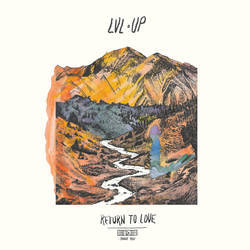
Skater slackboard hunk-punks from Brooklyn, Philadelphia pull through again with their crooked take on post-2007’s Smashing Pumpkins meets the coked out vibes of the “what-if-Pavement-were-from-the-70s” reunion revival of yesteryear, servin’ up a dash of what’s better known as This side of singer Greg Ruthking’s jizzed out stoner fantasy mind.” Pain from the LVL UP album Return to Love (release date: September 23rd 2016)

LVL UP’s excellent previous album Hoodwink’d was released through Double Double Whammy and Exploding in sounds and now the band have hopped, skipped and jumped over to Sub Pop in what seems to be an attempt to release as many records on as many great labels as possible. This is indeed a great record right from the off. Opening track ‘Hidden Driver’ not so much makes a nod to Neutral Milk Hotel but actually sounds like it could be a cover version and I’m not complaining. The whole album just sounds gorgeous, like you’d want your most reliable, cheerful best mate to sound if they were a record. At the midway point “Pain” encapsulates all that is great about this band with its mix of gentle strumming, melting melodies, bounce and crunching guitars. Return to Love is arguably good old American indie rock by numbers but hey, those are some pretty perfect numbers.