Pink Floyd have dug deep into their vaults for The Early Years 1965-1972, a massive upcoming box set that unearths audio and video from their earliest days with frontman Syd Barrett through right before their commercial breakthrough with Dark Side of the Moon. One of the many interesting eras documented in the box set is the period directly after they parted ways with Barrett, around when they recorded the soundtrack to the art-house flick More.
A new music video for More’s slow-building, psychedelic cut “Green Is the Colour” is premiering above. The live footage comes from a concert the band performed in Saint-Tropez, France, at the Pop Deux Festival on August 8th, 1970; the video component of the box set contains more songs from the festival. As with the “GrantchesterMeadows” video Pink Floyd released this summer, Hipgnosis’ Aubrey Powell served as creative director on the “Green” video and Nick Edwards shot the new footage interspersed throughout.
The More album was Pink Floyd’s follow up to A Saucerful of Secrets, the LP the group made as Barrett was leaving and David Gilmour was joining the band , and it showed that they could move on without their founding frontman. The band performed songs from More on tour in 1969 as part of two suites – The Man and The Journey – for which they retitled “Green Is the Colour” as “The Beginning” when it was played as the opening track of the latter piece. Even after they moved on from the suites, they kept the tune in their set lists through 1971.
The creative process behind scoring More was unique for the band. “[More filmmaker Barbet Schroeder] didn’t want a soundtrack to go behind the music,” Roger Waters once said, according to author Mark Blake’s band bio Comfortably Numb. “He wanted it literally. So if the radio was switched on in the car for example, he wanted something to come out of the car. He wanted it to relate to exactly what was happening in the movie. I was sitting at the side of the studio writing lyrics while we were putting down the backing tracks. It was just a question of writing eight or nine instrumentals.”
“Roger was the big creative force,” Schroeder said. “I remember this incredibly hectic two weeks. The sound engineer couldn’t believe the speed and creativity of the enterprise.”
The Early Years contains 27 discs, spanning CDs, DVDs, Blu-rays and seven-inch vinyl, grouped by year. It includes several renditions of “Green Is the Colour” as well as the whole More film and reproductions of memorabilia from around the time. The group has also made a pared-down, two-disc version,The Early Years 1967 – 1972: Cre/ation. Both will come out on November 11th.
Long-time favourites Deap Vally have just given us a camp-tastic video for new track ‘Little Baby Beauty Queen’. It features heavy plastic ornaments, a touch fo sparkle and a contestant form Ru-Pauls Drag Race.
The duo, comprised of Lindsey Troy and Julie Edwards also have a starring role in the clip alongside TrixieMattel (the aforementioned contestant) in the mystery plot directed by Darren Stein. The track itself is vintage Deap Vally. A heavy explosion of rock and roll with a double dose of rhythm.
It pounds, it thrashes, it has a drag queen co-star. Little Baby Beauty Queen”” is the brand new track from DeapVally’s new album “Femejism”, out now
“Psychic Tears“, the new album from Brooklyn artist Sam Kogon, does more in its opening one minute and forty-five seconds than most albums you’ll happen upon this year. Said track, the warped instrumental paves the way for the rest of his brilliant new record, instantly setting the tone for all that follows, framing the record with a psychedelic swirl of colours and patterns, dragging you deep inside Sam Kogon’s world before you’re even had a chance to examine your surroundings.
Describing the record as a “painstakingly detailed work of modern-retro guitar pop” barely even scratches the surface of what’s found within, and, indeed, it’s often difficult to acutely described what’s going, given the dizzying effect that a number of these tracks induce. There are Beatles comparisons that will inevitably crop up, and lines can certainly be drawn towards the work of The Shins and others of such ilk, however “Psychic Tears” is delivered with such adulterated passion.
An altogether complete work, the tracks here veer between effervescent baroque styled pop and the more withdrawn moments; a sugar-sweet, heartfelt duet with Frankie Cosmos providing one of the album’s more restrained moments and sits as one of its most endearing numbers. Elsewhere, on tracks such as “I’m Letting Go” and “TheWay To Talk To Boys”, the whole thing leaps with such abandon.
A sublime patchwork of influence, “Psychic Tears” is a dynamic and exquisitely-produced trip through Kogon’s soulful, endlessly inventive mind – and it might well provide one of 2016’s most bold excursions. The whole thing is released via Beyond Beyond Is Beyond Records.
Pinegrove began in January 2010 with the release of their first EP titled Mixtape One. The members had met and bonded through “Terry’s Serendipity Cafe”, a monthly music show planned by Montclair students nights in New Jersey.Pinegrove is the Brooklyn based project of Nandi Plunkett, Evan Hall, and brothers Zack and NickLevine. The latter three of the group all grew up in Montclair, New Jersey, but it wasn’t until Hall met Plunkett at Kenyon College that the music of Pinegrove began to develop.
After relocating back to Montclair and then on to Brooklyn the group created Meridian, their debut album. They released their second EP in July 2013 titled &. In June of 2014, Pinegrove released their third EP, titled Mixtape Two.Pinegrove has created a sound all their own, highlighted by syncopated guitar lines, driving percussion, and delectable harmonies from Plunkett and Hall. Take a listen to “The Metronome” below and make sure to pick up your copy of Meridian through the groups Bandcamp page. In early 2015, Pinegrove released a compilation cassette titled Everything So Far. In October 2015, Pinegrove signed to Run for Cover Records. After signing to the label, they re-issued their compilation cassette, adding two new songs called “New Friends” and “Angelina”.
It’s been a decade since Adam Torres released his debut album, Nostra Nova, which was reissued to great acclaim in 2015. Recently signed to Fat Possum Records, the Austin–Texas dwelling songwriter known for poetic lyrics and beautiful melodies just released a new album, Pearls to Swine. It’s very exciting to see a renewal of the traditional singer-songwriter movement. Adam Torres is just one of many Americana/roots solo musicians who have popped up over the past few years, having released his debut album in 2006 when he was just 20 years old. Pearls To Swine, is a sizzler of a record, one which I hope will likely catapult Adam Torres into a much greater spotlight. Torres’ Fat Possum debut is full of natural soundscapes and elaborate imagery that brilliantly twinkles throughout this piece of art.
From the upcoming album, Pearls To Swine, out September 9th via Fat Possum Records
An intuitively smart and fearlessly generous record – this is an artist in complete command of their craft at the top of their game and is already a contender for album of the year. After 2014’s stunning Burn Your Fire for No Witness which dramatically raised her profile, Angel Olsen perhaps felt pressure to make a big statement the next time out. My Woman finds her rising up to the challenge, maintaining a harrowing intensity in full-band rockers and solitary confessionals. Olsen is a brilliant songwriter and an even better vocalist, who can go from stern to tender to deranged, and back again, in a single verse. In the beginning of “My Woman”, Olsen mostly pursues love with wild-eyed fervor, whereas the closing songs disconsolately consider its ruins. Yet, the relentless heat of MyWoman can be exhausting over the course of the 10 searing tracks—the addition of a throwaway would give a weary listener time to regroup. But Angel Olsen’s fearless and eloquent embrace of raw emotions in all their messy splendor ultimately feels oddly uplifting, the way it always does when you witness a gifted artist at her best.
Angel Olsen – “Sister” from the album ‘MY WOMAN’ released September 2nd, 2016 on Jagjaguwar Records
Almost 10 years since they released their self-titled debut on Beggars Banquet, The Early Years returned on September 23rd with a brand new album called, simply, ‘II’.
It was recorded in their home studio in rural Cheshire before being mixed in Atlanta, Georgia by Jason Kingsland (Deerhunter) It’s a record we have been trying to encourage for the best part of a decade, and it’s well worth the wait. It’s stunning; the sound of a band who have matured and relaxed into their playing, created without any external pressures or expectations. It is also more relevant now than ever, despite their long absence; it towers above the legions of kraut-psych bands who came along in their wake with the sheer scale of its scope and vision.
Opener ‘Nocturne’ is a ferocious collision of man and machine: guitars sounding like Will Sergeant has moved to Neil Young’s farm, Roland TB-303s squelching away and the wild-eyed energy of Julian Cope circa ‘Fried’. Cope and the Bunnymen are reference points throughout, but it also takes in the elegiac New Order of ‘Fluxus’, the Dean Wareham duelling Tom Verlaine solos of ‘Out Of Signal’, the Spiritualized lullaby of ‘Hush’, and the Harmonia-meets-pre-definite-article-Verve of album closer ‘Memory Case’.
New song from The Early Years‘ second album, ‘II’, released on September 23rd, 2016
Following the long-awaited release of The Early Years’ new album ‘II’ last week, we are excited to reveal that we have licensed their self-titled debut album for a special 10th anniversary vinyl reissue.
‘The Early Years’ will be released on November 11th as a limited-edition pressing of just 300 copies on transparent orange wax. It’s a brand new vinyl cut by Noel Summerville, who has previously worked on a number of My Bloody Valentine and Warp archive reissues.
Initial orders from the Sonic Cathedral Shop will come with a bonus CD replica of the band’s first demo, which they sent to us in 2005 and contains early versions of ‘All Ones And Zeros’, ‘Things’ and ‘High Times And Low Lives’.
‘The Early Years’ was originally released on Beggars Banquet on September 25th, 2006 and includes the singles ‘All Ones And Zeros’ and ‘So Far Gone’. It also features the live staple ‘Simple Solution’, which closed the band’s incendiary set at Liverpool International Festival Of Psychedelia .On its release, it received glowing reviews from the likes of NME, Uncut, The Fly (RIP), The Independent (RIP) and the standard mid-noughties ,we think it’s an underrated classic that will appeal to fans of ‘Sowiesoso’ and Spiritualized alike. It also comes with the seal of approval of Brian Eno, The Horrors and Damo Suzuki, among others,
Hand Habits is the project of guitarist and singer-songwriter Meg Duffy. She’s spent the last two years touring and recording with Kevin Morby and Seattle’sMega Bog, but now she’s stepping out on her own, with her debut full-length Wildly Idle (Humble Before The Void) set to arrive on Woodsist Records early next year.
Tracked in a living room in her upstate New York hometown and finished in her current home in Los Angeles, the LP’s 13 tracks exude a deep, comforting warmth, the kind of warmth that seeps right into your bones. “Wildly Idle feels incredibly intimate, like a secret between her and the listener,” as Kevin Morby writes in the press release that accompanies the album announcement. “It hits soft, like warm water, and before you know it it is all around you — a bath, and Meg’s whisper has made its way inside you.”
That’s the kind of florid description that sounds like empty hyperbole, but one listen to first single “All The While” is more than enough to prove it. A wistful reverie of meandering guitar that ebbs and flows under Duffy’s unaffected vocals, it manages the neat trick of rocking out without ever breaking a sweat,
Anyone hoping the combination of one-time Akron residents Dan Auerbach and Chrissy Hynde collaborating on the first Pretenders album in eight years that would result in a raw, rustbelt Black Keys meets Iggy Pop explosion, may be disappointed. That doesn’t make this ballad heavy set substandard, but it does seem like a missed opportunity.
First off, this is “the Pretenders” in name only; other than Hynde, no one on it has been or probably will be a Pretender. Even though the Nashville backing musicians are talented veterans (two on loan from Auerbach’s Arcs side project) and there are plenty of echoes of what Hynde created with the Pretenders, releasing the project under that name, as opposed to the solo album it was initially intended as, is somewhat misleading.
But for those who feel that anything Hynde records is going to have the Pretenders stamp, at least philosophically, this dozen song album finds her in fine, typically swaggering form. The few rockers such as the opening title track where she recounts the pleasures of being “Alone” with her usual brass-in-pocket sneer, along with the pounding “Mystery Achievement” drums of “Gotta Wait” and the bluesy “Chord Lord” make it clear Hynde hasn’t lost her sassy strut.
Still, it’s the ballads that dominate. While songs such as the lovely acoustic finger-picked “Blue Eyed Sky,” the heartfelt and reflective “The Man You Are” and the bittersweet piano lilt of “Death is Not Enough” with its surf twang guitar are beautifully crafted and sung with Hynde’s husky, immediately distinctive purr, perhaps a few more taut, tightrope walking, tough talking rockers would solidify the Auerbach connection. And the less said about the closing single “Holy Commotion” with its commercial leaning synths and chilly, overly stilted playing, the better.
Thankfully, the quality of “Roadie Man,” about … well, roadies, with its soulful and insistent groove, the dreamy “Let’s Get Lost” (perhaps the closest Hynde gets to a full throated love song here), and the pissed off, flinty “I Hate Myself” (“I hate my requisite phony destruction”) with its dark ’60s vibe that, as its title implies, takes a hard look in the mirror as the singer repeats the title about two dozen times, show Hynde has maintained her quality control. These songs glow and grow on you and, with vocals that were recorded in a quick 48 hours, maintain the edge the best Pretenders music always displayed.
Alone won’t go down as a great Pretenders disc up there with Learning to Crawl or the magnificent debut, but it’s no embarrassment either. Despite the lack of rockers, Hynde hasn’t mellowed even if her music has. OK, so there isn’t a cohesive Pretenders band anymore; over 35 years into her career, Chrisse Hynde remains a powerful and iconic presence. We should be thankful she’s still at it and recording music as impressive and distinctive as Alone.
Matthew Sweet had been kicking around for almost a decade before he finally got his break with 1991’s album “Girlfriend”. From the start, he was attracted to the poppy side of college rock. It just took him a few albums to refine the perfect sound before he laid down on his breakthrough record.
Before Girlfriend or, more specifically, its title track made Sweet a modern-rock radio regular, he was part of the exploding Athens scene of the early ’80s as a member of Oh-OK, which included Micheal Stipe‘s sister Lynda. By the end of the decade he was a solo artist with two albums to his name. But it’s Girlfriend — which came out on October. 22nd, 1991 that finally clicked with music fans.
By ’90s industry standards, Matthew Sweet’s “Girlfriend” performed well. It peaked at number one on the Heatseekers chart in 1992, The title track made it to number four of the Modern Rock chart, while the album’s sublime lead track, “Divine Intervention,” was a number 23 Modern Rock hit—and, quite frankly, deserved better.
We’re talking about a quirky classic monumental power-pop record that almost didn’t find its way to listeners. Prior to Girlfriend,Sweet was less than an unknown commodity, he was a liability, with a pair of glossy, nondescript late-’80s albums that tanked commercially and critically. The vibe surrounding Sweet was so toxic that ZooEntertainment, the now-defunct BMG affiliate that finally took a chance on Girlfriend, pretty much spun the thing as Sweet’s debut. His band made up of Lou Reed’s sidemen Richard Quine and Fred Maher, along with a couple of New York City punk vets, Television’s Richard Lloyd and Richard Hell and the Voidoid’s IvanJulian provide the backbone of the record.
And for good reason: It sounds like nothing that came before—from Sweet or anyone else. Its edgy, honest beauty set the tone for a string of great albums, including Girlfriend’s underrated 1993 follow-up, Altered Beast, 1995’s 100% Fun and 1999’s Phil Spector-inspired masterpiece, In Reverse.
In the months prior to Girlfriend’s October 1991 release, a devoted cadre of industry people embraced the album—dubiously titled Nothing Lasts at the time making it their personal mission to ensure its survival. One of those fans was veteran music scribe Bud Scoppa, who was working A&R for Zoo when a cassette arrived in the mail from his New York counterpart, Scott Byron. Scoppa’s stellar liner notes for the 2006 Girlfriend Legacy reissue are required reading for any Sweet fan. They’re so good, in fact, that we found no point in reinventing the wheel here.
Legacy Recordings just released a vinyl edition of Goodfriend (Another Take On “Girlfriend”), featuring home demos, session outtakes and live performances. Think of it as an unruly companion piece to the original, which was reissued on 180-gram vinyl at its intended 12-song length in 2014.
Describing Girlfriend as one of the best power-pop LPs ever may be accurate, but it’s also selling the album short. After all, what purist in the form would allow the late Robert Quine to run roughshod over his pristine melodies and multipart harmonies—and, in the process, deliver some of the Richard Hell And The Voidoids guitarist’s most wrenchingly inspired work?
Matthew Sweet: I got married when I was really young—19—and we were married for six years. By 1989, we’d moved out to Princeton, N.J., from New York City, so we could rent a whole house. It was awesome for me because I could do music without bothering anyone. The house was built in 1780, right on the edge of the Princeton Battlefield. I’d ride my bike in the backwoods all through there. But my wife at the time was restless. She felt like there was something she wanted to do. So she got some money from her dad and moved back to New York—got an apartment there. We hadn’t really broken up, exactly, although we weren’t getting along. It wasn’t, like, a positive thing.
Ric Menck (drums):Matthew and I toured to promote his previous album, Earth—just the two of us in his Honda, opening for ’Til Tuesday. We listened every day to my cassette of Full Moon Fever, and we loved how unadorned by technology it sounded.
Sweet: I set up drums in the main living room, and I started playing them on my demos. I sent those to (manager) Russell Carter, and he said, “It reminds me of Crazy Horse and Neil Young.” And I said, “I know, my voice is really high and weird.” And he’s like, “No, the vibe of it.” He sent me a bunch of Crazy Horse stuff, and I was like, “Fuck, now I understand what he’s saying.”
Menck:Matthew was recording demos at his house, and I visited him at several points during that time. He was really getting into Neil Young, and he had an abiding love for the Beatles especially Abbey Road. As we drove around Princeton in his little Honda station wagon, he told me he wanted to make an album that sounded really organic.
Lloyd Cole (guitar):Matthew would write very quickly—sometimes two or three songs a day, where I would take a week. He’s never been the most disciplined guy in that respect, and that’s kind of endearing.
Sweet: Having my marriage end was something I tried so hard not to do. We tried to make it work; we went into marriage counseling. But we were like kids. In the end, it was me who said I wanted to get divorced, even though she was the one who left. By that point, she was sort of desperate to stay together. All my life, I thought I was a good guy. But when you have to be the one who says it’s over, I had to accept that there was no way to be the good guy. It was a thing where I went, “Wow, I’m really tainted.” You know, original sin or something—like, “Now I get it: I’m good and bad, and there will be times in my life when the right thing to do isn’t being good.”
Cole: My main claim to fame is on the song “Girlfriend.” Matthew kept talking about “good friend.” He’d just been recently separated from his wife, and I don’t think he wanted to address the issue straight-on and say “girlfriend.” And I said, “For God’s sake, just call it ‘Girlfriend.’”
Sweet: At the time, I tried to explain that none of it was exactly autobiographical—that everything could be looked at in a couple different ways. “You Don’t Love Me” might be a song my wife was singing to me—you know what I mean? But I felt those feelings, and so I was working that out in a song. Whereas something like “I’ve Been Waiting” was really like a brand-new, untouched fantasy of how it could be great to fall in love or whatever.
Fred Maher (producer, drums, guitar):Matthew originally wanted to record at his house in Princeton, and we planned it out. But he got cold feet a few months before recording was to start; he was nervous about upsetting neighbors. I suggested Axis Studios in New York City, since it would be as cramped and difficult a place to make a rock record as his small house.
Sweet: Fred and I had met on my first record (Inside) and worked a lot together on the second one. We were already buddies for a long time, so it was kind of coming together. Even (Television guitarist) Richard (Lloyd) and Bob (Quine) played with me before Girlfriend. I met Richard during my time with the Golden Palominos, when he filled in for Jody Harris. There was no way to learn the whole set, and we had to do these rehearsals with him, and I just felt so bad because it was so impossible. But Richard was really nice to me and told me he liked my songs. So we started to become friendly.
Menck: Prior to making the album, Matthew, Richard and I went through a few of the songs at a rehearsal space near the studio. We warmed up by playing Television’s “See No Evil,” and Richard yelled at me when I acted too much like a geeky fan.
Cole: The rough demos were nowhere near as extreme as what’s on the album. Jim Rondinelli deserves a lot of credit for that. He and Matthew gelled really well.
Jim Rondinelli (engineer): The sound of Girlfriend really goes back to lengthy conversations I had with Matthew. We talked about it for months before we actually did anything. When I heard Earth, I loved the songs, but there was a dissonance between the slickness and the precision of the production and Matthew’s voice.
Maher:Matthew didn’t want to use any of the technology available at the time. So we decided we’d make the entire record on 24-track tape. Parts were mercilessly bounced together, with no way back.
Rondinelli: I worked with Fred and Matthew to establish an entirely different framework for his voice, and that meant not drowning him in reverb or studio processing, not burying his voice but making it loud and clear in the front of the track, framing his voice with his primary weapon for attack, the electric guitars, and making sure those guitars were raw power and unadorned. I mean, good God, we had Richard Lloyd and Robert Quine, and Matthew’s rhythm-guitar playing is so incredibly concise.
Menck: My drum tracks were completed in one or two sessions. Matthew played rhythm guitar, and I played along. Very simple and straightforward, which was a change for Matthew, whose previous album was made with programmed drums. It took one or two takes to complete each track.
Rondinelli: We established rules at the start: It would be all live instruments; it would be all Höfner Beatle bass. The Höfner has this big, heavy bottom that stays nicely out of the way of the guitars, so we could really compartmentalize and separate the instruments. That left Matthew’s voice and the guitars front and center. By having the drums loud but dry, there’s always some ambience in the room where the music is being played. We didn’t want to soften the impact of Fred and Ric’s drumming by washing it in reverb. Really, we wanted to take everything that was done on the first record and do exactly the opposite.
Menck: Axis was in a high-rise building surrounded by other highrises. At one point, I looked out the window to see a very pretty woman undressing. She was the inspiration behind my playing on “Divine Intervention.” The drum track for that was definitely completed in one take.
Sweet: People see what they want in “Divine Intervention.” If they’re religious, they might think, “Awesome. That’s when God comes.” But I was saying that he’s not. I was coming out as an atheist, in a way. Christianity has great things about it. Jesus is totally cool, and I live by those morals. I don’t do anything that’s really un-Christian—and most atheists probably don’t. We put the whole album in [the precursor to] ProTools, which was so novel back then. The intro to “Divine Intervention” was something we turned backward—then you hear Richard playing a lick.
Rondinelli: We’d complete the basic rhythm tracks for the album, and Matthew would take a long weekend and go back to Princeton. He’d come back with these unbelievably layered and complex guitar and vocal arrangements. Then he’d sing additional vocals, and we’d add the guitar tracks. It was really a fun way to work.
Sweet: It’s a typical studio thing, but we made comps of our favorite guitar bits. So Richard and Bob didn’t have to do anything but play what they felt—and that’s why it worked so great.
Rondinelli: It’s funny. There’s only one spot on the album where two people are actually playing together in real time, and that’s Matthew and Lloyd on “Thought I Knew You.” Fred, wisely, wanted to pull the swing section out of the demo version of “Girlfriend,” which gave it a life on radio it probably wouldn’t have had otherwise.
Cole:Matthew was obsessed with Winona Ryder—especially in that Heathers film. I said to him, “You’re singing a song about Winona Ryder, and ‘Winona’ is a great title for a song—so just do it.”
Rondinelli: My favorite song to record was “Winona,” because there’s so much Greg Leisz and Quine on that song. Greg is something else. He does an incredible lap-steel part that’s an answer line to the vocals in “Girlfriend.”
Sweet: I went to see Jules Shear play. We were outside the venue afterward, and he introduced me to Greg. They were in a group together called the Funky Kings. I’m like, “Hey, so do you know the Sneaky Pete (Kleinow) kind of steel playing?” And he was like, “I love all that stuff.” So I asked him to play on the record. It was that simple.
Rondinelli: The first time Richard came in, his tracks were so exciting that I remember popping out of my chair when I heard them. With Quine, we’d have him play top to bottom on a song five times, and we’d go back afterward and compose a highlights track. I don’t think there’s one spot on the finished album where Bob played a continuous track. The most amazing thing is that Dennis Taylor, the guitarist who plays with Matthew now, learned all this stuff that no human being had ever played before.
Menck: An abiding memory of the sessions was hanging out with Bob Quine in the lounge. He was a passionate music fan who loved to talk about songs and records. Bob could be a little cantankerous, but when he started talking about music, he really softened up. I’ll forever treasure our discussion about the Velvet Underground. He loved them so much.
Rondinelli:Bob would get something going in the first couple of takes, and then he’d get really down on himself and go through this incredible self-loathing. On the fourth or fifth take, all this additional fire and anger would come out, and he’d take it out on his instrument. Then he’d be emotionally and physically exhausted.
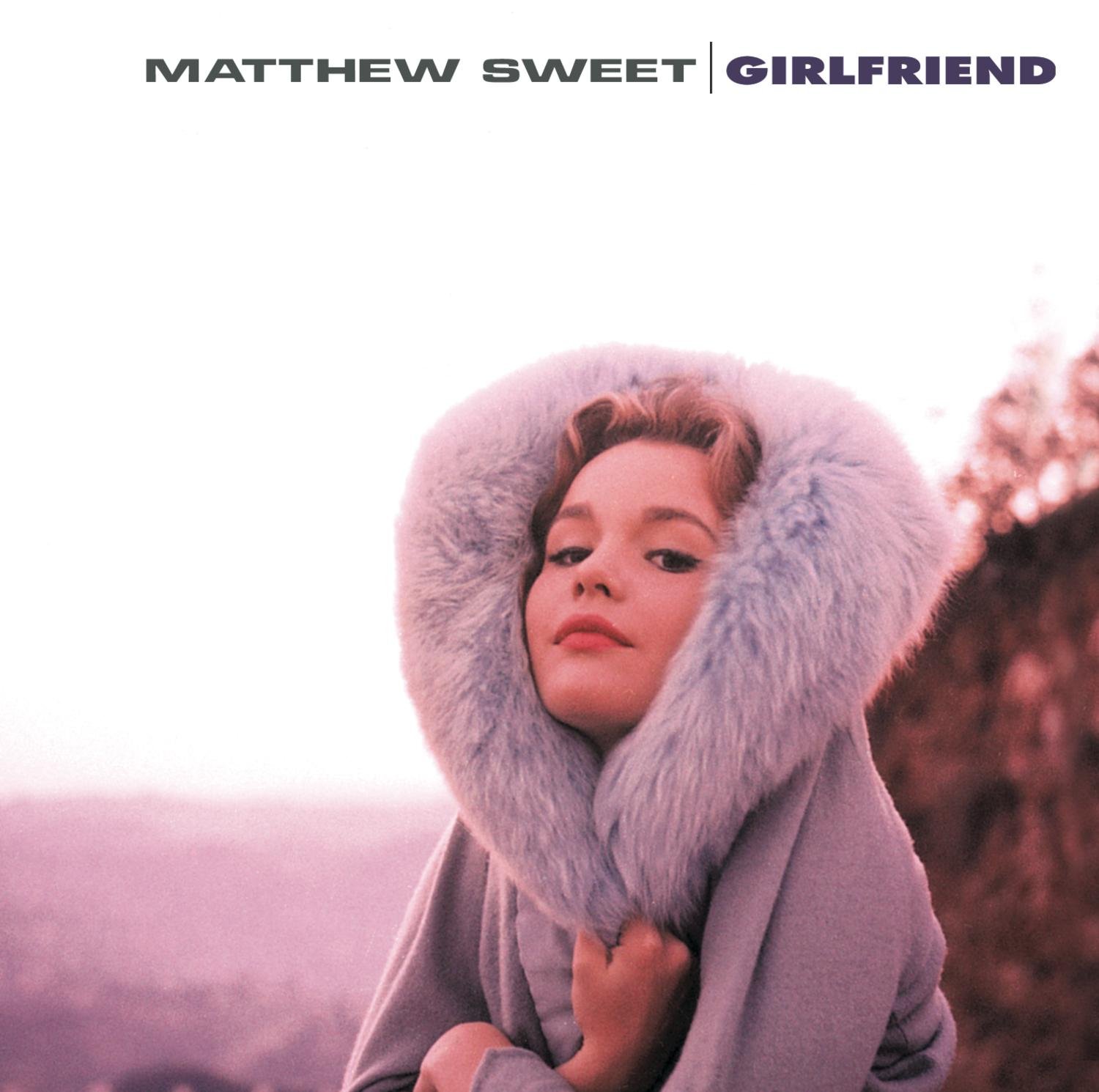
Sweet: The album was originally called Nothing Lasts, and we had to go through hoops to get Tuesday Weld to let us use her photo on the cover. Then somebody from the legal department called her and asked, “Is it OK that it’s called Nothing Lasts?” Well, it wasn’t.
Cole: A terrible name for an album. So he changed it to Girlfriend.
Rondinelli: The sound of the needle at the end of the record—that groove in the middle—was done by AlanFriedman, a programmer who was a fixture at Axis Studios.
Sweet: I just kept adding extra songs, because I was having so much fun in the studio, and it was just such a joy to hear what we made it sound like by adding everybody’s thing. I kept cramming them in, and I was so enamored by what we were doing that I wished I could put it all in there. I’m pretty sure it was me who came up with the idea of putting the three extra tracks all the way out. Then, if you accidentally left your CD player on and you were playing it really loud, they’d come on and be really loud. It makes me laugh now because that supposes a lot of things. But I figured if that happens a few times, it’s awesome. So we put in this long gap after the first 12 songs. I probably wanted to put three minutes, but I was talked down to something more like 40 seconds.
Rondinelli: We made Girlfriend for A&M, and they dropped it. God knows, every label in New York heard that album. We were all working that album, and Karen Glauber at HITS magazine was a huge supporter.
Karen Glauber (president of HITS magazine): I met Matthew when he was in the Athens, Ga., band Buzz OfDelight and worked closely with him as the director of new music marketing at A&M, which was the label for his second solo album, Earth. I left A&M in 1990, and I was absolutely insistent that (Zoo founder) Lou Maglia sign him, the label that employed many of my friends—and fellow avid Matthew fans.
Scott Byron (former East Coast A&R director for Zoo Entertainment):Zoo was a new company at the time and didn’t have a set process for getting things signed. The first thing I had to do was convince the head of A&R that it was a worthwhile project. Then I had to convince Lou. We had a verbal agreement, and Lou just sort of pulled the plug one day. I had to call Matthew and say, “It looks like it’s not going to happen.” Then, Bud Scoppa was cranking the album in his office one day, and Lou walked in and said, “What’s that you’re listening to?” And Bud said, “Matthew Sweet. You nixed it a few weeks ago.” Then Lou went back to his office and changed his mind.
Sweet: At the time, “Girlfriend” wasn’t an important song to me. It was just kind of a ditty. But if you were an artist at that time trying to sign to a label, they always used the track that’s nothing like you as the single. It was actually my manager, Russell, who became obsessed that it could be on rock radio. And he really trumpeted that all through the thing.
Rondinelli: I don’t want to downplay the record, because it’s really a testament to Matthew’s genius. But there was a bit of lucky timing to it, as well. Every radio station that programmed Nevermind had to very quickly find songs with loud guitars that they could play in its wake.
Maher:Girlfriend has aged well because we didn’t allow ourselves to use any modern recording techniques. We stuck to our guns. Ultimately—and possibly most importantly—it was made at a time when the record company let us do our thing. Matthew had a vision, and I defended it—brutally at times.
Glauber:Girlfriend is a perfect album. The songwriting and musicianship is unparalleled—most notably “Girlfriend,”“I’ve Been Waiting” and, my absolute favorite, “You Don’t Love Me.” The contrast of Matthew’s voice and the frenetic, angular playing of the guitarists elevated the songs to another dimension. Fred and Matthew’s production combines the energy of the late-’70s CBGB scene with the gorgeous harmonies of the Beach Boys and the Byrds.
Sweet: When I’m doing music, it’s kind of like throwing pottery on the wheel and just losing my mind. This thing comes from somewhere else. It’s almost like it’s not from me, but I know what to do once it starts coming. But what’s cool is that somehow I had an instinct on how to put those songs together, where it seemed to have worked so well.
People will ask me if I’m sick of playing the Girlfriend stuff, and I’ll be like, “No, I’m just happy someone likes something I did.” It’s a gift to me that it means so much to people—that it wears so well for them.
Rondinelli: It’s one of the greatest divorce records ever made.