Archive for the ‘CLASSIC ALBUMS’ Category

unnamed 21 e1504217047335 Top 50 Albums of 2017

When David Bowie gives you the seal of approval, you can turn a permanent conclusion into a five-year hiatus and a stellar return album. James Murphy and co. ended all the rumors once and for all with American Dream and did so with a bang. The album feels incredibly present, addressing the pervasive existential loneliness and concern while bringing the family back together.

American Dream retains all of LCD Soundsystem’s ability to fill the dance floor and bring tears to your eyes. There were plenty of fears that they’d lose the goodwill earned by a public exit, but with an honest, powerful record like this, LCD only further cemented their spot .

Post-hiatus records tend to be mediocre attempts to rejuvenate the enthusiasm of the past. Fans probably applied this to James Murphy’s band, wondering how American Dream, the first LCD Soundsystem record in seven years, could live up to 2007’s Sound of Silver or 2010’s This Is Happening. Thankfully, American Dream is a beautiful work of art about aging, regret and an arduous search for meaning, an expansive record that explores a variety of sounds and themes, but it never feels confused or lost. As Murphy’s vocals dreamily weave their way into the intro of opening track “Oh Baby,” you immediately know that this is a different LCD Soundsystem. The frantic energy of hits such as “Get Innocuous!” and “Movement” is gone, but not necessarily missing. Sonically, American Dream is more spacious than its predecessors. This dreamscape suits a record that’s aware of beauty in life, but invariably realizes that what it once thought was beautiful is merely an empty void.

Essential Tracks: “oh baby”, “call the police”, and “i used to”

Yes, it sounds like a U2 song. Yes, they quit and came back in less time than many artists take just to write and record a new record , James Murphy complained about never playing on SNL..  James Murphy asked his fans to give him a number one record. But who really cares when the song is this good? LCD are the rare band that deals in singles and albums. Their long players play well all the way through and their singles are mountain peaks across the horizon of music.

If you wondered if their brief but well-discussed exit robbed them of their excellence – “Call the Police” was the ideal defeat of that worry. The propulsive song never relents from the click track at the top through Mahoney’s constantly locked groove, never straying from perpetual forward motion. The pieces continue to stack until you are in an F-Zero straight race for the goal. The understated lower case titles perfectly represent this song that is so much more compelling than it acts like it is.

It Kindly Stopped for Me artwork

Sorority Noise’s 2015 album “Joy, Departed” culminated in an awakening. On “Using,” songwriter Cameron Boucher saves the album’s biggest, grungiest riff for an explosive declaration: “I stopped wishing I was dead!” The sentiment is played mostly for celebration, and Boucher shouts it with palpable joy. But it’s also a correction, an indictment of emo’s long history of glorifying depressive thinking, and an implied apology for his complicity in that. In interviews, Boucher explained “Using” was the first song he’d ever written with a positive takeaway. Despite his struggles with mental illness, he’d decided to make the best of things. “I started loving again,” he sang.

How cruel it is, then, that just as Boucher was learning to appreciate his own life, so many of the people close to him were giving up on theirs. Since recording Joy, Departed, Boucher lost some friends to suicide , Loss on that scale would upend anybody, but it’s especially derailing for an artist who’s had reason to fear he could meet the same fate. In all likelihood he’ll be working through his grief for albums to come, and that long process begins on the home-recorded It Kindly Stopped For Me EP, a four-song cycle narrated from the perspectives of both the departed and those left behind.

Boucher doesn’t just sound bereaved; he sounds downright shell-shocked. Singing like all the color has been drained from his face, he recites most of the EP in a sickly, half-inaudible mumble. If there are listeners who haven’t checked in on Sorority Noise since their debut LP Forgettable, released only two years ago, they won’t even recognize the band. Boucher’s purged every trace of pop-punk whimsy from his songs, trading crunchy riffs and shout-along tantrums for hushed pianos and closed-mic’ed drums tapped so lightly it’s as if they’re being gently blown on.

It Kindly Stopped is as intensely somber as its subject matter demands—maybe even more so, if that’s possible—and Boucher often seems to be processing these tragedies in real time. He captured the EP’s most disquieting track, the spoken-word interlude “Fource,” while he was literally wandering through the wilderness. “I think it might be okay, I’ll be okay,” Boucher mutters unconvincingly into his recorder while trying to catch his breath. “Today was an off day; I’ve had a few.” If he wasn’t actually drunk when he recorded it, he’s a mighty convincing actor. And while the rest of the EP is more deliberate than that field recording, it’s nearly as lonesome.

http://

Sonics aside, what truly distinguishes this recent iteration of Sorority Noise is Boucher’s newfound sense of responsibility. In concert, he prefaces “Using” with a heartfelt introduction about mental illness and the value of life. He includes a similar plea in It Kindly Stopped For Me’s liner notes. “If you do have the opportunity to listen to this record please know that suicide is not the answer,” he writes. “Please know how important you are and how much your life matters to your family, friends, and most importantly yourself.” Yet despite his convictions, he never admonishes the dead in these songs. He sympathizes with them too much for that. On “Either Way,” he casts life as a coin toss, drawing a parallel between a friend who saw “a chance to leave a life you couldn’t lead” and his own chance “to rid myself of my toxic ways,” a chance he could have just as easily missed. That’s the lone consolation on an otherwise disheartening EP, and it’s not an insignificant one: Many of his friends are gone, but Boucher is still here and he’s still thankful for that.

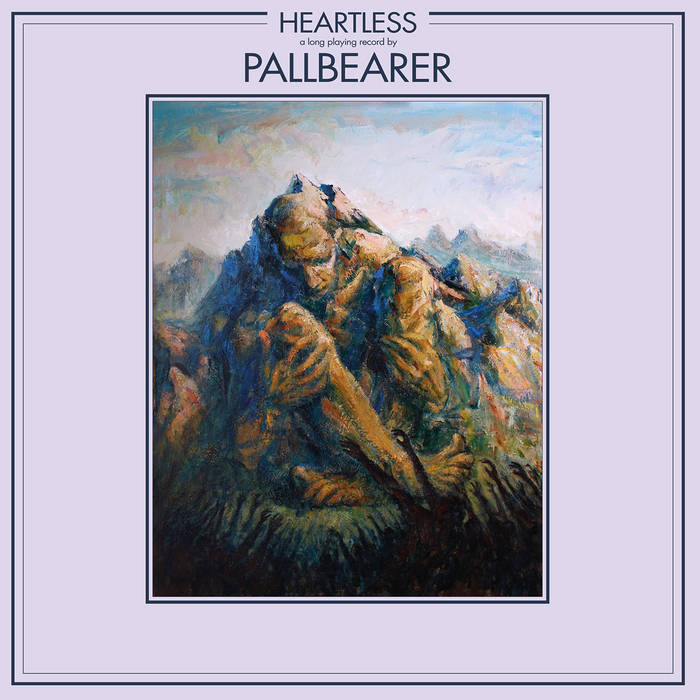
Pallbearer are nominally a heavy metal band, but with Heartless, they made an album too big for the confines of any one genre. Heartless draws influence from a vast library of giants — Pink Floyd, Neurosis, Neil Young, Metallica, Smashing Pumpkins, Santana, Mercyful Fate, and on and on and on — but it doesn’t translate or update those texts. It consumes them, ruminates on them, and finds inspiration in them, ultimately manifesting in a work of art worthy of placement in the same vaunted collection. Frontman Brett Campbell’s vocal performance evinces the flexibility, dexterity, power, confidence, and acumen of Mike Patton, but with none of Patton’s snideness or self-satisfaction. Campbell delivers every syllable with absolute sincerity, vulnerability, and commitment.

http://

Alvvays-Antisocialites-1511897643

On “Antisocialites”, Alvvays haven’t lost their knack for writing concise indie pop songs that rival the best of Camera Obscura or Belle & Sebastian. By adding a warm synth sheen for their sophomore release, the Toronto-based quintet manage to make their jangly guitars seem even lusher. They’ve achieved what every band strives for on a sophomore album but most fail to do—namely, strike the middle ground between making the same record twice, and wanting to evolve and change their sound. By tweaking their songwriting ever so slightly, Alvvays one-up their 2014 breakthrough record. “Plimsoll Punks” plays like a fuller, more tightly wound “Next of Kin;” “Dreams Tonite” is a supercharged, groovier take on “Ones Who Love You.” Molly Rankin & co. have dissected every minute detail from their debut and figured out how to truly improve upon each part, one by one. Those small flourishes—a more pronounced synth line here, an unexpected key change there—don’t distract from what makes Alvvays great; they’ve only made the overall sound better.

Lomelda

If you were to ask Hannah Read what Lomelda means, you’d probably end up with some kind of non-answer and a new topic. It is a guarded secret reserved for those who really pry. It is a high school attempt at describing something vast and powerful yet uniquely quiet and complex. And it is ever-changing. Lomelda is about memory, intimacy, and the tragedies of distance. As a band, it has appeared in several forms over the years, but always, to Hannah, Lomelda has been about discovering friendship and connection. Close collaborators have become closer friends. And when you see Lomelda, when you hear it, it is apparent that Hannah cares deeply about the connection made with the people on stage, the connection with you.

Lomelda’s Thx is an album worthy of a road trip, which is perhaps one of the most enduring compliments you can give to a collection of songs. Hannah Read navigates the feeling of being in-between with a dexterity that doesn’t rely on easy tropes, and the inner thoughts that creep into her lyrics during moments of stasis probably sound a lot like your own. In Read’s universe, small actions lead to big revelations delivered in a whispering half-yodel. Her utterances are quiet enough to creep into your conscience and give you a boost of strength when you need it most

Hannah Read has written and performed as Lomelda for most of her musical life. The project has been her outlet from the slow, shaggy days in her east Texas hometown of Silsbee, through moves to Waco and Austin, and into her wandering present. Her music is textural and spacious. Her words are suggestive snapshots of loosely knitted observations, depicting quiet moments between friends and lovers and half-remembered celestial occurrences. In her songs, the memory of the past and glimpses of future stretch out on either side of you, and the present is unsteady and always shifting.

http://

No automatic alt text available.

The World’s Best American Band, this Kentucky group’s devilishly catchy second full-length, opens with the roar of an approving crowd. It is not a live album, and this sounds like a large audience packed into an amphitheater, the sort of venue White Reaper might be headlining in a more excellent world. The song that emerges is sheer self-affirming cock-rock (“Rally up and dress to kill / Lace your boots and crush your pills”), a motivational speech for greasy-haired dirtbags.

Hi howdy! It’s Tony here, wanting to thank all of you guys and gals that we’ve seen at these last few dates, which have been absolutely incredible! And one more hello to all those who we’ll be seeing soon when we’re back on the road with our boys in Spoon! .In the meantime though, check out this video of us playing “The World’s Best American Band” in front of a live audience at the historic and beautiful Metro in Chicago!

“The World’s Best American Band” is taken from White Reaper’s second full-length album, The World’s Best American Band

On the album, White Reaper manage to distill all the strut and swagger of Thin Lizzy’s “The Boys Are Back in Town” into a pithy, 10-song set. The production is a bit clearer and less sludgy than on 2015’s White Reaper Does It Again, and the songs mark the quartet’s most confident collection to date. Two of them (“The World’s Best American Band” and “Little Silver Cross”) even hurtle past the four-minute mark.

“Judy French” is taken from White Reaper’s second full-length album, The World’s Best American Band, out April 7, 2017.

Zola Jesus’ Okovi was forged from a depressive episode, the kind that forces you to reckon with your small place in this great, big universe and wonder whether or not your presence in it is needed. On the towering single “Siphon” Nika Roza Danilova wills a friend lost to suicide back to life, while “Remains” untangles the moments after someone dies over a skittering backbeat. That beat is impossibly heavy, as is all of the production on Okovi, and Danilova’s voice barrels forth with an unparalleled strength that dominates your brainspace and makes it near-impossible to do anything other than listen.

Zola Jesus signed to Sacred Bones in 2008. In the seven years that followed, we released eight albums together (three LPs, two EPs, two 7”s, a CD-R, and even a DVD). We discovered her via Myspace, which was the common A&R vehicle of the early- to mid-Aughts. Nika is the sole member of Zola Jesus. 

From ‘Okovi,’ out now on Sacred Bones Records.

stream cloud nothings life without sound album listen hear Top 50 Albums of 2017

Unlike most peers who refuse to outgrow the simplicity of their hooky riffage, Dylan Baldi’s songwriting has continued to bloom without softening a thing. New album “Life Without Sound” is every bit as revelatory as 2012’s more ambitious and abrasive release Attack on Memory, yet he’s flirting with arena-rock territory.

This is not to say the Ohio band doesn’t still love harsh guitar riffs and introspective lyrics, and on their latest single, “Enter Entirely,” Dylan Baldi reflects on what it’s like to watch your life pass you by. Instead of moving forward, Baldi finds himself frozen in time, isolated and contemplating what steps he can take to be the person he wants to be: “There’s someone I would like to be if I could be, but the path is frightening,” Baldi raspily sings. But he also admits to self-sabotaging along the way with “a bottle of wine,” and as the chorus hits, you can feel Baldi settle back into himself (“Moving on but I still feel it, you’re just a light in me now”). He surrounds his rumination with crashing guitars that confidently pay homage to Pavement.

That woozy, lonely, and bitter feeling at the end of every late-night walk home, when you realize there’s nowhere else in the world you’d rather be than yesterday. “Moving on but I still feel it/ You’re just a light in me now”

 Dylan Baldi puts things into perspective with another must-squeeze anthem that wraps our love-torn wounds with gauze and distortion. Once more, he throws his weight into repetition, bludgeoning our bruises until they’re blistered and screeching. This one hurts.

We make music in a way that makes us happy. We are writers, watchers, painters and listeners. We come together to bring our ideas into the light. MT. OSSA is our music and we are proud of it. People have called our music anything from surf rock and psych-pop, to dream disco and soul fuzz; we’re okay with that. We’re okay with presenting to the observer an opportunity to imagine and experience. Ever expanding, and limitless is who we are. Loving what we do is not hard. Color and light and shapes and terrestrial bodies are all things that inspire us, but our love for music is what drives us to be MT. OSSA

This is the best kept secret of Los Angeles. Even though they’re from Orange County as well, this is one of the best California albums ever conjured. Rich Thiesen is the brain. He and I have been working on a new project called KSMOG—the album is 88% done and should be out next year. This album simply lives on forever.”

http://

The band ,

Richard Theisen
Jordan Sabolick
Tony Tancredi
Adam Sabolick
John Wilson

Image may contain: one or more people and people standing

The New Pornographers have spent their career see-sawing between two sides of their collective musical personality, contrasting straightforward peppy, poppy records—Mass Romantic (2001), Electric Version (2003) and 2014’s Technicolor Brill Bruisers—with melodic, less accessible and at times gratuitously weird LPs (2005’s Twin Cinema, 2007’s Challengers and 2010’s Together). Their new album Whiteout Conditions breaks the tie, unmistakably throwing its lot in with the former group. It’s a fitting introduction to spring, a blast of synthesizers and harmony and aural smiles. In particular,  multi instrumentalist AC Newman’s knack for melodies is on full display: Every song on Whiteout Conditions invites head-bobbing or singing along, and the album’s success stems at least as much from his penchant for experimenting with arrangement and structure. If 2014’s Brill Bruises was the return to more straightforward, listener-friendly power pop after the self-conscious eccentricity of the last three albums, Whiteout Conditions keeps that celebration going in style.

Whiteout Conditions breaks the tie, unmistakably throwing its lot in with the former group. It’s a fitting introduction to spring, a blast of synthesizers and harmonies and aural smiles. While AC Newman’s knack for melodies is on full display here—every song invites head-bobbing or singing along—the album’s success stems at least as much from his penchant for experimenting with arrangement and structure. Verses flow into choruses with such little fanfare, it hardly seems fair to call them choruses. Instead, the songs come off as collages of uniformly important but musically distinct melodic lines