Archive for the ‘CLASSIC ALBUMS’ Category

Freedom

Amen Dunes (aka the project of New York-based Damon McMahon) will release his fifth album, Freedom, on 30 March via Sacred Bones Records.

Amen Dunes last released an album in 2014. The album was called Love .  The tune below is called “Miki Dora” . Here’s what McMahon has to say about the track.

“Miki Dora was arguably the most gifted and innovative surfer of his generation and the foremost opponent of surfing’s commercialization. He was also a lifelong criminal and retrograde: a true embodiment of the distorted male psyche. He was a living contradiction; both a symbol of free-living and inspiration, and of the false heroics American culture has always celebrated. With lyrics of regret and redemption at the end of one’s youth, the song is about Dora, and McMahon, but ultimately it is a reflection on all manifestations of mythical heroic maleness and its illusions.”

On the surface, Freedom is a reflection on growing up, childhood friends who ended up in prison or worse, male identity, McMahon’s father, and his mother, who was diagnosed with terminal cancer at the beginning of recording. The characters that populate the musical world of the album are a colourful mix of reality and fantasy. Each character portrait is a representation of McMahon, of masculinity, and of his past.The lead single  “Miki Dora”, and its accompanying video, which features 17-year old Boomer Feith with McMahon appearing as both the story’s narrator and its subject.

Of the track, McMahon says, “Miki Dora was arguably the most gifted and innovative surfer of his generation and the foremost opponent of surfing’s commercialization. He was also a lifelong criminal and retrograde: a true embodiment of the distorted male psyche. He was a living contradiction; both a symbol of free-living and inspiration, and of the false heroics American culture has always celebrated. With lyrics of regret and redemption at the end of one’s youth, the song is about Dora, and McMahon, but ultimately it is a reflection on all manifestations of mythical heroic maleness and its illusions.”

On every record, Damon McMahon’s project has transformed continuously, and Freedom is its boldest leap yet. On the surface, the album is a reflection on growing up, childhood friends who ended up in prison or worse, male identity, McMahon’s father, and his mother, who was diagnosed with terminal cancer at the beginning of recording. The themes are darker than on previous Amen Dunes albums, but it’s a darkness sublimated through grooves. The music, as a response or even a solution to the darkness, is tough and joyous, rhythmic and danceable. The album comes out March 30th.

http://

The video for the first single from Freedom, “Miki Dora,” is out now.

The first LP, D.I.A., was a gnarled underground classic, recorded and played completely by McMahon in a trailer in upstate New York over the course of a month and left as is. The fourth and most recent LP Love, a record that enlisted Godspeed! You Black Emperor as both producers and backing band (along with an additional motley crew including Elias Bender Rønnenfelt of  Iceage and Colin Stetson), featured songs confidently far removed from the damaged drug pop of Amen Dunes’ trailer-park origins.

Love took two years to make. Freedom took three. The first iteration of the album was recorded in 2016 following a year of writing in Lisbon and NYC, but it was scrapped completely. Uncertain how to move forward, McMahon brought in a powerful set of collaborators and old friends, and began anew. Along with his core band members, including Parker Kindred (Antony & The Johnsons, Jeff Buckley) on drums, came  Chris Coady (Beach House) as producer and Delicate Steve on guitars. This is the first Amen Dunes record that looks back to the electronic influences of McMahon’s youth with the aid of revered underground musician Panoram from Rome. McMahon discovered Panoram’s music in a shop in London and became enamored. Following this the two became friends and here Panoram finds his place as a significant, if subtle, contributor to the record.

The bulk of the songs were recorded at the famed Electric Lady Studios in NYC (home of Jimi Hendrix, AC/DC, D’Angelo), and finished at the similarly legendary Sunset Sound in L.A., where McMahon, Nick Zinner, and session bass player extraordinaire  Gus Seyffert (Beck, Bedouine) fleshed out the recordings.

On the surface, Freedom is a reflection on growing up, childhood friends who ended up in prison or worse.

The characters that populate the musical world of Freedom are a colourful mix of reality and fantasy: father and mother, Amen Dunes, teenage glue addicts and Parisian drug dealers, ghosts above the plains, fallen surf heroes, vampires, thugs from Naples and thugs from Houston, the emperor of Rome, Jews, Jesus, Tashtego, Perseus, even McMahon himself. Each character portrait is a representation of McMahon, of masculinity, and of his past.

The themes are darker than on previous Amen Dunes albums, but it’s a darkness sublimated through grooves. The music, as a response or even a solution to the darkness, is tough and joyous, rhythmic and danceable. The combination of a powerhouse rhythm section, Delicate Steve’s guitar prowess filtered through.

It’s a sound never heard before on an Amen Dunes record, but one that was always asking to emerge. Eleven songs span a range of emotions, from contraction to release and back again. ‘Blue Rose’ and ‘Calling Paul the Suffering’ are pure, ecstatic dance songs. ‘Skipping School’ and ‘Miki Dora’ are incantations of a mythical heroic maleness and its illusions. ‘Freedom’ and ‘Believe’ offer a street tough’s future-gospel exhalation, and the funk-grime grit of ‘L.A.’ closes the album, projecting a musical hint of things to come.


Image result

The Spook School have released the video for new single ‘Body’.

The track is the third single taken from their excellent third album ‘Could It Be Different?‘, due for release on January 26th.

Speaking of the track and video, vocalist Nye Todd explained:“With ‘Body’ specifically, I wrote it from a kind of positive place, in that I’d been exercising lots and was proud of what I’d achieved and how much more capable I felt in my own body, but I was also aware of how much shame, dysphoria and internalised transphobia that I still felt towards myself. I got to wondering if everyone felt that to a certain extent, and that’s where the song lyrics kind of came from.”

‘Body’ is distinguishable as a Spook School single within seconds, with their unique Scottish indie punk blend taking a timely topic and turning it into a single flowing with relatable lyrics. ‘Could It Be Different?’ out January 26th on Alcopop! Records (UK) and Slumberland Records.

No automatic alt text available.

The music world’s focus doesn’t tend to drift far from the English speaking countries of the Western world, One artist who has become of note though is songwriter Nadia Schilling. Hailing from Caldas da Rainha in Western Portugal, Nadia put out her excellent, slow-burning debut album, “Above The Trees”, back in November, and it seems only now to be garnering the attention is so richly deserves.

Written on the archetypal battered old acoustic guitar; Above The Trees is a record that emerges from a difficult time in Nadia’s life, her songwriting inspired by her mother’s death. At times it feels deeply personal, Nadia exposing her own feelings, whilst simultaneously penning a beautiful tribute to loss and the act of grieving itself. Nodding equally to the raw, honesty of Cat Power or Elliot Smith, and the bruised beauty of Portishead, it is a record of breath-taking intensity that demand’s the listeners full attention to truly deliver its stunning charms. Above The Trees is a record spreading on word of mouth, and one that is thoroughly deserving of.

http://

Image may contain: 1 person, tree, shoes and outdoor

Nashville based alt-popper, Molly Jewell first came to our attention last year with excellent single, I Wish You Loved Me Like You Started To. The track was a flamboyant and passionate introduction; Molly’s vocal possessing the same raw, rasping quality of Margaret Glaspy, accompanied by vivacious piano flourishes, buzzing synths and thrilling, fuzzy guitar. The track was the first taster of Molly’s debut EP, due out at the end of January.

http://

The EP is soon to be preceded by the superb new single, I Can’t Fill You Up; Molly’s exploration into a relationship where, “you feel like someone needs you, but at the same time, you’re never enough for them”. Musically the track is a more muted affair, warm Rhodes-like piano and sombre guitar lines accompanying a downbeat, bruised vocal line as Molly sings, “I can’t do it anymore, I can’t fill you up, I have some of what it takes but I don’t have enough”. Singer-songwriters as intriguing as Molly Jewell don’t come along all that often, a musician with the pop-nous and experimental vision to make a huge splash in the year ahead.

http://

Sink into the autumn-colored, nostalgic world of singer-songwriter, Molly Jewell, where moody arrangements cradle her lilting confessions about the complications of human relationships, heartache of many kinds, and wandering through it all.

Written & Performed by Molly Jewell. Produced & Arranged by Goffrey Moore.
Performed & Tracked at Club Roar, Nashville TN; Engineered by Colin Dupuis.
Overdub tracking (acoustic guitar, vocals, synthesizers, electric bass, Rhodes) at Goffrey Moore’s studio, Nashville TN; Engineered by Goffrey Moore.
Overdub tracking (acoustic piano & vibraphone) at Middletree Studios, Nashville TN; engineered by Joe Pisapia.
Mixed & Edited by Goffrey Moore. Mastered by Alex McCullough at True East Mastering, Nashville TN.
Vocals, Wurtlitzer, Rhodes, Piano, Synthesizers, Vibraphone & Various Musical Toys: Molly Jewell
Electric & Acoustic Guitars: Goffrey Moore
Electric Bass: Steve Mackey
Drums & Percussion: Steven Nistor
Background Vocals: Goffrey Moore & Molly Jewell

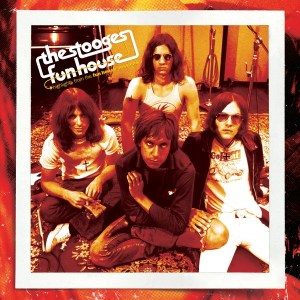
Back in 1999, Rhino Handmade had an early triumph with the release of the 7-CD box set The Fun House Sessions, chronicling the making of the album from the quintessential proto-punk bad boys, The Stooges.  Now Run Out Groove has boiled down that set into four sides of vinyl and fourteen choice selections as “Highlights from The Fun House Sessions”.  Recorded with producer Don Gallucci of The Kingsmen at Elektra Sound Recorders in Los Angeles back in May 1970 as The Stooges’ sophomore effort, Fun House made “Louie, Louie” look positively tame, and was commercially unsuccessful upon its initial release.  But its influence as a key building block in the punk revolution can’t go unnoticed, as it quickly developed a cult following among both critics and fans.  Blending fast and furious hard rock with improvisation and even a jazz element thanks to Steve Mackay’s saxophone and the loose feel, Fun House showed Iggy Pop, Dave Alexander, Ron Asheton, Scott Asheton, and Mackay at their most primal yet still pushing the musical envelope forward.

The first two sides of Highlights are sequenced to follow the track order of the original LP, with the third and fourth sides offering additional alternate takes, fly-on-the-wall studio chatter, and a 17-minute jam session/early version of the closing “L.A. Blues” entitled “Freak.”  There are plenty of ferocious nuggets here that are illuminating to fans of the original album but accessible enough to be enjoyed on their own.  Take 6 (Reel # 6) of “Down on the Street,” the lone A-side drawn from Fun House in its final version, spellbindingly pulsates.  The taut garage band performance on “Loose” (Take 16, Reel 4) is almost-but-not-quite-commercial, no small accomplishment for The Stooges.  Like Alexander’s throbbing bass on “Dirt” (Take 5, Reel 11) or Ron Asheton’s screaming guitar on “1970” (Take 2, Reel 1), Iggy Pop’s throaty wail on “See That Cat (T.V. Eye)” (Reel 2) explodes with no compromises.  Desperation drips from his raspy delivery on “Lost in the Future” (Take 3, Reel 3).  Outtake “Slide (Slidin’ the Blues)” offers something a bit different, with Mackay’s tenor sax wending through the bluesy drawl.  Everything about Fun House is even more primal and raw in these alternate versions – musically unflinching, brutal, and immediate.

Designed by Peto Gerth, Highlights from The Fun House Sessions boasts a glossy gatefold with new liner notes.  In a fine touch, the two multi-colored swirl 180-gram LPs, stored in protective sleeves, have vintage Elektra butterfly replica labels.  With The Complete Fun House Sessions long out-of-print in CD format, this vinyl collection of screeching, raw power is a welcome arrival.

Image may contain: 5 people, people standing and sunglasses

Smokey Brights make music that taps into history and stretches out a kind of visionary rock that rolls relentlessly forwardwhile recombining iconic sounds – from funk to Fleetwood Mac, Bowie to Blur, disco to Dire Straits, and splashes of Floyd psychedelia – crafting something urgent, fun, and utterly surprising.

it was back in 2010 than Smokey Brights first formed; Ryan Devlin and Kim West, a new couple with not much money to spare, set about singing Christmas songs to give out as gifts, seven years later they’re stilling singing. They may have been making music for a number of years, however with the release of their upcoming EP, Come To Terms, 2018 looks like being the year when a lot more people notice them doing it.

http://

The recently released title track, Come To Terms, is a fine introduction to the band’s sound, built around reverberating guitars and bombastic drum beats, it finds Ryan’s gravelly, Cold War Kids meets Two Gallants, vocal to the fore, while Kim’s soulful Beth Ditto like backing adds some wonderful depth to the track. Come To Terms is a record of social division, soundtracking the growth of political chasms between alternating view points, and asking how we can go about rising above and starting to heal the wounds; as Devlin sings on the closing track, “This is not the time to turn your back on what you see. Find the strength in you, and I will find the good in me”. There’s plenty of good to be found here, a big bold and important record, Smokey Brights are a band who seven years in have never sounded more important.

Kip Berman on The Pains Of Being Pure At Heart’s fourth album, The Echo Of Pleasure.

As The Pains Of Being Pure At Heart’s primary singer and songwriter, Berman has always rendered aspects of his life into his music. From the fizzy allure and bittersweetness of his 20s to the creeping responsibility of adulthood, he sings with a sense of wistful honesty and, when bolstered by the band’s effervescent melodies, with joyful idealism. But as he was writing and recording new material, Berman was facing a major life change: He and his wife were expecting the birth of their first child. Berman has said he couldn’t help but let that uncertainty — such as worrying about providing for his burgeoning family, and wondering what it meant for his band — influence his songs. The resulting album represents his most mature and personally revealing yet — without losing any of the The Pains of Being Pure at Heart’s trademark infectious charm and sincerity.

The Pains Of Being Pure At Heart's new album is The Echo Of Pleasure.

That’s especially true of “When I Dance With You,” an ecstatic dance-ready song built from buoyant beats and glistening synths that imply a fleeting, lose-yourself-in-the-moment headspace, but actually exposes deeper meaning: Contentment derived from inseparable togetherness washes away, at least temporarily, fears of an unknowable future. “When I dance with you, everything else just slides out of view… when I dance with you, I feel OK,” Berman sings. And on the dynamic opener, “My Only,” Berman gives into his love and unwavering commitment, earnestly declaring “Now that you’re here, I don’t have a fear, you’re my only / So keep it together, I won’t find another love like I found you.”

Throughout its nine songs, The Echo Of Pleasure balances the complex shadings between lust and sensuality, blissful devotion and messy accumulation of regret. On “Anymore,” he exposes his own flaws, and ruminates on whether he can live up to others’ expectations: “Don’t need to be told what I’ll never be, anymore,” he asserts. Later, the glimmering “Falling Apart So Slow” charts a seasonal year wherein intimacy unravels in his absence; and “The Echo Of Pleasure” describes how dynamics can change and decay when feelings are left unreciprocated. “The echo of pleasure can’t return / Just fade into these silent days… I was young and sick with love / Now I’m sick with something else,” Berman concedes.

Mirroring Berman’s resonant themes, there’s maturation in the music, too. Across its previous records, The Pains Of Being Pure At Heart toggled from the lo-fi shoegaze of its self-titled debut to the stormy distorted heft of Belong to the nimble indie pop the band is now best known for. With The Echo Of Pleasure, Pains reshapes its sonic palette once more. With bright, chest-swelling pop anthems such as “The Cure For Death” and “The Garrett,” the band absolutely sparkles, blending shimmering hooks, noisy guitar lines and snappy beats with swirling female vocal harmonies that crest into celebratory sing-alongs. Many of Pains‘ ever-widening net of friends pop up to flesh out Berman’s widescreen tapestry — including singer Jen Goma, who takes the spotlight on the retro dance track “So True.” “If you don’t lose some skin for the things you believe / How do you know that you really do,” she asks over fluttering keyboards and disco drum beats.

What makes The Echo Of Pleasure so powerful is the way The Pains Of Being Pure At Heart can address somber themes with such warm positivity. As he’s grown older and gained perspective as a songwriter, Kip Berman has settled on a beneficial, aspirational lesson: Healthy, enduring relationships require frequent compromise and reassessment over time, but if nurtured, the rewards can be limitless.

Image may contain: 3 people, people smiling, sunglasses, outdoor and close-up

Happy Accidents have been around the UK indie-punk scene for a while now, releasing their debut album, “You Might Be Right”, back in 2016. This year promises to ramp things up for the London-trio, with the upcoming release of their second album, “Everything But The Here And Now”, on the always excellent Alcopop! Records. The album, which was recorded with Hookworm’s front-man turned underground uber-producer MJ, is something of a departure for the band, not least because of the debut of drummer Phoebe’s nonchalant vocal, adding a stunning counter-point to regular front-man Rich’s more emotive, urgent delivery.

Taken from our new album Everything But The Here And Now on Alcopop! Records

The vocal changes aren’t the only progress here though, everything about Happy Accidents now seems more ambitious. The addition of washes of keys, synths and atmospheric studio trickery, creates a more rounded sound without losing their energetic charm, recalling acts like Los Campesinos! or former touring-mates Doe. As well as a more ambitious record, Everything But The Here And Now is also a more versatile one; recent single Text Me When You’re Home is an anti Cat-Calling anthem full of beefy Kamikaze Girls-like guitar lines and contrastingly ethereal vocals, while Wait It Out is a straight forward thrashy punk song, and A Better Plan has a distinct 90’s alt-rock feel to it. Happy Accidents sound better than ever, taking giant strides forward without ever forgetting where it all began.

Full Time Hobby - Micah P. Hinson - At The British Broadcasting Corporation | hyperurl.co

The new a compilation of Micah P. Hinson’s performances at the BBC over the last 15 years.

Re-mastered at Bent Leaf Studios in Texas, overseen by Micah himself at the end of last year, these 11 tracks were picked from a wealth of cuts from Micah’s visits to Marc Riley over the course of nine albums.

Micah offered some insight into the personal importance of these sessions:

“I owe Sir Marc a deep gratitude that spans back years now. In this life, champions are needed- yet they are rare. As if I was deep in the amazon, I had found a flower not yet known to the world and people would congratulate me on what had found and what I had brought to the world- and Marc was the first one in line, hand outstretched; a grin on his face.”

Marc also spoke about his experience of having Micah in to play for him over the years:

“I remember the first time Micah came in to do a session for us. 18th September 2004. It was at the time of his debut ‘…And The Gospel Of Progress’ LP which I absolutely loved. He was backed by The Earlies (as he was on the record) and the session was mind-blowing. The songs were fantastic, Micah’s voice made Johnny Cash sound like Aled Jones. He told tales of being thrown in jail.. of suffering great dramatic losses in his life. I remember asking him to clarify how old he was on air and he replied “23 Sir”.

Full Time Hobby - Micah P. Hinson - At The British Broadcasting Corporation | hyperurl.co

I believe his eventful life will one day be made into a biopic…but until that day this document of his radio sessions will serve to document the path of this great singer-songwriter from Abilene Texas.”

http://

Taken from the forthcoming album “Micah P. Hinson at the British Broadcasting Corporation.“

Evolving from the confines of a solo project into an emotionally reaching five piece powerhouse, Juan de Fuca renders heavy dreams through the catacombs of their beautifully textured debut album Solve/Resolve. Shortly after singer/songwriter Jack Cherry released a 6 song solo EP cavern of in 2015, he was fervently encouraged by friends in the Athens, GA scene to make something bigger happen with his material. Bassist Jack Webster and drummer Howard Stewart pushed for the formation of a full band, and when guitarists Clark Brown and Declan Farisee signed on, the group began work in earnest developing a sound that drew as much on Shoegaze’s layers of blissful chaos as it did on the clenched-jaw melodicism of wiry early aughts post-punk and Lower East Side rock icons.

Like many pieces of great art, the path to making the debut Juan De Fuca album, Solve/Resolve, has not been an easy one. Much of the record is inspired by the loss of front-man Jack Cherry’s best friend, taking in themes of grief, addiction and attempting to come out the other side. As Jack explains, “it’s about trying to overcome something that you are just absolutely living with for the rest of your life”.

There’s obviously a touching point towards bands like The Walkmen, Jack’s vocal bares a striking resemblance to Hamilton Leithauser, and the more hazy, textural sound of Deerhunter. Solve/Resolve is a record that feels vital, one minute bristling with electric intent the next sliding into morose ambiance or waves of beautiful noise. Juan De Fuca could just be among the most exciting guitar-bands you’ll hear all year.

http://

the Band:

Jack Cherry
Howard Stewart
Jack Webster
Clarke Brown
Declan Farisee