Legendary band The Distillers have returned with their first piece of new music in 15 years, ‘Man vs. Magnet’.
Earlier this year, The Distillers excited their loyal fanbase by announcing they were returning to the world of music after a twelve-year break. Soon, the band announced a series of comeback performances, which kicked off back in April. Taking to Instagram after the band’s first show since 2006, Aussie frontwoman Brody Dalle shared an emotional post on Instagram which highlighted her excitement at the reunion.
“14 years later and the jacket still fits…it’s been an emotional rollercoaster to get here but I’m grateful for it all,” she wrote. “I’m not afraid of a little old ride. Bring it. It was emotional tonight, me, us, you, the peeps on the street. I’m loving it and you. The Distillers feels so right.”
Now, the group have taken the next step in their reunion plans and released their brand new single. Titled ‘Man vs. Magnet’, the track only had its live debut two nights ago, when the band performed it in Vancouver, Canada. Their first piece of new music since their 2003 album Coral Fang, fans are already loving the band’s return, with the new track sounding like they never even took a single day off.
The track is also accompanied with ‘Blood In Gutters’ as the B-side. If you think that track sounds a little familiar, then you might remember it from when Brody Dalle released it on her debut solo album, Diploid Love, back in 2014. At this stage, the band haven’t made any official announcements in regards to whether or not we’re going to be receiving a new album from them, but if this new single is anything to go by, we’re incredibly excited to see what The Distillers will offer on their return.
The rise of Big Thief has been a charmingly old-fashioned one, built on hard work, word of mouth and wonderful music. The band have become one of the alternative-scenes most loved acts, and done it entirely on their own terms. Continuing that theme of doing things your own way, the band’s vocalist Adrianne Lenker has this week announced, not a new Big Thief record, instead a return to her solo career. Adrianne is set to release “Abysskiss”, the follow-up to 2014’s, Hours Were The Birds, in October and has shared the first taste of it, Cradle.
While much of Adrianne’s work has dealt with her youth, her past if you will, for Abysskiss, she has set out to document the here and now. Much of this record was written on the road and in studios as Adrianne lived the musicians life. It serves as an intimate and immediate documentation of where both her songwriting and life currently stand, in her own words, an attempt to, “archive the songs in their original forms”.Listening to Cradle, you feel like you’re almost listening to a demo, a song still having the life breathed into it as it’s performed; it’s not lo-fi per se, in fact it sounds lush and perfectly unadorned, allowing her unmistakable vocal and gentle backing plenty of room to breath. Lyrically, it seems to dance with half-finished images; there’s an underlying feeling of discontent, yet it seems to be more with an inability to accept the potential for happiness than any underlying sadness. As a snapshot of a songwriter at the peak of their powers, Cradle suggests Adrianne Lenker remains one of music’s most vital voices.
Singer/songwriter Justin Sullivan, aka Night Shop, may be releasing his debut album, In The Break this month, but he’s far from a starry-eyed newcomer. Sullivan has been a touring drummer for the last 20 years, most recently playing with The Babies, Kevin Morby and Flat Worms. While touring in 2016, Sullivan realized that the taxing life of a touring musician was getting a bit too much and he needed some time off, so he took a year-long break to clear his head. During that period, he wrote solo material in the form of a debut EP and now, his first LP. His first two cuts from the album, “The One I Love” and “My Love,” are rollicking folky rock and roll tunes that require a massive amount of restraint to stop yourself from tapping your foot. Sullivan’s voice may not be cocksure or Elvis Presley-esque, but he sure makes a fine front-porch troubadour via Bob Dylan. In The Break paints tales of deep-rooted romance, old and new pals, life on the road, late night hijinks and just plain ole life under the great big sky.
From the album “In The Break” coming out on Mare Records September 14th.
Still in high school when they made their first album Up To Anything in 2016, their brand of awkwardly transcendent teenage guitar pop took them into end of year lists for BBC6, Billboard and Rough Trade, and earned them raves from the Guardian, Pitchfork, Spin, Uncut, Rolling Stone and elsewhere. According to Metacritic, Up To Anything was the 8th best-reviewed debut album anywhere in the world in 2016.
Up To Anything, their 2016 debut from Brisbane, Australia group The Goon Sax, was a brilliant reminder of indie pop’s effectiveness when it’s distilled to its simplest form: loose, jangling guitars and wry, understated vocals. But when it came time for the trio to record what became their second album, We’re Not Talking, each member of the band found themselves pondering the definition of “pop,” and how it related to the ways they wanted to develop their sound.
“Pop’s a really odd thing,” says bassist/guitarist/vocalist Louis Forster (who is the son of Robert Forster of The Go-Betweens). “I think some people just see [pop] as something sounding polished and ultimately very accessible. But I think pop’s something that exists in a lot of forms, in all kinds of music. On jazz records, there are parts that are really poppy. I guess our idea of pop is a very westernized thing, and it comes out in funny forms; to me, [pop] satisfies something human and subconscious—or it should.”
Accordingly, We’re Not Talkingbalances the band’s usual laser-focused emotional acuity and economical instrumentation with a more expansive take on pop formalism. The keening opening song, “Make Time 4 Love,” boasts insistent cowbell, delicate strings, and jaunty horns; “Sleep EZ” joins delicate, harmony-rich choruses indebted to ‘80s U.K. dreampop to a contorted bridge that boasts a spurt of disco-punk beats, wherein Forster stutter-sings like a skipping LP; and the fierce, emotionally wrecked highlight “She Knows” charges forward on turbulent strings and livewire bass grooves. Even the more straightforward, strummy acoustic-pop songs boast more (and different) hues; the lovely “We Can’t Win,” for example, adds mournful piano and glassy twinkles of percussion into the mix.
“We wanted to make this record more collaboratively,” says Forster. “We had more ideas and more things that we wanted to try out.”
We’re Not Talking shows how much can change between the ages of 17 and 19. It’s a record that takes the enthusiasms of youth and twists them into darker, more sophisticated shapes, full of lines like “When the bus went past your house and past your stop my eyes filled with tears” and “I’ve got a few things above my bed but it feels so empty, I’ve got spaces to fill and we’re not talking.” Relationships are now laced with hesitation, remorse, misunderstanding and ultimately compassion.
Strings, horns, even castanets sneak their way onto the album, but We’re Not Talking isn’t glossy throwaway pop. Sounds stick out at surprising angles, cow-bells become lead instruments and brief home-recorded fragments appear unexpectedly. This is a record made by restless artists, defying expectations as if hardly noticing, and its complexity makes We’re Not Talking even more of a marvel.
Forster and his bandmates bassist/guitarist James Harrison and drummer/vocalist Riley Jones were determined to push themselves on We’re Not Talking. Forster cites Scott Walker’s Scott 4 and the Beach Boys’ Pet Sounds as inspirations, as well as the work of ESG, Liquid Liquid, and Jenny Hval. “I really like how [Jenny Hval’s] record had those bits where everything sort of drops back, and it’s just spoken word,” he explains. “We were very obsessed with making something very honest, and she does that really, really well in her lyrics. They’re incredible.”
Jones spent much of the recording sessions trying to funnel her love for Tall Dwarfs’ Chris Knox into the final product. “I’d always be like, ‘Chris Knox reference, Chris Knox reference,’” she laughs, “and it just didn’t really come across. I don’t know if anyone else was behind [the idea], but I was just very inspired by him as a pop songwriter.”
The slippery definition of “pop music” was another topic of intra-band debate during the recording process. On Talking, the group worked with outside producers—Architecture In Helsinki vocalist Cameron Bird and the band’s former drummer/keyboardist/guitarist James Cecil.
“We wanted it to be more polished and poppier than the last [album],” Jones says. “We tried to explain to them what we wanted, but I think they really had different ideas about it, so it was a bit tough sometimes. We were all pushing for things, and we couldn’t communicate or couldn’t find a middle ground.”
Those clashing ideas didn’t undermine the final product, but they did give the band more insight into the ways they approach their career—and the possibilities available to them as a result. “When I said we wanted it to be more poppy,’ they were like, ‘OK, poppy,’ and then they had this completely different idea of pop,” Jones recalls. “I just had no idea that things could be that clean and so produced.”
Adds Forster: “Sometimes you forget that there are words that other people have a very different version of, you know? To us, ‘pop’ probably meant something worlds away from what other people would think. We think quite similarly sometimes, the three of us—we often think that because all three of us are on the same wavelength about something, it must be very obvious to anybody else, when it’s not.”
This deep, personal connection dates back to before the Goon Sax’s 2013 inception, when Forster and Harrison forged a fast friendship thanks to their shared musical interests (the Raincoats, the Clean, the Fall, Marine Girls) and—to borrow Jones’ phrasing similarly “silly” personalities; five years in, those personal bonds continue to provide a much-needed buffer against the trials of being in a band. “After the last tour, I was like, ‘Oh my God, can’t wait to get away from these guys,’” Jones recalls, adding with a laugh: “[I was] really ready for break, and then on day two, I was like, ‘Hey guys, are you doing anything today? Do you want to hang out, maybe?’ I just missed them.”
As the Goon Sax gear up for yet another tour—they’ll be spending the fall playing throughout England and North America—they remain cognizant of (and confident about) where they want their band to go in the future. To that end, We’re Not Talking is not so much a bridge to the next career milestone: it’s more like a roadmap.
“I definitely learned that I don’t want anyone to tell me what to do anymore,” Jones says. “We really thought, like, ‘Oh, we’re young, we probably need some grown-ups giving us some good advice.’ But I just want to be free to create stuff naturally, and to push it really far.”
Our new video for Diablo, Take Me Home can be seen here. Taken from The Death or Glory Gang EP .
“He’s a wild one…” this is what we’d heard about Steve Glashier, the director we were waiting to meet at the location we’d scouted. Within 5 minutes this was proved right as we dodged security, climbed barbed wire and threw instruments over fences to get into a better looking location he had found nearby. The image of our manager giving Steve a bunk over the wall was perfect; I thought “this is our gang, our kind of people.”
The new location was a god-forsaken wasteland in Silvertown, East London, on the hottest day of the year with no water and no way to get out without ruining the shoot. Our vision of a desert with our beloved London skyline as a back drop came true with mild hallucinations and the feeling a rattlesnake could bite you at any second. The perfect setting and the perfect director to bring Diablo to life.
Jack White has announced a new live concert film, Jack White: Kneeling at The Anthem D.C., along with an accompanying six-song live EP. The film and EP premiere September. 21st, .
The film documents White’s second sold-out night at The Anthem during his Boarding House Reach tour, and features a career-spanning set, with tracks from The White Stripes, his solo career and more. It was directed by Emmett Malloy, who directed the 2009 White Stripes documentary Under the Great White Northern Lights.
A six-song EP featuring performances from the same show will be released exclusively on Amazon Music on the same day as the film’s release. The tracklist can be found below. White will be continuing his world tour throughout the autumn.
Watch the trailer for Jack White: Kneeling at The Anthem D.C. Get a front row view to Jack White’s career-spanning concert at Washington, D.C.’s The Anthem flmed on May 30th, 2018 as part of his Boarding House Reach tour.
The film takes from White and his band’s second of two sold-out shows at The Anthem on May 30th, 2018, and also features footage from White’s travels around DC and his surprise lunchtime performance at DC’s Woodrow Wilson High School. A six-song live EP of highlights from that show will also be available via Amazon Music.
The Anthem show, was a 21-song affair that included nine-song encore, featured cuts from Reach, along with White’s earlier solo albums, plus tracks from his work with The White Stripes, The Raconteurs and The Dead Weather.
Probaly Best known to most for their David Bowie-penned and produced 1972 hit single, “All the Young Dudes,” actually briefly broke up after their fourth album, Brain Capers, flopped. Bowie convinced them to stick it out, and he and Mick Ronson would co-produce the fifth album, All the Young Dudes, that added another two solid years of great work for this great band.
Aesthetically, Bowie glammed them up with silvery stage costumes and thigh-high boots, a far cry from the brawling image that came out of their raucous concerts, which could result in full-scale riots. Released in the UK in November 1971 (January 1972 in the U.S.), Brain Capers captures that mayhem, especially on “The Moon Upstairs,” with lyricist Ian Hunter at his angriest: “We ain’t bleeding you, we’re feeding you, but you’re too fucking slow.”
Not surprisingly, Mott the Hoople’s fans included British punk progenitors the Sex Pistols and The Clash, both whom became household names a few years later. In fact, while on his book tour last year Pistols guitarist Steve Jones confirmed that he and his future bandmates witnessed firsthand one of Mott’s infamous shows, circa 1971, during which riot police were called in. Johnny Rotten & Co. concluded, “That’s what we want to do!”
On Brain Capers, Mott’s softer, acoustic, bluesy side came through the cover versions of Dion’s “Your Own Backyard,” while its take on westcoast rockerJesse Colin Young’s “Darkness Darkness” was heavier than the original.
Mott was something of a schizophrenic band in that they’d oscillate between the heaviness, also evident on Brain Capers’ “Death May Be Your Santa Claus” (co-written by Hunter and organist Verden Allen), and what would later be considered Americana. That was the influence of Mott guitarist Mick, who dominated the band’s third album, Wildlife, which some fans and even the band dismissed as “Mildlife.” Ralphs received a co-writing credit on “The Moon Upstairs,” and one can assume that he worked on the music.
Even though Mott the Hoople hit a musical peak with their self-produced “Mott” album following its Bowie Dudes excursion, Ralphs seemed to resent Hunter being pushed by management to be front-and-center. Allen left after Dudes, although the rhythm section of Buffin (drums) and Pete Watts (bass) remained, even after Hunter left in 1975 for a solo career with Bowie guitarist Mick Ronson on-board.
On the road, Ralphs crossed paths with singer Paul Rodgers, who felt a similar frustration with his band Free. They joined forces and gave birth to Bad Company, interestingly Led Zeppelin’s first signing on its Atlantic Records imprint, Swan Song. Rodgers was better equipped – even the Dylanesque-voiced Hunter admitted so – to emote Ralph’s words on songs like “Ready For Love,” which Bad Company included on its 1974 debut.
Illuminati Hotties, aka L.A.’s Sarah Tudzin, seems plagued by the past on “Cuff.” But over a chorus of explosive guitars, backed by simple, steady drum programming, she settles on a solution: “I cuff my T-shirt sleeve / and grit my teeth / How else can I tell myself I can do most anything?”
In a new video for the track, featuring animation from Sam Lane, the protagonist is a humble fish that has fantasies of flight. As the chorus explodes, dreamy visions of possibilities flash, the colors shifting. For the film’s fish protagonist, despite the cost, hope remains. And for Tudzin, the final chorus offers relief in letting another in.
“After watching an animated short film that Sam created for part of her coursework at CalArts, I knew I wanted to collaborate with her on something,” Tudzin says. “The animation and storytelling she does is so sensitive, emotionally aware, and poignantly relatable – it sneaks right into your guts and twists them up in the most winsome way.”
The same can be said of Tudzin’s debut, a record that balances humor and heart, illuminating the ways in which we cope with coming into our own, no matter our age.
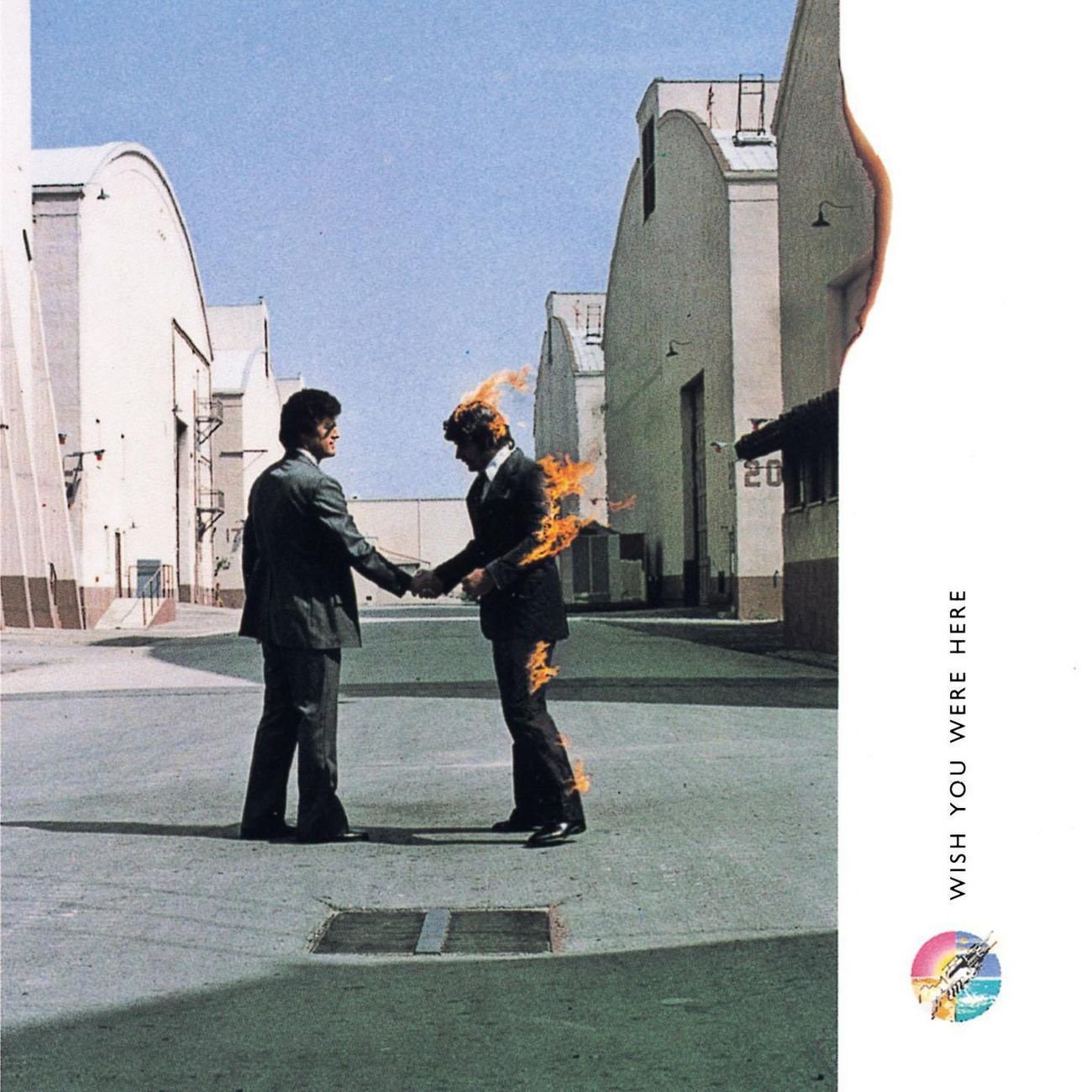
Wish You Were Here is the ninth studio album by English rock band Pink Floyd. It was first released on 12th September 1975 in the United Kingdom by Harvest Records.
It debuted at No. 1 on both sides of the Atlantic, and has been tabbed by both Gilmour and Wright as their favourite Pink Floyd album. Still, ‘Wish You Were Here’ was no ‘Dark Side of the Moon’; it never could be. And that – as much as anything seems to have relegated this 1975 follow-up to a life of perpetual underrated status. It’s a pity. There isn’t a more conceptually concise Pink Floyd album, nor one as musically inviting. Even as DaveGilmour and, in particular, Richard Wright pushed the work into deeper, more progressive musical themes, they helped fashion the last truly collaborative studio project between RogerWaters and his increasingly disgruntled bandmates.
Inspired by material the group composed while performing in Europe, During 1974, Pink Floyd sketched out three new compositions, “Raving and Drooling”, “You Gotta Be Crazy” and “Shine On You Crazy Diamond”. These songs were performed during a series of concerts in France and England, the band’s first tour since 1973’s The Dark Side of the Moon.
The album was recorded in numerous sessions at Abbey Road Studios in London. Two of its songs criticise the music business, another expresses alienation, and the multi-part composition “Shine On You Crazy Diamond” is a tribute to Pink Floyd founder Syd Barrett, who had left seven years earlier due to mental health problems. The band used studio effects and synthesizers, and brought in guest singers: Roy Harper, who provided the lead vocals on “Have a Cigar”, and Venetta Fields, who added backing vocals to “Shine On You Crazy Diamond”. After several weeks, Waters began to visualise another concept. The three new compositions from 1974’s tour were at least a starting point for a new album, and “Shine On You Crazy Diamond” seemed a reasonable choice as a centrepiece for the new work. Mostly an instrumental twenty-minute-plus piece similar to “Echoes”, the opening four-note guitar phrase reminded Waters of the lingering ghost of former band-member Syd Barrett.Gilmour had composed the phrase entirely by accident, but was encouraged by Waters‘ positive response.Waters wanted to split “Shine On You Crazy Diamond”, and sandwich two new songs between its two halves.
The album begins with a long instrumental preamble and segues into the lyrics for “Shine On You Crazy Diamond”, a tribute to Syd Barrett, whose mental breakdown had forced him to leave the group seven years earlier. Barrett is fondly recalled with lines such as “Remember when you were young, you shone like the sun” and “You reached for the secret too soon, you cried for the moon”.
Wish You Were Here is also a critique of the music business. “Shine On” crosses seamlessly into “Welcome to the Machine”, a song that begins with an opening door (described by Waters as a symbol of musical discovery and progress betrayed by a music industry more interested in greed and success) and ends with a party, the latter epitomising “the lack of contact and real feelings between people”. Similarly, “Have a Cigar” scorns record industry “fat-cats” with the lyrics repeating a stream of cliches heard by rising new-comers in the industry, and including the question “by the way, which one’s Pink?” asked of the band on at least one occasion. The lyrics of the next song, “Wish You Were Here”, relate both to Barrett’s condition, and to the dichotomy of Waters’ character, with greed and ambition battling with compassion and idealism. The album closes with a reprise of “Shine On” and further instrumental excursions.
Wish You Were Here topped the charts in the United Kingdom and the United States, and Harvest Records‘ parent company EMI was unable to print enough copies to meet demand. Although it initially received mixed reviews from critics, the album went on to receive critical acclaim,
Everyone wanted a piece of Pink Floyd after ‘The Dark Side of the Moon’ sold a gazillion copies , especially the shady music-industry types Waters never trusted. ‘Have a Cigar’ is all about those clueless suits. “By the way, which one’s Pink?” sings guest Roy Harper, a British folkie, summing up the era.
‘Shine on You Crazy Diamond’ was originally released as a two-song, eight-part, 26-minute suite on the band’s follow-up to the mega-popular ‘The Dark Side of the Moon.’ And like several Floyd projects from the period, the song references former bandmate Syd Barrett’s descent into mental illness. It’s an epic piece, the bookends to one of the group’s most durable LPs.
The members of Pink Floyd were still friendly with Syd Barrett after he left the group in 1968. He even showed up in the studio, somewhat unrecognizable, while they were recording of their ninth album. ‘The Dark Side of the Moon’ touched on the mental illness that crippled Barrett, but ‘Wish You Were Here’ was an album-length tribute to both his genius and madness. The title track ties Barrett’s plight to Waters‘ own distancing from society.
The band played much of Wish You Were Here on 5th July 1975 at the Knebworth music festival. Roy Harper, was also performing at the same event, on discovering that his stage costume was missing, proceeded to destroy one of Pink Floyd’s vans, injuring himself in the process. This delayed the normal setup procedure of the band’s sound system. As a pair of World War II Spitfire aircraft had been booked to fly over the crowd during their entrance, the band were not able to delay their set. The result was that a power supply ssue pushed Wright’s keyboards completely out of tune, damaging the band’s performance. At one point he left the stage, but the band were able to continue with a less sensitive keyboard, a piano and a simpler light show. Following a brief intermission, they returned to perform The Dark Side of the Moon, but critics displeased about being denied access backstage savaged the performance
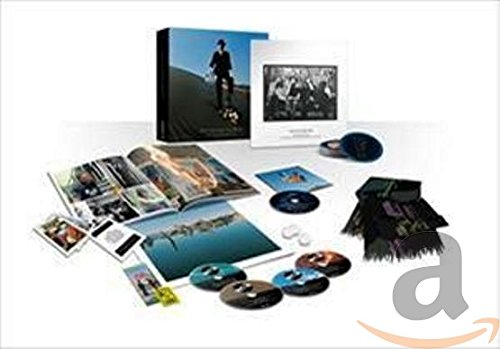
The Wish You Were Here – Immersion Box Set includes the new stereo digital remaster (2011) by James Guthrie on CD, an unreleased 5.1 Surround Mix (2009) by James Guthrie on DVD and Blu-ray, a Quad Mix (which had been released only on vinyl LP and 8-track tape) on DVD, as well as the original stereo mix (1975) on DVD and Blu-ray
Pink Floyd
David Gilmour – vocals, guitars, lap steel guitar, EMS Synthi AKS, tape effects, additional bass
Tancred’s ‘Something Else’, featuring Potty Mouth, is sweet, unpretentious alt-rock with a personally-oriented approach. Behind a fun, well-made music video, this group has a solid, if not kind of derivative, take on modern trends in the genre. The simple, lo-fi bedroom pop these women are going for is deeply reminiscent of Soccer Mommy. There’s a clear sense of the group as focused on social justice and female empowerment, but this is couched in a more personally-oriented, poppy lyrical sensibility that seems in debt to 2000s indie groups like Death Cab For Cutie and The Strokes. The broad, vaguely feminist aesthetic can be traced through more recent pop figures like Hayley Williams of Paramore back to Avril Lavigne and maybe even characters like Missy Elliott or Lauryn Hill. Anyways, this is a neat track from an up-and-coming band. Check out ‘Something Else’
“Something Else” is taken from Tancred’s new album, Nightstand, which came out June 1st, 2018.