Canada’s Frontperson release “Young Love”, which details the uncertain yet exhilarating feelings that arise in the early stages of a relationship, as Kathryn Calder explains:
“‘Young Love’ was one of the last things we finished. It was kind of tricky to get right because it is a delicate song. Lyrically, I was trying to capture the feeling of meeting someone and those first days when everything is kind of unsettled but yet you also know it’s the right thing. I remember the final glue to the song – when it felt like we had figured it out – was when Mark and I played our guitars together into one microphone, inspired by an early Leonard Cohen kind of sound. There was something kind of lo-fi about playing the song that way that really worked.”
Frontperson are: Kathryn Calder, Mark Andrew Hamilton, with Melissa McWilliams, Jen Sévertson, Clea Foofat, Foon Yap , Marek Tyler
From their album ‘Frontrunner’, out 21st September on Oscar St. Records.
Jacco Gardner has announced his new album “Somnium” for release on 23rd November.
Gardner has been known to create swirling psychedelic pop boosted by his rich, resonate and baroque voice but on his third album, his vocals are gone and in their place is an equally seamless melodic exploration but an instrumental one, with a synthesized occult edge. Somnium is a nod to the novel of the same name, written in 1608 by Johannes Kepler and is regarded as the first ever science fiction novel. “This book fascinates me because it was basically Kepler travelling in his mind to a non-existent world while describing it, and his journey, with amazing detail.”
This form of mind travel is what Jacco has set out to create in a sonic, almost alchemic, capacity. Hence the reason for his vocals being left out of this spiritual journey. “I deliberately removed my voice from the experience, as it made it more difficult for me to achieve the intended state of mind. I think it makes the journey more interesting, more deep, and more intimate. I didn’t feel the need to show my face while one drifts away into thought. Somnium is a visionary experience. The album is more than just a trip, it is about contact with a deeper – hidden – reality.”
Now living in Lisbon and immersed in literature, cinema, philosophy and with new winding streets to wander, Gardner’s ideal listening scenario is to take the album for a walk yourselves, consume it complete and without interruption.
“Somnium could be seen as a tribute to the album, a dying format in today’s fast-paced society. It can often be difficult to enjoy a meaningful uninterrupted moment. This album is where true mystery and wonder is waiting to be discovered.”
Jacco has plans to bring Somnium on the road early next year and promises to be the perfect accompaniment to this exceptional listening experience.
Foxing initially won me over by being such a towering live band (if you haven’t seen them, seriously fix that ASAP), but their second album Dealer went the opposite direction of their shows. It goes into more somber, intimate territory, and it’s the best thing they’ve done yet. The album takes on soaring post-rock, tear-jerking piano ballads, downtempo glitch, melancholic horns and strings, and highly vivid lyrics, all brought together by some of the richest-sounding rock production of the year (courtesy of Minus the Bear/Mastodon producer Matt Bayles).
It’s an album that stops me in my tracks every time I listen to it, whether it’s Conor Murphy’s gorgeous falsetto or the weight of the keys on “Winding Cloth” or the sudden moments where the band sound twice as large as they are. There’s a certain type of record that comes along every now and then, when an indie band swings for the fences but maintains delicacy and evokes real emotion from the listener. I’m thinking of albums like The Antlers’ Hospice album and self-titled Bon Iver, and now I’d add Dealer to that list too.
Moaning Lisa is the product of four Canberra-based music grads who find purpose in making loud noises together. Their music operates on the edge of the grunge genre: somewhere between composed restraint and fuzzed-out, life-affirming alternative rock. Moaning Lisa create an atmosphere entirely of their own, in their raucous live shows that see them consistently pack out venues across Australia’s East Coast.
Do You Know Enough?, the band’s new EP, is the journey of a queer girl navigating her early 20s. It follows the organic passing of milestones like yearning, love, heartbreak, self-assurance and reinvention. Each track plays a crucial role in the forming of an emotional narrative, leaving no stone unturned. Musically, the songwriting was organic and gradual; dipping into punk, shoegaze, and heavy alternative rock across the five tracks. Each song harnesses their own anthemic qualities; “Carrie” being a punk call-to-arms of queer women; ‘Good’ a rich feel-good shoegaze love song; “Lily” a heart-wrenching rock ballad; “Comfortable” a momentous ode to single life, and “Sun” a mammoth adventure into seizing the next chapter. Do You Know Enough? poses a question that seems obviously answered throughout the five tracks, but leaves yourself open to the possibilities of the future.
Paul McCartney invites you on a musical journey to Egypt Station. Sharing a title with one of Paul’s own paintings, Egypt Station is the first full album of all-new McCartney music since 2013’s international chart-topping NEW. Egypt Station was recorded between Los Angeles, London and Sussex, and produced (with the exception of one Ryan Tedder track) by Greg Kurstin (Adele, Beck, Foo Fighters). True to the inspiration behind its title, Egypt Station’s 14 songs combine to convey a unique travelogue vibe. Between the opening and closing instrumentals Station I and Station II, each song finds Paul capturing a place or moment before transporting the listener seamlessly to the next destination. Stops along the way include an acoustic meditation on present day contentedness (Happy With You), a timeless anthem that would fit on virtually any album of any McCartney era (People Want Peace), and an epic multi-movement closer clocking in at seven minutes with a song suite structure harkening back to the days of Paul’s previous combos (Despite Repeated Warnings). The result is a kaleidoscopic journey through myriad musical locales and eras, yet firmly rooted in the here and now – with Paul’s singular unmistakable melodic and lyrical sensibility serving as a guide.
Egypt Station is a moving statement from a guy who’s found love and now wants the rest of the world have it too. And it proves that McCartney is still having lots of fun in the studio – no more so than on “Back in Brazil,” the album’s weirdest and freshest track. McCartney plays nine instruments on the recording (he even recorded the birds chirping at the beginning); over a lounge beat, he tells the story of a couple dealing with the changing tide of a relationship. It seems corny at first, but then intensifies as McCartney’s harmonium, Wurlitzer, congas (and triangle!) create a psychedelic haze. There is no chorus, except Paul shouting “Ichiban,” which, confusingly, is a Japanese word asked to explain during a recent Twitter Q&A, McCartney said it has a “long answer” which he’ll give us by the end of the month. During the same Q&A, McCartney said he would consider teaming up with EDM artists. This song proves it might actually not be a bad idea.
According to producer Greg Kurstin, “Back in Brazil” was one of the songs that McCartney labored over most in the studio. “It was one of the trickier ones to get the feel of, to get the drum groove and all that stuff,” he said. “It started out as something very different than what it became. It started out with electric piano and drums and the whole band, and then we stripped it all down and built it all up with orchestra instruments. It started out as something very different than what it became. But I’m really happy with it. It has the clarinets playing the electric-piano part. It started out with electric piano and drums and the whole band, and then we stripped it all down and built it all up with orchestra instruments. When it really came to life for me was when we brought in [composer] Alan Broadbent and he helped with the arrangement. He did the strings and the clarinets and the flute and stuff like that. I like the arrangements he did on that.
Lala Lala, the project of Chicago-based songwriter Lillie West, has released a third single from her forthcoming album The Lamb, out September. 28th through Hardly Art Records. The album is among the most anticipated releases of September.
Lala Lala shares “Dove,” the third song off their new album The Lamb, out September 28th. “‘Dove’ is very plainly about the death of someone I loved a lot and the guilt I had and still have afterwards,” West explains of the plaintive and heartfelt track. “Dove” is out now at all DSPs .
“Dove” confronts directly the topics that have hung in the periphery of the band’s previous two singles, “Destroyer” and “Water Over Sex.”West has talked often of the traumatic experiences that contributed to the writing of The Lamb, including “a home invasion, deaths of loved ones and general violence around me and my friends.”
On “Dove,” West focuses her grief into a powerful, unflinching track that addresses the past directly. ”’Dove’ is very plainly about the death of someone I loved a lot and the guilt I had and still have afterwards,” West said. The song fashions West’s hazy guitars and ethereal voice into an miniature anthem of regret and longing. It’s a watery shout into—and about—an absence.
Jackson Browne is perhaps the quintessential 1970s singer-songwriter, a sensitive individual who analysed his difficult relationships into songs. On September 14th Robert F. Kennedy, Jr. will introduce Jackson Browne as he receives the Gandhi Peace Award from Promoting Enduring Peace,
He was extremely well connected into the 1970s Laurel Canyon Californian scene – he dated Laura Nyro and Joni Mitchell, wrote the Eagles’ first hit single, and produced Warren Zevon’s breakthrough album. Browne has written and recorded songs such as “These Days”, “The Pretender”, “Running on Empty”, “Lawyers in Love”, “Doctor My Eyes”, “Take It Easy”, “For a Rocker”, and “Somebody’s Baby”.
Primarily, Browne’s a lyricist, and certainly one of the best text writers in pop music, After a period in the Nitty Gritty Dirt Band, Browne left and after a few months and moved to Greenwich Village, New York, where he became a staff writer for Elektra Records‘ publishing company, Nina Music before his eighteenth birthday. He spent the remainder of 1967 and 1968 in Greenwich Village, where he backed Tim Buckley and singer Nico of the Velvet Underground. In 1967, Browne and Nico became romantically linked and he became a significant contributor to her debut album, Chelsea Girl, writing and playing guitar on several of the songs (including “These Days”). In 1968, following his breakup with Nico, Browne returned to Los Angeles, where he formed a folk band with Ned Doheny and Jack Wilce, and first met Glenn Frey.
Jackson Browne’s most artistically successful decade was the 1970s, during which he made five studio important studio albums. Browne’s right hand man in the 1970s was multi instrumentalist a guitarist, fiddler, and falsetto vocalist David Lindley, who enlivened Browne’s albums with his instrumental work. Browne’s voice is boyish, and not always engaging, and Lindley helped to make his records more accessible.
Jackson Browne – Saturate Before Using (1972)
In 1971, Browne signed with his manager David Geffen’s Asylum Records and released his debut JacksonBrowne (subtitled Saturate Before Using) produced and engineered by Richard Orshoff, which included the piano-driven “Doctor My Eyes” was the surprise hit, which entered the Top Ten in the US singles chart. “Rock Me on the Water”, from the same album, also gained considerable radio airplay, while “Song for Adam” (written about his friend Adam Saylor’s death) helped establish Browne’s reputation. Touring to promote the album, he shared the bill with Linda Ronstadt and Joni Mitchell.
Doctor My Eyes was Browne’s first single, and one of only two Top 10 hits he’s had, is one of the most musically upbeat songs he’s recorded, despite the bummer subject material. It’s basically a precursor to the searching, longing and disenchanted character who showed up in so many of Browne’s songs in the ’70s. It’s a little heavy-handed, as far as the sentiment goes — “Tell me what is wrong,” he sings. “Was I unwise to leave them open for so long?” — but it sets the template for almost every Top 10 Jackson Browne song.
Jackson Browne’s debut release didn’t emerge for six years after he had wrote ‘These Days’ for the Nitty Gritty Dirt Band. His first record, was for David Geffen’s Asylum label .The album, is his most minimal, and outside the singles, his material is simply presented – it’s the only 1970s album that guitarist David Lindley doesn’t appear on. It’s the singles that shine was the surprise hit, but I prefer the gospel-tinged ‘Rock Me On The Water’ and the plaintive ‘Jamaica Say You Will’.
The daughter of a captain on the rolling seas
She would stare across the water from the trees
For Everyman (1973)
Browne raided his back catalogue for his second album, featuring his well known songs like ‘These Days’ and ‘Take It Easy’ cowritten with Eagles’ Glenn Frey, had already been a major success for that group, while his own recording of “These Days” reflected a sound representing Browne’s angst. Gregg Allmanreleased a version on his 1973 albumLaid Back.But it’s Browne’s sad, plaintive take of the song — which he wrote while still a teen growing up in the mid ’60s — that nails the melancholic tone of the lyrics.
The arrangements are fuller, and David Lindley’s guitar and fiddle parts are prominent, joining The Section musicians Russ Kunkel, Craig Doerge, and Leland Sklar. Elton John plays piano on the rollicking ‘Redneck Friend’, but my favourite track here is ‘For Everyman’, a post apocalyptic vision of sailing to a new society, featuring David Crosby on backing vocals.
Everybody’s just waiting to hear from the one
Who can give them the answers
And lead them back to that place
In the warmth of the sun
Where sweet childhood still dances
Running on Empty (1977)
Jackson Browne’s best known work is a live album of all new songs, themed around the seedy side of a musician’s life on the road. Browne was a big enough star by 1977 to take The Section and David Lindley on tour as his backing band, and the album was recorded live on stage, as well as in hotel rooms and backstage. Running on Empty was recorded entirely on tour, It became his biggest commercial success. Breaking the usual conventions for a live album, Running on Empty contains some of his most popular songs, such as the title track, “Rosie”, and “The Load-Out/Stay” (Browne’s send-off to his concert audiences and roadies). “The Load-Out” runs down the daily monotony of tour life (“We’ve got truckers on the CB/We’ve got Richard Pryor on the video/We got time to think of the ones we love, while the miles roll away”) before giving way to an exuberant cover of Maurice Williams & the Zodiacs’ 1960 No. 1 doo-wop hit featuring vocals by members of Browne’s band. Criminally, the songs were split when “Stay” was released as a single in 1978, with “The Load-Out” shoved to the flip side on later pressings.
Unusually, Browne includes covers, like a charming version of ‘Stay’ spotlighting Lindley’s falsetto vocals, and co-writers on most tracks. But the title track, one of only two Browne solo compositions, is the standout track, a sweeping, Springsteen like tale of nostalgia and determination.
Running on Empty is one of the most revolutionary live albums ever made. Instead of going through their usual set of hits and favorites, Browne and his band recorded new songs onstage, backstage, at soundchecks and wherever else inspiration might have hit them. Fittingly, most of the songs are about touring; the album doubles as a concept album about being on the road. This one, which was released as a single, sympathizes with the wives, girlfriends and groupies who are along for the ride. It’s one of his most autobiographical songs — check out the years and ages he runs through in the song and a sign of things to come. “I don’t know where I’m running now, I’m just running on”turned out to hold some truth: After three classic albums in a row, Browne turned to mostly political subjects in the ’80s with a string of mediocre records.
Look around for the friends that I used to turn to to pull me through
Looking into their eyes I see them running too
The Pretender (1976)
Browne’s life was hit by personal tragedy during the recording of The Pretender – his wife Phyllis Major committed suicide, leaving Browne as a young solo father. These events are covered in the brief, wrenching ‘Sleep’s Dark and Silent Gate’. Production duties on Browne’s fourth album are handled by Jon Landau, who gives Browne’s music more detail than usual. ‘The Fuse’ is one of my favourite Jackson Browne deep cuts, and the title track is a fascinating look forward to 1980s yuppies. The closing track of Browne’s fourth album is also a summation of sorts of the previous seven songs, a nearly six-minute breakdown of one man’s occasionally harsh, and almost always dishonest, survival instincts. He lies, he cheats, he screws, and tomorrow he’ll do the same damn thing, even if he knows there’s something morally wrong at the core of it all. All that ’60s idealism had finally given way to mid-’70s cynicism, worn down by war, Watergate and crushing dreams.
At times, Browne’s fourth album plays like a eulogy for his wife, who killed herself in early 1976; at other times, it plays like a eulogy for his growing disillusionment with the leftover and broken promises from the idealistic ’60s. This song — one of the best Jackson Browne songs, a Top 25 single co-written by his late wife’s mother — falls into the former category, as Browne futilely tries to hide the scars of his broken heart. He’s bitter, angry and not ready to forgive. But most of all he’s at his most revealing here.
But my favourite track is ‘Your Bright Baby Blues’, with its warm arrangements and amazing backing band; Little Feat’s Lowell George is prominent on slide guitar and backing vocals, Bill Payne on organ, E-Street Band’sRoy Bittan on piano, Chuck Rainey on bass, and Jim Gordon on drums.
No matter how fast I run
I can never seem
To get away from me
Late For The Sky (1974)
Jackson Browne attained maximum Jackson Browne-ness with his third album, featuring gorgeous meditations on death and the apocalypse, accompanied by David Lindley’s guitar and fiddle. To save his label money after the expensive For Everyman, Browne used his live band, and they sound great. Browne’s work began to demonstrate a reputation for memorable melody, insightful, often very personal lyrics, and a talent for his arrangements in composition. Apart from the mundane rocker ‘Walking Slow’, every track is strong, and mournful expositions like ‘For A Dancer’ and ‘Fountain of Sorrow’ are prime Browne. Highlights included the title song, the elegiac “For a Dancer”, and “Before the Deluge”, . The arrangements featured the violin and guitar of David Lindley, Jai Winding’s piano, and the harmonies of Doug Haywood. The title track was also featured in Martin Scorsese’s film Taxi Driver. During this period, Browne began his fractious but lifelong professional relationship with singer-songwriter Warren Zevon, mentoring Zevon’s first two Asylum albums through the studio as a producer (working closely with Waddy Wachtel and Jorge Calderón).
Much of Jackson Browne’s songs on his terrific third album play like a deep, despairing farewell to an old love. This song — one of the album’s many centerpieces — piles on the apocalyptic dread. It could be heralding the end of a relationship … or maybe something much, much bigger. In a way, it foreshadows themes of growing up and out of youthful idealism found on The Pretender, and Running on Empty, but with more widespread and cataclysmic results.
But my favourite song is the title track, especially the moment when Browne’s voice cracks on the final note.
How long have I been sleeping?
Browne’s epic opener to his third album sets the tone for a record that plays like one long breakup montage. This is a key track in the story — the moment where that tiny glimmer of hope is wiped out by cold, hard reality. The song also plays a pivotal part in the movie Taxi Driver,underscoring a scene in which Robert De Niro’s brooding sociopath loses what’s left of his loose grip on reality. Not sure if this is what Browne had in mind for the song, but it serves a similar purpose.
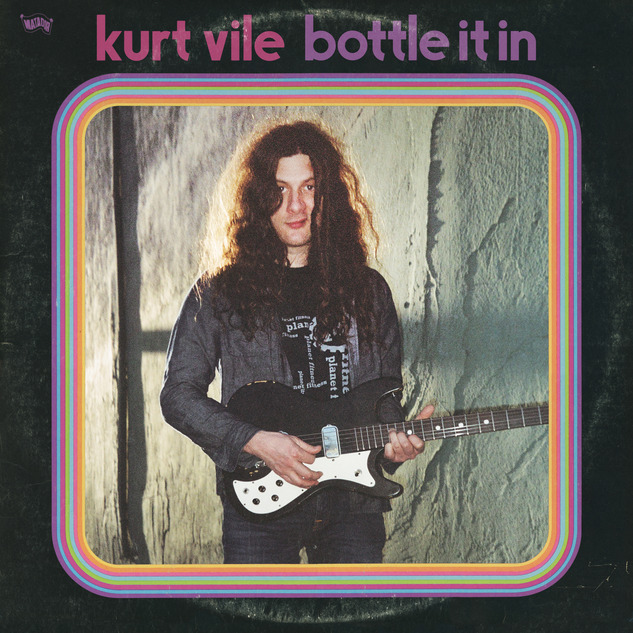
Last month, Kurt Vile released his first new single since 2015, “Loading Zones,” and now he’s giving the people what they want by wheeling out a new album. Bottle It In, due out on October. 12th via Matador Records, It will be Vile’s first LP since 2015’s b’lieve i’m goin down…., and the Philly singer-songwriter has shared another new song alongside today’s announcement, the gorgeous, nine-plus-minute epic “Bassackwards.”
Vile recorded “Bassackwards” with engineer and producer Shawn Everett at The Beer Hole in Los Angeles, and his Bottle It In bio describes the track as “the album’s beating heart and Vile’s most compelling evocation of how he sees the world.” Vile is of two minds—and sometimes none at all—on the song, singing, “I was on the beach but / I was thinking about the bay / got to the bay but by then I was far away,” over dreamy backmasked guitars and gentle acoustic strums. The polarized instrumentation fits perfectly with the song’s refusal to settle on one direction ”Bassackwards” moves two ways at once, leaving us wondering which way is true North, or if there even is one.
Anna Calvi garnered instant acclaim straight out of the box. Her self-titled debut earned her several prestigious awards, among them, a nomination for the Mercury Prize and the special distinction of being named British Breakthrough Act at the 2012 Brit Awards. Follow-up One Breath secured a second Mercury Prize nomination, no small accomplishment for an artist who once claimed she was too nervous to even sing in the shower. Apparently, her self-doubt’s been banished for good, and given the evidence offered on her latest album Hunter, Calvi’s clearly got the confidence needed to take her place among the echelon of Britain’s new musical elite. Brian Eno has sung her praises and become a mentor. David Byrne and Marianne Faithfull have shared their support. A classically trained violinist, Calvi’s won kudos for her guitar work, songwriting and unique style. Still, it’s her voice that commands, courtesy of a delivery that rises from a whisper and then soars with startling effect.
The first single,Don’t Beat The Girl Out Of My Boy. A battle cry with a rousing chorus, the song was partly written while thinking about how young children are when they’re conditioned to follow gender roles – in particular, the “heartbreaking” process through which small boys are taught not to cry or show emotions. Produced by Nick Launay (Nick Cave, Grinderman) at Konk Studios in London with some further production in LA, the album was recorded with Anna’s band – Mally Harpaz on various instruments and Alex Thomas on drums – with the addition of Adrian Utley from Portishead on keys and Martyn Casey from The Bad Seeds on bass. It has a new rawness, a primal energy into which Calvi pushes the limits of her guitar and voice beyond anything she’s recorded before.
Throughout I’ll Sing, Shannen Moser reveals a strong understanding of relationships – not only the influence they have on us but also the inner turmoil they create. “Haircut Song” is a deeply poignant, often haunting portrayal of the power this human connection has over us. Recalling a relationship, she presents us with a different kind of love song: You said I’m doomed to love you, and that’s the truth/It’s a sort of ***ed up way to say it, but I loved you too. As the song progresses, she lays bare her desperation when things go sour: A Broken heart will convince itself of many things/I will silence my own beating heart, that’s the sh*t you don’t want to hear/I would sell myself out for a lifetime of “I love you, love you, my dear”. The song is beautiful, sarcastic and heartbreaking all at once. It hits all the right receptors in the brain, leaving you wanting more; this is ok, because the rest of I’ll Sing delivers the goods.
Although Moser’s lyrics are her greatest asset – giving I’ll Sing an extra bite through witty storytelling – there’s no denying her skill as a musician. Effortlessly blending folk, blues and country, there’s a good deal of variety throughout her songwriting. Sometimes, we get nothing but the dialed-down plucking of a guitar, but “Hallelujah” busts out the banjos and enters borderline ho-down mode as it progresses. Whichever method she employs, all the songs are given an extra jolt of life by her soaring vocals and relatable themes of love and friendship. “One For Mama” is a real tear-jerker, with bluesy guitars and strings making way for the croon of Momma, I’m never too old for your love. And as she closes with the Americana-tinged title-track, she makes it apparent she plans on making the best of life – pressing on and “singing” even in its most vicious moments. It’s one hell of a way to conclude such a powerful album; the slower pace allows her voice to really capture the moment in perhaps her most alluring performance here. If any of the tracks could be called soulful, this is it. It’s only one piece of the gorgeous puzzle, though. In its entirety, I’ll Sing is overwhelmingly affective – one of those albums that connects with you on a personal level. There are other notable songwriters this year, but few of them, if any, have as much to say as Shannen Moser does on her gripping sophomore effort.