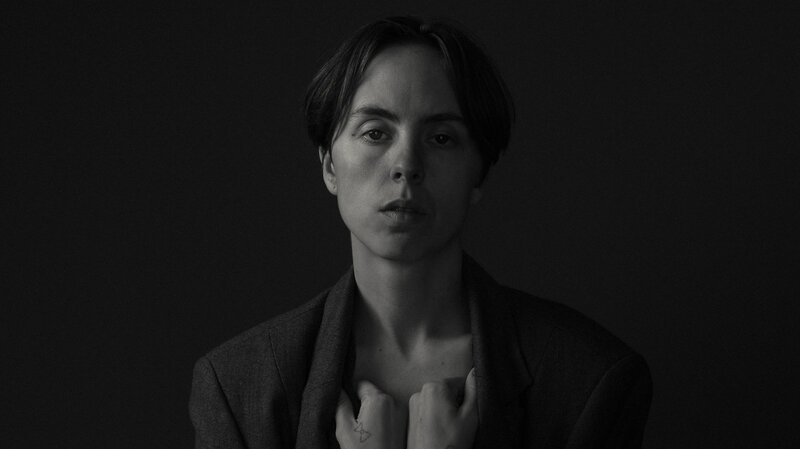
Meg Duffy’s music seems to exist in miniature, but it’s not for brevity or lack of complexity. Just the opposite, in fact: Recording as Hand Habits, Duffy pays scrupulous attention to detail in songs that function like intricate dioramas.
On Placeholder, the singer (who identifies as non-binary and uses they/them pronouns) contemplates the fragility of human relationships and the hard-to-stomach reality that many of the people, experiences and places we’ve loved are only stepping stones on a journey of self-discovery.
“A big aspect of my songwriting and the way I move through the world depends on my relationships with people,” Duffy writes in a statement about the album. “The songs on Placeholder are about accountability and forgiveness. I don’t fictionalize much.”
After a string of bedroom demos made their way to Bandcamp in the early 2010s, Duffy became a fixture on a burgeoning Hudson Valley DIY scene alongside acts like Florist and Bellows. (Duffy was raised in Albany and attended college in Schenectady.) With momentum building, they chose to place Hand Habits on hold, leaving the Northeast for Los Angeles to play guitar with songwriter Kevin Morby’s live band. After several years of touring, Duffy signed to indie label Woodsist and, in 2017, released Wildly Idle (Humble Before the Void), a tender, captivating solo debut.
A gorgeous progression from Wildly Idle, Placeholder captures Duffy’s transfixing intimacy in elevated form. While their earlier work was entirely self-produced, Placeholder was recorded at Justin Vernon’s Wisconsin studio. Duffy’s vocals find new confidence amid gentle guitar strumming and warbling pedal steel, blending into a haze of dreamlike Americana. These songs evoke waves of warm, pop-driven nostalgia, with equal doses of melancholy and optimism.
The album’s title track captures the musings of someone scorned but not dejected. Duffy displays an adept ability to see their own duplicity, never resolving to pin blame on someone else: “Oh, but I was just a placeholder / A lesson to be learned / Oh, but now you’re just a placeholder / For someone wasting time.”
In “yr heart [reprise],”Duffy sings of a phone call to a distant lover with an almost Patsy Cline-like lilt: “And you are far but not that far / I can feel you push your fingers / Through the fabric of all my thoughts.”
The record’s furthest sonic wandering point arrives in a minute-long brass interlude in “the book on how to change part II.” Duffy leaves us with a proverb that doubles as a euphoric moment of clarity: “The book on how to change / Wasn’t written in one day / The book on how to change / Never taught me anything.”
They were started in the fall of 1977 by punk poet Chris Desjardins, a singer known for morbid lyrical themes. Their first gig was December 21st, 1977 at The Masque in Los Angeles. Musicians in various Flesh Eaters line-ups have included Stan Ridgway (Wall of Voodoo), John Doe (X), DJ Bonebrake (X), Dave Alvin (The Blasters), Bill Bateman (The Blasters) and Steve Berlin (The Blasters, Los Lobos). Considered by many to be a precursur of Death Rock, their music was a pastiche of rockabilly, road-house blues, punk rock and jazz. The Flesh Eaters initially broke up in 1983. Desjardins performed with his new band, The Divine Horsemen until 1988. In 1989 Desjardins recorded an LP with the one-time group Stone-By-Stone. Shortly after this they changed their name back to The Flesh Eaters. They continued to perform on the west coast, ultimately recording two albums. They discontinued performances in the Spring of 1993. Since then, Desjardins has performed intermittently with a variety of musicians under this name. The most recent Flesh Eaters album Miss Muerte was released in 2004 on Atavistic Records. This label has also reissued “No Questions Asked” & “Hard Road To Follow”.
In February 2006 it was announced that the original Flesh Eaters would perform several live shows. This particular line-up of The Flesh Eaters had not played together since the Spring of 1981. John Doe and DJ Bonebrake from X, Dave Alvin and Bill Bateman from The Blasters and Steve Berlin from Los Lobos were scheduled to appear for these shows.
The second single from the Flesh Eaters forthcoming album “I Used To Be Pretty” is “My Life To Live”, an updated recording of the song that originally appeared on their 1982 album Forever Came Today
The Flesh Eaters, Los Angeles’s unconventional “supergroup”, reunites classic 1981 lineup of Chris D, Dave Alvin, John Doe, Bill Bateman, Steve Berlin, and DJ Bonebrake for their first new recording in more than 35 years. Ghost Cave Lament is a new song written by Dave Alvin and Chris D.
London’s Crows are the latest signing to Balley Records (IDLES, Heavy Lungs, Lice) and will deliver their long-awaited debut album “Silver Tongues” on March 22nd. The album’s thrilling first single “Chain Of Being”, this week’s Lamacq’s Livener on 6 Music, is a real statement: a widescreen slice of post-punk that combines heaviness and brooding melody in equal measures.
Joe Talbot said the following of his decision to sign Crows to his Balley Records label:
“I saw them play at the Louisiana in Bristol a few years ago and both the performance and the quality of their songs blew me away. Everything about them excites me; so when I heard they were looking to release an album, I had no choice but to chase them. It’s a dream to work with them.”
Crows formed in 2015 and have since built a considerable following for the intensity of their live shows which have seen the band members break bones as well as instruments. Supporting the likes of Girl Band and Wolf Alice in the past, the band will take their deafening live show on the road in support of IDLES for their sell out April tour.
With a string of successful singles and EPs under their belt, “Silver Tongues” has been a long while coming. Recorded in near total darkness to build a sense of atmosphere, the album fulfills both their early potential and confidently showcases a band comfortable across a variety of sonic avenues. From the monolithic noise-rock of the title track and opener, to the sky-scraping “Demeanour” and “Wednesday’s Child”, to the blissed-out closer “Dysphoria”, each listen reveals new layers, fresh ideas.
“Silver Tongues” is a huge step forward for the band, not only musically, but emotionally. A touring band who have been through so much already, this album rightly took time: now, both Crows and the listener can reap the rewards for their patience. Crows are:
James Cox (vocals)
Steve Goddard (guitar)
Jith Amarasinghe (bass)
Sam Lister (drums)
During September 1968 the Doors made their first trip to Europe for a tour that saw them paired with the Jefferson Airplane, far from the eyes of the world they played intimate concerts for audiences who where not there for the event but to listen and watch the performers, the tour was a major success in terms of attendance and in terms of artistic satisfaction from the band that equated to some of the best performances the band would ever perform.
These performances are an eye-opener if you’ve never heard them before. What you get is a wowser recording of an in-shape, ready to kill you Jim Morrison. The man is out for blood and it shows. The only thing wrong here, and it’s the Only thing is that Jim is off mike for the first “When The Music’s Over”. The recording is clear enough that you can just about hear him, but alas there is nothing that can be done about that now. The material itself is stellar and the band is in top form. Enjoy this show, it’s a mind-ripper.
On September 20th, 1968 The Doors played two concerts the Konserthuset in Stockholm, Sweden and gave permission for both to be broadcast on radio station Radiohuset. The resulting recordings give a prime example of the band at the height of their collective powers and are the source for many bootlegs. On vinyl the shows have been released as The Beautiful Die Young… (MIW Records 19) featuring parts of both early and late shows, The Complete Stockholm ’68 Tapes(DOORS 68) and deluxe 3 lp set containing both the early and late shows, Little Games (Shotgun Records 13010) that is a mix of both early and late shows,The Stockholm Tapes(unknown label) another 3 lp set packaged in a box with a deluxe cover. On CD there have been releases as Live In Stockholm(The Swinging Pig TSP CD-004-2) that featured both early and late shows on a 2CD set,Live In Stockholm ’68 Vol. 1 and Vol. 2(Black Panther CD 30/31) that were copies of the Swinging Pig title, The Lizard King (Vulture Records 002) a mix of both early and late shows on a single disc,Red Walls Blue Doors (WPOCM CD 1288D012-2) featuring only the late show,The Stockholm Tapes (DR 010) featuring only the late show,Sneaking Out The Backdoor(The Last Bootleg Records LBR SP 001/7) features both early and late shows, and Apocalypse Now (Kiss The Stone KTS 267), an excellent title featuring the late show.
The Doors, live at Konserthuset, Stockholm on 20th September 1968 The Doors finally visited Europe in September 1968, playing to rapturous audiences in the UK, Germany, Holland, Denmark and Sweden. Many fans agree that they were at their peak on this tour, despite Jim Morrison’s condition being unpredictable from gig to gig. This release contains the final date of the tour, originally broadcast by Sveriges Radio. It includes rare performances of Mack The Knife, Love Street and You’re Lost Little Girl as well as familiar staples of their set, and is presented here together with background notes and images.
The recording begins with the call to arms of “Five To One”, one can take many interpretations to Jim’s lyrics, the best I had read was five to one is the ratio to people under the age of 30 outnumber the old five to one. Of course the radio station does not censor the “I Got in this car with these people and get …f*cked up”, Jim slurring his words in true bluesman tradition. To show their respect from the European audiences the band treat them to an impromptu version of “The Ballad Of Mack The Knife” by Weill and Bretcht that was made famous by Frank Sinatra in America that flows right into the same song writing duo’s “Alabama Song” aka “Whiskey Bar”, a song the band adapted for their first self title LP. The song flows right into the abrupt riff of Willie Dixon’s “Backdoor Man”, played in true blues fashion. Morrison lets yell with a manic laugh before the band slows it down for the pork and beans section, the song is a prime example of their blues origins and garners a huge round of applause before Morrison tells them “Stop That”.
A real highlight of this recording is the bands rendition of “Your Lost Little Girl”, rarely played on stage the melancholy playing of Robby Krieger is wonderful and Morrison turns in a beautiful vocal for the song, no screaming and yelling on this song. “Love Me Two Times” from the Strange Days record was a true Krieger song, the lyrics much more about simple love and curiously would prove to be The Doors most radio friendly songs. A true centerpiece of most all Doors shows is “When The Music’s Over”, dense with mysterious lyrics and some of the most powerful music the band would ever explore it features Morrison at his most dramatic. All three musicians solo at one time or another, they blend the instruments as an accent to the lyrics. John Densmore goes from keeping simple time to answering Morrison in a point blank response accentuating message. The lyrics are expansive, moving from psychedelia to powder struggles to a commentary of the abuse of resources, all leading to a demand of “We Want The World and We Want It NOW “, Morrison keeping the audience on edge before finally letting out a huge yell in true dramatic fashion. The song again garners a huge ovation with the audience clapping and shouting their approval, one can only agree.
Curiously the band play an early version of “Wild Child”, a song that would not find its way onto a Doors record for close to a year until the release of 1969’s The Soft Parade. It started appearing in the bands set early the prior month of August 2nd at the band’s chaotic performance at the Singer Bowl in Flushing Meadows, New York. This version is much subdued to that version largely due to the circumstances, but we are treated to a superb rendition of the song and is nice to be able fully enjoy. They continue with their take on the Gordy / Robinson classic “Money”, a song that they had been playing since their early incarnation of the band in their pub days. They play a laid back version of the song that features song great Manzerek keys as he hammers out a great solo, the song simply swings as the band hit their stride.
“Light My Fire” is the culmination of Doors Concerts, its there most popular song and therefore is the one that people clamor to hear. Live versions are always extended, to give a showcase to move through music themes such as jazz, Manzerek, Krieger, and Densmore were all aficionados of the form and this song is their vehicle to express it. This version clocks in at over 11 minutes and features a long center section where they free form the music with teases of Coltrane’s “My Favorite Things”, Morrison does enter the fray at about 8 minutes in when he asks “why you jump up my ass…what did you come hear for anyway?” in some obvious dialog with an audience member and forces the band to abruptly go back into the main theme of the song and push Morrison’s focus back to the music.
The set concludes appropriately as Morrison asks for the lights to be lowered and only use the blue lights, there is a small language barrier with the operators and the band chants “turn out the lights” before Jim lets out a quieting “sshh” and Krieger hits the opening chords of “The End”. The song has much evolved from its early incarnations of a song of loves departed; now it is an apocalyptic masterpiece of theatre set to music. The song clocks in at close to 15 minutes in length and features a variety of lyric poems by Jim that culminates with the Oedipal section, perhaps it most moving yet frightening piece that polarized listeners as far back as the groups pre record deal days at the Whisky A Go Go. Live versions of this song are always an event, this is certainly one, if not my most favorite version (the Singer Bowl is awesome too). The end of the set and of a most successful European tour as the band leaves the stage amid respectful applause.
After spending years writing and recording music by himself in various bedrooms and basements, Andrew Carter hit his stride with the debut Minor Poet album, And How!. Made on a creative whim with no outside expectations, the eleven-song collection combined Carter’s love of carefully-crafted pop with a loose, fun, off-the-cuff recording aesthetic. The album was released in 2017 and developed a small but loving fan base, and Minor Poet has grown from a passion project into a cross-country touring band with write-ups in publications such as American Songwriter.
Minor Poet’s second album, The Good News, is a six-song collection that expands the boundaries of what constitutes the band’s sound. In just twenty-two minutes, the songs take apart the standard formulas of guitar-based rock and infuse them with vibrance and energy. On opener “Tabula Rasa,” interlocking guitars and a Farfisa organ carry the song through until everything drops suddenly into a doo-wop section that wouldn’t be out of place on a 1950’s greatest hits compilation. Warped noise envelops a tropicalia-flavored Casio beat in “Tropic of Cancer” before a slick groove and sliding bass line lead into the chorus’ pure pop bliss of of horns and vocal harmonies. “Museum District” begins with a drum intro reminiscent of an off-kilter “Be My Baby,” and “Bit Your Tongue/All Alone Now” features a midsection with a glam-rock guitar solo amidst trumpet fanfare. These are a just a few of the infectious moments on an EP filled with many more.
The Good News was made over four days at Montrose Recording, in Minor Poet’s hometown of Richmond, VA. In the past, Carter has played all the instruments and handled all the production, but he knew he that he had to reach outside himself to do justice to these songs. “I couldn’t capture the sounds I heard in my head,” Carter explains. “I wanted something that was vast and expansive but that at the same time could hit you immediately in the gut.” Paying homage to the “wall of sound” techniques made famous by Brian Wilson and Phil Spector, Carter and co-producer Adrian Olsen (Natalie Prass, Foxygen) overdubbed layer after layer of Carter playing an array of guitars, pianos, organs, synths, and percussion, as well as singing all the harmonies. The members of Minor Poet’s touring band were brought in to perform the core rhythm section, and local musicians stopped by to add crucial flourishes, such as the harmonizing guitar riffs in “Reverse Medusa” and the saxophone solo that closes out “Nude Descending Staircase.”
At the center of everything is Carter’s voice, singing lyrics that seamlessly mix allusions to religion, mythology, art, and philosophy as he questions himself, his place in the world around him, what he owes to his relationships, and, in turn, what he needs to ask of others in order to stay healthy. Tabula Rasa is a concept that argues that humans are born blank slates, shaped through experience and environment. The last two years couldn’t have felt more applicable for Carter, who started out as a fresh face with little-to-no experience in the music industry and slowly grew into himself as a stage performer and bandleader through both good and bad times. During this period he began to come to terms with lifelong struggles, such as the depression that permeates “Tropic of Cancer” and the social anxiety that runs through “Museum District.” Rather than be one-dimensional, however, Carter dives deeper into himself and his motivations, such as in “Reverse Medusa” when he sings, “Hide my love in poetic half-truths/never was one to dwell on my issues.” Carter’s ability to balance emotional honesty with a tongue-in-cheek self awareness adds to the richness and originality of the music. Short but memorable, catchy yet meaningful, The Good News is another promising step forward for Minor Poet.
After three years on the road, the New York singer Mal Blum returns with a refreshing directness, a hungry turtle and “Things Still Left To Say.” In their first new song since the 2015 album You Look a Lot Like Me, Blum confronts an estranged relationship where so much has been left unresolved. Though hard, Blum stresses the importance of being truthful, especially while “we’re all still here.”
The upbeat, punk-pop power chords and infectious lyrics are accompanied appropriately by a karaoke-style video. Along with the neon pink and blue text stretching across the screen with every line, a montage of clips shows people dancing and singing into the camera to “Things Still Left To Say.” In the background, Blum is laid out in a plant-filled living room, feeding lettuce to a turtle. Vibrant and liberating in all it’s awkward glory, what shines through is Blum’s signature, self-effacing honesty.
“‘Things Still Left To Say’ is a song about the desire and persistence to be heard,” Blum tells us in an email. “About times when we swallow or deflect vulnerable aspects of ourselves because we feel that there is no space for them. This song is about navigating that distance, the specific flavor of isolation (so awkward that it’s almost comical) that occurs when you feel unknown in front of those who think that they know you the best.”
Blum repeats a kind of mantra in the chorus, “There are thing still left to say / I’ve got phrases / I’ve got phrases.” It’s a reminder to keep those words close, just in case you get a chance to set them free.
“Things Still Left To Say”is out now on Don Giovanni Records, and Blum will be back on tour with Lucy Dacus and Fenne Lily in March.
Fierce, forceful and infectiously accessible this, Ballingry, Fife four-piece Paris Street Rebels emerged onto the scene just early in 2018; their debut single – produced by Johnny Madden (of Baby Strange) and Chris Marshall – ‘Freakshow’, firing an incendiary five and a half minute burst of solid punk’n’roll.
This video acts as a love letter to our home Ballingry , a tiny mining village in Fife that most people would rather ignore or wish never existed at all. A place where the young grow up mean and wild and free and the old drink to stolen kisses with forgotten loves alone in working mens pubs untouched since the 70’s.
It offers a window into our youth and more importantly , it shows the town that made us and broke us then made us all over again. We hope you lot see something in this that relates to your own lives , or at the very least understand this was made with every ounce of our hearts to bring you nothing but our best.
Big shout out to the Ballingry young team Ben Ritchie Ian Aird and all the other young rebels who gave up their precious friday night to come help us tell our story. You’ll never know what that meant to us.
And as always, thanks to the wizards that are Chris Marshall Johnny Madden and Jamie Holmes at 7 West Studios for helping us bring this to life. Also, big thanks to our long suffering benefactors Derek Wilson and Teresa Donnelly who own the legendary Red Goth pub and who let us film within the pub and have shown us nothing but kindness long before anyone else would give us the time of day.
The 80s influences have once again be ramped up on The Paper Kites 2018 album “On The Corner Where You Live”, but their folk roots are still there to be uncovered.
“Our hotel window in New York City looked straight into the apartment building across the street. You could see all these windows lighting up and people getting home from their nights out. We just sat there and watched them. It was fascinating. It was living art.”
Sam Bentley, frontman for The Paper Kites spoke of the moment the album’s concept clicked together. “It’s a collection of stories about these characters all living in an apartment building; I wanted to capture moments, feelings, it’s about people and their stories,” he says of On the Corner Where You Live (released September 21st via Nettwerk Records), the Australian band’s melancholic, mid-tempo companion to the recently released album, On the Train Ride Home.
Give them your tired, your lonely, your lovesick, your unsure, The Paper Kites have a song for each of them. “I created a world based on the idea of watching other people, but a lot of the songs are extensions of myself or people I know,” he says.
Such artistic insight has earned The Paper Kites (which also includes vocalist Christina Lacy, guitarist Dave Powys, drummer Josh Bentley and bassist Sam Rasmussen) a loyal, organic fan base. In the eight years since they formed, what’s followed is an impressive reach of their music, with steady international touring, nearly 47 million combined YouTube views and over 260 million streams on Spotify.
On the Corner Where You Live wafts evocatively with noir-ish saxophones, guitars, ambient traffic, even the languid sound of rain. Its levitating and bittersweet, heavy-hearted stories that are resoundingly universal.
Expanding on the group’s acclaimed second full length, 2015’s twelvefour, Sam says “I’m still very much drawn to the late nights and the sound of them: rich, honest, compassionate music.” The group originally planned to release On the Corner Where You Live and On the Train Ride Home as a double album, but decided to split them up due to the difference between the tracks – “We had these earnest, minimal, almost acoustic songs and these bigger songs you hear in On the Corner Where You Live. Like two sides of a coin, it’s the same feeling, just different expressions of them”.
The Paper Kites co-produced On the Corner Where You Live with Grammy-winner Peter Katis at his studio in Connecticut – a 120 year old victorian era home that the band lived and recorded in for 5 weeks.
On the Corner Where You Live’s opening instrumental “A Gathering on 57th” bridges the gap between the two records, the first thing you hear is the sound of the train running along the tracks and a street busker wailing into the night. The albums’ concept came to Sam while on tour – “It came from watching people really, being in unfamiliar cities, observing other people’s lives. I remember the band was staying in a hotel on 57th street in Manhattan and we’d come home from wherever we’d been. Our hotel window in New York City looked straight into the apartment building across the street. You could see all these windows lighting up and people getting home from their nights out. We just sat there and watched them. It was fascinating. It was living art.”
“Give Me Your Fire, Give Me Your Rain” takes over from where On The Train Ride Home left off. Josh Bentley’s punching drums making a statement that the record is a slightly different affair from the quiet solitude of the previous offering. A lush sonic tidal wave of midnight melancholy sets the tone of longing, loss and hope echoed through everything that follows.
The band recorded the Manhattan street noise from the window of their 57th street hotel, adding it to the lilting meditation “Midtown Waitress,” Sam tells the story of being alone in London bar years ago, where an elderly woman who turned out to be a pianist for the ballet scribbled down a melody on a piece of paper, gifting it to him, naming it “The Encounter.” During the recording session, Sam dug out that piece of paper, transforming it into a woozy, sax-based coda to “Midtown Waitress.”
“Music is so much more purposeful and devastating when it makes you feel exposed,” says Sam. Take “Deep Burn Blue,” a song about a girl who won’t leave her room. “It’s that feeling of being so inside your own thoughts that it’s debilitating.”(If that weren’t gutting enough, the song even references Nick Drake with the line, “You like the sound of a pink moon cry/Lying on the floor as the day goes by.”) Its foil is “When It Hurts You,” a harmonic lament about a man, locked-out of his apartment, making phone calls and yelling apologies from the street below. Says Sam; “You’re hoping the next morning things will smooth over, but you know it probably won’t.” Sam wrote 30 songs across three months. “It certainly consumed me. I was exhausted by the end of it,” he says, “I didn’t stop writing until Christina told me I had to stop.”
Christina Lacy takes lead vocals on “Mess We Made”, her first lead song since the bands debut album. Sam says “I remember we had planned to have her singing lead vocals on the last record (twelvefour) – but our producer at the time felt it sounded as if she was just singing my songs and wasn’t making them her own – so we decided that if she was singing on a record it had to be songs that she’d written and had an emotional connection to, and she did just that.”
Authenticity is important to Sam, who penned many of the lyrics for both albums while on the road, composing both albums in Melbourne. Amongst his many influences – film played a part. “I had films playing on the wall of my studio: ‘Lost In Translation,’ ‘Rear Window,’ ‘Lost Highway’,” he explains. In that vein, he wrote the piano-based track “Does It Ever Cross Your Mind” while working at a cinema.
Immersed in an aural diet of blues and jazz, “I was also listening to these ’50s mood albums like Jackie Gleason’s ‘Music to Make You Misty’ and Frank Sinatra’s ‘In The Wee Small Hours.’ I wanted to do a tribute to a mood album.” In a similar style to the covers of such albums, the artwork was painted by Los Angeles American Noir artist Gina Higgins, who also painted the cover for On The Train Ride Home and worked closely with the band on the concept.
While The Paper Kite’s songs explore longing and compulsions, Sam’s own obsession lies in breaking elusive sound-emotion barriers. “It’s a delicate responsibility to try and be sincere, but I think if there’s never a lack of feeling, it’s earnest to say the least”.
New Album ‘On The Corner Where You Live’ is available now
Band Members
Sam Bentley,
Christina Lacy,
Dave Powys,
Sam Rasmussen,
Josh Bentley,
The first single ‘The Barrel’ has been launched today, with a delightfully off-kilter accompanying video that transmutes to film the intense and commanding energy seen in Harding’s live shows. Designer finds the New Zealander hitting her creative stride. After Party, Harding came off a 100-date tour last summer and went straight into the studio with a collection of songs written on the road. Reuniting with John Parish, producer of Party, Harding spent 15 days recording and 10 days mixing at Rockfield Studios, Monmouth and Bristol’s J&J Studio and Playpen. From the bold strokes of opening track ‘Fixture Picture’, there is an overriding sense of an enigmatic artist confident in their work, with contributions from Huw Evans (H. Hawkline), Stephen Black (Sweet Baboo), drummer Gwion Llewelyn and violinist Clare Mactaggart broadening and complimenting Harding’s rich and timeless songwriting.
‘The Barrel’, by Aldous Harding. New album ‘Designer’ will be released on 4AD/Flying Nun on 26th April 2019.
Palehound (aka Ellen Kempner) has shared a brand new song, “Killer.” It is out now via Polyvinyl Record Co. and shared in honor of her current tour dates.
“With the new track, Palehound is teasing more new music to come,” a press release notes.
It may be the middle of February, but “Killer” is what Halloween-themed playlists have been wishing for. Dreamy, plucked guitar sequences invite the listener into the portrait of a walk home alone, down a sidewalk by the woods where the moonlight cuts through just enough to make you second-guess flickering shadows. Steady drums and a creeping, sinister bass slink in, ensnaring your attention before Kempner’s mesmerizing voice is heard crooning lines like, “Just because I feel the devil in your bed / doesn’t mean it’s you.” Wailing, howl-like riffs carry out the ominous dreamscape to a spine-tingling finish.
The song’s menacing undertones, while hypnotic in their delivery, touch on a more serious topic. “Quite frankly, this song is about the murderous fantasies I have about all of the people who have abused my friends and how they continue to live their lives unpunished,” Kempner said in a statement.