Since their formation in 2016, the Swedish indie-pop quartet Hater have released two EPs and two full-length albums, the most recent being last year’s excellent Siesta (released via Fire Records), With Caroline Landahl on vocals and guitar, Måns Leonartsson on guitar, Adam Agace on bass, and Lukas Thomasson on drums, the band’s dreamy and oftentimes moody sound was augmented by some atmospheric lighting. Hater treated the crowd to a 13-song setlist spanning the entirety of their discography, including both sides of their latest 7”, “Four Tries Down” backed with b side “It’s a Mess”
As they are Hater are gearing up for their first-ever North American tour, and to promote it they’ve got a new 7″ single that’s out September 6th. Like on last year’s terrific Siesta, A-side “Four Tries Down” is dreamy guitar pop with a melancholy aura.
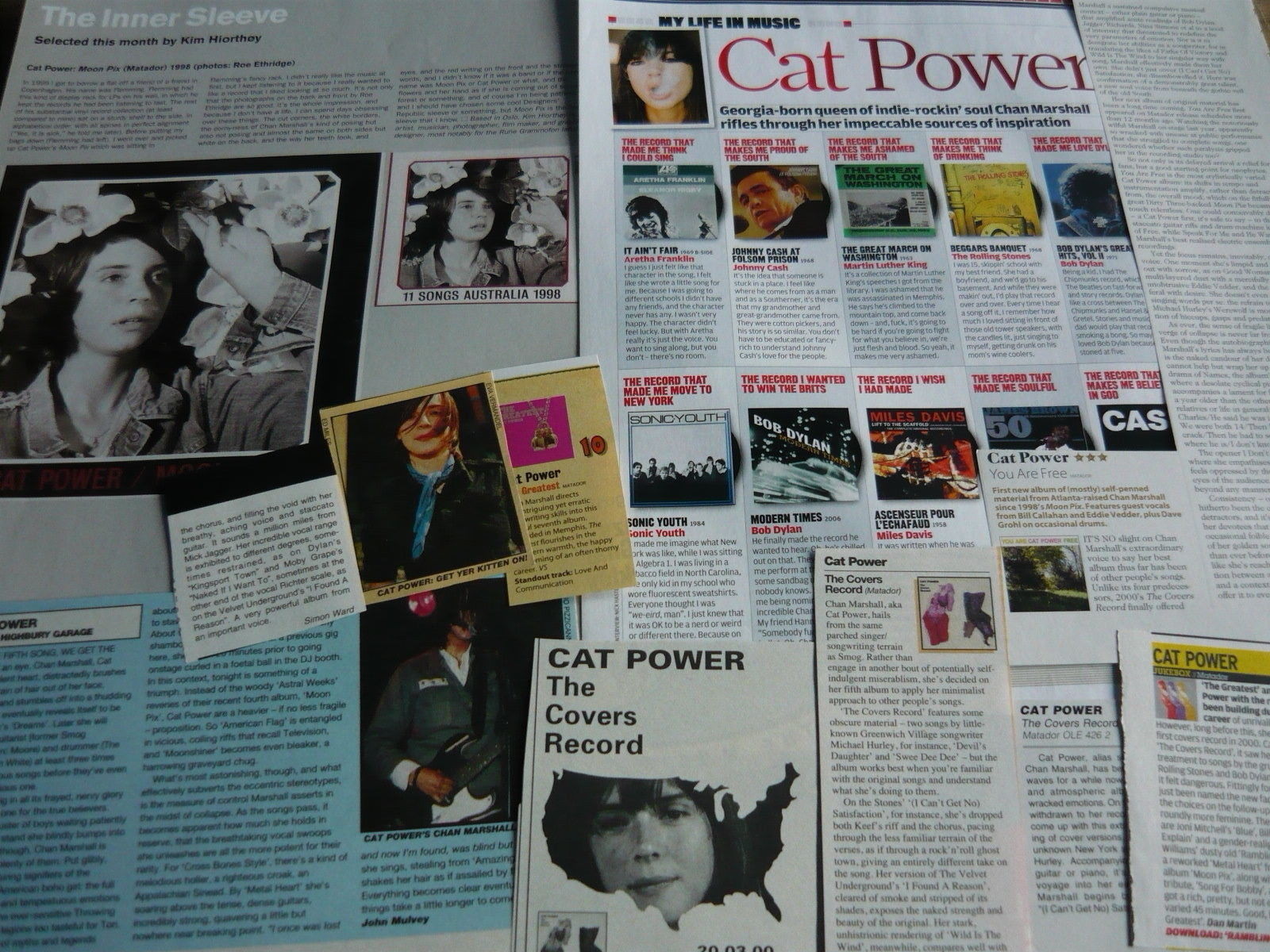
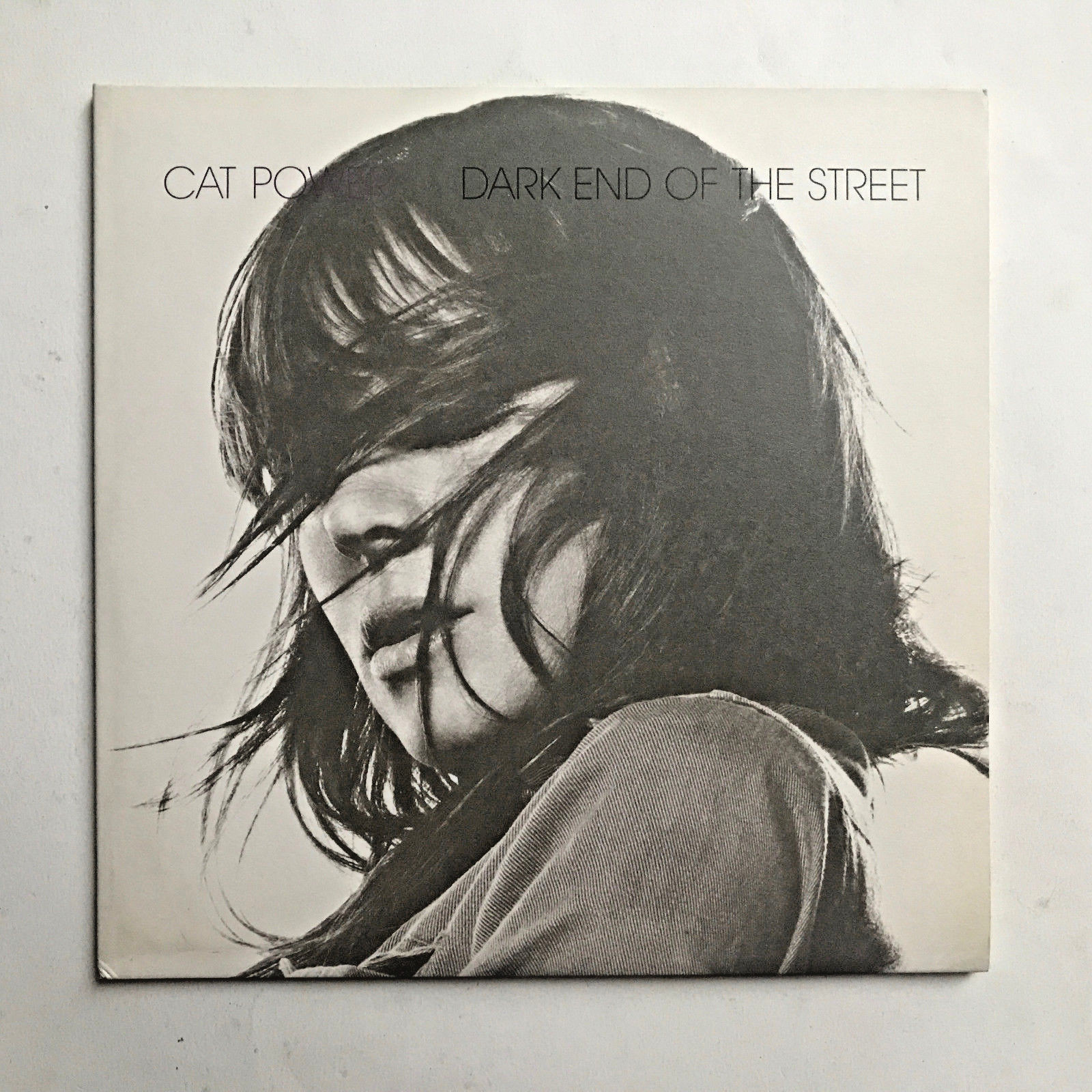
Cat Power was originally the name of Chan Marshall’s first band, but has become her stage name as a solo artist. Born in Atlanta, Marshall was raised throughout the southern United States, and began performing in local bands in Atlanta in the early 1990s. Marshall grew up in a chaotic, poor family with a largely absent blues musician father and a mother from whom she would later become estranged. She has written about alcoholism, violence and assault and, on one song – “Black” she sings of running all the way upstairs, to escape someone who “threw me in the bath with an ice and a slap / can of Coke down my throat / on his whole hands and knees”.
She was discovered opening for Liz Phair in 1993 by Steve Shelley of Sonic Youth and Tim Foljahn of Two Dollar Guitar, with whom she recorded her first two albums, Dear Sir (1995) and Myra Lee (1996), on the same day in 1994. In 1996, she signed with Matador Records, and released a third album of new material with Shelley and Foljahn, What Would the Community Think. Following this, she released the critically acclaimed Moon Pix (1998), recorded with members of Dirty Three, and The Covers Record (2000), a collection of sparsely arranged cover songs.
After a brief hiatus she released You Are Free (2003), featuring guest musicians Dave Grohl and Eddie Vedder, followed by the Soul music influenced The Greatest (2006), recorded with numerous Memphis studio musicians. A second album of cover tracks, Jukebox, was released in 2008. In 2012 she released the self-producedSun, the highest charting album of her career to date.
Critics have noted the constant evolution of Cat Power’s sound, with a “mix of punk, folk and blues” on her earliest albums, and elements of soul and other genres more prevalent in her later material. Her 2012 album Sun incorporated electronica in a self-proclaimed move from the “slower” guitar-based songs she initially wrote for the album. If you’re a fan of Cat Power’s music, you might be thinking: “Well, hang on a minute, she was drunk the last time I saw her live, in fact she turned her back on the audience, muttered something inaudible, stopped in the middle of three songs and then walked off.” Such erraticism is indeed something her live shows became known for; in her own life there were psychotic breakdowns, and she went to rehab for alcohol and prescription-drug addiction. Her diehard fans never wavered, though. For them, to know Cat Power’s heartbreaking, raw music is to love her unconditionally, giving her a rightfully elevated position in the American alt-rock scene
The complete recorded works of Georgia by way of New York, South Carolina and Miami artist Cat Power, reveal’s a complicated artist, and a highly unpredictable one. Yet throughout Marshall’s career, she’s maintained a singular sense of bluesy melancholy that remains a staple of who she is as a songwriter.
Dear Sir (1995)
Cat Power’s first album doesn’t reveal much of what her future held, aside from the fact that there’s a certain sense of walls-closing-in tension. Dear Sir is a lo-fi indie rock record like almost any other lo-fi indie rock record of the mid ’90s, except a notch or two better ,drummer Steve Shelley and guitarist Tim Foljahn amplify the nervous energy that Marshall’s songwriting holds, and you can already tell that voice she has is capable of expressing the kind of resonant emotion-over-virtuosity weariness of which artists typically nail the balance when they’re twice the age she is here. The version of Cat Power that Chan Marshall debuted on first album Dear Sir is, in essence, fairly similar to what she’s done all along, just much more stripped down and on a smaller budget. But at its heart, the connection remains — a bluesy, melancholy approach that comes wrapped up in a lot of soul and a lot of tears. Aesthetically, though, Dear Sir is mostly a low-key, lo-fi indie rock album that displays Chan Marshall’s songwriting at its rawest,
The Tom Waits song “Yesterday Is Here,” cowritten by Kathleen Brennan and originally from Franks Wild Years, is Marshall’s first great recognizable cover. While the arrangement doesn’t start out too far from the original’s staggering minimalist junk shop blues, it’s a brief but intense and unexpected turn into a monomaniacal motorik beat (if that motor threw a rod). This rendition shows off the way Marshall’s voice can turn her surroundings into shaky ground.
Undercover EP (1996)
This track, from a brief session in Portland, has a funny story behind it (at least if the YouTube comments are to be believed). Apparently, as Marshall was on her way to the studio to record Undercover, she changed her mind about one of the songs she wanted to record, and scrapped something she had planned in favor of Dead Moon’s “Johnny’s Got A Gun.” As a result, she spent her drive to the studio studying a copy of Dead Moon’s Defiance LP to memorize the song’s lyrics.
That’s how Marshall took one of the most underrated garage-punk protest songs of the ’90s and found a way to make her quiet intensity sound as capable of busting through walls as Toody Cole’s amplified snarl did. It’s a kind of sloppy-spontaneous performance — she omits the first verse and forgets the words to the last but damn, it works.
Myra Lee (1996)
Released only six months after Dear Sir, and what would be her second album of three in a one-year span, Myra Lee is considerably darker and more complex than its predecessor, but at the same time, a good measure more difficult. It can’t be a complete coincidence that Steve Shelley plays on this album, which sounds frequently like the dissonant songs of early Sonic Youth. Nonetheless, Marshall’s bluesy, folk-influenced songwriting still remains the focus, but presented in a considerably more gothic fashion. Its opening track, “Enough,” speeds up and slows down in pursuit of a nervous breakdown more than a climax, which grows even more intense when re-recorded for the same year’s What Would The Community Think. Similarly, “We All Die” is a harsh noise rock trip that follows a descending riff into the underworld. The cover this time around is a sparse, jangly take on Hank Williams’ “Still In Love,” and the re-recorded version of “Rockets” continues a tradition of revisiting old songs, which comes up repeatedly through Marshall’s career (Dear Sir‘s “Headlights,” itself was a reprise of an early single). There’s a little more complexity to Myra Lee, though Marshall is still one album away from really tapping into the kind of affecting songwriting that made her later albums such emotional powerhouses.
Hank Williams had dealt with pain his entire life from spina bifida, and when a fall made it worse in 1951 a few months after “I Can’t Help It (If I’m Still In Love With You)” hit No2 on the Billboard country singles chart — he started to self-medicate the only way a traveling musician in the early ’50s could find, namely alcohol and a cocktail of painkillers, up to and including morphine.
Whether or not that’s the Hank Williams that Marshall had in mind when she recorded her version, it’s the one that might come to mind thinking about the chronic illness and depression-related alcohol abuse she had to fight through over the years to get to where is is today. But think of the artist foremost, here the country love song deftly reimagined as the cream of ’90s indie rock, concealing a deep wistfulness in what half-listens might disguise as amateurishly played affectless calm. Instead, it’s an actual manifestation of feeling so completely defeated by heartbreak that you can’t even get the focus to play it tight.
What Would the Community Think (1996)
With two albums released in less than a year, Chan Marshall had transitioned from Steve Shelley’s Smells Like Records to the bigger indie Matador Records, which is where she revealed her first flat-out great record. On a purely aesthetic scale, “What Would The Community Think” is cut from the same cloth as its predecessors. It features the same musicians, maintains the same production style, and even has some of the same songs Myra Lee‘s“Enough” is made into an even more manic and climactic track here in the penultimate slot. But the songwriting here is stronger and more sophisticated. “Good Clean Fun” seems always on the verge of snapping, its tense verses extending into some dangerous places before finally revealing a chorus that references Carly Simon and never actually explodes. “Taking People” has some gorgeous slide leads, and “Nude As the News” is one of the most intense and intensely personal songs in the entire Cat Power catalog. It comes from a place of genuine struggle and anguish, as it was written about Marshall’s own experience having an abortion when she was 20.
Chan Marshall’s second album under the name Cat Power, a lo-fi recording at maverick Doug Easley’s Memphis studio, her soft, engagingly shy voice and delicate acoustSc guitar supported by Easley’s pedal steel and Sonic Youth drummer Steve Shelley’s percussion. though Easley and Shelley are better known for working with much louder, noisier artists than Marshall, they never overpower her sensitive but sturdy material. sounding more self-assured than she did on her debut, 1995’s ‘Dear Sir’, Marshall invests more passion and fire in songs like the foreboding ‘Water and Air’ and the obsessive, feedback and piano-laced title track than one expects to find in the slacker-friendly lo-fi genre. elsewhere, the delicate ‘King Rides By’ is an unvarnished love song that packs an equally powerful emotional wallop. this is an outstanding, underrated album.
There are, of course, a few covers, which likewise make for some strong inclusions, particularly Marshall’s take on Smog’s “Bathysphere.” Smog’s Bill Callahan was her boyfriend at the time, and the two would move in together in a house in South Carolina, though that didn’t last. Callahan has a long history of writing outstanding songs, though in this case, Marshall’s is the definitive one.
This isn’t the first time Cat Power paid tribute to Peter Jefferies — there was a cover of “Sleepwalker,” by his post-punk band This Kind Of Punishment, on Dear Sir but this cover from her breakthrough first album on Matador is bound to be a lot of people’s introduction to the New Zealand musician, mine included.
It’s clear from the original version of “Fate Of The Human Carbine” why Marshall might have considered Jefferies something of a kindred artist. The restrained anxiety in this performance, paired with the lyrics’ implication of a panopticon that needs to be hidden from (“They all come and peep through a hole in the wall/ Keep the bastards guessing”), is the sort of feeling that permeates Cat Power’s best early work. Paring back Jefferies’ intricate guitar technique into a serrated-edge acoustic churn adds some panic to the melancholy.
Moon Pix (1998)
Moon Pix is possibily Cat Power’s best album. This is, of course, entirely arguable. There is no qualitative way of proving it, and there are just as many entirely valid defenses for many of Chan Marshall’s other records, though “You Are Free” is probably the one that stands up strongest against this one. Moon Pix isn’t a victory because it’s the most perfectly executed, This is the classic, spooky and off kilter album from Cat Power. Chan adopts a kind of child-visionary persona, delivering an idiosyncratic mixture of surreal, direct, and insinuating lyrics that are enough to rend your heart the more you hear them. her voice is husky yet pure at the same time, and she’s at her best with minimal instrumentation, just her stark vocals and a muffled guitar, sounding like the saddest, most hopeful person on earth singing to herself in an empty room. originally released in September 1998 on Matador.
It sounds great, though later albums like “The Greatest” would prove that bigger recording budgets could, in fact, greatly enhance Cat Power’s sonic potential. What makes “Moon Pix” so special, really, is that it nearly perfectly encapsulates everything so bewitching about Chan Marshall’s dark, honest songwriting.
Playing the 20th-anniversary concert of her album”Moon Pix” in the Sydney Opera House in May. It’s an album that she wrote, inspired by a nightmare when living alone in a farmhouse, and recorded in Australia in 1998, which was then described by Rolling Stone as her “breakthrough record”. The concert cemented something in her head about her own sanity; her own power. Marshall met so many fans who wanted to tell her what certain songs helped them through: a brother’s suicide, madness, loss. The more stories she heard, the more she realised what her small act of creation had achieved. Plus, she found a power in the songs themselves that didn’t fit with her memory of the girl who had written them decades earlier. “I didn’t know I loved myself then, when I was younger. But when we played them, I realised the great love that I had had for myself. Those songs had been me trying to prove to myself,
Moon Pix is where Cat Power’s strengths as a musician and an idea-generator saw her established (dis)comfort zone of indie/folk/punk expand into a more sure-footed place, with lusher arrangements and a rhythm section with more breathing room (via Mick Turner and Jim White of the Dirty Three). On this album, Marshall traded claustrophobia for wide-open vistas. It’s an immersive, even welcoming record, which is pretty noteworthy considering half the original songs were written to stave off the harrowing aftereffects of a hallucinatory nightmare. “I felt as if something was coming fast, straight from under the earth, these dark spirits … then they came, thousands of them, all up against the kitchen window. They were clear, black as night, trying to get into my soul. That’s when I grabbed my acoustic guitar. I thought that if people found my body, I needed to leave a tape. So I just played the songs that became Moon Pix. It was horrifying.”
The one cover on Moon Pix is a traditional folk song, “Moonshiner,” but the liner notes state that it was “inspired by The Bob Dylan.” Marshall revealed in a recent interview, that she remembered hearing his version at around age 25: “I was so in love with this person who was so abusive. I just came to terms with it recently. He was a good man, he just had a lot of demons. He put this on, and it validated my pain, and listening somehow took the pain away. ‘Moonshiner’ was the softest bed I could ever lie on. I felt validated, realized.” But then you hear how weary and lost she sounds in this version, and look into what she adds to the lyrics: “You’re already in hell, you’re already in hell/ I wish we could go to hell.”
What makes the album all the more interesting is the chilling gothic atmosphere that seeps through every track, as it does on the crackle of thunder in “Say,” or the eerie flute that accompanies “He Turns Down.” In doing press for the album, Marshall tells a recurring tale in which she’s awoken by someone in a field in South Carolina, becomes surrounded by evil spirits and starts writing songs to keep from altogether losing it.
The Covers Record (2000)
“The Covers Record”, it’s her finest album, though it’s certainly stunning in its spare, skeletal beauty. Rather, it’s a key album in getting a better insight into who Chan Marshall is as a musician and a songwriter. That probably sounds counter intuitive – gaining insight into a songwriter’s persona via other people’s songs but it’s through her choice of covers that the composite picture of Marshall’s various influences, and the manner in which she applies her own filters. Half of the album comprises either standards or traditional folk songs from the public domain, including a gorgeously spare take on “Sea of Love” and a haunting, tearjerker of a take on “Wild Is the Wind.” Her choice of rock covers is all the more revealing, however. In Marshall’s hands, Velvet Underground’s “I Found a Reason” goes from a heartfelt love song to a statement of faith and acceptance of death.
Recently repressed on vinyl, these are covers of other people’s songs. yet she sings them with no less intensity than if they were her own. on ‘I Can’t Get No Satisfaction’ she removes the chorus and returns it as elegant slow blues. Most appropriately, she covers ‘Red Apples’ by Smog whom she resembles in approach. obscure (traditional and early) Dylan, Nina Simone and Michael Hurley tunes complement the bruised but not buried surroundings. originally released in march 2000 on Matador Records.
The first of two covers albums Marshall recorded in the ’00s,”The Covers Record” is right about where dramatic re-interpretations of other people’s songs went from an occasional fascinating diversion into a distinct corner of Marshall’s career. Her version of the Rolling Stones’ most iconic song is a gutsy way to open a record otherwise marked by folkier offerings, and looks out of place on a tracklist otherwise devoted to traditional songs and deep cuts from Smog and Moby Grape.
Looks, maybe, but not sounds: If you’re going to cover one of the most famous songs in rock ‘n’ roll, and it’s already been famously covered by DEVO, why not do the inverse of what they went for and go for ennui in place of monomania? No rhythm section, no chorus, not even That Riff — just a meditation on what happens when the initial youthful energy that accompanies that burst of frustration eventually disintegrates and you’re just left with the lingering downer effects of all these outside influences battering your sense of self.
“The Covers Record” is one of Marshall’s most emotional records, part of which comes from how stripped down it is, and part of which comes from Marshall’s connection to the songs, which is remarkably different from that of their original performers. More than any other album in her catalog, it’s a reflection of how crucial traditional American blues and folk music is on Chan Marshall’s songwriting.
You Are Free (2003)
In a manner of speaking, “You Are Free” is Cat Power’s breakup album with fame. Every artist with some level of success goes through it, from Neil Young’s On the Beach to Bob Dylan’s Self Portrait. But Marshall’s kiss-off to being held on a pedestal, which has only compounded in recent years with some uncomfortably forthcoming interviews (which come to think of it make her kind of a rock star for being so anti-glamour), is neither as angry as Young’s nor as shambling as Dylan’s. In fact, “You Are Free” is second only to “Moon Pix” in terms of being Marshall’s most cohesive and powerful statement. It also, ironically, is the album with the most famous guest musicians. Eddie Vedder lends his backing vocals to “Good Woman,” a sad chamber folk song that chills with its gentle narration of a crumbling domestic scene. Its instrumentation is stripped down to the skeleton, her ethereal voice not so much haunting as spooky.
By the time Cat Power got to this song by Greenwich Village vet-folkie Michael Hurley, he’d already recorded studio versions of it in four different decades.
Each version feels a little different, but they all share that sense of empathy for a misunderstood monster, and Cat Power’s version adds another layer of pathos. There’s the way those strings — arranged by David Campbell, who did the same for Linda Ronstadt, Leonard Cohen, and (his son) Beck — tremble into existence, bristling and swaying and taking an air of perilous tightrope balance that simultaneously invokes horror movie tension and romantic tragedy. There’s also the fact that Marshall’s habit of stripping out any lyrics that don’t fit the mood she’s putting across leaves “Werewolf” without any of the violence implied by the original: All the pain’s in the love itself.
The Greatest (2006)
Almost anything that Cat Power has recorded could in some way be classified as sad and beautiful, but in the case of “The Greatest”, it’s sad and beautiful in a much more conventional manner. Which is to say, it’s a classic pop album. To capture this rich, soulful aesthetic, Marshall recorded in Memphis with some of the biggest session players of the ’60s and ’70s, including Leroy and Mabon “Teenie” Hodges, who are best known for backing Al Green. As such, it garnered a few Dusty In Memphis comparisons upon release, which is perfectly fitting given the brassy, breezy soul of songs like “Could We” and “Living Proof,” the latter of which ranks among Marshall’s sexiest tunes, rhythmically speaking. But the vulnerability that’s been part of her music remains, it just manifests itself in different ways, from the third-person tale of a boxing hopeful on the lush, heartbreaking title track (“Once I wanted to be the greatest/ Two fists of solid rock/ With brains that could explain any feeling“) to the more conventionally Cat Power-sounding “Hate,” with almost satire-level lines of self-loathing: “I said hate me, myself and I / Said I hate myself and I want to die.” The unexpected peak, however, comes in the final track, “Love & Communication,” which abandons the lushly arranged pop sound for a dirty, Crazy Horse-style barnburner that at once finds Marshall sounding both abrasively defiant and perfectly natural.
Teaming Cat Power with the Hi team who recorded behind Ann Peebles and Al Green was an unexpected and brilliant idea. A special alchemy took place at Ardent Studios in Memphis which enhanced both Cat Power’s gorgeous smoky voice and the soulful groove the band has laid down. I would say that that it was worth the price of the album just for the majestic opening song, The Greatest, were it not that it is also available as a single, but that would be to unfairly demean the rest of the record. Of course Cat Power does not need embellishment, as is demonstrated on the unadorned song Hate. Cat’s most accomplished album to date.
Jukebox (2008)
Cat Power’s first album of covers, The Covers Record, was mesmerizing in how simply Chan Marshall took on various rock and folk songs from a wide range of eras, and made them entirely her own. Jukebox is another album entirely comprising covers, including a cover of a Cat Power song, but the feeling isn’t nearly as enchanting. The idea, admittedly, is cool: Marshall and the Dirty Delta Blues Band, which made up the touring band she used behind The Greatest that featured members of The Dirty Three, Chavez and the Jon Spencer Blues Explosion, play a loose and soulful session of covers. That’s it! Simple, easy, hard to ruin. But something about it just doesn’t add up to the gorgeous, charming collection that The Covers Record did. In fact, some of it is downright corny. The band’s take on Frank Sinatra’s “New York” takes a light, breezy standard and attempts to make it grittier, which in turn only makes it cornier. Her cover of Joni Mitchell’s “Blue” is cool enough, but doesn’t quite match the graceful sadness of the original. But the biggest point of contention is her reworking of Moon Pix‘s “Metal Heart.” Granted, five out of nine Cat Power albums feature a song in its second version, but this one feels utterly unnecessary. The original is so achingly gorgeous, I’m not sure why you’d want to mess with it, but then again, this is something she’s been known to do repeatedly, so why stop now, I guess. The remainder of the album is fine enough, but Jukebox on the whole seems like it could have been divided up in to b-sides.
Jukebox features a great version of Nick Cave’s ‘Breathless’. Cat Power returned with ‘Jukebox’, It was her second album of cover songs and a tribute to the great vocalists who have influenced her over the years. recorded in Dallas, Memphis and Miami with Stu Sikes (who also worked on Loretta Lynn’s grammy-winning ‘van lear rose’), ‘Jukebox’ contains thirteen tracks, eleven of which are covers. the other two tracks – ‘Song to Bobby’, is brand new and a suitable inclusion as she wrote it about meeting Bob Dylan for the first time (it also precedes her version of ‘I Believe in You’ on this record) plus a new version of Cat Power’s own ‘Metal Heart’. this is the first record she has made with her band Dirty Delta Blues – the quartet of Dirty Three’s Jim White, delta 72’s Gregg Foreman, Jon SpencerBlues Explosion’sJudah Bauer and Lizard Music’s Erik Paparozzi – and they make up a big part of this album.
Also making guest appearances on the record are Spooner Oldham , Larry Mcdonald, Teenie Hodges, and MattSweeney (chavez). the album includes covers of Frank Sinatra, Hank Williams, James Brown, Dylan, Billie Holiday, Janis Joplin etc.
Marshall singled out Hot Boys’ ’99 album Guerilla Warfare as a revelation: “At that time there was so much music that my friends were making that had no groove in it, so I just wanted something I could fuckin’ move to.” But you can’t move to this version of Guerilla Warfare cut “I Feel” unless you’re rocking in place, which is just as well. Stripping out most of the specificity of the original’s references while keeping the emotional core of its pacing-in-a-tiny-room stress, it treats its source material not as an excuse to slum it in gangsta exoticism but to zero in on what it is in those lyrics that she can connect to directly: defiance in the face of people who refuse to even comprehend you.
Sun (2012)
As of 2012, Chan Marshall is a grown-ass woman of 40, and a good listen through Sun, her ninth album, certainly reflects that. It’s a much tighter album than her 2008 covers jam Jukebox, and even a more dynamic record than The Greatest, which admittedly contained some of her prettiest songs. But what’s most important about Sun is how much Marshall challenges herself to expand into weirder but nonetheless remarkable material. Lead single “Ruin” makes good use of the Dirty Delta Blues Band by kicking up a driving rock song that makes for one of the album’s catchiest tracks. Pulsing krautrocker “Manhattan” is somewhere between Neu! and Eno, and that makes for a particularly satisfying surprise. But then “Silent Machine” just tears shit up the old fashioned way with some down and dirty blues rock. Sun is quintessential Cat Power, but also contains some of the least Cat Power-sounding material she’s ever recorded. For that matter, as evident on the sprawling “Nothin’ But Time,” Marshall sounds more positive than she ever has, and that seems to reflect her personal life, in which she seems to be in a much healthier place than she has through much of her career. A complicated performer with a long and nonetheless captivating history, Cat Power continues to stand as a vessel for fearless and powerful songwriting.
Six years after her last album of original material (‘the Greatest’, 2006), Chan Marshall moved on from her collaborative forays into memphis soul and delta blues. she wrote, played, recorded and produced the entirety of ‘Sun’ by herself, a statement of complete control that is echoed in the songs’ themes. Marshall calls ‘Sun’ – “a rebirth,” which is exactly what this confident, ambitious, charismatic record feels like. “Moon Pix (1998) was about extreme isolation and survival in the crazy struggle,” she says. “Sun is don’t look back, pick up, and go confidently into your own future, to personal power and fulfilment.” the music on ‘Sun’ employs a sweeping stylistic palette: there’s the classic Cat Power haunting guitar and provocative vocal hook in ‘Cherokee’ (“marry me to the sky…bury me upside down”); the irresistible latin-sounding nine-piano loop of ‘ruin’; upbeat, almost dancey electronic anthems like ‘Real Life’ and ‘3,6,9’; and the stirring, 8-minute epic ‘Nothin But Time,’ featuring a vocal cameo by Iggy Pop. the swagger of ‘Silent Machine’ brings to mind mid-70s Jagger, contrasted with the unusual, sparse production of ‘Always On My Own’. the narrative arc of the record is deeply optimistic; the music is defiantly modern and global. though devoid of grave bedroom confessionals, ‘Sun’ is possibly Cat Power’s most personal album to date. for all its layered expansiveness, it is as handcrafted as her debut, and never has a Cat Power album so paralleled her personality and state of mind – channelling her humour, anger, deep empathy, musical inspirations, technical skill, and spiritual inquiry into an album that’s both surprising and comforting. those versed in the Cat Power discography will detect elements of 2003’s landmark album ‘You Are Free’, which experimented with vocal forms and beats borrowed from urban music, and the spellbinding authority of songs like ‘American Flag’. ‘Sun’ is incredibly fresh, reflecting its forward-looking mindset.
Wanderer (2018)
“Wanderer” is her 10th album release. Her old record label, Matador Records , wanted her last album, Sun, “to be a hit record, and the pressure was overwhelming”. So she moved to Domino Recordings, where she felt she could have “some kind of sacred, secret space with this record. I didn’t want to think about what anybody else wanted. I only wanted to think about what arrived in my brain.”Chan Marshall (aka Cat Power) produced “Wanderer” herself, writing and recording it’s 11 tracks in Miami and Los Angeles. Lana Del Rey guests on one track! Richly glorious vocals sing folk for indie kids. Almost Appalachian harmonies are the icing on a homemade cake of indefinable sweetness. Gently tender songs trickle and flow like dancing sunlight. Splashes of piano, loping guitar and a quivering Rhodes help to wrap up the songs in a parcel of loveliness.
Wanderer is, in many ways, a quintessential Cat Power record, with Marshall’s clarion voice front and center in a set of songs that remarkably stark and straightforward. But, if old Cat Power records might easily have been viewed as repositories for pain, Wanderer is, at its heart, a testament to the transformative nature of songs, an album-length imagining of alternate paths, redemptions, connections, and open-ended possibility.
Cat Power, the vocalist, songwriter, musician, and producer Chan Marshall released her new album “Wanderer” via Domino Recordings. Produced in its entirety by Marshall, “Wanderer” includes appearances by long-time friends and compatriots, as well as guest vocals courtesy of friend and recent tour-mate Lana Del Rey. Written and recorded in Miami and Los Angeles over the course of the last few years, the new album Wanderer is a remarkable return from an iconic American voice. “Wanderer’s” 11 tracks encompass “my journey so far,” says Marshall. “The course my life has taken in this journey – going from town to town, with my guitar, telling my tale; with reverence to the people who did this generations before me. Folk singers, blues singers, and everything in between. They were all wanderers, and I am lucky to be among them.”
The albums:
Dear Sir (1995)
Myra Lee (1996)
What Would the Community Think (1996)
Moon Pix (1998)
The Covers Record (2000)
You Are Free (2003)
The Greatest (2006)
Jukebox (2008)
Sun (2012)
Wanderer (2018)
Formed in 1984, Dinosaur Jr carved a singular path through the latter half of the 1980s and early 1990s, issuing a number of highly influential albums in the process before finding a home with Sire Records. Cherry Red Records has announced details of an epic Dinosaur Jr. album reissue campaign coming this September: The four Warner period ’90s albums ‘Green Mind’, ‘Where You Been’, ‘Without A Sound’ and ‘Hand It Over’ have been lovingly remastered, expanded and reissued on coloured double vinyl and double CD editions, with related singles, b-sides and previously unreleased material. The entire collection is available now
Dinosaur Jr. consisted of J Mascis on guitar and vocals, Lou Barlow on bass and Murph banging the drums. Their first album came out in 1985 and they had a huge underground hit with the 1988 single Freak Scene. Lou Barlow left shortly afterwards to form the highly regarded Sebadoh,
“Without A Sound”, was their sixth record, emerged in the summer of 1994, in the wake of personal bereavement and the departure of longtime drummer and founder member Murph.
Performed primarily by J Mascis, “Without A Sound” continued the band’s growth in popularity and commercial achievement, reaching #44 in the US (their highest ever album placing there) and featuring the hit singles ‘Feel The Pain’ and ‘I Don’t Think So’. Released to positive reviews, “Without A Sound” also took Dinosaur Jr around the world, including dates in Australia, New Zealand and Japan, and into the mainstream as the group contributed ‘Blah’ to the hit US TV show Melrose Place.
Collected together with related B-sides, unreleased mixes and a complete live recording made in London in 1994, and accompanied by in-depth sleevenotes from Mojo’s Keith Cameron (based on recent and exclusive interviews with J Mascis), this edition provides a glimpse of a band at the height of their international appeal and accessibility.
“Hand It Over”, their seventh record, appeared in the spring of 1997 following a lengthy absence, and would prove to be the band’s final album-length offering for a decade.
Performed primarily by J Mascis, “Hand It Over” appeared at a time of declining international interest in American alternative rock, but nevertheless received widespread approval and appreciation amongst critics and reviewers. The album was accompanied, unusually, by an EP of non-album songs recorded for the Matt Dillon movie Grace Of My Heart and, later, a vinyl only ‘I’m Insane’ 7” single, all of which are collected here alongside a previously unreleased concert recording made in Stockholm and two tracks performed for ABC TV in Australia.
Dinosaur Jr carved a singular path through the latter half of the 1980s, issuing three highly influential albums in the process before finding a home with Sire Records, who issued “Green Mind” in 1991 as the alternative American rock scene the band had long been part of exploded globally.
Produced by a stripped down line-up of the group (in fact, J Mascis himself plays almost everything), the album and Sire’s international reach took Dinosaur Jr’s reputation to a new level, aided by the singles ‘The Wagon’ and ‘Whatever’s Cool With Me’, a non-album EP of new material and live recordings, all of which are included here alongside a previously unreleased live recording capturing the group at the Hollywood Palladium in June 1991.
Critically lauded on release, “Green Mind” remains one of the band’s strongest collections, and a firm fan favourite.
‘Where You Been’, their fifth record, emerged in 1993, at the height of enthusiasm for grunge and the alternative American rock scene the band had long been part of.
Produced by a new line-up of the group (longtime drummer Murph and new bassist Mike Johnson completing the three-piece), the album became the band’s most successful up to that point, reaching #50 in the US (where it sold over a quarter of a million copies) and #10 in the UK album charts, and spawning the hit single ‘Start Choppin’.
Released to unanimously positive reviews, and containing many tracks that would become staples and fan favourites, ‘Where You Been’ continued Dinosaur Jr’s global ascent, being issued simultaneously across the US, Europe, Australasia, Asia and South America.
Collected together here on vinyl for the first time with related singles, B-sides and John Peel session recordings,
To celebrate the deluxe reissue campaign of Dinosaur Jr.’s classic Warner Years albums ‘Green Mind’, ‘Where You Been’, ‘Without A Sound’ & ‘Hand It Over’ via Cherry Red Records, singer & guitarist J Mascis spoke to Keith Cameron from MOJO Magazine about recording these much loved albums.
Order the Warner Years albums reissued on deluxe gatefold 2LP & deluxe expanded 2CD editions
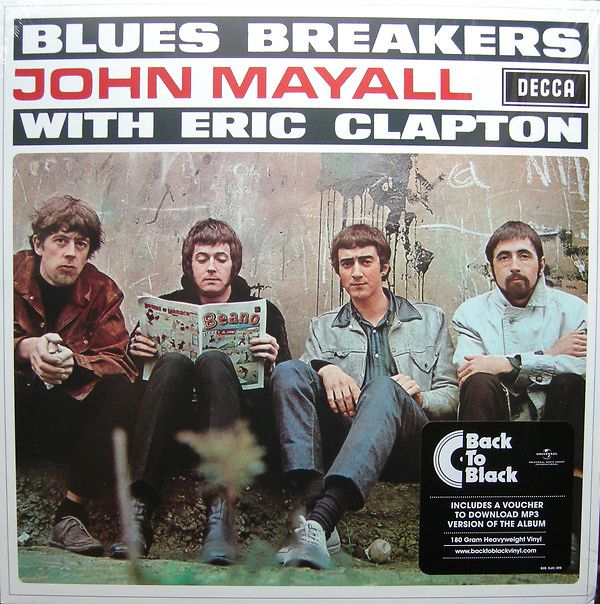
Arguably, no bandleader in modern history has attracted more sterling guitarists to his line up than John Mayall. During the ’60s and ’70s, Mayall hired and shaped some of the most distinguished axemen of all time, including Eric Clapton, Peter Green, Mick Taylor, Jon Mark and Harvey Mandel. In a frenzied, fourteen month period, between 1966 and ’67, Mayall released the seminal “Bluesbreakers With Eric Clapton” album, followed by “A Hard Road”, which showcased the string-bending talents of Peter Green right before he formed Fleetwood Mac, chased by “Crusade” , which introduced the world to later Rolling Stones’ guitar wiz Mick Taylor.
And it’s not just guitarists who are drawn into Mayall’s orbit. In addition his ever-shifting bands have included such vaunted bass players as John McVie, Jack Bruce, Andy Fraser and Tony Reeves, while, on drums, he nurtured the classic stickmen Mick Fleetwood, Aynsley Dunbar, Keef Hartley and Jon Hiseman. To boot, he provided early showcases for British sax icon Dick Heckstall-Smith and fusion violin pioneer Don “Sugarcane” Harris.
“I guess I’ve got good taste,” said Mayall, with a laugh. He’s also got longevity. At 83, Mayall still tours widely and puts out albums, including a crisp and toned new one, Talk About That
John Mayall Talk About That
The music on the album honors, and reemphasizes, the star’s more than half century devotion to the blues. Two cuts feature contributions by Joe Walsh. “Apparently, it was on [Joe’s] bucket list to play with me,” Mayall said. “I didn’t know his qualifications as a blues guitarist, to be honest. But he fit right in. He was only with us a few hours but it was a magical experience.”
Much the same could be said of Mayall’s many collaborators over the years. Few of them tarried long in his band, but each left an indelible impression. After more than half a century of talent scouting, it’s high time to celebrate everything John Mayall did with, and for, the star musicians he nurtured.
If you ask Mayall what he brought to all these axemen in their formative phases, he’ll answer with one word: freedom. “If I hire somebody to play with me, I’m hiring them because I love their playing,” he said. “I don’t want to usurp that by saying ‘you must play this and you can’t play that.’ I gave them the freedom to help them develop their own style.”
Mayall’s age helped him assume that mentor role convincingly. He was already thirty when he got his first record contract and began his storied hiring spree. His father had also been a guitarist and jazz fan, though John leaned closer to the blues as a teen after hearing artists like Lead Belly and Pinetop Smith. Armed with a guitar and a harmonica, Mayall played in blues bands during his time at the Manchester College of Art. Years later, the visual flair he honed at school would allow him to design some of his early album covers. In 1962, Mayall formed the group Blues Syndicate, mixing that genre with jazz, a balance inspired by Alexis Korner’s band. Korner convinced Mayall to move to London where, in 1963, he formed his first version of the Bluesbreakers, featuring John McVie on bass. Mayall himself sang lead vocals and played rhythm guitar. The group secured gigs at the Marquee Club, which led to a contract with Decca Records. In 1964, Mayall’s band received an amazing opportunity—to back John Lee Hooker on a British tour of clubs and festivals. “We learned a lot from playing with him,” Mayall said. “The first thing we noticed was that, where all the English bands were playing as loudly as they could, there was a different dynamic from the American blues greats. From them, we learned all about dynamics and volume.”
Mayall believes that the British and European musicians had more respect for the roots players than their American brethren did back then. “There were two separate societies in America at the time because of the color bar,” he said. “When the black jazz and blues musicians came over here they were treated like Gods. So it was inevitable that Europeans would eventually come to the blues line of work themselves.”
While some accused the British players of ripping off American blues stars, in fact they brought a different level of velocity, virtuosity and abstraction to the form. Essentially, they applied the expansions of free jazz to the chord structures of the blues. “Everybody found their own style within that structure,” Mayall said.
John Mayall Plays John Mayall
Not that the older generation in the music industry understood what these young bucks were doing. Mayall says his label, Decca, hadn’t a clue what he was up to on his debut work, John Mayall Plays John Mayall a live album released in 1965. On the disc, he sang and played harmonica, organ and 9 string guitar, while Roger Dean served as the band’s first lead guitarist. “Decca washed their hands of me after that first album,” the musician said. “It didn’t sell well enough for their executives. But Mike Vernon, the producer, talked to them and, they thought, ‘if it’s okay with Mike, then.. Still, things might not have been okay for long had Mayall not made a crucial change in his band that year. On the small London music scene, he had heard buzz about a young guitarist in the band The Yardbirds—one Eric Clapton. At first, Mayall wasn’t interested. When The Yardbirds made that first big single, “For Your Love” it didn’t impress me very much,” Mayall said. “But it had a B-side, “Got To Hurry” which was an instrumental. That was the thing that knocked me out.”As it turned out, Clapton felt much the same way. He hated the pop direction of “For Your Love” enough to ditch the band. “I approached him to see if he wanted to join my band,” Mayall said. “All we were doing was playing blues and that’s exactly what Eric wanted.”
Clapton replaced the departed Roger Dean and the refigured band began to cut their teeth in the London clubs. Unfortunately, Clapton proved to be a mercurial soul, prone to moodiness and hard to control. Mere months after cutting some sides with the Bluesbreakers, he announced he was running off to play with a bunch of virtual amateur musicians he had met in a group called The Glands. The unflappable Mayall told Clapton he could always come back if he changed his mind. In the meantime, the band leader subbed in another promising young, blues-obsessed guitarist from the scene: Peter Green. By November of ’65 Clapton came to his senses, pushing Green out. The next year the reconstituted band recorded that first Bluesbreakers release, an instant classic. Mayall said he considered the album just “a nice opportunity to go into the studio and put down what we were doing live. We never realized it would have the success that it did.”
Bluesbreakers with Eric Clapton
‘Bluesbreakers with Eric Clapton’ shot to to No. 6 on the U.K. Top Ten. The material on it included some original pieces by Mayall, who played keyboards and sang on the album. But mainly the repertoire emphasized covers of blues songs by artists like Otis Rush, Mose Allison and Little Walter. Clapton’s solos dominated the disc, fully earning the star billing he received on the cover. It was Mayall’s idea to highlight his impeccable contribution right on the album sleeve.
The album struck such a deep chord with the public, it inspired that famous graffiti scrawl in London, “Clapton Is God.” It also set the template for all the rock guitar heroes to come over the next decade. Some fans believe ‘Bluesbreakers with Eric Clapton’ contains the most fiercely emotive work of the guitarist’s career. At the time of its release, however, Clapton had already met bassist Jack Bruce who, together with drummer Ginger Baker, had a notion for new kind of band—a power trio. Clapton formed that group Cream without telling Mayall, who found out the way everyone else did—by reading about it the music press. One can hear the very direct influence of Buddy Guy and a handful of other American bluesmen in the playing. And lest anyone forget the rest of the quartet: future pop/rock superstar John McVie and drummer Hughie Flint provide a rock-hard rhythm section, and Mayall’s organ playing, vocalizing, and second guitar are all of a piece with Clapton’s work. His guitar naturally dominates most of this record, and he can also be heard taking his first lead vocal, but McVie and Flint are just as intense and give the tracks an extra level of steel-strung tension and power, none of which have diminished across several decades.
Remarkably, Mayall considered the surprise defection of his star attraction no big deal. “It was inevitable,” he said. “Eric and Jack wanted to do something different and Ginger Baker was there to talk them into it. From my point of view, this has always been simple. If somebody left the band, I found a replacement. And it seemed there was always somebody out there that I’d like to work with. As a bandleader I had the privilege to hire anybody I wanted.”
Mayall rallied by asking the 20 year old Peter Green to come back to the fold one year after he’d been shown the door. “He was a bit reluctant to trust that this job would be reliable,” the bandleader said. “Peter had the opportunity to work with The Animals and go to America. But because of his love of the blues, he decided he’d rather play in my band.”
John Mayall Bluesbreakers A Hard Road
Again, the chance to stick with pure blues became Mayall’s selling point for his young players. The result paid off with another Top Ten album, the critically hailed ‘A Hard Road,’ out in February of ’67. It featured two songs written by Green, and two sung by him. Green had a more economical style than Clapton, with a tone so sweet, B.B. King later said that it brought him to tears. Original pieces dominated ‘A Hard Road,’ most of them written by Mayall. As with Clapton, Green only remained with Mayall for a year, but when he left, he inspired a major defection, taking with him then drummer Mick Fleetwood—and bassist John McVie not soon after. Together, they formed Fleetwood Mac.
Even with so with another huge a blow to his band, Mayall kept an even-keel. It helped that he soon ferreted out another six-string master—18 year old Mick Taylor. Finding three such amazing players in a row makes Mayall seem like the brains behind Menudo, an act which subbed in new kids every time one got too old. Only in Mayall’s band, age wasn’t a factor and every young guitarist he hired turned out to be a genius.
John Mayall Crusade
The reborn band’s debut, ‘Crusade,” released in September of ’67, followed its predecessors path by shooting straight into the U.K. Top Ten. The music found Taylor in a commanding position. “He has a very elegant sound,” Mayall said. “He was more jazz influenced than Peter or Eric. but no one sounds like Mick, even today.”
The final album of an (unintentional) trilogy, Crusade is most notable for the appearance of a very young, pre-Rolling Stones Mick Taylor on lead guitar. Taylor’s performance is indeed the highlight, just as EricClapton and Peter Green’s playing was on the previous albums. The centerpiece of the album is a beautiful instrumental by Taylor titled “Snowy Wood,” which, while wholly original, seems to combine both Green and Clapton’s influence with great style and sensibility.
While it seems amazing that Mayall surfed so smoothly through all these fast changes, brisk switch-up weren’t at all unusual in the ’60s or early ’70s. The culture itself was moving at warp speed. Each year brought a whole new look, sound, and sensibility to the culture. The tender age of Mayall’s proteges also played a part. “They hadn’t much experience in playing,” he said. “They were in the process of finding their own style and finding out what they wanted to do in music. Being with my band helped them to develop rather more quickly than they might have done otherwise.”
“When one looks back you can see that speed,” of the changes, Mayall said. “But when you’re involved in it, you’re just doing a job, playing seven or eight gigs a week. You don’t have time to notice the big picture.”
John Mayall Bare Wires
To momentarily stave off more changes, Mayall pulled a fast one himself. He cut his next album The Blues Alone nearly entirely himself, penning all the songs and playing all the instruments save the one manned by drummer Keef Hartley. The album contains a rare example of Mayall playing lead guitar. It didn’t pay off commercially, but the bandleader rebounded strongly on 1968’s Bare Wires, his first album to crack the U.S. charts (reaching No. 59). “Wires” devoted a full side to a single suite, gave new reign to Taylor’s fluid guitar and provided a showcase for saxist extraordinaire Dick Heckstall-Smith. The album began with a 23-minute “Bare Wires Suite,” which included more jazz influences than usual and featured introspective lyrics. In retrospect, all of this is a bit indulgent, but at the time it helped Mayallout of what had come to seem a blues straitjacket (although he would eventually return to a strict blues approach). It isn’t surprising that he dropped the “Bluesbreakers” name after this release.
Blues From Laurel Canyon (Remastered)
‘Wires’ marked the final album credited to the band name Bluesbreakers, but that wasn’t the strongest break Mayall made at that time. Late in ’68, he left England to take up full time residence in what was then the newest hotbed of musical creativity—Laurel Canyon. While that locale gave rise to the whole singer-songwriter renaissance, as well as to the CSNY axis of creativity, Mayall says he didn’t participate much in the scene. “The only person I met there was Frank Zappa,” he said. “But I fell in love with the place. It was everything I hoped America would be.”
Turning Point,
Mayall trumpeted that love on Blues From Laurel Canyon, a seamless work which ran all the songs together in rootsy reverie. Soaking up the mellow L.A. atmosphere had an even greater impact on his next album, aided by a key loss. In June of ’69 Taylor bolted to replace the just-deceased Brian Jones in the Rolling Stones. The jolt brought out something revolutionary in Mayall. For his next work—the aptly named The Turning Point.
Mayall ditched high-octane, top volume blues for an acoustic-based band that featured no drummer. “I just got tired of the same instrumentation,” the bandleader said. “With a drummer-less band, there are more dynamics and no one gets drowned out. People who heard about the album were very skeptical. Promoters were horrified that they were booking a band that had no drums. But I went ahead anyway.”
Mayall had key help from folk guitarist Jon Mark. A sensitive player, Mark had previously been part of an overlooked gem of a band, Sweet Thursday, which included piano wiz Nicky Hopkins and future Cat Stevens collaborator Alun Davies. For the new project, Mayall amped up the role of a sax and flute player he’d already collaborated with: Johnny Almond. Mayall’s inspiration for the radical project was the record The Train and The River by Jimmy Guiffry, which featured just guitar and sax. To nail the immediacy of his new approach, Mayall cut ‘The Turning Point’ live at The Fillmore East. One song, Room To Move became an FM staple, prized for its brisk rhythm and wild mouth-organ flourishes.
Empty Rooms
In this incarnation, the group put out one studio album, 1969’s Empty Rooms, Immediately afterwards, Mark and Almond broke off to form their own acoustic-jazz group, inventively named The Mark-Almond Band. Some thought they ran off with Mayall’s idea but the magnanimous bandleader prefers to view MAB simply as “a continuation” of the style. Either way, the defection paved the way for yet another creative leap, this one involving the dexterous guitarist Harvey Mandel (late of Canned Heat) and fusion violinist Don “Sugarcane” Harris. The latter had made key contributions to Frank Zappa’s Hot Rats as well as to great Mothers’ albums like Weasels Ripped My Flesh The new band issued USA Union in 1970, pushing the sound deeper into jazz while retaining the drummer-less motif. “For me, jazz and blues have always been intertwined,” Mayall said. “There’s no dividing line.”
Back to the Roots
As a perfect capper for Mayall’s classic era, he released Back To The Roots. in 1971, a work which briefly reunited him with Clapton, Taylor, Almond, and other great players from his past. Mayall says he has maintained good relationships with all of his starry graduates of his group in all the years since. Taylor, for one, has often returned to play with him. The bandleader harbors no jealousy for the successes his proteges have achieved with other bands, most of them far greater than his own. Mayall’s insistence on sticking with the blues, rather than moving into more pop friendly sounds, accounts for the disparity. He believes he had no choice in that. “Blues is the only thing I know how to play,” he said.
Over the past few decades, Mayall’s blues-rooted bands have given platforms to other significant, if less celebrated, guitarists, including Coco Montoya, Walter Trout and Buddy Whittington. His current band has no lead axeman at all, the better to let the three players shine. At 83, Mayall still tours 100 days of the year and records regularly. The latest album ranks as his 41st. “There’s never a shortage of ideas,” he said. “I just love music, and so I always want to explore it.
The classic sophomore LP, available in a limited white vinyl pressing and available for the first time ever as a coloured LP. After two years of seemingly endless tours, the quartet returned in early 2004 to Peter Katis’s Tarquin Studios in Bridgeport, Conn., to record their second album. They had already debuted a handful of songs earmarked for Antics on the road: Length of Love, Narc, C’mere. Meanwhile, having revisited – and reinvented– the material from Bright Lights night after night, they discovered new strengths. There was more room for experimentation in these songs, for toying with arrangements and intricacies of individual parts, than on their debut.
The acclaimed record, which was originally released back in 2004, is set to be reissued on limited-edition white LP. It will arrive on September 27 – the album’s original release date – via Matador Records.
All 10 tracks from ‘Antics’ will appear on the reissue, including ‘Evil’, ‘Slow Hands’, and ‘Narc’
With Antics, Interpol has delivered a disc even more engaging than its celebrated predecessor, without sacrificing any of the depth that has made them such an important band for so many. The songs are at once catchier and more variegated, revealing themselves over time to a degree heard on few current releases, and nothing is ever obvious. Frontman Paul Banks describes, “A lot of time, there are specific topics or events that that inspire the songs, but it’s not explicit in my lyrics.“ Indeed, with Interpol, things are rarely what they seem.
Interpol is a New York-based rock band formed in 1998. The band currently consists of Paul Banks (vocals, guitar), Daniel Kessler (guitar) and Sam Fogarino (drums).
Interpol’s second album ‘Antics‘ 15th Anniversary out now on Matador Records
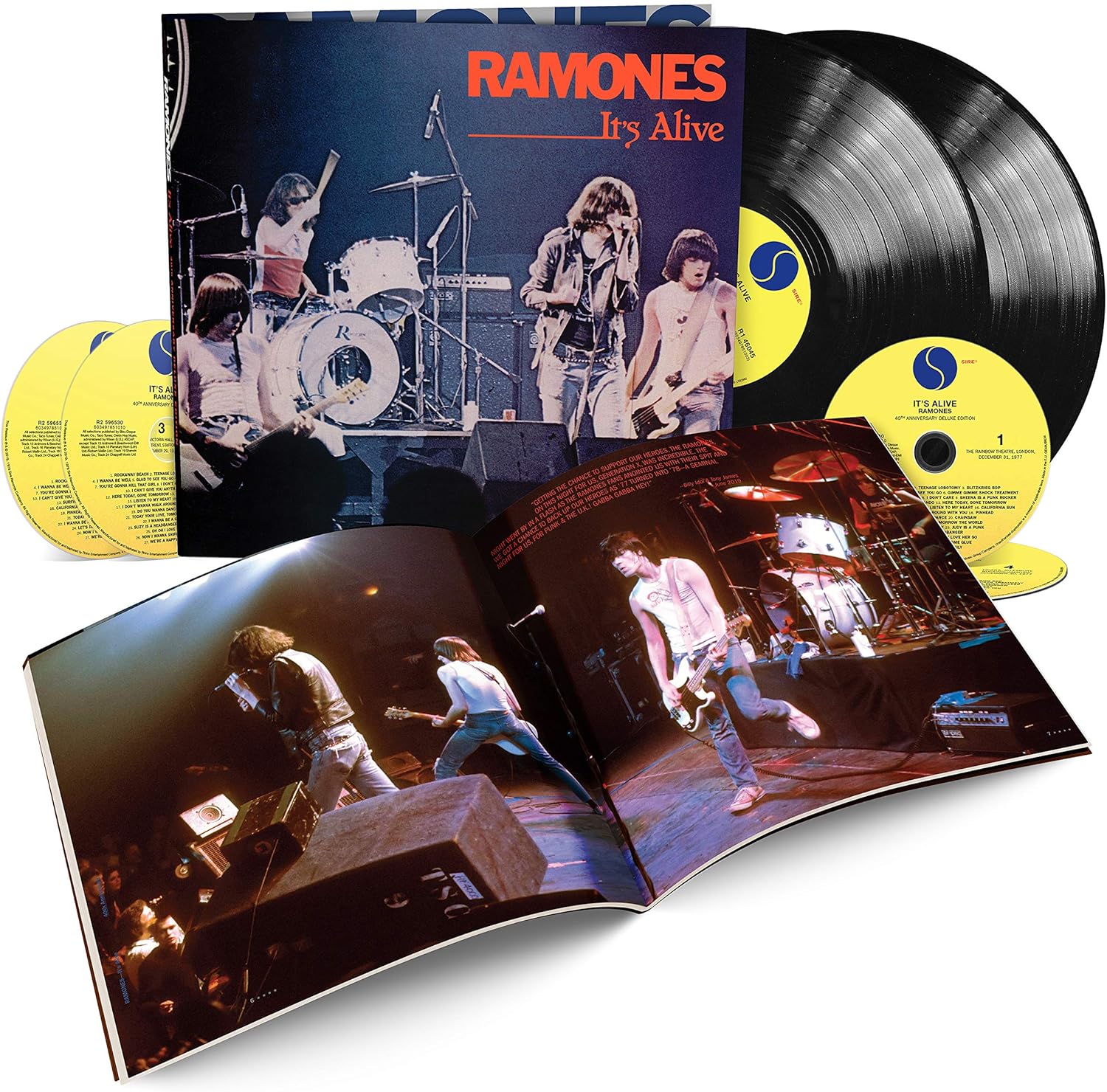
Rhino’s ongoing series of deluxe box sets celebrating the Ramones’ legacy continues on September 20 with a fifth entry: the 40th anniversary 4CD/2LP edition of the band’s 1979 live album It’s Alive. Recorded in London on New Year’s Eve 1977 and released in April 1979, It’s Alive featured blistering takes on songs from the band’s first three studio albums. Only the Ramones could have fit 28 songs onto less than 54 minutes of vinyl.
Limited to 8,000 units, the It’s Alive Deluxe Edition is packaged in a 12 x 12 hardcover book featuring new liner notes by Steve Albini and original album producer-engineer Ed Stasium, who also remastered the music here. It features all four concerts that were professionally recorded during the band’s U.K. tour of December 1977, three of which are making their first release: Top Rank, Birmingham (December 28, 1977); Victoria Hall, Stoke-On-Trent(December 29, 1977); Friars, Aylesbury (December 30, 1977); and The Rainbow Theatre, London (December 31, 1977). The latter was utilized for the original album release, which became the last album to feature all four original Ramones: Dee Dee, Joey, Johnny, and Tommy Ramone. Highlights include all-time band favorites such as “Rockaway Beach,” “Blitzkrieg Bop,” “Now I Wanna Sniff Some Glue,” and “We’re a Happy Family” plus high-octane covers of “Do You Wanna Dance,” “Surfin’ Bird,” “California Sun,” and more. The original album will be pressed on two 180-gram vinyl LPs for this release.
The Ramones’ first official live album, “IT’S ALIVE”, was recorded in various locations and eventually released as a double album in 1979. Taking its name from a 1974 horror film, the concert collection was the last album to feature all four original band members and delivered a blistering barrage of live takes on classic tracks from the group’s first three albums. Now available, a 4-CD/2-LP Deluxe Edition of the seminal set features remastered sound and three additional concerts from the same tour, all of them previously unreleased.
It’s Alive: 40th Anniversary Deluxe Edition is available for pre-order from Sire/Rhino, arriving September 20th,
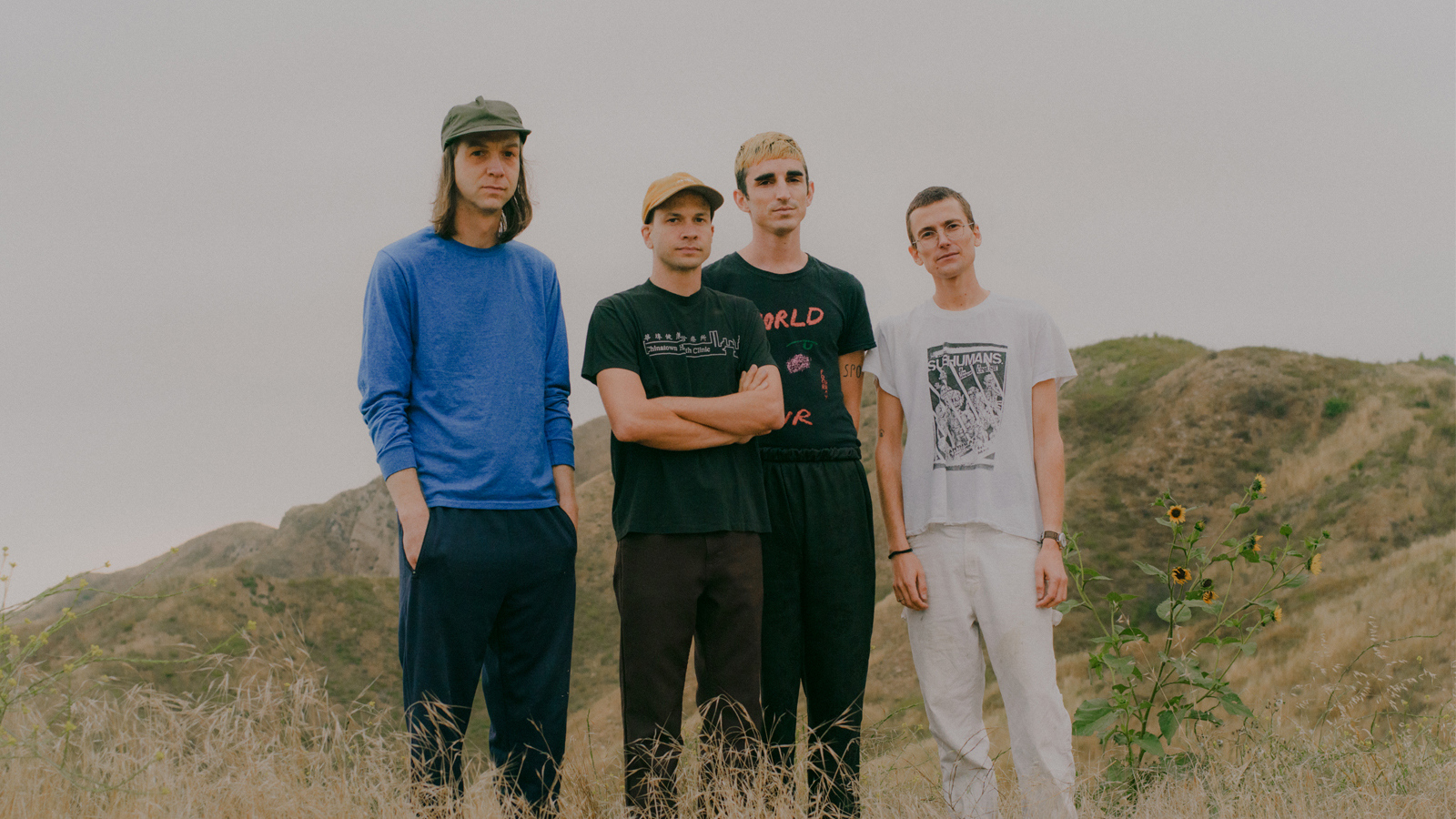
Rebirth takes place when everything falls apart. On DIIV’s forthcoming third full-length album, “Deceiver” – out October 4th – they craft the soundtrack to personal resurrection under the heavy weight of metallic catharsis, upheld by robust guitars and vocal tension that almost snaps, but never quite… Today, the band — Zachary Cole Smith [lead vocals, guitar], Andrew Bailey [guitar], Colin Caulfield [vocals, bass], and Ben Newman [drums] — releases lead single “Skin Game,” which gallops forth on a clean guitar riff before unfolding into a hypnotic hook offset by an off-kilter rhythm and hummable solo.
“It’s an imaginary dialogue between two characters, which could either be myself or people I know,” says Cole of “Skin Game. “I spent six months in several different rehab facilities at the beginning of 2017. I was living with other addicts. Being a recovering addict myself, there are a lot of questions like, ‘Who are we? What is this disease?’ Our last record was about recovery in general, but I truthfully didn’t buy in. I decided to live in my disease instead. ‘Skin Game’ looks at where the pain comes from. I’m looking at the personal, physical, emotional, and broader political experiences feeding into the cycle of addiction for millions of us.” Deceiver was recorded in March, 2019 in Los Angeles. For the first time, the band enlisted an outside producer in the form of Sonny Diperri (Nine Inch Nails, Protomartyr) whose presence dramatically expanded the sonic palette, making it richer and fuller than ever before. The new album is preceded by 2012’s Oshin and 2016’s critical and fan favorite Is the Is Are. Ranked it in the Top 10 among the “Albums of the Year” and Pitchfork’s audience voted Is the Is Are one of the “Top 50 Albums of 2016” as the outlet dubbed it, “gorgeous.”
DIIV – Zachary Cole Smith (lead vocals/guitar), Andrew Bailey (guitar), Colin Caulfield (vocals/bass), and Ben Newman (drums) – craft the soundtrack to personal resurrection under the heavy weight of
Ask most music lovers to name female singer-songwriters of the classic-rock era and the same trilogy of names will come numbingly to the tongue—Carole King, Joni Mitchell, and Carly Simon. It’s a familiar enough group to have inspired a best-selling biography covering all three, “Girls Like Us,” by Sheila Weller.
It’s too bad more people don’t know that there should be a fourth “girl” in that club one of equal talent and reach who sprang from the same era: Laura Nyro. That’s especially unjust given the fact that, in the late ’60s and early ’70s, Nyro penned many more chart hits than Joni did and at least as many as Carly managed. Admittedly, there’s a significant caveat to Nyro’s success: She could only smuggle her genius into the mainstream via cover versions recorded by more accessible artists. Between 1967 and ’71, songs that Nyro wrote, like “Stoney End” “Eli’s Coming and “Wedding Bell Blues”, flew high on the charts and became embedded in the public’s consciousness. But they only did so cut by other artists like Barbra Streisand, Blood Sweat and Tears, Three Dog Night, and The 5th Dimension, respectively.
It was left to the most dedicated fans to savor the quirks and drama of Nyro’s own recordings. They were contained on classic albums like Eli and the Thirteenth Confession , New York Tendaberry , and Christmas And TheBeads Of Sweat, all works which presented Nyro in the raw. Her albums served unsweetned versions of the songs, spiked by complex arrangements, sneaky beats, and vocals that could turn in an instant from shy to stentorian. Given those eccentricities, it’s understandable that Nyro never achieved the exposure of her peers.
This year, however, Nyro’s achievements deserve a fresh view, will mark 50 years since her debut appeared under the apt title More Than A New Discovery (later re-released as ‘The First Songs’). This fall, the star would have turned 70, while April 8th will mark twenty years since her death, exacerbating the silence surrounding her. Even most of the stars who gave Nyro her hits back in the day have fallen from popular, or critical, favor. The exception? Barbra Streisand, who included a herculean version of “Stoney End” on her most recent tour, this past summer.
That song, and others, demonstrate how Nyro brought together elements, and sensibilities, no other writer thought to connect. Her sift of genres put her beyond easy category. Listening to Nyro’s records today, you find yourself thinking: Just what kind of music did she make? Her unconventional keys and startling tempo changes suggest jazz. Her theatrical melodies speak of Broadway, while the introspection of the songs says “singer-songwriter.” Meanwhile, the soulfulness of Nyro’s tunes played straight to the heart of Motown. Everything from art-song to girl group hits had an influence on her sound.
Nyro’s music also boasted a heightened sense of place. Her records spoke the clamorous language of her birth city, New York, in the mid-20th Century. In her recordings, we hear the grandeur of Grand Concourse, the striving of the Lower East Side, the chic of Riverside Drive and the soul of Harlem. It’s a sound of uptown and down, an ideal blend of the sophisticated and the earthy.
The source of this creative nexus was born Laura Nigro on October 18, 1947 in the Bronx. Her parents boasted Russian Jewish and Italian Catholic roots. Her mother, Gilda, toiled as a bookkeeper while her father, Louis, provided her musical genes. Louis earned his living as a piano tuner and jazz trumpeter. Laura taught herself to play piano as a child, absorbing records played by her parents from the worlds of classical music (Debussy) and jazz (Billie Holiday). A clear prodigy, Laura wrote her first composition at the age of 8. In high school, she came to love the best soul songs of the day, from Martha Reeves to Curtis Mayfield to Nina Simone. Reflecting her ambition, she changed her name to Nyro (NEAR-oh) in high school. Her father’s contacts in the music business brought her to Artie Mogull, who became her first manager in 1966, before she turned 19.
It wasn’t long before the newly dubbed Laura Nyro sold her first song: “And When I Die,” a rousing ode to mortality and rebirth, which Peter Paul and Mary snapped up for five thousand dollars. Three years later, the song became a pop smash for the jazz-rock band Blood, Sweat and Tears, augmented by an unusual hoe-down arrangement. Nyro made her own professional debut at the hungry i, the famed boho performance space in San Francisco. Shortly after, Mogull got her a recording contract with Verve Folkways Records, home to Richie Havens, Janis Ian and Tim Hardin. In 1967, Verve issued Nyro’s debut, which barely cracked Billboard’s Top 100 Album chart. Its first single, “Wedding Bell Blues,” never inched above No. 103 on the singles list. Yet, two years later, the song went all the way to No. 1 in a version cut by The 5th Dimension. Nyro’s debut contained a Trojan Horse full of eventual hits, including “And When I Die,” which BS&T finessed to No. 2 in ’69, Blowin’ Away, which The 5th Dimension drove to No. 26 the same year and “Stoney End,” which Barbra Streisand rode to No. 6 in 1970, providing her biggest hit since People in 1964.
Still, Nyro wasn’t happy with the album. She had originally conceived of “Wedding Bell Blues” as a three-act suite. But producer Herb Bernstein made her cut a simpler version, undermining her theatrical reach. She experienced more frustration in the live arena. The singer considered her performance at the breakthrough Monterey Pop Festival in 1967 awkward, making her reluctant to play live. At the same time, the show made an impression on an important observer. A young David Geffen saw her and became smitten. He lobbied to become her manager, easing out her earlier handler, Mogull. Nyro became the budding mogul’s first project. Geffen immediately connected her to Clive Davis, then the pasha of Columbia Records. Davis had been to Monterey as well, inspiring him sign another key female star of the ’60s: Janis Joplin.
The fabled story of Nyro’s audition for Davis underscores the intimacy of her style. In Davis’ first memoir he wrote that, when she played for him, she insisted on turning off every light in the room save one—a beam from a television set positioned next to her piano. Bathed in the cathode ray, Nyro performed songs that would end up on her Columbia debut, Eli and the Thirteenth Confession, in 1968.
The performance epitomized the star’s keen sense of dynamics. In many songs, Nyro’s voice broke the silence like a spotlight falling on a darkened stage. Slowly, and quietly, piano chords would make their way around the voice, as if waiting for guidance. For minutes, vocal and keyboard would amble on until, fitfully, they erupted with spirit. The singing, then, turned exuberant, the piano playing orgasmic until, together, they formed a melody that couldn’t be more winning or true. The result presented a bold irony: Nyro’s songs were at once embraceable and elusive, easy and hard.
Her songs came to full bloom on ‘Eli,’ which appeared in March of 1968, graced by a unusual bit of packaging. Nyro insisted that the lyric sheet be perfumed. The recording found Nyro fully owning her operatic vocals, while the arrangements (co-created with Charlie Callelo) didn’t skimp on eccentric flourishes. Once again, the album yielded hits for others, including “Eli’s Coming,” a Top Ten smash for Three Dog Night, Sweet Blindness, a No. 13 score for the Fifth Dimension and Stone Soul Picnic, which the same group soared to No. 3. While the essential songs had as much pop appeal as compositions of the era by Jimmy Webb or Holland-Dozier-Holland, in the context of Nyro’s album they dove deeper. They coalesced into a full musical, mapping out Nyro’s greatest loves, hopes and fears.
While the album only inched to No. 181 by Billboard’s album tally, it had a profound influence on other artists. A young Todd Rundgren sought Nyro out, impressing her enough for the star to offer him a position as her band leader. He declined, since he had just signed a contract for his band The Nazz, whose first single Hello It’s Me, bears an obvious resemblance to Nyro’s style. Several years later, Elton John introduced a sound that bore its own debt to Nyro’s. Rickie Lee Jones also took influence from her, evident in her unusual approach to pace and her will to let her songs evolve.
The public began to take more notice of Nyro late in ’69, following the publicity identifying her as the writer of so many songs they loved. In the fall, Nyro’s third album, New York Tendaberry, got to No. 32, the finest showing of her career. A more spare recording, the album contained a song she first released the year before, Save The Country, which showcased her political side. “Save The Country” had been written after the assassination of Robert Kennedy. As usual, the piece got a far wider airing in a version by The 5th Dimension, which became a Top Ten hit in 1970.
Ironically, the only time Nyro finessed a single of her own into the Top 100 was a cover version—of the Goffin-King classic Up On The Roof. It appeared on her 1970 album, Christmas And the Beads of Sweat. The recording proved the power of Nyro as a performer, divorced from her role as a songwriter. That secondary aspect received a full airing on her next album, 1971’s Gonna Take A Miracle, a work comprised entirely of covers. Yet, these sounded like no others. To rarify the sound, Nyro made several key hires. For her producers, she chose the creators of Philly-soul, Kenny Gamble and Leon Huff. For her backup group, she selected Labelle. The twist? She didn’t use the group members—Patti Labelle, Nona Hendrix and Sarah Dash—as common backup singers.
Throughout the album, Labelle stands on nearly equal footing with Nyro, creating a thrilling sense of tension, while adding great dimensionality to the sound. Together, their voices created some of the erudite vocal harmonies in the history of soul.
For the material, Nyro drew on the Motown, doo-wop and Brill Building hits that first drew her to pop in the late ’50s and early ’60s. Everything from Spanish Harlem to Monkey Time turned up, along with a version of Marvin Gaye’s The Bells that may be Nyro’s most sensual recording. A 2002 re-issue of the album added four live tracks to the ten original studio cuts, including another nod to Nyro’s peer, Carole King, in Natural Woman.
The lyrics to that song perfectly suited Nyro’s image as an urban Madonna, the bohemian Jewish street poet who had become an heir to the classic American songwriters, from George Gershwin to Irving Berlin. The live cuts dispelled the notion of Nyro as an awkward concert performer, an impression held over from her Monterey appearance. In fact, one of her finest recordings was a concert set, Spread Your Wings and Fly, released in 2004 and cut at The Fillmore East 1971, mere weeks before that storied hall closed.
By the end of ’71—at the height of her songwriting career— Nyro announced her retirement from music. She was 24. Nyro had been newly married and wanted to concentrate on her life away from the stage. Happily for fans, her “retirement” ended five years later, when she divorced her husband and released her first album of original material in over half a decade, Smile. For that album she reunited with her arranger on ‘Eli’, Charlie Calello. The album arrived in the wake of the death of her mother, to ovarian cancer the year before, but it had as many encouraging moments as melancholy ones. Over the next two decades, Nyro continued to periodically record and tour, releasing her final work of original material in 1993, Walk The Dog and Speed The Light. It was produced by Gary Katz, known for his work with Steely Dan, a band whose early, R&B-leaning work bore Nyro’s clear influence.
Three years after her final album, the songwriter herself was diagnosed with ovarian cancer, a disease which took her life in April of 1997. Then 49, Nyro was same age her mother had been when she succumbed to the identical illness. In the years since, Nyro’s recordings have become entirely ghettoized to the writerly sidelines. At the same time, her compositions have enjoyed a life of their own. They stand shoulder-to-shoulder with the repertoires of Leiber-Stoller and Bacharach-David. There’s just one difference in that analogy. Those other catalogues sprang from teams of two. With Nyro, as always, there was only just one.
The Londoner plugs in the synths for a journey into the supernatural. Natasha Khan’s latest is a synth-pop love letter to the ’80s sci-fi and fantasy films of her youth. “Lost Girls” is the fifth studio album by Natasha Khan, known professionally as Bat for Lashes. It was released on 6th September 2019 through AWAL Recordings. It is Khan’s first album since 2016’s The Bride. The lead single “Kids in the Dark” was released on 10th June 2019.
Lost Girls is no less fantastical. Loosely centered around a new character (Nikki Pink) and a gang of biker women who roam the sunset streets of an eerie, make-believe vision of LA, it’s essentially a love letter to the ’80s sci-fi and fantasy films of her youth. She wrote the songs while working on a script of her own, and the starry-eyed, big-screen synth-pop of “Kids in the Dark” sounds like the soundtrack to the big romantic clinch in her own coming-of-age flick.
Khan has cited 1980s music and cinema as an inspiration for the record, citing artists such as Bananarama, Cyndi Lauper and The Blue Nile as well as film composer John Williams.
Bat For Lashes rarely makes anything less than a big statement with each of her releases—even the one-off side projects—and Lost Girls is not an exception. In some respects it feels like a paring down; the songs are shorter, the concept a bit less cosmic or emotionally overwhelming, but the final product remains grand, a rich headphone experience as much as it is a backdrop for some particularly elaborate daydreams.
Out today, “Days” is the latest dreamy roller from No Vacation’s upcoming EP, Phasing. The new release’s penultimate track cruises and sways upon a rolling groove of curious, winding bass and No Vacation’s signature guitar twang. Its reverb-soaked vocals call on nostalgia for days long passed, building up to the song’s instrumentally dynamic climax where a dozen layers of strings envelop the arrangement in a shimmering display of the group’s penchant for compositional tension and release. “Days” proves to be a quintessential No Vacation number, dabbling as it does in evocative, shoegazey dream-pop that leaves listeners warm and hopeful.






:format(jpeg):mode_rgb():quality(40)/discogs-images/A-291340-1494317432-7785.jpeg.jpg)