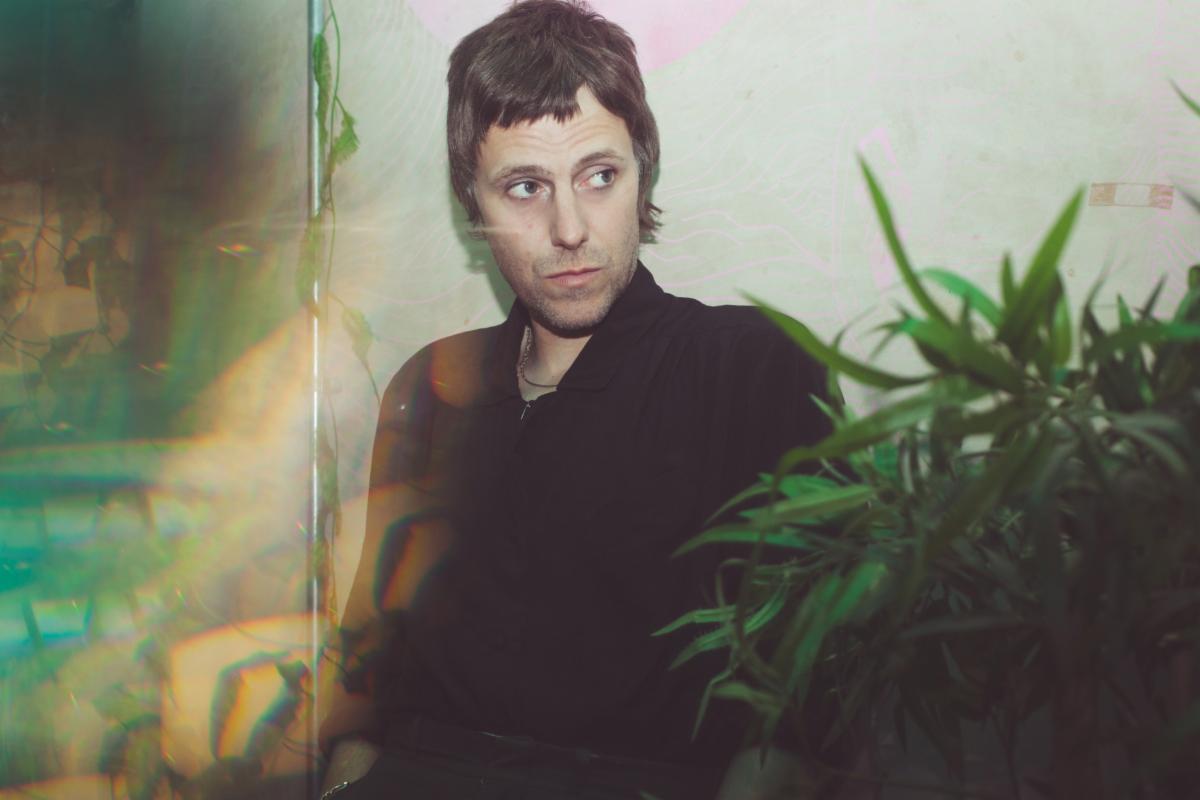
The king of rock, pop, teenage dreams, psych, the new wave and and future genres yet to be defined, Tim Presley is gearing up for sum shows in the East Coast, Chicago and then keeping Austin weird in November! Hot on the heels of “I Have To Feed Larry’s Hawk”, this succinct jaunt will be the first opportunity to see/hear Tim Presley’s WhiteFence in the U.S. following the release of IHTFLH, which is a big fucking deal.
Playing cuts old and new and under various monikers, who knows what this bitches brew will ferment!
Now, dig the official video for I Have To Feed Larry’s Hawk highlight, “Indisposed”:
Song from Tim Presley’s White Fence’s 2LP/CS/CD “I Have to Feed Larry’s Hawk,” released on January 25th, 2019 from Drag City Records.
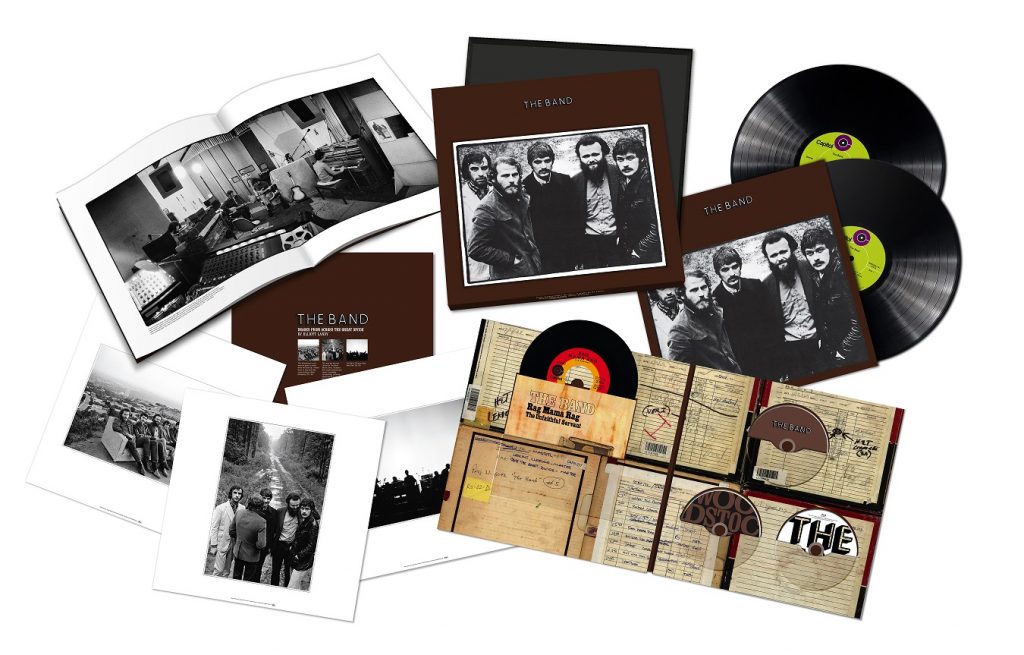
The Band are reissuing their 1969 self-titled sophomore album to celebrate the 50th anniversary of its release. A super deluxe limited edition version of The Band is slated to arrive November 15th.
The reissue will feature a new stereo mix of the album that engineer Bob Clearmountain made from the original analog masters, as well as classic photos, the group’s previously unreleased 1969 “Live At Woodstock” performance, Classic Albums: The Band documentary, and thirteen bonus tracks.
Exclusively for the boxed set, Clearmountain has also created a new 5.1 surround mix for the album and bonus tracks, presented on Blu-ray with the new stereo, both in high resolution audio (96kHz/24bit). All the new audio mixes have been mastered by Bob Ludwig at Gateway Mastering. The boxed set also includes an exclusive reproduction of The Band’s 1969 7-inch vinyl single for “Rag Mama Rag”/“The Unfaithful Servant” in their new stereo mixes and a hardbound book with an extensive new essay by author and music critic Anthony DeCurtis and classic photos by Elliott Landy. For the album’s new vinyl editions, Chris Bellman cut the vinyl lacquers for the album’s new stereo mix at 45 rpm at Bernie Grundman Mastering, expanding the album’s vinyl footprint from one LP to two.
The super deluxe reissue of The Band is cut at 45RPM and available on two 180-Gram LPs. Additionally, a reproduction of the Band’s 1969 7″ vinyl single for “Rag Mama Rag” with a B-side of “The Unfaithful Servant.” Listen to the alternate version of “Rag Mama Rag” .
All the Anniversary Edition releases were overseen by guitarist/songwriter Robbie Robertson and feature a new stereo mix by Bob Clearmountain from the original multi-track masters, similar to the 50th anniversary collections of last year’s Big Pink releases. The 50th Anniversary Edition’s CD, digital and boxed set configurations also include 13 outtakes, featuring six previously unreleased outtakes and alternate recordings from The Band sessions, The Band’s legendary Woodstock performance, which has never been officially released.
“Up On Cripple Creek” was the B side of The Night They Drove Old Dixie Down. Robbie Robertson wrote this song and it appeared on The Band’s sophomore self-titled album.
The Band had rented Sammy Davis’s house turning the pool house into a recording studio, nailing baffles all along the outside wall and getting a great sound inside. The album was recorded there except “Up On Cripple Creek”, “Jemima Surrender” and “Whispering Pines” which was recorded at the Hit Factory studio in New York City.
The unusual sound that sounds like a jaw harp was achieved by Hudson with a wah-wah pedal on his clavinet. The song has a great Americana sound to it. Hard to believe this band was all Canadian except for the southern Levon Helm. Guitarist Robbie Robertson wrote this song, which tells a disjointed story about a mountain man and a girl named Bessie. We hear about a trip to the horse races, listening to Spike Jones, and how what really makes him happy is when she “dips her doughnut in my tea.”
Like many songs by The Band, it’s wide open for interpretation. Robertson claims he doesn’t even know what’s going on. “I don’t really write songs with anything other than just a storytelling sense,” he said when asked about the song in Goldmine (August, 1998). “You sit down and write the song, and usually when something happens, you just don’t even know where it came from, or why it came, or anything like that. That’s the best. You know, when something comes out of you that surprises you. And it was one of those. You know, I was just sitting down to see if I could think of anything, and that’s what came out. But it was a fun song to write.”
Drummer Levon Helm sang lead on this track, giving it a very folksy vibe.
The guy in this song is one of the many curious characters Robbie Robertson has conceived. “We’re not dealing with people at the top of the ladder,” he said. “We’re saying what about that house out there in the middle of that field? What does this guy think, with that one light on upstairs, and that truck parked out there? That’s who I’m curious about.”
Robertson is listed as the only songwriter on this track, which is something his bandmates disputed, as they claimed they helped write it. Songwriting credits going to Robertson was a great source of friction in The Band.
That funky sound on “Up On Cripple Creek” was created by keyboardist Garth Hudson, who played a Hohner Clavinet D6 through a Vox Wah Wah pedal.
In The Band’s 2000 Greatest Hits compilation, Levon Helm said, “It took a long time to seep into us. We cut it two or three times, but nobody really liked it. It wasn’t quite enough fun. Finally one night we just got hold of it, doubled up a couple of chorus and harmony parts, and that was it.” The B-side of the single was “The Night They Drove Old Dixie Down,” which became a hit for Joan Baez in 1971.
The Band performed this on The Ed Sullivan Show in 1969. It was their only appearance on the show.
The Band was originally released on September 22nd, 1969. In short order, the Band appeared on The Ed Sullivan Show, one of only two television appearances the group would ever make, and it had a hit single with “Up on Cripple Creek.” In addition, The Band appeared on the cover of Time magazine in January of 1970, the first North American group ever to do so.
The band’s last album was 2017’s Whiteout Conditions, also released on Collected Works/Concord. In a previous press release Carl Newman (who also produced the album) says In the Morse Code of Brake Lights is an accidental concept record.
“I was about two-thirds of the way through the record when I began to notice that lyrically so much of it was pointing toward car songs,” he said. “The opening track is ‘You’ll Need a Backseat Driver,’ and that was a metaphor that seemed to be running through other songs, too. Next to the love song, I feel like the car song is one of the most iconic kinds of songs in pop music, from Chuck Berry to the present. There was so much of that throughout it that I started thinking: ‘Oh, no, there’s too many references to cars on this record!’ And then I thought, ‘No, that’s good-people might think it’s a concept album.'”
Previously the band shared the album’s first single, “Falling Down the Stairs of Your Smile,”.
Then they shared another song from it, “The Surprise Knock,”. That was followed by a video for “Falling Down the Stairs of Your Smile” and another song from the album, “One Kind of Solomon.”
Happy release day to my pals in The New Pornographers! We’re on tour right now (tour dates below) and I want to send a special thank you and shout out to my sweetheart of a husband Colin Stewart who NOT ONLY sends me daily cat photos so I don’t miss the cat too much while I’m away, he ALSO did an amazing job mixing/recording The New Pornographers ‘In The Morse Code of Brake Lights’. A big thank you to everyone who worked on this record with us, and thanks everyone for listening!
In The Morse Code Of Brake Lights CD/LP is out this week on Collected Work/Concord
“Since their inception, the New Pornographers have often been labeled a “supergroup”. Since A.C. Newman’s voice and guitar has rarely hogged the spotlight, it’s been easy to overlook the fact that he’s very much the mastermind behind the Canadian indie rock band’s coherent, but transcendently harmonious, pop sound. As a co-producer, he’s always displayed a nearly Brian Wilson-level gift for melding the group’s dizzying arsenal of talents, from NekoCase’s clarion alto to Dan Bejar’s quirky change-of-pace songs. In The Morse Code Of The Brake Lights is the band’s second album without Bejar and original drummer Kurt Dahle. But whereas 2017’s Whiteout Conditions buzzed along in familiar New Pornos fashion, with a bright, fizzy krautrock vibe and an equitable mix of vocalists, Brake Lights is, at least by the group’s typical power-pop standards, a heavier, murkier affair, with Newman’s voice sitting front and center for much of its duration.”
Supergrass recently released a cover of The Police’s “Next To You” (the lead track on Outlandos d’Amour) and now here’s Juliana Hatfield covering the same song. It’s like when we got two asteroid/meteor movies in 1998! In Juliana’s case, it’s part of her upcoming Juliana Hatfield Sings the Police tribute album that’s out November 15th. “Their recording of it is so perfect in its imperfection,” Juliana tells Billboard. “It’s unpolished and raw. That whole album sounds like three guys bashing out a song in a room together. So I didn’t even want to attempt to do a rocking version of it like that. I don’t want it to be compared to the original. There’s no way I could come close. So I just went in a completely different direction and slowed down to half time
Nearly a year and a half after Juliana Hatfield released an album of Olivia Newton-John covers, she’s back with a set dedicated to another act that inspired her — Juliana Hatfield Sings the Police, whose vibey cover of “Next to You” is premiering exclusively below “I still don’t know exactly what I’m mining with (the covers albums) — I’m sort of going back and exploring my formative years, I guess,” says Hatfield . “The Police and Olivia Newton-John were things that I loved when I was an adolescent and coming into myself and discovering music, and my own music. So I’m just exploring my past, I think, as I come more and more into myself — but it’s hard to answer why.”
The Blake Babies and Lemonheads alum did release an album of original songs, Weird, earlier this year, and she says the covers sets provide a bit of valuable creative respite. “Whenever I make an album of my own songs, at the end I feel so depleted,” Hatfield explains. “I feel like I’ve said everything I have to say and will never write another song. But I don’t want to stop making music. That’s when I go and start looking at other people’s stuff…so I can keep working. Recording covers is like a working vacation. It’s fun, and it also informs my own stuff afterwards.”
The Police, Hatfield says, were an adolescent fixation, attracting her with their blend of pop, punk and jazzy touches and helping introduce her to reggae. Choosing a dozen tracks to interpret was no easy feat; In fact, Hatfield says she could probably manage a second volume of Police material along the way. But for Sings the Police, due out November. 15th, she “just chose stuff that pleased me the most,” included hits and deeper cuts such as “Hungry For You,” “Canary in a Coal Mine,” “Hole in My Life,” “Murder by Numbers” and “Landlord.” “I went with stuff I thought sounded cool or that seemed relevant,” Hatfield explains. “Something like ‘Rehumanize Yourself’ seems very modern and current in its subject matter. ‘Canary in a Coalmine’ is so fun to sing and play. I was really just indulging my whims.
“Obviously I wanted to put my own stamp on them,” she continues, “but the structures and foundations are so solid that it’s fun and kind of easy to get inside them and mess around and remold them. Even if you dig into them and break them apart, they’re not gonna break. They bend real easy.”
“Next to You,” the first track from the Police’s 1978 debut album Outlandos d’Amour, presented a challenge for Hatfield, however. “It really was an intuitive reworking of that,” says Hatfield, who abandoned “an awful ’80s metal ballad” version of the song before settling on this version. “Their recording of it is so perfect in its imperfection. It’s unpolished and raw; That whole album sounds like three guys bashing out a song in a room together. So I didn’t even want to attempt to do a rocking version of it like that. I don’t want it to be compared to the original. There’s no way I could come close. So I just went in a completely different direction and slowed down to half time.”
Hatfield has had no feedback on the album yet from the Police camp (Newton-John full endorsed her album last year) and plans to continue the cover sets as a series between original albums. She’s currently on break from touring, which she’s using as an opportunity to do some songwriting before going back on the road in January. “When that tour is over I’ll start to think about recording something,” she says. “The Olivia Newton-John album definitely had an impact, so I’ll be interested to see what (the Police) album brings out of me now.”
The Grateful Dead and a group of other rock bands of the times including the Jefferson Airplane, took a lease out on the old Carousel Ballroom on Market Street in San Francisco (formerly the El Patio) back in 1968 which only lasted for several short months. During that time however there were many great shows and dance/concerts that took place. Moby Grape: They could have been the biggest and best band in the world, some contended back in the ‘60s, but something happened. The series of bad luck, misfortunes and critical misfires that derailed most of their career.
It was a Saturday night 47 years ago on this day back in 1968 that Moby Grape, along with It’s a Beautiful Day and Sweet Rush finished up their two night engagement there at the Carousel Ballroom. Back in 1966, amid the ferment of San Francisco’s active music scene, five disparate musicians were brought together in a new band. Heavily laden with talent, the group cut a 1967 debut album, that is still ranked among the finest, most assured bows in rock history. Almost instantly, they were tabbed as the act to beat. Moby Grape’s name is synonymous among rock connoisseurs with tragedy, failure, unfulfilled promise, and chaos. The story of how what appeared to be rock’s Perfect Beast became a rolling catastrophe is one of the all-time cautionary tales in the annals of music and the music business.
Looking back at Moby Grape and wonders, “How could they fail?” Among performing units of their era, they were seemingly rivaled solely by their Los Angeles contemporaries Buffalo Springfield, whose glittering lineup included the mighty singer-songwriter-guitarist triumvirate of Neil Young, Stephen Stills, and Richie Furay.
Moby Grape trumped the Springfield’s three-pronged attack. All five members of the group sang, and they forged a deftly blended choral attack unique among bands of the day. All five musicians also wrote, with consistent brilliance and economy. Their three-guitar front line could blow any outfit unlucky enough to share a stage with them right off the boards, and their powerful rhythm section was unmatched by any on the Haight-Ashbury scene.
The seeds of the band’s disorder may have been sown in its founding. In late 1966, its five members were brought together by an ambitious manager seeking a new act to work, as major label A&R men began poking around for acts that were playing in San Francisco’s burgeoning rock ballroom scene. The magnetic linchpin of the new band was singer-songwriter-guitarist Skip Spence. The Canadian musician had served as the drummer for Jefferson Airplane and had played on the group’s debut album, Jefferson Airplane Takes Off.. However, feeling marginalized creatively in the Airplane, he abruptly quit the band for a sojourn in Mexico. On his return to the Bay Area, he linked up with the Airplane’s erstwhile manager to make a fresh start.
Spence’s band mates were all well-traveled journeyman rockers who landed in San Francisco to flex their considerable chops. One arrived with a Hollywood pedigree: singer-guitarist Peter Lewis was the son of movie star Loretta Young, and a veteran of the surf band the Cornells and his own outfit Peter and the Wolves. Bassist-vocalist Bob Mosley, a white soul man to the bone, had recorded with San Diego’s Misfits. Lead guitarist-singer Jerry Miller—who had served for a time in Texas band‘ Bobby Fuller Four—and drummer Don Stevenson had both performed in the Frantics, part of Seattle’s vibrant ’60s scene.
The resultant quintet, while it keyed off Spence’s formidable onstage energy, was the most cooperative unit imaginable, with each member contributing notable songs to the Moby Grape repertoire. Their layered singing and instrumental puissance immediately made them a force to be reckoned with in the SF ballrooms, and they were rewarded with a contract from Columbia Records in early 1967.
Helmed by staff producer David Rubinson, ‘Moby Grape’ could scarcely have been bettered as a debut album. Released at the height of the Summer of Love in June 1967, it was everything one could ask for in a rock record. Its songs were exciting and tightly constructed, blending elements of hard rock, blues, soul, folk, and country into its alternately stormy and lilting mix. The playing, sparked by Miller’s fiery guitar work, was equally focused, and eschewed the indulgences that would soon overwhelm rock record-makers. Plus the band’s massed harmonies presented a sound matched only by the Byrds‘ contemporaneous work.
The remainder of the band’s story can be told through a series of horrific bullet points. What brought down this almost impossibly gifted and commercially alluring group? Well, for starters there was…
On June 6th, 1967, Moby Grape celebrated the release of their self-titled album with a splashy party and performance at San Francisco’s Avalon Ballroom . Early the next morning, Miller, Spence, and Lewis were popped in Marin County after police discovered them cavorting with three underage girls. The three men were charged with contributing to the delinquency of minors, and Miller was also charged with possession of marijuana.
All charges were later dropped, but the incident could not have added any luster to Moby Grape’s rep in the eyes of the Columbia executives who had just spent a small fortune launching their brand-new act. And that launch would itself become problematic for the band, who were instantly the victims of…Moby Grape’s Avalon appearance was a record-company saturnalia of the first magnitude. Janis Joplin with her own star on the rise as a member of Big Brother & the Holding Company made a guest appearance with the group; orchid petals were dropped from the ceiling of the venue during the band’s set; and invitees were presented with a velvet-covered box that included press materials, glossy photos of the band, and copies of ‘Moby Grape”s first five singles.
That’s right: five singles. In their infinite wisdom, Columbia’s marketing executives had decided to issue 10 of the 13 tracks on ‘Moby Grape’ simultaneously on 45s with identical picture sleeves. If there was ever a tactic guaranteed to put the noses of suspicious music critics, over-burdened radio programmers, and confused retailers out of joint, that was it.
Somewhat miraculously, ‘Moby Grape’ managed to perform decently in spite of Columbia’s miscalculations. The LP reached number 24 on Billboard’s album chart, where it spent six months; it reportedly sold 200,000 copies. The damage done by the label’s strategy at radio was apparently irreversible, however: Spence’s “Omaha” became the band’s only chart single, peaking at number 88 during a two-week stay. The writing was on the wall, and the next step in Moby Grape’s career witnessed…
By the time the band entered the studio with Rubinson in the fall of 1967 to begin work on a new record, Sgt. Pepper’s Lonely Hearts Club Band had just been released, and every musician on the planet was cocking an ear to the Beatles’ opulently recorded collection. The members of Moby Grape were in that number, and they were demonstrably led astray by the Fab Four’s example during the making of their second album, Wow.
Wow lacks the rev-it-up spirit of Moby Grape’s masterpiece, but Peter Lewis, Jerry Miller, and Skip Spence’s guitar work is just as impressive and richly layered, and the group’s harmonies and songwriting chops are still in solid shape. While the unobtrusive production on Moby Grape showcased the group’s many virtues, those attributes are visible on Wow despite the layers of studio excess, which sapped the momentum and charm of this band without snuffing them out altogether.
The band seemed to misunderstand its own strengths. In contrast to the lean, diamond-hard originals on ‘Moby Grape’, the second album bore unfocused tunes that were not enhanced by the overbearing and needless presence of strings and horns. Even a tuff little rocker like “Can’t Be So Bad” was dressed up with 20 reed and brass pieces. The album reached its nadir with “Just Like Gene Autry: A Fox Trot,” a trivial spoof of ’20s crooning introduced by ex-vaudevillian Arthur Godfrey; that track was pressed at 78 rpm, and owners of the original LP will recall the annoyance of getting up to change turntable speeds to listen to the number—an event that likely occurred only once in most cases.
Compounding the irritation, Columbia marketed ‘Wow’ with a “bonus album,” ‘Grape Jam’, which featured four listless improvisations with guest stars Mike Bloomfield (inexplicably abandoning his guitar for piano) and Al Kooper, both soon to ring up sales with their own similarly styled Super Session, Hawked at a two-for-one-price, the two-LP package rose to number 20 nationally. For many, the bloom was off the rose, but the group was already being wracked by larger problems, including…
Moby Grape also probably the only band to ever boast two diagnosed paranoid schizophrenics among its members. Skip Spence, was never a stable character to begin with, became an early LSD casualty; by 1967 he was, in the words of writer Jeff Tamarkin, “gobbling tabs of acid like Pez.” During the band’s stay in New York to record ‘Wow’, Spence attempted to attack Don Stevenson with a fire axe, and was committed to Bellevue Hospital. On his release, he hopped on a motorcycle and rode to Nashville; there, without the assistance of sidemen, he recorded the self-penned, self-produced solo classic album “Oar” under his given name, Alexander Spence. This disquieting, sometimes beautiful record has become a cherished classic of underground psycho-rock.
Spence, whose material was later recorded by his erstwhile band in his absence, returned sporadically to the Grape fold during a long period of homelessness and institutionalization; thanks to medication, his life stabilized to some extent before his death from cancer in 1999.
With Spence’s precipitous exit, Moby Grape carried on, recording Moby Grape ’69 as a foursome. The album was a solid return to form, and it was highlighted by three exceptionally strong Bob Mosley contributions, the ballad It’s a Beautiful Day Today and the hard rockers Hoochie and Trucking Man. Despite good reviews in the rock press, ”69′ sustained a meager chart peak of number 133. By the time the set was released, Mosley had one foot out the door: He suddenly bolted for a stint in the U.S. Marines, leaving Moby Grape to wrap its obligations to Columbia as a trio; late 1969’s thoroughly lackluster Truly Fine Citizen was cut with session man Bob Moore standing in for Mosley. Moby Grape ’69 is concise enough — most of the songs are under three minutes and the whole thing clocks in at a shade under a half-hour — and the high points come close to recapturing the electric magic of the group’s nearly flawless debut, especially the gritty groove of “Hoochie,” the doo wop influenced boogie of “Ooh Mama Ooh,” the beatific joy of “It’s a Beautiful Day Today,” the raucous celebration of one “Trucking Man,” and the folk-tinged wisdom of “If You Can’t Learn from My Mistakes.” However, even though these sessions found guitarists Peter Lewis and Jerry Miller, bassist Bob Mosley and drummer Don Stevensonplaying and singing at the top of their game and writing fine songs, the absence of Skip Spence, who left the band after Wow, robs Moby Grape ’69 of a significant share of the energy and drive that was the hallmark of their finest studio work.
It’s significant that the album’s most striking cut, the closer “Seeing,” was written by Spence during the Wow sessions. Mosley ultimately returned to Moby Grape for a lone effort for Reprise Records, 1971’s sadly overlooked and underrated ’20 Granite Creek’ (which also featured an instrumental contribution from the largely sidelined Spence) and a well-written self-titled 1972 solo album that was marred by uncertain playing and production. But he was not a well man: He too was intermittently hospitalized and homeless through the ’90s. He returned to play, quite magnificently, with latter-day incarnations of the band,
Given the fondness of Moby Grape’s onetime manager for launching combative litigation, K. handled Moby Grape from its 1966 founding, which he midwifed, through August 1967, when he was dismissed by the band. Prior to that time, he had managed Jefferson Airplane; after he was fired in 1966, his dispute with the Airplane’s members over their contract dragged through the courts for nearly 20 years, tying up $2 million in royalties and interest, most of which were ultimately awarded to the band. A similar contract conflict with another San Francisco bandIt’s a Beautiful Day, of “White Bird” fame, effectively put the group in deep freeze for two decades.
In 1968, K. sued Moby Grape, claiming his contracts gave him ownership of the band’s name and music publishing. This action remained on the docket for 38 years. During that time, K. assembled various groups to perform under the Moby Grape handle, and released CD editions of ‘Moby Grape’ and ‘Wow’ on his own label, using needle-drops off vinyl pressings of the original LPs as his “masters.” In 2003, K. sued the band again after they issued an excellent album, first released on cassette in 1989 by “the Melvilles,” on CD under the handle ‘Legendary Grape’.
Finally, in 2006, a California appellate court ruled that the members of Moby Grape owned their name and their songs. For most litigants, this would be the end of things. However, in 2007, after an independent label licensed the band’s Columbia catalog from Sony for classily packaged and augmented editions, another suit landed at the band’s feet; this time, K. claimed he owned the artwork for ‘Moby Grape’, ‘Wow’, and ‘Grape Jam’.
Realizing that it would be pointless and impossibly expensive to fight this vindictive new action for miniscule returns, Sony asked that the albums be taken off the market. Thus, to date, nearly half of Moby Grape’s studio work, including its classic debut, is unavailable in fully authorized form. Few rock bands in history have been served a platter of misfortune piled as high as the one placed before Moby Grape. The group’s music—at its best the equal of any made in its time—remains elusive to this day, but it’s worth hunting for.
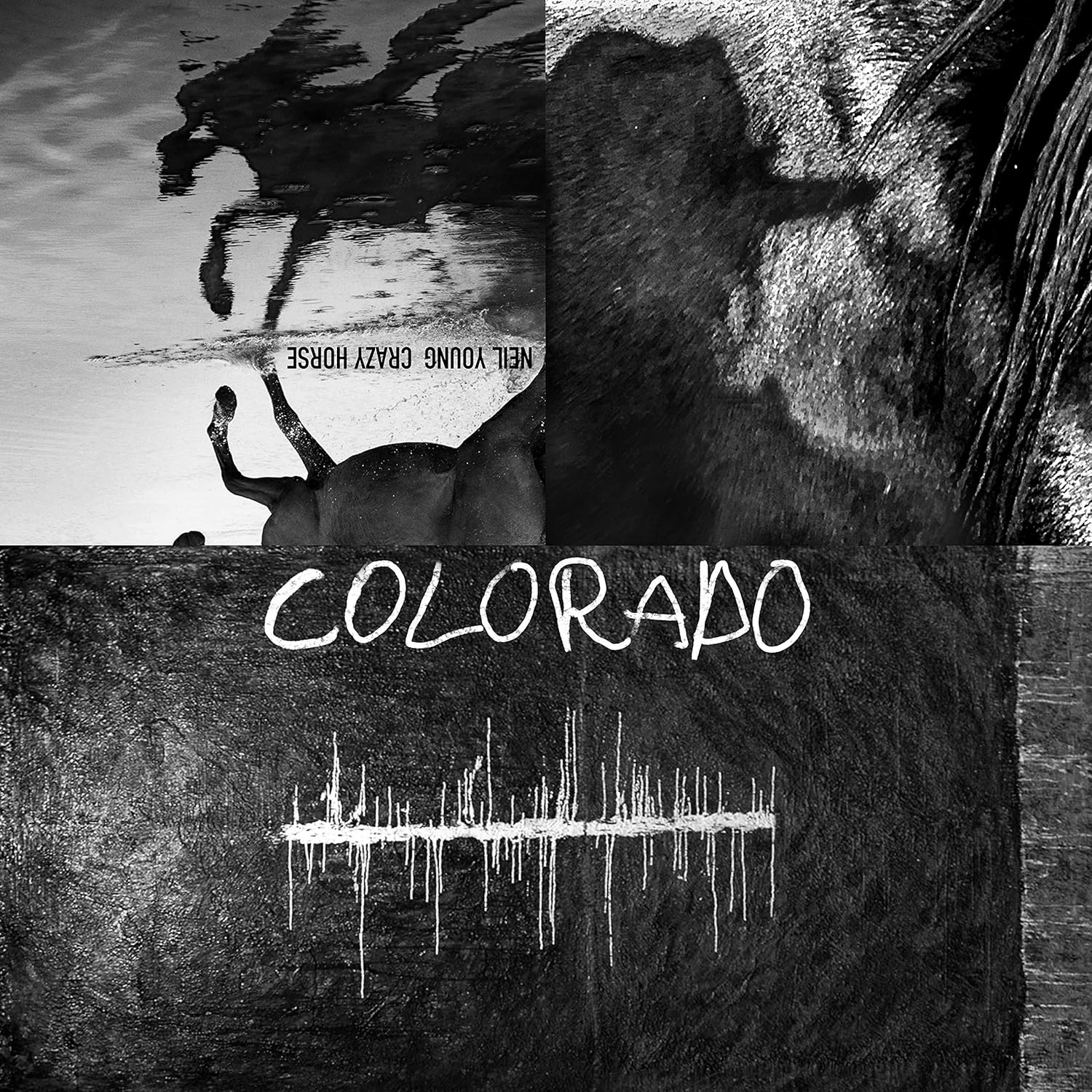
Yes, Neil Young has returned with his legendary backing band Crazy Horse, for their first album together since 2012’s well-received Psychedelic Pill. “We believe we have a great Crazy Horse album,” Young wrote recently on his Archives website back in April. “One to stand alongside the albums Everybody Knows This Is Nowhere, Rust Never Sleeps, Sleeps With Angels, Psychedelic Pill and all the others.” Big talk, but based on first taste “Milky Way” — almost as haunted and vulnerable as Young’s unnerving recent New York Times profile — it’s at least got a shot at living up to it.
Official audio for Milky Way from Neil Young with Crazy Horse from their upcoming new album ‘Colorado’ Available on October 25th.
M.C. Taylor has been singing about his kids since before they were even born. Before his eldest child, Elijah, arrived in 2009, Taylor — who for the past 10 years or so has made records with a revolving cast of musicians under the moniker Hiss Golden Messenger — wrote a sweet back-porch hymn called “I’ve Got a Name for the Newborn Child.”
But on his new album, Terms of Surrender, the tenor of Taylor’s relationship to his children feels different: more high-stakes, almost desperate at times. In several songs, he carries on imagined conversations with his son and daughter. Sometimes, they give him a pep talk (“Daddy, take down your sorrow”); more often, he’s apologizing to them for his shortcomings. “When you think of me,” he pleads to his daughter, Ione, in “Happy Birthday Baby,” a crushing song he wrote for her fifth birthday, “think of me better than I think of myself.”
When asked about this stark lyrical shift, Taylor pauses, then confronts the question head-on.
“I had this feeling that I could not shake that maybe I’m not going to be around for much longer, that maybe something’s going to happen to me,” Taylor says. “These tunes are, in part, imagined conversations that I am having with the people that are close to me, as something to leave behind, almost a last-testament type thing. I’m still here. I’m feeling good. Things are great. I love my family. They love me. But, you know, if I die somewhere out there on the road, what do I want my last sung words to be? That was definitely something that was on my mind.”
Since 2008, when Taylor self-released a collection of off-kilter folk tunes called Country Hai East Cotton, the Durham, North Carolina–based Hiss Golden Messenger has evolved into one of the most vital roots-music projects of the past decade — part solitary singer-songwriter outlet, part communal roots-rock collective. Taylor’s music turns the most banal of musician woes — the tribulations of life on the road, spending extended periods of time away from family— into gorgeous meditations on love and lack. Perhaps not coincidentally, Hiss Golden Messenger have became a favorite among fellow musicians, adored by everyone from Mumford and Sons and the Hold Steady to Jenny Lewis and the National’s Aaron Dessner, the latter two of whom appear on Taylor’s new record.
Taylor has grown his following, in part, by churning out an unusually large quantity of music, releasing nearly an album per year during the past decade. As Phil Cook, who’s become Taylor’s right-hand multi-instrumentalist (Cook’s words: “a sous chef in the kitchen of Mike Taylor”), puts it: “Mike has got a prolific bone to pick with the universe.”
But after several years of incessant gigging, recording, and writing, Taylor’s life ground to a halt in 2018. His father had a heart attack. He went through a “pretty huge interpersonal drama” with a close friend (chronicled, in part, on his new song “Katy (You Don’t Have to Be Good Yet”)). The meds Taylor had been taking for his depression, which had gotten worse in recent years, were simply not working. And he continued to struggle with what he calls the “spiritually complicated” parts of being a touring musician, the parts that involve spending a healthy chunk of the year away from his wife and children.
Terms of Surrender, Hiss Golden Messenger’s latest collection, documents — in sometimes frighteningly honest specifics — the crushing lows and precious saving graces of this turbulent time. Typically, after Taylor writes an album, he goes back and tweaks his lyrics “ever so slightly, to make it something that I’m going to be able to sing every night.” Terms of Surrender did not go through such a process.
“Mama, I’m standing on the ledge-i-o,” he mumbles, as if to obscure what he’s saying, on “Down at the Uptown.” “Run, jump or fly? I think I caught a bad one.”
Taylor has made several personal strides since the period chronicled on Terms of Surrender. During the making of Terms of Surrender, he started seeing a therapist for the first sustained period of time in his life, and it’s helped him “understand that it’s OK to have these feelings of anxiety, and that there are ways to let them pass through you and not destroy you.”
“I’m not putting this record out under any sort of duress,” he continues. “Making this record was an absolute ball; I was trying to get my meds right, and nobody really knew that, so I’d be going into the bathroom and having all these weird side effects and would be trying to shake it off and splash water on my face, and then go back out into the tracking room. It was amazing and terrifying, but great. The biggest danger that we have in our lives is forgetting how hard or complicated something was. For me, to have this reminder offers a path towards not going through that in quite the same way again.”
Taylor has a nervous, reflexive laugh that tends to surface right after he says something particularly intense, as when, discussing his father’s recent heart attack, he says, “Emotional heart trouble is big in my life, but shit, so is physical heart trouble.”
Emotional heart trouble is a helpful way of thinking about Hiss Golden Messenger as a whole. The central tension in Taylor’s music is the gulf between two distinct emotional zones: one, a brooding world of midlife angst and parental anguish; the other, a peaceful refuge of familial bliss and vivid Southern landscapes. In his best songs — 2012’s “Balthazar’s Song,” 2016’s “Heart Like a Levee,” 2019’s “I Need a Teacher” — these two spheres collide, each one informing the other.
“Sometimes I’m writing about things as they are in my life, and sometimes the songs are aspirational, where I’m trying to imagine a world in which things exist the way I posit them in the songs,” Taylor says.
The central challenge of Hiss Golden Messenger, then, has been how to hold room for both breezy major-key folk and dark, rhythmically stormy country-blues. Figuring out how to do that, Taylor says, was the foundational discovery that helped define the group and differentiate it from the previous musical lives he’s lived — with the hardcore band Ex-Ignota and alt-country outfit the Court and Spark — in his teens and twenties.
“I had found all these ways to create harmonic suspensions in the chords through different tunings to conjure that bittersweetness, the happy-and-sad-at-the-same-time thing,” he says. “I really had to search to figure out how to make those feelings appear in the chords, how to not commit to a major or minor chord so that it’s very hard for people to understand what they’re supposed to feel.”
The upshot is that, though Taylor works within well-established musical traditions, Hiss Golden Messenger — Taylor has said that the odd moniker holds no special significance — don’t sound quite like any of the scores of similarly minded Americana-based bands that have proliferated during the past half-decade. A few years ago, Taylor was playing with Heartbreakers keyboardist Benmont Tench, who, upon trying to learn the Hiss Golden Messenger song “Drum,” remarked, “Man, this song is crooked.” This delighted Taylor.
“There are a lot of parts of my music that are rhythmically a little bit crooked,” he says. “There’s a lot of crooked old-time songs, and maybe I sort of picked that up by osmosis.”
Taylor, who has a graduate degree in American folklore, goes on to say that he envisions his music as “country-soul, but I’m thinking of country-soul as an existential quest, a quest to understand and position the vast musical traditions of the South as a living and contemporary language that gave birth to everything good in American music.”
Perhaps because of how eloquently he’s able to articulate his musical project, Taylor is sometimes paralyzed by the idea that people regard him as someone who has capital-A “answers.”
“I get the sense sometimes that people might think I know something more than I do, which I really don’t,” he says. “I’m not a churchgoer. I wasn’t raised a believer. I just feel like love is a powerful, animating force in the world, and I’m trying to say that in the most non-hippie way that I can. I feel like, when people are talking about God, they’re talking about the animating force of love. That’s the way I understand it, that sort of holiness. For me, that makes belief and hope easier, because it’s something we’re not necessarily asked to take on faith. I can create love in my own house, and I can show my kids how to create it as well.”
Taylor laughs, perhaps realizing that, in answering a question about his fear of people feeling like he knows some greater truth, he has, inadvertently, spelled one out. “I’m sorry,” he says.
Phil Cook thinks of it this way: “The world is full of love songs, pretty cheap love songs, and I think Mike’s songs are about something that is much more difficult to pin down,” he says. “Not things people can sit down and say, ‘Here’s what it’s all about.’ I think Mike just searching, he’s got a lot of questions, and he’s not shy about saying: ‘I don’t know the fucking answer to any of this shit.’”
In February 2018, Taylor headed to a cabin in the foothills of the Blue Ridge Mountains in Virginia to begin writing songs for what would eventually become Terms of Surrender. Before he started to write, he took a small dose of mushrooms, “just enough to feel them,” and went outside.
“It was dusk and it was really cold and still,” Taylor says. “I could just hear the wind and the evening birds, and there was not another soul around. But then, out of the corner of my ear, I heard the faint sound of voices, kids laughing and playing. I thought I was tripping. I mean, I was tripping, but I thought that maybe I was tripping even harder. But then I realized that the property I was on was abutting this other piece of property that I couldn’t see. There must have been a family out doing their thing. For that minute or two, when I was just standing on this hillside in Virginia, completely alone and hearing these voices, and laughter, it was really beautiful, actually.”
The scene Taylor describes feels uncannily like something straight out of a Hiss Golden Messenger song. And then, almost as if prompted, he goes on:
“It was like being in this liminal space, not really knowing where I was or what I was experiencing, and it was really nice. It wasn’t terrifying, actually; it was comforting, in a way. It was a very particular feeling, and it really stuck with me. It was almost hopeful, we’ll say.”
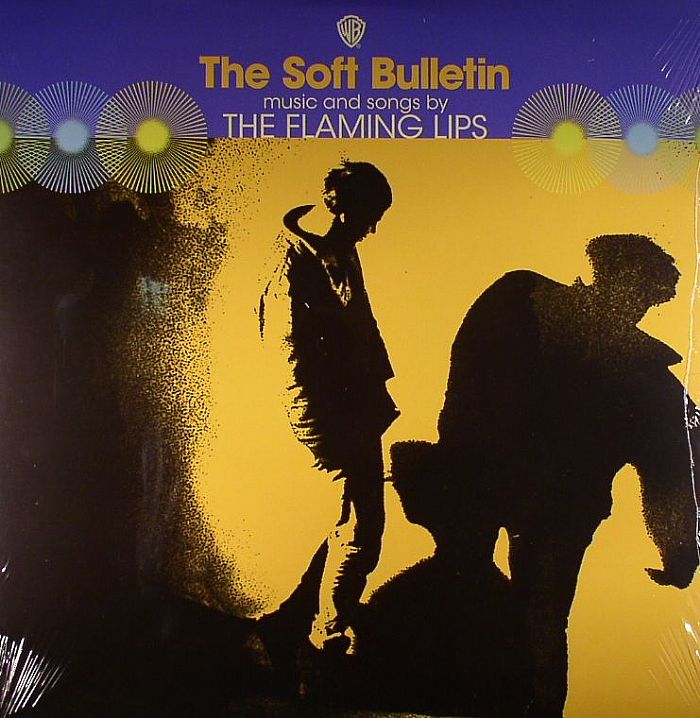
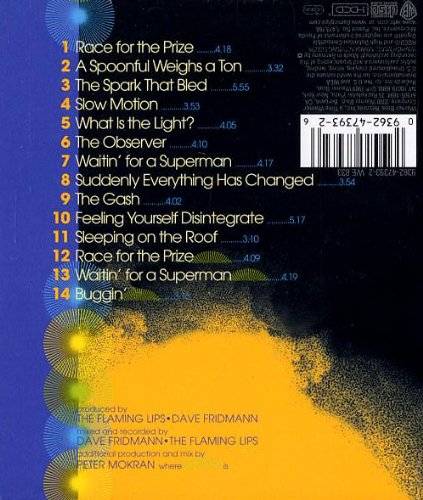
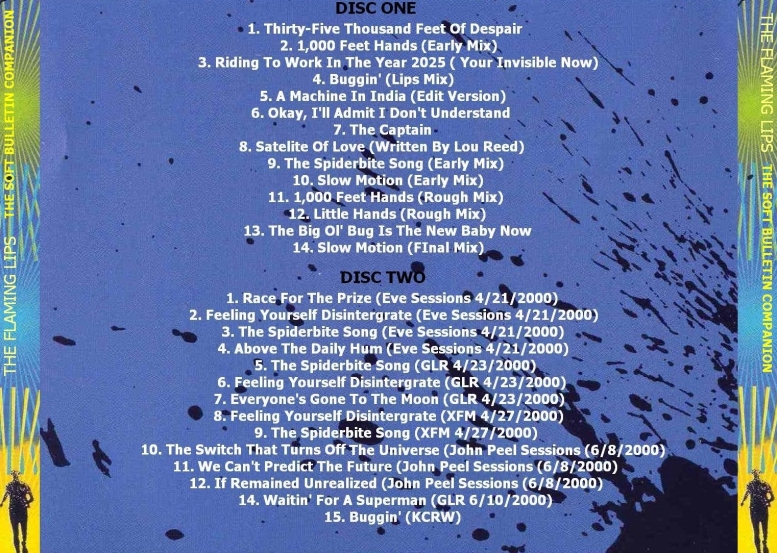
The Flaming Lips offer an oral history of The Soft Bulletin, with intimate interviews examining the stories behind this modern classic. The Soft Bulletin is the ninth studio album by The Flaming Lips, released by Warner Bros. Records on May 17th, 1999 . The album was released to wide critical acclaim and hailed by critics as a departure from their previous guitar-heavy alternative rock sound, into a more layered and intricately arranged work.
The Flaming Lips will celebrate it’s 20th anniversary of their 1999 masterpiece The Soft Bulletin with a limited edition vinyl reissue this October. The 2-LP reissue, released exclusively through subscription service Vinyl Me, Please and pressed on mustard yellow, preserves the album’s original 13-song vinyl track list – including the track “Slow Motion,” originally omitted from the U.S. CD release – and is accompanied by a new art print designed by frontman Wayne Coyne.
The album is now considered by many to be the Flaming Lips’s masterpiece, “The Soft Bulletin is a record that’s always with us… and we’re always considering it… we’re always playing it… we’re always celebrating it,” Coyne said of the reissue in a statement.
“Densely textured, awkward but somehow melodic, The Soft Bulletin finds these pop oddballs with their poker-faced humor firmly intact — ‘When you got that spider bite on your hand/I thought we would have to break up the band,’ sings Wayne Coyne in his strained Neil Young-style voice, referring to an accident that could only have happened to the Lips, and did,” Rolling Stone wrote of The Soft Bulletin in a 1999 album review.
“Their music isn’t, how you say, universally accessible, and the weirdness gets same-y, but no one else has posited a parallel universe in which the Sixties and the Nineties exist simultaneously, allowing for a peculiarly convincing brand of monolithic robotic swirl.”
“Over the past twenty years, The Soft Bulletin has cemented its standing as a modern classic of American rock music. The Flaming Lips’ distinctive use of theme, melody and unorthodox recording techniques accelerated them to an early-career magnum opus that has inspired countless artists,” Vinyl Me, Please Head of A&R Alex Berenson said in a statement.
Archival Materials Provided by The Flaming Lips, Michelle Martin-Coyne, The Fearless Freaks Directed By Bradley Beesley, Scott Booker, Dave and Mary Fridmann, George Salisbury, Warner Brothers Records
On January 31st, 2006, Warner Bros. re-released The Soft Bulletin in the US as a two-disc package titled The Soft Bulletin 5.1. It includes a remastered CD and a DVD-Audio disc that contains a 5.1-channel surround sound mix of the album.
The Soft Bulletin has so many special moments it could easily half-fill a 10 of the Best on its own. But on an album where nearly every song’s a gem, from the brittle beauty of The Spiderbite Song to The Spark That Bled’s gorgeous six-minute symphony, Feeling Yourself Disintegrate feels particularly precious. Here, Coyne floats high above the everyday muck and, cushioned by soft pillows of celestial synths and strings, realising that his body’s been slowly breaking apart ever since he was born; that all life is destined to die. “Love in our life is just too valuable / Oh to feel for even a second without it / But life without death is just impossible / Oh, to realise something is ending within us,” he sings gently, and for just a fleeting second, he’s grabbed hold of nirvana. In slightly grubbier fashion, The Soft Bulletin helped Warners see the light, too: after years of bemoaning the band’s lack of commercial success, they suddenly had a mainstream breakthrough act on their books. Their next project would be even bigger.
“The Spark That Bled” and “What Is The Light”, “Waitin’ for a Superman”
The Soft Bulletin, originally released in 1999, still stands as a pinnacle of what pop music can be at its most magical and inventive, an album rattling with wondrous sounds and ideas you’ll want to hold on to forever. On one hand, it’s their most sonically breathtaking work, built on otherworldly noises and instrumentation that sound as if they’re being beamed from a future disco in an orbiting space-station; on the other, it’s their most moving and vulnerable, too, with Coyne finding more frailty than ever before in his outlandish ideas. Race for the Prize, a touching tale of two scientists prepared to sacrifice themselves and find a cure that will save the world, is a belter: just listen, now, to the giant crack of those distorted drums, that giddy piano riff, the rush of those shrieking synthesised strings that fizz in your synapses like sherbert being poured on your brain. And then Coyne, somehow, touches looks past the HG Wells-like set-up to hit just the right nerve and bring you back down to Earth. “Theirs is to win / If it kills them,” he yelps. “They’re just humans with wives and children.” It’s four-odd minutes of glorious, perfect psych-pop, and a bittersweet sci-fi masterwork to boot.
The Flaming Lips
Wayne Coyne – songwriting, vocals, guitar, keyboards, theremin
Michael Ivins – bass, keyboards, backing vocals, engineering
The cover artwork of the album is a modified version of a photograph taken by Lawrence Schiller for a 1966 Life magazine article on LSD, The Soft Bulletin is still an undeniably essential listen that belongs in every record collection
Recorded October 8th-10th 2018 at Uniform Recording in Philadelphia, PA. Produced, arranged, composed, and performed by Sam Cook-Parrott. Engineered by Jeff Zeigler. Mastered by Ryan Schwabe. Cover design by Perry Shall. Photos and bouquet by Kate Illes. Center label design by Michael Cantor. Special thanks to Marco at Salinas for putting it out, my band for not being mad that I made a record without them, my roommates for putting up with my loud ass while writing and practicing this, to all my friends and family, and most of all to anyone who considers themself a “fan.” It’s my life’s great honor to rock for youWe are a rock band of rockers who love to rock. We also can be just one person who is much quieter but still loves to rock.. –Sam We are a rock band of rockers who love to rock. We also can be just one person who is much quieter but still loves to rock.
Looking to escape this dreary weather and get transported to another galaxy? Well, let this video take you away to the land of Honeyblood and her new track ‘Bubble Gun’. Full of post punk hooks, intergalactic battles and bad-ass silver ensembles, you can watch Stina Tweeddale, flanked by two accomplices fight conspicuous aliens and sticky situations. Honeyblood will be bringing their infectious sound to The Garage on 31st October
Starring HB & band (Stina Tweeddale, Debbie Knox-Hewson and Anna Donigan) plus Jules Rodríguez