‘Wedding Of A Friend’ is the new single of Brigid Mae Power’s upcoming album ‘Head Above The Water’.
‘Wedding of a Friend’ features a range of exotic instruments that would have made the basis of a great video, but given the impossibility of assembling a full band at this time we decided to focus on the most distinctive instrument featured in the song – Brigid’s voice.
The song is a great example of the way she uses her voice not just to deliver lyrics but as an instrument in its own right. This comes into its own in the instrumental sections, and the close-up, unflinching camera shot helps reveal the intimacy and depth of the song’s narrative. Video by Rob Curry, filmed Peter Broderick.
‘Head Above The Water’ is the new album from Brigid Mae Power, a coming of age opus featuring a ground-breaking amalgamation of traditional folk and country.
‘Wedding Of A Friend’ is Brigid Mae Power’s new single, from her upcoming album ‘Head Above The Water’ (Out 05/06/20). Fire Records.
Pictish Trail releases new single ‘Double Sided’ which includes unreleased b-side and Grandaddy cover ‘Now It’s On’ from his recent Marc Riley BBC 6 music 2019 session.
“This was the last song to be recorded on the album and is about the idea of living a virtual life, a sort of simulation existence. This track is kinda paired with ‘After Life’ from the previous album ‘Future Echoes’. It’s about how we present different versions of ourselves online, how we often experiment with how we wish to be perceived by others, and how there’s almost a sense of detachment from responsibility for our behaviour.” (Johnny Lynch – Pictish Trail)
RVG’s new single, ‘Perfect Day’, is the next track from their new album ‘Feral’ out on the 24th of April. The dreamlike and majestic music video of ‘Perfect Day’ sees the band in a snowstorm much like the turmoil at the centre of this song.
“Perfect Day” is a song about visiting someone who’s in hospital, trying to give them the facade of a nice day even tho everything around them is awful.” Romy Vager (RVG) “Movies and TV shows set in the snow have always made me feel happy in a way I cannot quite describe, so filming RVG perform their song 500 times in the middle of a snow storm was a magical experience. I’m forever indebted to these lovely people and their beautiful music for giving me an excuse to buy a snow machine. I don’t know when or why, but I’m sure I will need it again.” Geoff O’Connor, Video Director
From RVG’s new album ‘Feral’ (out 24th April 2020).
We have been talking about recording a live album for a long time. We think this is the best we’ve been playing as a live band and wanted to document that. With five albums of material we felt now was the time.
Over the past few months we were figuring out how to release the album and then covid-19/lockdown/gig cancellations happened. We quickly decided that we would release the album digitally on a pay what you want basis. The reason behind this is that we know that financially it is a worrying time for a lot of people and for ourselves included. We wanted to make sure we could give everyone who likes our band one of our gigs live in their living room as we can’t be out in the world playing gigs right now.
We wanted to make sure that anyone who wants the album can afford it as well. I hope everyone is doing okay. I hope this helps. The title of our last album It Won/t Be Like This All the Time has been living with me for the past three/four years and right now that sentiment feels stronger than ever. We’ll get through this together.
Sending our love to you and all the health services around the world.
On what was originally to be the date of the first of two nights at Glasgow’s Barrowland Ballroom, The Twilight Sad release It Won/t Be Like This All the Time Live: a momentous collection of live recordings captured across the band’s 2019 tours, one of the busiest years to date for a group well used to the live circuit.
released April 16th, 2020 The Twilight Sad – James, Andy, Johnny, Brendan & Seb,
There is something of that eerie Big Thief magic that surrounds Samantha Crain. Although there is only one Adrianne Lenker (and only one Sam Crain for that matter), the two share the ability to make the outside world stop, and pull you into one they’ve fashioned just for you. ‘Holding to the Edge of Night’ is a beautifully crafted, emotive and powerful moment of calm in the uncertainty that seems to encompass us all at the moment; a must listen for those who are craving a bit of escapism.
You’ll have to wait a little bit longer to get your mitts on the record unfortunately, which won’t be with us until the 17th July. Likewise, she’ll now be touring the UK around the release of the record but we can guarantee that it will be well worth the wait.
Cardiff rockers, Buzzard Buzzard Buzzard have announced their debut EP. Here is some info on the band.
Buzzard Buzzard Buzzard began as a bedroom studio project for Cardiff-based Rees, before eventually spreading his wings alongside bassist brother Eddie Rees, guitarist Zac White and drummer Ethan Hurst. The band first emerged in 2018 to widespread acclaim from the likes of The Guardian – “Thin Lizzy or T-Rex in the back room of a pub, riffs and tunes intact but with an endearing slacker attitude” – who included them in their 2019 list of artists to watch out for.
The video for “Hollywood Actors” is out now!! Let us know who’s acting you liked most – I’ve been re-watching Breaking Bad so this feels pretty poignant, I’m watching the last episode right now Walt is an absolute piece of shit but that’s by the by I hope everybody loves the video xxx
A BBC Radio 6 Music spin forDouble Denim Hop from none other than Iggy Pop, and a session for Huw Stephens on the same station followed at the beginning of 2019. Subsequent singles Late Night City and Love Forever drew airplay from BBC Radio 1’s Annie Mac, Jack Saunders and Huw Stephens, and BBC Radio 6 Music. The band also landed a slot at Glastonbury courtesy of BBC Introducing.
Now comes this 10 track mini LP featuring Double Denim Hop, Late Night City and 8 other nuggets.
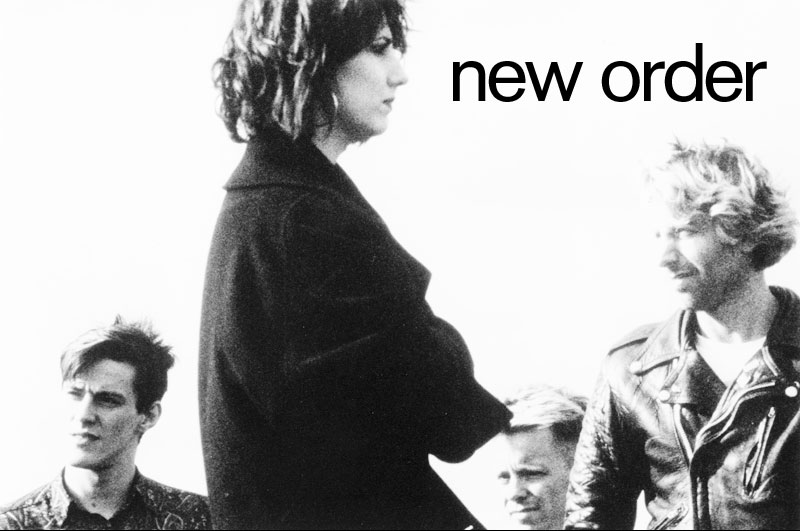
After Joy Division singer Ian Curtis took his own life on 18th May 1980, there was never much doubt among the surviving three members – guitarist Bernard Sumner, bassist Peter Hook and drummer Stephen Morris – over whether they’d carry on. However, how do you even begin to replace a singer and lyricist as charismatic and gifted as the subsequently legendary 23-year-old?
Shrewdly, they didn’t try. Sumner stepped into the breach as singer, while Morris’s girlfriend, Gillian Gilbert – who had already filled in for Curtis on guitar at a gig at Eric’s in Liverpool after he hurt his hand – was drafted in on guitar and keyboards. This minimised the disruption to the chemistry that produced Unknown Pleasures and Closer – two of the finest albums of the post-punk era – and meant they could become a thoroughly reinvented band, albeit one that still carried Joy Division’s heart and soul.
Movement (1981)
“Movement”, the 1981 debut, didn’t quite shake off that band’s long shadow, but with Power, Corruption & Lies, New Order had found their sound. It’s the heavenly hum of guitars and electronics, agony and ecstasy, sunlight bursting through the clouds – and one of the great pioneering albums of the 80s. Best viewed as a snapshot into the transition from Joy Division to New Order as opposed to than a debut album proper, ‘Movement’ was released 18 months after the death of Joy Division frontman Ian Curtis, and the band were almost certainly still finding their feet as what the new group were all about. There are hints of what the band would become – there are pop melodies and hyperactive basslines aplenty – but it’s the singles from this era, like ‘Ceremony’, ‘Procession’ and ‘Temptation’ – absent from the LP – that gave off the encouraging sign
There’s little argument that ‘Movement’ was a Joy Division record in all but name. It’s the sound of a disordered trio unsure of what direction to venture into musically. Even after they entered the studio, it wasn’t clear who would take up the mantle of singer. There are direct references lyrically and musically to their former moniker (“The Him” and “ICB,” the latter standing for “Ian Curtis Buried”) but what stands out even more is the bull-headed desire to continue on, experimenting and expanding their sound. “Dreams Never End” and “Senses” give hope that there was more to the remaining musicians than the legacy of their late frontman.
Side two of the album is slightly more statuesque. There’s the shimmering majesty of “Your Silent Face” (initially titled Kraftwerk 1, in homage to the German electronic predecessors) , the tense Ultraviolence, the electro-vocoder odyssey Ecstasy and sublime, melancholy “Leave Me Alone”, which shows they could still make new shapes from guitars and drums. It’s a record full of possible futures – for New Order and for pop – and the band’s defining album is the perfect place to start.
New Order were still underneath the shadow of Joy Division in 1981, a hard shackle to shake. Unsure how to progress after the death of Ian Curtis, both guitarist Bernard Sumner and PeterHook sing lead on New Order’s debut album, “Movement”, and both sound like they’re trying to mimic him. “Dreams Never End,” which features Hook on vocals, is musically bright and sunny, with Hook, Sumner and Gilbert’s instruments swirling around Stephen Morris‘ insistent, danceable beat. The Cure would crib liberally from this for their 1986 single “Inbetween Days.”
Peel Session, (1982)
New Order didn’t travel to Maida Vale studios in London to record their second session for John Peel’s Radio1 show – which was the standard practice, which they followed for their first one. But perhaps recording the four tracks in Manchester gave them room to experiment. The skeletal, minimalist, embryonic version of 5-8-6 is barely recognisable as the pop song it became later. The haunting, melancholy version of We All Stand is arguably superior to the one featuring 80s fretless bass on Power, Corruption & Lies. The anxiously mournful synth- and bass-driven Too Late is a terrific lost New Order classic tune, which was never played live or recorded elsewhere.
The oddest curio/gem is an unlikely but sublime melodica-driven cover of Jamaican artist Keith Hudson’s 1975 reggae song, Turn the Heater On, which led Peel to remark: “Skank with New Order.” It’s a wonderful remake of a song apparently loved by Ian Curtis, and this session is as fine a 20 minutes of music as New Order have recorded. It’s being reissued as an EP for Record Store Day this year.
Keith Hudson’s “Turn the Heater On” was Ian Curtis‘ favourite reggae song, says Peter Hook in his Substance memoir, saying it was where Bernard Sumner “got the got the idea for using the melodica,” an instrument which would turn up in New Order songs like “Your Silent Face” and “Love Vigilantes.” Barney’s only playing guitar at the end, after he’s stopped singing,” adds Hook, only kinda joking that “That became the whole template for the band.”
Power, Corruption & Lies (1983)
On this, the Salford/Macclesfield quartet cast off post-punk gloom, head towards the dancefloor and embrace pop. The change is apparent from the opening song, the mighty Age of Consent, as Peter Hook’s euphoric, twangy bass riff leads into a keyboard- and guitar-soaked melodrama. However, “Power, Lies & Corruption” is full to bursting with avenues to explore. Side one careers from the mournful “We All Stand” to the giddy electro-pop of The Village, a distant cousin of 1982’s similarly sequencer-driven single, “Temptation”. 5-8-6 is electronic dancefloor pop from the same well as Blue Monday. That much-loved 80s classic isn’t on the album (neither New Order nor Joy Division put singles on albums back then), but teed up “Power, Lies & Corruption” for a wider audience by becoming the biggest-selling 12-inch of all time.
‘Power, Lies & Corruption’ is the defining New Order release. After ‘Movement’, the weight of expectation had been lifted and the group were able to push their sound and songwriting into bold new places. ‘Age Of Consent’, for one, features one of Hooky’s finest basslines and ‘5-8-6’ saw the band build on the club-ready sound from 1983 single ‘Blue Monday’. ‘Power, Corruption & Lies’ also features some of Sumner’s lyrical peaks. Teenage love rules ‘The Village’s (“Our love is like the flowers / The rain, the sea and the hours”) and there’s acerbic wit on ‘Your Silent Face’ “You’ve caught me at a bad time/So why don’t you piss off.”
Three years after the demise of Joy Division and on album number two, the remaining musicians sounded like a completely different band, quite the shift from the dour eulogy of ‘Movement.’ Having nicked whatever they could remember from spending time in the blossoming New York City club scene, New Order was now a sequencer-and-synthesizer-driven outfit. Opener “Age of Consent” sounds as fresh and infectious today as it did then, due in no small part to Bernard Sumner finding his own singing style, while tracks like “The Village” and “Ultraviolence” bounce about shamelessly. American pressings of ‘Power, Corruption & Lies’ featured the monster dancefloor hit single “Blue Monday” and its instrumental remix “The Beach,” which to no detriment, saw the post-punk bedrock of New Order crumbling spectacularly.
Power, Corruption & Lies is a perfect record, and none of the songs were released as singles — “Blue Monday” was tacked onto the U.S. CD release — so every song could theoretically fit on this list. There are moments of sadness and desolation, but there are also songs of unabashed joy. In much the same spirit as “Age of Consent,” “The Village” bounces along like the first day of spring with Sumner singing “Our love is like the flowers / The rain, the sea and the hours.” The mid-section instrumental — with guitars, synthesizers and drum machines joining forces — remains one of New Order’s most magical moments.
“The synths are incredible from 1:45 so in your face but not overpowering … then they disappear – my whole taste in music seemed to change because of this song” – The Charlatan’s Tim Burgess on “The Village”
Many of New Order’s most genius moments come from the interplay between Peter Hook’s bass — which is almost always played high up on the neck to where some mistake it for guitar — and Bernard Sumner’s guitar. Is there a more perfect example than on “Power Corruption & Lies” closing track? The bass hook opens the song, but it’s when the chiming guitar lead enters that “Leave Me Alone” truly blooms. (Gillian Gilbert adds further, crucial, counterpoint guitar lines.) A grey-hued portrait of loneliness (“On a thousand islands in the sea / I see a thousand people just like me”), it’s one of New Order’s crowning achievements, fading out with two more minutes of gorgeous instrumental melancholia.
It remains a towering accomplishment. One that not only proved to be the band’s finest, but one that informed much of the following decade’s music: The Happy Mondays, The Stone Roses, Hot Chip and more kneel at the altar of ‘Power Corruption & Lies’. One listen and you will too.
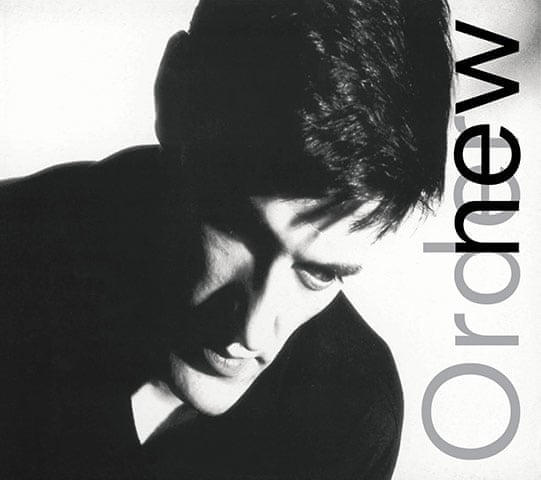
Low-Life (1985)
Blue Monday gave New Order a mainstream audience without entirely shedding the army of Joy Division/post-punk era fans (myself included), who wore long overcoats, pretended to read Dostoevsky, scoured record fairs for obscure bootlegs and swapped tapes of soundchecks with their mates. Low-Life (1985) carries off the tricky feat of catering for the different camps of fans. As with Power, Corruption & Lies, it unveils a different style with virtually every track. Opener “Love Vigilantes” – about a returning soldier – is one of the band’s great guitar pop songs.
This is the moment when New Order broke free of its Joy Division roots, presenting virtually no trace of the place from where they came. ‘Low-Life’ builds on every aspect of brilliance from ‘Power, Corruption & Lies’ and shows a fully-formed unit more than capable of standing on their own merits. The band as a whole is brimming with confidence, no one more so than Bernard Sumner, whose singing is so clearly self-assured on “The Perfect Kiss” and “Love Vigilantes,” the energy is palpable. “Elegia” is a haunting musical dedication to Ian Curtis, and sounds like the blueprint to the Cure’s ‘Disintegration.’ Nothing though, could overshadow the expert melding of dance and rock on ‘Low-Life”.
Expanding on the new-wave mastered on previous album ‘Power, Corruption & Lies’, here each song is trying to outdo the last in terms of creativity as the group dabble with house, rock, and beyond. ‘Love Vigilantes’ is a folk-tinged wonder, ‘The Perfect Kiss’ is one of their pop highlights and ‘Elegia’ is an experimental masterpiece – this album will not sit still and will not be pigeon-holed.
The Joy Division end of the band’s sound is represented by the driving, post-punky Sunrise, a brooding This Time of Night and beautifully, well, elegiac Elegia, an aural memorial to Curtis that appeared years later in an 18-minute version. The newlyacquired Saturday-night-beer-monster fanbase could wobble along to Sub-Culture and Face Up. Possibly best of all, hit single The Perfect Kiss utilises state of the art Emulator sampling technology to produce a dancefloor killer featuring frog croaks
“Elegia” (full version) An ode to Ennio Morricone’s spaghetti western scores, specifically the pocket watch scene from A Few Dollars More, “Elegia” opens side two of 1985’s highly underrated Low-Life. While the five-minute instrumental is carefully paced, exploding into full Sergio Leone glory in the last minute, the original 17-minute version is even better. “Dylan Jones – then editor at id magazine –asked us if we’d like to do some music for a short 15-20 min art film,” Stephen Morrissays. “We went into a studio in Wembley and did a marathon all night session. The film never happened, but we liked ‘Elegia’ so much it got edited down to fit on the LP.” As Morris says, “Hooky’s bass melodies on ‘Elegia’ are majestic.”
“Elegia” is one of three New Order tracks to appear in Pretty in Pink (“Thieves Like Us” and “Shellshock,” which appears on the soundtrack album, are the others), and you may have also heard it in Stranger Things, and the trailer for video game “Metal Gear Solid 5: Phantom Pain.”
“Sooner Than You Think” Like Power, Corruption and Lies, Low-Life is a near-perfect album and picking from the many great songs is difficult. Following “Blue Monday” and “Thieves Like Us,”New Order really came into their own as far as blending rock and club music. While the albums that follow would more often than not have songs that were either “rock” or “synth,” Low-Life let things intermingle in wonderful and surprising ways. After a building, minute-long intro that is mostly guitar, bass and drums, “Sooner Than You Think” shifts gears and lets the keyboards take over. “A very unusual tune, showing exactly why I used to love New Order,” says Peter Hook in his memoir. “We were so versatile.” As the lyrics describe, the song was actually written after “a party in [New Order’s] hotel” in Zurich in 1984. “I think some members of the Furious Five were there, no Grandmaster Flash,” recalls Stephen Morris. “There was a very loud blaster in a very small room – other hotel guests were not amused – complaints were made, maybe I dreamt the Furious Five bit? But not the Swiss police though.”
“Face Up” This one should’ve been a single. “When we first wrote Face up in early 1984 we thought it was the best thing ever,” says Stephen Morris. “Face Up” is another New Order song where two disparate parts have been grafted together, with an an atmospheric intro (“inspired by Caligula” says Hook) that then drastically shifts gears into music that all but demands you bounce up and down. Sonically, “Face Up” is pure ebullience, the kind few besides New Order can do with guitars, but the lyrics — “Oh how I cannot bear the thought of you” — are a decided kiss-off from a spurned lover. “I couldn’t understand why some people didn’t get Face Up’s euphoria, but maybe you had to be playing the drums to fully get that,” adds Morris.
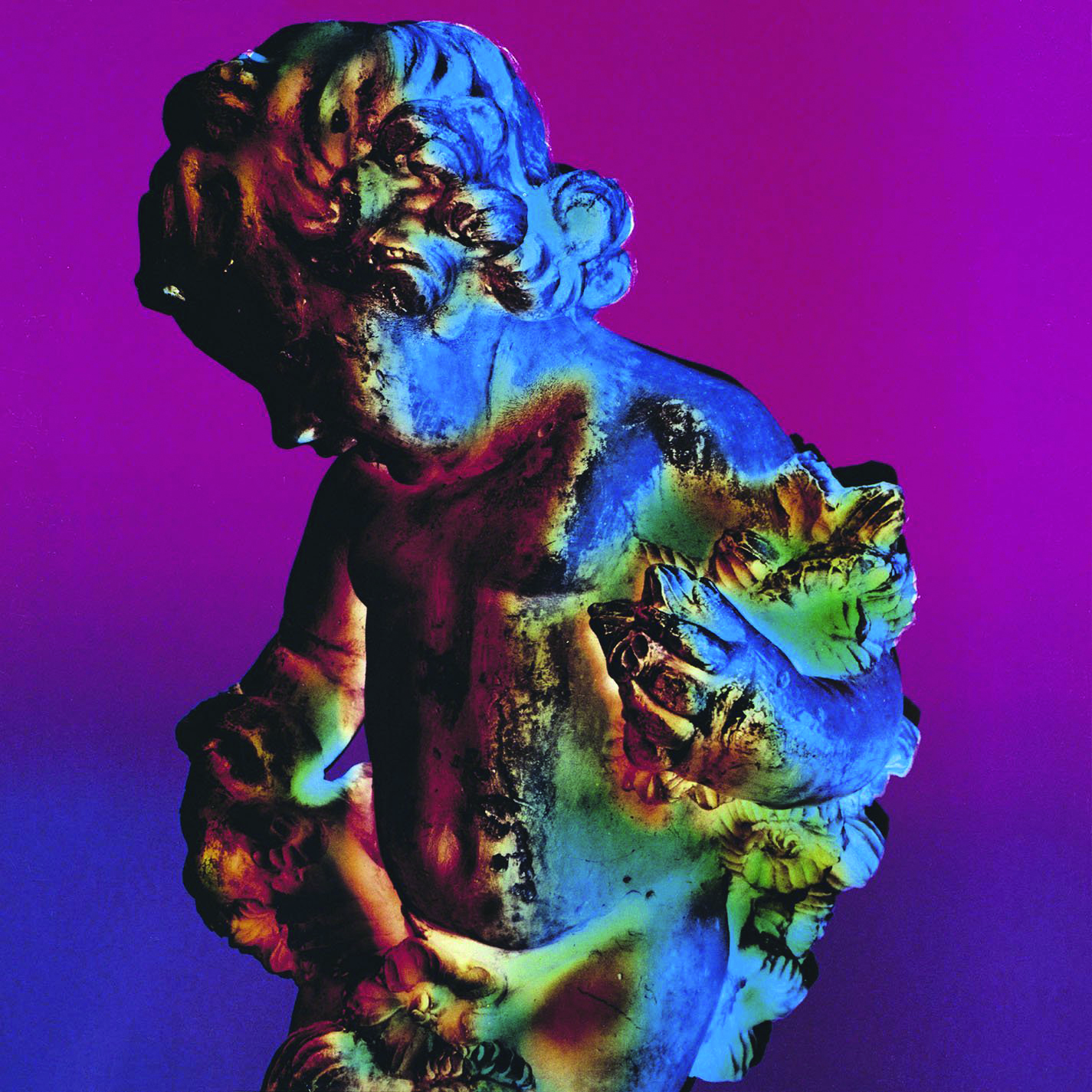
Technique (1988)
Peter Hook’s book Substance is full of eyebrow-rocketing tales of how New Order recorded their acid-house-era classic in Ibiza, leaving behind a trail of trashed cars, hedonism and fracturing relationships. A battle between the band’s rock and electronic camps over how the album should sound hinted at the growing schisms that led to a 90s hiatus and eventually Hook’s estrangement from the band. Without a doubt the most fun entry in New Order’s daunting catalogue. Partly recorded in Ibiza and influenced by clubs in New York and London, consider this the most carefree album of the bunch. Balearic beats dominate ‘Fine Time’, ‘Round and Round’ and unsurprisingly ‘Mr Disco’ as the band deftly combine their unparalleled musicianship with the ability to write big fucking bangers. There’s a couple for the indie kids like ‘All The Way’, but this one’s purpose built for ravers, and it’s the club-owning powerhouse operating at their hedonistic peak.
“Dream Attack” individual lanes, but the album closes with the glorious “Dream Attack” that brings the whole record together, mixing ragged guitar solos, windswept acoustic guitars, sampled orchestra hits, sequencers and live drums — plus another great chorus — all together as only New Order can do. Bernard Sumner apparently had The Eagles’ “Hotel California” in mind with the song’s two-minute jam outro which, in their hands, works. Gillian Gilbert, who played those wonderful acoustic guitars, says, “To me, Dream Attack‘ sums up the whole album. It’s bright breezy and uplifting…a good song to walk off into the sunset to.”
Having decamped to the Mediterranean island of Ibiza in 1988, New Order soaked in the well-known nightlife, especially the house music explosion enveloping the local venues. Rather than be intimidated by something unfamiliar, they let it heavily influence their sound. Tracks like “Fine Time,” “Mr. Disco” and “Round & Round” were instant club hits, usually buoyed by whatever remix took it to another level in much the way ecstasy was lifting clubgoers to otherworldly heights. It totally separated them from their past, and those considering ‘Technique’ the peak of New Order certainly aren’t wrong.
Given all this – and the fact that partying took priority over recording until they relocated to Peter Gabriel’s Real World back in the UK – it’s remarkable that they managed to come back with much at all, never mind such a fantastic album. Technique assimilates Balearic beats but is recognisably, inimitably New Order. The band’s most dancefloor album starts off with the acid-house-flavoured Fine Time and ends with the supernaturally melancholy Vanishing Point, while the rest of the album careers from guitar pop (Run, Dream Attack) to plangent electronic pop (Round and Round, Mr Disco), the sound of summer adventures, Ibizan clubs and long, reflective sunsets.
Brotherhood (1986)
Like its predecessor, ‘Brotherhood’ features both dance and pop, but unlike ‘Low-Life,’ it keeps them apart. Side one is all guitar pop, “Broken Promise,” “Weirdo” and the chill acoustic “As It Is When It Was,” whereas side two is right out of the gate a departure with “Bizarre Love Triangle,” a classic club staple. It’s not bad at all, just an interesting maneuver. In fact, the case could be made that whichever New Order you prefer, it’s on here. It’s also the record where Peter Hook fully asserts that the bass guitar is to be a featured instrument, not merely there to accent the songs.
“Way of Life” As the ’80s progressed, New Order became more and more known as a synthpop band, but they remained a clever, inventive rock band on album tracks, as is evidenced by the entire first side of 1986’s Brotherhood. “Way of Life” closes out Side A, beginning with another gloomy fake-out intro before blossoming into a wonderful pop song with a chorus so infectious it seems impossible they would bury it this deep into the album. Hook says “We were trying to emulate ‘Age of Consent’ so I just played the riff backwards, and voilà.”
“Every Little Counts” New Order were guilty a few times over the years of what Peter Hook calls “five o’clock in the morning lyrics.” Sometimes that meant something special, like “you caught me at a bad time, so why don’t you piss off” (Power, Corruption & Lies’ “Your Silent Face”) and sometimes it gives you the opening lines to Brotherhood’s closing track. “Every second counts when I am with you / I think you are a pig, you should be in a zoo,” which Bernard Sumner cannot get through without laughing. (He also didn’t feel a need to do another take.) And yet, “Every Second Counts” is still pure gold, making great use of orchestral samples, harmony and Sumner’s winning “do de do de dooh” chorus. “Every Little Counts” is also a perfect album-closer, with a massive, woozy swell from their Emulator sampling keyboard — “with Barney holding all the keys down at once, using both arms” — and then a great final joke that definitely freaked out some vinyl listeners at the time.
Power, Corruption & Lies and Low-Life defined New Order as a band who were able to weave together guitars and electronics, a format used by countless bands today. However, Brotherhood separates the two sides again, virtually entirely, with a guitar/drums side and an electronic side. Brian Eno had done something similar with the very different halves of Before and After Science, while David Bowie’s “Heroes” divided neatly into rock music and synthesiser stuff. New Order were fans of both, and here they pull off a similar feat. Brotherhood’ shows a band in the midst of battle for their own soul – and it sounds tremendous. The record’s first half is awash with slinking guitar-led anthems such as ‘Broken Promise’ and some of Hooky’s best bass work in the shape of ‘Way Of Life’, but the album’s latter half is where the party is. Kicked off by what we’ve called their “perfect pop moment”, ‘Bizarre Love Triangle’, this side builds on ‘Low-Life’s more electronic moments in subtle ways. ‘All Day Long’, all regal synths and pounding drums, acts as a compromise between their conflicting sounds, and ‘Every Second Counts’ sounds like the demo song on your old-school Yamaha keyboard, but, you know, pretty good.
The first side is a Hook masterclass. Having been a huge part of Joy Division’s sound with those mournful/powerful bass lines, his trademark twangs fire five supremely catchy guitar-pop songs such as the hurtling Weirdo or the truly lovely As It Is When It Was. Side two kicks off with a classic – Bizarre Love Triangle’s soaring symphonic electronic pop – and ends with a rare recorded moment of their idiosyncratic Mancunian humour. As Sumner sings Every Little Counts’ madcap lines – “I think you are a pig, you should be in a zoo” – he can’t stop laughing. It’s a long way from their roots, but, if you like these albums, head back to Movement and Joy Division to listen to where they started out.
“Special” New Order were not especially getting along in the early-’90s, but got back together to make a new album, as they were low on funds after their label Factory Records (which went belly-up the year prior) and their troubled Manchester club, The Hacienda, depleted their bank accounts. Republic was, by all accounts, not the most pleasant recording experience with Bernard Sumner and Peter Hook butting heads constantly. There’s not much of Hook’s signature bass on the album, but there is some unfortunate rapping by Sumner. Republic does contain “Regret,” one of their best-ever singles (a Top 40 hit in the US), and some of the old magic can also be found tucked away near the end of Side 2 with the sultry, moody “Special,” which is driven by Hook’s bass and another great chorus. Lyrically the song is perhaps referencing the demise of Factory Records or the group itself: “It was always special, like water down the drain.” New Order went on an eight-year hiatus not long after its release.
Also worth checking out and a great read Record Play Pause by Stephen Morris, The New Order drummer’s first volume of memoirs combines humour, geek-level detail and insider insight in a read that’s especially good on the environment and chemistry that produced Joy Division (and hence New Order). A second volume on the New Order years and fall-outs, due later this year, promises to be similarly gripping.
Music Complete
I think a few people had written New Order off after Peter Hook acrimoniously departed in 2007. The last time that the original New Order line-up was in the studio together gave us 2013’s ‘Lost Sirens’, an LP consisting solely of material written during 2005’s ‘Waiting for the Siren’s Call’ sessions.
However, while 2015’s ‘Music Complete’ lacked Hooky’s distinctive bass playing, here New Order rose, like a moody Mancunian phoenix, and delivered what some see as their best album since ‘Technique’. ‘Music Complete’ has all the hallmarks of a great New Order LP – a deceptively simple Peter Savile-designed album cover, a stonking single (‘Plastic’) and plenty of Kraftwerk-y synth work-outs. The band seem to have rediscovered that certain New Order-y-ness that made them so great in the first place.
In the past, New Order had an enjoyably cack-handed approach to keyboards and electronics – if they often sound like they were figuring out how to use things for the first time, it’s often because they were – but on ‘Music Complete’ they seem a lot more assured. From the marauding moodiness of ‘Restless’ to those tight, chattering synth arpeggios on ‘Singularity’ via the surprisingly heady and DnB-inspired ‘Superheated’, ‘Music Complete’ is the sound of a mature band with a wealth of experience – so, guys, please make some more!
Formed out of the primordial creative ooze of the San Francisco Bay Area, Oakland’s Once & Future Band is Joel Robinow (keyboards, lead vocals), Raj Ojha (drums, recording / mixing engineer) and Eli Eckert (bass, vocals). For over a decade, Joel, Raj and Eli had worked together (in various combinations) with several bands and projects, including Drunk Horse and Howlin’ Rain. Throughout those years, they often spoke of forming an outlet into which they could combine their love of 60s and 70s psychedelic pop, jazz-rock, fusion and progressive rock, in addition to their myriad other musical fascinations.
These psychonauts have been jamming up a storm and the conserve that rains down upon us is of the finest vintage, spreading flavours of glam-rock, psych-pop and divinely tart, acid-folk-prog across our grainy brains.
These songs will stop you in your tracks so that you can merely absorb how wonderful this album is. there are haunting chorale escorts here…long trains of room warmth…the belting of the machine heart…lofty guitar and bass melange…and just beautifully laid to magnetic tape with a sure hand by the throbbing brains that are once & future band. As John Dwyer (Thee oh Sees) says, this is “for fans of roy wood, idle race, elo, roxy music, head hunters, stevie wonder, paul mccartney, the lord bowie, the band, and the soundtrack from every movie that ever pierced your cold, cold heart”.
“Freaks came after a fight I had with an old girlfriend, which are invariably about pride, and I just thought of this guy ineffectually trying to enact revenge but everyone knows he’s full of shit…was listening to a lot of nillson and ELO then and still, so that’s likely the musical inspiration, I feel like Danny Levin (double D horns) really nailed the vibe, he does all of our horn arrangements by proxy in LA where we mail him the tracks and he Magics them up…if you listen carefully you can hear me saying a mixture of “have someone” and “got someone” in the triple tracked vocals creating a new possessive word Gavt which basically means fool you never had her in the first place.” – Joel Robinow
With 2020 comes the release of their 2nd full length LP, “Deleted Scenes” which has been years in the making. featuring another iconic cover by longtime collaborator Christopher Appelgren.
From the forthcoming album “Deleted Scenes”, out April 10th, 2020 on Castle Face Records.
The American composer and rock & roll provocateur, Frank Zappa, died at age 52 almost two decades ago, on December 4th, 1993. At the time of his passing, his official discography totaled 62 albums released under his own name and that of his landmark combo, the Mothers of Invention.
He is still putting records out, at a remarkable pace, under the vigilant aegis of his wife Gail and the Zappa Family Trust’s Vaultmeister, archivist Joe Travers. According to the fine print on the back, Carnegie Hall – a four-CD set of Zappa’s two shows at New York’s symphonic palace on October 11th, 1971
Zappa Records and UMe have repackaged this 2011 website-exclusive 4-CD set in more compact 3-CD fashion for general release. “Carnegie Hall” chronicles Zappa and the Mothers of Invention’s October 11th, 1971 shows at the famed New York venue from the original mono tapes. This version drops the opening set by The Persuasions but includes all of Zappa and the Mothers’ material from both shows. The Mothers’ lineup includes three alumni of The Turtles – bassist Jim Pons and vocalists Howard Kaylan and Mark Volman, a.k.a. Flo and Eddie – plus Ian Underwood, Don Preston, and Aynsley Dunbar.
According to New York promoter Ron Delsener’s Carnegie Hall liner note, Zappa and his ’71 Mothers keyboard players Don Preston and Ian Underwood (the latter also on alto sax), ex-John Mayall drummer Aynsley Dunbar and three former Turtles, bassist Jim Pons and singer-jesters Mark “Flo” Volman and Howard “Eddie” Kaylan –only got through the backstage door because Delsener told the venue’s booking manager that the boss Mother “was a very accomplished classical musician.” Which was true, although the only strings in this band were on Zappa’s guitar.
The complete 7:30 and 11 p.m. shows in this box were recorded by the leader in mono with a single microphone and concealed tape machine (probably to avoid union hassles). The fidelity is remarkably clear and full-bodied, even with the inevitable room echo. This is also a rare chance to hear the “Flo and Eddie” Mothers’ full range of operatic lunacy and underrated small-combo instrumental drive. An LP-sized dose, Fillmore East – June 1971, had been issued shortly before these concerts; another, 1972’s “Just Another Band from L.A.”, had just been taped.
But Carnegie Hall is all that fun at length – the bawdy rock-star mockery of “The Mud Shark,” reprised from Fillmore East; an even longer “Billy the Mountain” than the one on “Just Another Band” plus surprising excavations from Uncle Meat, a long new piece called “Divan” (about a sofa and a magic pig) and a weirdly funky rewiring of the paranoia in Freak Out! “Who Are the Brain Police?” A chunk of “King Kong” 30 minutes goes to an overlong drum solo, but such were the times.
Ironically, Zappa’s orchestral work was never performed in Carnegie Hall in his lifetime. After his death, though, Zappa’s long-form fable, “The Adventures of Greggary Peccary” (issued on 1978’s Studio Tan), rendered in full, by an orchestra. Carnegie Hall marked Zappa’s first and last night on that stage. He never left the building.
Dark and dizzying, hard-edged and sophisticated, “Why Not” is the fast-paced and magnetic brand-new single from Unloved. The track is out right now through the courtesy of the legendary Heavenly Recordings.You can find sundry streaming and download links for it , and it also appears in the Season 3 premiere of Killing Eve out now as well.
We’re delighted that Killing Eve are airing the first episode of Season 3 on Sunday in the US and Monday in the UK – a real treat to entertain us during the lockdown! This is especially exciting as we’re also going to release our brand new single ‘Why Not’ which features in the episode . You can pre-save it already and familiarise yourself with the tracks from season 1 and 2 to get yourself ready for the new season by clicking the link. We can’t wait for you to hear it.
if the shangri las got locked in a studio with Lee Hazzlewood, Nancy Sinatra and Raymond Scott and Ennio Morricone it could possibly sound like unloved


:format(jpeg):mode_rgb():quality(90)/discogs-images/R-29053-1397768349-7178.jpeg.jpg)
:format(jpeg):mode_rgb():quality(90)/discogs-images/R-35892-1515588537-5883.jpeg.jpg)


