Earlier this week, Montreal’s Elephant Stone released a new video for ‘Fox on the Run’, taken from their recent ‘Hollow’ LP, as well as a great remix of the band’s 2013 single ‘A Silent Moment’ by Tom Furse (The Horrors). Elephant Stone ‘Fox on the Run’ is from their sixth full-length, ‘Hollow’, which we put out earlier this year. The song is a sublime piece of ambient psychedelia that submerges you in waves of mesmerising synths, shimmering guitars and Rishi’s effects-heavy vocals –
Talking about ‘Fox on the Run’, bandleader Rishi Dhir explains: “During the writing of this track, I was listening to a lot of Yo La Tengo, specifically ‘And Then Nothing Turned Itself Inside-Out’, I loved the hypnotic element to their tunes. At the same time I kept hearing reports about ICE agents taking people away in the middle of the night—people who have been in America for years and worked hard…only to be now targeted by Trump and his cronies. The song was written from the perspective of someone who just wants to be somewhere safe and with their family.”
Vince Gauthier, the director of the video, describes it a “a visual companion to the song’s playful rhythms juxtaposed against a serene portrayal of the protagonist, untroubled by the chaos tearing at the fabric of his world.” Out today, the single also comes with a B-side remix of the 2013 track ‘A Silent Moment’ courtesy of Tom Furse of The Horrors and MIEN, another of Rishi’s project’s MIEN with Tom, Alex Maas of The Black Angels and John Mark Lapham of The Earlies. You can stream ‘Fox on the Run’ and the remix below, and buy ‘Hollow’ on vinyl now.
Steve Gunn released Acoustic Unseen on Matador Records, a new EP of intimate acoustic versions of songs from his critically acclaimed latest album, The Unseen In Between. Accompanying the news of the release is a short documentary titled Unseen Anthology which opens to a scene of Gunn performing outside one of London’s thirteen green cab shelters, diminutive sheds which were originally introduced in 1875 to provide shelter for cabmen – and also to keep them out of the Victorian pubs.
The Unseen In Between is befitting of its title; a mysterious and mesmeric edgeland offering glimpses into the underbelly of a half-remembered neighbourhood, and the trials and habits of its outcasts. It could be argued that the view is too familiar for some, causing them to wander and grow listless. Upon looking deeper however, many will find solace in the oblique tales and tragedies. Those relatable human moments, which can be found right under your nose….” . The EP features a stripped down perspective on the stately set and disclosing the songs’ rich individual elements in Gunn’s dexterous and lyrical guitar style. Steve says: “After being on the road with the band since January, I wanted to spend an afternoon capturing the songs from The Unseen In Between as I originally wrote them, with just me and my acoustic. Mid-year, I went back to the great Strange Weather Studio in Brooklyn, and played through the songs in their most basic form. It felt good.”
Directed by The Mitcham Submarine and edited by James Harman, the documentary weaves together footage from touring, live sessions, official and unofficial music videos – including a breath taking session for Toutpartout in a transformed convent in Ghent, on the road footage captured on a Fisher-Price camera by Steve and his band, and acoustic videos filmed across London, including a Cecil Court bookshop. Taken together, it’s an engrossing live document of an artist in need of little more than a guitar and his voice to conjure a transfixing atmosphere, and a perfect visual companion to the EP.
released October 15th, 2019
Steve Gunn – Guitar & Vocals,
All songs written by Steve Gunn
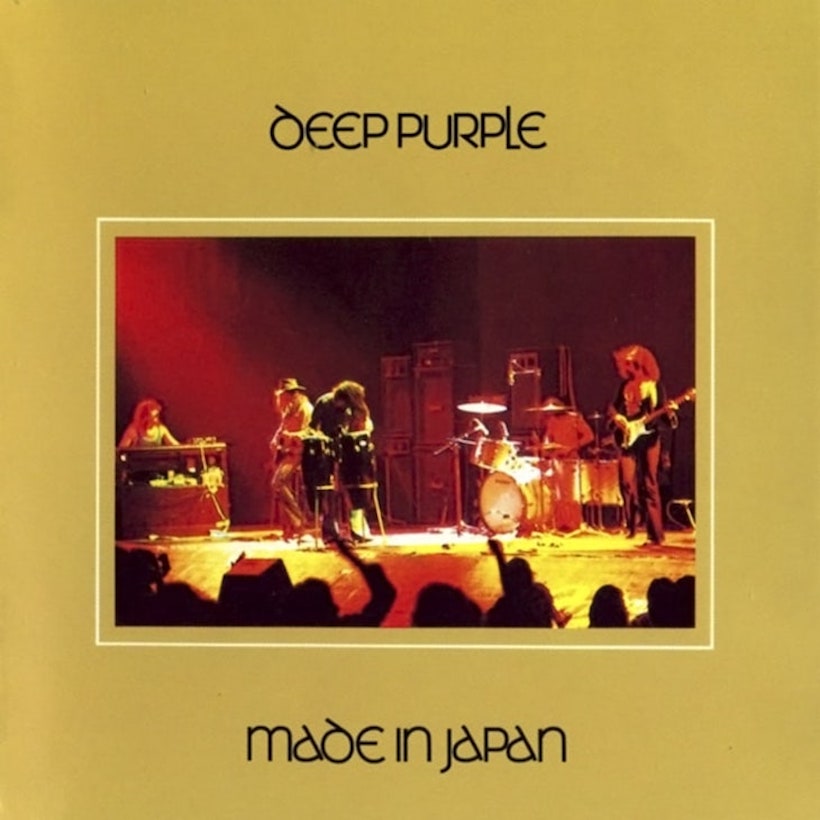
One of the most celebrated live rock albums in history made its big entrance on 6th January 1973. “Made In Japan”, the double live album recorded in the summer of 1972 during the first tour of Japan by Deep Purple, debuted on the UK chart. Its US debut followed on 21st April. The band were well known for their strong stage act, and had privately recorded several shows, or broadcast them on radio, but were unenthusiastic about recording a live album until their Japanese record company decided it would be good for publicity. They insisted on supervising the live production, including using Martin Birch, who had previously collaborated with the band, as engineer, and were not particularly interested in the album’s release, even after recording, the band’s musical skill and structure meant there was sufficient improvisation within the songs to keep things fresh. The tour was successful, with strong media interest and a positive response from fans. there was a demand for bootleg recordings of the band. The most notorious of these was an LP entitled H Bomb, recorded at Achen on 11th July 1970. This success, along with albums from other artists such as the Who’s Live at Leeds and the Rolling Stones’ Get Yer Ya-Ya’s Out convinced the band that an official live album would be commercially successful. At the time, Glover told Sounds magazine that “there are so many bootlegs of us going around, if we put out our own live set, it should kill their market.
The album featured only seven tracks across the four sides of the original vinyl release, four of them taped at their show at the Festival Hall in Osaka on 16th August; one at the same venue the night before; and the other two at probably the best-known venue in those early days of Western bands exploring that market, Tokyo’s Budokan.
In just the seven cuts, Deep Purple deliver four sides of excitement and indulgence. From Ian Paice’s dizzying drum solo during “The Mule” to Jon Lord’s winking organ vamp at the start of “Lazy,” from the trick ending of the 20-minute “Space Truckin'” to Ian Gillan and Ritchie Blackmore’s voice-and-guitar duel during “Strange Kind of Women,” the metal progenitors plunder (and arguably establish) a near-complete arsenal of onstage tricks and tropes. Cheaply made, wildly popular and frequently reissued, Made in Japan was captured during the three nights in Osaka and Tokyo. The set feels ever casual, as if the band is performing less for the crowd or the tape machine and more for the sheer enjoyment of stretching these tunes out like playdates. “We were all so unconcerned about the whole thing that nobody was actually aware of being recorded,” Lord later confirmed in Dave Thompson’s book Smoke on the Water. “There was no diminution of the interplay, spontaneity and feeling that we usually got onstage.
This was already Purple’s second live album, but a very different animal to their first, the 1969 recording of Jon Lord’s Concerto For Group and Orchestra. This time, chiefly at the request of their Japanese label, the idea was to create a record of the band’s powerful live show. It was also a chance to present an in concert version of the band’s anthem-in-the-making from the Machine Head album of only a few months earlier, ‘Smoke On The Water.’
Included on Made in Japan in live form are three more songs from Machine Head, which had been on the UK charts for 24 weeks after its April 1972 debut. The live set’s opening ‘Highway Star’ was another new Purple favourite, while ‘Lazy,’ a seven-minute track on Machine Head, extended to nearly 11 tracks on the live record. The closer, taking up the whole of side four of the vinyl release, was ‘Space Truckin,’’ which expanded from a four-minute original to an epic of nearly 20 minutes on Made In Japan.
The band considered the gig at Tokyo on 17th August to be the best of the tour. Glover remembered “twelve or thirteen thousand Japanese kids were singing along to ‘Child in Time'” and considered it a career highlight, as did Gillan. Lord listed it as his favourite Deep Purple album, saying, “The band was at the height of its powers. That album was the epitome of what we stood for in those days. At the venue, a row of bodyguards manned the front of the stage. When Blackmore smashed his guitar during the end of “Space Truckin'” and threw it into the audience, several of them clambered past fans to try and retrieve it. Blackmore was annoyed, but the rest of the band found the incident amusing. The gig was not as well recorded as the Osaka shows, though “The Mule” and “Lazy” were considered of sufficient quality to make the final release.
Deep Purple were on a hot streak in which both Machine Head and its predecessor Fireball had topped the British chart, but as often with live albums, there was less chart glory to be had this time. The album debuted in the UK that first week of 1973. “Made in Japan is Deep Purple’s definitive metal monster, a spark-filled execution,” wrote Rolling Stone. “Deep Purple can still cut the mustard in concert.
The 8-track tapes of the three shows were carefully put in storage by Warner Bros. Japan for future use. For the album’s 21st anniversary in 1993, Deep Purple author and archivist Simon Robinson decided to enquire via the band’s management if the tapes could be located. He discovered the entire show had been recorded well, including all the encores. In July, Robinson and Darron Goodwin remixed the tapes at Abbey Road Studios for an expanded edition, that was then mastered by Peter Mew in September. To compromise between including as much of the shows as possible and setting a realistic price that most fans would accept, they decided to release a 3-CD box set, titled “Live in Japan”. This included all of the three main shows except for two tracks already available on the original album. In their place were two previously unreleased encores.
Robinson subsequently oversaw a new reissue of the original album in 1998 on CD, The colour scheme of the cover was reversed to show gold text on a black background. The remastered Made in Japan has further edits to make a contiguous performance, making it shorter than the original release. At the same time, a limited edition of 4,000 double LPs was released on purple vinyl, while in Spain,
In 2014,Universal Music announced that the album would be reissued in a number of formats in May. The deluxe option is a set of four CDs or 9 LPs containing a new remix of the three concerts in full, a DVD containing previously unseen video footage, a hardback book and other memorabilia. The original LP was reissued in 180g vinyl as per the original release with the original 1972.
Deep Purple
Ritchie Blackmore – lead guitar
Ian Gillan – vocals, harmonica (uncredited), percussion (uncredited)
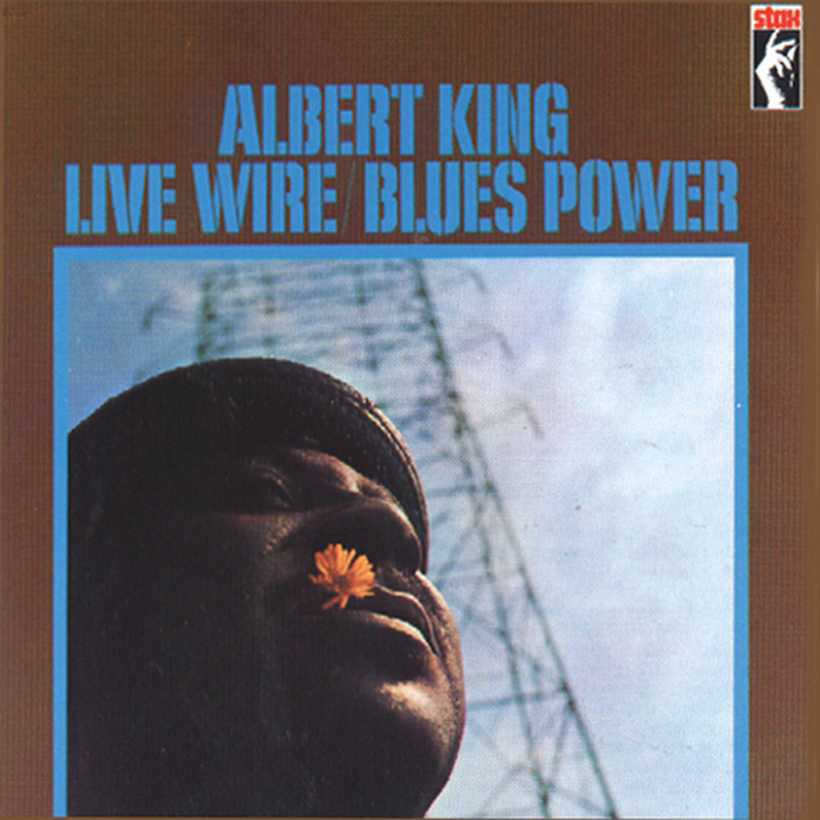
If you want to understand what makes Albert King such a much loved guitar player and purveyor of the blues then look no further than “Live Wire/Blues Power” his 1968 release. Recorded live at the Fillmore Auditorium in San Francisco in June 1968 it is a record that is full of King’s searing guitar and his unique vocals.
King was a regular at the Fillmore, playing there probably more times than any other blues artist. He played three nights at the gig from 25th to 27th June , with support from Loading Zone and Rain. Loading Zone was a local band who released their debut album in 1968, but they never rose above the role of a support band; Rain have been lost to the mists of time.
The opening number is a cover of Herbie Hancock’s‘Watermelon Man’ that Albert turns into a funky fanfare for what is to follow. It’s followed by one of King’s defining numbers, the soaring Blues Power which features some of his finest searing guitar, accompanied by a trademark homily; Stax released it in edited form as a single. This is one of the four self penned numbers on the record and not to be confused with the song of the same name written by Eric Clapton and Leon Russell.
‘Night Stomp’ that follows is co-written by King, Raymond Jackson and Al Jackson Jr. Al produced the album and was the drummer and a founding member of Booker T & The MGs. Raymond, no relation to Al, was also from Memphis and wrote many songs for Stax Records.
‘Blues Before Sunrise’, another King original, is the epitome of a slow blues burner, full of fire and ice, one of those numbers to play people who may have some lingering doubt that the blues are for them. A cover of BB King’s ‘Please Love Me’ follows, with its traditional, ‘dust my broom’ riff. Throughout the band of Willie James Exon-Guitar, James Washington-Bass, Rooselvelt Pointer-Bass, and Theotis Morgan-Drums support King in the perfect way, giving him the space to play.
The set closes with King’s ‘Look Out’ with it’s fast ‘walking bass’ line it shows why Albert King was so beloved by the San Francisco rock crowd who adored Jefferson Airplane, Quicksilver Messenger service, The Steve Miller Band and the Dead…all of them took influence from the blues and Albert King was the real deal.
There’s not a blues guitarist that has not copped King’s licks and fallen under his spell, in part because this became Albert’s first album to make the Billboard chart on 16 November 1968; it only made No.150 but that’s not the point.
Play it LOUD and relish a night with Albert King at the Fillmore.
So here it is. 5 years on, a new School of Language record. A concept album about the 45th President of the United States. Songs about Cambridge Analytica, Hillary Clinton, Rex Tillerson, North Korean foreign policy and the limits of the Goldwater Rule. This one is mostly a list of things Donald Trump has claimed to be amazing at.
I hope you all enjoy the songs, despite the subject matter, and the beautiful artwork by Elliot Elam, despite the subject matter. And, of course, I hope Western civilisation hasn’t crumbled by the time you get your copy. Hope to see you all soon on whichever School of Language or Field Music adventure comes next. Now I’m off to finish my new song, “On The Oranges of Species”.
It’s four years since Prince left us. Over these past few exceedingly odd weeks, I’ve been thinking about him; picturing him alone in the studio, running a drum machine through guitar pedals, layering vocals, churning out song after song, maybe with an engineer looking through the glass but nevertheless in a bubble of isolation. I couldn’t bring myself to cover his songs. I love the complete package – the playing and the production and the imperfections – just too much to tinker with. But I thought that maybe I could keep myself on the level by writing my own Prince songs. Maybe a little batch which would have been left in the vault back in ’81 because they sounded “too Prince” and he’d already moved on. So this is my little tribute, a digital EP called I Could Have Loved U Better available on Bandcamp as a pay what you like affair.
David Brewis of Field Music at his least collaborative. There were six years between Sea From Shore and Old Fears.
Pittsburgh’s Code Orange have been making frantic, math-damaged hardcore for more than a decade, since they were literal children operating under the name Code Orange Kids. With each album, they’ve been getting bigger and heavier, to the point where they’ve now been playing metal festivals in stadiums and collaborating with Slipknot’s Corey Taylor. On Underneath, they’ve embraced the challenge of making grand, cathartic big-tent rock music without losing their punishing harshness. They’ve succeeded. Underneath has soaring choruses, jittery IDM drill-beats, scuzzed-out nu-metal groove-attacks, and riffs hard enough to clothesline the skin right off of your skull.
our new album ‘Underneath’ is available now on Roadrunner Records.
Muzz, is the new project of Paul Banks (Interpol), Josh Kaufman (producer/multi-instrumentalist and one third of Bonny Light Horseman), and Matt Barrick (drummer of Jonathan Fire*Eater,The Walkmen, and Fleet Foxes’ touring band), have announced their self-titled, debut album, due out June 5th on Matador Records.
The phrase “Interpol side project” should rightly send a shiver down your spine, and yet somehow Muzz (the new band from Paul Banks plus producer Josh Kaufman and The Walkmen’s Matt Barrick) is something special. The trio went to high school together and that lived-in feel permeates the music they make together. “Bad Feeling” is their first release and combines a gorgeous guitar tone with jazz flourishes and heavenly backing vocals.
Muzz was born out of longstanding friendship and collaboration. Banks and Kaufman have known each other since childhood, attending high school together in Spain before separately moving to New York. There, they independently crossed paths with Barrick while running in similar music circles. They kept in touch in the following years: Barrick drummed in Banks + Steelz and on some of Kaufman’s production sessions; Kaufman helped on Banks’ early Julian Plenti solo endeavour; various demos were collaborated on, and a studio was co-bought. The self-titled debut album, written, arranged and performed by all three, is dark and gorgeous, expansive and soulful. No matter the sonic direction, Muzz goes there effortlessly and with maximum emotional charge.
This is a new band. Now they have announced their self-titled debut album and shared another song from it, “Red Western Sky,” via a video for the single Muzz is due out June 5th via Matador and features two previously shared singles, “Bad Feeling” and “Broken Tambourine.” Check out the “Red Western Sky” video tracks below.
Their first song, “Bad Feeling.” It was a little more lush and chill than the post-punk assault of Interpol and was one of our favourite songs. Then they shared another new song, “Broken Tambourine,” via a video for the track.
Banks and Kaufman have known each other since they were teenagers and both have also worked with Barrick before. Muzz’s earliest recordings date back to 2015. All three members wrote, arranged, and performed the album. And while Banks is usually the sole lyricist in Interpol, here all three members contributed to the lyrics.
“Josh has more training as a theory musician while Paul comes from a different perspective,” Barrick says about the process in a press release. “You never know how Paul’s gonna approach a song, lyrically and melodically, so it’s always unusual and exciting. Everyone is open to everyone else’s ideas. I think three is a great number of people for a band. We all had a big hand in everything.”
Kaufman had this to say about the band’s sound: “The music has this weird, super removed vibe but is also personal and emotional at the same time. If something felt natural in a simple way, we left it. I’d never heard Paul’s voice framed like that—a string section, horns, guitars—we know none of that is visionary but it felt classic and kind of classy.”
The band’s name stems from the word Kaufman used to describe the band’s sound, or as the press release puts it, “the music’s subtle, analog quality and texture.”
Summing up the album Banks says: “Ultimately, the music speaks for itself. We have a genuine, organic artistic chemistry together. It’s partly a shared musical taste from youth, as with me and Josh, but then it’s also the souls of my friends that resonate with me when expressed through music. I think it’s cosmic.”
Interpol (which also features Daniel Kessler and Sam Fogarino) released a new EP, A Fine Mess last year also via Matador. It followed their 2018 album Marauder. Outside of Interpol, Banks has released two solo albums (2009’s Julian Plenti is... Skyscraper and 2012’s Banks and one album with RZA as Banks & Steelz (2016’s Anything But Words).
Muzz’ self-titled album out June 5th, 2020 on Matador Records.
On his ANTI- Records debut “Beginners”, Los Angeles-based singer/songwriter Christian Lee Hutson embeds every lyric with his most intimate self-dialogue, sharing painful confessions and private jokes, imagined conversations and elaborate daydreams. The album—produced by his friend and collaborator Phoebe Bridgers—spotlights a nuanced songcraft and understated candor that all but erases the distance between feeling and expression. Throughout this collection of songs, Hutson ultimately speaks an illuminating truth about regret and forgiveness and the endless confusion in growing up.
“I went with Beginners as the title because that’s where I feel like I am in my life—like I’m still just learning and trying to figure out how to navigate the world,” Hutson notes.
Hutson and Bridgers recorded Beginners at L.A.’s legendary Sound City Studios, but purposely preserved the homespun quality of his cell-phone-recorded demos. “With almost all the songs, we started with my voice memos and then figured out what to add—if anything—as opposed to going in with some grand idea of what it should sound like,” Hutson recalls. “Phoebe and I have the same musical shorthand, which made it really easy to share and add to each other’s ideas.” Beginners mines its subtle textures from Hutson’s warm vocals and graceful guitar work, and also unfolds flashes of sonic brilliance achieved with the help of its guest musicians—including Bridgers herself, as well as Nathaniel Walcott of Bright Eyes (who created all the string arrangements for the album, in addition to playing trumpet).
On Beginners’ softly heartbreaking lead single “Lose This Number,” Hutson reveals one of his greatest strengths as a songwriter: a rare ability to infuse his lyrics with myriad idiosyncratic detail, yet leave the narrative slippery enough for the listener to fill in their own meaning. Throughout the song—inspired by a loved one’s ordeal in what Hutson refers to as “knowing you really fucked up and there’s no way to go back”—his storytelling is threaded with incisive turns of phrase (e.g., “It’s like I was born on the back of a bullet/With your name written on it”).
An album steeped in impossibly vivid memory, Beginners moves between tender nostalgia and self-effacing humor on “Northsiders”—a song about “all the posturing you do in high school because you don’t know who you are yet,” according to Hutson (sample lyric: “Morrissey apologists/Amateur psychologists/Serial monogamists/We went to different colleges”). His often-bemused reflection on growing up in L.A. turns to “this very common experience of kids I knew getting sent to rehab at a really young age” on “Seven Lakes.” And on “Get The Old Band Back Together,” Beginners slips into a strangely joyful mood as the track slowly warps into an epic sing-along sending up Hutson’s own teenage hubris.
The Santa Monica-native took up guitar at age 12 and soon started self-recording on a four-track in his bedroom, largely inspired by the DIY sensibilities of artists like Elliott Smith. Hutson’s universe has expanded considerably since then, having co-written a song on the 2018 debut EP from boygenius and two on the 2019 debut LP from Better Oblivion Community Center (with whom Hutson also toured as both a guitarist and support act). Last year, he toured supporting artists including Julia Jacklin and Okkervil River as well.
With the release of Beginners, Hutson hopes his audience might find solace in his deliberate emotional transparency. “I want people to feel like it’s okay: we’re all here fucking up all the time; we’re all just learning and living, and it’s going to be all right,” Hutson says. “I don’t even know if I fully believe that, but it’s the voice I always wished I had in my life.”
Christian Lee Hutson is the musician the Reply All guys hired to record that insanely catchy song they were trying to discover on this month’s viral episode. His own new song, “Talk,” owes less influence to U2 and Barenaked Ladies but is a delicate, Phoebe Bridgers-produced reflection on a man’s life with a family in both the past and future.
“Talk” by Christian Lee Hutson from the album ‘Beginners,’ available May 29th
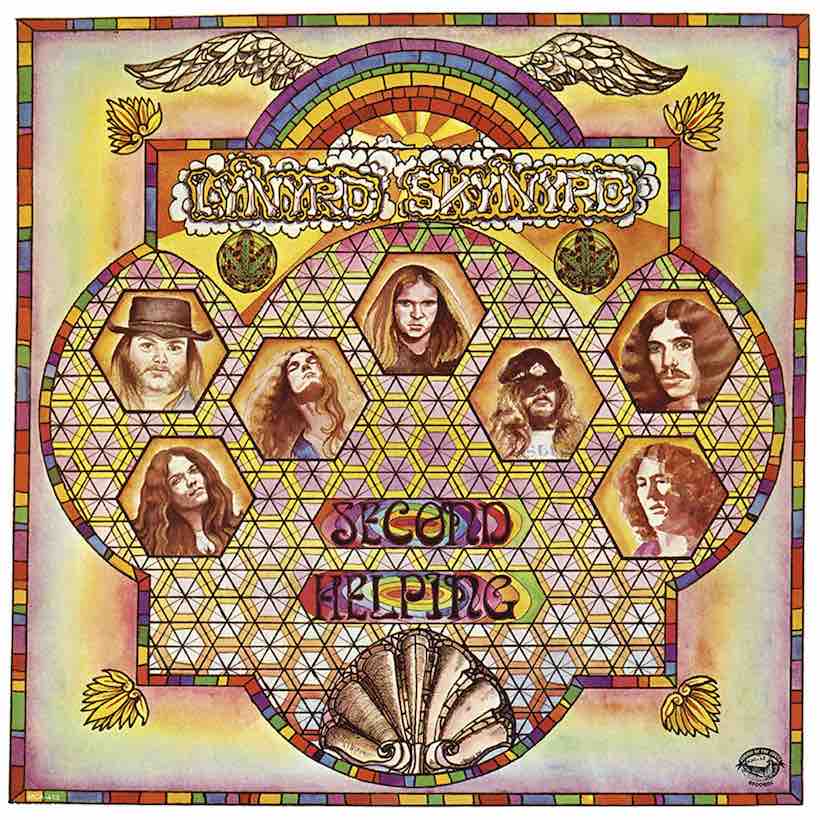
“Second Helping”, was the record that contained their biggest hit single and perhaps greatest rock theme tune of all time, ‘Sweet Home Alabama,’ was released on 15th April 1974. An answer song to Neil Young’s “Alabama” and “Southern Man”. Skynyrd’sfan base had continued to grow rapidly throughout 1973, largely due to their opening support slot on the Who’s Quadrophenia tour in the United States.Second Helping features Ed King, Allen Collins and GaryRossington all collaborating with Ronnie Van Zant on the songwriting.
After the success of their debut album, 1973’s Lynyrd Skynyrd (pronounced ‘lĕh-‘nérd ‘skin-‘nérd), the Second Helping LP was recorded chiefly at the Record Plant in Los Angeles. That was apart from that signature hit, which the band laid down in Doraville, Georgia. Recording sessions started in June 1973, a matter of weeks after they had signed off on the one before. Their producer, as with the first album and 1975’s third release Nuthin’ Fancy, was Al Kooper, whose notoriety already stretched back some 15 years to his teenage success with the Royal Teens. Kooper’s association from the mid-1960s with Bob Dylan was augmented by appearances with hundreds of other artists, not to mention his own recordings from 1969 onwards.
Kooper was also one of the musicians on Second Helping, singing and playing piano on two tracks. ‘Sweet Home Alabama’ featured the vocals of Merry Clayton, Clydie King and others. Clayton, famously the powerful female voice of ‘Gimme Shelter,’ was not the only Rolling Stones alumnus on the Skynyrd album. Saxophonist Bobby Keys played on ‘Don’t Ask Me No Questions’ (the first single from the set, before ‘Alabama’) and Skynyrd’s cover of JJ Cale’s ‘Call Me The Breeze.’
Second Helping outdid its predecessor, which had peaked at No. 27 in the US, by peaking at No. 12. It was certified gold by September 1974 and went both platinum and double platinum on the same day in 1987. “A vast improvement over their first album,” ruled Billboard in their original review at the time, “and a tribute to the combination of skill and good taste.”
Savages lead singer Jehnny Beth has shared her latest single “Innocence,” from her forthcoming debut solo record “To Love is to Live”. “Innocence” follows her previous singles “Flower” and “I’m the Man,” and it also comes with a new video featuring live footage from a rehearsal. The album release date was pushed back June 12th (via Caroline Records), and the decision was made due to Beth’s desire to support independent record stores.
“Record stores are where I found myself as a teenager, digging through albums that ultimately shaped who I have become,” Beth says. “To release my first ever solo album in a way that would leave them out felt wrong to me; luckily, we were able to find a date that would allow us to release the physical and digital album at the same time.”
“Innocence” opens with bold, pitched-down vocals and bare percussive stomps before Beth grabs the reins, railing against the romanticism of urban utopias. It’s a slightly hair-raising ode to alienation and loneliness, cloaked in Beth’s trademark jet-black smoke and spellbinding presence.
To Love is to Live, was recorded in Los Angeles, London, and Paris, and it features a number of big names like producers Flood, Atticus Ross and longtime co-creator Johnny Hostile, plus The xx’s Romy Madley Croft, actor Cillian Murphy, and IDLES’ Joe Talbot.
Beth will also release her first book, Crimes Against Love Memories (C.A.L.M.), a collection of erotic short stories and photography, in July via White Rabbit.
‘Innocence’ comes from Jehnny Beth’s debut solo album ‘To Love Is To Live.’ The album will be released May 8th