Archive for the ‘CLASSIC ALBUMS’ Category

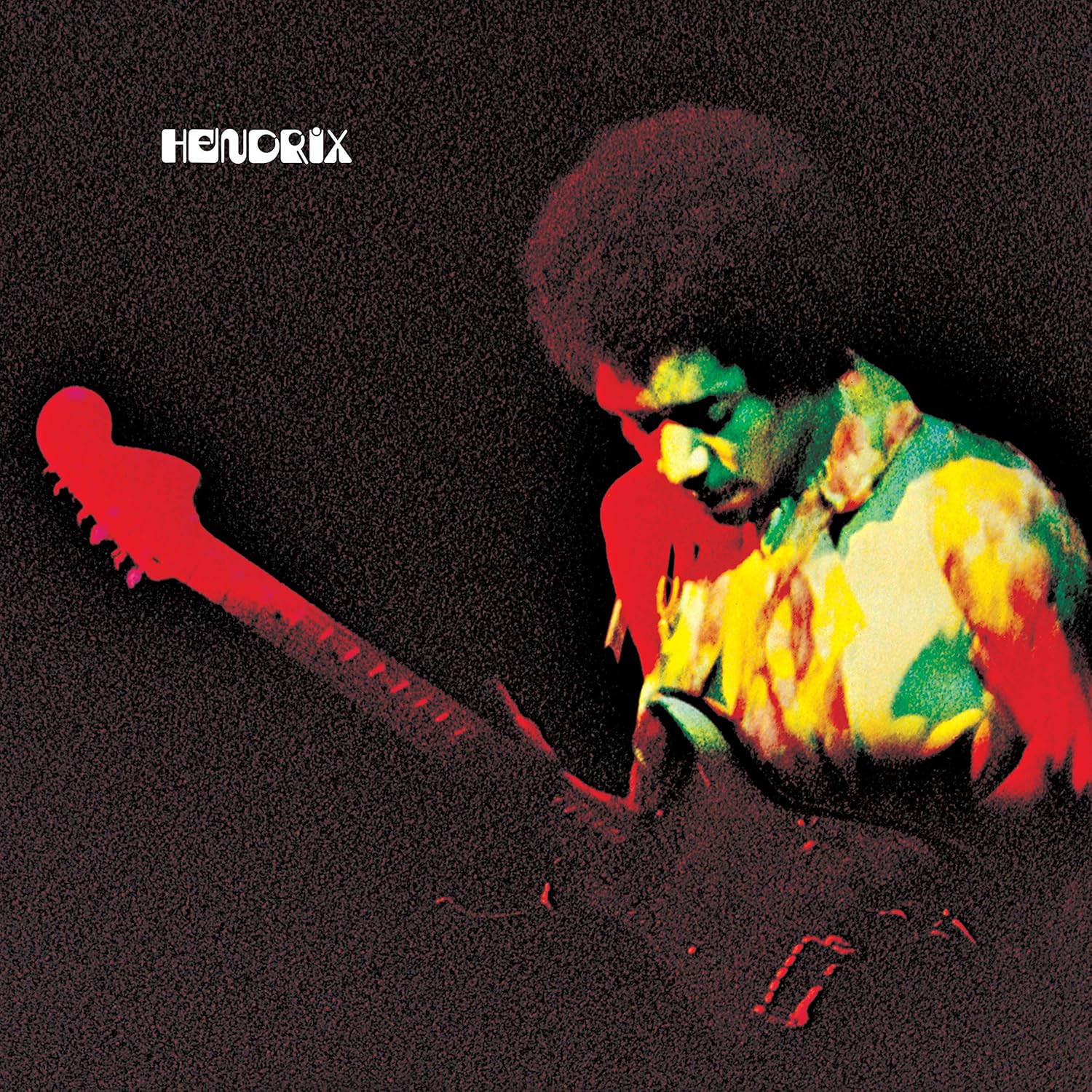
During his all-too-brief career, Jimi Hendrix navigated an uncharted course, following his muse and his talents wherever they would take him.  So much has been said about his guitar technique, his song writing, and his lyrics.  But as I lay listening to the 50th anniversary edition of Band of Gypsys, I realized that Hendrix was also a pioneer of that sometimes-maligned product, the concert recording.  At the time of its release in March of 1970, live albums had something of a bad rap.  Many were contractually obligated stop-gaps – excavated and thrown out into the marketplace by the label when an artist didn’t have new material.  Some of the worst offenders weren’t even live albums at all, but studio recordings overdubbed with canned applause and whoops from some disembodied audience.  With Band of Gypsys, Hendrix turned the live album on its head with an album of completely new tunes performed by a new ensemble with verve unmatched by most live albums to follow. And the recent audiophile vinyl reissue from Capitol/UMe proves that this collection still holds up, as exciting and boundary pushing as ever.

Now, it’s worth noting that Band of Gypsys came about due to a contractual obligation itself, but that doesn’t make it firmly part of that “let’s just throw this out to the unsuspecting public” category.  Hendrix was getting pressure from Reprise to follow up Electric Ladyland.  At the same time, a prior contract had allowed rival label Capitol to cash in on Hendrix’s early session work with a number of dubious releases.  By 1969, Hendrix and his former manager Ed Chalpin arrived at a deal that gave him exclusive distribution to a new album.  Hendrix had gathered together a new trio by October featuring bassist Billy Cox (who had served in Hendrix’s backup group at Woodstock) and drummer Buddy Miles, ex-Electric Flag.  They agreed to record the album of new material live onstage at New York City’s Fillmore East on New Year’s Eve, during what would be their first joint concert performance.

After weeks of rehearsals full of inspiring jams, the band was a well-oiled machine by New Year’s Eve with a clutch of songs that signalled a new direction for Hendrix.  But that’s not to say they were playing by the book.  For this new ensemble, improvisation reigned.  And the results are stunning – the sort of thing a listener can get lost in but also want to play again and again.  Album opener “Who Knows” lays into a grimy, bluesy groove with a positively funky bass line, giving the space for call-and-response verses and for Hendrix to traverse an array of effects and approaches to soloing: staccato lines with a harmonizer emphasizing the higher frequencies; fuzzy wah; slinky phase-shifting goodness… it’s all here.  What it may lack in structural complexity, it makes up for in instrumental artistry.  Next, “Machine Gun,” an anti-war blues dedicated to those fighting in Vietnam.  Here, Jimi’s guitar sounds like ten instruments at once.  Whether mimicking gunfire, eliciting squealing feedback, or attacking the whammy bar, Hendrix explores the limits of the instrument and his array of effects with a near-violent ferocity.

“Changes” (also known as “Them Changes”) gives Buddy Miles a chance to shine.  The more pop-oriented number alternates between gospel-tinged, almost Sam and Dave-like soul and a catchy, repeated riff from Hendrix.  While it may not be as engaging as the more expansive improvisations on the album, it’s still an enjoyable performance of a song that would become a minor soul hit when it was re-recorded by Miles a few months after Hendrix’s death.  The fiery “Power To Love” (a.k.a. “Power of Soul”) begins with a bluesy lead into an almost rockabilly groove.   But just as you think you know what follows, the band launches into a funky groove putting Hendrix’s guitar squarely at the forefront.  With shifting meters, rapid-fire double-stops, and the humanist refrain “With the power of soul, anything is possible,” it shows Hendrix embracing influences from funk as well as rock, and branching out into more universal lyrical themes.  “Message of Love” (a.k.a. “Message to Love”) is even jauntier and funkier.  While “Power to Love” was at times meandering, “Message of Love” is taut and seems primed to be a single, down to the “Yeah! Woo!” interjections from Miles and Cox.  And while it’s based on a straightforward groove, Hendrix stretches the tune out with mind-blowing solos and plenty of rhythmic switches, even venturing into gospel territory at times.  The album concludes with Miles’ “We Gotta Live Together,” a jam with a James Brown-like funk feel.  It blasts off into the heavens halfway through as Hendrix conjures guitar squeals as he solos, frenzied, with an array of effects atop a gospel groove.   As the group continues to pick up the pace, Hendrix suddenly hammers out ten huge-sounding power chords, seemingly signaling an end to the thrilling program.

Whether locked into a Buddy Miles composition or branching out into his arsenal of pedals and boxes to break the boundaries of his instrument, Jimi Hendrix reached new heights on Band of Gypsys.  Fifty years on, the material not only still feels fresh, but it sounds better than ever on the recent 50th anniversary vinyl edition (digital versions of this master are also available).  Fully authorized by Experience Hendrix, the new edition features all-analog mastering from the original master tapes.  The music was pressed on 180-gram vinyl, plated at QRP.  The result is a flawless, tick- and pop-free experience that allows the music to shine without all the pesky deficits that can plague the medium.  As for packaging, this edition features a beautiful gatefold sleeve, a huge 24″x36″  replica of a 1970 Band of Gypsys promo poster, and a booklet with an in-depth essay by Hendrix historian and producer John McDermott who details the creation and impact of this legendary recording.

In all, the fiftieth anniversary edition of Band of Gypsys reminds the listener of just how vital a live album can be.  Even one born from a contractual dispute can be a canvas for some of the most electrifying, visceral musical artistry.  Here, Hendrix raised the bar once more, proving not only his technical prowess, but his unmitigated vision of what music can be.  If you don’t have this album – or, more likely, even if you own it a few times over – you owe it to yourself to pick up a copy and remind yourself just how great music can be.

Band of Gypsys: 50th Anniversary Edition is available now

Image may contain: one or more people, people playing musical instruments, people on stage, concert, guitar and night

Haley Bonar was first discovered by Low’s Alan Sparhawk who spotted her at a local open mic club in Duluth, Minnesota and was so impressed he immediately invited her to join t hem on tour. Which is how, a week later, the nineteen year old Haley Bonar, was transformed from college student to ambitious dropout, crammed into a Honda Civic with a guitar and a drummer for company, touring the US opening for Low.

But there is more to this story. In the decade since Haley has released a succession of recordings, each of which have garnered more praise the last, and has seen her collaborate with the likes of Andrew Bird (with whom Haley occasionally plays live) and Justin Vernon (who features on her new album). That’s not to mention the company she keeps in a rotating cast of premium band members including Jeremy Hanson (Tapes ‘n Tapes), Luke Anderson (Rogue Valley), Jeremy Ylvisaker (Andrew Bird, Alpha Consumer) and Mike Lewis (Bon Iver, Alpha Consumer). Now, with her new album ‘Last War’ Haley looks set to find a wider audience.

http://

Much of the joy of Bonar’s songwriting is in the tension between her sparkling melodic sensibility and her deeply ambivalent lyrics. Album opener ‘Kill the Fun’ positively crackles with traces of the Cure at their most pop, as Bonar chronicles her travels with a lover, taking some moments to reveal the nature of the relationship: “You’ll be here till morning / You will get back on the plane / Go back to work / where you never knew my name.” On ‘No Sensitive Man’ (which features the most Clem Burke drums outside of a Blondie record), she claims “I don’t want no sensitive man / I don’t want to talk.” While on the captivating ‘Heaven’s Made For Two’ Bonar’s daydreaming vocal drifts ethereally as the instrumentation builds from stripped-back beginnings into a country-meets-shoegaze wall of sound crescendo.

On ‘Last War’, the complexities hit as hard as the hooks, a smart, careful balance achieved through equal doses of mystery and charm.

Originally released September 29th, 2014


“Look Alive” by The Stroppies is released today. Having initially been moved back a month due to complications relating to COVID19, the record now arrives at a time of even more distress and concern. Tough Love and The Stroppies stand united in our support for the Black Lives Matter movement. Please see below for the band’s views on the matter. We hope the music can bring some relief in these dark and uncertain times.

“It feels strange to be promoting and releasing music in the midst of what has been a strange and traumatic year for everyone. This feeling is even more acute in light of the recent events in Minneapolis and the global raising of consciousness around the adversity faced by black people and black communities the world over.

The Stroppies will be donating 100% of profits from any copies of Look Alive sold through our to the aboriginal led Literacy for Life foundation until our copies are gone- in addition to this we will donate 100% of the profits from anything sold on our Big Cartel to this charity over the next week. We have also set up an ongoing donation of $20 a month in the band’s name that will be debited monthly and indefinitely.

Australian customers please order through us and through this channel to support this initiative.
For any overseas customers you can click the link below to purchase the record through regular channels.
We hope you enjoy the record and look after each other.

Stroppies x”

Image may contain: text

Sonic Boom, better known as Peter Kember, has always followed an unconventional musical path, whether under the Spectrum banner, his expeditions with Experimental Audio Research (a fluctuating soundscape project that has included Kevin Shields, Delia Derbyshire and AMM’s Eddie Prévost, among others), his recordings as Sonic Boom, and collaborations with acts including Stereolab, Yo La Tengo and Dean & Britta, or his work as a producer (MGMT, TEEN, Beach House). But on the recording side, the Ex-Spacemen 3 co-founder has been uncharacteristically quiet over the past ten years, aside from a Sonic Boom collaborative EP with Canadian shoegaze duo No Joy a couple years’ back, and a 16-minute track by E.A.R. in 2014, “All Things Being Equal.”

That changes June 5th when Carpark Records issues an album titled All Things Being Equal, not by E.A.R. but instead Kember’s first full album as Sonic Boom since his debut in 1990 (which was itself titled Spectrum, adding to the mixed-up confusion).

The new album first began taking shape in 2015 as instrumental electronic jams and sketches that Stereolab’s Tim Gane encouraged Kember to release as-is. “I nearly did,” says Kember, “but the vibe in them was so strong that I couldn’t resist trying to ice the cake.” Three years later, after moving to Portugal, he added vocals inspired, he says, by Sam Cooke, the Sandpipers and the Everly Brothers, as well as spoken word segments and guest singers Panda Bear and Britta Phillips, with whom he’s worked in the past.

“I learn from everyone I work with, and I wanted to bring what I learnt into this record,” Kember explains. “Everybody thinks about and listens to music in different ways.”  Thus far, a pair of trippy advance tastes from All Things Being Equal have been released: “Just Imagine” and “The Way That You Live.”

It’s auspicious that Sonic Boom—the solo project and nom-de-producer of Peter Kember (Spectrum, Spacemen 3)—returns in 2020 with its first new LP in three decades. Kember’s drawn to the year’s numerological potency, and this intentionality shines into every corner of All Things Being Equal. It’s a meditative, mathematical record concerned with the interconnectedness of memory, space, consumerism, consciousness—everything. Through regenerative stories told backwards and forwards, Kember explores dichotomies zen and fearsome, reverential of his analogue toolkit and protective of the plants and trees that support our lives.

His new home Sintra’s parks and gardens provided a different visual context for Kember’s thoughtful observations, and he thematically incorporated sunshine and nature as well as global protests into the ten resulting tracks. “Music made in sterility sounds sterile,” he says, “And that is my idea of hell.”

Over the vivid, calculating arps of opener Just Imagine, Kember nudges listeners to do as the title suggests. It’s based on a story he read about a boy who healed his cancer by picturing himself as a storm cloud, raining out his illness. The Way That You Live, a rollicking drone powered by drum machine rattles and bright chord beds, morphs political distrust into a revolutionary mantra about ethical living. “I try and live my life by voting every day with what I do and how I do it, who I do it with and the love that I can give them along the way,” offers Kember.

It’s rare to see liner notes where synthesizers rather than humans are credited (other than guest vocal stints from “co-conspirators” Panda Bear and Britta Phillips), but Kember is masterful at finding the unique personality in his machines. “I tried to find the deepest essence of the instruments and let them play,” he offers. What emerges from these considerations on technology and humanity is a honed collection both philosophical and grooving, spacious even as it fills to its brim. It’s distinctly Kember—more than that, it’s distinctly Sonic Boom.

Image may contain: 1 person, standing, tree, child, night and outdoor

we’re very excited to share an album of demos today. please consider supporting us or an artist you love on Bandcamp today as they have graciously forfeited their cut of sales.

http://

demos for Heavy Lifter written & recorded at home by Hovvdy.
mastered by Ben Littlejohn.
art by Ben Johnson (@johnsonstretch).
Band Members
Charlie Martin, Will Taylor
Released March 20th, 2020

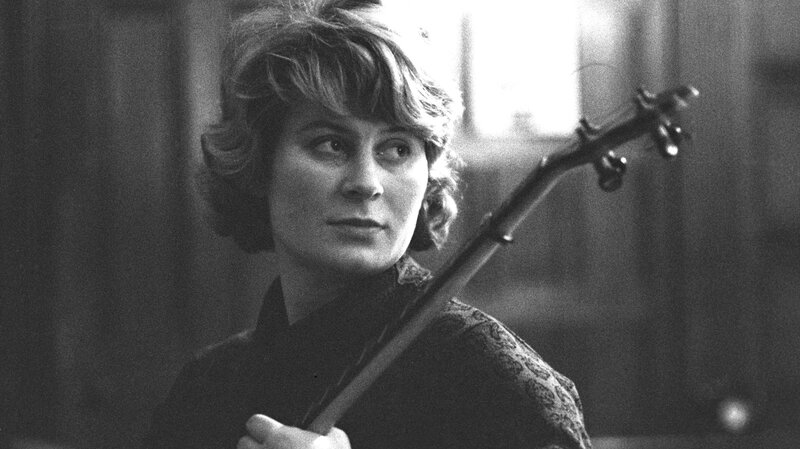
In 1964, still bruised after turning down The Beatles, Decca Records released an album by the woman who helped make the discovery of blues musician Mississippi Fred McDowell, whose music she had been discovered in Tennessee in the late 1950s and recorded McDowell for the masses: 29-year-old Sussex folk singer Shirley Collins.

Collins may not have looked like much of a rebel on the cover of that 1964 album, but she was. Five years earlier, she had crossed the Atlantic alone to visit prisons and remote Appalachian communities, meeting there with folklorist Alan Lomax to collect folk songs.

Collins’ 1964 album, Folk Roots, New Routes, is an uncompromising work that spearheaded innovation in the middle of the folk music revival. It set a template for all the folk-rock that followed it, and inspired 21st century psych-folk decades later. Bands like Pentangle and Fairport Convention would have been very different without her, while Will Oldham, Blur’s Graham Coxon and Angel Olsen are among the contemporary fans who have recorded her songs.

It was one of the best 1960’s folk music revival albums of the 20th Century. “Folk Roots New Routes” it is a beautiful, highly respected and often the go-to British folk album which has earnt a great deal of admiration from many musicians, critics and fans around the world. At the center of this extraordinary record is Collins’ startling voice. It is clear and stark, pure but free of prettiness, a vehicle for a song and its sentiments, entirely without ego.

Davy Graham and Shirley Collins’ pioneering arrangements and playing is unyielding and timeless, yet their uncompromising approach was also very innovative.

Pressed on 180grm vinyl, analogue remastered with many tracks in stereo for the first time, directly from tapes for RSD 2020.Comes with new additional liner notes and rare photos printed on the inner sleeve. Some tracks are released in stereo for the first time ever.

Record Store Day-logo

Image may contain: 1 person, text that says 'GRDON HANDS "THE LONG WEEKEND"'

The Long Weekend ain’t over yet, folks. If you haven’t given the brand new Green Hands single a look or a listen or both yet, there’s still plenty of time to be doing so, This is the second single to be taken from Green Hands’ upcoming debut album ‘Nebo’s Dream’, out later this year via Breakfast Records.

Following on from the glorious indie tones of recent single ‘I Found a Way’, Green Hands present a second taster from their upcoming album. The track in question is entitled ‘The Long Weekend’ and sees the band push aside the guitars and slide over to the organ.

‘The Long Weekend’ is an intimate piece of music that further showcases Jack Telford’s talent for emotive alternative pop songwriting, “I had probably spent too much time listening to ‘Godspeed’ by Frank Ocean and a bunch of Grandaddy..”, he mentions, “I really wanted to move away from guitars and lean in on some warmer organs and mellotrons”, and lean in he does.          A departure it isn’t, but a crowning jewel within Green Hands’ new record perhaps. The bare-bones structure and lyrical content on ‘The Long Weekend’ oozes fragility and intimacy through it’s delicate soundscape, it brings the listener ever-closer to the songwriter.

Telford explains, “The Long Weekend” was written about a period a few years ago during my last months living in Oxford, where I spent a bit too much time cutting about bars and pubs. Trying to balance yourself out in your twenties can be difficult and the song is a reminder that some allures can be strong but after a while, they are temporary too.”

‘The Long Weekend’ is out April 10th.

Image may contain: 2 people, people sitting and shoes

Francis Of Delirium are a somewhat surprising duo, consisting of 18-year-old singer and songwriter Jana Bahrich and collaborator Chris Hewett, some 30 years her senior. The pair didn’t even share a country, splitting themselves between Canada and the US, before settling in their current home of Luxembourg. What they do share is a love of 90’s grunge, the influence of bands like Alice In Chains or Soundgarden colliding with millennial bedroom pop to make something compelling and intriguing. The band are set to release their debut album, “All Change”, next month, and have this week shared a new single, “Ashamed”.

Discussing the track, Jana has suggested it touches on ideas of, “navigating how much of yourself you should be giving out to other people”, and often feeling inadequate for not sharing more of yourself with the world. Musically, as you’d perhaps expect from the themes, Ashamed is a tightly wound-affair, Jana’s rapid tumble of vocals colliding with crunchy guitar lines, in a tense unravelling of emotion. You can almost hear the ideas cycling through Jana’s head, shaping into rapidly formed thoughts before quickly dancing off somewhere else, the music mirroring the whirring of a sleepless mind. A fascinating collision of ideas,

Francis Of Delirium feels like an intoxicating blend, there’s a restlessness and an urgency here, a demand to be heard that we can only recommend you give into, it’s well worthy of your time.

Band Members
Jana Bahrich,
Chris Hewett,
Jeff Hennico,

“All Change” is out June 19th via Dalliance Records.

Jimi Hendrix “Live at the Fillmore” It was 50 years ago this year that the iconic “Band of Gypsys” performances were immortalized on acetate.

On January 28th, 1970, at Madison Square Garden, Jimi Hendrix spoke his last words as a member of Band Of Gypsys: “That’s what happens when Earth fucks with space.”

He then left the stage, stumbling under the effects of either exhaustion or a psychedelic mickey, possibly slipped to him by his manager, Mike Jeffrey. A mere two songs into their set at the Winter Peace Concert, the show was over – as was the band. But just a month earlier, when the group had played four sets at the Fillmore East, things had seemed much more promising.

Consisting of Hendrix and the rhythm section of Billy Cox (bass) and Buddy Miles (drums), Band Of Gypsies evolved out of Gypsy Sun & Rainbows, the larger group Hendrix had assembled to play Woodstock. Cox was an old army buddy from Hendrix’s time in the 101st Airborne and Miles, late of the Electric Flag, had crossed paths with Hendrix at Monterey Pop a few years earlier. Hendrix had often bemoaned his lack of engagement with black audience so perhaps an all-black group would be the ticket, as well as allowing him to realize a funkier musical vision. As he told Al Aronowitz in an interview in the New York Post that ran January 2nd, 1970: “Now I want to bring it down to earth. I want to get back to the blues, because that’s what I am.”

Hendrix’s nagging insecurities about his voice also came into play. “I’d rather just play,” he told Aronowitz,”I never sang before. In England they made me sing, but Buddy has the right voice, he’s going to do the singing from now on.” According to his engineer Eddie Kramer in the April 2020 issue of Mojo Magazine, Hendrix came to regret that decision when it came to selecting the tracks and mixing the Band of Gypsys album. “We get to one of Buddy’s long rants where he goes on and on and on, and I could just see Jimi’s head with his hat on get lower and lower, and finally he folds his arms and rests his head down on the console. And he says, ‘Ahhh Buddy, I wish you would shut the fuck up.’”

With much of the impetus for the Fillmore East concerts coming from the need to deliver an album to Capitol Records, an obligation dating back to 1965, Hendrix might have rushed the gig a bit. He admitted as much in an April 1970 interview with Melody Maker’s Keith Altham, saying “I wasn’t too satisfied with the Band of Gypsys album. If it had been up to me I would have never put it out. From a musician’s point of view it was not a good recording and I was out of tune on a few things. Not enough preparation went into it and it came out a bit ‘grizzly’ – we all felt shaky. The thing was we owed the record company an album and they were pushing us – so here it is.”

And now here it is 50 years later and the Experience Hendrix promotional machine is wasting no time celebrating an album that was definitely the weakest of the four released during his lifetime. There’s also Songs For Groovy Children, a box set they released last year, which included all four concerts the Band of Gypsys played on December 31st 1969 and January 1st 1970. That set proved the risks of being a completist, with four ragged versions of “Stop,” a rote soul number by Jerry Ragavoy/Mort Shuman that sounded way better when Howard Tate sang it. But there were also a number of mind-blowing performances that had been left in the vaults. Using the benefit of hindsight – and as someone who agrees with Hendrix’s later opinion of Miles – here is my definitive single-disc distillation of those four nights at the Fillmore, a collection I’m calling:

SIDE ONE

“Power of Soul” (December 31st, 1969 – First Set) Why not start with the first song of the first set? While Hendrix’s voice sounds a little thin on this recording, his guitar snarls with a thrilling complexity, dealing out riffs and solos like winning hands in a high-stakes poker game. Buddy’s vocal contribution works, giving you an idea of why Hendrix thought their collaboration would work. The guitar does most of the talking anyway, with a dazzling introduction that goes on for over half the length of the song.

“Message to Love” (December 31st, 1969 – Second Set) While the vocal interaction is a little rough, this exuberant slice of funky soul keeps the energy going, with some thrilling unison work from Hendrix.

“Machine Gun” (January 1st, 1970 – Second Set) There is no bad live recording of this extraordinary anti-war tone poem. In fact, I was tempted to make Band of Gypsys into The Machine Gun Variations and leave it at that. Instead, I chose to have it end side one. What this take has over the one used on the original album (1/1/70 – 1st set) is the sense of pain on the part of the victims of war, with their screams getting equal time alongside the sounds of the weapons of war. Hendrix’s first solo is almost pure anguish, with the eerie backing vocals the only sign of humanity. The quieter sections seem to invent a new kind of dub blues, with Miles’ drums taking on a horrific inevitability, like putting one foot in front of the other even though each step takes you closer to certain doom. Among the many tragedies of Hendrix’s early death is the fact that he was never able to complete a fully realized studio version of “Machine Gun.”

SIDE TWO

“Izabella” (December 31st, 1969 – First Set) This loose bit of roadhouse, gutbucket riffage seems the perfect way to kick off side two after the dread of “Machine Gun.” Even though he played it first, it fits here well, as Hendrix introduced it by saying, “I’d like to do this song dedicated to maybe a soldier in the army, singing about his old lady that he dreams about and humping a machine gun instead.” Why they left this off the original to make room for two Buddy Miles originals (the clichéd “Changes” and the hippy jive of “We Gotta Live Together”) I’ll never know.

“Bleeding Heart” (December 31st, 1969 – First Set) This slow, elegant extrapolation of the Elmore James classic must be what Hendrix was talking about when he said he wanted to get back to the blues. While he also played “Hear My Train A-Comin’” (once) and “Earth Blues” (three times), this is the best pure blues of the the two-night stand.

“Who Knows” (December 31st, 1969 – Second Set) “Happy New Year, goodbye ’69,” Hendrix improvises at the start of this first-ever performance of “Who Knows.” While the song never rises above a jam, Hendrix seems to really enjoy trading lines with Miles, getting into the inconsequential fun of lyrics like, “They don’t know (they don’t know)/About my baby (about my baby),” before letting his Strat rip the Fillmore’s roof off.

“Ezy Ryder” (December 31st, 1969 – First Set) Another debut performance, this time for a song Hendrix would focus on for his next album and perform at many concerts to the end of his life. Perhaps he left it off Band of Gypsys because he was already holding the image of what it would become in his mind. But this version, which Hendrix introduces by saying, “I seen this picture called Easy Rider, and I was mad as hell…We’re going to call this thing “Ezy Ryder,” we’ll just make up the words as we go along because we’ve got about 20 verses of it,” is savagely entertaining. Miles and Cox can barely keep up as Hendrix alternates between stop-start riffs and furious soloing. The ascending chords at the end take it over the top – and then drag you down to earth, a perfect ending for my perfected Band of Gypsys.

In early 2003 a young Steve McBean was living in Vancouver and in the midst of a transition from his sorely overlooked rock band Jerk With A Bomb into an auspicious new chapter. JWAB was his umpteenth band in as many years woodshedding as both a frontman and a supporting musician in countless punk & hard core bands in the Canadian wilds starting in his teens and going through his twenties. JWAB was arguably the band in which he’d finally found his signature singing voice and started collaborating with drummer Joshua Wells and vocalist Amber Webber.

Around this time his friend Dan Bejar (Destroyer, New Pornographers) sent to Jagjaguwar Records a demo tape of new songs that Steve had been writing. He wasn’t sure if it they were JWAB songs or something new entirely. The songs were randy & ribald, with a primitive drum machine beat and a Bo Diddley guitar swagger. They were scintillating and taught us things that our parents were too scared to teach.

These were the demos for the songs that would be re-recorded as the debut album by Pink Mountaintops, a sister project to the other McBean-fronted rock band that was being born at the same time — Black Mountain. This was an exciting time not only for McBean — who was bubbling with songs & ideas — but a turning point for Jagjaguwar, thrilled to sign two of its most significant projects simultaneously. We’re very pleased to be able to share these first demos which bred so much inspiration and provided a horny clarion call for things to come.

http://

Chris Swanson,

released May 1st, 2020