Archive for the ‘CLASSIC ALBUMS’ Category

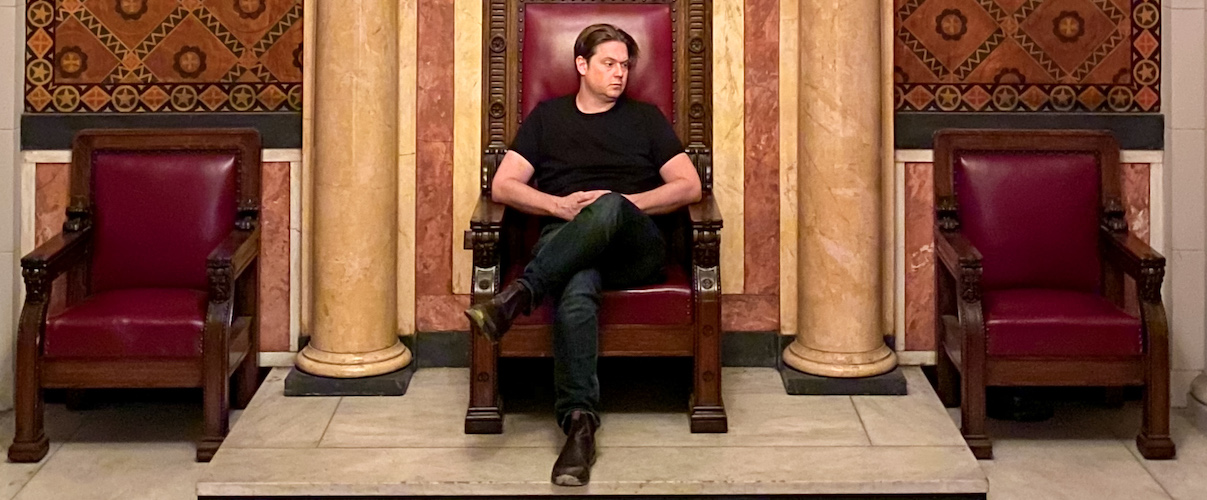
Thurston Moore

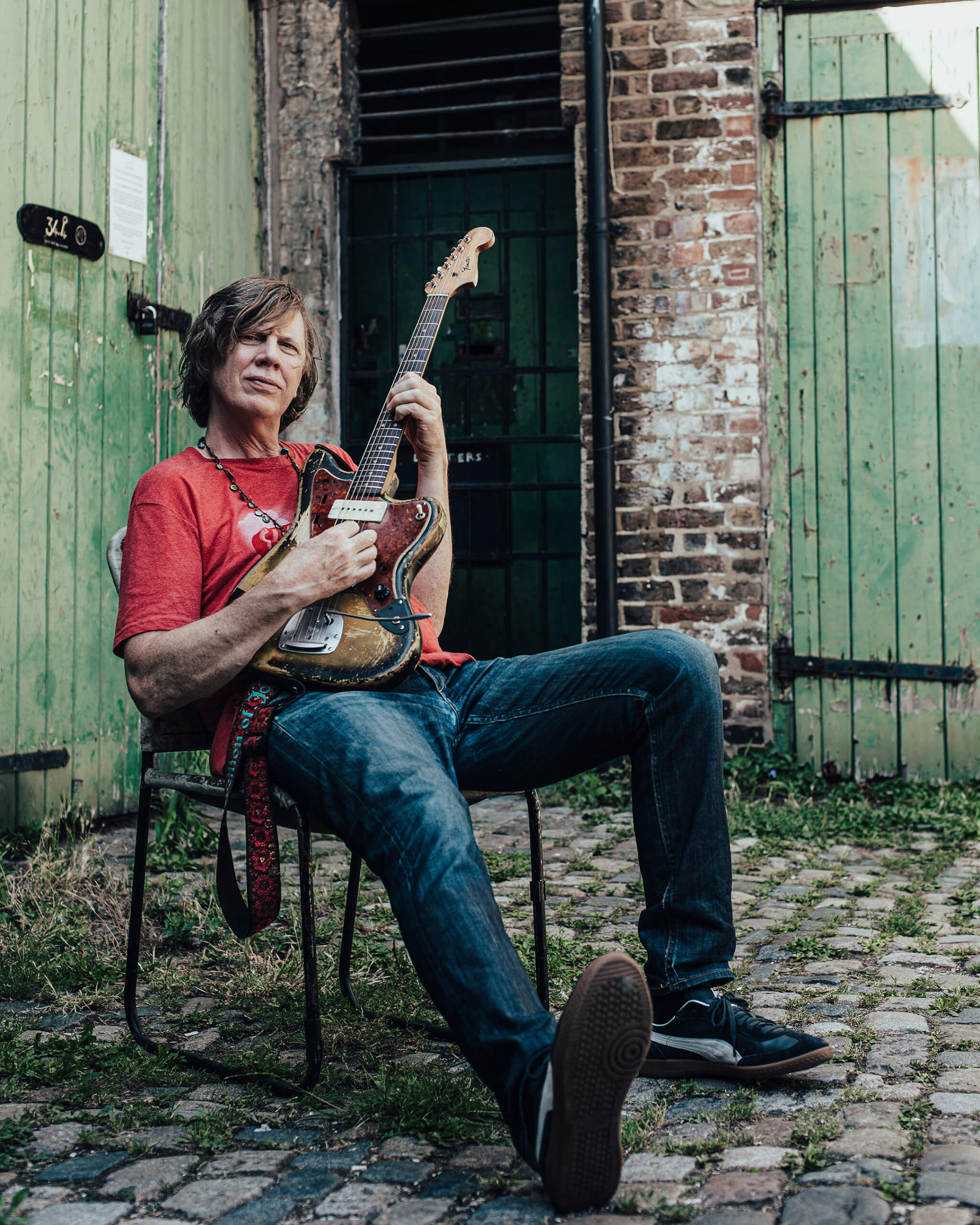
Until recently. Of late Thurston Moore, co-founder of Sonic Youth, terroriser of Jazzmasters, walking building block of modern indie-rock, has been spending a lot of time between four walls, with a guitar in his lap and one eye on the spread of COVID-19 in his adopted hometown of London.

“I’ve loved working on guitar in the privacy of my flat, knowing that I had all these days ahead of me to do that,” he says. “But psychologically it’s a conflict. I’m in a place where I can be creative without the anxiety of having to go out and work, yet the only real revenue I have is from going out and working. I enjoy being in one place, but there’s friction because it comes with this situation where people are susceptible to getting fatally ill on such a scale that it’s almost too strange to believe.

Moore’s new solo record, “By The Fire”, is intended as a balm of sorts. Let’s not pretend that it’s prophetic or the perfect record for these imperfect times, but close to its heart it has a relevant maxim cribbed from avant-jazz musician Albert Ayler: “Music is the healing force of the universe.” Recorded pre-lockdown, with a few overdubs captured once the world had shifted, Moore can see the uncertainty and anger of the time in the manner he tailored the finished album as much as any individual song.

“The situation with the pandemic, and seeing the uprising of people’s rage in the USA because of the nefarious leadership there, informed a lot of how the record was sequenced,” he says. “The title certainly references that. I wanted it to be about people communicating in a really primal way – sitting around the fire, telling stories, but also about what fire denotes when people take to the streets. They light fires to get attention for the oppression that’s happening. Records are always made in the moment, even if the songs are part of your historical language. They’re always about what’s happening now.”

Thurston Moore’s solo material gives a better view of his conflicting tendencies, with seventh proper solo album “By the Fire” embracing both noisy, chaotic tangents and the blurry impressionistic poetry that has long been the core of his songs. The record begins with the kind of layered, intricate guitar figures and steady rock rhythms that have been Moore’s calling card since the early ’90s.

By The Fire is a literate reading of Moore’s ambitions and crutches. Backed by My Bloody Valentine’s Deb Googe on bass, guitarist James Sedwards, Jon Leidecker on electronics, lyricist Radieux Radio and Sonic Youth’s Steve Shelley in a drumming job-share with Jem Doulton, he weaves meditative, occasionally meandering, guitar instrumentals together with immediate, hooky indie-rock songs like “Hashish”, which sounds like a grizzled sibling of Sonic Youth’s Sunday.

“The album starts out very joyful, with proper, straight up pop-rock songs,” Moore says. “I wanted the trajectory to at least go through this period where it gets a bit more complicated. The final piece, Venus, is about sounds coming together through a structure. The guitars go through a very specific sequence of notes, and the only improvisational part is my cueing.

“It’s by feel – the high sixth string, starting on the second fret and moving all the way up to the top of the neck. Then repeat that sequence on the next lowest string. I wanted to have this piece that was all about these continuing ascensions and returns, which encapsulated what was happening musically with all these different ideas. It’s sort of like: ‘Here’s the catalogue of notes used on this record’.”

The ham-fisted grunge rock of “Cantaloupe” and fuzzy, churning push of “Breath” are also well-covered ground, sounding like they could fit in nicely in different parts of Moore’s back catalogue. Instead of presenting “Breath” as a compact rock song, however, he stretches it out into a sprawling, multi-part epic. The track turns dynamically as it moves from a lengthy gentle intro through to passionate verses, explosive instrumental sections, and breakdowns into formless squalls of feedback. This kind of dense song construction becomes the factor that sets By the Fire apart from the rest of Moore’s solo efforts. “Siren” follows the same approach, building over the course of a 12-minute run time from long, lazy stretches of chiming guitars to rolling waves of rhythmless sound. The vocals begin at just about nine minutes into the song after the completion of a full cycle of tension and release. Songs like “Locomotives” and “Venus” are similarly built, each burning on for well over ten minutes as they rise and fall through various movements. These intense full-band extrapolations are broken up by more subdued moments like “Dreamers Work,” which find Moore alone with a guitar, rambling through cloudy autumnal reflections.

Moore has been undertaking expeditions like this for 40 years. Born in Coral Gables, Florida in 1958 and largely raised in Bethel, Connecticut, he moved to New York City in the late 70s with a white Stratocaster, passed down from his older brother along with a few Hendrix moves, in hand and “Louie Louie” still ringing in his ears. And not a moment too soon, because in Thurston Moore’s world, punk rock smashed the reset button on everything.

Its arrival immediately drew a line in the sand between before and after that first power chord cleaved its way through his brain. He saw his own tall, unwieldy frame reflected back at him in the form of Joey Ramone, felt the future in the electro mayhem of Suicide. His Zappa and Zeppelin records would moulder in his mother’s basement as he sought out things that were new, newer, newest. In the city he found that on tap, roving out from his apartment amid the gonzo weirdness of the Lower East Side as punk begat new wave, no wave spat back and hardcore wind-milled into the conversation.

“The documents were just so incredible,” Moore remembers. “And you could actually buy a seven-inch and a fanzine and not suffer too much from it. Going to a guitar store was all about gawking, maybe playing it and then walking out without anything to show for it. Unless you had deep pockets, it was an excursion in window shopping. To me, the records were what I was getting my guitar education from anyway. You’d hear the first Scritti Politti seven-inch and it was just so odd, or the Slits album and how it was produced by Dennis Bovell. One after the other, from ’77 through to like ’81, it was relentless.”

By The Fire

Into this maelstrom came the avant-garde guitar orchestras moulded and manipulated by composers Glenn Branca and Rhys Chatham. Moore ate up the punishing, confrontational volume of the music, studied their grand plans to build sounds that no one had heard before, and channelled these ideas of perpetual motion and experimentation into his contributions to a new band called Sonic Youth.

“I remember when the Clash first played New York after the second album,” he says. “They didn’t play CBGB or Max’s Kansas City, they played at this big place, the Palladium. Everybody in our world went to that gig. They came out and just tore the roof off the place. The next six months, they came back again. And you know what? It wasn’t the same, because so much had happened since – new ideas and records and bands. There was such an amazing amount of radical things happening that the Clash at the Palladium part two sounded a little too traditional. I was like, ‘I’m gonna go see A Certain Ratio because that’s more interesting right now.’ It was an amazing time. Our band started in the thick of that.”

On By The Fire, the instincts he honed in that anything goes world are still relevant. What has changed is the dynamic between Moore and his bandmates. He is a bandleader here in a manner that he never was during Sonic Youth’s tenure, when his interjections were only one part of the puzzle alongside those emanating from the powerful creative minds of bassist Kim Gordon and guitarist Lee Ranaldo.

Their bold brand of art-school anthemics, roiling dissonance and searing cool – which spanned 15 albums, at least five of which qualify as sacred indie-rock texts – was always a collage. Since Sonic Youth’s passing in 2011, with the acrimonious end of Moore and Gordon’s marriage at its heart, he has sought to foster collaborations that feel different.

“From the outset, Sonic Youth was a democratic concern,” he says. “As most young bands are, and should be, it was people coming together to create the sum of their parts. Sometimes it’s really magical – from the Beatles to the Pistols. Some people have stronger egos than others but it’s always about the band. The band is writing the songs as opposed to one chief songwriter. That’s what Sonic Youth always was. All the publishing, all the song writing is, ‘All songs by Sonic Youth’. It doesn’t matter who wrote the lyrics, who brought the idea in. It’s in the forum of Sonic Youth. I didn’t feel like I needed to experience that again.”
His approach isn’t pernickety, though. It’s still about the songs. “I certainly don’t dictate to Deb Googe what to play on bass,” he adds. “She’s a formidable player, and I want her to play with me because of how she writes her own lines. At first, James was playing in unison with me, but I realised I was underselling him. I can’t play lead guitar in his manner – it’s really high technique, traditional playing. He plays like that effortlessly. But for him, it’s a challenge to work in alternate tunings, and he’s risen to the occasion.

“We’ve grown into hearing each other. I think he feels a little bit more comfortable with moving away from just trying to acknowledge what I’m doing, and that comes with time, spending years together on the road. You can hear that camaraderie in these pieces. It’s quite different to the relationship I had with Lee [Ranaldo] as a guitar player. That can’t be replicated, not that I’d want to. It was too personal. Lee and I spent 30 years growing up together.”

While Moore describes Sedwards’ key influences as “equal value Led Zeppelin and the Fall”, he’s also a Sonic Youth head. And that means that he knew alternate tunings were part of the gig from minute one – the sight of Moore’s hand on a tuning peg has come to mean the same thing as another guitarist working their way into the meat of a solo. As with so many elements of that New York punk scene Sonic Youth’s fascination with tunings – and taking power drills to pickups – sprang from a place that balanced creative abandon with hard facts: their gear was pawn shop junk.

“When I first saw Rhys Chatham and Glenn Branca play, I didn’t know they were playing alternate tunings,” Moore admits. “It wasn’t really until I started playing with them that I was like, ‘Okay, this guitar is all high E strings, and this one is all G strings. I see, you’re making one massive guitar.’ That was very informative and really exciting. When Sonic Youth started the first guitars we had were so cheap and horrible that they sounded terrible in traditional tunings.

“But they sounded great when you put a drumstick underneath the 12th fret to create this noded guitar where you could play either end of it. For the economics of it all, I can’t now have a dozen tunings on a record and go out and have a dozen guitars on the road. In the 90s, when we had such a high profile, Sonic Youth toured in a way that allowed us to travel with two dozen guitars, so we could write in any tuning and your tech would pass you a guitar. I don’t have that kind of comfort zone or privilege anymore.”

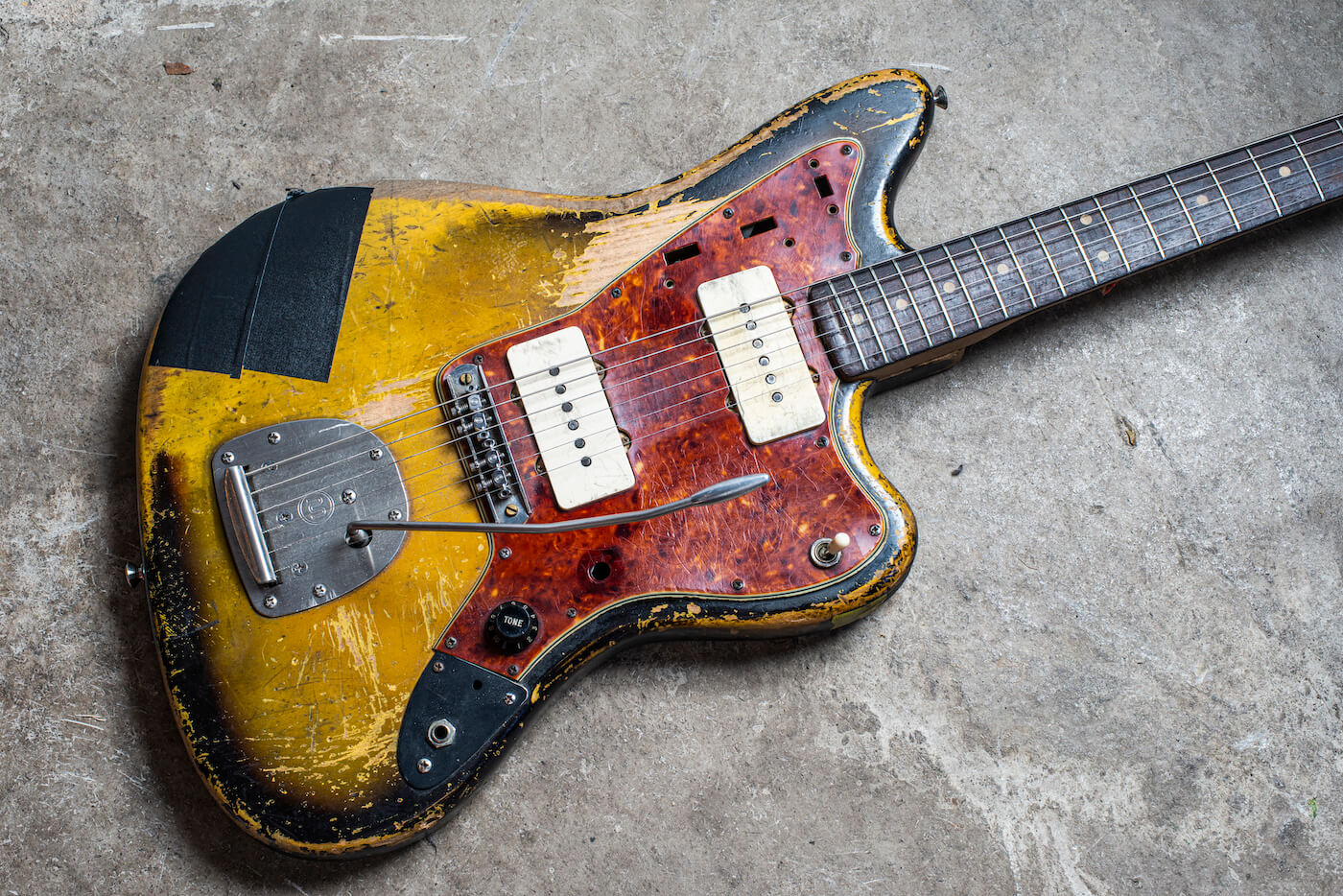
Sonic Youth’s guitar slingers played a huge part in making the Jazzmaster the symbol of alternative guitar cool that it remains today, and Moore and Ranaldo’s dealings with Jazzmasters began in earnest back in the mid-80s. Their sideline in modding them – ripping out electronics, sacrificing switches, and in Ranaldo’s case adding Tele Deluxe pickups to his ‘Jazzblaster’ – began immediately afterwards. Sonic Youth’s guitars quickly became good for nothing except playing Sonic Youth songs. It is one of the most symbiotic relationships between musicians and instruments in rock history.

“The charity shop guitars were just falling apart,” Moore remembers. “Their shelf-life was limited, especially with the way we were treating them. As soon as we had a little coin, I remember going up to 48th Street in Manhattan, where Manny’s Music was and all these iconic stores. We were stepping it up a bit, but not too much. Lee pointed at a Jazzmaster and went, ‘That’s the kind of guitar [Television’s] Tom Verlaine uses.’ That was a selling point right there.

“Nobody was playing Jazzmasters on the scene at that time. We got a couple for next to nothing. They were considered to be a country and western guitar, or some old fogey 50s jazz guitar. We began to modify them when we realised we were hitting these unnecessary switches. We were like, ‘Man, all we need is a toggle switch between the two pickups and a volume knob. We’ll keep the tone knob on its brightest end.’ That’s it. We started digging out all the electronics and soldering them back together again.”

In Sonic Youth’s wake, with waves also made by guitarists including J Mascis of Dinosaur Jr and Kevin Shields of My Bloody Valentine, the Jazzmaster became an indie-rock fixture.

“It was basically a matter of economics that we chose that guitar,” Moore admits. “But the aspects of it were so intrinsic to what we were interested in. We were already noding guitars, and the fact that the Jazzmaster had all this real estate behind the bridge to work with was really good. That’s a whole other instrument right there – a real high register electric guitar string sound. I have a long reach so the Jazzmaster fits my body like no other guitar. There’s nothing else I feel as comfortable with.”

It should come as no surprise, then, that Moore and Sedwards both leaned heavily on Jazzmasters during work on By The Fire. Moore’s pre-CBS Sunburst was acquired in Sonic Youth’s final throes as a backup before stepping up when the band’s gear was stolen. “It has become what the previous Jazzmaster was,” Moore says. “In the words of Sunburned Hand of the Man founder John Moloney, ‘Excalibur!’”

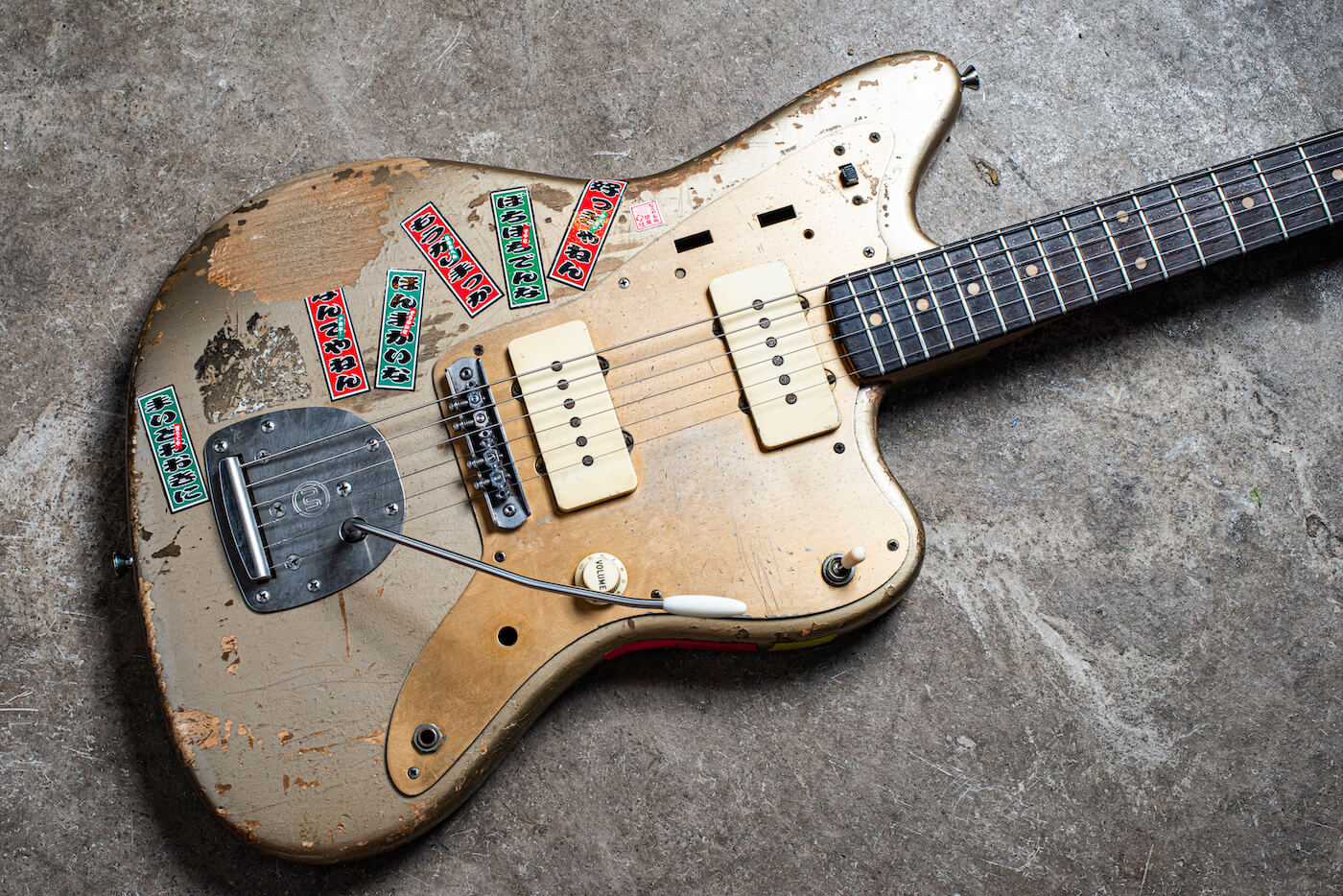
Sedwards, meanwhile, plays a guitar that is essentially as old as Jazzmasters come. The gold ‘59 model also tumbled into Moore’s possession after Sonic Youth were robbed in a semi-legendary incident in Orange County, California in 1999 (several guitars from the heist have been recovered since, largely thanks to diligent fans). “It was a gift from Patti Smith in sympathy, because they had gotten ripped off as well at some point,” Moore says. “It happens to the best of us. That guitar is really cherished.

“If a Sonic Youth guitar goes on the market, completely gutted and rewired, they become these very personalised, iconic items,” he adds. “It’s a Sonic Youth guitar. Whoever ripped them off, they could take them to a guitar store and they’d probably look at them and go, ‘These guitars aren’t worth anything!’ I hope they’re starting some noise-rock groups.”

Another curio is Moore’s Sunburst Fender Electric XII. It has ties to a piece commissioned by the Barbican in London, which provides added context for By The Fire’s extended workouts while linking back to his earliest days in experimental music. Next to the sunnier side of his new record, this nebulous composition (which was released as part of Moore’s Spirit Counsel box set in 2019) recalls Branca and Chatham as much as it speaks of his place as an indie-rock sage who will always be down to get improvisational.

It underlines the fact that Moore’s guitars are often part of the music: from tunings through to the feedback screaming out of his amp. Living in London, he has collaborated with a host of experienced, daring free improv musicians, sometimes adapting his style to offer a febrile, unpredictable noise counterpoint. The experience has become part of his make up as a player.

“Knowing that you can present feedback as a spontaneous musical gesture is something that started to become a big part of Sonic Youth’s songwriting at some point,” he says. “That to me is as good as any chord run, or any blues scale. It can have a life of its own, and you’re a bit of a lion-tamer. I can actually manipulate and bend the neck and create things that way. You can engage the guitar physically with the amplifier, creating some slight bends without destroying everything.

“I don’t really know if I ever see the guitar completely as a tool. When I go to a radio station and they want me to play a song, it’s almost impossible. The song that I have is about which guitar is being played. Even if they have some hired Jazzmaster sitting on a guitar stand, the song is going to suffer because of that. It won’t sound right. I have a very personal relationship with the guitars that I play. I never see them as interchangeable.”

The album is one of the more intentional chapters of Moore’s solo work, melding his long-studied Branca-esque walls of guitar and mystical lyrical viewpoints with a new, patient approach to composition. By the Fire isn’t a drastic shift, but as Moore goes deeper into the sounds he’s been exploring for decades, he uncovers new magic.

Thurston Moore’sBy The Fire” is out on September 25 through the Daydream Library.
Get ready, because you’re about to feel. That’s what Tim Heidecker warns on “Fear of Death’s” opening track, “Prelude to Feeling.” And he means it. This is a Serious Album about Serious Topics – a doomed future, abandoning life in the city, and, you guessed it, the inevitability of death – and without a warning, those feelings might just sneak up on you.

Fear of Death is the follow-up to 2019’s What the Brokenhearted Do, which chronicles a fictional divorce from his wife and the accompanying depression. Just like that one with its morose theme of a contentious breakup, the new album puts Heidecker squarely in the tradition of comedians and actors like Steve Martin, Hugh Laurie, and Donald Glover, eschewing his funny side in his music and leaving the jokes for the screen.

Tim Heidecker and Weyes Blood’s Natalie Mering have chosen an alarmingly on-the-nose year to release a mostly sunlit album about death. Although the duo and a host of collaborators recorded “Fear of Death” in 2019, the absurdity of the album’s release amid a global pandemic, overdue uprisings against police brutality, raging West Coast wildfires and the 2020 election cycle only amplifies these songs’ often upbeat morbidity. Heidecker and Mering certainly aren’t strangers to the absurd and its accompanying hilarity. Over Heidecker’s 20-or-so-year career, he’s developed a distinctly surreal, ironic brand of hipster humour through the cult Adult Swim shows Tim And Eric Awesome Show, Great Job! and Decker. Even before Mering jumped to the forefront of the chamber-rock pack with last year’s apocalypse-themed instant classic Titanic Rising, she was singing about how bizarre the world’s end will look. Both also share a passion for ’70s soft rock, as do some of their Fear of Death collaborators.

Fear of Death is a Serious Album about Serious Topics – a doomed future, abandoning life in the city, and the inevitability of death. It’s Heidecker’s biggest sounding and most fleshed out album yet featuring an all star band comprised of Weyes Blood’s Natalie Mering (vocals and piano), Drew Erickson (Jonathan Wilson, Dawes), The Lemon Twigs’ Brian and Michael D’Addario, Jonathan Rado, and string arrangements by Spacebomb’s Trey Pollard (Foxygen, Bedouine, The Waterboys, Natalie Prass). “I didn’t know that Fear of Death was going to be so focused on death when I was writing it,” Heidecker says. “It took a minute for me to stand back and look at what I was talking about to realize that, yes, I am now a middle-aged man and my subconscious is screaming at me: ‘You are getting old, dude! You are not going to live forever! Put down that cheeseburger!’”

The album’s lead single, “Fear of Death,” is “about as ‘Dead’ as I get,” says Heidecker. Over an intricate guitar line, Heidecker’s voice intertwines with Mering’s elevative vocals as he swears off partying and risky decisions: “I don’t see the value in having fun // I think I’m done growing // fear of death is keeping me alive.” And while “Fear of Death” is an upbeat take on avoiding potentially fatal choices and avoiding death, “Nothing” comes to terms with it. “Nothing, that’s what it amounts to, they say // A black void waiting down the road for us one day,” Heidecker sings from a recording session that he calls “one of the more spiritual and emotional moments of my creative life.”

The band nods to J.J. Cale in the bluesy and smoky “Say Yes To Me” and The Faces in the uptempo ode to country living, “Come Away With Me.” The album’s haunting and sad closer “Oh How We Drift Away” began as a Bernie Taupin/Elton John-style writing experiment, with Heidecker supplying the words and Mering setting them to music. “I was very interested in trying to do something big in scope and otherworldly,” Heidecker says. “I hope it leaves you thinking.”

While this is serious music about serious topics, it’s not all doom and gloom. Heidecker says, “I hope my observations and meditations on death, the afterlife, the future, while at times a little dark and grim, offer a little comfort and catharsis for some people, as I don’t think I’m the only one who occasionally thinks about this stuff.”

“This record is a dream come true for me,” he continues. “I got to work with some of the best, and nicest, musicians in town who helped me take some shabby, simple tunes and turn them into something I’m really proud of.” Occasionally, an idea with the shabbiest, simplest beginnings will grow into something more special than ever intended. With Fear of Death, Heidecker and his band of friends have achieved just that.

From the album Fear of Death, out September 25, 2020, on Spacebomb Records

(Photo Credit: Adrian Samson)

Irish indie-pop singer Róisín Murphy first made a name for herself as one half of ’90s U.K. trip-hop duo Moloko. After the group disbanded in 2004, Murphy embarked on a solo dance-pop career that saw her release four riveting albums, then vault back into the limelight in 2018 as the vocalist on DJ Koze’s immaculate “Illumination.” She’s now revving up to release her fifth LP, “Róisín Machine”, which sees Murphy unfurling into a full blown disco diva with a collection of tracks she’s banked across the last decade. Róisín Machine is a collaboration with producer Crooked Man (aka Sheffield’s DJ Parrot), and tracks like “Murphy’s Law” and “Narcissus” are disco-pop at its absolute finest—this is seriously like Robyn meets Sylvester. Murphy needs to be considered among Irish pop’s most accomplished artists, and the track “Incapable” alone is one of the best dance floor tracks you’ll hear all year.

Róisín Murphy has contributed a few songs to the dance-club canon during the course of her 25-year career as a soloist and a member of the electronic duo Moloko (the group’s “Sing It Back” remains a reliable floor-filler). But recently, material that wouldn’t be out of place at iconic parties like the Loft and the Paradise Garage has become her primary focus. Murphy pushes further in that direction with the release of Róisín Machine, a full-length collaboration with the producer DJ Parrot that includes singles like “Incapable,” smoldering, cold-hearted disco, and “Murphy’s Law,” which evokes late-Seventies Joe Bataan and Donna Summer. “Róisín rang up one day and said she wanted to make some house music,” DJ Parrot said. “Off we went.”

Tell you what, the contest for the best modern disco record of the year is gonna be a hotly contested one. Róisín Machine, the long-awaited fifth record from Irish powerhouse Róisín Murphy is up there with the best of them.

‘Something More’ is a slower and deeper track than some of the big bangers Murphy has drip-fed us since last year, but an affecting throwback that’s got a little bit of Grace Jones, a little bit of 90s piano house and, of course, Murphy’s own indomitable approach to making dancefloor music hit you heart as much as your glutes.

Róisín Machine is out now.

Release date: September 25th

Official Audio for Incapable by Róisín Murphy. The new album ‘Róisín Machine’ is out September 25

image

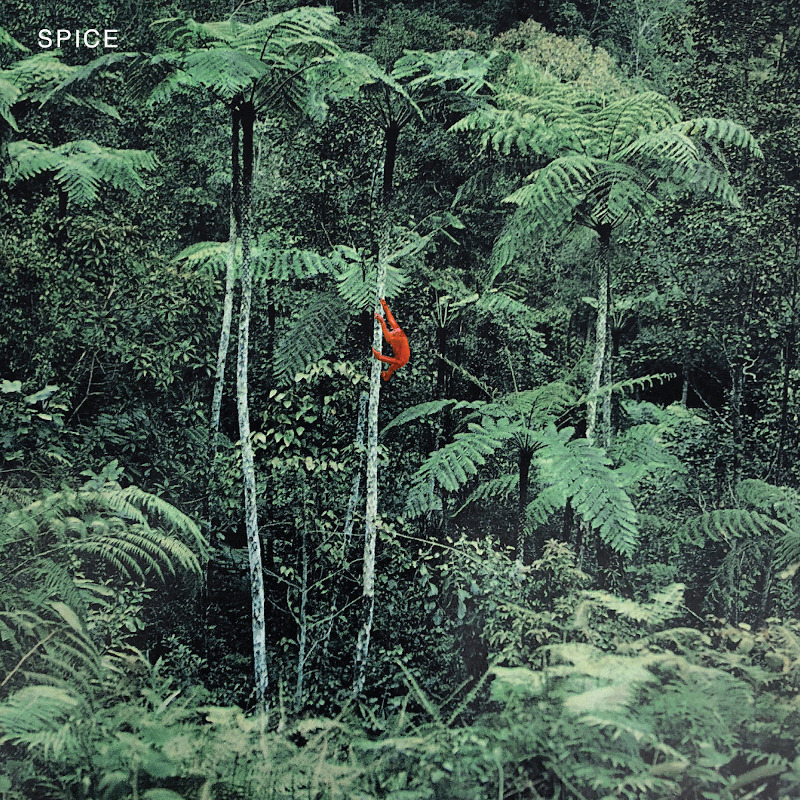
There are five members in the pan-Californian band Spice who’ve contributions lay equally on the surface of their debut album’s crackling, rocky complexion. Formed in 2018 and based across California, each members’ roots are in the North Bay of San Francisco. Spice’s sound pulls from the sense of melody and drive inherent to Bay Area pedigree, peppered with modernity and awash with an anthemic haze. The hook is in the connection as much as melody, with each song building its inner narrative and exploration of affliction. At its epicenter of those fault line is most notably that of vocalist, Ceremony frontman Ross Farrar. Following Farrar’s career throughout his shape-shifting hardcore-punk band as well as projects like his shoegazing offshoot the Down House, he’s never shied away from applying varying degrees of pressure onto sound, and on “Spice”, we experience this in one of its most focused instances of aggression to date.

Alongside Spice bandmates in fellow Ceremony drummer Jake Casarotti, bassist Cody Sullivan (No Sir, Sabertooth Zombie), guitarist Ian Simpson (Creative Adult,) and violinist Victoria Skudlarek, the collective’s “deliberate isolation of pain” through fascias of hardcore and indie rock channel themselves through in non-stop urgency that makes for one of the year’s most rewardingly thrill rides in anxiety-riddled head charges and whirring melodies. The listen is pop-induced, billowing in the air, and heavy like a pile of bricks at once, and when all of these elements atomize onto one slab, we hear how pain even in isolated form comes in many forms.

The audacity for Spice to entitle a song called “I Don’t Wanna Die In New York City” and to have it bark back through the dark city mania of an early Walkmen track is a sticking point that echoes throughout the rest of the listen. It’s been almost two decades since the Aughts’ NYC underground sculpted a movement in rockism, after all. That’s enough passage to warrant revisioning metropolitan nightmares through a modern lens with windows dirtied and pushed out here on tracks like “BLACK CAR” and the “The Building Was Gone”.

With “First Feeling” and “All My Best Shit”, Spice punctuate post-hardcore and brainy pop-punk with tightly-wound exclamations and sharp brevity. There’s a separation from where they stand against sinking into familiarity, however, thanks to the searing heat radiating from Victoria Skudlarek’s violin strings, sparking instantaneously as they careen through the former. On “Murder”, she helps orchestrate a dark secret life lived, and on “Reward Trip” she guides an electric third rail down a lost highway. Later on “26 Days”, she and her Spice ‘mates stretch light with a towering wait.

http://

Honed over late nights at Panda Studios in Fremont, California with producer Sam Pura (Basement, The Story So Far, Self Defense Family), Spice spent hours tweaking it until it became a little world formed by what they refer to as “the power of groupthink.” Sprinkled with field recordings—audio snapshots from the member’s every-day-lives—the record offers an intimate twist that builds on its theme of a single thread that connects everything with continuity, making it a single organism with as many depths as questions.

The totality of Spice in its 30-minute listen, with its non-stop concentrate of pain succeeds as a group exercise in attempting to control that which consumes us. That it also happens to be knockout debut from a band whose makeup continues to reinvent themselves by leaving no corner of underground rock uncovered as a conduit to carry this out only helps it go down easier. The record diverts from a singular mood, tempo, or delivery, instead focusing on orchestrating emotional drain as single impulses—fast, slow, driving, simple, and layered—that coalesce in their machinations. At its core, Spice’s Self-Titled album is wired together by brawny and brittle guitars, lock-groove rhythms, and vocals announce each moment and mood.

Released July 17th, 2020

image

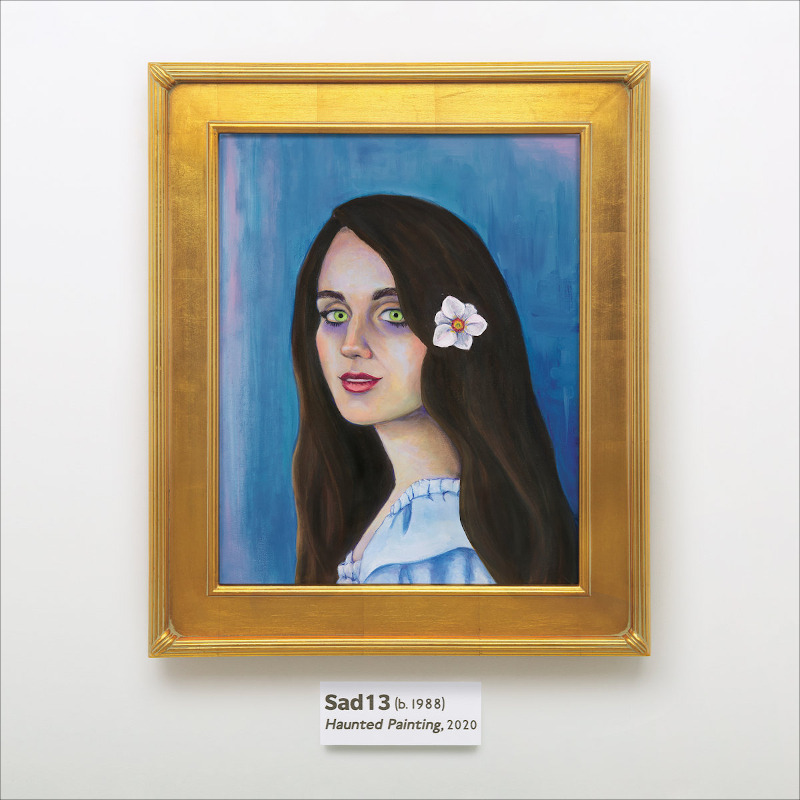
Sadie Dupuis song writing has been a practice in poptimistic views through the complicated indie rock gaze. The best songs from her band Speedy Ortiz and are the ones where the hooks swing heavy even when knotted up in amp cords and wrought time signatures, and with her solo project outlet Sad13, tracks like “Get a Yes” made you wonder what her take on subversive accessibility might sound like in her hands. In recent years, it’s sounded like Dupuis has grown more comfortable with that notion – Speedy’s 2018 Twerp Verse had some of the best weirdo indie-pop jams out there that year – but “Haunted Painting”, her second effort as Sad13, is a different kind of ghost.

As someone who has proven over the last decade to be a diverse combined-forced creative in her roles as a songwriter, poet, activist and visual artist, one should expect by now for Dupuis’ work to reflect a lot of thought going on within it. Her past work in both band and singular form has often warred with itself in finding a balance between great production, an atypical pop ambition, sincere wokeness, and the pursuit of seeing her reflection actualized in a sound defined as her own, and Haunted Painting is that self-portrait that puts it all on the canvas.

Backed by an all-women collective of studio pros including the likes of Illuminati Hotties’ Sarah Tudzin and Grammy winner Erin Tonkon as well as featuring guest spots from Deerhoof’s Satomi Matsuzaki, Tune-Yards’ Merrill Garbus and Pile’s Rick Maguire, Dupuis’ all-hands-on-deck project culls together engineers and musicians gifted in tweaking her electric indie-pop hexes into her own perfect spells. The cast does not deter from Dupuis as the focal point of “Haunted Painting”, and the way she wires together pop-rock with sharply-refined verbosity.

This especially comes in handy whenever she’s cutting down the patriarchy good wit as she does in the sci-fi synth pop anthemry of “Hysterical”, or drumming down bad behavior on “…Oops!” The most interesting aspects of Dupuis’ songwriting on Haunted Painted are how it goes further in colouring in her creative persona as something more than just using her voice to cause waves within socio-political currents, however. “Into the Catacombs” is an ornate orchestration that sets an ominous introduction for themes of loss, love, and loneliness backed by Roberto Carlos Lange of Helado Negro’s ghostly apparitions akin to every starting point on an …And You Will Know Us by the Trail of Dead album. “Good Grief” and “Take Care’ showcase a duality in a new found confidence with quietness building within the heaviness of indie rocks rolling, as she turns to timeless stylistic designs well learned from Liz Phair’s latter work.

Where Haunted Painted ultimately ends up is in one of Sadie Dupuis’ best songs written to date. “Market Hotel” sends the album off in one last burst of big, frustrated exultation with its share of side-eyed disses after already exhaling her traumas, anxieties, and washed adult dirtbag ruminations from her soul before it. It’s a saccharine ripper that in less than two minutes compresses everything that Haunted Painting is in picturing every side of Dupuis’ songwriting craft within the same frame. “I’m working three fucking jobs, I’m too embarrassed to die,” she sings. The punchlines are deprecating and surely, Dupuis is tired of having to make them, but it doesn’t stop her from hitting them right on target every time.

Sadie Dupuis – guitar, bass, synths, organ, marimba, prepared piano, drum programming, vocals, production, arrangement

Haunted Painting, out September 25, 2020


bob mould

After a fleeting dalliance with optimism on last year’s Sunshine Rock, Bob Mould returns to rage on “Blue Hearts” — a punkish album that’s sometimes even more aggressive than the hardcore screeds he recorded 40 years ago with Hüsker Dü. He literally screams at Trump and evangelicals on “American Crisis,” which seems to juxtapose the way the Reagan administration ignored the AIDS epidemic with Trump’s lies about the Covid-19 pandemic. “I never thought I’d see this bullshit again,” he sings. The more tempered yet still caustic “Forecast of Rain” is Mould’s indictment of religious hypocrisy. “These fuckers tried to kill me once,” Mould said of his motivation on Blue Hearts. “I’m not going to sit quietly this time and worry about alienating anyone.”

Look, I get it. It’s not fun to think about how fucked up America is when you just want to listen to some songs in the car. Still, given how terrible pretty much everything has been for the last few years, it’s weird that there hasn’t been a larger resurgence in politically minded music. It’s fallen to older artists to address Trumpism and the toll it’s taken on the country. Bob Mould’s Blue Hearts is a furious broadside about the lies, hypocrisies and inhumane policies of the modern conservative movement, with “American Crisis” in particular reviving the pissed-off political consciousness of the early ‘80s hardcore scene Mould got his start in. Blue Hearts unites that “In a Free Land”-era anger with the pop song writing of peak Husker Du and the crunch of Mould’s recent solo albums, resulting in one of the most powerful records of the year.

Release date: September 25th From the album Blue Hearts, out on Merge Records.


Clot

it is universally agreed that New Zealand’s Wax Chattels are a must- see live act; their hypnotically sinister debut captured this perfectly.

Released in 2018 and supported by relentless touring, the eponymous album reached #7 on the New Zealand album charts, and release week saw the title feature as #1 in Rough Trade’s top 20 new releases. Tastemakers like NPR and the A.V. club came on as early champions. the album’s success at home and abroad led to the well-deserved nomina- tion of best alternative artist at the 2018 New Zealand music awards, as well as the band’s inclusion in the coveted shortlist of finalists for the taite music prize and Auckland live best independent debut award. after a knock-out entrée, the anticipation that surrounds their sophomore album, “Clot” , is immense. much like their debut,

The writing process for “Clot” took the best part of a year. while some songs were written on the road, the bulk of the album was workshopped throughout 2019 across bedrooms and storage containers. demos were fine-tuned before recording engineer James Goldsmith (aldous harding, mermaidens) stepped in. the band maintained the use of only the barest of ingredients — bass guitar, keyboard, and a two-piece drum kit — but spent more time ex- perimenting with and finding new sounds. they wanted to maintain the same live element, but, this time, heavier — for which they enlisted the help of mixing engineer, and fellow noise-maker, Ben Greenberg (uniform, destruction unit, the men). the keyboards are thicker, the bass more intense. a marked step-up, this new record keeps the visceral energy of the debut, only this time they dig deeper into ca- thartic noise. at Clot’s center is confrontation. “mindfulness” asks do you accept the status quo over forcing tangible change? the vitriolic choruses of “cede” are in cheng’s native language — taiwanese hokkien — and are an indignant confrontation about cross-strait relations and self- determination. the experience of being a first generation immigrant is expressed in the melodic single “no ties”. the song touches on cul- tural differences and the parental sacrifice of careers and support sys- tems to provide a “better” future for their children. the explosive arc of “efficiency” describes knowing when to bide your time, and when to push, in which the band treads a line between the explicit and in- tuitive.

This is carried through “An Eye”, in which the band stresses the physical harm and psychological breakdown emanating from the escalating racial and political uproar throughout the world. though the band seethes and boils throughout, Clot concludes with a message of hope. perhaps it’s this capacity for self-awareness that makes wax chattels one of New Zealand’s  most treasured independent exports. “this band of former jazz students is making confrontational post-punk, marrying the grind- ing keyboards of suicide with the drum-and- bass intensity of early death from above 1979. the results are stark, hypnotically sinister songs.”

Official video for Efficiency by Wax Chattels, from their album “Clot”

Anna von Hausswolff is a musician and composer exploring the myriad of possibilities and the potential for new expressions on the pipe organ.

On her continued and successful campaign to make the pipe organ cool again, Anna von Hausswolff will release “All Thoughts Fly” in September which features just the artist and the organ. “I wanted to play with dissonance and polyrhythms to create a harmonic landscape that is constantly changing and expanding into something else,” Anna says of the title track. “Everything you hear in this track, every little overtone and all ambience is entirely made through the organ. We used EQ but that’s it. The overall idea was to create an illusion of flying thoughts, intertwining and entangling into each other. Different words and worlds happening at the same time, affecting each other and changing each other’s directions and courses.”

Sacro Bosco (“Sacred Grove”) is the starting point for Anna von Hausswolff’s new album All Thoughts Fly, incoming on Southern Lord on 25th September. Here in solo instrumental mode, the entire record consists of just one instrument, the pipe organ, and represents absolute liberation of the imagination. All Thoughts Fly radiates a melancholic beauty, and is distinguished by fluid transitions of contrasting elements; calmness and drama, harmony and dissonance, much like the place that inspires the music.

Sacro Bosco is a garden, based in the centre of Italy, containing grotesque mythological sculptures and buildings overgrown with vegetation, situated in a wooded valley beneath the castle of Orsini. Created during the 16th Century, Sacro Bosco was commissioned by Pier Francesco Orsini, some say to try and cope with his grief following the death of his wife Guilia Farnese, others speculate the purpose was to create art.

About the album Anna explains “there’s a sadness and wilderness that inspired me to write this album, also a timelessness. I believe that this park has survived not only due to its beauty but also because of the iconography, it has been liberated from predictable ideas and ideals. The people who built this park truly set their minds and imagination free. All thoughts fly is a homage to this creation, and an effort to articulate the atmosphere and the feelings that this place evokes inside of me. It’s a very personal interpretation of a place that I lack the words to describe. I’d like to believe Orsini built this monumental park out of grief for his dead wife, and in my Sacro Bosco I used this story as a core for my own inspiration: love as a foundation for creation.”

The accompanying video for the first single “Sacro Bosco” is, just like the music, an interpretation of the park with an imaginary twist. Directed by Gustaf and Ludvig Holtenäs.

www.youtube.com/watch

Anna summarises, “Sacro Bosco in Bomarzo is a creation carved out from one man’s head. A frozen thought lasting throughout time and touching people across generations. All thoughts fly, Ogni Pensiero Vola, is about this: the importance of sharing for surviving, creating space and evolving. Once you’ve shared your words they are not only yours anymore.”

All Thoughts Fly ultimately embodies the exploration of any and all possibilities, and the audience is invited to listen, liberate the mind and let it wander.

http://

Notes on the recording process:

The organ on All Thoughts Fly is situated in Gothenburg and is a Swedish replica of the Arp Schnitger organ in Germany. It is the largest organ tuned in Quarter-comma meantone temperament in the world. With it’s four manuals, one pedal and 54 stops, it was built as part of a ten-year research project reconstructing 17th Century North German organ building craft. The tuning temperament is an important detail to note here, as it deeply affects the sound and tuning, and thus radically changed the process of creating this album. Anna speaks of a pleasant surprise during recording, the organ’s ability to create beautiful “pitching” notes through its stops and air supply system. She remarks “We took advantage of this so most of the pitching sounds and notes that you hear on the album comes from the mechanics of this organ, effects made entirely acoustically.” The organ was recorded with two room mics for atmosphere and two pairs of close mics placed inside the organ to capture nuances and detail for further organ sound processing by Filip Leyman in his studio.

Releases September 25th, 2020

All songs written & played by Anna von Hausswolff


“‘Ghosts’ is about the beauty and joy of being in a band, and the pain of losing one another to illness and time. ‘Ghosts’ tries to speak to the spirit of the music itself, something none of us owns but can only discover and share together. In the E Street Band, it resides in our collective soul, powered by the heart.” – Bruce

New album “LetterToYou” featuring the E Street Band coming October 23rd.

An explosive electropop collaboration between two of our new favourite bands – the Saint Agnes remix of CLT DRP‘s ‘I Always Like Your Mother Better’. The release heralds the announcement of an exciting remix edition of CLT DRP’s album Without the Eyes, due to release 13th November.

Here’s what the bands had to say about each other , CLT DRP supported us at a show on tour and blew us away. Kitty and I couldn’t wait to get our hands on the music and remix it.

Saint Agnes: We knew early on that we wanted do a remix version of this album. With our sound edging in to that electronic territory it seemed like the natural thing to do. At the start of this project, if you showed us the list of bands that all came together in the end to do remixes for this album; we would have been pinching ourselves. We’re blown away with all the artists input and really excited for everyone to hear our debut album reworked.

CLT DRP: Both bands are sparkling hot stars of Brighton’s Small Pond Recordings – a Brighton indie label serving up some very tasty fish right now (see also LibraLibra and Bitch Falcon)

http://

Releases November 13th, 2020