Archive for the ‘CLASSIC ALBUMS’ Category

One thing Graham Parker appreciates when discussing his earliest work is to not call him or his lyrical output “angry.” Says Parker, “When I’m writing, I don’t write angry or think angry. Sadly, all critics see or hear is anger.  There are many such laughs to be had talking with most of the team behind “Howlin’ Wind”, the smart, snarling, roughly soulful and reggae-tinged 1976 debut by Graham Parker & The Rumour. “When you have a good time, you get a good record,” says organist/pianist Bob Andrews. You can’t get to Parker’s grouchy, skanky, literally horny Howlin’ Wind, with its smugly sarcastic lyrics, scuffed-up vocals and scorched-earth soul-garage demeanor, without the Rumour. And the Rumour remains dormant without Parker, a great backing/collaborating band without a front. “I think back, and yeah, it was, and is, a pretty symbiotic relationship,” says Parker.

Post-pub rock and pre-punk (a matter of months in between; mid-1975 to January 1976), Howlin’ Wind closed the door on one relaxed-fit movement and popped the top on the ragged, spiky rage of another, with topics such as lousy schoolmasters, God, social justice and bad romance on the tips of their lips. “Punk rock in England doesn’t really occur without pub rock,” says guitarist/bandleader Brinsley Schwarz. “If we hadn’t pushed these places to be available for gigs—because there wasn’t anywhere to play save colleges and arenas then—where would punks have built their nests?”

The aggressive rebellion of punk, its untutored musicianship and its anarchistic everything, was never really a draw for Parker and the Rumour, as Howlin’ Wind wasn’t recorded by a bunch of snot-nosed youngsters. “When punk really hit and those kids were spitting out of so-called appreciation, I wasn’t having that,” says Parker with a laugh. “I didn’t get that far to be spit upon.”

One thing Graham Parker appreciates when discussing his earliest work is to not call him or his lyrical output “angry.” It’s a word never uttered by this writer in regard to the now-66-year-old, East London-born Parker’s writing: a cliché forever bandied about by hollow critics who probably haven’t really listened to Parker beyond his often blistering vocal delivery.

“When I’m writing, I don’t write angry or think angry, so I appreciate that you noticed this, and thank you,” says Parker. “Sadly, all critics see or hear is anger. Not me, though. ‘With a little humour, always with a little humour,’ There are many such laughs to be had talking with Parker, guitarist/bandleader Brinsley Schwarz, organist/pianist Bob Andrews and drummer Steve Goulding: most of the team behind Howlin’ Wind, the smart, snarling, roughly soulful and reggae-tinged 1976 debut by Graham Parker & The Rumour. “When you have a good time, you get a good record,” says Andrews, talking about not only the laughs shared with long time friends in Brinsley Schwarz (the band named after the man, which ended in 1975 only to become the Rumour later that year) but also recording with Nick Lowe, Howlin’ Wind’s producer and one-time Brinsley bassist/singer.

You can’t get to Parker’s grouchy, skanky, literally horny Howlin’ Wind, with its smugly sarcastic lyrics, scuffed-up vocals and scorched-earth soul-garage de-meanor, without the Rumour. And the Rumour remains dormant without Parker, a great backing/collaborating band without a front. “I think back, and yeah, it was, and is, a pretty symbiotic relationship,” says Parker. The Cajun-Jamaican flavouring of the rhythm section was the cherry on top.

See the source image

Considering Schwarz and Lowe were in bands since 1966 such as Sounds 4+1, which morphed into Kippington Lodge, the immediate predecessor to the epic Brinsley Schwarz; that Andrews played organ for U.K. soul/pop songstress P.P. Arnold around 1967-68 before joining Kippington Lodge, etc.; and that Goulding and Rumour bassist Andrew Bodnar met in 1970 before becoming Skyrockets, then the reggae/Cajun-inspired Bontemps Roulez before hooking up with Schwarz, Andrews and Rumour guitarist Martin Belmont, this crew of seasoned vets had been around the block.

Maybe they were seasoned but not well-trained. “We definitely always needed to get much better, until we actually did,” says Schwarz, recalling the debacle of a disastrous, over-hyped Manhattan gig at its start and hauling his namesake band into one house where they rehearsed all day out of necessity.  “We studied album sleeves closely, but we weren’t trained musicians at all,” says Goulding of playing with Bodnar in Islington and forming local bands. “We spent most of our time playing along to records and lusting after expensive instruments.”

Still, when it came to 1975, the just-broken-up Brinsleys—as musicians—were well-worn-in with their chops handsomely sharpened, and known for their abilities (and propensity for having a good time) in the pubs of London. Lowe even told GQ in 2011 that manager Dave Robinson “saddled (Parker) with this band that had just broken up and came with all their in-jokes and were fully formed in a way.” That’s Lowe’s dour outlook.

The fully formed vibe Lowe spoke of is what gave Parker’s prickly poignancy a sage authority, its weight, its “soul shoes” glide when set in the company of the then newly anointed Rumour. This team of players’ well-rounded, often sloppy, brutal but buoyant, genre-babbling musicianship gave Parker’s debut—from the stinging groove of “White Honey” to the confessional gospel of “Don’t Ask Me Questions”—might and bite. “Pub rock” as a tag was nothing more (and nothing less) than combine-churning boozy music boiled into one frothy, funky mess—the Band meets the Meters meets the Wailers meets the Famous Flames meets the Faces—made by hungry men no longer at the beginning of their careers. “I didn’t know anything about pub rock, but I did know that these guys had been around,” says Parker of his collaborators.

Parker, however, was also no spring chicken (25!) when he got to the soon-to-be-rechristened Rumour and Dave Robinson, Brinsley Schwarz’s manager. “Morocco, Gibraltar, Channel Islands, the whole of Europe; I’d been all over by the time I was 18, as that’s what you did at 18, because you didn’t need money to live,” says Parker of his restless youth. When he did need cash, he worked while home at his parents’ house in Sussex at the Chichester rubber-glove factory, or breeding mice and guinea pigs. “Between traveling and odd jobs, I had a fantastic time meeting people and harvesting ideas,” he says. “Then I’d fuck off and go to Morocco because that’s where Burroughs and Kerouac went; hippies, too, the whole Marrakesh Express.”

Though Parker had instruments as a kid, he’d never thought much of music. Suddenly, though, buying an old acoustic guitar in Guernsey, totaling up the sum of his experiences in squats and sands, allowing the youthful influences of Eddie Cochran, the Supremes, Van Morrison (“a true poet who happened to be a phenomenal white soul singer”) and the latter-day inspiration of Bob Dylan (“honestly didn’t get into him until Blood On The Tracks”) to take root turned his head around.

“Something came out the other side, and nobody of my generation was doing that particularly, or at least I didn’t hear it: the soul, the rock, the poetry,” says Parker. He confesses a love, too, for “the early singer/songwriter types” such as Joni Mitchell, James Taylor and Neil Young. “That’s the only thing that I took from the hippies,” he says with a laugh. “I didn’t like their noodling music, but some of their writers were devastating.”

Parker got the writing fever and, by 1974, songs came pouring out. To him, the melodies were based on old tunes that he loved, that mix of which he speaks. Along with his then-fresh feel for Dylan (“I was upset with myself for not getting him sooner”), Parker was inspired by elements of social justice and class in his U.K. homeland and began developing a lyrical style and subject matter. “I had no interest in politics, per se, but I knew what justice—and injustice—looked like when I saw it, being part of the working class and with England being a classist country,” he says. “It’s still based on class there—if the ruling class could break the working class, they would.”

Parker sought to integrate the poetry of disgust, discrimination and inequity into his first tunes such as “Back To Schooldays,” which wound up on Howlin’ Wind. “Even the love songs, I wanted them to have that taste, but I didn’t know how I was going to do it, really,” he says. “What I came up with was ‘Don’t Ask Me Questions,’ which I think makes love into a social issue.” As for the burgeoning Dylan influence, Parker insists that you can hear him grappling with that on “You’ve Got To Be Kidding,” with its compact chords and emotional output.

Parker wanted to point fingers, but he did not want to preach. “I can’t stand that,” he says. “Preaching is the last thing I wanted to do.” Caustic humour, often subtle, became his guide, a lyrical flip he’s used ever since. “I still don’t think that people get the jokes, but there you go,” he says.

Either way, Parker believed that he was truly on to something in 1974, as at that time (the era of prog rock and post-glam), “there were certainly no new acts doing something original with this,” he says. In this case, something tough, soulful and social. “That felt good,” he says. “I just had to make the right connections, meet musicians who weren’t hippies. Go to London.”

This is where Brinsley Schwarz, Bontemps Roulez and Dave Robinson come in.

By 1974, Schwarz, Lowe and Andrews had just begun conquering the pubs of London with a mélange less like the country rock of Brinsley Schwarz’s eponymous 1970 debut and its immediate follow-up, Despite It All, and more like the Kippington Lodge of their youth. “Motown, ska, reggae, Beat Invasion bands—it was all one thing with no delineation,” says Schwarz of Kippington-Lodge. By the time Brinsley Schwarz set itself into motion, the Band had become Schwarz and Co.’s deepest influence.

“I had already been in love with groove-jazz organists like Jimmy Smith and Charles Earland, but Garth Hudson and his rich, aggressive attack really turned my head around,” says Andrews of the Band’s often frightening but still funky keyboard tones. Schwarz recalls a Melody Maker story with Robbie Robertson where he revealed the Band’s favourite artists: Lee Dorsey, Clifton Chenier, Professor Longhair. “All New Orleans,” says Schwarz, enthusiastically. “We were overjoyed, Andrews in particular, who eventually moved to New Orleans and became ‘Piano Bob’ there. That’s quite an accomplishment for a boy from Leeds.”

Andrews, who joined Schwarz and Lowe at K-Lodge (“because I could play and sing Blood, Sweat & Tears’ ‘I Can’t Quit Ya’—a big deal for a 19-year-old,” he says), was only enhanced by the New Orleans sway. “There’s a feel, a spirit to that music—even when funereal—that’s gleeful,” he says.

As their regimen intensified and practice became perfection, the Brinsleys began adding the dirty-yet-precise funk of James Brown to their repertoire. “We’d rehearse until we nailed it, until that swing, that backbeat, was right and tight,” says Schwarz. Mix all that in with the Brinsleys’ shambling country thing, and you got pub rock.

“I didn’t listen to pub rock,” says Goulding, who, with bassist Bodnar, began a “rhythm section for hire” gig, putting ads in Melody Maker for whomever came along. “At that point we had more ambition than experience,” says Goulding, recalling jams at Iroko Country Club in Hampstead run by African drummer Ginger Johnson, and a Bodnar/Goulding band—the bluesy Skyrockets—with a slide guitarist and a harmonica player for pub gigs. “Then, pubs still charged in old money, pre-decimal money, which could get confusing after your third pint.”

When Skyrockets splintered, Goulding, Bodnar and keyboardist Tony Downes used their R&B and reggae background—their love of Leon Russell and Burning Spear—and became Bontemps Roulez.

“Me and Andrew had always played reggae—I suppose living in South London, which had a big West Indian population, had something to do with it,” says Goulding. “I always loved the rhythm of it, ska, blue beat, rocksteady, whatever was around.” Goulding credits Charlie Gillett’s show on Radio London for playing a huge variety of American music (“like Lee Dorsey”) that sounded so different from the U.K. stuff that was around in the early 1970s.

Bontemps Roulez needed gigs, so they went to different pubs near the King’s Head, as that was the area where they tried hardest to get booked. “The Hope & Anchor up the street from there was quite a well-known music pub, and Dave Robinson, Fred Rowe and John Eichler seemed to all run it together,” says Goulding. “They’d built a recording studio upstairs and had bands playing in the basement. Dave put the word out among friends on the pub-rock scene that we were OK, so we got gigs in other pubs, too.” Along with gigs, Bodnar and Goulding became the go-to rhythm section of that studio, the Sly & Robbie of the Hope & Anchor. “Because we were cheap and willing,” says Goulding with a laugh. “And we weren’t old and jaded. My dad would drive me up there with my drums is how not old.”

Two of the artists whom Goulding and Bodnar recorded with were shouter Frankie Miller and Declan McManus, a guitarist/singer who had just left his pub band, Flip City. “I remember Dave being very impressed with the quality and quantity of his material,” says Goulding of the soon-to-be-renamed Elvis Costello. The rhythm boxers eventually recorded—with Lowe as producer—Costello’s My Aim Is True together in 1977, but not before they got involved with one old find of Robinson’s and the manager’s newest acquisition.

Dr. Feelgood, Ducks Deluxe (where Rumour guitarist Martin Belmont hailed from) and Brinsley Schwarz—none of those guys was I familiar with,” says Parker. “That is, until Dave (Robinson) brought them to my attention, and by then Brinsley was breaking up. I didn’t know from pub rock or knew anyone who had seen them. All I knew was that these were the good songs that would live forever. When you know it, you know it.” And Parker had his own songs, and he wanted them done right.

See the source image

Parker, who had just become a managerial client of Robinson’s based on a collection of acoustic demos, was responsive to the Brinsley boys on a more tonsorial level. “I was very encouraged by them because they all had short hair,” says Parker, laughing. “That was exactly my attitude about fashion, as I actually had even shorter hair, sometimes too severe.”

For Parker, the Brinsley hair thing played into Schwarz and Co.’s fashion-ability as far as he was concerned (“Really?” says Schwarz when told of Parker’s praise), as a London band. “That’s good and that’s bad,” says Parker. “They had a London following, which means no one in the provinces knew them. Then again, things took awhile to get to us. I mean, we were just getting Uriah Heep in 1974. My uncle suddenly had long hair. It was terrifying. Ah, to be young.”

Robinson was impressed with Parker’s cleverly worded ire and heard something forceful and melodic in his demos. All they needed was a taut, knowing band to play to Parker’s blend of the aggressive and the chilled (yes, he, too, was a big reggae fan). “They were great but didn’t have focus,” says Parker. “With me, Robinson saw a direction, something that couldn’t be stopped. Which was true. I was revved-up. Now, the Rumour at first, I don’t know that they wanted to play with me; I’m sure they had misgivings. But they were smart enough to know that up until that point, they hadn’t really gotten anywhere.”

The Brinsleys broke up in 1975, and I went to play with Ducks Deluxe, where I met Martin (Belmont), until they broke up, so I just stopped for a minute and started learning to play saxophone,” says Schwarz, whose studies were interrupted by a call from Robinson to say, “I got this guy.” “Dave so has the gift of gab that he convinces me I’m the only one that can bring out the best in Parker. I call Martin and Bob—remember, Nick had left when the Brinsleys split—and I needed a rhythm section.”

Goulding states that, yes, Bontemps Roulez had splintered at that time but that Bodnar and he had played on Ducks Deluxe singer Sean Tyla’s demos, as well as at gigs with the last incarnation of Ducks Deluxe, “which Brinsley was also a part of, so I suppose we met then,” says the drummer. “The pub-rock bands were all splitting up, the scene was changing, and Dave had the idea of putting me and Andrew together with Bob, Martin and Brinsley to see what happened.”

What happened is that they made the demo above the Hope & Anchor that everyone loved, said, “Why don’t we do this again?” and commenced to play at a pub, Newlands Tavern, owned by Belmont’s friend in Peckham. “Bob and I were suspicious after all that had happened with Robinson in the past, but this sounded amazing,” says Schwarz. “Next thing you know, Dave wanted us to be Parker’s band and record the first album properly with Mercury as the label.”

Goulding continues that Schwarz came up with the Rumour name (“after the Band song, but with an English spelling”) and that after the Newlands Tavern gigs got this bassist and drummer in on the action. “We learned a few of his songs and did covers with him, and he would come on halfway through our set, do five or six songs with us and go away again,” says Goulding. “At first, a lot of the audience went to the bar or bathroom during his bit. But we liked him, his voice and songs went with the style of playing we were slowly developing, and he was a better singer than any of us, so it seemed like a good fit. Pretty soon people stuck around for his bit, so we knew we were on to something.”

Recording at Eden Studios, London, in early 1976, Parker and the band smoked a bunch of pot and drank a lot of beer while recording his debut album. “See, with GP and us, that could be every album,” says Goulding. “It was the first time I’d recorded in a nice studio with a kettle and fridge and biscuits. They even had a TV. Everything sounded a lot more like I’d always imagined it should—like a record.”

For Andrews, the sessions provided his first opportunity to arrange not only a band now armed with an arsenal of guitars (“Having Graham, Martin and Brinsley made for a complicated sound, one that I wanted to keep separate, defined and equal”) but also a six-piece brass-and-reeds section and additional musicians such as Dave Edmunds and slide guitarist Noel Brown. “Nick wasn’t doing it, so I did,” says Andrews of Lowe’s production. “He was great but quick—just there to tidy up a bit.”

“That’s why they call Nick ‘the Basher’—one or two takes, bash ’em up, in and out,” says Parker.

Schwarz even manages a brief impersonation of Lowe at the mixing board during the height of the Howlin’ Wind sessions. “Nick’s production method was to ask the engineer to get the sound, make sure everybody was happy with it, make sure they were comfortable—and play,” he says. “So, in the studio with Nick, he’d yell, ‘Fantastic, amazing, marvellous, maybe one more.’ And that was it. He made you feel good. That was his method.”

Remember, though, here was Lowe—chosen by Robinson—just months away from leaving Brinsley Schwarz (the man and the band) after playing with them since their collective teens now producing them for his behind-the-boards debut. “It was an odd situation because [Parker’s] group was made up of so many people from the group I had just left,” Lowe told GQ in 2011. “It was sort of strange: One minute I was tripping down the road, you know, I’m free! And the next moment, I’m in the studio with these guys again. But Graham was, and is, fantastic.”

“Fantastic” seems to be the buzzword regarding Parker songs such as “Back To Schooldays,” “White Honey” and the title track, a mini-epic in both Parker’s mind and that of his Rumour. “‘Back To Schooldays’ was punchy, very tight and rocking, and I have a soft spot for ‘Gypsy Blood,’ as I always like the slow ones,” says Goulding. “Good singers who write powerful songs are obviously easier to play with, and Graham is one of those. He also had an onstage energy that matched ours very well.”

Parker recalls that “Howlin’ Wind,” dense and unforgiving, truly set the tone for the rest of the album. “Look, I couldn’t imagine any of this in the top-10”—it wasn’t—“but I wanted to be an albums artist, not a pop singer.”

Schwarz, Goulding and Andrews all agree: Going into and coming out of Howlin’ Wind, Heat Treatment (released later in 1976) and the rest of the annual album-then-tour pace they kept until 1981, when Parker dismissed them—and even now, going into recent collaborative albums such as 2015’s Mystery Glue—they all saw Parker as an extraordinary talent. “He had a raw energy that was very attractive and brought out the best in us,” says Schwarz. “Steve and Andrew had not seen what we went through as Brinsley Schwarz. We were on the laidback side. Graham’s words and aggression lit a fire under our ass and still does.”

As for Parker, lighting fires is one thing, but then and especially now, he’s hoping to do something more.

“I’ve always tried to be playful, starting with Howlin’ Wind,” says Parker. “Not dumb, not goofy, but playful. I’m a fan of humour. People have always thought I was pissed off, but really, I was just joking around. They don’t get it or they’re not hearing me. I have always loved to tickle people.”

The Band:

  • Graham Parker – vocals, acoustic guitar, Fender rhythm guitar
  • Brinsley Schwarz – guitar, Hammond organ, backing vocals
  • Bob Andrews – Lowrey organ, Hammond organ, piano, backing vocals
  • Martin Belmont – guitar, backing vocals
  • Steve Goulding – drums, backing vocals
  • Andrew Bodnar – Fender bass
“I was guzzling wine at my favorite bar in San Francisco, the Rite Spot, and the entertainment that night was some local opera singers singing along with a big video screen showing a collage of various operatic moments with subtitles. One particular subtitle, ‘Ah! (etc)’ made me laugh, I thought it was a perfect description of life – the joy of existence against the etcetera of it all, the struggle. With a heavy head of rose’ it seemed like ecstatic poetry! I scribbled it on a napkin and thought it might make a good title for something” And so the mystery behind the title of Kelley Stoltz new record is solved. Less of a mystery is the quality contained therein… after 12 self-titled releases and a several more under pseudonyms, Stoltz is the word for “one-man-band-home-recording-pop-songs of idiosyncratic character.” A quick follow up to his more power pop and pub rock LP only “Hard Feelings” offering in the summer, “Ah!(etc)” finds Stoltz returning to his sweet spot, writing songs that never were, but should have been in the 60’s and 80’s.

http://

As with other LPs Stoltz makes virtually every noise on the album which was written and recorded in 2019 at his Electric Duck Studio in San Francisco. A few friends popped in to play along… Stoltz former bandmate, Echo & the Bunnymen’s Will Sergeant adds electric guitar to “The Quiet Ones” a sort of Scott Walker lyrical take on strangers and neighbours. Karina Denike formerly of Dance Hall Crashers adds gorgeous vocals on the bossanova groover “Moon Shy”, where Sergeant pops up again in a spoken word role on the outro. Allyson Baker of SF’s Dirty Ghosts sings on “She Likes Noise”, a song Stoltz wrote for her in celebration of her love of seeing live bands.

Released November 20th, 2020

here’s an album what’s got ten types of songs.

The January Song, that’s a country-lobster city-lobster type song.
The April Song, dying type of song.
Grace, that’s a dying and living type song.
Mercy, “milk-of-human-kindness”, that’s an eye-of-the-dog, three-types-of-souls type song.
The Pool of Blood is a two paths type of song and The August Song is a one path type of song.
White Lichen, that’s a “you break it you buy it” type song.
The October Song, that’s a “you bought a ghost story and there are no refunds” type song.
Ghosts Explode, that’s a living and dying and worship the sun type song.
The Golden Days are Hard, now that’s a you-know-me-better-than-I-know-myself type of reckoning type song.

there are several additional type songs that these ten pick up here and there like stray radio signals ricocheting off street lamps and open palms and little rocks collected between the sidewalk and the yard. feel free to take note of ’em but a comprehensive list won’t be much more useful than the one we’ve got here anyhow.

http://

Westelaken is
Alex Baigent – electric bass, upright bass, synth on track 1, backing vocals (all over the place but most prominently in tracks 1 and 9)
Rob McLay – percussion, synth on track 10, backing vocals (including harmonies on tracks 1 and 8)
Jordan Seccareccia – guitars, vocals
Lucas Temor – piano, banjo, backing vocals


released August 21, 2020

Mountains

To date Matador’s Revisionist History series has set its focus on the hallowed year of 1995 – surfacing critical releases by Pavement, Yo La Tengo, Guided by Voices, and Chavez.

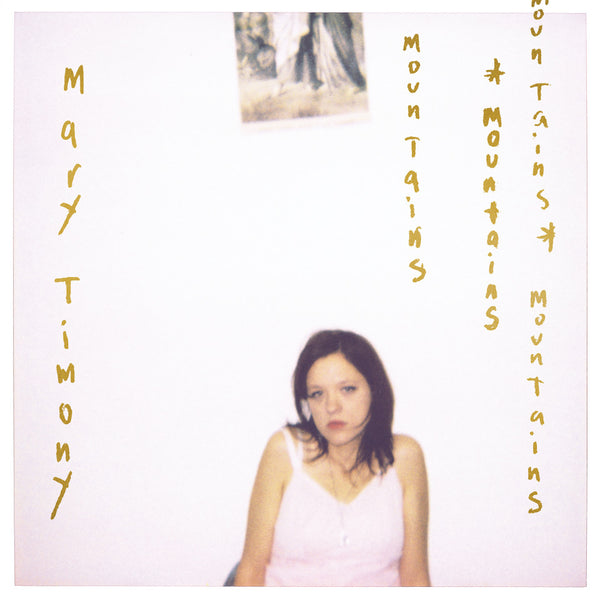
Today, however, we whirl the dial on the in-house wayback machine and travel toward the future: the year 2000 and Mary Timony’s debut solo album, ‘Mountains‘, which will be reissued on January 15th. Remastered by Bob Weston, “Mountains” comes back to us as a gold foil-embossed gatefold double LP and will include the previously unreleased original takes of “Return to Pirates,” “Poison Moon,” and “Killed by the Telephone,” which were delivered along with the original master tapes 20 years ago, but were omitted from the final album. The record is completed by a newly recorded orchestral version of “Valley of One Thousand Perfumes” produced by composer Joe Wong (Russian Doll, Midnight Gospel) and mixed by Dave Fridmann.  

At the turn of the century, Timony (Ex Hex, Wild Flag, Hammered Hulls) was already a celebrated presence in American underground music ­­– a fixture of D.C. and Boston rock ’n’ roll via her work in Autoclave and Helium respectively. By 1998, though, Helium was drawing to a close and Timony was feeling uncertain about the future. “I had never been good at the rock’ n’ roll business, and making a living from being in a band just didn’t seem like it was in the realm of possibility for me,” she writes. “I just knew I wanted to make another record because that was the part of being in a band that I liked the most.” 

At the time of its original release, Timony called ‘Mountains’, “A Trip to the New Underworld.” “A bunch of hard stuff was happening in my life: family illnesses, people dying, people leaving, relationships ending. I fell into a deep depression,” she explains. “I tried new ways of making music: I tried writing songs without any filter at all, and I purposely didn’t think about what the music would sound like to anyone else. I was only interested in describing what was in my head.”

Recorded and mixed in Boston alongside Christina Files and Eric Masunaga and in Chicago with Bob Weston, Mountains found Timony dialing into territory that was barer and more confessional than her work in Helium. Stark arrangements were augmented with newly ornate instrumentation — piano, vibraphone, and viola — and the lyrics were tinted with slyly occult imagery.

“Listening back to Mountains now I am struck most by how raw it sounds,” says Timony. “I hear the depression and angst, but also I hear all of that darkness disappearing through the power of music and friendship—and turning into songs during those happy and productive months recording and hanging out in Christina’s loft in downtown Boston.”

Mountains” will be reissued on January 15th.

Mountains
UNITED STATES - JANUARY 01:  Photo of Richard HELL; B&W Posed  (Photo by Peter Noble/Redferns)

On this day (November 18th) in 1976: Richard Hell & The Voidoids made their live debut at CBGB’s New York; their 1977 debut album, ‘Blank Generation‘, would influence many other punk bands – its title song was chosen by music writers as one of ‘The 500 Songs That Shaped Rock’ in the Rock & Roll Hall of Fame listing, & is ranked as one of the all-time Top 10 punk songs by a 2006 poll of original British punk figures,

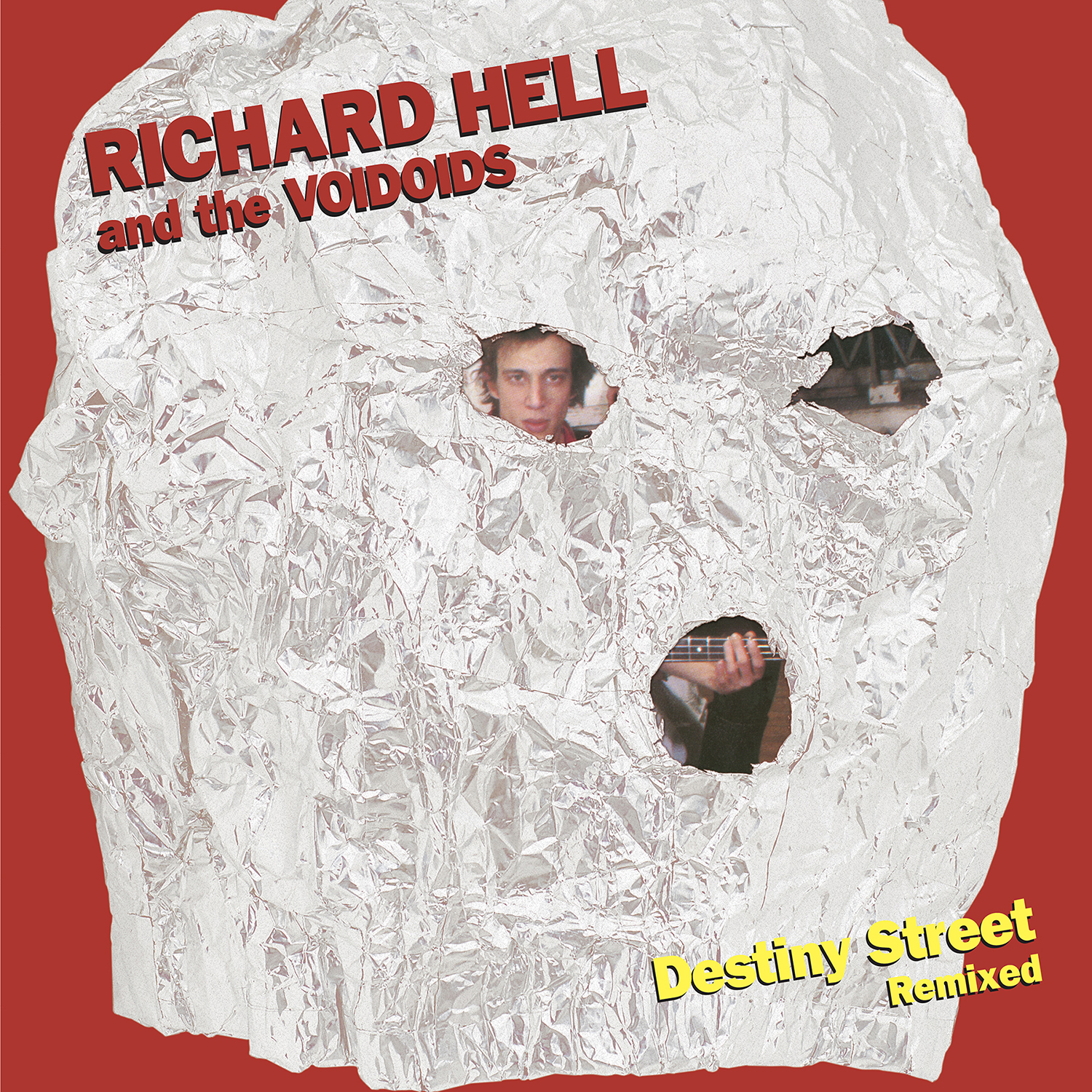
Richard Hell and the Voidoids will revisit their 1982 album “Destiny Street” as a “remastered, remixed, repaired” reissue that captures how the band’s second and final album was originally intended to sound. Destiny Street Remixed, due out January 21st, 2021 via Omnivore Recordings, makes use of the newly discovered three of the four original 24-track masters from the 1981 sessions for the album that, in its original form, “was a morass of trebly multi-guitar blare,” Hell writes in the reissue’s new liner notes. Never happy with the 1982 album, Hell first tinkered with it for 2009’s Destiny Street Repaired, which combined the original rhythm tracks with Hell’s new vocals and guitar overdubs courtesy of Marc Ribot, Bill Frisell, and Ivan Julian. After rediscovering the 24-track masters featuring the Voidoids’ contributions, Hell enlisted Yeah Yeah Yeah’s Nick Zinner for a full remix of the original Destiny Street.

Destiny Street was the follow-up album to one of the greatest punk albums of all time, 1977’s Blank Generation. The album was originally recorded in 1981 and released in 1982, but not to Richard Hell’s satisfaction. As he says in his new liner notes to Destiny Street Remixed, “The final mix was a morass of trebly multi-guitar blare.”

Now, for the 40th Anniversary of its creation, the album is at last presented improved the way Richard Hell has long hoped and intended: “The sound of a little combo playing real gone rock and roll.”

Richard Hell co-founded his first band, the Neon Boys, with Tom Verlaine in 1973. That band became Television. When Hell left Television in 1975, he formed, with Johnny Thunders and Jerry Nolan, both formerly of the New York Dolls, The Heartbreakers. After another year, Richard Hell departed The Heartbreakers and created Richard Hell And The Voidoids, which, along with other CBGB bands of the era, such as the Ramones and Patti Smith, formed the template for punk, the effects of which are still being felt.

Apart from Hell on vocals and bass, the original Voidoids comprised Robert Quine (guitar), Ivan Julian (guitar), and Marc Bell (drums). The Destiny Street-era band retained Quine, but otherwise the backing lineup became Naux (Juan Maciel) on guitar and Fred Maher on drums.

Richard had wished forever that he could remix the original Destiny Street, but was told by the record company that the original 24-track masters had been lost. In the early 2000s, Hell discovered a cassette from 1981 that contained just the album’s rhythm tracks (drums, bass and two rhythm guitars) and he realized he could add new guitar solos and vocals to that to obtain a cleaner, improved version of the songs. He enlisted Marc Ribot, Bill Frisell, and Ivan Julian to overdub the solos (Quine had died in 2004 and Naux in 2009) and he re-sang everything. This was released as Destiny Street Repaired in 2009. Hell was pleased.

Then, in 2019, three of the four original 24-track masters were discovered. Now, at long last, Destiny Street could be fully remixed, and Hell signed on Nick Zinner (Yeah Yeah Yeahs) to help him with that. The result became the uncanny centerpiece of the 2-CD Destiny Street Complete extravaganza to be released in January of 2021. Destiny Street Remixed will also be available as a stand-alone vinyl LP.

Besides containing the three faithful versions of the album, the 40th anniversary 2-CD deluxe edition of Destiny Street includes not only Hell’s detailed liner notes, but a fourth LP’s worth of demos and prior studio versions of the album’s material—essentially all of Richard’s songwriting output recorded between the release of Blank Generation in 1977 and the recording of Destiny Street in 1981—including some of the best playing and singing in the four-part Complete—called Destiny Street Demos.

And for Record Store Day 2021, Omnivore Recordings will proudly offer this special material on its own stand-alone vinyl LP. Significantly, all the material in this entire collection has been freshly remastered (or in the case of the Remixed, mastered) for these releases by Michael Graves at Osiris Studios.

According to Hell: “I’ve been working on this release for 40 years. Long road! Three different versions of the same ten songs, from the same basic tracks by the same four musicians. I couldn’t help myself, and I’m glad, god damn it. But really, each of the four parts (including the collection of demos) has its points of interest and then the whole is greater than the parts, for my money. It was a good trip, with lots of roadside attractions, but I’m happy to have reached the destination.”

In addition to the standalone Destiny Street Remixed, the remastered 1982 LP, the “Repaired” version, and the new remixed version will also be released together as the two-CD Destiny Street Complete, which adds a fourth disc of a dozen demos recorded between 1978 and 1980. “I’ve been working on this release for 40 years. Long road,” Hell said of the release in a statement. “Three different versions of the same 10 songs, from the same basic tracks by the same four musicians. I couldn’t help myself, and I’m glad, God damn it. But really, each of the four parts (including the collection of demos) has its points of interest and then the whole is greater than the parts, for my money. It was a good trip, with lots of roadside attractions, but I’m happy to have reached the destination.”

Elvis Costello Armed Forces SDE

As a follow-up to the agitation of “This Year’s Model,” 1979’s “Armed Forces” might have had even more rage to it — but it was better disguised, as Costello, his band the Attractions and Lowe committed to putting more of a pop sheen on the songs, trading organ for synths or, on the politicized “Oliver’s Army,” a piano sound they borrowed from ABBA’s “Dancing Queen.”

“By the time we got to ‘Armed Forces,’ we had the idea we wanted to make an actual studio record,” Elvis Costello recalls. “And that was our version of what a studio sounded like. We played cassettes in the station wagon driving around America for the first time, of the same four or five records round and around. Little wonder that became our language for that next record, things that we were listening to in that moment — including ABBA. We put aside the rock ’n’ roll, Small Faces/Rolling Stones references of ‘This Year’s Model’ and into it came the synthesizer, which came from those David Bowie and Iggy Pop records — ‘Station to Station,’ ‘Low,’ ‘Heroes,’ ‘The Idiot,’ ‘Lust for Life.’” Then, considering more stripped-down techno influences, he adds, “I don’t think we thought we were making a Giorgio Moroder record, but we liked the mechanistic sound of Kraftwerk, even if we weren’t going to make records that were that austere. I wanted the emotion in them.”

Guitar music figured in — barely. “Certainly ‘Party Girl’ has a reference to the Beatles, obviously in the arpeggio at the end. There are some Cheap Trick songs that sound like that too, though, and we loved Cheap Trick. So were we ripping off the Beatles, or were we just ‘Hey, Cheap Trick — I like them’?” He hears us chuckle at the idea he might’ve been influenced as much in the moment by Rick Nielsen as George Harrison. “You’re laughing,” he says, “but I’m deadly serious!”

Columbia Records added a cover of Nick Lowe’s “(What’s So Funny ’Bout) Peace, Love and Understanding,” recorded for another project, to the album. “They thought it sounded more rock ’n’ roll than many of the other things, and that’s what they wanted. This record didn’t suit them at all.” Although Costello says of the song that “in my mind, it’s not even on this album” (and it wasn’t, on the original U.K. version), he’s not unhappy that it became so wildly popular that fans have expected to hear his version of Lowe’s tune closing out most of his shows for 40 years now.

“I think there was a little irony in the way Nick recorded it originally,” Costello says, recalling that Lowe first had the idea of gently satirizing hippie sentiments with “Peace, Love and Understanding.” “But if you’ve ever heard him perform it in recent years, he sings it very much like the lament that it deserves to be. I think both approaches to the song are really appropriate. I like all the versions of the song that I’ve heard. Sometimes it takes you a moment to hear it again in a different way, but I’ve had reason to sing it as a ballad, as a rocker and somewhere in between. I’ve heard Bruce Springsteen sing it and Chris Cornell sing it, and Josh Homme sang it with Sharon Van Etten. I mean,  there’s some really good versions. Nick’s version with a choir earlier this year was beautiful. You know, it shouldn’t be needed now, but we still have to sing it. How long, how long must we sing this song — as Bono said, you know?”

The “Armed Forces” boxed set is coming out on vinyl as well as digitally with several extra LPs’ or EPs’ worth of live material from ’79. He picked out only the performances he thought were great from that period, he says. “I appreciate the Grateful Dead fans really want all those ‘Dick’s Picks’ releases and want the differences between each show, but I don’t really think there’s a lot of difference between the performances over the course of one year of the Attractions. It’s more about the atmosphere of some of those shows. One is from a show in Sydney where there was a riot. You can hear the show just about to go out of control. I love records that fade out just before it goes somewhere; that one fades just before it goes somewhere, but nowhere good. ‘Live at Hollywood High’ has a great atmosphere because we were in this high school gym, and it slightly ironic that there were no high school students at that gig, just some 35-year-old divorcees dressed like teenagers, and record executives. And Linda Ronstadt apparently was at that show. I’m really thrilled to know that she actually heard ‘Party Girl’ at that show for the first time, and then went ahead and recorded it. Not that I was particularly grateful as my younger, very snotty self.”

Costello’s biggest project yet for 2020: a deluxe 9-disc vinyl “Super Deluxe Edition” ofArmed Forces with three 12-inch LPs, three 10-inch LPs, and three 7-inch singles including 23 previously unreleased live tracks and the complete contents of the previous Rhino/Edsel deluxe edition. It’s due from UMe on November 6th.

Armed Forces was the third studio album from Elvis Costello and second with The Attractions, arriving in January 1979. It was originally conceived under the title Emotional Fascism, which says a lot about the artist’s state of mind while writing and recording. Much was made at the time about Costello moving away from the punk sound of its predecessors and embracing a new wave style, but (then as now) genre tags were simply reductive when it came to Costello’s oeuvre. He brought a deep and abiding love of pop, rock, and R&B in all their forms to Armed Forces, turning in some of his most beloved compositions including “Oliver’s Army” (anchored by Steve Nieve’s ABBA-inspired keyboard riff) about the Troubles in Northern Ireland; the tense, paranoid “Green Shirt”; and elegant, haunting “Accidents Will Happen,” inspired by Burt Bacharach and Hal David’s “Anyone Who Had a Heart.” One of the LP’s most famed songs wasn’t on the original U.K. issue, however. “(What’s So Funny ‘Bout) Peace, Love, and Understanding” was introduced by Nick Lowe – the producer of Armed Forces – by his band Brinsley Schwarz in 1974 and re-recorded by Costello, The Attractions, and producer Lowe in 1978 credited to “Nick Lowe & His Sound.” Costello’s biting rendition was added to the U.S. version of the album where it replaced “Sunday’s Best.”

Various configurations of Armed Forces have been released over the years. The original U.K. LP had the “elephant stampede” cover, while the U.S. edition had the “splattered paint” artwork. Early pressings included a three-track EP, Live at Hollywood High, with a live version of “Accidents Will Happen” as well as “Alison” and “Watching the Detectives.” Rykodisc’s 1993 CD issue based on the original U.K. sequence appended “What’s So Funny” and the EP plus five additional bonus cuts. The 2002 deluxe edition, released by Rhino in the U.S. and Edsel in the U.K., upped the ante with an entire bonus disc of 17 selections including all of the Ryko bonuses and a generously expanded Hollywood High boasting nine songs. In 2007, Universal’s Hip-o imprint controversially restored Costello’s catalogue to its original form on CD, meaning that Armed Forces lost all additional material other than “What’s So Funny.” In 2010, the June 4th, 1978 Hollywood High show received its first standalone release on CD with 20 total songs.

After the disappointing string of early releases in the wake of the superlative Rhino/Edsel series, UMe has thrown down the gauntlet with this presentation of Armed Forces. The set has been personally curated by Costello. It’s housed in a slipcase bearing the Barney Bubbles “splattered paint” artwork and in effect expands on the 2002 Rhino/Edsel deluxe edition in the vinyl format. It contains:

  • New remaster by Bob Ludwig and EC of Armed Forces from the original tapes, “with the sonic fidelity matching the original 1979 U.K. pressing”;
  • Sketches for Emotional Fascism 10-inch, with four previously issued bonus tracks;
  • Riot at the Regent: Live in Sydney ’78 10-inch, with six previously unreleased live tracks;
  • Europe ’79: Live at Pinkpop 12-inch, with 13 previously unreleased live tracks;
  • Christmas in the Dominion: Live 24th December ’78 10-inch, with four previously unreleased live tracks;
  • Live at Hollywood High and Elsewhere 12-inch, with the 10 live tracks included on the 2002 Rhino/Edsel deluxe edition of Armed Forces;
  • “Oliver’s Army” b/w “Big Boys (Demo)” 7-inch single;
  • “Accidents Will Happen” b/w “Busy Bodies (Alternate)” 7-inch single;
  • “American Squirm” b/w “(What’s So Funny ‘Bout) Peace, Love, and Understanding” – Nick Lowe & His Sound 7-inch single.

In addition to the nine vinyl platters, the box also includes seven notebooks including updated liner notes by Elvis (nearly 10,000 words in length) and his handwritten lyrics, plus a replica of the “grenade and gun” poster and original postcards of Elvis and the Attractions: keyboard maestro Steve Nieve, drummer Pete Thomas, and bassist Bruce Thomas.

 
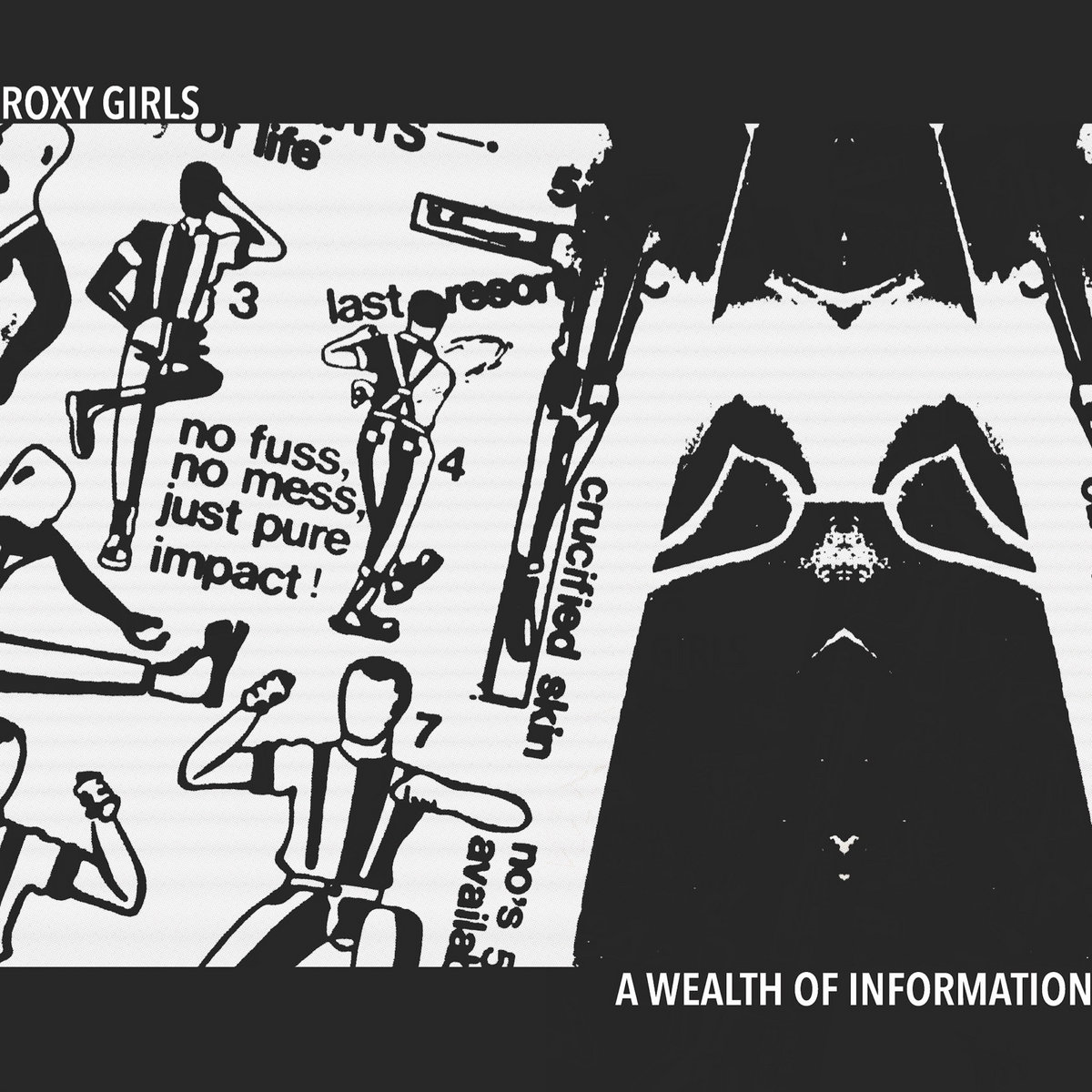
‘A Wealth Of Information’ sees Roxy Girls expand on their unique and idiosyncratic take on the post-punk format. Whilst the band still conveys the same breathless intensity and intricacy in their instrumentation, the new material also finds them developing on their stripped-back sound and experimenting with warmer and more densely structured dynamics. Whereas ‘A Poverty Of Attention’ introduced Roxy Girls high-energy and mordacious lyrical humour to the world, ‘A Wealth Of Information’ exemplifies a more considered insight to the band. Whilst the musicianship is still largely rooted in hook-driven indie-rock territory, the new EP shows a very natural evolution of a sound that has become completely their own.

Speaking about the new EP, Tom Hawick (frontman) says, “A progression in musicianship and technicality, A Wealth Of Information takes A Poverty Of Attention and flips it on its head. Focusing on the tropes of 21st century living and the mundanity that comes with it, these songs focus on themes that have, in one way or another, affected each mortal modern human life.”

Sunderland band, Roxy Girls consists of… boys and kit on his A wealth of information, released by Moshi Moshi Records, a good string of pieces of post-punk obedience, nervous and no frills although not hesitating, within a single essay, to change lanes. Active, in terms of releases, since 2017, the English have been plotting with Dirtier, establishing a punk emergency, recalling Parquet Courts and touching the impact. Commands ,just as jerky and in between, evokes Gang of Four for the raw riffs a tad funky, and demonstrates that here, it seems that we came across a bunch of four guys who do things without derailing, with a youthful spirit that makes them win, again, in impact. You Have To Waste Your Time (if it’s to listen to this skeud, it won’t be a waste of time), based on a similar approach, also unfusses on a short time that makes it all the more efficient. Poor Cow, at first hesitant, then sets up his jolts without softness, his songs allied to the snatch. We’re a taker.

The sketch takes well, it sends itself a draft. Suddenly, she breaks, slightly tempers the ardour of the men. The droid features chatty guitars, one of the advantages of the quartet of Tom  Vocals/Six String, Matthew  Four String, Aidan  Drums/Cowbell, and Isaac  Vox/Six String. By regaling us with their late 70’s impulses, with a rough modernism, the young wolves display real virtues.

http://

All talk, its riffs and dry rhythms, confirms. This is a reliable tape, whose work betrays nothing wrong. It sends continuously, nuanced by remaining in excellence. At Moshi Moshi, it is rare for the product to smell bland. The proof here is assailed, with a noticeable aplomb. Get Up (Seize The Day), carried by the “high energy” mentioned on the Bandcamp of Roxy Girls, completes the work without crumbling. From a block, A Wealth of information reveals tense and vigorous tracks, crossed by a beautiful inspiration.

At the end, and after replay, we will go to explore the previous releases of the clique, while keeping an eye on the products of his laudable label. This one offers indeed, and in frequency, a nice scramble of records that deserve an extended stay in our readers of his indies.

Released June 5th, 2020

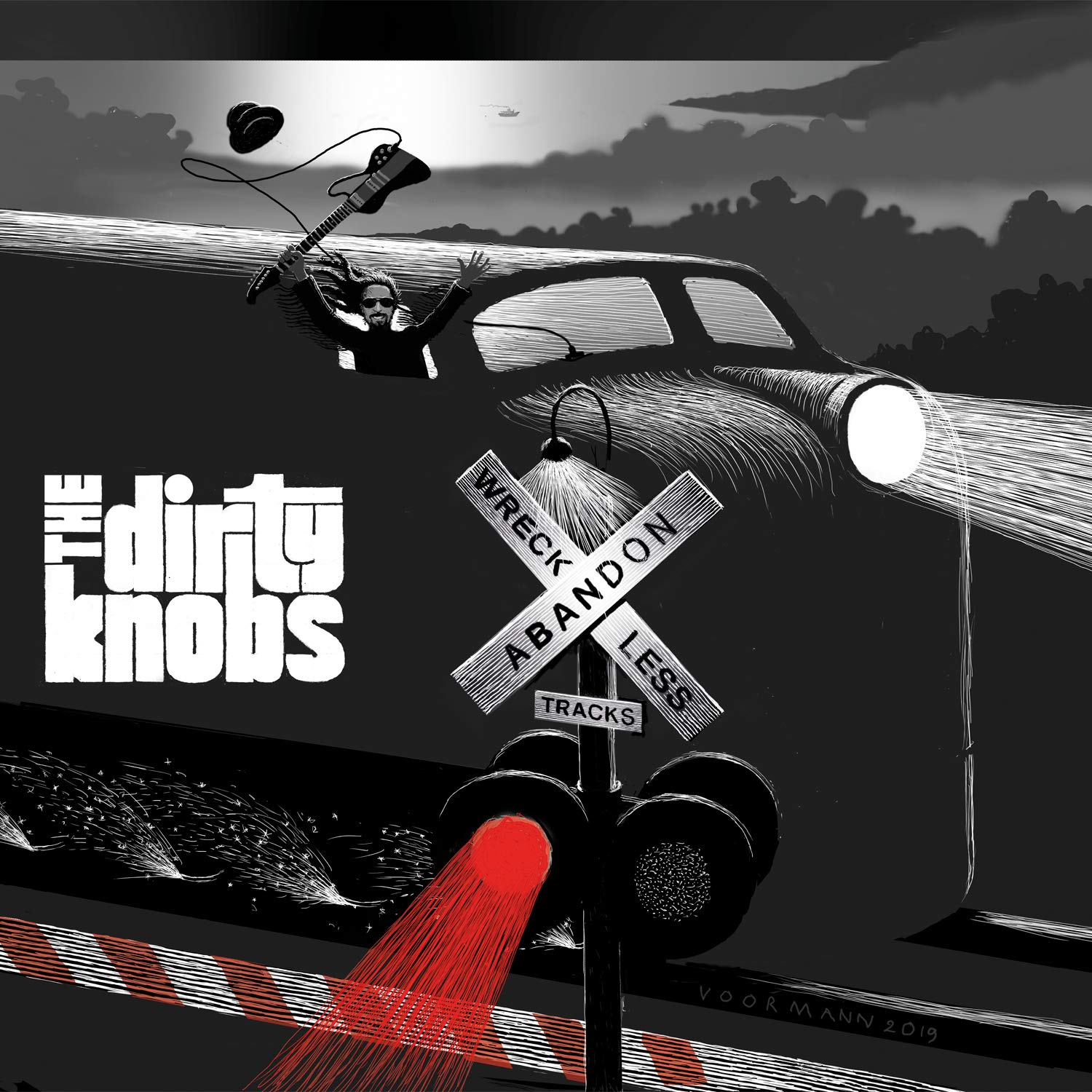
While 2020’s “Wreckless Abandon” is their first official release and occasion to tour, The Dirty Knobs first came together 15 years ago after Mike Campbell met guitarist Jason Sinay at a session and liked the way their guitars sounded together. More than a decade ago, Campbell took the helm of his own band, the Dirty Knobs—an irreverent, spontaneous unit that veered from originals to a grab bag of ’60s and ’70s deep-cut covers and curiosities. But with the Heartbreakers and Fleetwood Mac taking the lion’s share of Campbell’s time, there was rarely time to accomplish much until now.

 Wreckless Abandon was whittled down from a backlog of eclectic originals to a slab of boisterous, rockin’ economy that reflects the rowdiest and most irreverent side of the band.

“Ignorance”, is the new album by the The Weather Station, It begins enigmatically; a hissing hi hat, a stuttering drum beat.  A full minute passes before the entry of Tamara Lindeman’s voice, gentle, conversational, intoning; “I never believed in the robber”.  A jagged music builds, with stabbing strings, saxophone, and several layers of percussion, and the song undulates through five minutes of growing tension, seesawing between just two chords.  Once again, Toronto songwriter Tamara Lindeman has remade what The Weather Station sounds like; once again, she has used the occasion of a new record to create a new sonic landscape, tailor-made to express an emotional idea.  Ignorance, Lindeman’s debut for Mississippi label Fat Possum Records, is sensuous, ravishing, as hi fi a record as Lindeman has ever made, breaking into pure pop at moments, at others a dense wilderness of notes; a deeply rhythmic, deeply painful record that feels more urgent, more clear than her work ever has. 

On the cover, Lindeman lays in the woods, wearing a hand made suit covered in mirrors.  She was struck by the compulsion to build a mirror suit on tour one summer, assembling it in a hotel room in PEI and at a friend’s place in Halifax.  “I used to be an actor, now I’m a performer” she says.  In those roles, she points out, she often finds herself to be the subject of projection, reflecting back the ideas and emotions of others.  On the album, she sings of trying to wear the world as a kind of ill fitting, torn garment, dangerously cold; “it does not keep me warm / I cannot ever seem to fasten it” and of walking the streets in it, so disguised, so exposed.  Photographed by visual artist Jeff Bierk in midday, the cover purposefully calls to mind Renaissance paintings; with rich blacks and deep colour, and an incongruous blue sky glimpsed through the trees.

The title of the album, Ignorance, feels confrontational, calling to mind perhaps wilful ignorance, but Lindeman insists she meant it in a different context.  In 1915 Virginia Woolfe wrote: “the future is dark, which is the best thing a future can be, I think.”  Written amidst the brutal first world war, the darkness of the future connoted for Woolfe a not knowing, which by definition holds a sliver of hope; the possibility for something, somewhere, to change.  In french, the verb ignorer connotes a humble, unashamed not knowing, and it is this ignorance Lindeman refers to here; the blank space at an intersection of hope and despair, a darkness that does not have to be dark. We are so proud and relieved to finally announce that my next album, the fifth Weather Station album, is set for release February 5th. It’s called “Ignorance”. It’s the strangest record I’ve made, and also the most pop record I’ve made. It’s a bit of a monster. It’s available now for pre-order through Fat Possum Records and Next Door Records and also my new web store. Cover art by the one and only Jeff Bierk. Today also marks the release of a new song ‘Tried To Tell You’ with accompanying video. 

Ignorance

What especially takes the biscuit, for us, is the news of Shame’s new album! since we witnessed their debut shake the very foundations of modern post-punk, we’ve been feverishly awaiting the next chapter in the saga of these lovely boys & it looks like they’ve swerved hard out of the path of any career ruts with this newie. their second album expands their sound into more anxious & atmospheric environs, tautly roped together by frontman Charlie Steen’s agitated vocals. what’s cause for even more excitement is the choice of coloured vinyl on offer! you can have any colour you like as long as it’s pink (or standard black). get your pre-orders in extra quick if you fancy grabbing the limited indies exclusive on galaxy pink vinyl with signed insert or the limited indies opaque pink lp.

There are moments on ‘Drunk Tank Pink’ where you almost have to reach for the sleeve to check this is the same band who made 2018’s ‘Songs Of Praise’. Such is the jump Shame have made from the riotous post-punk of their debut to the sprawling adventurism and twitching anxieties laid out here. The South Londoner’s blood and guts spirit, that wink and grin of devious charm, is still present, it’s just that it’s grown into something bigger, something deeper, more ambitious and unflinchingly honest.

To understand this creative leap you need to first understand the journey Shame undertook to get here. From their beginnings as wide-eyed teenagers taken under the decrepit wing of The Fat White Family to becoming the most celebrated new band in Britain and their subsequent crash back down to earth. Come in, and close the door behind you…It’s no exaggeration to say the members of Shame have spent their entire adult life on the road. A wild-eyed tour of duty marked by glorious music and damaged psyches, when it eventually careered to a stop the band were parachuted back into home territory. Shell shocked, dislocated and grasping for some semblance of self.

Shame’s previous bases – the notorious den of iniquity that was The Queens Head pub, the musical petri dish of Brixton’s Windmill – were either gentrified into obsolescence or no longer viable as an HQ. Sometimes home just isn’t home anymore. Or at least it’s not the way you remember it.

To cope, guitarist Sean Coyle-Smith barricaded himself in his bedroom. Barely leaving the house and instead obsessively deconstructing his very approach to playing and making music, he picked apart the threads of the music he was devouring (Talking Heads, Nigerian High Life, the dry funk of ESG, Talk Talk…) and created work infused with panic and crackling intensity.

“For this album I was so bored of playing guitar,” he recalls, “the thought of even playing it was mind-numbing. So I started to write and experiment in all these alternative tunings and not write or play in a conventional ‘rock’ way.”

Frontman Charlie Steen, meanwhile, took a different tac and attempted to party his way out of psychosis. “When you’re exposed to all of that for the first time you think you’re fucking indestructible,” he notes. “After a few years you reach a point where you realise everyone need a bath and a good night’s sleep sometimes.” An intense bout of waking fever-dreams convinced Steen that self medicating his demons wasn’t a very healthy plan of action and it was probably time to stop and take a look inward. Shame had always been about exposure – be that the rogues’ gallery of characters they drew inspiration from or the cornucopia of joy to be had from simply being in a band – this time, however, they were exposed to themselves.

“You become very aware of yourself and when all of the music stops, you’re left with the silence,” reflects Steen. “And that silence is a lot of what this record is about.”

Pass along the plant-strewn corridor leading into Steen and Coyle-Smith’s shared living space in South East London and hidden away to your left is a dank, brown curtain. Pull it back and open the door… welcome to the womb.

More of a cupboard than a room (it used to house the washing machine until they lugged it outside and put a bed in) and painted floor to ceiling in the specific shade of pink used to calm down drunk tank inmates, the womb is where Steen cocooned himself away to reflect and write. Scraping and shaking lyrics out of himself that – through the prism of his own surrealistic dreams – addressed the psychological toll life in the band had taken on him. The disintegration of his relationship, the loss of a sense of self and the growing identity crisis both the band and an entire generation were feeling.

“The common theme when I was catching up with my mates was this identity crisis everyone was having,” reflects Steen. “No one knows what the fuck is going on.”

“It didn’t matter that we’d just come back off tour thinking, ‘How do we deal with reality?!?’” agrees Coyle-Smith. “I had mates that were working in a pub and they were also like, ‘How do I deal with reality?!?’ Everyone was going through it.”

The genius of ‘Drunk Tank Pink’ is how these lyrical themes dovetail with the music. Opener “Alphabet” dissects the premise of performance over a siren call of nervous, jerking guitars, its chorus thrown out like a beer bottle across a mosh pit. “Nigel Hitter”, meanwhile, turns the mundanity of routine into something spectacular via a disjointed jigsaw of syncopated rhythms and broken wristed punk funk.

Bassist Josh Finerty had begun to record the band’s divergent ideas at home in South London which were then fleshed out in a writing trip in the Scottish highlands with electronic artist Makeness, before sessions in La Frette studios in France with Arctic Monkeys producer James Ford. The result is an enormous expansion of Shame’s sonic arsenal.

Songs spin off and lurch into unexpected directions throughout here, be it “March Day’s” escalating aural panic attack or the shapeshifting darkness of “Snow Day”. There’s a Berlin era Bowie beauty to the lovelorn “Human For A Minute” while closer “Station Wagon” weaves from a downbeat mooch into a souring, soul-lifting climax in which Steen elevates himself beyond the clouds and into the heavens. Or at least that’s what it sounds like.

“No that’s about Elton John,” laughs Steen. “I read somewhere about him being so cracked out that he told his PA to move a cloud that was blocking the sun. I just thought that was the greatest, Shakespearean expression of ego. Humour is a massive part of this band. We’re not some French existential act where everything is actually sad. There’s light in it as well.” From the womb to the clouds (sort of), Shame are currently very much in the pink

“Water in the Well” taken from Shame’s new album ‘Drunk Tank Pink’, out 15th January 2021 on Dead Oceans Records