Phoebe Bridgers has shared a new music video for her song “Savior Complex” directed by Fleabag creator Phoebe Waller-Bridge and starring Normal People actor Paul Mescal. The video came about after the two Phoebes connected over email while quarantined; you can watch it at Facebook.
“Savior Complex” appears on Bridgers’ latest studio album “Punisher”. The singer-songwriter recently issued a companion release, the Copycat Killer EP, as well as a cover of Goo Goo Dolls’ “Iris” with Maggie Rogers. Last year, Phoebe Waller-Bridge connected with actor Olivia Colman to record a cover of Portishead’s classic “Glory Box.” She comments on the Things That Influenced Her New Album, “Punisher,” in which the singer discussed her admiration of Waller-Bridge. “Dirtbag dudes have Larry David and I have Phoebe Waller-Bridge,” she said. “She strikes a fucking chord in me.”
Phoebe Bridgers remotely appeared on The Tonight Show for a live rendition of her “Punisher” track.
Phoebe Bridgers appeared on The Tonight Show Starring Jimmy Fallon yesterday (December 2nd) to perform her Punisher and Copycat Killer song “Savior Complex.” Bridgers was accompanied by a self-playing piano. At one point, she shook hands with an adorable dog.
Bridgers sang in a room filled with Christmas decorations . Earlier this week, Phoebe Bridgers had shared a music video for “Savior Complex.” It was directed by Fleabag creator Phoebe Waller-Bridge and starred Paul Mescal of Normal People fame.
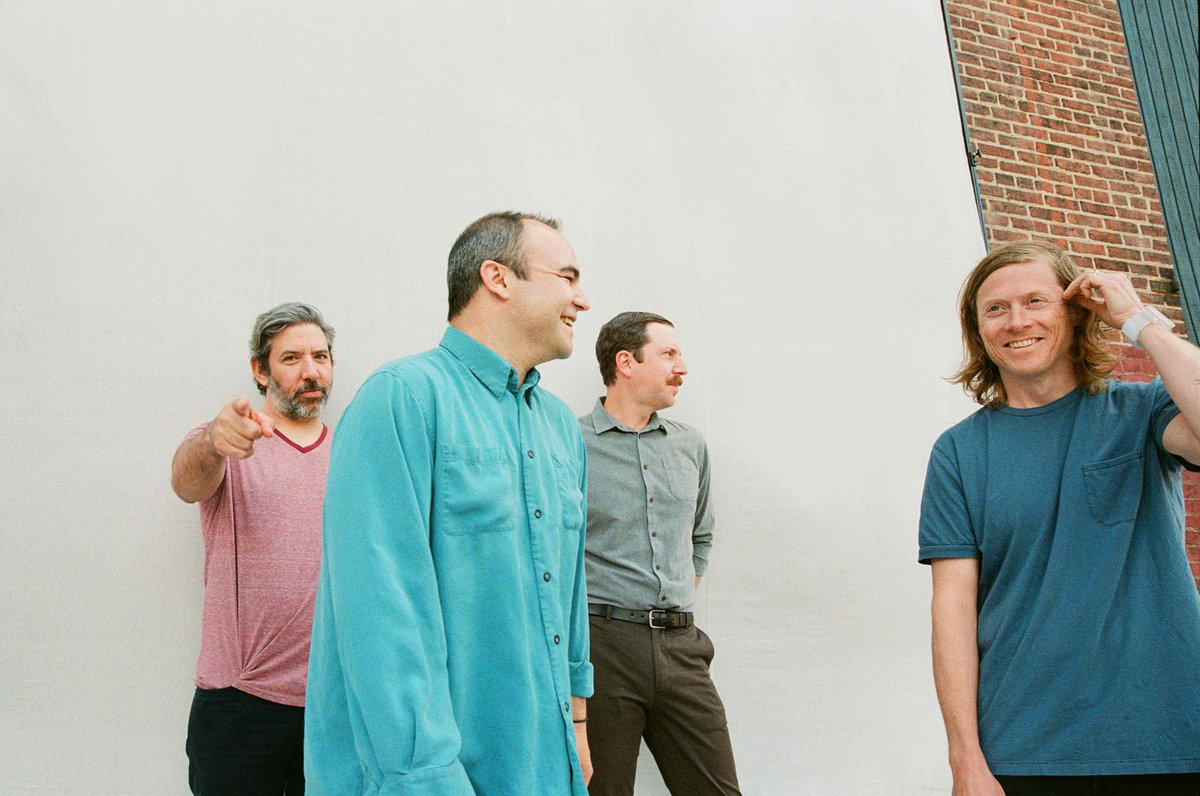
Future Islands’ romantic synth sound scales new heights with “On the Water”, the Baltimore trio’s most ambitious and fully realized statement yet. Built around a song cycle exploring love, loss, and memory, their latest album finds the band continuing to deliver pounding rhythms, swelling melodies, and undeniable hooks – but finding new ways to probe inner space and tug at hearts.
Convening in March 2011 in Elizabeth City, NC’s historic, waterfront Andrew S. Sanders House, vocalist Samuel T. Herring, bassist William Cashion, and keyboardist Gerrit Welmers lived together in a space that served as both studio and sleeping quarters. The band used this tranquil retreat to refine their most reflective and mature batch of songs to date, adding new material in the process.
What emerged is a lush yet visceral album about two parallel journeys–one physical and one psychological. On the Water’s narrator offers enough detail that their story feels personal, yet open enough that any listener can inhabit each twist and emotional pang as their own.
Travelling on foot, we seek something – an exorcism, an epiphany, an ending. Memories wash across us as in life: non-linear, linked by emotional resonance rather than conventional chronology. And so, the pain of letting go channeled by “The Great Fire” collides with a moment’s fleeting serenity in the Eno-esque “Open”; the triumphant rallying cry “Give Us the Wind” despite its confident declaration of individual strength, remains a mile away from final chapter “Tybee Island” It is there the song cycle ends, and what is discovered in “Tybee Island” will be as different as the lives lived by each person who finds their way to this album.
On the Water may unearth aural memories as well. The mind may flash upon our first encounters with New Order’s “Ceremony,” David Bowie’s “Heroes,” or The Cure’s Disintegration, memories which, are continually reborn and re-imagined in the context of the here and now. And as the song-cycle’s narrator comes to terms with his own memories, his singular journey collapses into the collective experience of album-closer “Grease.” It is here that the “I” of the nine previous songs collapses into the “we” of Future Islands, now singing the literal journey of the people who came together by the ocean to deliver these songs into our ears. Far from just a narrative trope, the ocean played an integral role in On the Water’s creation. The bulk of the album was recorded with waves pounding sand mere feet away. The album opens and closes with field recordings made by the band on a nearby dock, and one pivotal track, “Tybee Island” began with vocals recorded on the beach (subsequently fleshed out in the studio with additional instrumentation).
The ocean inhabits every note of these songs. On the Water is an addictive ride that demands repeat listens, eagerly awaiting the test of time. To produce these results, Future Islands fleshed out its sound with the additions of cello, violin, marimba, and field recordings. As with their 2010 breakthrough album In Evening Air, On the Water was produced by frequent collaborator Chester Endersby Gwazda, perhaps best known as producer of Dan Deacon’s Bromst. Noted guests include Wye Oak’s Jenn Wasner, who provides vocals on “The Great Fire,” and Double Dagger’s Denny Bowen on live drums and additional percussion.
For all its undeniable weight, On the Water is not a sullen concept album. Every track on the record works both as a contribution to the whole and as a stand-alone pleasure, evident in the insistent throbs, addictive melodies, and stirring vocals of tracks like “Close to None” “Balance” and first single “Before the Bridge”
Merge Records is an independent record label based in Durham, North Carolina. It was founded in 1989 by Laura Ballance and Mac McCaughan. It began as a way to release music from their band Superchunk and music created by friends, and has expanded to include artists from around the world and records reaching the top of the Billboard music charts.
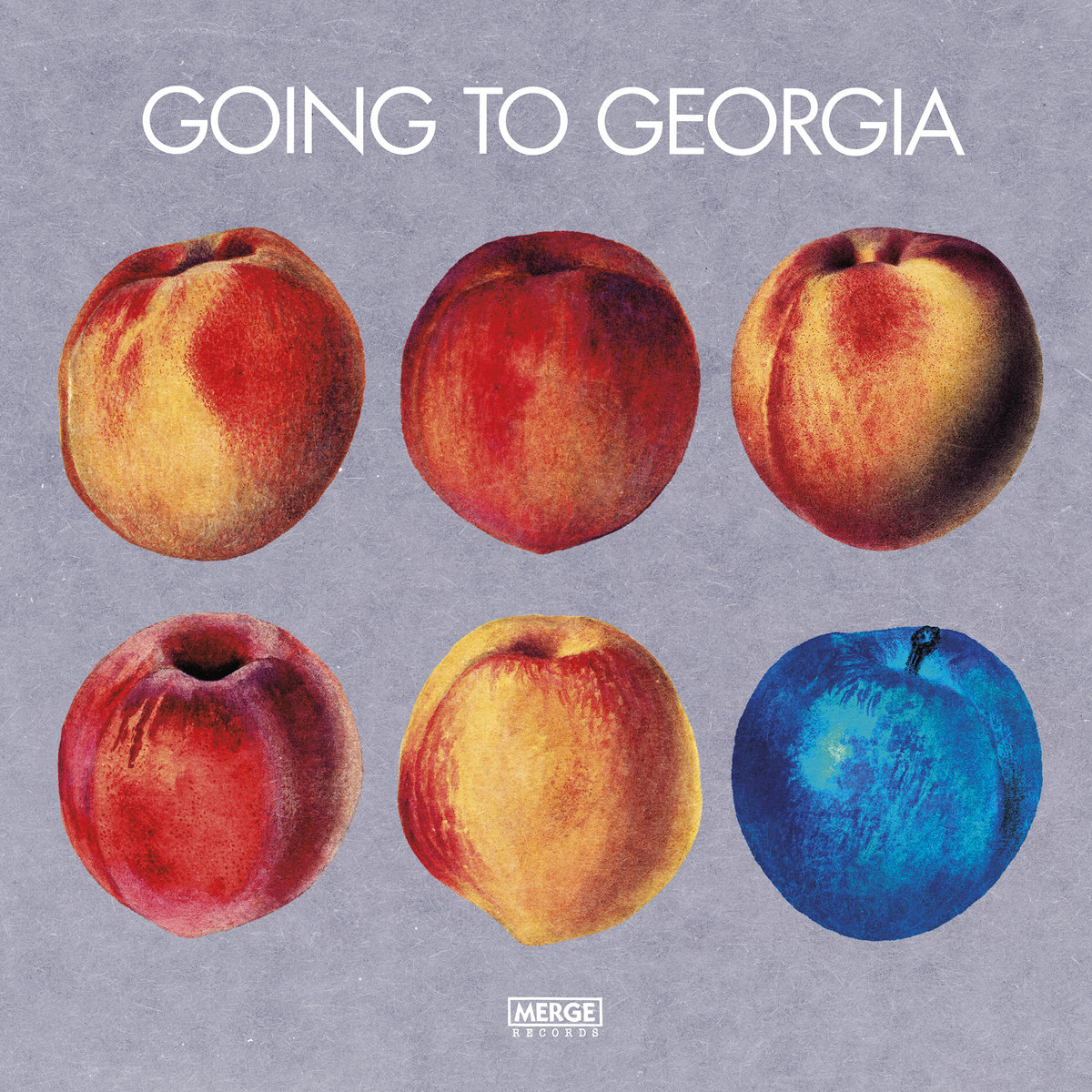
We live in North Carolina, where a racist Republican legislature has worked for a generation to undermine democracy through unprecedented voter suppression. Our neighbours in Georgia have successfully fought back, through the efforts of Fair Fight and other organizations. The voters who turned Georgia blue in November can now elect Raphael Warnock and Jon Ossoff, take back power in the Senate, and make true progress possible in this country.
The Merge artists on this comp came together quickly, recording in various quarantine situations, to pay tribute to their favourite artists from Georgia, or maybe just record their favourite songs with “Georgia” in the title, and to support those working hard in Georgia to make sure everyone’s voice is heard.
There’s a lot of effective rock music on Bitch Falcon’s long-awaited debut album “Staring At Clocks” moving between atmospheric guitar pedal-assisted sounds and ripping low-end. ‘Turned To Gold’ is my favourite previously-unheard song from the Dublin band’s record. Bitch Falcon; is a name you won’t forget and a band who won’t let you forget them. This trio from the vibrant, much-hyped music scene of Dublin was formed by front-woman Lizzie Fitzpatrick with her friends in a small kitchen in the city in 2014. Since these freshman days, the line-up has galvanised around the rhythm section of Barry O’Sullivan on Bass and Nigel Kenny on Drums. This is a band that is growing in stature with every release and I want to be part of it. The song writing is very interesting. Very nice bass sound!
BITCH FALCON are a name you will not forget, and a band who will not let you forget them. The acclaimed dream-grunge three-piece have announced their debut LP, “Staring At Clocks”, to be released 6th November via Small Pond Records
Following up on her highly acclaimed Trinity Lane LP (2017), singer-songwriter Lilly Hiatt drops a vivid new video for her single “Candy Lunch”. Directed and edited by Joshua Britt and Neilson Hubbard, the film uses its colour palette to carry the storyteller’s reflections. Although stunning in its brightness, for the most part, the camera’s focus remains on the raconteur. Which in turn provides the kind of intimacy the deeply personal lyrics deserve.
“Candy Lunch” is from the songwriter’s 2020 album, ‘Walking Proof’, out now via New West Records. And according to a label statement, the set is produced by one time Cage the Elephant guitarist Lincoln Parish and features a first-time collaboration with Hiatt’s father, the legendary songwriter-performer John Hiatt. As well as contributions by friends Amanda Shires (The Highwomen) and the famed Aaron Lee Tasjan.
Check out the new video and make sure to follow the links for album updates and details. And spend some time feasting your eyes on the beautiful psychedelic artwork by Kim Radford. Written by Lilly Hiatt
Birmingham. 4th February 2017. The End. After nearly fifty years it was the final show of Black Sabbath’s Farewell Tour back where it all began in their home city of Birmingham, the industrial heart of England. There could be no more appropriate place for the Godfathers of Heavy Metal to take their last bow. Geezer Butler, Tony Iommi and Ozzy Osbourne delivered a set that focused on Black Sabbath’s classic seventies albums, the albums that defined a genre and inspired future generations. It was an extraordinary, emotional night for both the band and the fans and one that will never be forgotten. In addition to the live concert, both the film and album feature ‘The Angelic Sessions’ – five songs recorded in the days following the band’s final show. The tracks will mark the band’s final studio recordings.
THE FINAL SHOW FROM THE GREATEST METAL BAND OF ALL TIME On 4th February, 2017, Black Sabbath stormed the stage in their hometown of Birmingham for their final triumphant gig. This monumental show brought down the curtain on a career that spanned almost half a century, and is featured here in its entirety.
With a hit packed set list that includes Iron Man, Paranoid, War Pigs and many more, the band delivered the most emotionally charged show in their history. The End captures a once-in-a-career performance, an essential snapshot of musical history and a fitting farewell to true innovators and original heavy metal icons, Black Sabbath.
The three 180gm LPs are housed in a gatefold sleeve.
Margo Price’s take on classic sounds is at once familiar and daring, an infectious blend of Nashville country, Memphis soul, and Texas twang. The release is a beautiful summary of Margo’s triumphant three-night run at The Ryman Auditorium in May 2018, and features guest appearances from Emmylou Harris, Jack White, and Sturgill Simpson.
A note from Margo: “Two years ago today I headlined the Ryman and it was something I had dreamed of since I was a little girl. We did three nights in a row and recorded all of them. I am so excited that we are releasing it – the recordings are rough and the performances are raw, but there was a magic there and the band was on fire. We played unreleased songs, alternative album versions and lots of special guests. I hope it moves you.”
Quivers make cathartic guitar pop that jangles and shimmers somewhere between 1980s Australia and 1990s America. Championing our favourite up-and-coming artists has always been the foundation of Turntable Kitchen. Over the course of more than 100 releases, we’ve released debut wax from bands like MØ, Arlo Parks, No Vacation, Gallant, Tei Shi, Cathedrals, The Record Company, Crumb, Tender, and so so many more incredible rising bands.
Rising Melbourne-based Quivers captured the attention late last year with a pair of incredibly catchy, captivating singles: “You’re Not Always On My Mind” and “When It Breaks.” Fully formed and with a knack for easy, upbeat song writing, we immediately knew they were something special. In fact, we’ve been “all in” on them since that first listen. Back in January we were honoured to release their first ever vinyl single (sold out) and now we’re proud to share their contribution to our SOUNDS DELICIOUS series.
They selected R.E.M.’s “Out of Time” for their contribution to the series, flipping the script on tracks like “Shiny Happy People” (a sprawling psychedelic vibe here); shedding off some of the jangle to reimagine classics like “Losing My Religion” and transforming the cult classic “Country Feedback” into a gorgeous and stripped down piano ballad.
Quivers’ version of “Out of Time” is only available by subscribing to the SOUNDS DELICIOUS vinyl record club.
Quivers got to choose a ‘classic’ to cover for Turntable Kitchen’s Sounds Delicious vinyl series and selected R.E.M.’s Out of Time (1991) Album. We hope you like our re-imagining of the record and we hope Mike Mills doesn’t sue us (I had a dream he would, twice).
All tracks written by Bill Berry, Peter Buck, Mike Mills and Michael Stipe. Turntable Kitchen has sorted the relevant license. Recorded over 4 days at Second World Studios Rehearsal Space in Fairfield with Matthew Redlich. Mastered for vinyl by John Ruberto.
Quivers are: Sam Nicholson – sings, guitars Bella Quinlan – sings, bass, guitars Holly Thomas – sings, drums Michael Panton – sings, guitars.
The trippy story of how Jimi Hendrix ended up playing a concert in front of a few hundred spectators at a windy cow farm next to a Hawaiian volcano features a cast of characters that could come from a Thomas Pynchon novel. There’s Chuck Wein, aka The Wizard, a Leary-lite Harvard graduate who dated Edie Sedgwick and made films with Andy Warhol before dropping into the hippie world. There’s Michael Jeffery, Hendrix’s manager, a shady operator with a line in tall stories about his career in the British Army. And there’s Hendrix, who found himself committed to making a soundtrack for Wein and Jeffery’s Hawaii-set psychedelic sci-fi movie, “Rainbow Bridge”, and somehow ended up playing one of the last shows – performing with the Cox-Mitchell axis – on the tiny island of Maui.
Rainbow Bridge started as a celebration of Hawaii’s surfing subculture, but soon mutated into an experimental, unscripted Warhol-esque film inspired by hippie life, Wein’s impenetrable personal philosophy and Jack Nicholson’s stoned campfire monologue from Easy Rider. It’s the success of the latter that seemed to appeal to Jeffery, who thought a Hendrix score would turn a counterculture flick into a serious commercial offering. The promise of that soundtrack persuaded Warners to fund the film, and Hendrix was on board as he needed the money to complete Electric Lady Studio.
Hendrix made a cameo in the film as an assassin but his biggest contribution was to perform an outdoor concert that was filmed. The gig was as unconventional as the film. “It was a colour/vibratory sound experience,” says Rainbow Bridge art director Melinda Merryweather. “The electricity went off, people swear they saw a spaceship go by, somebody fell of a tower.” The audience were asked to sit in astrological order and delivered a mass Buddhist chant as Hendrix took the stage. A gale was blowing and the small audience sat on the floor as if they were at a village fête. It must have been one of the most unusual set-ups Hendrix had ever faced but he seemed to thrive in the atmosphere – Cox described it as one of the best the trio did.
The set included new songs like “Dolly Dagger”, “Hey Baby (New Rising Sun)”, “Ezy Rider” and “Freedom” alongside established classics. Seventeen minutes of scratchy footage – with drums overdubbed by Mitchell – appeared on the posthumous Rainbow Bridge film, eventually released along with a Hendrix LP of the same name that had nothing recorded in Maui. Much more restored footage features in this fun documentary, while the forthcoming “Live In Maui” triple contains all that was salvageable from the two 50-minute sets.
Directed by John McDermott, Music, Money, Madness – Jimi Hendrix Experience Live In Maui attempts to unpick this wild tale with the help of a tremendous batch of interviewees. Billy Cox and Eddie Kramer are on hand from camp Hendrix, there’s cast and crew from Rainbow Bridge, a few still bewildered Warner Bros execs plus archive interviews with Mitch Mitchell and Chuck Wein.
Experience Hendrix and Legacy Recordings have a brand-new collection that celebrates The Jimi Hendrix Experience’s near-mythic performances on Maui, Hawaii in 1970. “Live In Maui” brings together audio and video with a new feature-length documentary called Music, Money, Madness: Jimi Hendrix In Maui. The collection will be available in 2-CD/Blu-ray and 3-LP/Blu-ray configurations, all due on November 20th. Director John McDermott’s new documentary film chronicles the Jimi Hendrix Experience’s visit to Maui and the story of the Rainbow Bridge film by incorporating period footage with new interviews with Chuck Wein, Billy Cox, Eddie Kramer, and others key figures. It’s presented in both editions of Experience Hendrix/Legacy’s release on Blu-ray, and the discs will also feature all of the existing 16mm colour footage from the two afternoon sets captured on July 30th, 1970 mixed in stereo and 5.1 surround. The accompanying 2-CD set features Hendrix, Billy Cox, and Mitch Mitchell’s restored Maui sets, newly mixed by Eddie Kramer and mastered by Bernie Grundman.
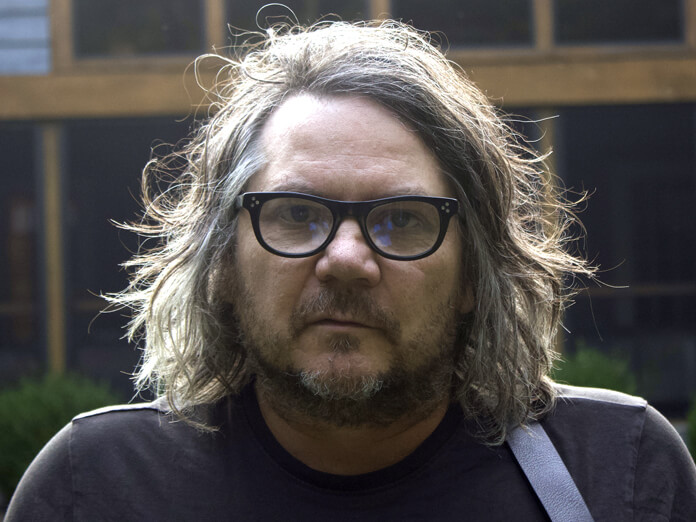
During the enforced idleness of the early months of the Covid-19 pandemic, many people hatched ambitious plans: reading unreadable books, mastering a language, baking virtuous sourdough. For Jeff Tweedy, the global crisis truncated a Wilco tour, and he found himself at home with his family. His son Spencer lives at home anyway, and his other son, Sammy, returned from New York to do remote schooling.
Tweedy had tuned in to the discussion about creativity during times of quarantine, and had learned (the arguable fact) that Shakespeare wrote King Lear while sheltering from the plague. What to do? Well, in times of stress, as in all times, Tweedy’s habit is to visit his Chicago studio, The Loft. There, he planned to write a country album named after Shakespeare’s greatest tragedy, producing a song a day.
“Love Is The King” is not that record. Tantalisingly, Tweedy suggests that a number of straightforward country-style songs were recorded before his own instincts started to kick in. True, if Shakespeare had gone countrypolitan, he might have taken his sense of jeopardy, his troubled masculinity, his interest in tempests as an emotional metaphor and created something similar. “Ripeness is all,” says Edgar in King Lear. “Oh, tomatoes right off the vine,” croons Tweedy in “Guess Again”, “we used to eat them like that all the time.”
This album marries Tweedy’s mature emotional outlook (love is all, and is a dream worth dreaming) to the workaday manners of Uncle Tupelo or the Woody Guthrie project, Mermaid Avenue. There’s a home video lurking on YouTube of Tweedy sitting on his sofa, strumming his way through Talking Heads’ “Heaven”. The sound of Love Is The King is what you’d expect from the bar band in that song: briskly functional, with an enduring tension between Tweedy’s balmy vocals and the electric guitar, which arrives in these songs like a deluge.
“I always think that the electric guitar player, who’s me, is the guy who’s having the toughest time dealing with everything,” Tweedy tells says. “He’s a little bit frayed. He showed up for a different type of session, his nerves are getting the better of him.”
Occasionally, broader influences seep through. The playful “Gwendolyn” has the wayward electricity of the Faces, and a heroine who sounds the sort of paramour the young Rod Stewart might have conquered and regretted. For Tweedy it acknowledges his habit of finding himself several steps behind a woman, emotionally. The title track has a languid rhythm that is almost obliterated by the guitar, and a lyric that marries the Lear-like outlook of the narrator (“At the edge/Of as bad as it gets”), to flashes of current affairs; tanks in the streets and violence.
That mood spills into “Opaline”, a honky-tonk lament that playfully blurs images of death, paranoia and dread. The inspiration for the song is more prosaic. The lyric is addressed to a golden orb-weaver spider that lived in Tweedy’s backyard through spring and summer before abruptly disappearing, presumed dead. The song’s most troubling image, of a hearse stuck at a toll gate, actually happened. Tweedy saw the funeral car, parked in its own metaphor, when escaping Chicago via the skyway to Michigan. “I kept looking in my rear-view mirror, thinking, ‘Holy shit, that’s one of the worst things I can think of,’” he says with a laugh. “A guy driving a hearse with no change for a toll.”
On paper, it sounds tormented. In reality, it doesn’t. As a singer, Tweedy patrols the trunk road between regret and resilience. Straight-legged sincerity, when he chooses to use it, is a good look: see the thankful love song “Even I Can See”. Tweedy is probably more instinctively comfortable undermining himself, as on the countrified “Natural Disaster”. That song’s image of “a lightning bolt punch a bird right out of the sky” may be a nod to the sudden death of a flamingo in Charles Portis’s book The Dog Of The South. On a further literary note, Tweedy’s pal, author George Saunders, provides a couple of lines to the sprightly “A Robin Or A Wren”, a song that manages to roll together romantic devotion, love of life, fear of death, and a playful suggestion of reincarnation. Saunders’ lines are about “the end of the end of this beautiful dream”.
Tweedy, with his unerring ability to find himself while getting lost, ushers in a conclusion that is happy and sad, with hope kept aflame by his faith in the power of song. No matter what he does with Wilco or solo, simply one of the best songwriters alive. His lyrics are poetry. His vocal delivery invites you in and is so vulnerable. I like this a bit better than Warm, which was also brilliant. This is just another in a string of albums from artists over the pandemic that have blown me away this year.
Released October 23rd, 2020
All songs written by Jeff Tweedy except “A Robin Or A Wren” written by Jeff Tweedy and George Saunders Performed by Jeff Tweedy, Spencer Tweedy, and Sammy Tweedy,










 The Fat Angel Sings