Posts Tagged ‘The Stooges’

Rhino isn’t holding back this Record Store Day, planning more than 30 special vinyl releases for Saturday, April 21st, to be sold at all participating retailers. Interestingly, several releases are companion pieces to recent general reissues, offering bonus content from different re-releases and box sets as standalone vinyl. Several singles and oddities are in the mix, from a 12″ of The Notorious B.I.G.’s “Juicy,” to a rare “short version” of Prince’s 1999, featuring only seven tracks from the album on one LP. Picture discs from Yes, Whitesnake, and Cheech & Chong are part of the line-up, and outtakes will be used to create alternate versions of Van Morrison’s Moondance and Fleetwood Mac’s Tango In The Night.

Most interesting for collectors are not one but two reproductions of rare Madonna vinyl releases outside the U.S., the vinyl debut of a promo collection by British hip-hop artist The Streets, unreleased mid-’80s masters from Miles Davis and a pair of vinyl sets covering new and old remixes by The Cure.

Among these titles, announced on Tuesday, now stand alongside previously announced RSD exclusives for Led Zeppelin (their first) and David Bowie. More RSD info is at the organization’s official site, while breakdowns of all Rhino’s new titles are below.

Air, Sexy Boy (12″ Picture Disc) (Parlophone)
Celebrate the 20th anniversary of the French synth duo’s debut, Moon Safari, with this shaped picture disc of the band’s first single. It features art from the original 12″ sleeve. (6000 copies)

Cheech & ChongUp In Smoke (40th Anniversary Picture Disc) (Rhino)
This marijuana leaf-shaped disc features the title track to the comedy duo’s first film (the soundtrack of which is being reissued by Rhino the same week) plus an unreleased version with an extra Spanish verse from Cheech Marin as well as a scratch ‘n’ sniff sticker! (4500 copies)

John Coltrane, My Favorite Things, Part I & II (Atlantic)
This U.S.-only single reissue was first included in a Coltrane mono box set. (1000 copies)

The Cure, Mixed Up and Torn Down: Mixed Up Extras 2018 (Elektra)
Long desired by fans of The Cure, the group’s 1990 remix album will be released as a 2LP picture disc set alongside another double picture disc featuring 16 new remixes of Cure tracks by frontman Robert Smith. The band is celebrating their 40th anniversary this year, so hopefully this is the first in a wave of commemorative titles! (7750 copies each)

Miles Davis, Rubberband EP (Warner Bros.)
This four-track 12″ disc features the title song to an unreleased 1985 album, intended to be Miles’ first for Warner Bros. Records after a lengthy tenure on Columbia. It features a new remix featuring Ledisi, a completed version of the track finished by Randy Hall and Zane Giles, and cover art painted by Davis. (6000 copies)

The Doors, Live At The Matrix Part 2: Let’s Feed Ice Cream To The Rats, San Francisco, CA – March 7 & 10, 1967 (Elektra)
This 180-gram, individually numbered sequel to last year’s RSD release features a set from the band at San Francisco’s The Matrix, which was last heard on a 50th anniversary edition of The Doors’ self-titled debut. (13,000 copies)

Fleetwood Mac, The Alternate Tango In The Night (Warner Bros.)
As is becoming tradition for Record Store Day, this album brings together demos and outtakes from last year’s box set version of Fleetwood Mac’s hit 1987 album. (8500 copies)

The Grateful Dead, Fillmore West, San Francisco, CA 2/27/69 (Grateful Dead/Rhino)
A 4LP box set edition (with fourth side etching) of a beloved Dead show, which has been out of print since its release in The Complete Fillmore West 1969 CD box set in 2005. (9000 copies)

Hawkwind, Dark Matter: The Alternative Liberty/U.A. Years 1970-1974 (Parlophone)
A 2LP collection in a gatefold jacket featuring rare tracks from the 2011 compilation Parallel Universe. (5000 copies)

Jethro Tull, Moths (Parlophone)
This six-track 10″ EP is tied to the 40th anniversary of Heavy Horses, recently reissued by Rhino. (6500 copies)

Madonna, The First Album and You Can Dance (Sire)
Two exciting Madonna titles are due for Record Store Day: first, a picture disc version of Madonna’s 1983 debut, reissued in 1985 after the success of Like a Virgin. This set replicates the original Japanese packaging, down to the sticker. Then there’s a red vinyl reissue of her 1987 remix album, featuring the poster and obi from the European vinyl release. (14,000 copies and 12,000 copies)

Van Morrison, The Alternative Moondance (Warner Bros.)
Constructed from alternates and outtakes from the deluxe edition of Van’s 1970 album, this LP features unreleased mixes of “And It Stoned Me” and “Crazy Love.” (10,000 copies)

The Notorious B.I.G., Juicy 12″ (Bad Boy)
A clear/black marble swirl vinyl reissue of Biggie’s defining single. (9000 copies)

Prince, 1999 (Warner Bros.)
A quirky reissue of an ex-U.S. single-LP, seven-track cutdown of Prince’s breakthrough 1982 double album, with a different cover, even. (13,000 copies)

Ramones, Sundragon Sessions (Sire)
These early mixes of tracks from Leave Home were first heard in the 40th anniversary box set of the album and appear on vinyl for the first time. (10,000 copies)

Lou Reed, Animal Serenade (Sire)
A 3LP edition of Lou’s 2003 live album, its first appearance on vinyl. (7500 copies)

The Stooges, The Stooges (Detroit Edition) (Elektra)
This 2LP set was first made available only at Third Man Record shops (it was compiled by the label’s own Ben Blackwell), but now this collection, featuring the band’s 1969 debut album and handpicked rarities from Rhino’s 2010 deluxe edition, is available at all indie stores. (8000 copies)

Various Artists, Twin Peaks: Music From The Limited Event Series and Twin Peaks: Limited Event Series Soundtrack (Rhino)
These two picture discs feature soundtrack and score, respectively, from the acclaimed 2017 revival of David Lynch’s television series, including Roadhouse band performances and original compositions by Angelo Badadamenti. (11,000 copies and 10,000 copies)

Whitesnake, 1987 (30th Anniversary Edition) (Parlophone)
A picture disc version of the rock group’s recently reissued hit LP, featuring “Here I Go Again.” (6500 copies)

Wilco, Live At The Troubadour 11/12/96 (Reprise)
The premiere 2LP edition of a live set included in the deluxe edition of the alt-country act’s Being There, reissued last year. (8500 copies)

Yes (Atlantic)
The legendary prog-rock’s ninth album, released in 1978, gets a picture disc release. (5400 copies)
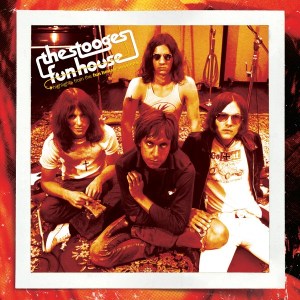
Back in 1999, Rhino Handmade had an early triumph with the release of the 7-CD box set The Fun House Sessions, chronicling the making of the album from the quintessential proto-punk bad boys, The Stooges.  Now Run Out Groove has boiled down that set into four sides of vinyl and fourteen choice selections as “Highlights from The Fun House Sessions”.  Recorded with producer Don Gallucci of The Kingsmen at Elektra Sound Recorders in Los Angeles back in May 1970 as The Stooges’ sophomore effort, Fun House made “Louie, Louie” look positively tame, and was commercially unsuccessful upon its initial release.  But its influence as a key building block in the punk revolution can’t go unnoticed, as it quickly developed a cult following among both critics and fans.  Blending fast and furious hard rock with improvisation and even a jazz element thanks to Steve Mackay’s saxophone and the loose feel, Fun House showed Iggy Pop, Dave Alexander, Ron Asheton, Scott Asheton, and Mackay at their most primal yet still pushing the musical envelope forward.

The first two sides of Highlights are sequenced to follow the track order of the original LP, with the third and fourth sides offering additional alternate takes, fly-on-the-wall studio chatter, and a 17-minute jam session/early version of the closing “L.A. Blues” entitled “Freak.”  There are plenty of ferocious nuggets here that are illuminating to fans of the original album but accessible enough to be enjoyed on their own.  Take 6 (Reel # 6) of “Down on the Street,” the lone A-side drawn from Fun House in its final version, spellbindingly pulsates.  The taut garage band performance on “Loose” (Take 16, Reel 4) is almost-but-not-quite-commercial, no small accomplishment for The Stooges.  Like Alexander’s throbbing bass on “Dirt” (Take 5, Reel 11) or Ron Asheton’s screaming guitar on “1970” (Take 2, Reel 1), Iggy Pop’s throaty wail on “See That Cat (T.V. Eye)” (Reel 2) explodes with no compromises.  Desperation drips from his raspy delivery on “Lost in the Future” (Take 3, Reel 3).  Outtake “Slide (Slidin’ the Blues)” offers something a bit different, with Mackay’s tenor sax wending through the bluesy drawl.  Everything about Fun House is even more primal and raw in these alternate versions – musically unflinching, brutal, and immediate.

Designed by Peto Gerth, Highlights from The Fun House Sessions boasts a glossy gatefold with new liner notes.  In a fine touch, the two multi-colored swirl 180-gram LPs, stored in protective sleeves, have vintage Elektra butterfly replica labels.  With The Complete Fun House Sessions long out-of-print in CD format, this vinyl collection of screeching, raw power is a welcome arrival.

Special Edition

LIMITED TO A QUANTITY OF 400 NUMBERED COPIES.

Third Man Books is pleased to announce our SIGNED SPECIAL EDITION of TOTAL CHAOS: The Story of The Stooges / As Told by Iggy Pop by Jeff Gold. Each Special Edition is signed by Iggy Pop himself, includes for the first time on vinyl two songs from Iggy’s pre-Stooges band THE PRIME MOVERS, and three reproduction Stooges posters co-billing the legendary band with the likes of John Coltrane, MC5, and more! Extremely limited edition.

EXCLUSIVE TO THE SPECIAL EDITION: Each Special Edition has a custom-made signature book plate that is SIGNED and NUMBERED by Iggy Pop himself* Includes a limited edition, first time available on vinyl,two-song single of Iggy’s pre-Stooges band The Prime Movers* Three exclusive reproductions of original Stooges posters* Book cover is specially printed in metallic gold ink* Available only from Third Man Books

*The first book to tell the story of The Stooges from Iggy Pop’s own words*Includes hundreds of rare and unseen photos*Additional contributions from Ben Blackwell, Dave Grohl, Josh Homme, Joan Jett, Johnny Marr, and Jack White*Rolling Stone ranked The Stooges in their Top 100 Artists of All Time*The Stooges are a Rock n Roll Hall of Fame inductee.*Author Jeff Gold wrote the best selling 101 Essential Rock Records*Editor Jon Savage wrote the best selling book England’s Dreaming: Anarchy, Sex Pistols, Punk Rock, and Beyond.

[The Stooges] took it to a place that no one else ever had. I think that they made such a lasting impression on musicians for decades to come.—Dave Grohl

Those first three Stooges records are to me perfect rock ‘n’ roll—absolutely perfect. It’s sweet enough for the girls and tough enough for the guys. It doesn’t care about you, you have to care about it.—Josh Homme

For me, Iggy and The Stooges have to be one of the greatest American rock bands that have ever been.—Joan Jett

Discovering The Stooges helped to change my life.—Johnny Marr

The Stooges’ Fun House is to me the very definition of Detroit rock ‘n’ roll, and by proxy the definitive rock album of America.—Jack White

Iggy Pop’s ‘Lust For Life’: 10 Things You Didn’t Know

It was love at first drum. You can’t mention Iggy Pop’s “Lust For Life” without mentioning the hypnotic infectious drumbeat that kicks off the title cut with a bang. The lyrics are some of Iggy’s best. “I’m worth a million in prizes” is one of the greatest lines in rock. When the third verse comes in, the listener knows all the words and what they don’t…they’ll make up. Lust For Life is often considered the best post-Stooges Iggy Pop album, it is the 40th anniversary of Iggy’s explosive solo album.

Iggy’s first three solo releases all came out in the same year – 1977. Lust For Life came out on the heels of Iggy’s first post-Stooges release, The Idiot. The album was a collaborative effort with David Bowie (who had previously mixed The Stooges last album, Raw Power) and was heavily influenced by German culture, as both musicians were living in Berlin at the time. The band went on tour and shortly after, they jumped into the studio to write and record. On tour, they’d been playing The Idiot and old Stooges cuts but during sound checks, the band started experimenting with ideas.

Recording for Lust for Life started in April and ended in June, with the album hitting the shelves on 9th September 1977. Not even half a year had passed since the release of The Idiot and there was a new rock n’ roll record from Iggy. During this time, Iggy had also made a third album, Kill City, a demo he recorded in 1975 but most labels were hesitant, due to Pop’s reputation at the time. After the success of Lust For Life, the smaller label Bomp! Records jumped at the chance to put it out in November of 1977.

While The Idiot sounds more atmospheric and experimental for Iggy, Lust for Life sees him return to straightforward rock’n’roll. In the studio, Bowie would sit at a piano and name famous rock songs and say, “Okay now we’re going to rewrite [insert song]” and knock it out while Iggy would record it. While Bowie co-wrote many of the tracks, it’s Iggy’s lyrical wit and musicality that truly shines, along with an excellent lean and mean backing band provided by brothers Tony and Hunt Sales for the rhythm section, Carlos Alomar and Ricky Gardiner on guitars and Bowie on keyboard and backing vocals.

The infectious riff on the title cut, ‘Lust for Life’ was inspired by the Morse code opening to the American Forces Network News in Berlin while David and Iggy were waiting for 70s buddy cop series Starsky and Hutch to start. Whereas the song’s lyrics heavily reference all the stripteases, drugs, and hypnotizing chickens that make up Beat novelist William S Burroughs’ book, The Ticket That Exploded.

Iggy has always been a less-is-more kind of songwriter, so when it came to his lyrics, he took direction from the kid’s show host, Soupy Sales, who instructed kids to write fan letters that were 25 words or less. Bowie was so impressed by the expediency of Iggy’s improvisational lyrics that he ad-libbed most of the lyrics on his Heroes album.

In the 1980s, Iggy was financially struggling and facing the same demons of his early career.
At this time, Bowie famously covered the song they co-wrote together from The Idiot, ‘China Girl’ for his album, Let’s Dance. However, it’s lesser known that Bowie also covered two songs from Lust For Life, ‘Neighborhood Threat’ and ‘Tonight’ on his album Tonight, which helped Iggy get back on his feet financially and get clean.

‘The Passenger’ is loosely based on a Jim Morrison poem from his collection called “The Lords/Notes on Visions” and while many Berliners may like to imagine Iggy riding along on their enviable public transit system, the song is actually written from his perspective of riding shotgun in David Bowie’s car, since Iggy was without a car or license at the time. The title also takes its name from Michelangelo Antonioni’s movie The Passenger starring Jack Nicholson, which Pop had spotted on a billboard in LA before decamping to Berlin.

With the success of The Idiot, RCA had given the newly popular Pop a rather large advance to make his follow-up. As Iggy recounted to biographer Joe Ambrose in his book, Gimme Danger: The Story of Iggy Pop:

David and I had determined that we would record that album very quickly, which we wrote, recorded, and mixed in eight days, and because we had done it so quickly, we had a lot of money left over from the advance, which we split.”

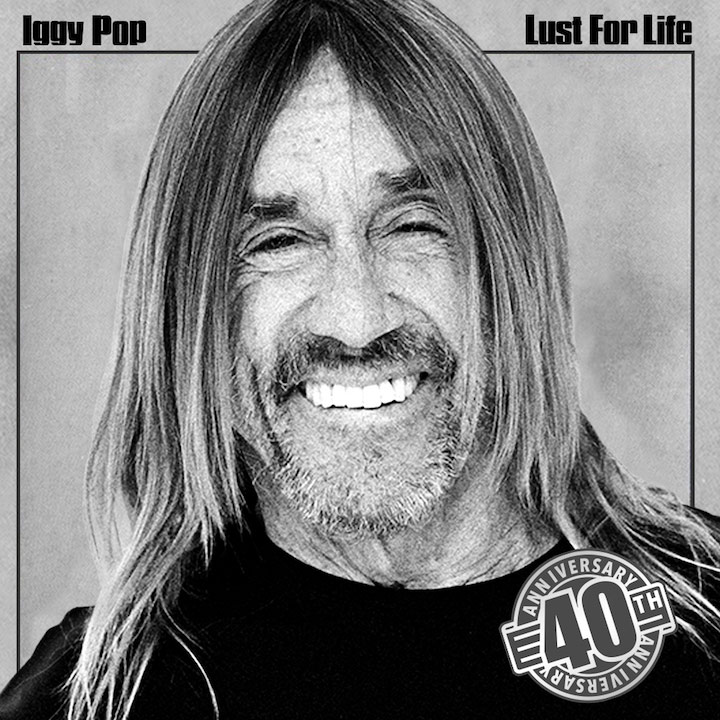
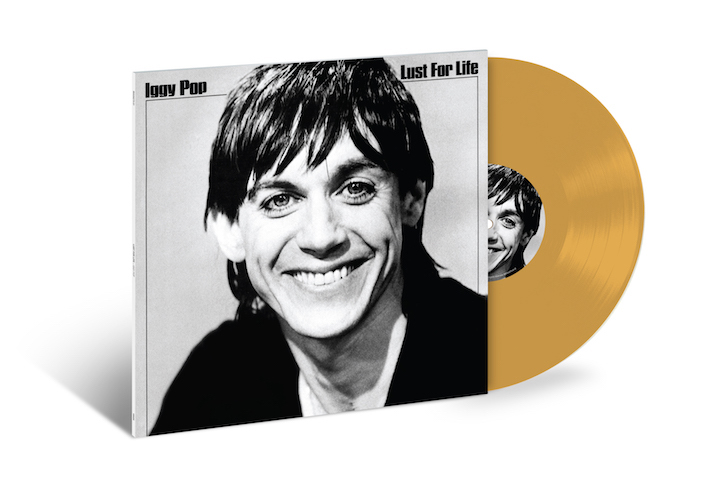
Iggy Pop Celebrates 40 Years Of ‘Lust For Life’ With Vinyl Reissue

In the summer of 1970, after a shambolic set at the Goose Lake Rock Festival in their native Michigan, The Stooges put together a new lineup as they prepared to hit the road in support of their second album, “Funhouse” Zeke Zettner, previously part of The Stooges road crew, became their new bassist, and second guitarist Bill Cheatham was brought aboard to reinforce the primal guitar work of Ron Asheton. With vocalist Iggy Pop, drummer Scott Asheton , and sax player Steve MacKay joining the new recruits, the band headed to New York City for a three-night stand at Ungano’s, a rock club in Manhattan. Danny Fields the legendary behind-the-scenes figure who signed the band to Elektra Records, brought a portable tape recorder to the show on August 17th, 1970, and “Have Some Fun, Live At Ungano’s is a suitably raw document of The Stooges in full flight. Sounding taut and feral, the band rips through six songs from the “Funhouse” album before bringing the set to an explosive conclusion with the spontaneous “Have Some Fun”/”My Dream Is Dead.” is one of the few live recordings documenting The Stooges during the period when Ron Asheton was lead guitarist. While the fidelity leaves something to be desired, the force and intensity of the performance make this a must for anyone wanting to hear The Stooges when they were the most dangerous band in rock.

Exclusive release from 2015.
Black/white splatter vinyl with poster insert.
7500 pressed.
Recorded live on 18th August, 1970

Tracklist

A1 Going To Ungano’s
A2 Loose
A3 Down On The Street
A4 T.V. Eye
A5 Dirt
B1 1970
B2 Fun House
B3 Have Some Fun / My Dream Is Dead

Image result for Ron Asheton

Today’s the birthday of Ron Asheton of The Stooges, Ron formed the Stooges along with Iggy Pop and his brother, drummer Scott Asheton, and bassist Dave Alexander. Asheton, once ranked as number 29 on the list of 100 Greatest Guitarists of All Times,  if you feel the need to run put on one of the band’s classic albums, we  understand that completely. In fact, we should even encourage it.

By 1967  Ron Asheton was jamming with his brother Scott and friend Dave Alexander. They were soon joined by James “Iggy” Osterberg who remembered Asheton from the Chosen Few. The “Psychedelic Stooges” played their first show in 1967. In 1968 they were signed to Elektra Records along with the MC5 . He played guitar on and wrote most of the music for their first two albums, the eponymous debut (1969) and the second album Fun House (1970).

Check out these tracks featuring Ron Asheton in some capacity or other. The majority of them are pretty spot on, so prepare to get an rock education!. His raw, distorted guitar work with the Stooges was greatly influential for many punk bands to come. Asheton was found dead in his bed by police at his home in Ann Arbor Michigan in the early hours of January 6th, 2009, apparently having died of a heart attack a couple of days earlier.

After kicking The Stooges’ best-loved song off with a flurry of explosive feedback, this glorious three-note descending riff encapsulates Asheton’s ‘less is more’ style, which without question helped define punk’s early sonic blueprint.

Destroy All Monsters, “Assassination Photograph” (1979): This band came roaring out of Detroit, and although they never found tremendous commercial success, they gained a fair amount of attention as a result of having members of both the Stooges and the MC5 within their ranks at various points.

https://www.youtube.com/watch?v=XqhCCm9F0ao

New Race, “Crying Sun” (1982): These guys were never a studio band, only a live outfit, but when three guys from Radio Birdman teamed up with one of the Stooges and a member of the MC5, you can understand why Warner Brothers found it reasonable to release a live album by the band (THE FIRST AND LAST).

https://www.youtube.com/watch?v=KjSyyV0ICCM

Dark Carnival, “Bloody Mary” (1997): This band was fronted by Niagara, who as many of you likely already know also fronted the aforementioned Destroy All Monsters. As such, it’s none too surprising that Asheton should feature on recordings by both bands

https://www.youtube.com/watch?v=VO2jut4wL0E

1970: The Complete Fun House Sessions was recorded at Elektra Sound Recorders in Los Angeles and compiled from all thirteen reels of multi-track tape that held every note and snippet of studio dialogue. Twelve reels of tape were used during the original sessions, with the thirteenth reel having the takes that would be used on the studio album. This sprawling set which was originally aimed at the collector market would be challenging and cost prohibitive to reissue as a multi-disc vinyl box set. What is presented here is an attempt to assemble some of the best highlights from the Fun House Sessions on an officially-released 2LP set in high quality packaging with a sequence that hopefully proves to be an easier, and more casual listen. Included are some terrific alternate versions of Down on the Street, Loose, Dirt, Funhouse ,1970 and others, pulled from session reels 1, 4,6, 7, 9 & 11and originally recorded on May 11,12, 15, 18, 21 & 25 of 1970. Also notable is the inclusion of the 17+ minute-version of L.A. Blues, titled as “Freak,” which encompasses the entire fourth side of this set and is the prime example of what makes the Funhouse Sessions both loved and feared simultaneously.

Track Listing:

Side A

1 Studio Dialogue #23 (reel 6) May 18, 1970
2  Down on the Street Take 6 (Reel 6) May 18, 1970
3 Loose Take 16 (reel 4) May 15, 1970
4 T.V. Eye Take 5 (reel 7) May 18, 1970
5 Dirt Take 5 (reel 11) May 25, 1970

Side B

1 Studio Dialogue #3 (reel 1) May 11, 1970
2 1970 Take 3 (reel 1) May 11, 1970
3 Funhouse Take 3 (reel 9) May 21, 1970

Side C

1 Studio Dialogue #7 (reel 2) May 12, 1970
2 See That Cat (T.V. Eye) (reel 2) May 12, 1970
3 1970 Take 2 (reel 1) May 11, 1970
4 Lost in the Future Take 3 (reel 3) May 15, 1970
5 Slide (Slidin’ The Blues) (reel 4) May 15, 1970

Side D

1 Freak (L.A. Blues) Take 1 (reel 12) May 25, 1970

http://

  • Brand new collection that includes some of the best alternate takes from the legendary Complete Fun House Sessions box set.
  • First time all of these alternate tracks are available on vinyl and are sequenced for a better listening experience
  • Each 2LP set is individually numbered and strictly limited based on pre orders
  • 2LP, 180g  multi-color swirl vinyl pressed at Record Industry comes in a gatefold tip-on Stoughton sleeve with brand new artwork and liner notes.
  • Includes the legendary 17+ minute alternate version of L.A. Blues, titled “Freak,” that rocks the entire 4thside of this set.

Image result

Last February one month after the death of his close friend and collaborator David Bowie ,Iggy Pop covered Bowie’s “The Jean Genie” at Carnegie Hall. Two weeks earlier, he had said in an interview that he’s probably “closing up” and retiring from the recording business after the release of his new album Post Pop Depression with Josh Homme. If Pop seems a little morbid these days, well, it’s nothing new. A hell-bent, self-destructive streak runs through his entire body of work; in fact, that streak long ago became his calling card, along with this feral, hair-raising baritone. Hard to believe he launched his music career innocuously enough as fresh-faced James Osterberg, the drummer of various ’60s garage bands in Michigan such as The Iguanas and the Prime Movers.

iggy Pop’s next band, The Stooges, hit the scene like a runaway earthmover. Not that the band was particularly popular during its time. Formed in 1967 when he was still going by the name Iggy Stooge, The Psychedelic Stooges (soon shortened), the group harnessed the jet-engine power of fellow Michigan band The MC5 while droning on in a spectacularly Neanderthal way. The Stooges’ self-titled debut appeared in 1969, produced by The Velvet Underground’s John Cale, and it turned psychedelia into something overwhelmingly new: simple, primal, brutal, and blazing the trail for a new style of music still a decade away, punk rock. On the album’s best-known track, “I Wanna Be Your Dog,” Pop howls in an lascivious imitation of Ron Asheton’s wah-wah guitar, celebrating sexual submissiveness while paradoxically playing up the group’s own aggressive, distorted domination.

https://www.youtube.com/watch?v=BJIqnXTqg8I

As great as The Stooges was, it’s an album that all but painted the band into a corner—that is, until Fun House blew off the roof. The blueprint from the first album is dutifully carried over no one ever accused The Stooges of being eclectic but the band’s attack is deepened, sharpened, and given a far more insidious atmosphere of transgression and hedonism. On top of that, the decision to bring saxophonist Steve Mackay into the mix on songs like “1970” and the sinuous, swaggering title track lent a jazzy edge that only enhanced the album’s ominous atmosphere. And Pop’s blistered voice urges on the noise like a drug-pushing drill sergeant. At the start of the ’70s, as rock ’n’ roll was congealing into corporate slickness, Fun House ripped off the skin and pissed in the wound.

Three years passed between “Fun House” and its follow-up, “Raw Power”. The album was billed under the name Iggy And The Stooges, reflecting the new star power of its self-abusive front man, whose bloody, destructive stage performances were already becoming the stuff of legend. But the band itself had disintegrated in a haze of drugs and reformed in those three years, giving Raw Power a far more abrasive and hard-edged sound; co-produced by Pop and his admirer David Bowie, the album’s ear-shredding, in-the-red chaos kick started the punk movement. On songs such as “Search And Destroy,” guitarist James Williamson threatens to split the heavens with his unhinged solos; meanwhile Pop weaves a new mythology of rock decadence that teeters on the brink of sanity and reality.

https://www.youtube.com/watch?v=EDNzQ3CXspU

Barring the officially released demo Kill City in 1977 (recorded in 1975 and credited to Iggy Pop and James Williamson), The Stooges’ time in the studio was long over by the time Pop began in solo career in earnest with The Idiot. Released in 1977, the year punk exploded, it took a different route than all the groups The Stooges had inspired; instead of raw power, the album bears the cool, dour, synthetic tones that co-produced and collaborator Bowie was about to use on his Berlin Trilogy (The Idiot was also recorded in Berlin). In a way, Pop is fish-out-of-place on Krautrock-inspired tracks like “Nightclubbing” and the ethereal “China Girl” (later turned into a hit by Bowie himself). But it’s exactly this bewildered displacement and fresh context that makes The Idiot such a welcome jolt in Pop’s career arc—one that stretched his formidable voice into strange new shapes.

The second of Iggy Pop’s Berlin collaborations with Bowie released in 1977, Lust For Life produced Pop’s most identifiable solo hit: the Bowie-penned title track, a thumping, sinewy anthem that gleefully hurls Pop’s suicidal image back at itself. Falling much closer to Pop’s raw rock wheelhouse than The Idiot, Lust For Life nonetheless produced one of his most sultry songs: “The Passenger,” whose slinky, menacing vibe taps into the dark poetry that Pop always has lurking beneath his bad-boy surface. With punk in full swing, the movement’s forefather claimed his snotty offspring while striking out on his own assured yet anarchic path.

Pop’s third solo album, New Values, was released in 1979—his first without Bowie. Instead it was produced by his old Raw Power cohort James Williamson, who also supplies guitar. Rather than sounding like a Stooges rehash, though, the album ventured forth into bold new territory: sleek, sculpted, and lean, songs like the nervy title track gave Iggy Pop a clean canvas on which to reinvent himself. Accordingly, his vocal range is fully explored for the first time on record: From spoken-word proclamations to supple yelps to stentorian moans, he’d finally settled into his solo-artist role as a sophisticated provocateur and enfant terrible—even while Williamson sets off Stooges-era guitar explosions.

The ’80s should have been the decade where Pop reaped his hard-earned artistic rewards. Instead, it was pretty spotty. In spite of a strong pool of collaborators (The Sex Pistols’ Glen Matlock, Blondie’s Clem Burke and Chris Stein, Patti Smith Group’s Ivan Kral, and Bowie sideman Carlos Alomar) the run of albums including 1980’s Soldier, 1981’s Party, and 1982’s Zombie Birdhouse reflect a desperate frenzy of weirdness, mediocrity, and experimentation with only sporadic bursts of brilliance. Following a four-year break from studio albums, 1986’s Blah Blah Blah was Pop’s attempt to court the mainstream; with David Bowie back in the producer’s chair, the record resulted in a minor hit and something of a calling card for Pop in the ’80s, a slick cover of Johnny O’Keefe’s rock ’n’ roll oldie “Wild One (Real Wild Child).” Pop’s rebelliousness comes off as canned, but the album gave Pop another lease on music life—although it wasn’t capitalized on by 1988’s Instinct, a middling hard-rock team-up with The Sex Pistols’ Steve Jones that feels like a washed-out echo of Raw Power.

In the ’90s, the alternative boom brought many borderline underground artists out of the shadows—Pop somewhat included. He came out swinging with 1990’s Brick By Brick, a substantial album that boasted appearances from members of Guns N’ Roses plus another minor hit—a genuinely stirring duet with The B-52s’ Kate Pierson, “Candy.” With a new generation of stars, led by Kurt Cobain, singing his praises, the decade might have been huge for Iggy Pop, but his next three albums of the decade (1993’s American Caesar, 1996’s Naughty Little Doggie, and 1999’s Avenue B) were mostly muddled and confused, each one lesser than the one before it. Pop’s status as an icon was cemented—especially after “Lust For Life” was resurrected by its appearance on the soundtrack to 1996’s movie Trainspotting but his inability to funnel that into another classic record was frustrating. Yet wholly in line with his perverse brand of self-destructive integrity.

Image may contain: 2 people, people smiling

In the ’70s, few would have predicted that Pop would make it to the year 2000, let alone release some of his most intriguing music in the 21st century. That’s not to say 2001’s Beat Em Up and 2003’s Skull Ring are good—they aren’t—but two significant things happened to Pop’s career in the new millennium: One, he started dabbling in French pop , and jazz, and two, he also got The Stooges back together. His French-inflected albums, 2009’s Préliminaires (consisting of original songs) and 2012’s Après (comprising covers of everyone from Serge Gainsbourg to Édith Piaf), aren’t entirely successful, but they’re both brave and compelling in their own way, giving Pop’s ever-more-cavernous voice a new atmosphere to breathe. The Stooges’ two reunion albums, 2007’s The Weirdness and 2013’s Ready To Die, are wildly uneven—the second is much better—but there are flashes of real combustion to that decades-old chemistry. His new album, Post Pop Depression, once again relies on top-notch collaborators, in this case a group led by Josh Homme of Queens Of The Stone Age, and it’s one of Pop’s best solo albums since The Idiot, Lust For Life, and New Values—mostly because it draws heavily from The Idiot, Lust For Life, and New Values. But if Post Pop Depression is indeed Pop’s swan song, he’s going out on a note that’s both dignified and fittingly creepy.

The Essentials purchases,

1. The Stooges, Fun House (1970) More confident and corrosive than The Stooges’ self-titled debut a year earlier,Fun House is not only Iggy Pop’s most potent statement about the dark side of the modern psyche—it captures American civilization at the cusp of an epic comedown.

2. Iggy Pop, The Idiot (1977) The Idiot is as much a Bowie album as a Pop one, and that’s its strength: icy, experimental, starkly chiseled, and filled with both dreamy electronics, it gave Pop’s wild-man persona a chillingly robotic sheen.

3. Iggy And The Stooges, Raw Power (1969) If ever an Iggy Pop album explodes out of the speakers, it’s Raw Power. Savage and incediary, every second feels like it’s about to shake apart at the molecular level. And Pop has never topped his fierce, apocalyptic imagery here.

4. The Stooges, The Stooges (1973) There’s something endearingly numbskull about The Stooges’ eponymous debut—a psychedelic record that bulldozes over every flower in its path. But it’s also steeped in shadows and Pop’s pulsing, psychotic desire.

5. Iggy Pop, Lust For Life (1977) The title track of Lust For Life may have been used in one too many TV commercials for its punch to be fully retained, but Pop’s sophomore solo album as a whole remains a giddy, meaty match-up between Bowie’s vestigial glam stomp and Pop’s fiery abandon.

https://www.youtube.com/watch?v=hNVmV3KtrSc

Thanks To The AV Club

Though he achieved his greatest notoriety as the founder of Australia’s punk progenitors Radio Birdman, Deniz Tek is a Detroit kid—no surprise, as guttural guitar ferocity like his has the Rust Belt written all over it. Radio Birdman were shot through with Detroit influences, specifically via the Stooges—their name came from a misheard Iggy lyric, and their rehearsal space/clubhouse was dubbed the Funhouse.

In later post-Birdman years, Tek would play in bands with ex-Stooges, like New Race with Stooges guitarist Ron Asheton, and the short-lived (exactly two gigs) and underdocumented Dodge Main, whose live lineup featured the MC5’s Wayne Kramer, Stooges’ Scott Asheton, Sonic’s Rendezvous Band’s Scott Morgan, and The UP!’s Gary Rasmussen, with Jimmy Zero of the Dead Boys.

Tek is releasing a four-song E.P. with later Stooges guitarist James Williamson, titled “Acoustic K.O”. a play on the title of Iggy and the Stooges’ live album “Metallic K.O . It features four Williamson compositions “Penetration” and “I Need Somebody” both from Raw Power, and “Night Theme” and “No Sense of Crime” from the 1977 Pop/Williamson album “Kill City” . The acoustic transformations are startling and quite effective. Williamson: says

The songs of Acoustic K.O. are pearls from my youth, which are almost equally familiar to Deniz Tek from his. In fact the same could be said for the others on this record, to varying degrees. The process of recording them acoustically enhanced their luster with new clarity from re-interpretation. We love how it turned out.

He ain’t wrong—“I Need Somebody” seems a natural for an acoustic treatment, and the new version with Tek maintains the original’s menacing stomp. A more substantial transformation occurs on “Penetration,” but the E.P.’s real stunners are “No Sense of Crime,” on which Tek duets with Annie Hardy of Giant Drag, and “Night Theme”; the original on Kill City it’s a noisy-ish guitar theme-and-reprise suite that straddles the LP’s two sides, but here it’s a lush instrumental featuring a full orchestra.

http://

Image result for iggy pop the stooges 2007

Reuniting in 2003 for the Coachella Music Festival, the Stooges became an active touring unit again. But it would take a few more years before they ventured back into the studio to complete a full-length effort, manifesting itself in The Weirdness, which came out March 6th, 2007.

Three-quarters of the original band was on board, with frontman Iggy Pop joined by guitarist Ron Asheton, his brother Scott Asheton on drums and ex Minuteman bass player Mike Watt replacing Dave Alexander, who died in 1975. It was their first LP together in 34 years, though they had contributed four songs to Pop’s guest-heavy 2003 solo opus Skull Ring. Recorded at Steve Albini’s Electrical Audio Studios in Chicago, The Weirdness was technically the follow-up to 1973’s proto-punk masterpiece of “Raw Power” .

“I think the big change in the dynamic would be I’ve learned to delegate more,” Pop said shortly after the release of The Weirdness. “I’m not micromanaging as much as I did. The drummer has learned he has the ultimate authority in this group. He sails the ship. Neither Ron or myself will sound like much without that guy backing it up and the same would be true in a street brawl. He has that authority, and he is one of these soft-spoken people who people do listen to when he opens his mouth. He’s kept the group sensible, and he’s been a little more active in the group.”

It may be for that reason alone that The Weirdness isn’t more uneven. Scott Asheton takes the lead and holds it down from the outset, evident on the lead single, “My Idea of Fun.” He’s undeniably driving the Stooges tank, and everyone else follows his cues. Check the rowdy “ATM” or “The End of Christianity,” where even his older brother lets him show the way. That’s not to say Ron isn’t ripping solos left and right; he does a call-and-response with Pop during “Mexican Guy” that’s on fire, and his leads on “Free & Freaking” and album closer “I’m Fried” are dirty and raw. The Weirdness would end up being the finale for Ron, who died less than two years after its release.

Tracklist

1. Trollin’- 0:00
2. You Can’t Have Friends- 3:06
3. ATM- 5:28
4. My Idea Of Fun- 8:43
5. The Weirdness- 12:00
6. Free & Freaky- 15:45
7. Greedy Awful People- 18:29
8. She Took My Money- 20:36
9. End Of Christianity- 24:25
10. Mexican Guy- 28:45
11. Passing Cloud- 32:14
12. I’m Fried- 36:18