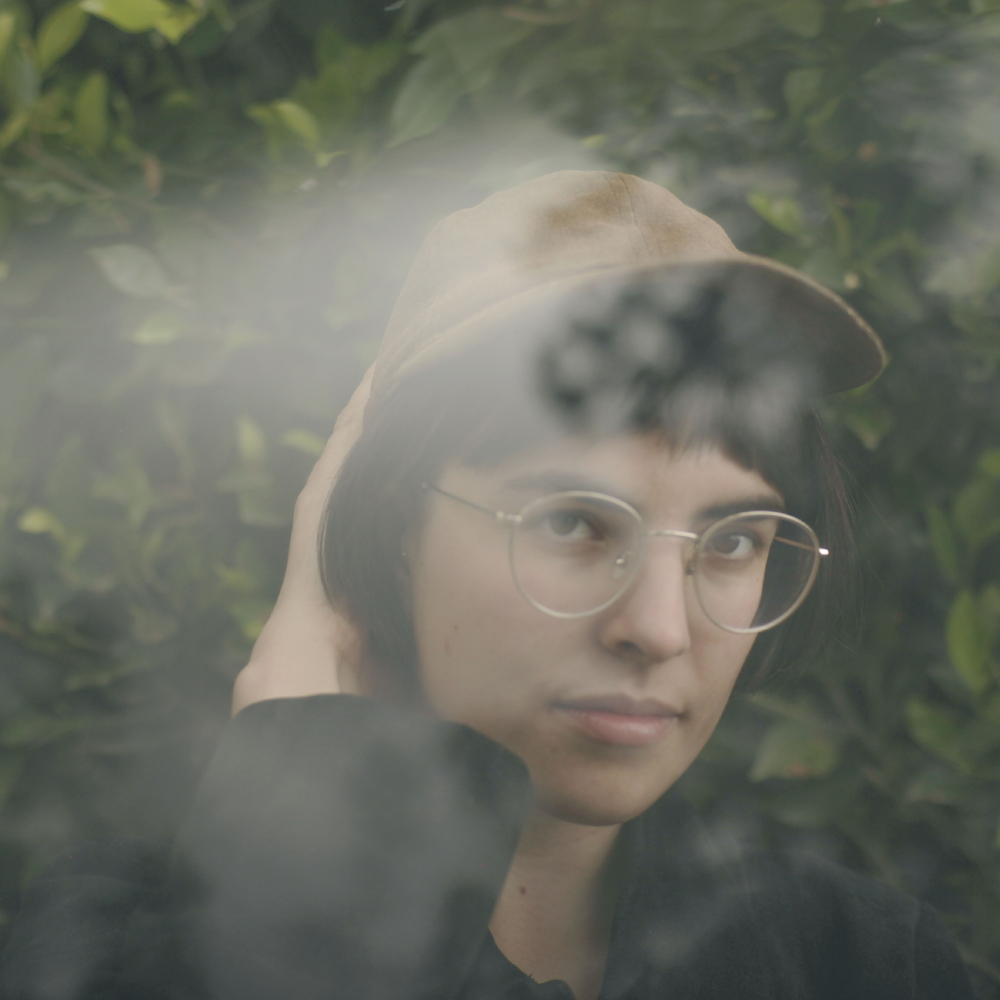
When it comes to volume, Sarah Tudzin likes to keep listeners on their toes. “Kiss Yr Frenemies”, was her debut album as Illuminati Hotties, playfully leaps between a variety of decibel-dictated sonic moods from the indie-pop canon. Hushed acoustic reveries give way to knife-sharp stabs of guitar; contemplative, finger-picked tranquility crescendos to giant slabs of post-rock feedback and trumpet fanfare. “You only like me when I’m sad,” she sweetly sings during a quiet interlude on “Pressed 2 Death,” an otherwise boisterous rambler that’s dotted with kiss-offs.
Tudzin—who is technically Illuminati Hotties’ sole permanent member, although she records with a full band—is a veteran studio rat, and it shows in the album’s dynamic sounds. In addition to working as a production and engineering assistant to big-time indie producer Chris Coady (Beach House, TV on the Radio), she’s logged studio time with acts ranging from Porches to Macklemore and worked on the sound design for the original Broadway cast recording of Hamilton.
Her expertise gives her own tracks a funhouse-like quality, with an eruption of noise, six-stringed squeal, or purposely lo-fi effect around every corner. Even without knowing that additional vocals on the album are credited to “Everyone at Jesse’s Party,” you get the sense that she had fun making this record. Tudzin describes the sound of Illuminati Hotties as “tenderpunk,” and that feels right. Every emotional abrasion and pang of longing on Kiss Yr Frenemies is conveyed with just the right mix of sadness and acerbity. On the single “(You’re Better) Than Ever,” she confesses, “All the baddest words I knew came pouring out/When I heard you feel better/Better than ever.” Along with stylistic forebears Los Campesinos!,
Tudzin’s sound sometimes recalls indie-pop lifer Rose Melberg’s many projects, as well as 1990s Vancouver punks Cub—all acts that have regularly challenged the common notion that indie pop is all cloying sentiments and bookishly restrained instrumentation.
Painted Zeros is Katie Lau’s recording project. Her debut full-length album “Floriography” was released 10/30/2015 on Don Giovanni Records, and demonstrates the breadth of her musicality while being unmistakably punk at heart. Lush strings colour the spaces between melodic guitar hooks and Lau’s dreamy (often buried) vocal delivery, offering the listener an intimate look inside a world that echoes the heyday of shoegaze and demands that they listen closely–and loud. Based out of Brooklyn, NY, the band is a trio live, and in concert Lau’s songs burst to life with the help of two of her best friends. Love the fuzzy sound, and the guitar work is wonderful. I wish I had better words to describe how much I enjoy this album. Despite, or maybe because of, the subject matter throughout, this album often feels like the beginnings of a triumphant breakthrough to the other side.
Her new album “When You Found Forever”, her first project to be released in five years under the Painted Zeros name. It’s an uncompromising journey into a person stricken with a battle of the psyche, overcoming a tumultuous relationship with alcohol and breaking free from the clutches of an old love (see “”). Lau is fearless in showing the pains of addiction mixed with the beautiful colour palette that returns once its been abandoned. On her latest single that we’re thrilled to premiere, “I Will Try” Lau takes the various shades that make up ourselves to create an anthem endowed with a restored affirmation in her identity and making the best of the future.
Written, performed, engineered, and mixed by Katie Lau
Drums played by Jared Kaner on tracks 3 & 8 Bass played by Jim Hill on tracks 3 & 8
I’ll never forget where I was when I first discovered The Cranberries’ “Dreams”: as they put the song on repeat all afternoon. I may someday forget where I was when I first heard Living Hour’s kinda dreamy cover version, While it’s far from the heat-stroke shoegaze that first drew me to Sam Sarty’s project, this cover shares its unique deep-exhalation appeal. Oh, and careful—when you google “living hour dreams” it autocorrects to “living your dreams,” which is apparently a song from Beverly Hills Chihuahua 3. This is not that song.
Living Hour’s expansive, gentle and slow indie rock is distinguished by lovelorn melodies, transient polyrhythms, and a dreamy instrument palette that includes heavenly interlocking guitars, casiotone keyboards, and brass. Floating over these warm sparkles of sound are Sam Sarty’s emotive lead vocals, which are intoxicatingly smokey and vulnerable.
Living Hour recorded their early songs with friend and producer Riley Hill in the west end of their hometown, Winnipeg, Canada. Their self-titled debut album was released on cassette in early 2016 on Bloomington’s Tree Machine Records, introducing the band’s cinematic sound and propelling years of DIY touring in Canada, USA, and Europe.
Living Hour’s Softer Faces was released by Brooklyn’s Kanine Records in February 2019 with production by Kurt Feldman (The Pains of Being Pure at Heart, DIIV, Depreciation Guild) and Jarvis Taveniere (Woods, Purple Mountains, Parquet Courts).
The album received acclaim from NPR, Stereogum, Paste, Vice, Bandcamp, AllMusic, The Grey Estates, Gold Flake Paint and more.
“Some of the most heartsick synth-pop since Cocteau Twins.” – Noisey
“Winnipeg rockers Living Hour dream big with grandiose, all-encompassing shoegaze that stretches to the ends of the earth.” -Stereogum
Loss is one of life’s most challenging experiences. There is no universal path to solace, no prescriptive behaviours to mitigate its pain. But as we process the death of a loved one, at some point in the days and weeks that follow, the one undeniable truth of the situation is eventually revealed: Life goes on.
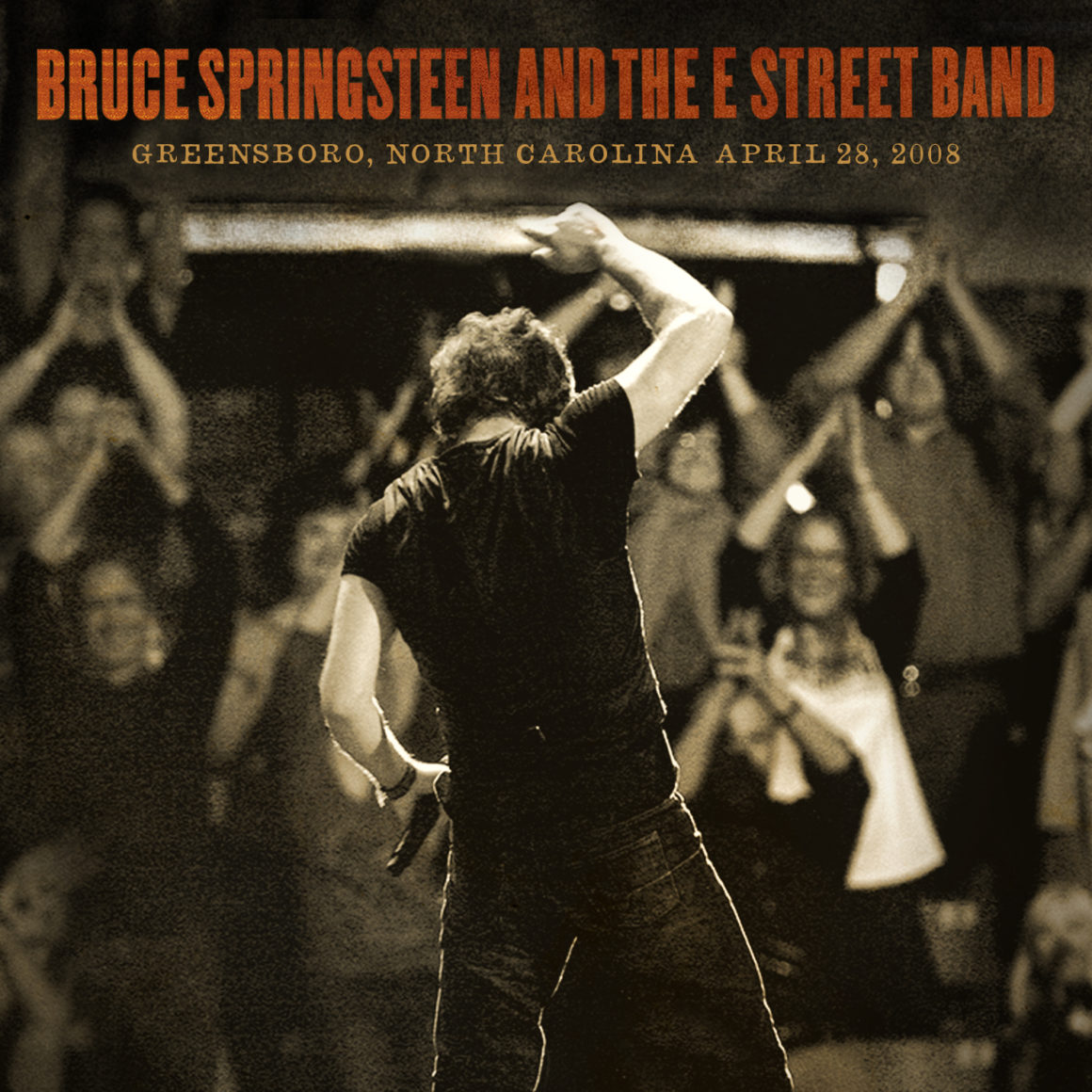
Just 11 days removed from the passing of Danny Federici, Greensboro opens with a video tribute to the band’s fallen comrade set to the music of “Blood Brothers.” But from there the mood shifts markedly. At the first four shows performed after Federici’s funeral, setlists dipped back to Springsteen’s first two albums for songs like “Blinded By the Light,” “Does This Bus Stop at 82nd Street?” and “Growin’ Up” in tribute to Phantom Dan. There would be time for that this night too, but to open Greensboro, something more cathartic was delivered.
The pairing of “Roulette” into “Don’t Look Back” rivals the best one-two punch from any Springsteen show in any decade. Two stunning, underplayed rockers—one haunting, one life-affirming—blow off the doors of the Greensboro Coliseum, and the release of energy is unmistakably liberating for all.
As the diehard collectors well know, “Roulette” has a very tricky arrangement, especially as a one-off, and here it is played with full conviction in what has to be one of its best modern performances. How convicted? Listen to Bruce declare, “They say they wanna help me but with the stuff they keep on sayin’, I think those guys just wanna keep on playin’.” The guitar solo is searing as well, and Max crushes one of his signature drum parts.
The same can be said for “Don’t Look Back,” which faithfully follows the 1977 arrangement in its only live outing circa 2000-2012 and one of only 31 performances ever. Short-listed for, but ultimately left off of Darkness on the Edge of Town, “Don’t Look Back” remains one of Springsteen’s greatest non-album tracks. In fact, “Don’t Look Back” was so “ready” for Darkness, it is the only song that wasn’t newly remixed for Tracks in 1998. The performance in Greensboro is a faultless rebirth.
One could argue the top of the show isn’t merely a perfect pairing, but a trio, quartet, or even quintet of brilliantly linked performances. The momentum of “Roulette” and “Don’t Look Back” pushes kindred spirit “Radio Nowhere” to new heights. “Out in the Street” (a phrase also uttered in “Don’t Look Back”) bears renewed vivacity and “The Promised Land” brings us home, riding Roy Bittan’s piano and Stevie’s guitar.
Bruce finally catches his breath as we move into Magic territory with a solemn (and timely as ever) reading of the title track with Soozie subbing admirably for Patti. “Gypsy Biker” was a Magic tour highlight every night and continues to deserve consideration as one of the finest E Street Band songs of the 2000s. A heartfelt story follows, as Bruce describes meeting Danny for the first time, preceding a momentarily tentative but ultimately winning “Saint in the City.”
Setlists on the Magic tour were notably tight, and that bang-bang approach is in evidence as Bruce steers “Saint” left into a very fine “Trapped” and follows that with graceful right turn into the Nils Lofgren (and Soozie, too, in Ms. Scialfa’s absence) showcase, “Because the Night.”
The night’s crackling atmosphere sparks a terrific “Darkness on the Edge of Town.” Jon Altschiller’s mix positions piano and guitar ideally. The performance is anchored by an impassioned Springsteen vocal that drops in defeat when he sings the slight variant, “I lost my faith when I lost you,” only to rise to that arresting heightened register to deliver the rest of the verse starting with, “Tonight I’ll be on that hill, ‘cause I can’t stop.” “Darkness” and the “She’s the One” that follows are equal parts vintage and in-the-moment.
By the halftime arrival of “Living in the Future,” the score Bruce has put on the board is at MJ/Lebron levels. And to continue the analogy, those games still make for great, memorable wins, even if the superstars don’t hit quite as many downtown three-pointers or monster dunks in the second half.
The return of a newly streamlined “Mary’s Place” registers as another highlight. “Let’s see if we remember this one…debut on this tour. Come on, let’s try it,” says Bruce with undeniable glee. There is something fresh about “Mary’s Place” mk2, with more echoes of the kind of updated “Thundercrack” or “Santa Ana” vibe that he seemed to be going for in the first place, compared to what the song morphed into on the Rising tour.
Sure, there is something peculiar about spending your sign request on “Waiting on a Sunny Day.” The motivation may have had more to do with being picked for the singalong (which, as it turns out, didn’t even happen for this tidy performance), but we’ll excuse it as well-meaning if slightly misguided. From there, Greensboro moves through a solid back ten that may lack a bit of the first half’s urgency but holds its own, especially the Magic songs: “Last to Die, “Long Walk Home,” and “Devil’s Arcade.” The last of these and “Magic” make their first appearances in the Live Archive series from 2008 performances.
Springsteen and the band ultimately bring Greensboro home in fine form through a long and lively “Badlands,” a musically rich and beautifully sung “Backstreets,” the fitting farewell of “Bobby Jean” (kudos to Clarence for nailing the solo), and the high-spirited finale, “American Land” with Charlie Giordano eloquently deputizing for Danny on accordion.
The recent release of Letter to You on record and film reinforces that life does go on for the E Street Band, and equally that the spirit of those who have departed continue to inspire those who carry on. Greensboro is a wonderful reflection on the process of loss and the power of perseverance.
Bruce Springsteen – Lead vocal, electric and acoustic guitars, harmonica; Roy Bittan – Piano, keyboards, accordion; Clarence Clemons – Tenor and baritone saxophones, percussion, backing vocal; Nils Lofgren – Electric and acoustic guitars, backing vocal; Garry Tallent – Bass; Stevie Van Zandt – Electric and acoustic guitars, mandolin, backing vocal; Max Weinberg: Drums; Charlie Giordano – Organ, keyboards, accordion; Soozie Tyrell – Violin, acoustic guitar, percussion, backing vocal
And how about Pylon? You remember Pylon, right? Oh lord. Pull up a chair… While the B52’s were the first to break the seal on Athens, Georgia as a hotbed of artistic intrigue in the late-70’s, and R.E.M. would become the cities most famous sons, Pylon were arguably the city’s favourite band and deepest influence on their emerging peers.
In the late 1970’s Athens, Georgia was buzzing with a raw but sophisticated music scene.
The turn of the decade began producing new sounds from bands like the B-52’s, R.E.M. and art-rock luminaries, Pylon. before they were a band, Pylon were art-school students at the university of Georgia: four kids invigorated by big ideas about art and creativity and society. in 1980 the band released its first record, “Gyrate” and began touring across the country in support of the release. they would soon develop a following across the country. shortly thereafter, Pylon went back into the studio. they gleefully pulled their songs apart and put them back together in new shapes, revealing a band of self-proclaimed non-musicians who had transformed gradually but noticeably into real ones. Now more than three decades later, both studio recordings have been remastered from their original audio tapes and are set for release on New West Records
Athens, Georgia may have been the breeding ground for the B-52’s, but in 1978 it was, for the most part, still a sleepy college town with few places for bands to play when Pylon began to cohere. (It’s worth remembering that the B-52’s had almost exclusively played house parties before moving to New York and becoming a sensation.) Like more than a few great and original groups, Pylon came together without much of a support system or many first hand influences; they were young people creating their own art and making their own fun with it. While it wasn’t their first release (the epochal “Cool”/”Dub” single preceded it by seven months), 1980’s Gyrate caught Pylon on tape when they were still clearly fascinated with their own creative possibilities, though they were tight enough to sound elemental and straightforward rather than amateurish. The skittery chiming of Randy Bewley’s guitar and the expressive whisper-to-a-scream report of Vanessa Briscoe Hay’s vocals give this music plenty of brains, and the lean, minimal rhythms generated by bassist Michael Lachowski and drummer Curtis Crowe lend it all a strong, muscular body; at a time when America was just falling out of love with disco, Gyrate was a reminder that there was more than one way to make music for dancing. As smart as this music was, it was also fun and engaging in a way that many of their peers and followers were not.
Gyrate is full of joy and subtle, surreal wit, and if it sometimes sounds like the work of arty grad students, they’re still grad students who want to cut loose and get in the groove, and that’s exactly what they do. Gyrate is a classic touchstone of the American underground scene of the ’80s, and it sounds as fresh, challenging, and exciting as the day it was released. R.E.M. would become a lot more famous, but Pylon were the band that made the world aware that there was something remarkable happening in Athens, and this was their first triumph.
It will likely turn a few heads that ‘The Mirror’, a dark, brooding track around halfway through this latest from Hey Colossus, features an appearance by the one and only Mark Lanegan. A bonafide alternative rock titan, his reputation for collaborative work is well known, but so are his exacting standards. Only working with the best, the fact he’s even here says volumes about where this shapeshifting, hardcore-cum-post punk noisemakers are at.
Dances / Curses is loud when it needs to be, for example the growling riffs of Tied In A Firing Line, or the stadium-filling, doom-laden frenzy of Dead Songs For Dead Sires, but isn’t afraid of intimacy either. Stylites In Reverse’s delicate melodies, or Blood Red Madrigal’s hazy, woozy, melancholic air. A broad brushstroke that confirms Hey Colossus are among the most vital we’ve currently got.
Hey Colossus is an English rock band formed in London in 2003. Since its inception, the band has undergone several line-upchanges, revolving around founding members Joe Thompson and Robert Davis. Longterm Hey Colossus fan Mark Lanegan makes an appearance amidst the languid and sun-soaked denouement of ‘The Mirror’, the existential gravitas of his tones entirely at home in these revelatory surroundings.
The band is characterised by its ‘heavy’ sound, DIY ethic, prolific output, and stylistic experimentation.
New double album ‘Dances / Curses’ on Ltd Clear 2LP/2CD/DL released on November 6th via Wrong Speed Records (UK/Euro) & Learning Curve Records (US).
Before they were a band, Pylon were art-school students at the University of Georgia: Just four kids invigorated by big ideas about art and creativity and society. Pylon was less a band, however, and more of an art project, which meant they had very specific goals in mind as well as an expiration date. while their time together as a band was short lived (1979-1983), Although just a few years as their time together Pylon had a lasting influence on the history of rock and roll. Throughout their brief history, they were able to create influential work that would help foster the post-punk and art-rock scene of the early 80s. influencing artists like R.E.M., Gang of Four, Sonic Youth, Sleater-Kinney, Interpol, Deerhunter and many more claim inspiration from the band. in 1980 the band released its first record, “Gyrate” and began touring across the country in support of the release. The band would soon develop a following across the country and specifically in the bustling music scene in New York City. One of their earliest gigs was opening for the Gang of Four in the big apple. Following the critical acclaim of their debut release, Pylon went back into the studio. while in the studio they gleefully pulled their songs apart and put them back together in new shapes, revealing a band of self-proclaimed non-musicians who had transformed gradually but noticeably into real musicians. The resulting album, “Chomp” was barely off the press when Pylon were booked to open a run of dates for a hot new Irish band called U2 (after previously playing two arena shows with them in the month leading to the album release). Most bands would have jumped at the opportunity, but Pylon were skeptical. at a critical point in the life of Pylon, they opted to become a cult band rather than stretch their defining philosophy too far. “We fully intended Pylon to be an almost seasonal thing that we were gonna do for a minute and then get on with our lives,” says Curtis Crowe, drummer for the band. “but it just never went away. it still doesn’t go away. there’s a new subterranean class of kids that are coming into this kind of music, and they’re just now discovering Pylon for the first time. that blows my mind. we didn’t see that coming.” New West Records is proud to partner with Pylon to reissue “Chomp” back into the masses. beautifully remastered from the original audio sources and pressed on vinyl for the first time in over 30 years.
Pylon’s 1980 debut album, sounded like the work of the best sort of enlightened amateurs, musicians who were still fairly new to what they were doing and making the most of their simplicity, which worked brilliantly in their favour. 1983’s Chomp was a somewhat different affair; Pylon were a more accomplished group with far more practical experience under their belts, and instead of the streamlined hands-off production of Bruce Baxter, the second album was produced by Chris Stamey and Gene Holder of the dB’s, and engineered by Mitch Easter. As a consequence, Chomp sounds fuller and less minimal than Gyrate, with Vanessa Briscoe Hay overdubbing vocal harmonies on some tracks, keyboards popping up here and there, and Randy Bewley adding some new flash to his James Brown-style chicken scratch guitar. However, if Pylon were capable of doing more on Chomp, they also knew what not to do. The textures are more complicated, but the music still feels efficient, with no wasted gestures in the songs or performances. The grooves are as potent as ever, with bassist Michael Lachowski and drummer Curtis Crowe anchoring this music with lean, funky rhythms that sound edgy while still filling the dance floor.
The added production polish and instrumental niceties add atmosphere without weighing down the songs, and reinforce how tuneful the material is despite their clean surfaces. “Crazy” is a beautifully ominous pop song that Pylon lacked the sophistication to pull off when they made Gyrate; if their early music was full of sharp angles, “Crazy” showed they could create something more accessible without compromising their vision in any way. Pylon would break up the same year Chomp was released, and it’s fascinating to speculate where their broader musical range and studio smarts would have taken them if they’d stayed together (they would periodically play reunion shows, and even cut a third album, Chain, in 1990.) However, if Chomp closed the book on Pylon’s first era, it was a grand finale, an album that stands apart from their debut yet is just as brilliant in its own ways.
Ezra Furman finally takes her first steps back towards the ordinary life we all crave as she performs a full live solo set in the magnificent confines of Boston’s Museum Of Fine Arts.
In a year which has continued to challenge the creative arts and both inhibited and reshaped the art of live performance, we have at least been blessed by innovation in a way we could not have imagined. And with good fortune Ezra Furman has not only provided us with the magnificent soundtrack to the Netflix series “Sex Education” earlier in 2020 but has also performed a consistent stream of live songs through her Facebook channel, demonstrating her wide ranging and eclectic taste which have inevitably fueled her consistently high quality of song writing over recent years. But with the ever growing frustrations of having to cancel or postpone the vast majority of her 2020 touring schedule, Ezra set about plotting to bring us a very special and intimate solo show with just her and her guitars and the songs she’s spent her life crafting.
The setting for this performance was the magnificent Museum Of Fine Arts in Boston. The inspiration for this came from Ezra’s hero, rock’n’roll minimalist Jonathan Richman, who referenced the building in The Modern Lovers classic song Girlfriend. The prospect of hearing the performance of some great songs filmed against the stunning backdrop of the Museum’s galleries was certainly something not to be missed.
Drift back to the start of our journey with Ezra Furman and his band The Boyfriends but on a cool October evening back in 2012. The diminutive figure of Ezra Furman who took to the stage in a denim jacket with an acoustic guitar strapped over his shoulder. It was a nervous entrance with Ezra, previously completely unknown to myself, having an almost apologetic look on his face as he performed the half hour support set. But it soon became clear to me that this was no ordinary support set. Someone appearing so frail and nervous in front of an audience yet delivering such powerful and assured messages through his songs. I found myself wondering if this is how a youthful and inexperienced Bob Dylan would have portrayed himself in those early days performing in Greenwich Village, not appreciating how his songs would resonate with so many people over so many years to come.
Fast forward through a period when Ezra’s onstage and offstage persona began to fully recognise more assurance Ezra’s bisexual and gender-fluid status, You could only wonder how the rock’n’roll outsider would feel performing in the presence of some of the finest American art of the 19th century that is displayed on the walls of the Boston Museum. However reassured when Ezra commented that “I think my stuff can measure up to theirs” and I had little doubt that it would.
Ezra Furman plays ‘The Queen of Hearts’ as part of a streamed performance film shot at The Museum of Fine Arts Boston
As the live stream commenced and Ezra moved in to take her place and pick up her electric guitar, there was a further overlaying intermittent commentary by Ezra which made it sound at times like she was conversing with herself. As Ezra explained how important the medium of a song is in her life and “how we all belong in a song”, it was clearly her intention to make moments for others as her favourite artists have made moments for Ezra.
“A beautiful hybrid, Trees found a unique space between intimate folk and freewheeling psychedelia. Musically ambitious yet brilliantly balanced, they have left an enduring legacy for those lucky enough to be in on the secret” Edd Gibson, Friendly Fires
· This is a Beautifully packaged four-disc anniversary edition includes 12” book with liner notes from founder member David Costa and comedian Stewart Lee. The reissue Features two new discs of alternate mixes, early demos, BBC session tracks and 2018 live recordings in London
· Includes lost demos of ‘Polly On The Shore’ and ‘Streets Of Derry’
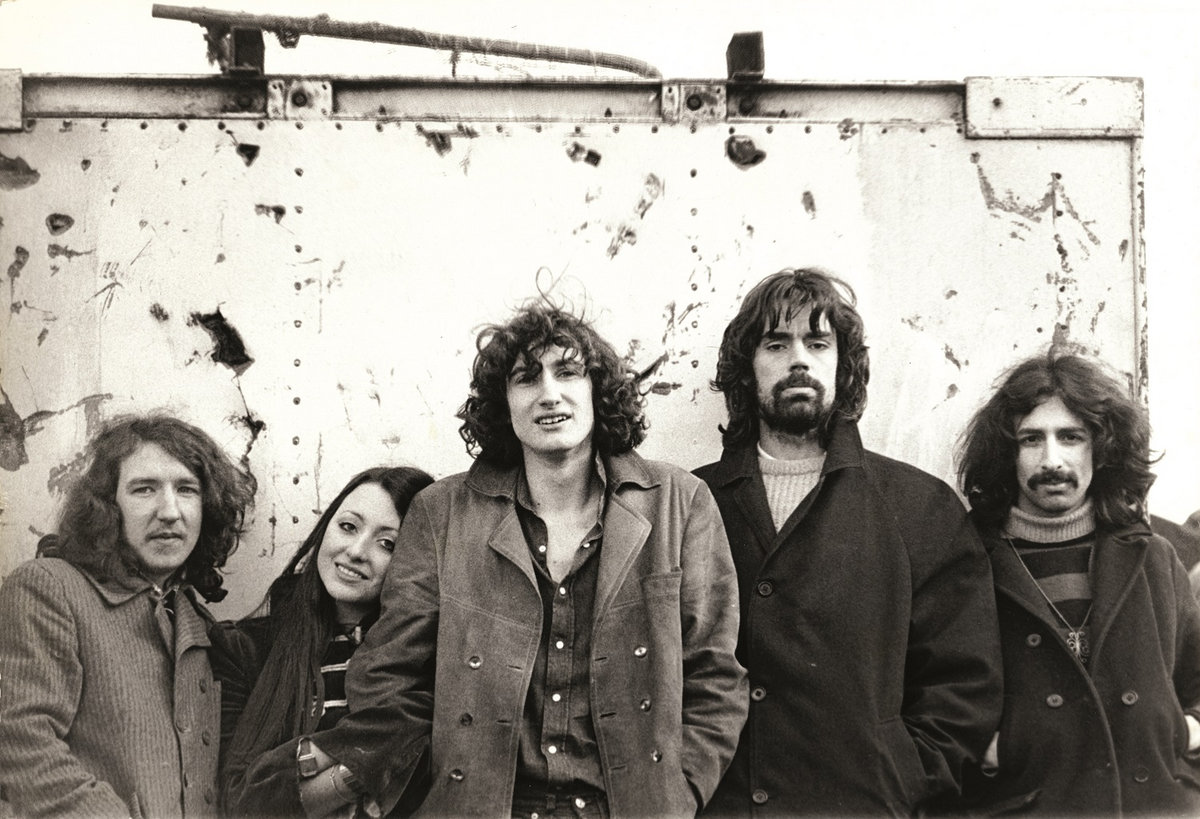
It’s now over fifty years since Trees’ formation, a band who helped define ‘Acid Folk’, creating a sub-category in the lexicon of record dealers and music critics alike. Earth’s new Trees collection brings together both albums adding shiny alternate mixes of key tracks along with a selection of radio sessions and demos, all sounding brighter and cleaner than ever before.
Trees first album, ‘The Garden of Jane Delawney’ (1970) snuggles nicely into contemporary nu-folkies’ idea of the genre, and shares some of the pastoral-whimsy that characterised The Incredible String Band or Donovan, offset by some stunning interpretations of traditional material and Bias’ own songs, which were somehow part of the tradition Trees had adopted. Readings of ‘Lady Margaret’, ‘Glasgerion’ and the old standard ‘She Moved Thro’ The Fair’, and the extended fade of the group’s own ‘Road’, presage the explosive instrumental duelling that would come to characterise the follow up album, ‘On The Shore’.
Divided about half-and-half between traditional folk covers (“The Great Silkie” is the best) and Tobias Boshell originals, this is very much in the mainstream of 1970 British folk-rock. But the material is often plain, and the arrangements simply too drawn-out, even bombastic at times. The band takes on Fairport head-to-head on “She Moved Thro’ the Fair” (sung by Sandy Denny on Fairport’s second LP) and loses. The title track, though, is their best song, an atypically light piece for acoustic guitar and harpsichord that has a beautifully haunting melody.
The Trees’ second album is so similar to the debut (The Garden of Jane Delawney) that it’s difficult to recommend one above the other. If you like one, you’ll like the other; if you want only the best stuff in this style, you’ll stick to Fairport Convention and maybe Steeleye Span without digging this deep. It’s more assertive, harder-rocking, and fuller-sounding than the debut, but the principal flaws of overlong songs and patchy original material remain. The taut and dramatic original “Murdoch” is the highlight, rivaling the first album’s “The Garden of Jane Delawney” as their best track.
There’s a definite shift between the records, the second being darker and more ambivalent. Here Trees don’t tell you what to think. You’re left to formulate your own response to this odd, opaque music.
The ‘Streets of Derry’ session version leans into the brain vibrating drone-groove they somehow found at the traditional tune’s centre. ‘Polly On The Shore’, another traditional tune, is one of the definitive moments of English folk rock.
This special expansive collector’s edition celebrates the bands 50th anniversary.
Ken Hensley, the songwriter and multi-instrumentalist best known for his work with 70s rock band Uriah Heep, has died aged 75. His press representative said he had died “peacefully following a very short illness”. Ken Hensley, co-founding former keyboardist with Uriah Heep, died at the age of 75 at home in Spain on November. 4th, his brother confirmed.
Hensley wrote many of the band’s songs during his tenure from 1970 to 1980, performing guitar and lead vocals on a number of occasions. He later also worked with W.A.S.P., Cinderella, Blackfoot and others following his departure and led his own band, Live Fire. In a statement, Uriah Heep said Hensley’s death took place after a “very short illness,” adding that he “was one of the most important musicians of the past half-century. His work with Uriah Heep in the 1970s helped to make the band hugely influential. … A very spiritual person, Hensley became an inspiration to many and known for encouraging talented artists.”
In an interview with last month, Hensley explained why he had no writing credits on Uriah Heep’s debut album, “Very ‘Easy, Very ‘Umble”.“When I joined the band, I had a publishing contract with another publisher, which meant they had to hide my name,” he explained. “I did, in fact, write songs for the first album, but we just weren’t allowed to publicize it, and so it was disguised under Paul Newton’s name.”
He noted that the “reason I became the dominant writer was because I always wrote a lot of songs. In the days of vinyl, you could only put eight or nine tracks on an album, and I would go in with 10, 12, 15 songs, and the other guys would bring maybe one or two, so naturally, that’s the way it came out.”
Hensley left Uriah Heep after becoming disillusioned with their line-up changes, and said, despite a reunion show in Russia in 2015, he had no desire to return. “But to think about what we achieved together and the things that we did and everything else, it still puts a smile on my face,” he said.
The cause of Hensley’s death was not revealed. He had recently finished writing a memoir titled My Book of Answers, which is set for publication in February.
“I am writing this with a heavy heart to let you know that my brother Ken Hensley passed away peacefully on Wednesday evening,” Trevor Hensley wrote on Facebook. “His beautiful wife Monica was at his side and comforted Ken in his last few minutes with us. We are all devastated by this tragic and incredibly unexpected loss and ask that you please give us some space and time to come to terms with it.” He noted that “Ken will be cremated in a private ceremony in Spain, so please don’t ask for information about a funeral. Ken has gone but he will never be forgotten and will always be in our hearts.”
His Uriah Heep bandmate Mick Box said he was in “deep shock … Ken wrote some amazing songs in his tenure with the band, and they will remain a musical legacy that will be in people’s hearts forever.” As well as playing guitar and keyboards with the band – and helping popularise the latter instrument as part of an emerging harder rock sound – Hensley penned and sang lead vocals for one of the band’s key tracks, the stirring folk-rock song “Lady in Black” . He also wrote “Easy Livin”’, which was a hit across Europe in 1972, as well as a large number of the band’s other songs.
Born in London in 1945 and raised in Stevenage, Hensley came of age amid the British blues-rock explosion of the 1960s, playing in his early band the Gods with Mick Taylor, who would go on to join the Rolling Stones and John Mayall’s band; Greg Lake of Emerson, Lake & Palmer also passed through their ranks.
In 1969, Hensley joined Spice, who soon renamed themselves Uriah Heep. He spent a decade with the band, recording 13 albums with them that straddled prog, blues, heavy metal and more, before leaving in 1980. Their biggest chart hit came with Return to Fantasy, which reached No 7 in the UK album chart in 1975; four of their albums from this period also reached the US Top 30.
After he left, unhappy with the band’s musical direction, the 80s featured spells with hard rock bands he had influenced, As well as occasional one-off live reunions with Uriah Heep, he sporadically released solo material, including the ambitious Blood on the Highway (2007), an autobiographical rock opera featuring the Alicante Symphony Orchestra, hard rock vocalist Glenn Hughes, and more.